

Quick Summary: The best small business web design companies in 2026 combine responsive design expertise, conversion-focused strategies, and personalized service. This list features 15 top agencies selected based on track record, client satisfaction, and proven results in delivering custom websites that drive business growth without disclosing specific pricing or hourly rates.
Finding the right web design company can make or break a small business’s online presence. The difference between a generic template and a strategically designed website often determines whether visitors become customers.
Small businesses face unique challenges. Limited budgets. Tight timelines. The need to compete with larger competitors who have bigger marketing teams. The right web design partner understands these constraints and delivers solutions that punch above their weight class.
Here’s the thing though—not all web design agencies are built for small business success. Some focus exclusively on enterprise clients. Others deliver beautiful designs that fail to convert. And plenty promise the moon but can’t execute.
This guide cuts through the noise. The agencies featured here have demonstrated consistent success with small business clients, backed by verified reviews and proven results. Each brings something different to the table, from industry specialization to technical expertise to creative innovation.
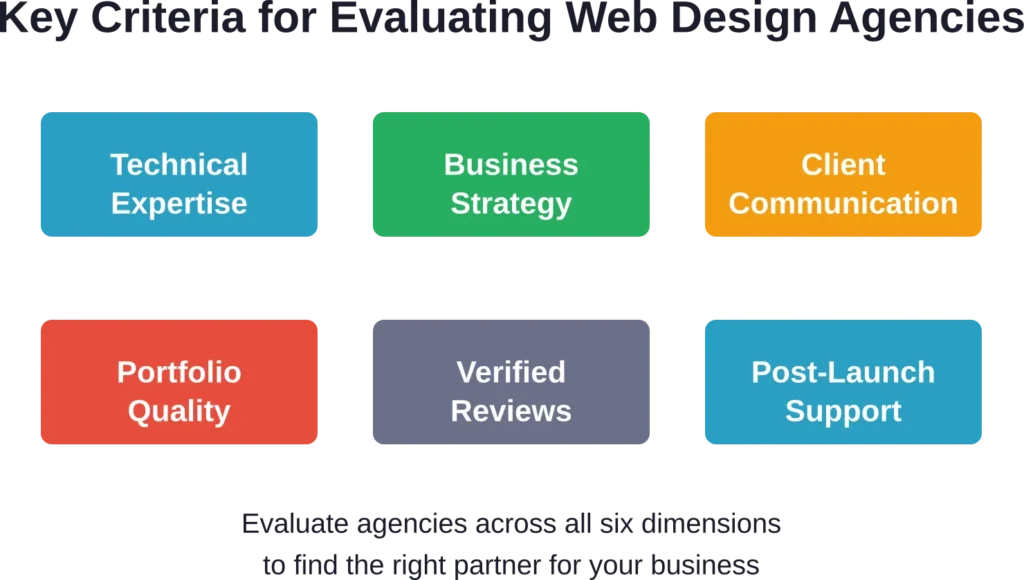
What Makes a Great Small Business Web Design Company
Before diving into specific agencies, it’s worth understanding what separates exceptional web design partners from mediocre ones.
Great small business web design companies don’t just make pretty websites. They solve business problems. That means understanding conversion psychology, user experience principles, and how design decisions impact revenue.
Technical Excellence Meets Business Strategy
The best agencies combine technical skills with strategic thinking. They ask about business goals before discussing color schemes. They want to understand target audiences, competitive positioning, and growth objectives.
Technical excellence matters too. Websites need to load fast, work flawlessly on mobile devices, and follow SEO best practices from day one. According to the U.S. Small Business Administration’s digital initiatives, improving online capabilities and digital services delivery has become essential for organizational competitiveness.
Responsive design isn’t optional anymore. Mobile traffic dominates most industries, and Google’s mobile-first indexing means mobile performance directly impacts search rankings.
Communication and Collaboration
Small business owners wear many hats. They don’t have time for agencies that disappear for weeks or require constant hand-holding.
Top agencies establish clear communication channels, set realistic expectations, and deliver updates without being asked. They explain technical concepts in plain language and involve clients in key decisions without overwhelming them with minutiae.
Look for agencies that assign dedicated project managers. This single point of contact streamlines communication and ensures nothing falls through the cracks.
Portfolio Evidence and Client Results
Portfolio quality speaks volumes. Look beyond visual appeal—examine whether past projects align with your business needs. An agency that excels at ecommerce might struggle with lead generation sites, and vice versa.
Client testimonials and case studies provide insight into working relationships and results. Strategic design and UX improvements can contribute to conversion rate increases.
Platforms like Clutch aggregate verified client reviews, making it easier to assess agency reputation and client satisfaction across multiple projects.
Top 15 Small Business Web Design Companies
The following agencies have proven track records delivering high-quality websites for small businesses. Each brings unique strengths to the table, from specialized industry focus to particular technical capabilities.
1. A-listware

A-listware is a software development and consulting company that delivers high-quality digital solutions tailored for small and medium businesses. They specialize in custom software development, application services, UX/UI design, and dedicated development teams that strengthen both customer-facing websites and internal systems.
Their approach focuses on seamless integration with client teams, modern cloud solutions, data analytics, AI capabilities, and full-spectrum software engineering. A-listware helps small businesses build scalable web applications, enterprise tools, and user-friendly interfaces that support growth and operational efficiency. Clients value their reliable delivery, clear communication, and ability to provide cost-effective solutions that fit business needs perfectly.
Contact Information:
- Website: a-listware.com
- Phone: +1 (888) 337 93 73
- Email: [email protected]
- Address: North Bergen, NJ 07047, USA
- LinkedIn: www.linkedin.com/company/a-listware
- Facebook: www.facebook.com/alistware
2. Gilzor

Gilzor delivers custom software development with a strong emphasis on web and mobile solutions that drive real business growth. The company combines technical expertise with user-centered design to create digital products that are both functional and conversion-focused.
Their process begins with idea validation and business analysis, followed by UI/UX design, development, quality assurance, and go-to-market support. This full-cycle approach helps small businesses launch or scale digital channels efficiently. Gilzor has delivered web and mobile applications across industries including startups, e-commerce, and product studios, with clients noting strong results in user acquisition and operational improvements. Client feedback highlights the team’s ability to turn ideas into polished, market-ready products that deliver measurable value.
Contact Information:
- Website: www.gilzor.com
- Email: [email protected]
- Address: Poland, Warsaw, Office 58, street Adama Mickiewicza 37, 01-625
- LinkedIn: www.linkedin.com/company/gilzor-softwaredevelopment
3. Mobian
Mobian builds dedicated engineering teams that deliver production-ready digital products for small and medium businesses. Specializing in mobile and web solutions alongside AI capabilities, they focus on speed, quality, and seamless execution without the overhead of traditional hiring.
The studio offers two flexible models — full outsourcing and team augmentation — allowing small businesses to scale development quickly. Their expertise covers end-to-end product development, scalable architecture, legacy integration, and post-launch support. Projects span healthcare, fintech, logistics, and IT sectors. Clients appreciate the clear communication, clean architecture, and ability to ship reliable software that supports business growth.
Contact Information:
- Website: mobian.studio
- Phone: [email protected]
- Address: Harju maakond, Tallinn, Kesklinnalinnaosa, Masina tn 22, 10113
- LinkedIn: www.linkedin.com/company/mobian-studio
4. Lengreo

Lengreo serves as a complete marketing and tech partner for small businesses, with website development at the heart of their integrated approach. They create eCommerce, business, and portfolio websites along with landing pages that align with broader growth strategies including SEO, paid ads, and lead generation.
What distinguishes Lengreo is their results-driven methodology combining strategy, custom development, and ongoing optimization. Their services include discovery and business analysis, prototyping, full implementation, and continuous support. The team works across B2B sectors such as software development, professional services, and technology. Client testimonials frequently praise their initiative, clear communication, and consistent delivery of high-quality work that boosts leads and conversions.
Contact Information:
- Website: Lengreo.com
- Phone: +31 686 147 566
- Email: [email protected]
- Address: Vrijstraat 9 C/D, 5611 AT Eindhoven, Netherlands
- LinkedIn: Lengreo
- Twitter: @Lengreo
- Instagram: @lengreo
5. Oski
Oski designs, develops, and maintains well-engineered software solutions for tech-forward small businesses and ambitious startups. With a focus on cloud, frontend technologies, and artificial intelligence, they build digital experiences that enhance operations and drive growth.
Their capabilities include modern web development with React, Vue, Angular, and other frameworks, paired with strong UI/UX design and AI integrations. Oski supports industries such as e-commerce, travel, logistics, education, and fintech. Small businesses benefit from their fast ramp-up, scalable architecture, and emphasis on intuitive, high-performance solutions. Clients value the team’s ability to deliver innovative yet practical digital tools tailored to business objectives.
Contact Information:
- Website: oski.site
- Phone: +48571282759
- Email: [email protected]
- Address: Kaupmehe tn 7, 10114 Tallinn, Estonia
- LinkedIn: www.linkedin.com/company/oski-solutions
6. The Creative Momentum (a CloudMellow Company)

The Creative Momentum brings together web design, development, and digital marketing services under one roof. This integrated approach allows small businesses to work with a single partner for all their digital needs.
The agency specializes in WordPress and custom CMS solutions, giving clients flexibility to manage content after launch. They emphasize training and knowledge transfer, ensuring small business teams can maintain and update websites independently.
Beyond design and development, The Creative Momentum offers SEO, content marketing, and ongoing optimization services. This comprehensive service model appeals to small businesses seeking long-term partnerships rather than one-off projects.
The agency works across industries with particular depth in healthcare, professional services, and ecommerce. Client reviews frequently highlight the team’s responsiveness, technical expertise, and ability to deliver projects on schedule.
7. Bop Design
Bop Design focuses exclusively on B2B companies, bringing deep understanding of business-to-business buyer journeys and decision-making processes. This specialization makes them particularly effective for small businesses operating in B2B markets.
The agency understands that B2B websites serve different purposes than B2C sites. They need to educate sophisticated buyers, support longer sales cycles, and facilitate multiple touchpoints. Bop Design structures websites to nurture prospects through research and evaluation phases.
Bop Design combines web design with content development, ensuring websites launch with strategic messaging that resonates with target audiences. Their copywriters understand B2B positioning and create content that builds credibility and trust.
The agency has worked extensively in technology, professional services, and industrial sectors. Client testimonials emphasize Bop Design’s strategic thinking and understanding of complex B2B sales processes.
8. Lounge Lizard

Lounge Lizard describes itself as a brandtenders agency, mixing creative cocktails of design, development, and marketing. This playful positioning belies serious expertise across digital disciplines.
The agency has been operating since 1998, giving them extensive experience navigating web technology evolution. They’ve adapted to countless platform changes, design trends, and best practice shifts while maintaining consistent focus on results.
Lounge Lizard offers full-service capabilities including branding, web design and development, mobile app development, and digital marketing. Small businesses appreciate the ability to access multiple services from a single partner with established relationships and context.
The agency serves diverse industries with particular strength in retail, hospitality, and professional services. Client reviews consistently mention the team’s creativity, technical skills, and commitment to understanding business objectives.
9. Ruckus

Ruckus specializes in creating websites and digital experiences for purpose-driven organizations. While they work with various client types, their passion for mission-focused work resonates with small businesses built around strong values.
The agency brings strategic thinking to every project, starting with discovery phases that explore business models, competitive landscapes, and growth objectives. This foundation ensures design decisions align with long-term business goals rather than short-term preferences.
Ruckus excels at translating complex ideas into clear, engaging digital experiences. They’re particularly skilled at information architecture and content strategy, making them valuable partners for businesses with sophisticated stories to tell.
The agency has worked extensively with nonprofits, healthcare organizations, and educational institutions. Client testimonials emphasize Ruckus’s collaborative process and ability to distill complex messaging into accessible formats.
10. Azuro Digital

Azuro Digital combines boutique agency personalization with enterprise-level capabilities. The agency focuses on creating sophisticated websites that rival what larger competitors deploy while remaining accessible to small business budgets.
Their approach emphasizes conversion optimization and user experience from project inception. Every design decision gets evaluated against its impact on business goals. This discipline ensures final products deliver measurable results rather than just aesthetic appeal.
Azuro Digital has particular expertise in ecommerce and lead generation websites. They understand the specific design patterns, features, and optimizations that drive online sales and lead capture. Small businesses benefit from this specialized knowledge applied to their competitive contexts.
The agency serves clients across retail, professional services, and technology sectors. Client reviews highlight Azuro Digital’s strategic recommendations, attention to detail, and post-launch support.
11. Thrive Internet Marketing Agency
Thrive Internet Marketing Agency specializes in comprehensive digital marketing solutions with web design at the core. The agency takes an integrated approach, ensuring websites align with broader marketing strategies including SEO, content marketing, and paid advertising.
What sets Thrive apart is their emphasis on measurable results. They don’t just deliver attractive designs—they track performance metrics and optimize for continuous improvement. The agency achieved substantial AI SEO growth in 2025, with referral traffic from generative AI platforms growing significantly from January to October.
Thrive works across industries but has particular expertise in healthcare, legal services, and ecommerce. Their team handles everything from initial strategy through design, development, and ongoing optimization.
Client reviews consistently highlight responsive communication, transparent reporting, and the agency’s ability to explain complex concepts clearly. For small businesses seeking a partner that goes beyond basic web design, Thrive delivers integrated solutions that support overall growth objectives.
12. Digital Silk

Digital Silk focuses on creating premium digital experiences for growing companies. While they work with clients of all sizes, their approach scales beautifully for small businesses with big ambitions.
The agency combines branding expertise with technical web development capabilities. This dual focus means they can help businesses refine their brand identity while building the website to express it. That’s particularly valuable for newer small businesses still establishing their market position.
Digital Silk emphasizes custom solutions over template-based approaches. Every project starts with discovery and strategy phases to ensure the final product aligns with business goals. Their design process incorporates extensive user research and testing to validate decisions before development begins.
The agency has experience across B2B and B2C sectors, with notable work in technology, professional services, and consumer brands. Client testimonials frequently mention the team’s strategic guidance and ability to translate abstract business goals into concrete design decisions.
13. Clay

Clay has built a reputation for product-focused web design that prioritizes clarity, structure, and conversion over surface-level aesthetics. The agency approaches websites as products, applying UX research methodologies and data-driven optimization.
This philosophy resonates particularly well with small businesses that need websites to perform specific functions—generating leads, enabling self-service, or facilitating online sales. Clay excels at identifying friction points in user journeys and designing solutions that remove barriers to conversion.
The agency combines web design with branding and motion design capabilities. This integrated skill set allows them to create cohesive digital experiences where every element serves a strategic purpose. Small businesses working with Clay often report significant improvements in conversion rates following website launches.
Clay’s portfolio demonstrates versatility across industries while maintaining consistent emphasis on usability and business results. Their case studies detail specific challenges, solutions, and outcomes, providing transparency about their approach and effectiveness.
14. eDesign Interactive

eDesign Interactive specializes in creating websites that combine compelling design with technical sophistication. The agency has particularly strong capabilities in custom functionality and complex integrations, making them ideal for small businesses with specialized requirements.
What makes eDesign Interactive stand out is their ability to balance aesthetic excellence with technical complexity. They’ve built custom content management systems, integrated complex APIs, and developed proprietary tools while maintaining clean, user-friendly interfaces.
The agency serves diverse industries including healthcare, education, professional services, and manufacturing. Their team includes strategists, designers, and developers who collaborate throughout projects to ensure seamless execution.
Client reviews emphasize the agency’s problem-solving abilities and willingness to tackle challenging technical requirements. For small businesses with unique needs that can’t be met by off-the-shelf solutions, eDesign Interactive delivers custom development without sacrificing design quality.
15. Huemor

Huemor positions itself as a disruptive force in web design, challenging conventional thinking and pushing creative boundaries. The agency works primarily with ambitious small and medium businesses ready to make bold statements with their digital presence.
Their design philosophy emphasizes differentiation. In crowded markets, looking like everyone else means getting ignored. Huemor helps clients identify what makes them unique and amplifies those qualities through distinctive design.
But Huemor doesn’t sacrifice usability for creativity. Their websites balance innovative aesthetics with solid user experience fundamentals. The agency conducts extensive research to understand target audiences and designs experiences that resonate emotionally while facilitating practical goals.
Huemor has worked across numerous industries, with notable projects in healthcare, finance, and technology sectors. Client testimonials consistently mention the agency’s collaborative approach and commitment to understanding business contexts before proposing solutions.
Essential Features Every Small Business Website Needs
Regardless of which agency a small business chooses, certain features and capabilities should be non-negotiable in modern websites.
Mobile Responsiveness
Mobile traffic continues to dominate web usage across most industries. Websites must deliver excellent experiences on smartphones and tablets, not just desktop computers.
Responsive design automatically adapts layouts to different screen sizes. Text remains readable without zooming. Navigation works with touch interfaces. Forms are easy to complete on small screens.
Google’s mobile-first indexing means the mobile version of a website determines search rankings. Sites that underperform on mobile devices suffer in search results, regardless of desktop quality.
Fast Loading Speed
Site speed directly impacts both user experience and search rankings. Visitors abandon slow-loading pages, and Google factors speed into ranking algorithms.
Modern web design techniques prioritize performance. That includes optimized images, efficient code, strategic caching, and content delivery networks. The best agencies build speed optimization into their development process rather than treating it as an afterthought.
Real talk: a beautiful website that takes eight seconds to load will underperform an average-looking site that loads in two seconds. Speed matters.
Search Engine Optimization Foundations
SEO shouldn’t be bolted onto a website after launch—it needs to be built in from the beginning. That means proper technical architecture, clean code, strategic URL structures, and optimized content.
Good web design agencies understand SEO fundamentals and implement best practices by default. They structure content hierarchically, use semantic HTML, optimize images, and ensure search engines can crawl and index content efficiently.
On-page SEO elements like title tags, meta descriptions, and heading structures should be optimized for target keywords while remaining natural and user-focused.
Clear Calls to Action
Every page should guide visitors toward desired actions. That might mean scheduling consultations, requesting quotes, making purchases, or downloading resources.
Effective calls to action are specific, visible, and compelling. Generic “click here” links underperform compared to action-oriented phrases like “schedule your free consultation” or “download the pricing guide.”
Strategic placement matters too. Primary calls to action should appear above the fold on key pages, with secondary options available as visitors scroll.
Content Management Capabilities
Small business teams need the ability to update content without hiring developers for every minor change. Modern content management systems provide intuitive interfaces for managing text, images, and other content elements.
WordPress dominates the small business CMS market for good reason—it’s flexible, well-supported, and relatively easy to learn. Other platforms like Webflow, Craft, or custom solutions may make sense depending on specific requirements.
The right agency will train small business teams on content management and provide documentation for future reference.
Analytics and Tracking
Websites generate valuable data about visitor behavior, traffic sources, and conversion patterns. But only if proper tracking is implemented.
Google Analytics provides comprehensive insights at no cost. The best agencies set up analytics properly from launch, configure goal tracking for key actions, and show clients how to access and interpret data.
Understanding what’s working and what isn’t enables continuous optimization. Small businesses can identify high-performing traffic sources, optimize underperforming pages, and make data-driven decisions about future improvements.
Red Flags to Watch For When Choosing an Agency
Not every agency is what they claim. Watch for these warning signs during the selection process.
Lack of Relevant Portfolio Work
Agencies should have examples of work similar to what’s being requested. If their portfolio shows nothing but ecommerce sites and the need is for lead generation, that’s a concern.
No portfolio at all is even worse. Legitimate agencies proudly display their work. Reluctance to share past projects suggests either inexperience or unsatisfied clients.
Overpromising Results
Be wary of guarantees around rankings, traffic, or conversions. Too many variables affect these outcomes to promise specific results.
Good agencies set realistic expectations based on experience and data. They explain what they’ll do and why it should work, but acknowledge that results depend partly on factors beyond their control.
Poor Communication During Sales Process
How agencies communicate during sales previews how they’ll communicate during projects. Slow responses, missed calls, or vague answers to questions suggest future frustration.
Pay attention to whether agencies listen. Do they ask questions about business goals and challenges, or just pitch generic solutions? The best partnerships start with agencies seeking to understand before proposing solutions.
Extremely Low Bids
Quality web design requires skilled professionals and significant time investment. Bids that seem too good to be true usually are.
Rock-bottom pricing often indicates offshore teams, inexperienced designers, or template-based approaches with minimal customization. Small businesses get what they pay for—cutting corners on web design typically costs more in lost opportunities than it saves.
Pressure Tactics and Urgency
Legitimate agencies don’t need to pressure prospects into hasty decisions. Be suspicious of artificial deadlines, limited-time discounts, or aggressive sales tactics.
Choosing a web design partner is an important decision that deserves thoughtful consideration. Agencies that respect that process are more likely to respect clients throughout projects.
| Red Flag | Why It Matters | Better Alternative |
|---|---|---|
| No relevant portfolio examples | Suggests lack of experience in required area | Agency with 3-5 projects similar to your needs |
| Guaranteed rankings/traffic | Unrealistic promises indicate inexperience | Realistic projections based on industry data |
| Poor sales communication | Previews project communication problems | Responsive, thoughtful engagement during evaluation |
| Extremely low pricing | Quality requires investment; cheap work shows | Market-rate pricing with clear scope definition |
| High-pressure sales tactics | Suggests desperation or unethical practices | Patient approach respecting decision timeline |
Questions to Ask Potential Web Design Partners
The agency selection process should include detailed conversations exploring approach, capabilities, and fit. These questions help evaluate potential partners.
About Their Process
What does the typical project timeline look like? Understanding the process from kickoff through launch helps set expectations and identify potential scheduling conflicts.
How do agencies handle revisions and feedback? Clear revision policies prevent misunderstandings about scope and additional costs.
What happens if the project runs over budget or timeline? Problems occasionally arise—how agencies handle them reveals their professionalism and client commitment.
About Strategy and Approach
How do agencies approach user experience and conversion optimization? The answer should reference research, testing, and data-driven decision making rather than just aesthetic preferences.
What role does SEO play in the design process? SEO should be integrated from the beginning, not treated as an optional add-on.
How are websites optimized for performance and speed? Look for specific technical answers about image optimization, code efficiency, and hosting considerations.
About Post-Launch Support
What training is provided for content management? Small business teams need to understand how to update and maintain their websites.
What ongoing support options exist? Clarify what’s included after launch versus what requires additional fees.
How are issues and bugs handled? Understanding the support process and response times prevents future frustration.
About Measurement and Results
How will success be measured? Agencies should propose specific metrics aligned with business goals.
What analytics and tracking will be implemented? Proper measurement requires planned tracking configuration from launch.
Do agencies provide post-launch optimization? The best results come from continuous testing and refinement based on real user data.
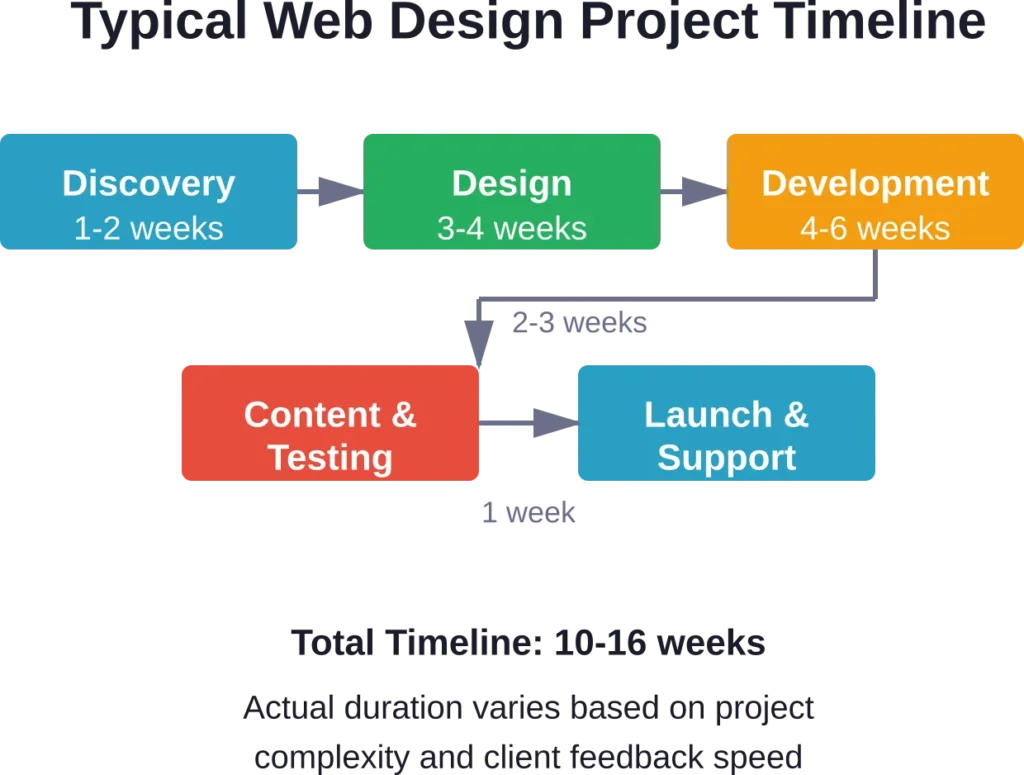
The Web Design Process: What to Expect
Understanding typical web design workflows helps small businesses prepare for projects and collaborate effectively.
Discovery and Strategy Phase
Projects typically begin with discovery work exploring business objectives, target audiences, competitive landscape, and technical requirements. This research foundation ensures design decisions align with strategic goals.
Good agencies ask lots of questions during discovery. They want to understand not just what clients want but why they want it and what they hope to achieve.
Discovery deliverables might include competitive analysis, user personas, site maps, and strategic recommendations. These artifacts guide subsequent design and development work.
Design Phase
Design typically progresses through wireframes, mockups, and prototypes. Wireframes establish structure and layout without visual design. Mockups add branding, color, typography, and imagery. Prototypes enable interactive testing before development begins.
Client feedback happens throughout design phases. Agencies present work, gather input, make revisions, and refine until designs meet approval.
The number of revision rounds should be specified upfront. Unlimited revisions sound appealing but often lead to scope creep and project delays. Defined revision rounds encourage thoughtful, consolidated feedback.
Development Phase
Approved designs move into development where they’re transformed into functional websites. Front-end developers build user interfaces. Back-end developers create content management systems and custom functionality.
Development includes responsive coding for multiple devices, CMS integration, form setup, third-party integrations, and performance optimization.
Quality assurance testing happens throughout development. Developers test across browsers, devices, and screen sizes to ensure consistent experiences.
Content Population
Somebody needs to add actual content—text, images, videos, product information. Responsibility varies by project. Some agencies include content population in their scope. Others expect clients to handle it.
Clarify content responsibilities during contracting. Content delays are the most common cause of project timeline extensions.
If agencies handle content population, they’ll need all materials in final, approved form according to agreed-upon schedules.
Testing and Quality Assurance
Before launch, comprehensive testing verifies everything works correctly. That includes functionality testing, browser compatibility testing, mobile responsiveness testing, form testing, link checking, and performance testing.
Many agencies provide staging sites for client review and testing. This allows small business teams to explore websites and provide final feedback before public launch.
Launch and Post-Launch
Launch involves moving websites from development environments to production servers, configuring DNS, setting up SSL certificates, and verifying everything works in the live environment.
Post-launch monitoring catches any issues that emerge with real traffic. The best agencies provide defined support periods to address bugs and make necessary adjustments.
Training sessions teach small business teams how to manage content, publish updates, and handle routine maintenance tasks independently.
Maximizing ROI From Website Investments
Building a great website is just the beginning. Small businesses need strategies to maximize return on that investment.
Drive Traffic Through Multiple Channels
The best website in the world doesn’t help if nobody visits it. Small businesses need comprehensive traffic strategies including SEO, content marketing, social media, email marketing, and potentially paid advertising.
SEO drives organic traffic over the long term. Content marketing establishes expertise and attracts qualified visitors. Social media expands reach and engagement. Email marketing maintains relationships with prospects and customers.
Different channels work better for different businesses. B2B companies might prioritize LinkedIn and content marketing. Local retailers might focus on Google Business Profile optimization and local SEO. Ecommerce businesses often benefit from paid social advertising and Google Shopping.
Optimize Conversion Paths
Traffic means nothing without conversions. Regularly analyze how visitors move through websites and identify opportunities to reduce friction and improve conversion rates.
A/B testing enables data-driven optimization. Test different headlines, calls to action, form fields, page layouts, and value propositions to identify what resonates best with target audiences.
Small improvements compound over time. A 20% increase in conversion rate means 20% more leads or sales from the same traffic investment.
Maintain and Update Content
Fresh content signals to both visitors and search engines that websites are active and relevant. Regular updates through blogs, case studies, product information, and resource libraries attract return visits and improve SEO.
Content marketing serves multiple purposes. It attracts organic search traffic, demonstrates expertise, educates prospects, and provides material for social media and email marketing.
Improving online capabilities and providing comprehensive digital information has become essential for organizational competitiveness, making continuous content updates a strategic priority.
Monitor Performance and Analytics
Regular analytics review reveals what’s working and what needs improvement. Track metrics like traffic sources, bounce rates, time on site, conversion rates, and goal completions.
Set up monthly reporting routines to review key metrics and identify trends. Look for changes in traffic patterns, conversion rate fluctuations, and emerging opportunities.
Use data to guide optimization priorities. If mobile bounce rates are high, focus on mobile experience improvements. If blog traffic is strong but conversions are weak, enhance calls to action on content pages.
Invest in Ongoing SEO
SEO isn’t a one-time project—it requires ongoing attention. Search algorithms evolve, competitors improve, and new content opportunities emerge.
Regular SEO activities include monitoring rankings, updating existing content, creating new content targeting additional keywords, building backlinks, and addressing technical issues.
Many agencies offer retainer-based SEO services providing ongoing optimization. For small businesses serious about organic traffic growth, these partnerships deliver better results than one-time projects.
Alternative Approaches for Tight Budgets
Not every small business can afford custom web design right away. Several alternatives provide functional websites at lower price points.
Website Builders and Templates
Platforms like Squarespace, Wix, and Shopify provide template-based solutions that small business teams can implement independently. These platforms handle hosting, security, and technical maintenance while providing drag-and-drop editors for customization.
Template quality has improved dramatically. Many templates now offer professional designs, mobile responsiveness, and reasonable customization options.
But templates have limitations. Customization options are constrained. Advanced functionality may not be available. And websites built on these platforms can look generic without significant customization effort.
Freelance Designers
Individual freelance designers typically charge less than agencies. For straightforward projects, experienced freelancers deliver quality work at accessible price points.
The tradeoff is that freelancers typically offer narrower skill sets than agencies. A freelance designer might excel at visual design but lack development skills or SEO knowledge. Small businesses may need to coordinate multiple freelancers for comprehensive solutions.
Freelancer availability can also be unpredictable. Solo practitioners sometimes become overbooked or experience personal situations that delay projects.
Phased Approaches
Small businesses can launch with basic websites and enhance them over time as budgets allow. Start with essential pages and core functionality. Add features, content, and sophistication through incremental improvements.
This approach provides online presence quickly while preserving flexibility to invest more as business grows. The key is ensuring initial websites are built on solid foundations that support future enhancement rather than requiring complete rebuilds.
Common Web Design Mistakes Small Businesses Make
Learning from others’ mistakes is cheaper than making them yourself. Watch out for these common pitfalls.
Prioritizing Aesthetics Over Function
Beautiful designs that don’t convert waste money. Effectiveness matters more than appearance, though the two aren’t mutually exclusive.
Every design decision should serve a strategic purpose. Visual elements should guide attention, establish hierarchy, build trust, and facilitate desired actions—not just look pretty.
Neglecting Mobile Experience
Some small businesses still treat mobile as an afterthought. That’s backwards in an era where mobile traffic often exceeds desktop.
Design for mobile first, then scale up to larger screens. This forces prioritization of essential elements and ensures mobile visitors get excellent experiences.
Too Much Content on Homepage
Homepages should orient visitors and direct them to relevant sections. Cramming everything onto the homepage creates cognitive overload and decision paralysis.
Focus on clear value propositions, primary calls to action, and navigation to deeper content. Save detailed information for dedicated pages where visitors actively seek it.
Weak or Generic Calls to Action
Vague phrases like “learn more” or “click here” underperform specific, action-oriented alternatives. Calls to action should clearly state what visitors will get and why they should act now.
Compare “submit” versus “get your free consultation” or “download” versus “access the complete guide.” Specific, benefit-focused language drives better results.
No Clear Unique Value Proposition
Visitors should immediately understand what makes a business different and why they should care. Generic descriptions like “we provide quality service” could apply to anyone.
Strong value propositions are specific, customer-focused, and differentiated. They answer “why should I choose you over alternatives?”
Ignoring SEO Fundamentals
Treating SEO as optional or something to address later wastes opportunities. Search engine visibility drives traffic, and traffic creates opportunities.
Basic on-page SEO—strategic keyword usage, optimized title tags and meta descriptions, proper heading structure, fast load times, mobile responsiveness—should be built into every website from launch.
The Future of Small Business Web Design
Web design continues evolving. Several trends are shaping the future for small business websites.
AI-Powered Personalization
Artificial intelligence enables websites to adapt to individual visitors based on behavior, demographics, and preferences. Small businesses can now deploy personalization previously available only to enterprises.
Personalized content, product recommendations, and calls to action improve relevance and conversion rates. As AI tools become more accessible, expect personalization to become standard practice.
Organizations optimizing for AI visibility will gain competitive advantages as referral traffic from generative AI platforms continues to grow.
Voice Search Optimization
Voice-activated search through smart speakers and mobile assistants continues growing. Websites need content structured to answer conversational queries.
Voice search optimization emphasizes natural language, question-based content, and featured snippet optimization. Small businesses targeting local markets particularly benefit since voice searches often include local intent.
Progressive Web Apps
Progressive web apps (PWAs) blur lines between websites and mobile applications. They provide app-like experiences—offline functionality, push notifications, home screen installation—through web technologies.
For small businesses, PWAs offer mobile app benefits without development costs and app store complexities. Expect broader PWA adoption as businesses seek deeper mobile engagement.
Accessibility as Standard Practice
Web accessibility ensures websites work for people with disabilities. Beyond ethical imperatives, accessibility is increasingly becoming a legal requirement.
Accessible design benefits everyone, not just disabled users. Clear navigation, readable text, and logical structure improve experiences for all visitors. The best agencies now treat accessibility as non-negotiable rather than optional.
Sustainability and Performance
Environmental concerns are driving attention to website carbon footprints. Efficient code, optimized assets, and green hosting reduce energy consumption.
Performance optimization aligns sustainability with user experience and SEO. Websites that load fast, use less data, and run efficiently serve multiple goals simultaneously.
Frequently Asked Questions
Typical timelines range from 10 to 16 weeks for custom websites, depending on complexity and scope. Simple sites with limited pages can launch faster, while complex projects with custom functionality, extensive content, or sophisticated integrations require more time. Timeline factors include the number of pages, custom feature requirements, content preparation, revision rounds, and how quickly clients provide feedback. Website builders and templates enable much faster launches—sometimes within days—though with less customization and strategic planning.
Designers focus on visual aspects, user experience, and interface layouts. They create mockups, choose color schemes, design page layouts, and determine how information is organized and presented. Developers transform those designs into functional websites through coding. Front-end developers build the user-facing interface using HTML, CSS, and JavaScript. Back-end developers create server-side functionality, databases, and content management systems. Full-stack developers handle both front-end and back-end work. Many agencies include both designers and developers, providing complete solutions.
WordPress powers a significant portion of websites globally and works well for most small businesses. It offers extensive customization through themes and plugins, has strong community support, and is relatively easy to learn for content management. Custom platforms make sense when businesses have highly specialized requirements that WordPress can’t accommodate efficiently. Other platforms like Webflow, Shopify (for ecommerce), or custom solutions may be appropriate depending on specific needs, technical requirements, and long-term goals. Discuss platform options with agencies during discovery phases.
Minimum viable content includes homepage, about page, services or products pages, contact page, and relevant legal pages (privacy policy, terms of service). Beyond these essentials, more content generally performs better for SEO and provides visitors more reasons to engage. Blogs, case studies, FAQ pages, resource libraries, and detailed service descriptions all contribute value. Balance thoroughness with launch timeline constraints. Websites can launch with core content and expand through ongoing updates rather than delaying launch until every possible page is complete.
Reputable agencies include defined revision rounds in their project scopes. During design phases, clients provide feedback and agencies make adjustments until designs meet approval. Problems arise when expectations weren’t clearly set upfront or communication breaks down. Prevent dissatisfaction by thoroughly reviewing portfolios before engagement, articulating preferences and requirements clearly during discovery, and providing detailed, constructive feedback during design reviews. Contracts should specify what happens if agreements can’t be reached—whether deposits are refundable, how kill fees work, and what deliverables clients own if projects terminate early.
Key performance indicators vary by business goals but typically include traffic volume, traffic sources, bounce rate, time on site, conversion rate, and specific goal completions (form submissions, purchases, downloads). Google Analytics provides comprehensive data about visitor behavior and website performance. Set up conversion tracking for important actions so analytics can measure business outcomes, not just traffic metrics. Compare actual performance against benchmarks and goals established during planning. Regular monthly reviews help identify trends, opportunities, and issues requiring attention. Many agencies offer post-launch analytics consulting to help interpret data and identify optimization opportunities.
Regular maintenance includes software updates (CMS, plugins, themes), security monitoring and updates, backup verification, uptime monitoring, broken link checking, content updates, and performance optimization. WordPress sites require particular attention to updates since outdated software creates security vulnerabilities. Many agencies offer maintenance retainers handling technical upkeep so small business teams can focus on content and strategy. At minimum, plan for monthly check-ins to review analytics, test key functionality, and ensure everything operates properly. Neglected websites accumulate technical debt that becomes expensive to resolve and creates security risks.
Conclusion
Choosing the right web design company represents one of the most important decisions small businesses make about their digital presence. The difference between a strategic partner and a generic vendor shows up in conversion rates, user experience quality, and ultimately, business results.
The 15 agencies featured here have demonstrated consistent success working with small businesses across diverse industries. Each brings particular strengths—whether integrated marketing capabilities, conversion optimization focus, B2B specialization, or custom development expertise.
But finding the right agency means looking beyond rankings and lists. Consider specific business needs, industry context, budget constraints, and long-term goals. Review portfolios carefully for relevant experience. Check client testimonials and reviews. Have detailed conversations about approach, process, and philosophy.
The right partner will ask probing questions about business objectives before discussing design preferences. They’ll set realistic expectations, communicate transparently, and focus on measurable outcomes rather than just aesthetic appeal.
Remember that websites are investments, not expenses. The impact extends beyond initial launch—effective websites generate leads, drive sales, build credibility, and support growth for years. Choosing partners who understand that context and design accordingly delivers returns that far exceed upfront costs.
Take time with the decision. Consult with multiple agencies. Ask difficult questions. Trust instincts about cultural fit and communication style. The agency relationship matters as much as technical capabilities.
Ready to transform a small business’s digital presence? Start by defining clear goals, assembling necessary assets, and reaching out to agencies whose work and approach align with the vision. The perfect website begins with the perfect partnership.