

Quick Summary: The top professional web design companies for 2026 include Lengreo, Gilzor, OSKI Solutions, A-listware, Mobian Studio, Clay, Fantasy, Locomotive, DEPT (Basic Agency), Instrument, Excited Agency, Code and Theory, Build in Amsterdam, MONOGRID, and Cuberto. These agencies are recognized for excellence by Awwwards, deliver work for Fortune 500 brands, and specialize in everything from SaaS product design to eCommerce and branded experiences. Selection criteria include portfolio quality, industry recognition, team expertise, and proven client results.
Finding the right web design partner can make or break your digital presence. The wrong choice leads to wasted budgets, missed deadlines, and websites that fail to convert. The right agency transforms your brand into a compelling digital experience that drives real business results.
But here’s the thing: not all web design companies are created equal. Some excel at eCommerce, others at SaaS product design. Some win awards for creative innovation, while others quietly deliver ROI-focused solutions that scale.
This list cuts through the noise. After analyzing portfolios, reviewing client testimonials, and examining industry recognition from Awwwards and other authoritative sources, these 15 professional web design companies stand out in 2026.
What Makes a Web Design Company “Professional”?
Professional web design goes beyond making things look pretty. It’s about solving business problems through thoughtful design, research-backed decisions, and technical excellence.
The agencies on this list share common traits. They maintain strong portfolios showcasing work for recognized brands. They’ve earned industry recognition through awards and peer validation. Their teams include specialized talent across UX research, interface design, front-end development, and strategy.
Most importantly, they deliver measurable outcomes. Whether that’s improved conversion rates, successful funding rounds, or enhanced user engagement, these companies prove their value through results.
According to Awwwards, which recognizes the talent and effort of the best designers, web developers and digital agencies worldwide, top agencies produce work of high caliber. Awwwards’ Agency of the Year nominees represent recognized excellence in web design.
How This List Was Compiled
This ranking prioritizes agencies with proven track records and public portfolio work. Selection criteria included:
- Recognition by Awwwards and other industry authorities
- Portfolio quality and diversity of work
- Client testimonials and verified reviews
- Team expertise and specialization
- Innovation in design and development approaches
- Business impact and measurable results
The list excludes pricing and hourly rates, focusing instead on capabilities, specializations, and the type of clients each agency serves best. Check each agency’s official website for current pricing information, as costs vary significantly based on project scope and requirements.
The Top 15 Professional Web Design Companies
1. Gilzor
Gilzor focuses on custom digital product development, creating web and mobile solutions that launch startups and scale existing businesses. The team delivers full-cycle services from idea validation to production-ready applications with strong emphasis on web experiences.
Their portfolio features web and mobile apps for airlines, eCommerce grocery platforms, cognitive training tools, and other solutions across startups, SMBs, and product studios. Projects emphasize intuitive UI/UX, performance, and user-centric design that drives adoption and revenue.
The agency stands out through its structured methodology covering business analysis, UI/UX design, development, QA, and go-to-market strategy. Every solution prioritizes clean architecture, conversion-focused interfaces, and seamless user experiences.
Gilzor assembles global teams of creative and strategic thinkers who specialize in turning ambitious ideas into functional, attractive web and digital products that connect with target audiences.
Best for: Startups and SMBs seeking custom web and mobile development with strong UI/UX design that supports product validation, user growth, and long-term scalability.
Contact Information:
- Website: www.gilzor.com
- Email: [email protected]
- Address: Poland, Warsaw, Office 58, street Adama Mickiewicza 37, 01-625
- LinkedIn: www.linkedin.com/company/gilzor-softwaredevelopment
2. Mobian
Mobian builds dedicated engineering teams specializing in mobile and web solutions with AI integration. The European studio delivers production-ready digital products on time and on budget for companies that demand flawless execution.
Their work includes full-stack web applications, mobile apps, AI-powered systems, and complex digital platforms for IT, Healthcare, Fintech, and Logistics clients. Projects focus on scalable architecture, clean code, and intuitive interfaces that perform at enterprise level.
What sets Mobian apart is their dual delivery model — end-to-end outsourcing or seamless outstaffing — combined with post-launch partnership. They ensure every web solution features documented architecture, modern tech stack, and user experiences that drive real business results.
The team consists of senior engineers who deliver complete web and digital products from wireframes to production, with deep expertise in scalable frontends, backend systems, and modern web technologies.
Best for: Companies in IT, Healthcare, Fintech, and Logistics that need reliable dedicated teams for high-quality web and mobile development with AI capabilities.
Contact Information:
- Website: mobian.studio
- Phone: [email protected]
- Address: Harju maakond, Tallinn, Kesklinnalinnaosa, Masina tn 22, 10113
- LinkedIn: www.linkedin.com/company/mobian-studio
3. A-listware

A-listware delivers software development and consulting with dedicated expertise in UX/UI design and web solutions. The agency helps companies build responsive, secure, and user-focused digital experiences through outsourcing and team augmentation.
Their projects include enterprise applications, eCommerce platforms, web portals, and custom software with strong emphasis on UI/UX that drives engagement and brand excellence. Clients range from enterprises and SMBs to startups across multiple industries.
The agency excels at seamless integration and full-spectrum delivery. They combine UX/UI design with development, QA, and infrastructure services to create cohesive web solutions that act as natural extensions of client teams.
A-listware maintains focus on responsive, high-quality web and application design that prioritizes usability, security, and performance while delivering scalable digital experiences.
Best for: Organizations looking for dedicated development teams and professional UX/UI design within reliable software outsourcing partnerships.
Contact Information:
- Website: a-listware.com
- Phone: +1 (888) 337 93 73
- Email: [email protected]
- Address: North Bergen, NJ 07047, USA
- LinkedIn: www.linkedin.com/company/a-listware
- Facebook: www.facebook.com/alistware
4. Oski
Oski builds smart, well-engineered software solutions with a core emphasis on frontend and web development. The agency serves tech-forward enterprises and ambitious startups that demand quality and innovation.
Clients benefit from modern web solutions using React, Vue, Angular, and other frameworks, alongside CMS platforms. Projects span eCommerce, business portals, and industry-specific digital experiences in travel, logistics, education, fintech, and insurance.
What distinguishes Oski is their commitment to innovative design paired with robust performance. They deliver intuitive user experiences that combine aesthetic excellence with seamless functionality and scalability.
The team brings deep expertise in cloud solutions, AI integrations, and full-stack delivery, enabling end-to-end web projects that reimagine business operations through digital innovation.
Best for: Enterprises and startups that require high-quality web development and frontend solutions backed by strategic technical architecture and ongoing support.
Contact Information:
- Website: oski.site
- Phone: +48571282759
- Email: [email protected]
- Address: Kaupmehe tn 7, 10114 Tallinn, Estonia
- LinkedIn: www.linkedin.com/company/oski-solutions
5. Lengreo
Lengreo positions itself as a complete B2B marketing and tech partner with strong expertise in website development. The agency combines digital strategy with hands-on implementation to drive measurable growth for ambitious companies.
Their work includes building eCommerce, business, and portfolio websites alongside SEO, lead generation campaigns, and conversion optimization for clients in software development, architecture, event tech, sports tech, and IT services. Results focus on qualified opportunities, reduced cost per lead, and significant conversion uplifts.
What sets Lengreo apart is their integrated approach. They listen to specific business needs rather than offering pre-packaged solutions, blending website development, prototyping, audits, and performance marketing into cohesive strategies that reinforce each other.
The team is led by co-founders with deep operational focus on customer success and proactive execution. This shows in their systematic delivery and transparent communication throughout every project.
Best for: B2B companies and tech providers that need website development paired with full-funnel digital marketing to generate qualified leads and scale customer acquisition.
Contact Information:
- Website: Lengreo.com
- Phone: +31 686 147 566
- Email: [email protected]
- Address: Vrijstraat 9 C/D, 5611 AT Eindhoven, Netherlands
- LinkedIn: Lengreo
- Twitter: @Lengreo
- Instagram: @lengreo
6. Excited Agency
Excited Agency approaches web design through a product-first lens. Based in Ukraine with global clients, the agency specializes in SaaS, fintech, and digital product work.
The agency focuses on clarity, structure, and conversion rather than surface-level aesthetics. By combining UX research, web design, branding, and motion design, Excited creates websites that scale with the product and support long-term growth.
Their portfolio includes work for early-stage startups through established software companies. Projects emphasize user onboarding, feature education, and conversion optimization.
Excited’s team brings backgrounds in product management and UX research alongside design skills. This cross-functional expertise helps them bridge the gap between business goals and user needs.
Best for: SaaS companies and digital product teams that need websites aligned with product strategy and optimized for user acquisition.
7. Code and Theory
Code and Theory operates at the intersection of creativity and technology. With offices in New York, San Francisco, London, and Manila, the agency serves global enterprise clients.
Their work spans digital experiences, products, and campaigns for brands like Adidas, JPMorgan Chase, and Pfizer. Projects often involve not just design but also strategy, technology implementation, and ongoing optimization.
Code and Theory differentiates itself through deep technical capability. The agency can handle complex integrations, custom platforms, and sophisticated web applications alongside traditional website design.
The team includes strategists, designers, engineers, and data scientists. This diverse skill set enables them to tackle projects that require both creative excellence and technical depth.
Best for: Enterprise brands with complex requirements that span creative, technology, and strategy — particularly those in regulated industries like finance and healthcare.
8. Build in Amsterdam
Amsterdam-based Build brings European design sensibility to global projects. The agency appears among Awwwards’ Agency of the Year nominees, recognition earned through work that balances innovation with usability.
Build’s portfolio showcases projects for clients ranging from startups to established brands. Their work often features bold typography, generous white space, and thoughtful micro-interactions.
The agency emphasizes collaboration and transparency. Clients work directly with designers and developers throughout the project, not through layers of account management.
Build maintains a strong presence in the design community through open-source contributions, workshops, and speaking engagements. This community engagement keeps them connected to evolving best practices.
Best for: International brands seeking European design sophistication and agencies that value direct collaboration with the team doing the work.
9. MONOGRID
Tokyo-based MONOGRID brings Japanese precision to digital design. The agency appears on Awwwards’ Agency of the Year nominees list, reflecting work that showcases meticulous attention to detail.
MONOGRID specializes in creating digital experiences that feel refined and purposeful. Their work often involves custom interactions, thoughtful animations, and interfaces that reward exploration.
The agency’s portfolio spans cultural institutions, fashion brands, and technology companies. Projects unite diverse clients through shared commitment to craft and quality.
What distinguishes MONOGRID is their ability to create complexity that feels simple. Sophisticated technical implementations hide behind interfaces that feel effortless.
Best for: Brands that appreciate meticulous craft and want digital experiences that reflect Japanese design principles of refinement and purposeful simplicity.
10. Cuberto
Cyprus-based Cuberto has built a reputation for interfaces that delight users while serving business goals. The agency appears among Awwwards’ Agency of the Year nominees, recognition earned through consistently excellent work.
Cuberto’s portfolio showcases projects across industries, from fintech to entertainment. Their work is characterized by smooth animations, thoughtful micro-interactions, and interfaces that feel responsive and alive.
The agency maintains an active presence sharing design insights, case studies, and tools with the broader community. This transparency into their process builds trust with potential clients.
Cuberto’s team includes specialists in UI design, motion design, and front-end development. This combination enables them to create experiences that look beautiful in static mockups and feel even better in motion.
Best for: Brands launching consumer-facing digital products where interface quality directly impacts user perception and engagement.
11. Clay
Clay positions itself at the intersection of brand and product design. This San Francisco-based agency works with companies at pivotal growth moments, from Series A startups to established enterprises reimagining their digital presence.
The agency’s portfolio includes work for Slack, Coinbase, Google, and other high-profile tech brands. Their approach emphasizes clarity and purpose over decoration, creating interfaces that feel intuitive from the first interaction.
What sets Clay apart is their integrated methodology. They don’t separate brand work from product work. Instead, every project considers how visual identity, messaging, and user experience reinforce each other.
The team includes former designers from Apple, Google, and IDEO. This pedigree shows in their attention to detail and systematic approach to design problems.
Best for: Tech companies and startups that need brand and product work to happen in lockstep, particularly those preparing for major launches or fundraising milestones.
12. Fantasy
Fantasy takes on projects other agencies won’t touch. Their specialty is creating digital experiences that push technical and creative boundaries simultaneously.
Based in New York and San Francisco, Fantasy has built websites and digital products for Nike, Apple, Dior, and other brands where mediocrity isn’t an option. Their work often involves custom animations, complex interactions, and novel approaches to navigation and content presentation.
The agency operates at the premium end of the market. Projects typically involve significant investment and extended timelines. In return, clients get work that competitors can’t easily replicate.
Fantasy’s team includes not just designers and developers, but also motion designers, 3D artists, and creative technologists. This diverse skill set enables them to realize ambitious visions that blend art and engineering.
Best for: Premium brands launching flagship digital experiences where innovation and craftsmanship justify substantial investment.
13. Locomotive
Montreal-based Locomotive brings a distinctly refined aesthetic to web design. Their portfolio showcases work that balances visual beauty with functional excellence.
The agency appears among Awwwards’ Agency of the Year nominees, recognition earned through consistently excellent work. Their projects span industries from fashion to technology, united by meticulous attention to typography, layout, and motion.
Locomotive’s strength lies in creating websites that feel premium without sacrificing usability. Every animation serves a purpose. Every layout decision considers both aesthetics and information hierarchy.
The team maintains an active presence in the design community, contributing open-source tools and sharing insights through case studies. This commitment to craft shows in their output.
Best for: Brands that view their website as a reflection of product quality and want design that signals premium positioning.
14. DEPT (Basic Agency)
DEPT operates at scale few agencies can match. Formed through the merger of several respected digital agencies including Basic Agency, DEPT maintains offices across North America, Europe, and beyond.
The agency handles everything from strategy and branding to web design, development, and digital marketing. This full-service approach appeals to enterprise clients who prefer consolidating vendors.
DEPT’s portfolio includes work for Google, KFC, Netflix, and hundreds of other brands. Projects range from simple marketing sites to complex web applications and eCommerce platforms.
What’s notable about DEPT is their ability to maintain quality while operating at enterprise scale. The agency has systems and processes that allow them to deliver consistent work across dozens of simultaneous projects.
Best for: Enterprise organizations seeking a single agency partner that can handle multiple digital disciplines with proven scalability.
15. Instrument

Portland-based Instrument combines strategic thinking with exceptional craft. The agency works primarily with purpose-driven brands and technology companies.
Their client list includes Google, Levi’s, Sonos, and REI. Projects often involve not just web design but also brand strategy, content creation, and digital campaigns.
Instrument’s approach starts with deep discovery. They invest time understanding business goals, user needs, and competitive context before generating design concepts. This foundation shows in work that feels both strategic and soulful.
The agency has received consistent recognition from Awwwards and other industry bodies. But they’re equally proud of business metrics: increased conversion rates, improved engagement, and measurable ROI for clients.
Best for: Mission-driven brands and tech companies that want design rooted in strategy and supported by data.
What to Expect When Working With Professional Agencies
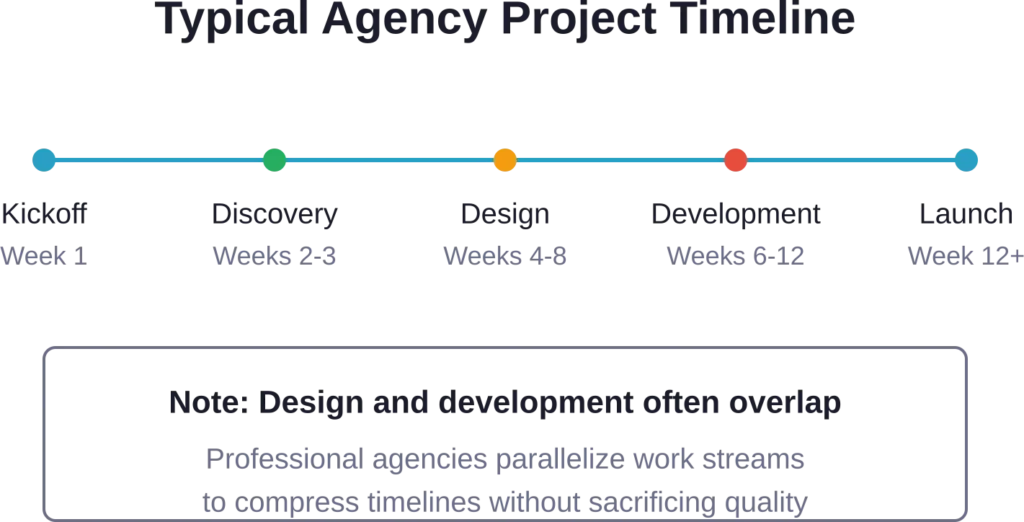
Professional web design agencies follow structured processes. While specifics vary, most projects include these phases:
Discovery and Strategy: The agency invests time understanding your business, users, competitors, and goals. This might involve stakeholder interviews, user research, analytics review, and competitive analysis.
Concept Development: Designers explore multiple directions, typically presenting 2-3 distinct concepts. These aren’t full designs but rather explorations of different strategic approaches.
Design and Iteration: Once a direction is selected, the team develops complete designs for key pages or screens. Expect multiple rounds of feedback and refinement.
Development: Developers build the designed experience, often working in parallel with late-stage design work. Professional agencies maintain close collaboration between design and development.
Testing and Launch: Before launch, the team conducts thorough testing across devices, browsers, and use cases. Post-launch support ensures any issues are quickly addressed.
Timeline for professional web design projects typically ranges from 8 weeks for straightforward marketing sites to 6+ months for complex platforms or products. Rushing rarely produces better outcomes.
Questions to Ask Before Hiring
Smart questions reveal how agencies actually work, not just how they market themselves. Try these:
“Can you walk me through a challenging project and how you handled unexpected obstacles?” This reveals problem-solving approach and honesty about difficulties.
“How do you balance our input with your expertise when we disagree?” Professional agencies push back when client requests conflict with best practices, but do so respectfully.
“What’s your typical team structure for a project like ours?” Understanding who you’ll actually work with prevents surprises when the senior team present in sales meetings doesn’t show up for execution.
“How do you measure success for projects?” Agencies focused on business outcomes discuss metrics. Those focused on creative awards discuss aesthetics. Neither is wrong, but alignment matters.
“What happens if we’re not satisfied with initial concepts?” Professional agencies have clear processes for handling dissatisfaction without souring the relationship.
Industry Recognition and Awards
Awards don’t guarantee quality, but consistent recognition from authoritative bodies like Awwwards signals peer respect and design excellence.
Awwwards recognizes the talent and effort of the best designers, web developers and digital agencies worldwide. Their Agency of the Year program honors exceptional work, with nominees including many agencies on this list.
Awwwards’ Agency of the Year program recognizes exceptional work across nominated agencies. The list included SALT AND PEPPER, Locomotive, Numbered, Unseen Studio, Vide Infra, Tubik, Merci Michel, MONOGRID, Tux Creative House, /nk.studio, and many others.
These agencies and the others recognized represent the pinnacle of web design craft. Their work pushes boundaries while maintaining usability and achieving business goals.
But awards are lagging indicators. They recognize past work, not current capability. When evaluating agencies, look at recent projects alongside award history.
The Role of Design Systems and Scalability
Professional agencies think beyond individual projects. They build systems that scale.
A design system is a collection of reusable components, patterns, and guidelines. Instead of designing every page from scratch, designers compose pages from a library of well-tested elements.
This approach offers several advantages. Design and development move faster once the system exists. Quality stays consistent across pages and features. Updates become easier when changes to core components propagate throughout the site.
Not every project needs a full design system. Small marketing sites with limited pages don’t justify the investment. But companies planning ongoing digital work benefit significantly.
Professional agencies understand when system thinking makes sense and when simpler approaches suffice. They can also integrate their work with existing systems if your organization already has design and development standards.
Technical Considerations Beyond Design
Beautiful design means nothing if the website loads slowly, breaks on mobile devices, or fails to rank in search results.
Professional agencies address technical foundations alongside visual design. This includes:
Performance: Optimizing images, code, and server configuration to ensure fast load times across connection speeds.
Responsive design: Ensuring the site works well on screens from smartphones to ultra-wide monitors.
Accessibility: Following WCAG guidelines to ensure the site works for users with disabilities.
SEO foundations: Implementing proper HTML structure, metadata, and technical elements that help search engines understand content.
Content management: Selecting and configuring CMS platforms that let non-technical teams update content without breaking design.
Analytics and tracking: Implementing measurement tools that let you understand user behavior and optimize over time.
These technical elements aren’t glamorous. They don’t win design awards. But they determine whether beautiful design actually delivers business value.
Trends Shaping Professional Web Design in 2026
The web design landscape continues evolving. Professional agencies stay current with meaningful trends while avoiding fleeting fads.
Agentic AI experiences: Smashing Magazine has published research on agentic AI systems that plan, decide, and act on behalf of users, representing a shift in interface design considerations. Professional agencies now consider how AI agents interact with websites alongside human users.
Explainable AI integration: As AI features become common in web applications, the need for transparency grows. Professional agencies implement patterns that help users understand what AI components are doing and why.
Performance as design: Speed isn’t just technical — it’s a design decision. Agencies increasingly treat performance as a core design constraint rather than an optimization added later.
Sustainable web design: Awareness of digital carbon footprint is driving interest in efficient design and development practices that reduce energy consumption.
Advanced motion design: Modern browsers enable sophisticated animations and transitions. Professional agencies use motion purposefully to guide attention and communicate state changes.
Generative engine optimization: Forbes has published articles on generative engine optimization (GEO) and its impact on brand visibility and agency strategies. Agencies now consider how AI systems interpret and present content alongside traditional SEO.
Not every trend matters for every project. Professional agencies evaluate trends through the lens of business goals and user needs rather than chasing novelty.
Working With International Agencies
Geography matters less than it once did. Many businesses successfully work with agencies in different countries or even continents.
International collaboration offers advantages. Access to specialized talent and expertise not available locally. Often more competitive pricing, particularly with agencies based in lower-cost regions. Fresh perspectives from teams immersed in different markets and cultures.
But distance introduces challenges. Time zone differences can slow communication. Cultural differences in work style and expectations require adjustment. Language barriers occasionally cause misunderstandings.
Professional international agencies mitigate these challenges through clear processes, excellent communication practices, and experience working with distributed teams. Many maintain overlap hours when both client and agency teams are available for real-time discussion.
When considering international agencies, look for evidence of successful work with clients in your region. Ask about their communication processes and how they handle time zone differences. Verify they have strong English communication skills (or whatever language you’ll be working in).
Measuring Web Design Success
How do you know if a web design project succeeded? Professional agencies establish success metrics before work begins.
Metrics vary by project type and business model. An eCommerce site might measure conversion rate, average order value, and checkout completion. A SaaS product site might track trial signups, demo requests, and time to conversion. A content site might focus on engagement metrics like time on page, pages per session, and return visits.
The best metrics connect directly to business outcomes. Pageviews and bounce rate matter only to the extent they correlate with revenue, leads, or other business goals.
Professional agencies also track design-specific metrics. Task completion rates show whether users can accomplish key goals. Error rates reveal friction points. Accessibility scores ensure the site works for all users.
Smashing Magazine has published guidance on measuring UX and design impact.
Beyond the Initial Launch
Website launches aren’t endpoints. They’re beginnings.
Professional agencies understand that real optimization happens after launch, when actual user behavior provides data static planning can’t predict. Some agencies offer ongoing support relationships. Others hand off to internal teams with documentation and training.
Either way, the first months post-launch are critical. Real users encounter edge cases designers didn’t anticipate. Traffic patterns reveal bottlenecks. Analytics show where assumptions were wrong and where they were right.
Smart organizations treat launches as hypotheses to validate rather than finished products. They instrument sites to gather data, run tests to optimize conversion paths, and iterate based on what they learn.
If you’re working with an agency that disappears after launch, plan how your team will handle ongoing optimization. If you don’t have internal capability, consider retainer relationships that provide continued support.
Frequently Asked Questions
Timeline varies significantly based on scope and complexity. Simple marketing sites with 5-10 pages might complete in 6-8 weeks. Mid-complexity sites with custom features typically need 3-4 months. Large-scale platforms or applications can extend to 6-12 months or more. Professional agencies provide detailed timelines during the proposal phase based on your specific requirements. Rushing rarely improves outcomes and often introduces problems that require expensive fixes later.
Geography matters less than capability and fit. Many businesses successfully work with international agencies and benefit from specialized expertise not available locally. However, local agencies offer advantages for projects requiring frequent in-person collaboration or deep understanding of local markets. Evaluate agencies based on portfolio quality, relevant experience, communication practices, and time zone compatibility rather than location alone. The best agency for your project might be across town or across the world.
Agencies provide teams with diverse specializations — strategists, UX researchers, visual designers, developers, project managers. This breadth enables handling complex projects and provides continuity when team members are unavailable. Freelancers offer direct access to the person doing the work and often lower costs. They work well for focused projects within their specialty. Choose based on project complexity and your need for diverse skills versus deep expertise in one area.
Budgets vary enormously based on scope, agency positioning, and requirements. Marketing sites for small businesses might start around five figures. Mid-market company sites with custom features often reach mid five figures. Enterprise sites and complex platforms can require six-figure investments or more. Rather than starting with a budget and finding what you can afford, start with business goals and understand what achieving them requires. Check agency websites for current pricing, as rates and project minimums vary significantly.
Review their portfolio for projects in your sector or adjacent industries. During conversations, assess how quickly they grasp industry-specific challenges and terminology. Ask about past projects with similar user types, business models, or regulatory requirements. However, don’t over-index on exact industry matches. An excellent agency experienced in complex B2B software can often tackle fintech better than a mediocre agency with one fintech project. Capability and approach matter more than industry checkboxes.
Professional agencies typically lead design, development, and technical implementation. Your team provides business context, user insights, content, and feedback throughout the process. Clarify responsibilities during kickoff to prevent gaps and overlaps. Some areas require clear ownership: Who provides content? Who conducts user research? Who manages hosting and domains? Who handles post-launch updates? Successful projects establish clear responsibilities from the start.
Standard practice is for clients to receive design files (Figma, Sketch, etc.) and all code upon project completion and final payment. This ensures you can maintain and modify the site regardless of future agency involvement. Clarify intellectual property terms in contracts before signing. Some agencies retain rights to reuse certain components or patterns in future work. Others transfer complete ownership. Neither is wrong, but alignment on expectations prevents disputes.
Making Your Decision
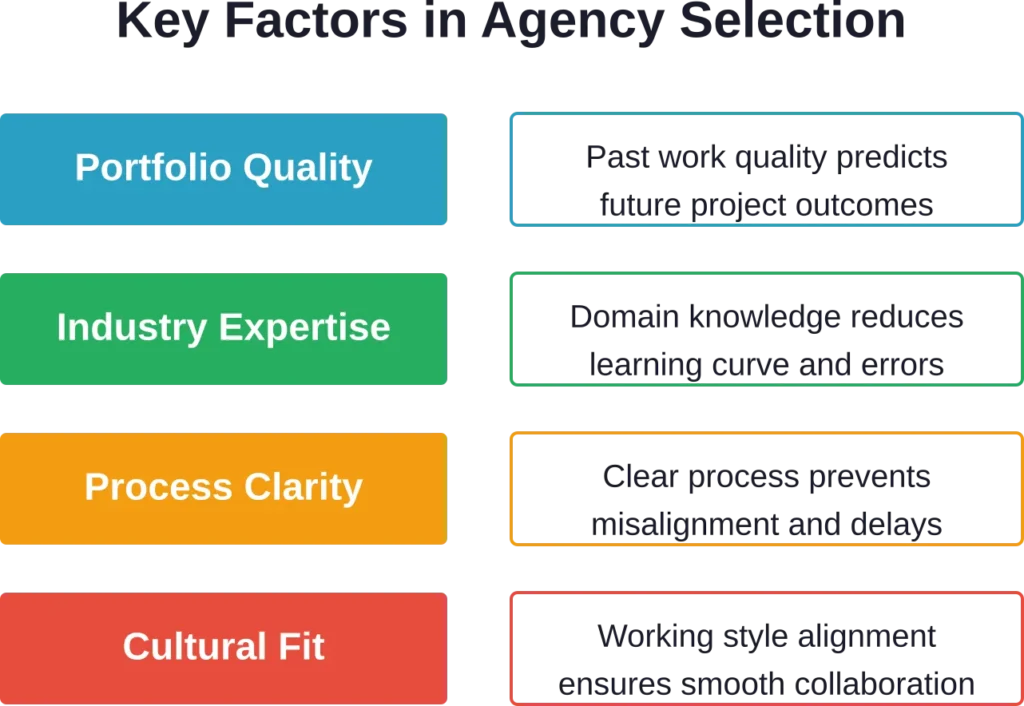
Choosing a web design agency is part analysis, part intuition. The data matters — portfolio quality, client testimonials, relevant experience, technical capability. But so does the harder-to-quantify sense of whether you’ll work well together.
Professional agencies approach sales conversations as mutual evaluation. They’re assessing whether your project is a good fit just as you’re assessing them. This mutual selection leads to better outcomes than agencies that accept any project regardless of fit.
Trust your gut alongside the data. If an agency’s portfolio impresses but conversations feel difficult, that friction won’t improve during the project. If you immediately click with the team but their portfolio doesn’t showcase relevant experience, consider whether they can deliver what you need.
The 15 agencies on this list represent different approaches to excellence. Clay’s integration of brand and product. Fantasy’s premium craft. Locomotive’s refined aesthetics. DEPT’s enterprise scale. Instrument’s strategic foundation. Excited’s product focus. Code and Theory’s technical depth. Build in Amsterdam’s collaborative approach. MONOGRID’s precision. Cuberto’s delightful interfaces.
One of them might be exactly right for your project. Or you might find the perfect partner in another excellent agency not on this list. Use these profiles as a framework for evaluation, not a limiting boundary.
Start the Conversation
Professional agencies typically start with exploratory conversations before formal proposals. These discussions help both sides understand whether there’s a good fit.
Prepare for these conversations by clarifying your goals, budget range, timeline, and decision-making process. The more context you provide, the more useful the conversation becomes.
Expect agencies to ask probing questions about your business, users, competitors, and past initiatives. This isn’t idle curiosity. They’re determining whether they can deliver value and what approach makes sense.
Most agencies provide proposals within 1-2 weeks of initial conversations. These should outline approach, timeline, deliverables, and investment required. Evaluate proposals on methodology and fit, not just price.
The agencies on this list maintain websites with contact information and portfolio work. Visit their sites, review their work, and reach out to those whose approach aligns with your needs. The right web design partner transforms your digital presence from a cost center into a growth driver.