

Quick Summary: The best Shopify web design companies for 2026 combine deep platform expertise with strategic thinking to build stores that convert. This curated list features 15 agencies that specialize in custom Shopify development, theme optimization, migration services, and Shopify Plus solutions—without discussing pricing. Each agency brings proven experience working with established brands and scaling stores for growth.
Choosing the right Shopify web design company can make or break an ecommerce business. The platform itself is powerful, but transforming it into a high-converting store requires specialized expertise.
Not every agency understands the nuances of Shopify development. Some excel at visual design but stumble on technical implementation. Others build functional stores that lack strategic thinking around user experience and conversion optimization.
The agencies featured here have been selected based on their proven track record with Shopify, range of services offered, technical capabilities, and demonstrated results for real brands. These aren’t just web designers who happen to work with Shopify—they’re specialists who live and breathe the platform.
Why Work with a Specialized Shopify Agency?
Shopify has evolved far beyond a simple store builder. It’s now a complete commerce ecosystem with headless capabilities, extensive API integrations, and enterprise-grade features through Shopify Plus.
Building a store that leverages these capabilities properly requires specific knowledge. Generic web design agencies often miss critical optimizations that Shopify specialists implement automatically.
Strategic Advantage Beyond Design
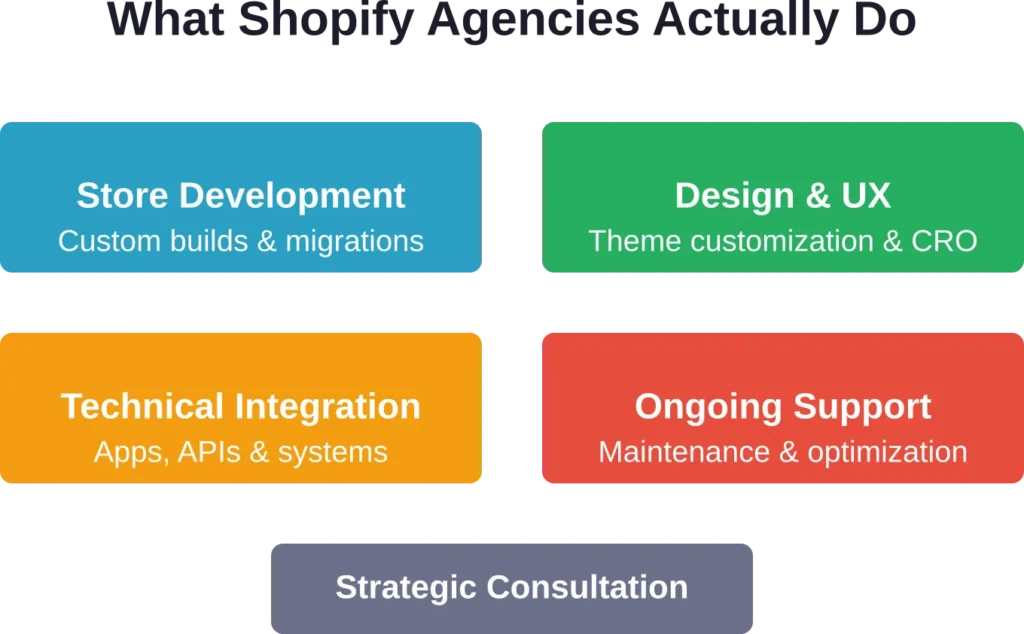
The best Shopify agencies think strategically, not just aesthetically. They understand conversion rate optimization, mobile commerce patterns, and how to structure product collections for discovery.
These companies work with Shopify’s architecture instead of fighting against it. They know which customizations require apps versus custom code. They understand theme performance implications and how to maintain site speed while adding functionality.
According to the official Shopify Partner Directory, there are +100K partners across 50 countries. But expertise varies dramatically. The agencies listed here represent the top tier.
Technical Expertise That Matters
Shopify development involves specific technologies: Liquid templating, Shopify CLI, theme architecture, app integration patterns, and checkout customization rules.
Specialized agencies stay current with platform updates. When Shopify releases new features or deprecates old APIs, these teams already know how it affects existing stores. They’ve worked through migration challenges multiple times and can anticipate problems before they surface.
They also understand the Shopify Plus differences—expanded API access, custom checkout capabilities, automation features, and wholesale channel setup. Not every Shopify developer can handle Plus-level projects.
Top 15 Shopify Web Design Companies for 2026
These agencies represent the best combination of technical skill, strategic thinking, and proven results in the Shopify ecosystem. Each brings unique strengths to different types of projects.
1. Gilzor

Gilzor builds custom Shopify solutions with a strong focus on eCommerce development that helps startups and growing businesses launch and scale effectively. Their full-cycle approach covers everything from idea validation and UI/UX design to Shopify store development, QA, and go-to-market strategy.
The agency creates secure, scalable Shopify stores and custom eCommerce applications designed to improve conversion rates and user engagement. They pay special attention to mobile-first themes, performance optimization, and seamless checkout experiences to ensure fast, reliable customer journeys.
Gilzor supports both new Shopify store launches and existing platform scaling through custom functionality, automation, additional sales channels, and ongoing maintenance. Their user-centric design process and rigorous QA help brands maximize product-market fit on Shopify.
Clients benefit from their expertise in turning ambitious ideas into functional, attractive Shopify stores that connect effectively with target audiences across various industries.
Contact Information:
- Website: www.gilzor.com
- Email: [email protected]
- Address: Poland, Warsaw, Office 58, street Adama Mickiewicza 37, 01-625
- LinkedIn: www.linkedin.com/company/gilzor-softwaredevelopment
2. A-listware

A-listware provides comprehensive software development and consulting services with proven capabilities in building and enhancing eCommerce platforms. As a trusted technology partner, they deliver custom solutions, dedicated teams, and full-cycle development tailored to business needs.
The agency works with leading platforms including Shopify, creating enterprise-grade implementations, custom features, and seamless integrations. Their services span UX/UI design, application development, testing & QA, and infrastructure management to support high-performance online stores.
A-listware excels at team augmentation and managed development, acting as an extension of client teams to deliver quality results on time. They handle everything from custom eCommerce functionality to complex system integrations and ongoing optimization.
Their experience with enterprise clients, SMBs, and startups across multiple industries makes them a reliable choice for businesses seeking scalable, secure digital commerce solutions.
Contact Information:
- Website: a-listware.com
- Phone: +1 (888) 337 93 73
- Email: [email protected]
- Address: North Bergen, NJ 07047, USA
- LinkedIn: www.linkedin.com/company/a-listware
- Facebook: www.facebook.com/alistware
3. Mobian

Mobian builds dedicated engineering teams that deliver production-ready Shopify solutions, including advanced web and mobile experiences for ambitious companies. They specialize in full-stack Shopify development with a focus on clean architecture, scalability, and exceptional user experiences.
The agency offers both outsourcing and outstaffing models, enabling brands to accelerate Shopify store development and custom functionality without the risks of traditional hiring. Their expertise covers end-to-end Shopify projects, from theme customization and frontend development to backend systems, APIs, and post-launch support.
Mobian particularly shines in creating scalable Shopify architectures and integrating modern technologies that support growing eCommerce operations. They maintain high standards in code quality, documentation, and ongoing partnership to ensure long-term platform success.
Clients in IT, fintech, logistics, and related sectors benefit from senior-level Shopify execution and domain-specific knowledge that helps them launch faster and compete more effectively.
Contact Information:
- Website: mobian.studio
- Phone: [email protected]
- Address: Harju maakond, Tallinn, Kesklinnalinnaosa, Masina tn 22, 10113
- LinkedIn: www.linkedin.com/company/mobian-studio
4. Lengreo

Mobian builds dedicated engineering teams that deliver production-ready Shopify solutions, including advanced web and mobile experiences for ambitious companies. They specialize in full-stack Shopify development with a focus on clean architecture, scalability, and exceptional user experiences.
The agency offers both outsourcing and outstaffing models, enabling brands to accelerate Shopify store development and custom functionality without the risks of traditional hiring. Their expertise covers end-to-end Shopify projects, from theme customization and frontend development to backend systems, APIs, and post-launch support.
Mobian particularly shines in creating scalable Shopify architectures and integrating modern technologies that support growing eCommerce operations. They maintain high standards in code quality, documentation, and ongoing partnership to ensure long-term platform success.
Clients in IT, fintech, logistics, and related sectors benefit from senior-level Shopify execution and domain-specific knowledge that helps them launch faster and compete more effectively.
Contact Information:
- Website: Lengreo.com
- Phone: +31 686 147 566
- Email: [email protected]
- Address: Vrijstraat 9 C/D, 5611 AT Eindhoven, Netherlands
- LinkedIn: Lengreo
- Twitter: @Lengreo
- Instagram: @lengreo
5. Oski
Oski delivers smart, well-engineered Shopify solutions for enterprises and ambitious startups seeking high-quality eCommerce experiences. With deep expertise in frontend development and modern frameworks, they create scalable Shopify stores that combine beautiful design with robust performance.
The agency specializes in cloud-powered Shopify implementations, custom frontend solutions, seamless integrations, and headless commerce architectures that support complex business requirements. Their work emphasizes intuitive user experiences and technical excellence across industries including eCommerce, travel, logistics, and fintech.
Oski focuses on end-to-end Shopify delivery—from initial design and theme development through deployment and ongoing support—ensuring solutions remain reliable and adaptable as businesses grow. They leverage AI-accelerated processes to deliver faster Shopify results without compromising quality.
Their client-focused approach helps tech-forward companies build powerful Shopify platforms that drive efficiency and customer engagement.
Contact Information:
- Website: oski.site
- Phone: +48571282759
- Email: [email protected]
- Address: Kaupmehe tn 7, 10114 Tallinn, Estonia
- LinkedIn: www.linkedin.com/company/oski-solutions
6. Swanky

Swanky positions itself at the intersection of brand strategy and Shopify development. They work with brands seeking to establish or refine their market position while building the technical foundation to support growth.
The agency’s process begins with brand workshops that define positioning, messaging, and visual identity before any Shopify work commences. This ensures the store genuinely reflects the brand rather than feeling like a disconnected technical implementation.
Swanky particularly excels with emerging brands launching their first professional ecommerce presence. They understand the unique challenges of establishing credibility and driving initial sales when brand recognition is limited.
Their design work emphasizes storytelling and emotional connection alongside functional commerce. Product pages become brand experiences rather than simple transactional interfaces.
7. Brainvire Infotech Inc

Brainvire brings enterprise software development expertise to Shopify projects. The company works extensively with larger organizations implementing Shopify Plus as part of broader digital transformation initiatives.
They excel at API-driven integrations connecting Shopify to existing enterprise systems. Their experience spans ERP platforms, CRM systems, marketing automation tools, and custom internal applications.
Brainvire’s team includes certified Shopify developers alongside specialists in other technologies, enabling them to build bridges between Shopify and virtually any other system a business operates.
The company also offers comprehensive quality assurance processes. Their testing protocols catch edge cases and potential issues that smaller teams might miss, reducing post-launch problems.
8. IT Geeks

IT Geeks focuses on providing accessible Shopify expertise to mid-sized businesses. They’ve built their reputation on clear communication and reliable delivery rather than flashy case studies.
The agency excels at pragmatic solutions—identifying the simplest path to achieve business goals without unnecessary complexity. They’ll recommend existing apps when appropriate rather than defaulting to custom development.
IT Geeks maintains particularly strong expertise in Shopify app ecosystem. They know which apps work well together, which cause conflicts, and how to configure complex app stacks for optimal performance.
Their support model emphasizes ongoing relationships. Many clients retain IT Geeks for continuous optimization and feature additions rather than one-off projects.
9. Expert Village Media

Expert Village Media combines Shopify development with comprehensive digital marketing services. This integrated approach ensures stores are built with marketing strategies in mind from the beginning.
They specialize in stores designed around specific marketing channels—whether that’s Instagram shopping, influencer partnerships, or paid search campaigns. The store architecture supports the marketing strategy rather than working against it.
Expert Village Media also offers content production services, creating product photography, lifestyle imagery, and video content that works seamlessly with their Shopify designs.
The agency works extensively with brands in competitive categories where differentiation through marketing and positioning is critical. They understand how to make stores stand out in crowded markets.
10. Canesta

Canesta takes a boutique approach to Shopify development, working with select clients on highly customized implementations. They avoid templated solutions in favor of bespoke designs tailored to specific brand needs.
The agency excels at creating unique shopping experiences that break from standard ecommerce conventions. These distinctive interfaces help brands establish memorable identities but require careful UX consideration to maintain usability.
Canesta maintains deep expertise in Shopify’s theme architecture and Liquid templating system. They push the platform’s capabilities to create experiences that don’t immediately look like typical Shopify stores.
Their client roster skews toward premium and luxury brands where differentiation and exclusivity matter more than following established ecommerce patterns.
11. Eastside Co

Eastside Co has built a reputation for thoughtful, conversion-focused Shopify stores that balance aesthetics with functionality. The agency focuses on brands ready to scale, bringing both design and technical development capabilities.
Their approach emphasizes user research and strategic planning before any design work begins. This foundation prevents costly revisions later and ensures the final store aligns with actual business goals rather than just looking good.
Eastside Co particularly excels at Shopify Plus implementations for mid-market brands. They handle complex catalog structures, multi-currency requirements, and wholesale channel setup with equal competence.
The team maintains a selective client roster, which allows them to dedicate proper attention to each project. Their work spans fashion, home goods, and lifestyle brands seeking sophisticated digital experiences.
12. Netalico

Founded in 2013, Netalico has earned a 5-star rating on the Shopify Partners directory and maintains a 4.9/5 rating across Clutch reviews. They’ve worked with notable brands including Oatly, Big Green Egg, and Vybes.
Netalico specializes in Shopify Plus custom development, platform migrations, UX design, and conversion rate optimization. They also offer Klaviyo email and SMS marketing integration, creating cohesive customer experiences across channels.
Their technical audit services help existing stores identify performance bottlenecks and optimization opportunities. Many clients engage Netalico specifically for migration projects from other platforms to Shopify or Shopify Plus.
The agency takes a data-driven approach to design decisions. Rather than relying on aesthetic preferences alone, they test assumptions and iterate based on actual user behavior.
13. ControlF5

ControlF5 brings enterprise-level capabilities to Shopify Plus implementations. The agency focuses on technically complex projects that require custom development beyond standard theme modifications.
They excel at systems integration work—connecting Shopify stores to existing ERP systems, custom databases, subscription platforms, and third-party logistics providers. These integrations often make or break the operational efficiency of larger ecommerce operations.
ControlF5 also handles headless commerce implementations, separating the frontend presentation layer from Shopify’s backend. This architecture gives brands maximum flexibility in creating unique customer experiences while maintaining Shopify’s robust commerce engine.
Their client roster includes both direct-to-consumer brands and B2B operations using Shopify Plus for wholesale ordering systems. The team understands the specific requirements of both models.
14. WeMakeWebsites

WeMakeWebsites has established itself as one of the most technically proficient Shopify agencies globally. They contribute actively to the Shopify developer community and often work on cutting-edge implementations.
The agency specializes in performance optimization, regularly achieving exceptional site speed scores even for stores with extensive product catalogs and heavy customization. They understand the technical tradeoffs between functionality and performance.
WeMakeWebsites works extensively with fashion and apparel brands, where visual presentation is paramount but must be balanced against fast load times. Their development approach prioritizes mobile experience first.
Beyond initial builds, the agency offers ongoing optimization services. They monitor store performance, identify issues proactively, and implement continuous improvements rather than treating launches as final deliverables.
15. Elsner Technologies
Elsner Technologies operates at significant scale, offering comprehensive Shopify services alongside broader ecommerce and software development capabilities. This breadth allows them to handle complex projects requiring custom applications beyond Shopify’s native features.
The company excels at multi-store implementations where brands need several Shopify stores managed under unified operations. They handle the technical coordination and ensure consistent branding while accommodating regional differences.
Elsner’s team includes specialized roles—dedicated UX researchers, accessibility experts, and performance engineers—that smaller agencies often lack. This depth enables them to tackle challenging requirements.
They maintain a strong focus on post-launch support, offering tiered maintenance packages that keep stores updated, secure, and optimized as the platform evolves.
How to Choose the Right Shopify Agency
Selecting an agency shouldn’t be based on portfolio aesthetics alone. Multiple factors determine whether a particular agency fits a specific project’s needs.
Define Project Scope First
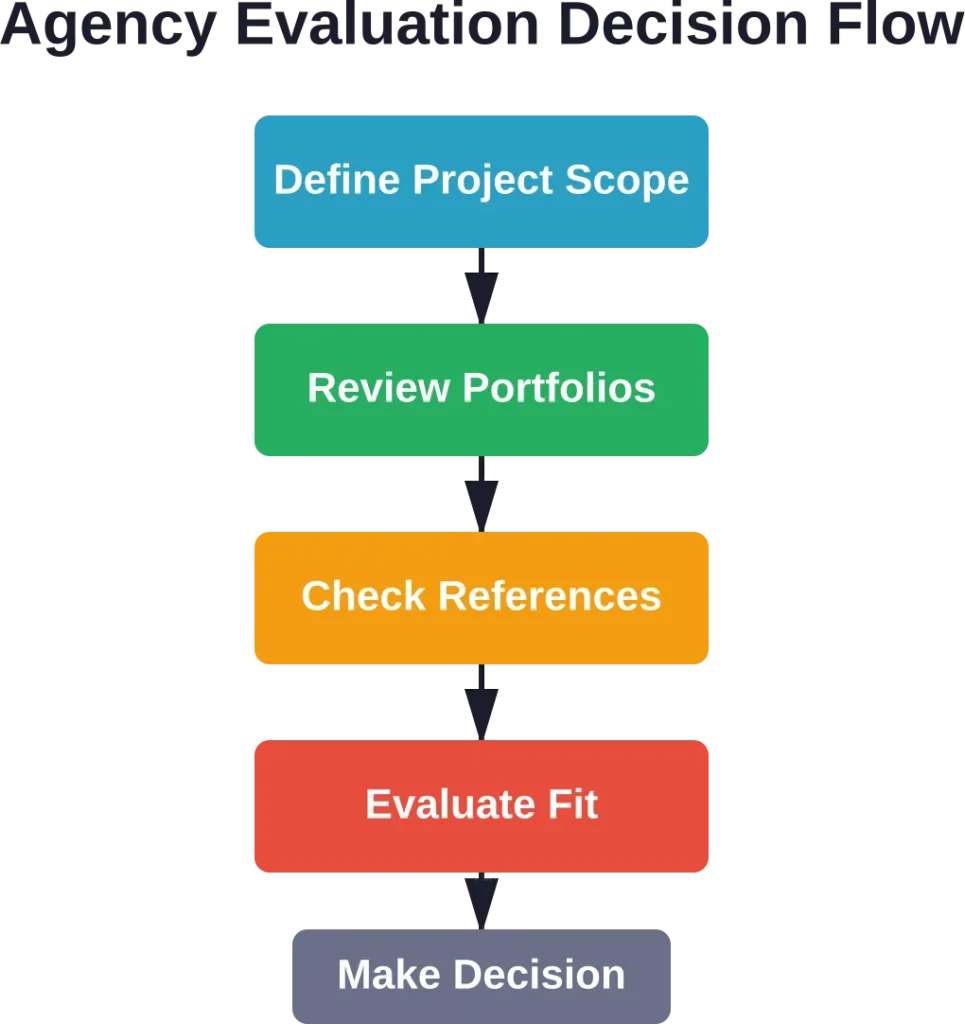
Before evaluating agencies, clarify exactly what the project entails. Is this a complete custom build? A migration from another platform? Theme customization on an existing store? Ongoing optimization work?
Different agencies excel at different project types. Some specialize in greenfield builds but lack migration expertise. Others focus on optimization but don’t take on full redesigns.
Scope also determines timeline and resource requirements. A three-month custom build demands different agency capabilities than a two-week theme implementation.
Evaluate Shopify-Specific Experience
General web design experience doesn’t translate directly to Shopify competence. The platform has specific patterns, limitations, and best practices that require hands-on experience to master.
Look for agencies with Shopify Partner status, particularly those who’ve achieved higher tier recognition. Review their case studies specifically for Shopify projects, not just general ecommerce work.
Ask about their experience with specific Shopify features relevant to the project—whether that’s multi-currency, subscriptions, wholesale channels, or custom checkout experiences.
Assess Technical Versus Design Orientation
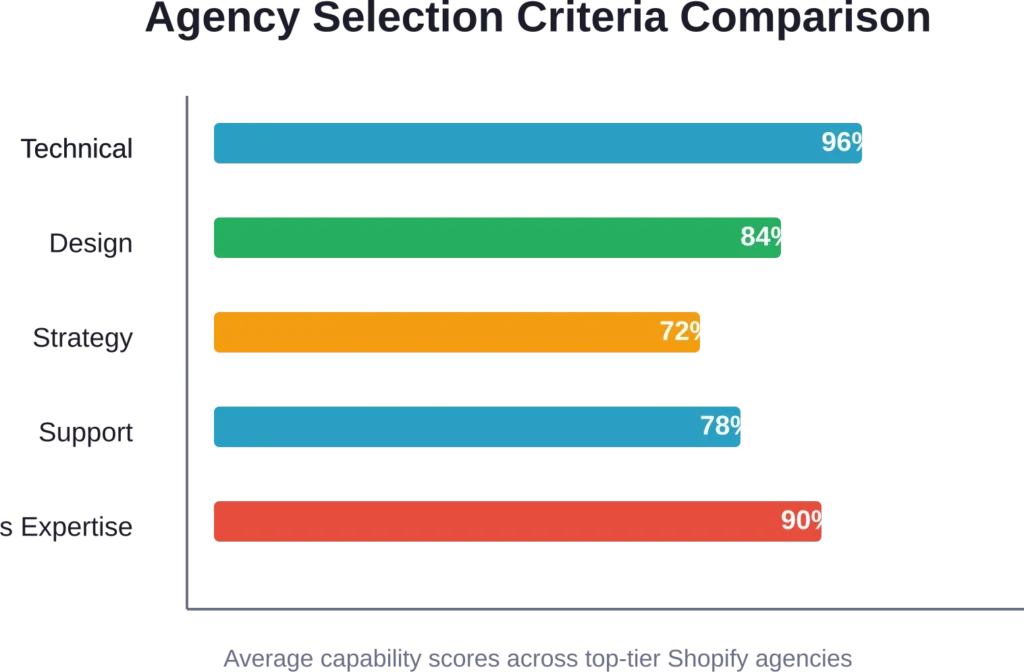
Some agencies lead with design while others emphasize technical implementation. The right balance depends on project priorities.
Brands with strong internal creative teams might need technical execution more than design vision. Conversely, brands with technical resources but limited design capabilities need agencies that excel at visual and experience design.
The best agencies balance both, but every team has natural strengths. Understanding those strengths relative to internal capabilities helps identify the right fit.
Consider Ongoing Support Requirements
Store launches aren’t endpoints. Ongoing optimization, troubleshooting, and feature additions continue indefinitely. Some agencies specialize in these ongoing relationships while others focus on project-based work.
Clarify support expectations upfront. Will the agency provide ongoing maintenance? How do they handle urgent issues? What’s their response time for different types of requests?
Agencies structured for ongoing support typically offer retainer arrangements with dedicated resources. Project-focused agencies might hand off to internal teams or other partners post-launch.
| Agency Type | Best For | Typical Engagement |
|---|---|---|
| Full-Service Strategic | Brands needing complete solution from strategy through execution | 3-6 month builds with optional retainers |
| Technical Specialist | Complex integrations, custom functionality, headless commerce | Project-based or ongoing technical support |
| Design-Focused | Brands with technical resources needing exceptional UX/UI | Design delivery with implementation support |
| Migration Expert | Moving from legacy platforms to Shopify or Shopify Plus | Fixed-scope migration projects |
| Growth & Optimization | Existing stores needing CRO and ongoing improvement | Retainer-based optimization programs |
Questions to Ask Potential Agencies
The discovery conversation reveals whether an agency truly understands both Shopify and the specific business challenge at hand.
About Their Process
Ask agencies to walk through their typical project process from kickoff to launch. How do they approach discovery and requirements gathering? What does their design iteration look like? How do they handle feedback and revisions?
Strong agencies have structured processes that balance flexibility with organization. They should explain how they keep projects on track while accommodating inevitable changes.
Understanding the process also reveals how much client input they expect at various stages. Some agencies want heavy involvement while others prefer more autonomy.
About Technical Approach
For technically complex projects, dig into the agency’s development methodology. How do they approach custom functionality? When do they recommend apps versus custom code?
Ask about their testing and quality assurance processes. How do they ensure cross-browser compatibility? What’s their mobile testing approach? How do they handle performance optimization?
Understanding their approach to technical documentation and knowledge transfer matters for post-launch support, especially if different teams will maintain the store.
About Previous Similar Work
Request case studies or examples closely matching the project at hand. If migrating from Magento, ask about their Magento-to-Shopify migration experience specifically.
Generic portfolio pieces don’t reveal capability for specific challenges. Look for demonstrated experience with relevant industries, store sizes, technical requirements, and business models.
Reference calls with previous clients provide unfiltered perspective on working with the agency. Ask those references about communication, problem-solving, and how the agency handled unexpected challenges.
Red Flags to Watch For
Certain warning signs indicate agencies that might not deliver quality Shopify work despite impressive presentations.
Platform-Agnostic Positioning
Agencies that claim equal expertise across every ecommerce platform rarely excel at any single one. Shopify mastery requires focused experience, not dabbling between platforms.
While good developers can work across technologies, the best Shopify work comes from teams deeply embedded in the ecosystem who understand its evolution and nuances.
Portfolio Lacking Diversity
An agency showing ten nearly identical stores suggests they’re reusing templates rather than creating custom solutions. Look for portfolio diversity that demonstrates solving different business problems.
Conversely, portfolios with no visible patterns might indicate lack of specialized expertise. The best agencies show both range and recognizable excellence in their focus areas.
Vague Timelines and Processes
Experienced agencies can estimate timelines reasonably accurately and explain their process clearly. Vague answers suggest lack of structure or experience.
While flexibility matters, professional agencies operate with defined methodologies refined through repeated projects. They should articulate how they work, not just what they deliver.
Dismissive Attitudes Toward Platform Limitations
Every platform has constraints. Agencies claiming Shopify can do absolutely anything either don’t understand the platform or aren’t being honest about tradeoffs.
Strong agencies acknowledge limitations honestly and explain workarounds or alternative approaches. This honesty prevents unrealistic expectations and mid-project disappointments.
Working Effectively with Your Chosen Agency
Selecting the right agency is just the beginning. Project success depends on effective collaboration throughout the engagement.
Establish Clear Communication Patterns
Define communication expectations early. How often will status updates occur? What format will they take? Who are the primary contacts on each side?
Most successful projects maintain regular check-ins—often weekly during active development—plus asynchronous communication channels for questions and updates between meetings.
Clear communication prevents misaligned expectations and allows course corrections before small issues become major problems.
Provide Comprehensive Brand Assets
Agencies work best when given complete access to brand guidelines, asset libraries, customer research, and business context. Holding back information slows progress and limits quality.
Compile brand assets before the project starts: logos in multiple formats, color specifications, typography files, photography style guidelines, tone of voice documentation, and any existing customer research.
The more context agencies have about the business, target customers, and competitive landscape, the better their strategic recommendations will be.
Designate Empowered Decision Makers
Projects stall when feedback comes from multiple stakeholders with competing preferences and no clear authority to make final decisions.
Identify decision makers for different aspects—design, technical architecture, content, and business logic. Empower those people to make binding decisions without endless committee reviews.
Agencies can accommodate multiple reviewers but need clarity on who provides input versus who makes final calls.
Trust Expertise While Maintaining Vision
Balancing trust in agency expertise with maintaining brand vision requires nuance. Agencies bring platform knowledge and pattern recognition from multiple projects. Clients bring deep understanding of their specific business and customers.
The best outcomes emerge when both perspectives inform decisions. Push back on agency recommendations that don’t align with business realities, but remain open to suggestions that challenge assumptions.
When disagreements arise, dig into the reasoning on both sides rather than defaulting to either position.
What to Expect During Development
Understanding typical project phases helps set realistic expectations and identify when things might be off track.
Discovery and Planning Phase
Strong agencies invest significant time upfront understanding business requirements, technical constraints, and success metrics. This discovery phase typically involves stakeholder interviews, competitive analysis, and requirement documentation.
The output should include detailed specifications, wireframes or mockups, technical architecture decisions, and project timelines. This documentation serves as the blueprint for subsequent development.
Resist pressure to skip or rush discovery. Time invested here prevents expensive revisions later when changing direction becomes dramatically more costly.
Design and Iteration Phase
Most agencies present initial design concepts, gather feedback, then iterate based on that input. The number of revision rounds varies by agency and project scope.
Design reviews should focus on whether designs achieve strategic goals and serve users effectively, not just personal aesthetic preferences. Keep feedback focused on functional concerns and brand alignment.
Expect multiple touchpoints as designs evolve from high-level concepts to detailed specifications including responsive behavior, interaction patterns, and edge cases.
Development and Testing Phase
Development typically happens in a staging environment where progress can be reviewed without affecting any live store. Agencies should provide regular access for review and feedback.
Quality agencies conduct thorough testing before launch—functionality testing, cross-browser testing, mobile testing, performance testing, and user acceptance testing.
This phase often reveals issues requiring adjustment. Changes during development are normal, but scope creep can derail timelines and budgets if not managed carefully.
Launch and Post-Launch Support
Launch involves migrating from staging to production, configuring domain settings, and monitoring closely for any issues. Launches typically happen during low-traffic periods to minimize risk.
Expect some post-launch adjustments. Real traffic often reveals edge cases or minor issues that testing didn’t catch. Good agencies remain closely involved for several weeks after launch.
Post-launch is also when optimization begins. Initial launch is the foundation, but conversion optimization, performance tuning, and feature additions continue indefinitely.
| Project Phase | Typical Duration | Key Deliverables |
|---|---|---|
| Discovery | 2-3 weeks | Requirements doc, sitemap, wireframes, technical spec |
| Design | 3-5 weeks | Visual designs, style guide, responsive specifications |
| Development | 6-10 weeks | Functional staging site, content integration, testing |
| Launch Prep | 1-2 weeks | Final QA, training, migration planning, launch execution |
| Post-Launch | 2-4 weeks | Monitoring, bug fixes, optimization adjustments |
Maximizing Long-Term Value
The agency relationship shouldn’t end at launch. Ongoing collaboration drives continued improvement and adaptation as the business evolves.
Consider Retainer Arrangements
Many agencies offer ongoing support through monthly retainers. These arrangements provide dedicated resources for continuous optimization, feature additions, and troubleshooting.
Retainers make sense for stores requiring regular updates or brands lacking internal Shopify expertise. They provide predictable access to agency resources without project overhead.
Structure retainers around clear scope and deliverables. Understand what’s included, response times for different request types, and how unused hours roll over or expire.
Plan for Continuous Optimization
Store optimization never truly finishes. Conversion rate optimization, performance improvements, and feature enhancements should happen continuously based on data and user feedback.
Work with agencies to implement proper analytics tracking from day one. Data-driven optimization decisions beat intuition-based changes.
Consider quarterly optimization sprints focused on specific metrics—mobile conversion rates, cart abandonment, page speed, or specific user journey improvements.
Stay Current with Platform Evolution
Shopify releases new features regularly. Staying current with these updates ensures stores leverage the platform’s evolving capabilities.
Good agency partners proactively recommend new features relevant to specific business needs. They watch Shopify’s product roadmap and identify opportunities before they become obvious.
Major updates sometimes require theme modifications to maintain compatibility. Plan for occasional technical refreshes to prevent technical debt accumulation.
Frequently Asked Questions
Custom Shopify store development typically takes between 8-16 weeks from kickoff to launch, depending on complexity. Basic theme customizations might complete in 4-6 weeks, while complex Shopify Plus implementations with custom features, multiple integrations, and extensive product catalogs can extend to 20+ weeks. The timeline depends on scope clarity, content readiness, feedback turnaround times, and technical complexity. Discovery and planning phases usually require 2-3 weeks, design takes 3-5 weeks, and development needs 6-10 weeks plus testing and launch preparation.
Shopify Plus agencies specialize in the enterprise tier of the platform, which includes advanced features not available on standard Shopify plans. These agencies understand Plus-specific capabilities like custom checkout, automation workflows, wholesale channels, expanded API access, and higher rate limits. They typically work with larger brands processing significant transaction volumes and requiring more complex integrations. Standard Shopify agencies focus on core platform features suitable for small to mid-sized businesses. While many agencies work across both tiers, Plus specialization matters for enterprise implementations requiring advanced functionality.
Location matters less than expertise and fit for most Shopify projects. The platform’s collaborative tools enable effective remote work, and many top agencies work with clients globally. Local agencies offer benefits like in-person meetings and timezone alignment, which some clients prefer for communication and relationship building. However, limiting searches to local agencies dramatically reduces the pool of potential partners. Evaluate agencies based on relevant experience, proven results, and working style compatibility rather than geography alone. If face-to-face interaction matters significantly, prioritize local options. Otherwise, expand the search nationally to access specialized expertise.
Genuine Shopify expertise reveals itself through several indicators. Check their official Shopify Partner status and tier level—higher tiers indicate more experience and client success. Review case studies specifically showing Shopify projects with detailed explanations of challenges and solutions. Ask about their experience with Liquid templating, Shopify APIs, app ecosystem, and recent platform updates. Strong agencies explain platform limitations honestly rather than promising anything is possible. Request references from previous Shopify clients and ask those references about the agency’s platform knowledge. Look for contributions to the Shopify community through blog posts, open source tools, or conference presentations.
Most experienced Shopify agencies offer migration services from other ecommerce platforms including WooCommerce, Magento, BigCommerce, and custom solutions. Migration complexity varies based on the source platform, data volume, custom functionality, and integration requirements. Agencies handle product data transfer, customer records, order history, SEO preservation through redirects, and functionality replication within Shopify’s architecture. Some custom features from other platforms may require different approaches in Shopify. Typical migrations take 6-12 weeks depending on catalog size and complexity. Choose agencies with specific experience migrating from your current platform, as each has unique challenges.
Contract terms should address satisfaction guarantees, revision processes, and dispute resolution before work begins. Most professional agencies include specific revision rounds in their agreements and outline the process for addressing concerns. Communicate dissatisfaction early rather than waiting until project end—most issues can be resolved through clear feedback during development. Document concerns specifically, referencing agreed-upon requirements or designs. If fundamental disagreements emerge, review the original scope and requirements to determine whether expectations were misaligned from the start. Reputable agencies want satisfied clients and will work to resolve legitimate concerns. In worst-case scenarios, contracts should specify termination terms and ownership of work completed to that point.
The need for ongoing agency support depends on internal technical capabilities and the store’s complexity. Basic store management—adding products, updating content, processing orders—requires no technical expertise and can be handled internally. However, theme modifications, app integrations, performance optimization, and troubleshooting typically require Shopify development knowledge. Teams with experienced developers can manage technical maintenance internally using Shopify’s documentation and support. Others benefit from agency retainers providing on-demand expertise for technical needs. Consider a hybrid approach: handle day-to-day operations internally while maintaining agency relationships for strategic projects and complex technical work. Many businesses start with retainers and gradually reduce dependency as internal capabilities grow.
Making the Final Decision
Choosing among qualified agencies often comes down to intangible factors beyond technical capabilities and portfolio quality.
Trust matters enormously. The agency relationship requires transparency, honest communication, and mutual respect. Select partners who demonstrate these qualities during the sales process.
Cultural fit influences project satisfaction significantly. Agencies and clients with aligned values, communication styles, and working preferences collaborate more effectively than those constantly negotiating process differences.
Look for agencies that ask insightful questions about the business, challenge assumptions constructively, and demonstrate genuine interest in achieving business outcomes beyond just delivering technical specifications.
The right agency feels like an extension of the internal team rather than an external vendor. They understand business context, anticipate needs, and proactively suggest improvements aligned with strategic goals.
Moving Forward with Confidence
Building or redesigning a Shopify store represents significant investment in the ecommerce business. Partnering with the right agency dramatically increases the likelihood of success.
The agencies featured here represent proven options across different specializations and project types. Each brings unique strengths to specific scenarios.
Take time to evaluate options thoroughly. Rush decisions based on price or availability alone often lead to disappointing outcomes. Invest in proper discovery conversations with multiple agencies before making final selections.
Remember that the cheapest option rarely delivers the best value. Quality Shopify work requires specialized expertise, strategic thinking, and meticulous execution. These capabilities command appropriate investment.
The Shopify Partner Directory provides access to thousands of additional agencies beyond this curated list. Use that resource to explore more options while applying the evaluation criteria outlined here.
Start conversations with agencies whose work resonates and whose expertise aligns with specific needs. The right partner is out there—finding them requires patience and thorough evaluation.
Ready to take the next step? Visit the official Shopify Partner Directory to explore agencies, review detailed profiles, and begin conversations with potential partners who can transform the Shopify store vision into reality.