
Quick Summary: This comprehensive guide profiles 15 leading web design consulting companies, each specializing in different aspects of digital design—from SaaS product studios to enterprise-scale agencies. The list covers boutique firms known for conversion-focused design, agencies with award-winning portfolios, and strategic partners that blend UX research with brand storytelling, helping businesses find the right fit for their unique project needs.
Finding the right web design consulting company can feel like searching for a needle in a haystack. There are hundreds of agencies claiming expertise, but only a handful truly deliver strategic design that drives business results.
The landscape has shifted dramatically. Corporate websites are no longer digital brochures—they’re proof platforms. As Clear Digital notes, modern buyers arrive pre-educated and pre-framed by AI-powered research tools. Your website isn’t the teacher anymore. It’s the final exam.
That means the agency you choose needs to understand more than just aesthetics. They need to grasp user psychology, conversion architecture, and how design decisions impact revenue.
This guide breaks down 15 of the most respected web design consulting companies operating in 2026. Each entry includes what they specialize in, who they work best for, and what makes them stand out in a crowded market.
Why Web Design Consulting Matters More Than Ever
Design isn’t decoration. It’s strategy made visible.
When done right, web design consulting transforms how a business communicates value. The best agencies don’t just make things look polished—they solve problems. They reduce friction in the user journey. They align visual language with brand positioning. They turn visitors into customers.
But here’s the thing: not every agency is built for every project. A boutique studio that excels at SaaS product design might struggle with enterprise-level content architecture. An agency known for bold creative might not be the right fit for a compliance-heavy industry.
The key is matching your specific needs with an agency’s core strengths. That’s exactly what this list helps you do.
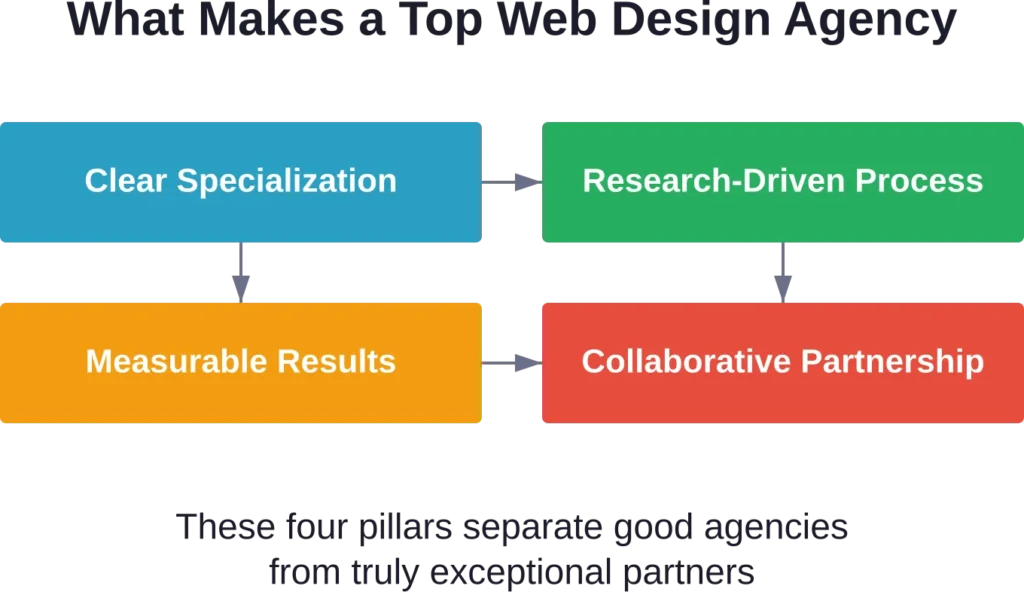
What Separates Top Web Design Consulting Companies
Before jumping into the list, it’s worth understanding what actually makes a web design consulting company exceptional.
First: specialization. Generalists can be good, but specialists are usually better. The agencies on this list have carved out clear niches—whether that’s SaaS applications, eCommerce platforms, or brand-driven storytelling.
Second: process. Top firms don’t start with mockups. They start with research. User interviews. Competitive analysis. Strategic frameworks that inform every design decision.
Third: results. The best agencies tie their work to business outcomes. Not just “we increased time on page” but “we helped the client raise $18 million in funding” or “we doubled their conversion rate.”
Fourth: collaboration. Elite agencies work with you, not for you. They challenge assumptions. They push back when needed. They treat design as a strategic partnership, not a service transaction.
Top 15 Web Design Consulting Companies
Now, here’s the list. Each agency brings something different to the table. Some focus on SaaS. Others excel at eCommerce or brand storytelling. A few operate at enterprise scale with teams of 500-plus.
What they all share: a proven track record, strong client reviews, and a clear point of view on what great design looks like.
1. Mobian
Mobian builds dedicated teams that deliver production-ready digital products with excellent design and engineering standards. They specialize in creating mobile-first and AI-enhanced web experiences that perform in demanding industries.
Their full-stack delivery includes UI/UX design, mobile and web development, scalable architecture, and AI systems. They focus on building digital products that are not only visually compelling but also technically robust and future-proof.
What sets them apart is their dual outsourcing/outstaffing model combined with senior-level execution. They deliver clean architecture, thoughtful interfaces, and solutions designed for real scalability from day one.
Their collaborative approach ensures products are built with both user experience and long-term business success in mind.
Best for: Companies in healthcare, fintech, logistics, and IT that need high-quality digital product design and development delivered by dedicated expert teams.
Contact Information:
- Website: mobian.studio
- Phone: [email protected]
- Address: Harju maakond, Tallinn, Kesklinnalinnaosa, Masina tn 22, 10113
- LinkedIn: www.linkedin.com/company/mobian-studio
2. Lengreo
Lengreo has laser focus on performance-driven web design and B2B digital growth. They combine strategic marketing with high-converting website development to turn complex offerings into clear, results-oriented digital experiences.
Their integrated approach includes website development, UX-focused design, conversion optimization, and full-funnel digital strategies. They excel at building websites and landing pages that not only look professional but actively generate qualified leads and accelerate sales pipelines.
What sets them apart? Their work is proven to deliver dramatic business outcomes — from 400% increases in acquired clients to over 6X reduction in cost per lead. They don’t just design websites — they engineer digital systems that produce measurable revenue impact.
Their philosophy centers on deep listening and custom tactics rather than template solutions, ensuring every design and marketing decision directly supports client growth objectives.
Best for: B2B companies, SaaS and tech service providers, professional services firms, and startups that need websites and digital strategies built for lead generation and conversion.
Contact Information:
- Website: lengreo.com
- Phone: +31 686 147 566
- Email: [email protected]
- Address: Vrijstraat 9 C/D, 5611 AT Eindhoven, Netherlands
- LinkedIn: www.linkedin.com/company/lengreo
- Instagram: www.instagram.com/lengreo.agency
- Twitter: x.com/Lengreo
3. Gilzor
Gilzor takes a product-first approach to web and digital product design. They specialize in creating custom digital solutions where strong UI/UX design drives user adoption and business success.
The studio offers full-cycle development including idea validation, user-centric UI/UX design, web and mobile development, and go-to-market strategy. They focus on turning complex ideas into intuitive, high-conversion digital products.
What sets them apart is their ability to deliver both beautiful and highly functional products. With an emphasis on user-centric design and rigorous quality assurance, they build solutions that users love and that deliver real business results, including significant MRR growth for their partners.
They combine creative design thinking with technical excellence and strategic market understanding.
Best for: Startups launching new products, product studios, SMBs scaling digital channels, and companies that need high-quality UI/UX design paired with robust development.
Contact Information:
- Website: www.gilzor.com
- Email: [email protected]
- Address: Poland, Warsaw, Office 58, street Adama Mickiewicza 37, 01-625
- LinkedIn: www.linkedin.com/company/gilzor-softwaredevelopment
4. Oski
Oski builds smart, well-engineered digital solutions with strong emphasis on frontend and user experience design. They create scalable web applications and interfaces that combine aesthetic excellence with powerful functionality.
Their expertise covers frontend development, UI/UX design, cloud solutions, and AI integrations. They focus on delivering intuitive, high-performance digital experiences that help businesses operate more effectively.
What sets them apart is their ability to blend innovative design with modern technical architecture. They prioritize seamless user experiences while ensuring solutions are built for scale, security, and long-term maintainability.
Their approach helps tech-forward enterprises and ambitious startups transform ideas into polished, production-ready digital products.
Best for: Tech-forward enterprises, ambitious startups, and companies in travel, logistics, e-commerce, fintech, and education that need sophisticated web solutions with excellent user experience.
Contact Information:
- Website: oski.site
- Phone: +48571282759
- Email: [email protected]
- Address: Kaupmehe tn 7, 10114 Tallinn, Estonia
- LinkedIn: www.linkedin.com/company/oski-solutions
5. A-listware
A-listware delivers strategic software development with a strong focus on UX/UI design and digital transformation. They act as an extension of client teams, building high-quality digital solutions that drive business efficiency and growth.
They offer a full spectrum of services including software development, UX/UI design, application services, and IT consulting. Their strength lies in creating enterprise applications, custom solutions, and user-friendly interfaces that solve real business challenges.
What sets them apart is their seamless team integration and ability to deliver secure, responsive digital solutions tailored to specific industry needs. They focus on end-to-end execution that aligns technical excellence with business objectives.
Best for: Enterprises, small and medium businesses, and startups that need reliable software development partners with strong design capabilities and deep technical expertise.
Contact Information:
- Website: a-listware.com
- Phone: +1 (888) 337 93 73
- Email: [email protected]
- Address: North Bergen, NJ 07047, USA
- LinkedIn: www.linkedin.com/company/a-listware
- Facebook: www.facebook.com/alistware
6. Fantasy
Fantasy is the agency behind some of the most visually ambitious websites on the internet. They push boundaries—sometimes to the point of polarizing audiences.
Their work often features experimental interactions, bold visual concepts, and designs that challenge conventional usability norms. They’re not for everyone. But for brands that want to make a statement and aren’t afraid to take creative risks, Fantasy delivers unforgettable experiences.
The agency has worked with major brands in fashion, technology, and entertainment. Their projects tend to win awards and generate buzz in the design community. Whether they drive conversions as effectively as they drive attention is a question worth asking—but there’s no denying their creative impact.
Fantasy’s team includes designers, developers, and strategists who are comfortable working at the bleeding edge of what’s technically and creatively possible on the web.
Best for: Fashion brands, entertainment companies, and organizations that prioritize brand differentiation and creative impact over conventional conversion metrics.
7. Huge

Huge is a global digital agency with a strong focus on experience design. They operate at a scale that allows them to handle multi-market campaigns, complex integrations, and projects that span web, mobile, and physical touchpoints.
Their approach combines design thinking with business strategy. They’re as comfortable in the boardroom as they are in Figma. That makes them a strong fit for organizations that need an agency to not just execute, but to help define digital strategy at the highest level.
Huge’s work spans industries—retail, finance, healthcare, technology. They’re especially strong at designing for complex user journeys that involve multiple stakeholders and decision points.
The downside? Like most large agencies, they come with enterprise-level budgets and timelines. Smaller companies or startups looking for nimble, fast-moving partners might find Huge’s process too heavyweight.
Best for: Enterprise organizations, multi-national brands, and companies that need strategic design consulting alongside execution.
8. Locomotive
Locomotive is a Montreal-based agency known for their technical craftsmanship and attention to detail. They specialize in creating highly polished, interactive web experiences with smooth animations and refined interactions.
Their work often features scroll-triggered animations, parallax effects, and transitions that feel seamless and intentional. They’ve won multiple Awwwards—an industry benchmark for cutting-edge web design—and their portfolio showcases some of the most technically impressive websites built in recent years.
But Locomotive isn’t just about visual flash. Their projects are built with performance in mind, using modern frameworks and optimization techniques to ensure fast load times even with rich media.
They’re a strong fit for brands that want to showcase products, portfolios, or stories in a way that feels premium and engaging.
Best for: Product companies, creative studios, and brands that want technically sophisticated, visually striking websites with strong interactive elements.
9. Ueno
Ueno built their reputation on a distinctive visual style: clean, bold, and unapologetically modern. They’ve worked with major technology brands and startups alike, bringing a level of craft that feels both rigorous and playful.
The agency is particularly strong at interface design. Their work demonstrates a deep understanding of typography, layout, and the small details that make interfaces feel polished. They’re less focused on experimental interactions and more focused on doing the fundamentals exceptionally well.
Ueno’s process emphasizes collaboration and iteration. They work closely with clients to refine concepts, test assumptions, and ensure the final product aligns with both brand goals and user needs.
They’ve since been acquired, but their legacy work continues to influence how many designers think about modern web interfaces.
Best for: Technology startups, SaaS companies, and brands that want clean, modern design executed with precision and craft.
10. Build in Amsterdam
Build in Amsterdam is a Dutch agency with a global client roster. They’re known for strategic design that blends brand, user experience, and technology into cohesive digital products.
Their approach is research-driven. They start projects with discovery phases that include user research, competitive analysis, and workshops designed to align stakeholders around a shared vision. Only then do they move into design and development.
Build in Amsterdam works across industries but has particularly strong experience with eCommerce, digital platforms, and product design. Their projects tend to be substantial multi-phase engagements rather than quick one-off websites.
They’re also strong at creating design systems—reusable component libraries and guidelines that allow brands to maintain consistency as they scale.
Best for: eCommerce brands, digital product companies, and organizations that need strategic partners for long-term design and development engagements.
11. Eleken
Eleken has laser focus: SaaS product design. They’re not trying to be everything to everyone. Instead, they’ve built their entire practice around making complex web applications feel simple, fast, and usable.
Founded in 2015, Eleken operates as a distributed team with over 100 designers and SaaS product experts. Their specialty is UI/UX design for web applications, SaaS platforms, and product design consulting.
What sets them apart? They’re startup accelerators in disguise. Multiple clients have raised serious funding shortly after working with Eleken—multiple clients have raised significant funding following engagements, with some securing funding in the millions. That’s not coincidence. That’s design that communicates value clearly enough to convince investors.
Their approach emphasizes clarity and conversion. They don’t chase trends or create designs that win awards but confuse users. Instead, they focus on structure, usability, and making sure every interface decision supports the product’s growth trajectory.
Best for: SaaS companies, web application startups, and product teams that need user-centered design without the fluff.
12. Excited Agency
Excited Agency takes a product-first lens to web design. They’re not interested in surface-level aesthetics. Their focus is on clarity, structure, and conversion—building websites that scale with the product and support long-term growth.
The agency combines UX research, web design, branding, and motion design into a cohesive service offering. This integrated approach means they’re thinking about how every element—from micro-interactions to overall information architecture—works together.
Their work is especially strong for brands that need to communicate complex value propositions. They excel at turning technical products into clear, compelling web experiences that resonate with both technical and non-technical audiences.
Best for: B2B companies, product-led startups, and brands that need conversion-focused design rooted in research and strategy.
13. Code and Theory
Code and Theory operates at enterprise scale. With over 500 employees, they’re one of the larger agencies on this list—and they work with clients who have equally ambitious needs.
Their expertise spans digital strategy, web design, and large-scale platform development. They’re the kind of agency that can handle complex content architectures, multi-brand systems, and projects that require coordination across multiple internal teams.
What makes them stand out is their ability to blend creative thinking with technical execution. They don’t just design experiences—they build them, often working with proprietary content management systems and custom development stacks.
The trade-off? They’re not cheap, and they’re not fast. But for organizations that need a strategic partner capable of handling enterprise-level complexity, they deliver.
Best for: Large enterprises, Fortune 500 companies, and organizations with complex digital ecosystems that require strategic consulting alongside design execution.
14. Clay
Clay has built a reputation for brand-driven web design. They’re the agency you call when design needs to do more than function—it needs to tell a story.
Their work often features bold typography, striking visual systems, and a level of craft that feels more art direction than template. They approach every project as a brand exercise first, web project second.
That doesn’t mean they ignore usability. But their primary strength is creating digital experiences that feel differentiated and memorable. They’re particularly strong with lifestyle brands, consumer products, and companies where brand perception directly impacts business outcomes.
Clay’s portfolio includes work for well-known consumer and tech brands. They’re not just making websites—they’re shaping how audiences perceive the companies they work with.
Best for: Consumer brands, lifestyle companies, and businesses where brand identity and emotional resonance are critical competitive advantages.
15. Instrument

Instrument blends strategy, design, and storytelling in a way that few agencies manage. They’re especially known for narrative-driven web experiences that guide users through a carefully crafted journey.
The agency works across industries but has particularly strong case studies in technology, retail, and media. Their projects often feature rich multimedia content, thoughtful animation, and interfaces that feel more like curated experiences than traditional websites.
What sets Instrument apart is their emphasis on collaboration. They treat clients as partners, involving them deeply in the creative process. That collaborative approach results in work that feels authentic to the brand rather than imposed from outside.
They’re also strong at balancing creativity with performance. Their sites are visually striking, but they’re also built with attention to load times, accessibility, and technical best practices.
Best for: Technology companies, media brands, and organizations that need web experiences with strong narrative and emotional impact.
How to Choose the Right Web Design Consulting Company
So how do you actually pick from this list—or any list of agencies?
Start with specialization. Match the agency’s core strength to your primary need. If you’re building a SaaS product, prioritize agencies with deep SaaS experience. If you’re a consumer brand, look for agencies with strong portfolios in brand-driven design.
Next, consider scale. A boutique studio with 15 people operates differently than an enterprise agency with 500. Smaller agencies tend to be more nimble and offer direct access to senior talent. Larger agencies can handle more complex projects and provide more specialized expertise across disciplines.
Look at the portfolio—but look critically. Don’t just admire pretty screenshots. Ask: Does this work solve business problems? Can I see evidence of strategic thinking? Do these designs reflect a point of view, or do they feel like executions of client requests?
Read reviews, but read between the lines. Look for patterns. Do multiple clients mention communication issues? Do they praise the final output but complain about the process? Reviews on platforms like Clutch can provide insight into what it’s actually like to work with an agency.
Finally, trust your gut. Chemistry matters. The best agency-client relationships feel like partnerships, not vendor transactions. If the initial conversations feel transactional or formulaic, that’s unlikely to change once the contract is signed.
Red Flags to Watch For
Not every agency that talks a good game can deliver. Here are warning signs to watch for during the evaluation process.
First: agencies that promise everything. If a firm claims equal expertise in SaaS, eCommerce, branding, motion design, AR/VR, and blockchain, they’re probably mediocre at all of it. Specialization exists for a reason.
Second: portfolios full of unsourced work or spec projects. You want to see real client work with measurable outcomes, not concept designs created to win awards.
Third: reluctance to share process details. Great agencies are transparent about how they work. If a firm can’t clearly articulate their discovery process, design methodology, or how they collaborate with clients, that’s a red flag.
Fourth: pressure to sign quickly or start immediately. Reputable agencies are usually booked weeks or months in advance. If a firm with impressive credentials has immediate availability and is pushing you to commit, ask why.
Fifth: vague or evasive answers about results. When you ask about business outcomes from past projects—conversion lifts, funding raised, user growth—the best agencies have concrete answers. Evasive responses suggest they don’t track impact or don’t have good results to share.
The Changing Role of Web Design Consulting
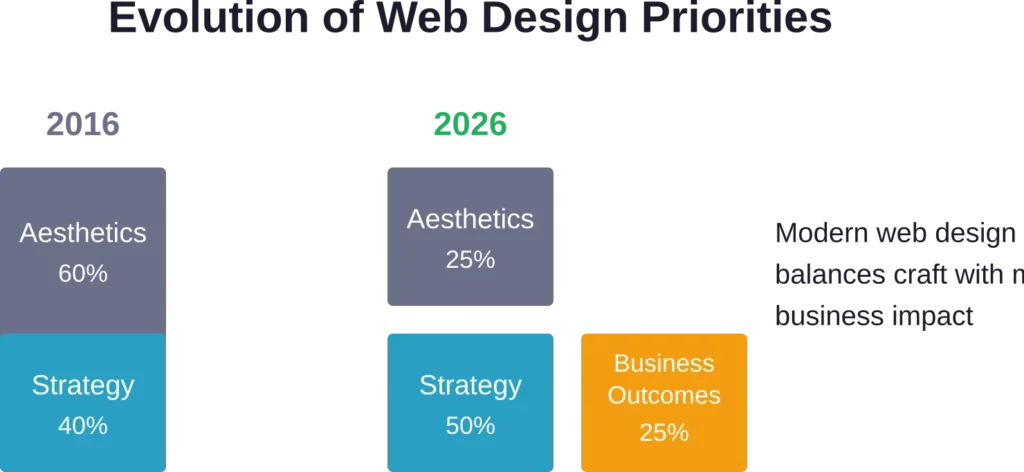
The discipline has evolved significantly. A decade ago, web design consulting was primarily about aesthetics and usability. Today, it’s inseparable from business strategy.
As Clear Digital observes, corporate websites have transformed from starting points to final exams. Buyers now arrive informed, having already consumed AI-generated summaries, peer reviews, and competitive analyses. The website’s job is no longer to educate—it’s to prove.
That shifts what great design looks like. Less explanation. More demonstration. Clearer value props. Stronger proof points. Faster paths to conversion.
It also means web design consulting companies need broader skill sets. The best firms now combine UX design, brand strategy, content architecture, technical development, and growth optimization. They’re not just making things look good—they’re architecting digital systems that support business objectives.
This evolution separates the firms on this list from the thousands of agencies offering “web design services.” These companies understand that design is a strategic function, not a cosmetic one.
Working With a Web Design Consulting Company: What to Expect
Once you’ve selected an agency, what does the actual engagement look like?
Most projects follow a similar arc. Discovery comes first. Expect workshops, stakeholder interviews, user research, and competitive analysis. Good agencies spend significant time in this phase because getting strategy right makes everything downstream easier.
Then comes concept development. Agencies typically present 2-3 design directions that explore different ways to solve the core strategic challenge. This isn’t about picking your favorite color scheme—it’s about choosing the approach that best serves business goals.
After a direction is selected, the team moves into detailed design. This includes full page designs, component libraries, interaction specifications, and often prototypes that demonstrate how the experience will feel.
Development follows. Some agencies handle this in-house. Others partner with development shops or work with your internal engineering team. Either way, expect close collaboration between designers and developers throughout the build.
Finally: launch and iteration. The best agencies don’t disappear when the site goes live. They help with launch planning, monitor performance, and recommend optimizations based on real user behavior.
Timeline varies dramatically. A simple marketing site might take 8-12 weeks. A complex web application could take 6-9 months. Enterprise projects with multiple stakeholders and approval layers can stretch beyond a year.
Trends Shaping Web Design Consulting in 2026
Several forces are reshaping how top agencies approach their work.
First: AI-informed design. Not AI-generated design—AI-informed. Agencies are using AI tools for research synthesis, content drafting, and rapid prototyping. But the strategic thinking and creative direction still come from humans.
Second: performance as a feature. With Core Web Vitals and page speed directly impacting SEO, agencies can’t prioritize aesthetics at the expense of performance. The best firms now treat speed optimization as a core design constraint from day one.
Third: accessibility as standard practice. WCAG compliance is no longer optional. Top agencies build accessible experiences by default, not as an afterthought.
Fourth: component-driven design systems. Agencies are increasingly delivering not just websites, but design systems—reusable component libraries that allow brands to maintain consistency as they scale across products and platforms.
Fifth: proof over persuasion. As buyer behavior shifts toward research-heavy, trust-driven decisions, web design is evolving to emphasize proof points: case studies, data, testimonials, and interactive demonstrations that let products speak for themselves.
Common Mistakes When Hiring Web Design Consulting Companies
Even experienced teams make predictable errors when selecting agencies. Here are the most common.
Mistake one: choosing based on portfolio alone. Beautiful work doesn’t guarantee a good process or results. Dig deeper. Ask about challenges faced during projects. Request client references.
Mistake two: underestimating the importance of chemistry. Design is collaborative. If early conversations feel strained or transactional, it won’t get better under deadline pressure.
Mistake three: being too prescriptive about solutions. Hire an agency for their expertise, then actually listen to it. If you’ve already decided exactly what the site should look like, you don’t need a consultant—you need a production team.
Mistake four: skipping the discovery phase to save money. This always backfires. Strategy developed in discovery prevents expensive revisions later. Cutting corners early leads to higher costs and worse outcomes.
Mistake five: failing to align internal stakeholders before engaging an agency. If your executive team hasn’t agreed on goals, success metrics, and decision-making authority, the project will stall. Do that alignment work before the agency starts.
Frequently Asked Questions
Web design agencies focus on user experience, visual design, and strategy—how the site looks, feels, and guides users toward goals. Web development companies focus on technical implementation—the code, infrastructure, and functionality that makes the design work. Many firms offer both services, but their core expertise usually leans one direction. For strategic design work, prioritize agencies with strong design and UX practices.
It depends on scope and complexity. A straightforward marketing site might take 8-12 weeks from kickoff to launch. A SaaS application with multiple user types and complex workflows could take 4-6 months. Enterprise projects with extensive content migration, integrations, and stakeholder coordination can stretch 9-12 months or longer. Most delays happen in client review and approval cycles, not design or development time.
Specialist agencies typically deliver stronger results in their area of focus. If you’re building a SaaS product, an agency that only does SaaS design will understand the nuances better than a generalist. Full-service agencies offer convenience—one vendor for web design, branding, marketing, and development—but rarely excel at everything. The best choice depends on whether deep expertise or broad convenience is more important for your project.
Look beyond aesthetics. Ask: Do these designs solve clear business problems? Can I see evidence of strategic thinking? Are the case studies showing measurable outcomes, not just deliverables? Check whether the portfolio includes work similar to your project type. Also verify that work is real client projects, not spec concepts. Request references from 2-3 past clients and actually call them.
A solid proposal includes project goals and success metrics, discovery and research approach, design process and deliverables, timeline with key milestones, team composition and who you’ll work with, and how collaboration and feedback will work. Many agencies exclude specific costs from initial proposals, but there should be clarity on scope and how the engagement will be structured.
It varies. Most web design agencies can provide content strategy—recommendations for what content is needed, how it should be structured, and what tone to use. Some offer copywriting services; others expect clients to provide or hire a separate copywriter. Clarify content responsibilities upfront. Waiting on client-provided content is one of the most common causes of project delays.
Collaboration works best. Provide strategic input—share business goals, user insights, brand guidelines, and constraints. Give feedback on whether proposed solutions meet objectives. But avoid dictating specific design decisions like colors, layouts, or typography unless there’s a specific brand or compliance reason. Trust the agency’s expertise on craft and execution. Over-directing usually results in compromised work that doesn’t perform as well.
Making the Final Decision
Choosing a web design consulting company isn’t a purely rational process. Yes, evaluate capabilities, portfolios, and process rigor. But also pay attention to intangibles.
Do they ask good questions? Do they challenge your assumptions in productive ways? Do they seem genuinely curious about your business and users?
The best agency relationships feel like partnerships. Both sides bring expertise. Both sides listen. And both sides are invested in creating something that works—not just something that looks impressive in a portfolio.
Remember: web design isn’t decoration. It’s strategy made visible. The agency you choose will shape how customers perceive your brand, how easily they understand your value, and ultimately whether they convert or leave.
So take the time to get it right. Use this list as a starting point. Research each firm that seems like a potential fit. Request case studies. Talk to references. Have exploratory calls with 3-4 finalists.
Then trust your judgment. The right partner is out there. And when you find them, the work that follows will prove its value many times over.