

Quick Summary: The best web design agencies in 2026 combine creativity with strategic thinking, delivering websites that convert visitors into customers. This comprehensive list features 15 leading agencies recognized by Awwwards and industry platforms, each specializing in different areas from enterprise-level projects to startup-focused solutions, without discussing pricing to help you focus on quality and fit.
Finding the right web design company can feel like searching for a needle in a haystack. There’s no shortage of agencies claiming they’re the best, but how do you separate genuine talent from empty promises?
The web design landscape in 2026 is more competitive than ever. Businesses need websites that don’t just look good—they need digital experiences that drive results, convert visitors, and scale alongside growth.
This guide cuts through the noise. What follows is a carefully researched list of 15 web design agencies that have proven their worth through award-winning work, strong client relationships, and consistent delivery. These aren’t random picks—they’re agencies recognized by authoritative platforms like Awwwards, with portfolios that speak for themselves.
No fluff. No fabricated reviews. Just solid information to help you make an informed decision about which agency deserves your trust and investment.
What Makes a Web Design Agency Stand Out in 2026
Not all web design agencies are created equal. The best ones share certain characteristics that set them apart from the countless competitors flooding the market.
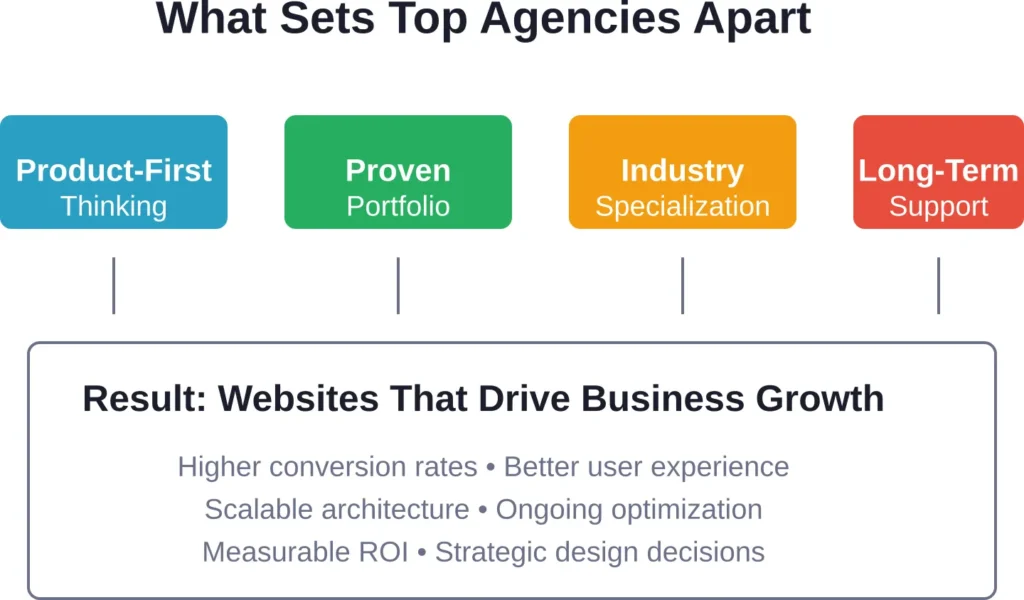
First, they understand that design isn’t just about aesthetics. Sure, a beautiful website matters, but it’s meaningless if visitors can’t figure out where to click or what action to take next. Top agencies approach projects through a product-first lens, focusing on user experience, conversion optimization, and long-term scalability.
Second, they have the portfolio to prove it. Words are cheap in this industry. Any agency can claim expertise, but the best ones let their work do the talking. Look for agencies with case studies showing measurable results, not just pretty screenshots.
Third, they specialize. The days of generalist agencies are fading. The strongest players in 2026 have carved out specific niches—whether that’s fintech, healthcare, e-commerce, or B2B SaaS. This specialization means they understand your industry’s unique challenges and regulatory requirements.
Finally, they think beyond launch day. A website isn’t a one-and-done project. The best agencies consider ongoing optimization, performance monitoring, and how the site will evolve as your business grows.
How This List Was Compiled
This isn’t a random collection of agencies that paid for placement. The selection process involved extensive research across multiple authoritative sources.
Awwwards served as a primary reference point. This platform recognizes exceptional web design through rigorous evaluation, and agencies featured there have proven their creative and technical capabilities. According to Awwwards, their Agency of the Year nominees represent the best work across the industry, with winners demonstrating consistent excellence.
Beyond awards, client reviews were examined through platforms like Clutch, where real customers share detailed feedback about their experiences. These reviews provide insight into communication quality, deadline adherence, and whether agencies deliver on their promises.
Portfolio analysis was equally important. Each agency’s body of work was evaluated for creativity, functionality, and diversity. Agencies that show range across different industries and project types demonstrate adaptability and deep expertise.
Finally, industry reputation matters. Agencies that consistently appear in multiple “best of” lists, receive speaking invitations at design conferences, and contribute thought leadership content have earned their status through sustained excellence.
The result? A curated list that prioritizes substance over marketing hype.
Top 15 Web Design Companies and Agencies in 2026
Here’s the comprehensive breakdown of the 15 best web design agencies operating in 2026, each bringing unique strengths to the table.
1. Lengreo
Lengreo operates as a complete Marketing & Tech Partner, delivering integrated digital solutions with a strong focus on website development and performance-driven online presence.
What sets Lengreo apart is their proven ability to deliver measurable business growth through digital channels. They have successfully increased client acquisition by 400% for software development companies, reduced cost per lead by over 6X, and boosted conversion rates by 53.6% for IT companies, demonstrating a results-oriented approach that combines strategy with execution.
Their website development services include full-cycle creation of business websites, eCommerce platforms, landing pages, and portfolio sites — from discovery and research through prototyping, design, development, and ongoing support. They also excel in SEO, B2B digital marketing strategy, and lead generation campaigns that turn websites into effective client acquisition tools.
Lengreo builds custom digital experiences that prioritize conversion and scalability, working closely with clients to align every design and technical decision with business objectives.
Best for: B2B companies, IT and software development firms, service providers seeking high-converting websites, businesses focused on lead generation and digital growth.
Contact Information:
- Website: lengreo.com
- Phone: +31 686 147 566
- Email: [email protected]
- Address: Vrijstraat 9 C/D, 5611 AT Eindhoven, Netherlands
- LinkedIn: www.linkedin.com/company/lengreo
- Instagram: www.instagram.com/lengreo.agency
- Twitter: x.com/Lengreo
2. Gilzor
Gilzor is a custom software development studio specializing in building digital products from idea to launch, with particular strength in web and mobile applications that drive user engagement and business results.
The studio stands out through their full-cycle approach and consistent delivery of high-quality, user-focused solutions. They emphasize UI/UX design that improves conversion rates, combined with robust development, QA, and go-to-market strategies.
Key services include web development, UI/UX design, idea validation, and product development for startups and scaling businesses. Their portfolio features successful web and mobile solutions across various industries, including e-commerce grocery platforms and specialized service applications that deliver clear value to users.
Gilzor focuses on creating functional and attractive digital products that connect effectively with target audiences, using modern technologies and user-centric methodologies throughout the process.
Best for: Startups launching new digital products, small and medium businesses needing custom web applications, companies seeking to improve user experience and conversion through design and development.
Contact Information:
- Website: www.gilzor.com
- Email: [email protected]
- Address: Poland, Warsaw, Office 58, street Adama Mickiewicza 37, 01-625
- LinkedIn: www.linkedin.com/company/gilzor-softwaredevelopment
3. Oski
Oski builds smart, well-engineered software solutions for tech-forward enterprises and ambitious startups, with strong expertise in frontend development and digital experiences.
They distinguish themselves through AI-accelerated engineering and focus on delivering scalable, high-performance web solutions. Their frontend capabilities include React, Vue, Angular, Next.js, and advanced UI/UX design that creates intuitive and visually compelling interfaces.
Oski offers comprehensive web development services covering cloud integration, modern frontend frameworks, and custom solutions that help businesses reimagine their digital operations. They specialize in creating digital products for industries including e-commerce, fintech, education, and logistics.
The studio prioritizes innovative design, seamless user experiences, and technical excellence, ensuring every solution is both aesthetically strong and highly functional.
Best for: Tech-forward enterprises, ambitious startups, e-commerce and fintech companies, businesses requiring modern, scalable web platforms with excellent user interfaces.
Contact Information:
- Website: oski.site
- Phone: +48571282759
- Email: [email protected]
- Address: Kaupmehe tn 7, 10114 Tallinn, Estonia
- LinkedIn: www.linkedin.com/company/oski-solutions
4. A-Listware

A-Listware is a software development and consulting company that delivers high-quality digital solutions through dedicated teams and custom development services.
What makes them effective is their ability to provide end-to-end software solutions with strong emphasis on UX/UI design and modern development practices. They support businesses with custom software development, application services, and digital transformation initiatives.
Their offerings include UX/UI design, software development, team augmentation, and enterprise application development (ERP, CRM, and more). A-Listware builds responsive, secure, and scalable digital solutions tailored to client needs.
They focus on seamless integration with client teams and delivering reliable digital products that enhance business operations across multiple industries.
Best for: Enterprises and SMEs needing custom web and software solutions, companies looking for dedicated development teams, businesses requiring UX/UI-focused digital transformation.
Contact Information:
- Website: a-listware.com
- Phone: +1 (888) 337 93 73
- Email: [email protected]
- Address: North Bergen, NJ 07047, USA
- LinkedIn: www.linkedin.com/company/a-listware
- Facebook: www.facebook.com/alistware
5. Mobian Studio
Mobian Studio is a European software development partner specializing in building dedicated engineering teams for mobile and web solutions, with a focus on production-ready digital products.
They stand out by delivering full-stack development with clean architecture and strong emphasis on user experience. Mobian offers end-to-end product development covering web applications, mobile solutions, and scalable digital platforms.
Their expertise includes web and mobile development, UI/UX implementation, scalable architecture, and integration projects. They work across IT, fintech, healthcare, and logistics, creating digital products that perform reliably at scale.
Mobian emphasizes quality delivery, clear documentation, and long-term partnership, ensuring websites and applications are built to grow with the business.
Best for: Companies in IT, fintech, healthcare and logistics, businesses needing reliable custom web and mobile development, organizations scaling digital products.
Contact Information:
- Website: mobian.studio
- Phone: [email protected]
- Address: Harju maakond, Tallinn, Kesklinnalinnaosa, Masina tn 22, 10113
- LinkedIn: www.linkedin.com/company/mobian-studio
6. Cuberto
Cuberto specializes in UI design, branding, and product experience, with a portfolio that demonstrates exceptional attention to micro-interactions and motion design. Every click, hover, and transition is carefully considered.
Listed among Awwwards’ Agency of the Year nominees, Cuberto has earned recognition for work that feels polished and premium. Their projects often feature smooth animations, thoughtful color palettes, and interfaces that guide users effortlessly through complex tasks.
The agency works extensively with mobile apps and digital products, not just traditional websites. This product design background informs their web work, resulting in interfaces that feel native and intuitive rather than clunky or confusing.
Cuberto’s case studies reveal their process: deep research, extensive wireframing, prototyping, and iteration. They don’t rush to high-fidelity designs. Instead, they validate concepts before committing to visual execution, reducing costly revisions later.
Best for: SaaS companies, mobile-first products, fintech applications, brands prioritizing user experience, companies needing both web and app design.
7. BORNFIGHT
BORNFIGHT combines strategy, design, and technology to create digital experiences that drive business results. As an Awwwards Agency of the Year nominee, they’ve demonstrated consistent excellence across diverse projects.
The agency takes a holistic approach, starting projects with strategic workshops to align stakeholders around goals, user needs, and success metrics. This foundation ensures design decisions support business objectives rather than just looking impressive.
BORNFIGHT’s work spans e-commerce, corporate websites, and digital platforms. Their strength lies in handling complexity—they excel at projects with multiple user types, intricate information architectures, or challenging technical requirements.
Client feedback consistently highlights BORNFIGHT’s communication and project management. They maintain transparency throughout the process, provide regular updates, and handle feedback constructively. In an industry notorious for missed deadlines and scope creep, this reliability stands out.
Best for: E-commerce businesses, enterprises with complex requirements, organizations needing strategic guidance alongside design, companies valuing clear communication.
8. Zajno
Zajno operates as a digital product studio, creating websites and applications with a focus on emerging technologies and innovative interactions. Their Awwwards recognition stems from projects that push creative boundaries while maintaining usability.
The agency’s portfolio showcases expertise in branding, web design, and product design. They work across industries but show particular strength in tech, blockchain, and fintech sectors—spaces where cutting-edge design signals innovation and trustworthiness.
Zajno’s design philosophy balances boldness with restraint. Their work features striking visual elements that grab attention, but never at the expense of functionality. Users can navigate their sites intuitively, even when the designs break conventional patterns.
The agency maintains a strong online presence, regularly sharing insights about design trends, development techniques, and project case studies. This thought leadership demonstrates expertise and helps potential clients understand their approach before engagement.
Best for: Blockchain and crypto companies, fintech startups, tech platforms, brands in innovative industries, companies seeking distinctive visual identity.
9. basement studio
basement studio has carved out a reputation for creating bold, memorable digital experiences that blend art and commerce. Their inclusion in Awwwards’ Agency of the Year nominees reflects their consistent delivery of visually striking, technically accomplished work.
The agency excels at projects where brand personality needs to shine through. Their designs don’t fade into the background—they make statements, challenge expectations, and create emotional connections with audiences.
basement studio’s portfolio reveals work across fashion, entertainment, consumer goods, and lifestyle brands. These industries demand creativity and cultural awareness, strengths that basement studio delivers consistently.
What sets them apart is their ability to balance artistic expression with commercial goals. Their websites look like art projects but function as business tools, driving engagement, conversions, and customer loyalty.
Best for: Fashion and lifestyle brands, entertainment companies, consumer goods, brands with strong personality, businesses in creative industries.
10. Locomotive
Locomotive rounds out this list as another Awwwards Agency of the Year nominee with a stellar reputation for technical excellence and creative innovation. Based in Canada, they’ve worked with international clients across industries.
The agency’s name references their powerful open-source smooth scrolling library, which developers worldwide use to create fluid, engaging scroll experiences. This technical contribution to the web community demonstrates their commitment to advancing the craft beyond client work.
Locomotive’s portfolio spans digital campaigns, websites, and interactive experiences. They handle everything from small business sites to large-scale enterprise projects, adapting their approach to match project scope and budget constraints.
Client reviews emphasize Locomotive’s problem-solving abilities and technical expertise. When projects encounter unexpected challenges—complex integrations, performance issues, or scope changes—they navigate solutions effectively.
Best for: Businesses of all sizes, companies needing custom development, organizations with complex technical requirements, brands valuing innovation and technical excellence.
11. MONOGRID
MONOGRID operates as a Creative Innovation Studio with headquarters in Florence and Milan, plus international presence in the Netherlands, Paris, and the USA. This isn’t your typical design agency—they blend creative excellence with technical innovation.
What sets MONOGRID apart is their impressive Awwwards portfolio. With 40 completed works, 17 Site of the Day awards, and 37 Honorable Mentions (as of the verification date), they’ve proven their ability to deliver award-winning work consistently. That’s not luck—it’s systematic excellence.
Their recent work includes high-profile projects for fashion brands like Miu Miu and Weekend Max Mara, demonstrating their strength in luxury and lifestyle sectors. The agency excels at creating immersive digital experiences that balance artistic vision with user-friendly interfaces.
MONOGRID handles projects in English and Italian, making them particularly well-suited for international brands looking to expand into European markets or Italian companies seeking global digital presence.
Best for: Luxury brands, fashion and lifestyle companies, businesses seeking award-winning creative work with international appeal.
12. ADELT Agency
Based in Barcelona, Spain, ADELT positions itself as a rapid-execution agency specializing in helping startups move from concept to market. Their tagline says it all: branding, websites, and strategies delivered in just 20 days.
Speed without sacrificing quality is ADELT’s signature. Their Awwwards portfolio includes 12 works with 3 Site of the Day awards and 11 Honorable Mentions (as documented in Awwwards). Notable projects include Farm Minerals, Quiet Cubes, SAAPRO mobile waste management, and Keytom—all showcasing clean, modern design with strong attention to user experience.
The agency earned Developer Awards for multiple projects, indicating technical excellence alongside creative chops. This combination matters because beautiful designs mean nothing if they don’t function flawlessly across devices and browsers.
ADELT’s startup focus means they understand lean budgets, tight timelines, and the need for websites that support rapid growth. They’re not building static brochures—they’re creating digital products that evolve with the business.
Best for: Startups, tech companies, businesses needing fast turnaround without compromising quality, product-focused organizations.
13. Active Theory
Active Theory represents the cutting edge of interactive web experiences. This agency has built a reputation for pushing technical boundaries while maintaining usability—a difficult balance that few agencies achieve.
Their work appears frequently in Awwwards’ Agency of the Year nominees list, cementing their status among the industry’s elite. Active Theory specializes in WebGL, 3D web experiences, and interactive storytelling that captivates users without overwhelming them.
What makes Active Theory particularly relevant in 2026 is their forward-thinking approach to emerging technologies. They were early adopters of progressive web apps, immersive scrolling experiences, and experimental interfaces that eventually became industry standards.
The agency works primarily with brands willing to invest in distinctive digital experiences. Their projects aren’t cookie-cutter templates—each one is custom-built from the ground up, resulting in truly unique online presences.
Community discussions consistently praise Active Theory for their technical expertise and innovative approaches, though some note their work tends toward the experimental side, which may not suit conservative industries.
Best for: Brands seeking differentiation, companies in creative industries, businesses ready to invest in cutting-edge digital experiences, tech-forward organizations.
14. Build in Amsterdam
Build in Amsterdam brings a distinctly European design sensibility to their projects, combining minimalist aesthetics with robust functionality. As their name suggests, they’re based in Amsterdam, bringing Dutch design principles to digital experiences.
The agency appears in Awwwards’ Agency of the Year nominees, recognizing their consistent output of high-quality work. Build in Amsterdam’s portfolio spans diverse industries, from tech startups to established corporations, demonstrating versatility without diluting their distinctive style.
Their approach emphasizes clarity and purpose. Every design decision serves a strategic goal, whether that’s improving conversion rates, simplifying complex user journeys, or strengthening brand identity. This user-first methodology results in websites that look sophisticated while remaining intuitive.
Build in Amsterdam excels at projects requiring both creative vision and technical complexity. They handle custom development work, complex integrations, and performance optimization—the unglamorous but crucial elements that separate good websites from great ones.
Best for: B2B companies, tech platforms, businesses valuing European design aesthetics, organizations needing complex technical implementations.
15. dogstudio
dogstudio has earned recognition as one of Awwwards’ Agency of the Year nominees, placing them among the industry’s most respected creative shops. Based in Belgium with an international client roster, they’ve built a reputation for meticulous craft and attention to detail.
The agency’s work spans branding, web design, and digital experiences, with a particular strength in creating cohesive brand ecosystems. They don’t just design websites in isolation—they consider how the digital experience connects with brand identity, marketing materials, and customer touchpoints across channels.
dogstudio’s portfolio showcases work for ambitious brands willing to challenge conventions. Their designs often feature bold typography, confident use of whitespace, and interactions that surprise without confusing. The result? Websites that people remember and talk about.
The agency’s collaborative approach involves clients deeply in the creative process. This partnership model ensures the final product aligns with business goals while pushing creative boundaries.
Best for: Established brands seeking reinvention, companies launching new products, businesses wanting cohesive brand-web integration, organizations valuing collaborative processes.
Key Factors to Consider When Choosing a Web Design Agency
Selecting the right agency requires more than just browsing portfolios. Several critical factors determine whether an agency will deliver the results your business needs.
Portfolio Quality and Relevance
The portfolio is the most honest representation of an agency’s capabilities. Look beyond surface-level aesthetics—examine whether their previous work aligns with your industry, audience, and goals.
Does the agency show variety, or do all their sites look identical? Cookie-cutter approaches signal they’re applying templates rather than creating custom solutions. Does their work demonstrate understanding of different user needs across industries?
Pay attention to case studies. The best agencies explain their thinking, show problem-solving processes, and share measurable results. If an agency only showcases pretty pictures without context, that’s a red flag.
Technical Expertise
Beautiful designs are useless if they don’t function properly. Agencies need technical chops to handle responsive design, performance optimization, accessibility standards, and browser compatibility.
Ask potential agencies about their development process. Do they conduct device testing? How do they handle performance optimization? What’s their approach to accessibility compliance? Vague answers suggest shallow technical knowledge.
Some agencies focus purely on design and outsource development. That’s not necessarily bad, but it can create communication gaps and accountability issues. Agencies with in-house development teams typically deliver more cohesive results.
Industry Experience
Agencies with experience in specific industries bring valuable knowledge to projects. They understand regulatory requirements, competitive landscapes, and user expectations without needing extensive education.
A healthcare-specialized agency knows HIPAA compliance. An e-commerce-focused shop understands conversion optimization and checkout flows. A B2B agency grasps the long sales cycles and multiple stakeholder involvement typical in enterprise purchases.
That said, fresh perspectives can add value too. Sometimes agencies from outside an industry bring innovative approaches that challenge stale conventions. Balance is key—enough experience to avoid rookie mistakes, enough curiosity to question assumptions.
Communication and Process
The fanciest website means nothing if working with the agency is miserable. Communication style, responsiveness, and project management approach significantly impact outcomes.
During initial conversations, note how agencies communicate. Do they ask thoughtful questions about business goals, or do they immediately pitch solutions? Do they listen, or just wait for their turn to talk?
Inquire about their process. How do they handle revisions? What happens if timelines slip? How do they involve clients in decision-making? Clear processes prevent misunderstandings and keep projects on track.
Strategic Thinking
Order-takers execute instructions. Strategic partners challenge assumptions and offer guidance. The best agencies function as consultants, not just service providers.
Strong agencies ask difficult questions: Who’s your target audience? What actions should visitors take? How will you measure success? What happens after launch? These questions force clarity and alignment before design work begins.
Agencies focused only on visual output miss opportunities to solve underlying business problems. Look for partners who understand that websites are business tools, not art projects.
| Factor | Why It Matters | Red Flags to Watch For |
|---|---|---|
| Portfolio Quality | Demonstrates actual capabilities and style range | All work looks identical; no case studies or context; only visual mockups without live sites |
| Technical Expertise | Ensures functional, performant, accessible websites | Vague technical answers; no in-house developers; no mention of testing or optimization |
| Industry Experience | Brings relevant knowledge and avoids learning on your dime | No similar projects in portfolio; lack of industry-specific questions during discovery |
| Communication | Smooth collaboration and fewer misunderstandings | Slow responses; unclear processes; no dedicated point of contact |
| Strategic Thinking | Aligns design with business goals rather than just aesthetics | Immediately suggesting solutions without asking questions; focus only on visuals |
Common Mistakes When Selecting a Web Design Company
Businesses often make avoidable mistakes when hiring web design agencies. Recognizing these pitfalls helps prevent costly errors.
Focusing Only on Price
The cheapest option rarely delivers the best value. Web design is an investment, not an expense. Low-priced agencies often cut corners—using templates, skipping research, rushing development, or providing minimal support.
That doesn’t mean expensive agencies are automatically better. But when price is the primary decision factor, quality usually suffers. Focus on value: the relationship between cost and the results delivered.
Ignoring the Agency’s Specialization
Hiring a B2C consumer goods specialist to design a complex B2B SaaS platform rarely works well. Different contexts require different expertise, and agencies can’t be experts in everything.
Review the agency’s portfolio for projects similar to yours. If you don’t see relevant work, ask directly about their experience in your space. Generic claims of versatility should raise skepticism.
Skipping the Reference Check
Portfolios show finished products, but references reveal what working with the agency actually feels like. Did they meet deadlines? Handle feedback professionally? Communicate proactively? Deliver on promises?
Ask agencies for client references and actually contact them. Ask specific questions about the process, not just outcomes. Past clients provide insights you won’t find in marketing materials.
Overlooking Post-Launch Support
Websites need ongoing maintenance, updates, and optimization. Agencies that disappear after launch leave clients stranded when issues arise or changes are needed.
Clarify post-launch support before signing contracts. What’s included? How are requests handled? What are response times? Understanding this prevents frustration down the road.
Making Decisions Based Solely on Awards
Awards indicate quality, but they shouldn’t be the only consideration. Some award-winning work prioritizes creativity over usability, resulting in beautiful but impractical websites.
Awards from authoritative platforms like Awwwards carry weight—they involve rigorous evaluation by industry experts. But even then, the best agency for your project depends on fit, not just accolades.
Questions to Ask Potential Web Design Agencies
Smart questions during the vetting process reveal whether an agency is the right fit. Here are essential questions to include in your evaluation.
About Their Process
“Walk me through your typical project timeline from kickoff to launch.” This reveals their structure and helps set realistic expectations.
“How do you handle scope changes and revision requests?” Understanding their flexibility and change management process prevents future conflicts.
“Who will be my main point of contact, and how often will we communicate?” Knowing who’s responsible and communication frequency ensures alignment.
About Their Expertise
“Can you show me three projects similar to what we’re looking to build?” This confirms relevant experience rather than generic capabilities.
“What’s your approach to mobile responsiveness and cross-browser compatibility?” Technical competence becomes clear in their answer’s specificity.
“How do you approach accessibility and ensure sites work for users with disabilities?” This reveals whether they understand inclusive design principles.
About Results and Strategy
“How do you measure website success, and can you share examples of results you’ve achieved for clients?” This shifts conversation from features to outcomes.
“What research or discovery process do you conduct before designing?” Strong agencies invest time understanding users and business context before creating designs.
“How do you approach conversion optimization?” This shows whether they think beyond aesthetics to business performance.
About Post-Launch
“What happens after the website launches?” This clarifies whether support, training, or optimization are included or require separate arrangements.
“Do you offer website maintenance packages, and what do they include?” Understanding ongoing support options prevents future scrambling when updates are needed.
“How do you handle website performance monitoring and optimization?” This reveals their commitment to long-term success versus just project completion.
The ROI of Professional Web Design
Investing in professional web design often feels expensive until you consider the alternative. Poor websites cost businesses revenue, credibility, and competitive advantage daily.
First impressions happen fast. Research across the industry suggests users form opinions about websites within seconds of landing. A dated, confusing, or unprofessional site signals low quality—even if your product or service is excellent.
Conversion rates tell the real story. Professional design optimizes user journeys, reduces friction, and guides visitors toward desired actions. Small improvements in conversion rates compound dramatically over time, often justifying the entire design investment within months.
Professional websites also reduce support costs. Clear navigation, intuitive interfaces, and well-organized information help users self-serve rather than contacting support. This efficiency scales beautifully as traffic grows.
Search engine visibility matters too. Technical excellence, mobile optimization, fast loading times, and proper structure—all hallmarks of professional design—influence search rankings. Better visibility means more organic traffic without ongoing advertising spend.
Finally, professional websites scale with business growth. They’re built on solid architecture that accommodates new features, content, and functionality without requiring complete rebuilds every few years.
The question isn’t whether professional design has ROI. It’s whether businesses can afford the opportunity cost of mediocre websites.
Trends Shaping Web Design in 2026
Web design evolves constantly, and understanding current trends helps businesses make informed decisions about their digital presence.
Performance as a Priority
Users expect instant loading. Sites that load slowly lose visitors before content even appears. Professional agencies now treat performance as a design constraint, not an afterthought.
This means optimized images, efficient code, strategic resource loading, and careful third-party script management. The best agencies use performance budgets—predetermined limits that ensure sites stay fast.
Inclusive Design and Accessibility
Designing for all users, including those with disabilities, has moved from nice-to-have to essential. Beyond moral and legal considerations, accessibility expands audience reach.
Professional agencies now incorporate accessibility from the start—proper semantic HTML, keyboard navigation, screen reader compatibility, color contrast, and clear content hierarchy. Retrofitting accessibility is harder and more expensive than building it in initially.
Strategic Animation and Interaction
Motion design has matured beyond gratuitous effects. In 2026, animations serve specific purposes: directing attention, providing feedback, revealing relationships, and creating engaging experiences.
The best agencies use animation purposefully and subtly. Movement enhances understanding without distracting from content or slowing performance.
Mobile-First Thinking
Mobile traffic has surpassed desktop for years, yet some sites still treat mobile as an afterthought. Leading agencies now design for mobile first, then enhance experiences for larger screens.
This shift influences everything—navigation patterns, content hierarchy, interaction methods, and performance considerations. Mobile constraints force clarity and prioritization that benefit all users.
Personalization and Dynamic Content
Static websites are giving way to dynamic experiences that adapt to user behavior, preferences, and context. This ranges from simple location-based content to sophisticated recommendation systems.
Agencies with technical depth can implement personalization that feels helpful rather than creepy, respecting privacy while delivering relevant experiences.
Frequently Asked Questions
Focus on projects similar to yours in scope, industry, and goals. Look for case studies that explain the agency’s thinking, process, and results—not just pretty screenshots. Check whether their work demonstrates variety or if everything looks the same, which suggests template-based approaches. Verify that portfolio pieces are live websites you can actually visit and test, not just mockups. Pay attention to how sites function on mobile devices, load speeds, and overall user experience beyond initial visual appeal.
Project timelines vary significantly based on scope and complexity. Small business websites may take several weeks from kickoff to launch. Mid-sized corporate sites typically require several months. Large enterprise projects often span longer periods. These timeframes assume normal processes—discovery, strategy, design, development, testing, and refinement. Rush projects are possible but often compromise quality. Always ask potential agencies for realistic timeline estimates based on your specific requirements.
Templates suit simple needs with limited budgets—basic business sites, portfolios, or straightforward e-commerce. They’re fast to launch and inexpensive but offer limited differentiation and flexibility. Custom design makes sense when brand identity matters, user experience needs optimization for specific goals, technical requirements exceed template capabilities, or competitive advantage depends on distinctive digital experiences. Consider custom approaches when scaling plans require flexibility templates can’t provide, or when your audience and user journey are complex. The agencies featured in this list focus on custom work because their clients need solutions templates can’t deliver.
Professional web design investment varies widely based on scope, complexity, and agency expertise. Industry data across multiple sources suggests small business websites typically start around $10,000 from reputable agencies. Mid-market business sites generally range from $25,000 to $50,000. Enterprise-level projects from top agencies often exceed $100,000, particularly for complex platforms or applications. These ranges reflect comprehensive projects including strategy, design, development, and basic optimization. Remember that extremely low prices usually indicate template-based approaches, offshore outsourcing, or inexperienced providers. For current investment ranges specific to your needs, request detailed proposals from agencies that match your project requirements.
Web design focuses on the visual and experiential aspects—layout, color, typography, user interface, and user experience. Designers determine how sites look and how users interact with content. Web development translates designs into functional websites using code. Developers handle technical implementation, functionality, performance, integrations, and ensuring designs work across browsers and devices. Many professional agencies handle both disciplines with in-house teams, ensuring seamless coordination. Some agencies specialize in design and partner with development shops, which can work but introduces coordination complexity. For best results, look for agencies with strong capabilities in both areas or clear, proven partnerships when they specialize.
Good fit depends on several alignment factors. First, review their portfolio for relevant experience in your industry or with similar project types. Second, evaluate their process—does their approach match your working style and timeline needs? Third, assess communication during initial conversations—do they ask insightful questions and listen, or just pitch services? Fourth, consider team chemistry—you’ll work closely with these people for months. Fifth, verify their technical capabilities match your requirements. Request references from past clients in similar situations and actually contact them. The best agencies will be honest if your project isn’t ideal for their strengths and may even recommend better-suited alternatives.
Post-launch phases vary by agency and agreement. Typical scenarios include a warranty or bug-fix period where the agency addresses technical issues discovered after launch. Ongoing maintenance contracts cover security updates, content changes, and technical support. Performance monitoring identifies optimization opportunities as real user data accumulates. Some agencies offer growth partnerships involving conversion optimization, A/B testing, and iterative improvements based on analytics. Clarify post-launch expectations before signing contracts. Understand what’s included in the initial project versus what requires additional investment. Agencies committed to long-term success will propose ongoing relationships focused on continuous improvement rather than simply completing projects and moving on.
Making Your Final Decision
Choosing a web design agency is a significant business decision. The right partner elevates your brand, drives conversions, and positions you for growth. The wrong choice wastes time and money while delivering subpar results.
Start by clarifying your own goals and requirements. What does success look like? Who’s your audience? What actions should visitors take? What’s your timeline and budget? Clear answers to these questions guide your evaluation.
Use this list as a starting point, not an ending point. Each agency featured here has demonstrated excellence, but the best choice depends on your specific situation. Research their portfolios, read client reviews, and have detailed conversations with finalists.
Don’t rush the decision. Agencies that pressure quick commitments or promise unrealistic results should raise red flags. The best partnerships start with mutual understanding and aligned expectations.
Trust your instincts about chemistry and communication. You’ll work closely with your chosen agency for months. If early conversations feel difficult or unclear, those challenges rarely improve during actual projects.
Remember that your website isn’t a one-time expense—it’s a long-term investment in your business’s digital presence. Making the right agency choice now pays dividends for years.
Conclusion
The web design agencies featured in this guide represent the industry’s best—creative powerhouses combining artistic vision with technical excellence and strategic thinking. From MONOGRID’s award-winning luxury brand work to ADELT’s rapid startup delivery, from Active Theory’s interactive innovations to Locomotive’s technical mastery, each brings distinctive strengths to the table.
But here’s the truth: there’s no universally “best” agency. The right choice depends entirely on your business needs, industry context, project scope, and working style preferences.
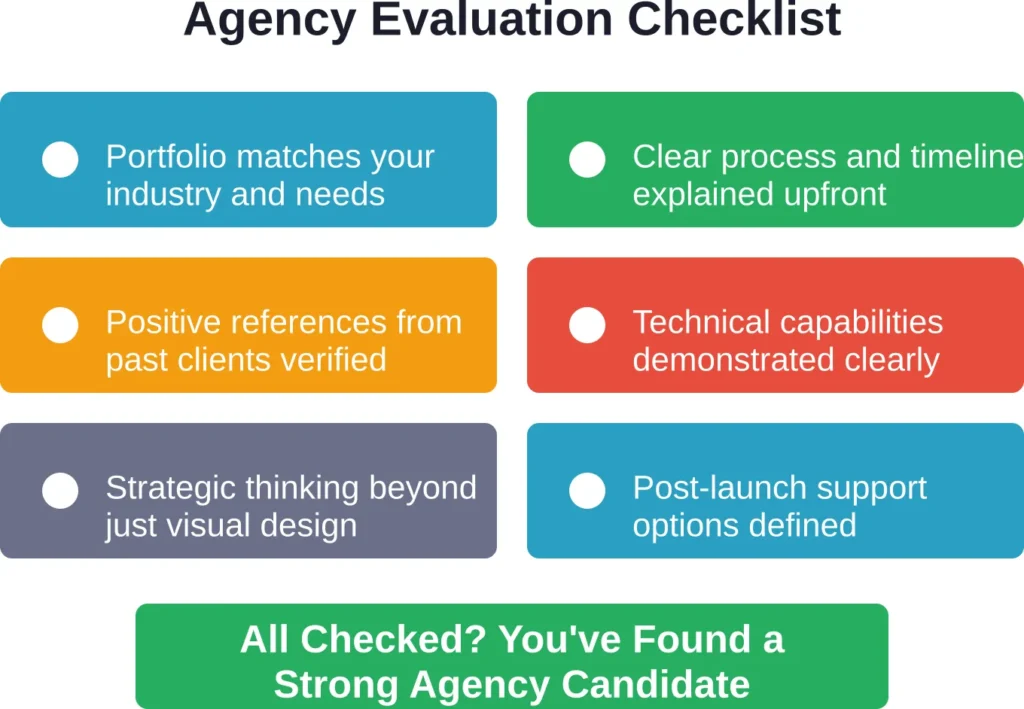
Use the evaluation framework provided here—portfolio relevance, technical capabilities, industry experience, communication quality, and strategic approach—to assess potential partners systematically. Ask the tough questions. Check references. Verify that their process aligns with your expectations.
Professional web design is an investment that shapes how customers perceive your brand, interact with your business, and ultimately decide whether to become paying customers. That investment deserves careful consideration and the right partner.
Ready to elevate your digital presence? Start by reaching out to agencies whose work resonates with your vision. Schedule conversations, share your goals, and find the partner who’ll help transform your website from a digital business card into a powerful growth engine.
The perfect agency for your project is out there. Now you have the knowledge to find them.