
Quick Summary: The best local web design companies in 2026 include industry leaders like Lengreo, Gilzor, OSKI Solutions, A-listware, Mobian Studio, Lounge Lizard, Clay, Digital Silk, Huemor, and Ruckus Marketing, each specializing in different areas from SaaS product design to eCommerce and enterprise solutions. These agencies have proven track records with major brands, strong client reviews, and expertise in modern web technologies, responsive design, and user experience optimization. Selecting the right partner depends on your business size, industry focus, project complexity, and whether you need specialized services like Shopify development, mobile-first design, or brand strategy integration.
Finding the right web design partner can make or break your digital presence. A professional website works for your business 24 hours a day, answering customer questions, showcasing services, and guiding visitors toward action. In many cases, it’s the first interaction a potential customer has with your brand.
But here’s the thing—not all web design companies are created equal.
Some agencies excel at building beautiful brand experiences for Fortune 500 companies. Others specialize in conversion-focused designs for small businesses. And then there are those who live and breathe SaaS product interfaces or eCommerce platforms like Shopify.
The 15 agencies below represent the strongest players in the web design space as of 2026. They’ve built hundreds of websites collectively, earned consistent five-star reviews, and delivered measurable results for clients ranging from startups to established enterprises.
What Makes a Web Design Company Worth Hiring?
Before diving into the agency list, it helps to understand what separates exceptional web design companies from mediocre ones.
The strongest agencies share several characteristics. They maintain transparent communication throughout the project lifecycle. They show real portfolios with live websites you can visit and test. They understand responsive design principles—mobile-responsive design is critical for user experience across devices.
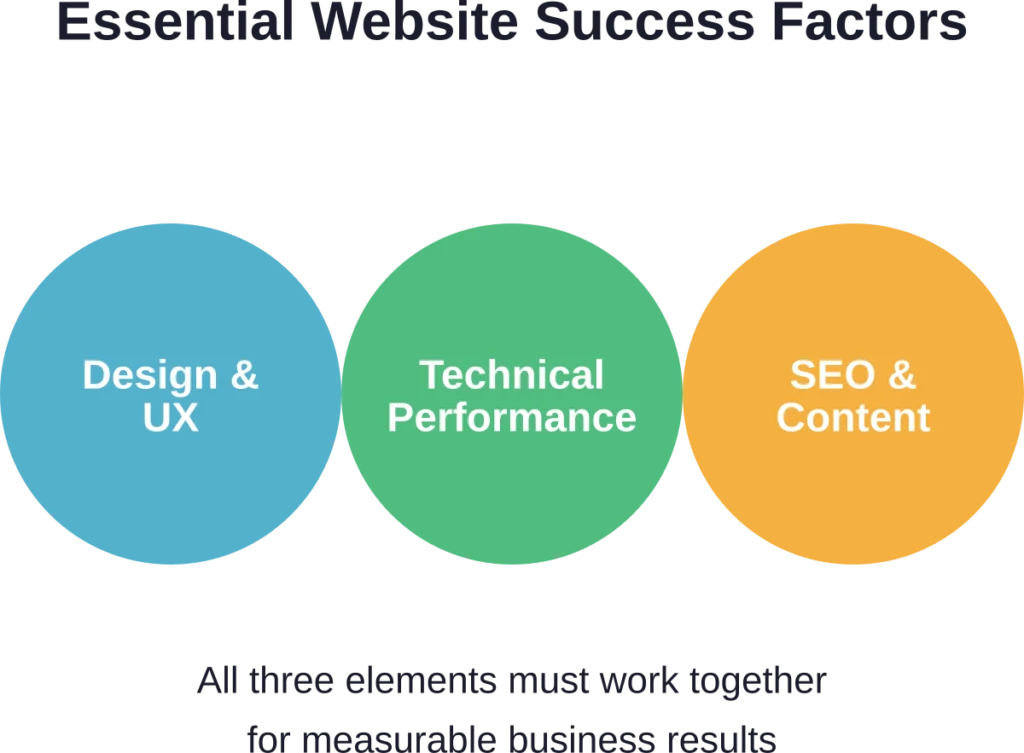
Top agencies also grasp the intersection between design and technical performance. Page speed matters. Accessibility compliance matters. SEO-friendly architecture matters. A visually stunning website that loads in seven seconds and can’t be found in Google search results won’t deliver business value.
Look for agencies that ask tough questions about your business goals before discussing aesthetics. The best partners dig into your target audience, competitive positioning, and conversion objectives during discovery.
How We Evaluated These Web Design Companies
This list draws from multiple data sources to ensure objectivity and accuracy.
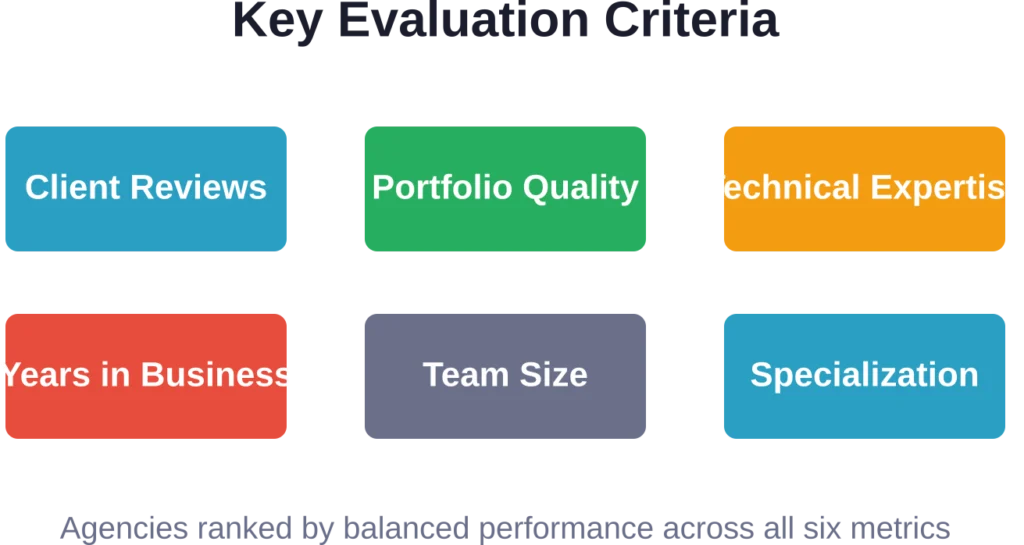
Reviews on platforms like Clutch provided client satisfaction metrics. Portfolio quality showed design sophistication and technical capabilities. Years in business indicated stability and experience. Team size revealed capacity and specialization depth.
Agencies that rank highest across multiple evaluation criteria made the cut. The goal wasn’t to list every web design company—it was to identify the 15 most reliable partners for different business needs and budgets in 2026.
1. Mobian Studio
Mobian Studio builds dedicated engineering teams that deliver production-ready digital solutions for companies that demand speed and reliability. They specialize in mobile and AI-powered products for industries including healthcare, fintech, and logistics.
What sets Mobian apart is their flexible engagement model and commitment to senior-level execution. Whether taking full ownership of delivery or embedding engineers into client teams, they ensure clean architecture and clear communication.
The studio focuses on end-to-end product development, mobile applications, AI and automation systems, scalable architecture, and legacy system integration. They create solutions that are built to grow and perform under real-world conditions.
Their teams work exclusively on client projects with full accountability from scoping through deployment and ongoing support. This focused approach eliminates delays and ensures high standards of quality.
Clients value their ability to ship faster than competitors while maintaining excellent documentation and post-launch partnership.
Best for: Companies in competitive industries that need fast, reliable delivery of complex mobile and web-based digital products.
Contact Information:
- Website: mobian.studio
- Phone: [email protected]
- Address: Harju maakond, Tallinn, Kesklinnalinnaosa, Masina tn 22, 10113
- LinkedIn: www.linkedin.com/company/mobian-studio
2. A-listware
A-listware is a trusted software development and consulting partner that delivers high-quality, secure, and responsive digital solutions. They help businesses of all sizes strengthen their technical capabilities through expert teams and strategic guidance.
What sets A-listware apart is their focus on seamless integration and long-term partnership. They act as an extension of their clients’ teams, ensuring smooth collaboration and consistent delivery of excellent results.
The company specializes in software development, application services, UX/UI design, testing and QA, dedicated development teams, and IT consulting. They build enterprise applications, custom software, cloud solutions, and systems that enhance business operations.
Their experienced professionals provide end-to-end management across development, infrastructure, security, and support. This comprehensive service ensures projects stay on track and deliver lasting value.
Clients trust A-listware for their professionalism, technical expertise, and ability to solve complex challenges effectively.
Best for: Businesses seeking reliable software development partners and dedicated teams to build or enhance their digital infrastructure.
Contact Information:
- Website: a-listware.com
- Phone: +1 (888) 337 93 73
- Email: [email protected]
- Address: North Bergen, NJ 07047, USA
- LinkedIn: www.linkedin.com/company/a-listware
- Facebook: www.facebook.com/alistware
3. Lengreo
Lengreo has established itself as a complete marketing and technology partner, delivering integrated solutions that combine strategy with execution. With a strong focus on B2B success, they help companies across multiple countries achieve significant growth in client acquisition and lead generation.
What sets Lengreo apart is their personalized, results-driven methodology. Rather than offering template solutions, they listen carefully to client needs and craft tailored tactics using the most effective tools and channels.
The agency specializes in website development, B2B digital marketing strategy, SEO, paid advertising, lead generation, and demand creation. They build eCommerce platforms, business websites, landing pages, and full digital ecosystems designed to drive measurable outcomes.
Lengreo’s team works closely with clients through every stage — from discovery and strategy to implementation and ongoing optimization. Their collaborative process ensures alignment with business goals and smooth project delivery.
Clients consistently praise their initiative, dedication, and ability to deliver high-quality work that produces real business impact.
Best for: B2B companies seeking a reliable partner that combines website development with powerful lead generation and digital marketing strategies.
Contact Information:
- Website: lengreo.com
- Phone: +31 686 147 566
- Email: [email protected]
- Address: Vrijstraat 9 C/D, 5611 AT Eindhoven, Netherlands
- LinkedIn: www.linkedin.com/company/lengreo
- Instagram: www.instagram.com/lengreo.agency
- Twitter: x.com/Lengreo
4. Oski
Oski designs, develops, and maintains well-engineered software solutions for tech-forward enterprises and ambitious startups. They combine deep technical expertise with a focus on innovation and quality.
What sets Oski apart is their ability to accelerate development while maintaining high standards. They create powerful digital experiences across cloud infrastructure, modern frontend technologies, and artificial intelligence.
The company specializes in cloud solutions, frontend development, artificial intelligence integrations, content management systems, and industry-specific platforms. Their work spans web applications, mobile solutions, and complex enterprise systems.
Oski brings together experienced developers, designers, and strategists who collaborate closely to deliver solutions that are both technically robust and user-friendly.
Clients appreciate their structured approach, clear communication, and ability to transform business operations through thoughtful digital innovation.
Best for: Enterprises and innovative startups looking for sophisticated, scalable web and software solutions that drive operational excellence.
Contact Information:
- Website: oski.site
- Phone: +48571282759
- Email: [email protected]
- Address: Kaupmehe tn 7, 10114 Tallinn, Estonia
- LinkedIn: www.linkedin.com/company/oski-solutions

5. Gilzor
Gilzor excels at turning ambitious ideas into functional, high-performing digital products. They partner with startups, small and medium businesses, and product companies to create custom software solutions that users love.
What sets Gilzor apart is their full-cycle approach to product development. They focus on validating ideas early, designing intuitive interfaces, and delivering polished applications that drive real user engagement and business growth.
The company specializes in web development, mobile development for iOS and Android, UI/UX design, quality assurance, and go-to-market strategy. Their work includes complex web applications, e-commerce solutions, and mobile apps that solve specific business challenges.
Gilzor’s team of creative and strategic thinkers manages projects from research and prototyping through development, testing, and post-launch support. This end-to-end involvement ensures technical excellence and user-centered results.
Clients highlight their ability to deliver clean, scalable solutions on time while maintaining strong communication throughout the partnership.
Best for: Startups and growing businesses that need custom web and mobile applications built with strong user experience and technical quality.
Contact Information:
- Website: www.gilzor.com
- Email: [email protected]
- Address: Poland, Warsaw, Office 58, street Adama Mickiewicza 37, 01-625
- LinkedIn: www.linkedin.com/company/gilzor-softwaredevelopment
6. SmartSites
SmartSites has built over 900 websites since launching in 2011. Based in New Jersey with a team of 50+ professionals, they’ve earned consistent five-star ratings for responsiveness and ROI delivery.
The agency serves a diverse client base—from local auto dealerships to national e-commerce brands. SmartSites has delivered measurable results for clients through SEO-friendly website redesigns.
What makes SmartSites notable is their focus on measurable outcomes. They track conversion rates, traffic sources, and engagement metrics, then optimize designs based on actual performance data rather than assumptions.
SmartSites also offers digital marketing services, allowing them to design websites with paid advertising and SEO strategies in mind from the start. This integrated thinking produces better long-term results than agencies that only handle design in isolation.
Best for: Small to mid-sized businesses seeking affordable web design with strong digital marketing integration.
7. Bop Design
Bop Design specializes in serving B2B companies, particularly in professional services, technology, and industrial sectors. This focused positioning allows them to deeply understand the unique challenges B2B websites face.
B2B buying cycles are longer and involve multiple decision-makers. Bop Design creates websites that nurture prospects through that complex journey—providing the right information at the right stages to move deals forward.
Their portfolio includes work for consulting firms, software companies, manufacturers, and professional service providers. The design aesthetic tends toward professional and polished rather than flashy, reflecting the expectations of B2B audiences.
Bop Design also offers content marketing services, recognizing that B2B websites need robust content strategies to attract and convert qualified leads. Their integrated approach addresses both design and content needs.
Best for: B2B companies needing websites optimized for longer sales cycles and multiple stakeholders.

8. Orbit Media Studios
Orbit Media Studios, based in Chicago, has spent nearly two decades perfecting their web design and development process. The agency is known for creating websites on the widely-used WordPress platform.
Their WordPress expertise runs deep. Orbit Media doesn’t use generic templates—they build custom themes tailored to each client’s specific requirements. This approach delivers the flexibility businesses need while maintaining the ease-of-use WordPress offers.
The agency emphasizes analytics and continuous improvement. They help clients understand website performance through clear reporting and provide actionable recommendations for ongoing optimization.
Orbit Media’s team includes content strategists who ensure websites have compelling, SEO-optimized copy that resonates with target audiences. This holistic approach addresses both design and messaging.
Best for: Organizations wanting custom WordPress websites with strong content strategy and analytics integration.
9. Blue Fountain Media
Blue Fountain Media handles large-scale projects for enterprise clients and mid-market companies. With offices in New York and Seattle, they’ve worked with brands like Sony, NASA, and P&G.
The agency specializes in complex websites that require advanced functionality—custom web applications, membership portals, eCommerce platforms with thousands of products, and multi-language international sites.
Blue Fountain Media’s strength lies in their technical capabilities. They handle challenging integrations with CRM systems, marketing automation platforms, and legacy enterprise software. Their development team solves problems smaller agencies can’t tackle.
The agency also offers digital marketing services, including paid search, SEO, and conversion rate optimization. This full-service model appeals to larger organizations wanting consolidated vendor management.
Best for: Enterprise and mid-market companies with complex technical requirements and integration needs.
10. TinyFrog Technologies
TinyFrog Technologies, despite their playful name, delivers serious web design and development services. Based in San Diego, they’ve built websites for over 500 clients since 2003.
The agency focuses on creating mobile-responsive websites optimized for lead generation. They serve small to mid-sized businesses across industries—from healthcare practices to professional services to local retail.
TinyFrog’s approach emphasizes clear communication and client education. They walk businesses through the web design process, explaining technical decisions in plain language and ensuring clients understand how to manage their websites post-launch.
The agency also handles website maintenance and support, providing ongoing technical assistance after launch. This removes the burden from businesses that lack in-house technical resources.
Best for: Small businesses needing mobile-responsive websites with strong support and clear communication.

11. Lounge Lizard
Lounge Lizard has been crafting digital experiences since 1998, making them one of the longest-standing agencies in this space. With offices in New York, Nashville, and several other locations, they’ve built over 600 websites for clients across industries.
What sets Lounge Lizard apart? Their process integrates brand strategy from day one. They don’t just design websites—they build digital ecosystems that align with broader marketing goals. Their portfolio includes work for major brands as well as mid-sized businesses looking to establish stronger online presence.
The agency specializes in responsive web design, mobile app development, and digital marketing integration. Their team includes strategists, designers, developers, and project managers who collaborate throughout each engagement.
Lounge Lizard consistently earns high marks for communication and project management. Clients appreciate their structured approach and ability to meet deadlines without sacrificing quality.
Best for: Established businesses seeking comprehensive brand and web design strategy integration.
12. Clay
Clay has earned a reputation for creating websites that don’t just look exceptional—they perform exceptionally. This San Francisco-based agency works primarily with high-growth companies and recognizable brands.
Their client roster includes Coinbase, Slack, and other tech companies that demand cutting-edge design and flawless execution. Clay’s approach emphasizes research-driven design decisions. They conduct user testing, analyze behavioral data, and iterate based on real-world usage patterns.
The agency’s strength lies in their ability to balance aesthetics with functionality. Their websites load quickly, work seamlessly across devices, and guide users toward conversion goals without friction.
Clay’s team includes UX researchers, visual designers, and front-end engineers who collaborate closely. This multidisciplinary approach ensures designs are both beautiful and technically sound.
Best for: Tech companies and brands that need sophisticated web experiences with proven conversion optimization.

13. Digital Silk
Digital Silk positions itself as a full-service digital agency, handling everything from brand identity to web development to ongoing digital marketing. Founded in 2012, they’ve grown to a team of over 100 professionals.
Their portfolio showcases a wide range of project types—corporate websites, eCommerce platforms, web applications, and more. Digital Silk serves clients in healthcare, finance, technology, and consumer goods sectors.
What makes Digital Silk stand out is their end-to-end service model. Many agencies hand off completed websites and move on. Digital Silk offers ongoing optimization, A/B testing, and growth marketing services to continuously improve performance post-launch.
The agency has received recognition for both design quality and client satisfaction. Their structured methodology ensures projects stay on track and deliver against defined success metrics.
Best for: Mid-to-large businesses wanting a long-term digital partner beyond just website design.
14. Huemor
Huemor takes a refreshingly straightforward approach to web design. Their tagline promises to eliminate the frustration many businesses experience when working with agencies—and client reviews suggest they deliver on that promise.
The agency specializes in creating websites that drive measurable business results. Huemor has worked with healthcare clients on e-commerce optimization. They focus on understanding business challenges first, then designing solutions that address those specific pain points.
Huemor’s portfolio demonstrates versatility across industries—from healthcare to hospitality to professional services. Their design style tends toward clean, modern aesthetics that prioritize usability over unnecessary embellishment.
The agency maintains transparency throughout projects, providing regular updates and involving clients in key decisions. This collaborative approach reduces surprises and ensures the final product aligns with expectations.
Best for: Businesses frustrated with typical agency experiences who want straightforward communication and results-focused design.
15. Ruckus Marketing
Ruckus Marketing brings serious creative firepower to web design projects. This New York-based agency has worked with clients like the United Nations, Live Nation, and Revlon, delivering websites that make bold statements.
Their approach emphasizes brand storytelling through digital experiences. Ruckus doesn’t create generic websites—they craft distinctive digital presences that reflect each client’s unique positioning and personality.
The agency’s team includes award-winning designers, copywriters, and developers. This integrated talent allows them to handle complex projects that require coordination across disciplines—brand identity, web design, content strategy, and technical implementation.
Ruckus excels at projects where brand differentiation is paramount. If your industry is crowded and you need to stand out dramatically, their creative approach can deliver that edge.
Best for: Established brands seeking distinctive, creative-led web design that breaks category conventions.
What to Look for When Choosing a Web Design Company
Selecting the right agency requires looking beyond surface-level factors like awards and flashy portfolios.
Portfolio Relevance
Does the agency have experience in your industry or with similar project types? An agency that’s built 50 eCommerce sites will understand online retail challenges better than one that’s only done corporate brochure sites.
Look for portfolio pieces that solve problems similar to yours. If you need lead generation, find agencies that show conversion-focused designs with clear calls to action. If you need brand differentiation, look for creative work that stands out visually.
Technical Capabilities
Can the agency handle your technical requirements? Simple brochure websites require different skills than complex web applications with custom functionality.
Ask about their development stack, hosting arrangements, and ongoing maintenance capabilities. According to academic research from institutions like Penn State Extension, website maintenance considerations should be addressed during initial planning, not as afterthoughts.
Communication and Process
How does the agency manage projects? What does their communication cadence look like? Who will be your primary contact?
The strongest agencies have defined processes that keep projects on track. They set clear milestones, provide regular updates, and involve clients at appropriate decision points without overwhelming them with every minor detail.
Client Reviews and References
What do past clients say about working with the agency? Look beyond star ratings to read detailed reviews that describe specific experiences.
Pay attention to comments about communication, problem-solving, and post-launch support. These factors often matter more than pure design talent when determining overall satisfaction.
Cultural Fit
Do you get along with the agency team? Web design projects require collaboration over weeks or months. Working with people you trust and communicate well with makes the process smoother.
Initial conversations should feel productive and energizing, not frustrating or confusing. Trust your instincts about whether the relationship will work.
Common Web Design Project Types
Different businesses need different types of websites. Understanding common project categories helps match requirements to agency strengths.
Corporate and Business Websites
These sites establish online presence, communicate brand positioning, and provide information about products and services. They typically include pages like About Us, Services, Portfolio, and Contact.
Corporate sites prioritize professionalism, clear navigation, and content that builds credibility. They may include resources like blog posts, case studies, and downloadable assets.
eCommerce Platforms
Online stores require product catalogs, shopping carts, payment processing, and order management. Popular platforms include Shopify, WooCommerce, and Magento.
eCommerce design focuses on product presentation, seamless checkout experiences, and features that increase average order value like recommendations and upsells.
SaaS and Web Applications
Software-as-a-service products need interfaces for both marketing sites and the application itself. These projects require strong UX design to make complex functionality feel intuitive.
SaaS websites must explain technical products clearly, demonstrate value through product tours or demos, and guide visitors toward free trials or purchase decisions.
Nonprofit and Association Sites
Organizations in the nonprofit sector need websites that tell compelling stories, accept donations, recruit volunteers, and provide resources to constituents.
These sites balance emotional storytelling with practical functionality like event calendars, membership portals, and donation processing.
Industry-Specific Considerations
Certain industries have unique requirements that influence agency selection.
Healthcare and Medical
Healthcare websites must comply with HIPAA regulations if they handle patient information. They need clear information architecture to help patients find services, locations, and providers.
Medical practices benefit from appointment scheduling integration, patient portal access, and educational content that establishes expertise.
Professional Services
Law firms, accounting practices, consulting companies, and similar businesses need websites that establish credibility and showcase expertise.
These sites typically emphasize team bios, service descriptions, case studies or client results, and thought leadership content.
Hospitality and Tourism
Hotels, restaurants, and tourism businesses need visually rich websites with high-quality photography. Booking functionality, event calendars, and location information are critical.
These sites often integrate with reservation systems, review platforms, and local attraction information.
Manufacturing and Industrial
B2B manufacturers need websites that explain technical products, showcase capabilities, and generate qualified leads from buyers and distributors.
According to the U.S. Small Business Administration, Spika Design & Manufacturing, a Montana manufacturer, has expanded aerospace, defense, and transportation capabilities while investing in rural jobs with support from SBA programs—demonstrating how digital presence supports real-world business expansion.
Mobile-First Design in 2026
Mobile traffic now represents the majority of website visits across most industries. Designing for mobile devices first has become standard practice rather than an afterthought.
Mobile-first design means considering small screens, touch interfaces, and slower connection speeds from the beginning of the design process. Navigation must be simplified. Content must be scannable. Forms must be easy to complete on touchscreens.
The best agencies in 2026 don’t treat mobile as a separate phase. They design responsive layouts that adapt seamlessly from smartphones to tablets to desktop monitors, testing across devices throughout development.
Accessibility and Inclusive Design
Website accessibility ensures people with disabilities can access content and functionality. This isn’t just ethical—it’s increasingly legally required.
Academic institutions like UC Santa Cruz and University of Texas emphasize that websites must meet defined information security, accessibility, and usability standards. These standards are designed to ensure sustainability and improve clarity on responsibility.
Accessible design includes proper heading hierarchy, alt text for images, keyboard navigation support, sufficient color contrast, and screen reader compatibility.
Top web design companies build accessibility into their standard process rather than treating it as an optional add-on. This ensures compliance with standards like WCAG 2.1 and reduces legal risk.
SEO and Web Design Integration
The most beautiful website in the world won’t deliver business value if nobody can find it. Search engine optimization must be integrated into web design from the start.
Technical SEO considerations include site speed, mobile responsiveness, clean URL structures, proper heading hierarchy, schema markup, and XML sitemaps. These elements affect how search engines crawl and index websites.
Content strategy also impacts SEO success. Pages need keyword-optimized copy, compelling meta descriptions, and internal linking structures that distribute authority across the site.
The strongest agencies coordinate between designers, developers, and SEO specialists to ensure websites are both visually appealing and search-engine friendly. These disciplines shouldn’t work in isolation.
Questions to Ask Before Hiring
Before signing a contract, ask potential agencies these questions to gauge fit and capability.
About Their Process
- What does your typical project timeline look like?
- How do you handle revisions and feedback?
- Who will be my primary point of contact?
- What information do you need from us to get started?
- How do you handle situations when projects get off track?
About Their Expertise
- Have you worked with companies in our industry before?
- Can you show examples of similar projects you’ve completed?
- What platforms and technologies do you specialize in?
- Do you handle ongoing maintenance and support?
- What’s your approach to mobile responsiveness and accessibility?
About Results
- How do you measure project success?
- Can you share case studies with specific results?
- What analytics and tracking will be implemented?
- Do you offer post-launch optimization services?
- What kind of results should we expect to see and when?
Red Flags to Watch For
Certain warning signs suggest an agency may not be the right choice.
Vague timelines or reluctance to commit to schedules indicate poor project management. Professional agencies provide realistic timelines and stick to them.
Lack of questions about your business suggests the agency doesn’t prioritize understanding client needs. The best partners dig deep into goals, audiences, and challenges before proposing solutions.
Portfolio pieces that all look similar hint at template-based approaches rather than custom design. While templates have their place, custom work should demonstrate variety and adaptability.
Reluctance to provide references or case studies raises concerns about past project outcomes. Established agencies have satisfied clients willing to speak about their experiences.
Communication delays during the sales process often predict communication problems during the project. Responsive agencies remain responsive after contracts are signed.
Working With Remote Versus Local Agencies
Geography matters less in 2026 than it did a decade ago, but location still influences some decisions.
Local agencies offer face-to-face meetings, which some businesses prefer for major projects. Being in the same timezone simplifies scheduling. Local agencies may also understand regional market dynamics better.
Remote agencies expand options dramatically. The best agency for your specific needs might be across the country. Video conferencing tools make remote collaboration seamless for most projects.
The 15 agencies on this list include both geographically concentrated firms with physical offices and distributed teams working remotely. Both models can deliver excellent results when communication is prioritized.
Post-Launch Considerations
Website launch is the beginning, not the end, of your digital presence journey.
Ongoing Maintenance
Websites require regular updates for security patches, plugin updates, and technical maintenance. Academic guidance from institutions like Penn State Extension emphasizes that maintenance considerations should be addressed during development, not after problems arise.
Some agencies include maintenance in their service offerings. Others hand off completed sites and expect clients to handle updates independently. Clarify this before signing contracts.
Content Updates
Fresh content keeps websites relevant and supports SEO efforts. Plan for how you’ll handle blog posts, service updates, team changes, and other content additions.
Content management systems like WordPress make updates relatively straightforward, but businesses still need dedicated resources or agency support to maintain active websites.
Performance Monitoring
Track metrics that matter to your business—traffic sources, conversion rates, bounce rates, and goal completions. Use tools like Google Analytics to understand how visitors interact with your site.
Regular performance reviews identify optimization opportunities. Maybe certain pages have high drop-off rates. Maybe mobile conversion rates lag behind desktop. Data reveals where improvements will have the most impact.
Continuous Optimization
The best websites evolve based on user behavior and business needs. A/B testing compares design variations to see what performs better. Heatmaps reveal where users click and how far they scroll. User recordings show real navigation patterns.
Agencies that offer optimization services help businesses continuously improve their digital presence rather than launching once and moving on.
Frequently Asked Questions
Most professional website projects take between 8-16 weeks from kickoff to launch, depending on complexity. Simple sites with few pages might complete in 6-8 weeks. Complex sites with custom functionality, extensive content, or multiple stakeholder approvals can extend to 20+ weeks. Timeline depends on project scope, client responsiveness during review cycles, and whether content is provided or needs to be created.
A comprehensive contract should specify project scope, deliverables, timeline with milestones, payment terms, revision limits, ownership of final files, hosting arrangements, post-launch support terms, and cancellation policies. It should clearly define what’s included in the quoted price versus what would require additional fees. Good contracts protect both parties by setting clear expectations upfront.
This varies by agency and should be clarified during initial discussions. Some agencies include copywriting as part of their design services. Others expect clients to provide all content. Many offer content creation as an optional add-on service. If you lack in-house writing resources, look for agencies with content strategists and copywriters on staff or establish a content plan before design begins.
Web design focuses on visual appearance, user experience, and layout—the creative aspects of how a website looks and feels. Web development handles the technical implementation—coding, database configuration, functionality, and making designs actually work in browsers. Most agencies offer both services with designers and developers collaborating throughout projects. Some smaller agencies specialize in one or the other.
Templates work well for straightforward websites with common functionality needs and limited budgets. Custom design makes sense when you need unique brand expression, specific functionality not available in templates, or competitive differentiation in crowded markets. Consider your budget, timeline, and how important distinctive design is to your business positioning. Many successful businesses use customized templates that split the difference.
Professional agencies include revision rounds in their contracts—typically 2-3 rounds of feedback and refinement. During revisions, provide specific, constructive feedback about what isn’t working and why. Good agencies welcome honest feedback and work collaboratively to find solutions. If fundamental disagreements arise, review the contract terms regarding project termination and partial refunds. This rarely happens when agencies conduct thorough discovery and maintain good communication.
WordPress works well for most business websites and blogs, offering flexibility and ease of content management. Shopify excels for eCommerce with built-in payment processing, inventory management, and sales tools. Custom development makes sense for unique applications requiring specific functionality unavailable in existing platforms. Discuss platform options with agencies during discovery—experienced agencies will recommend the best fit based on your specific needs, technical resources, and growth plans.
Making Your Final Decision
Choosing a web design partner is a significant business decision. The right agency becomes a valuable collaborator who understands your goals and helps achieve them through effective digital experiences.
Start by clearly defining your own requirements. What does success look like? What specific functionality do you need? What’s your realistic budget and timeline? Clear internal alignment makes agency conversations more productive.
Interview multiple agencies before deciding. Compare not just portfolios and capabilities but also communication styles and cultural fit. The agency you feel most comfortable with often delivers the best results because collaboration flows more naturally.
Trust the process. Professional agencies have refined methodologies that produce consistent results. Resist the temptation to micromanage every detail—you hired experts for a reason.
The 15 agencies highlighted in this guide represent some of the strongest web design partners available in 2026. Each brings unique strengths to different project types and business needs.
Whether you’re a small business launching your first professional website or an enterprise organization rebuilding a complex digital platform, the right agency partner is out there. Take time to find the one that aligns with your specific requirements, communicate openly throughout the project, and you’ll end up with a website that truly works for your business.
Ready to start your web design project? Reach out to 2-3 agencies from this list that match your needs, schedule discovery calls, and begin the conversation. Your next great website is closer than you think.