
Quick Summary: Revit drafting costs vary widely based on project complexity and provider. Basic floor plans range from $300–$800, while full residential permit sets cost $1,800–$6,000+. Hourly rates typically run $80–$150 for professional drafting services in the U.S., with outsourcing to specialized studios offering 40–60% cost savings.
Revit has become the industry standard for architectural drafting and BIM workflows. But when it comes to pricing out a project, the numbers get fuzzy fast.
Some firms quote hourly. Others offer fixed rates. And that’s before you factor in software licenses, project scope, or whether you’re hiring domestically or outsourcing overseas.
This guide breaks down exactly what Revit drafting costs in 2026—covering project-based pricing, hourly rates, software subscription fees, and the variables that push costs up or down. Real numbers, no fluff.
What Drives Revit Drafting Costs?
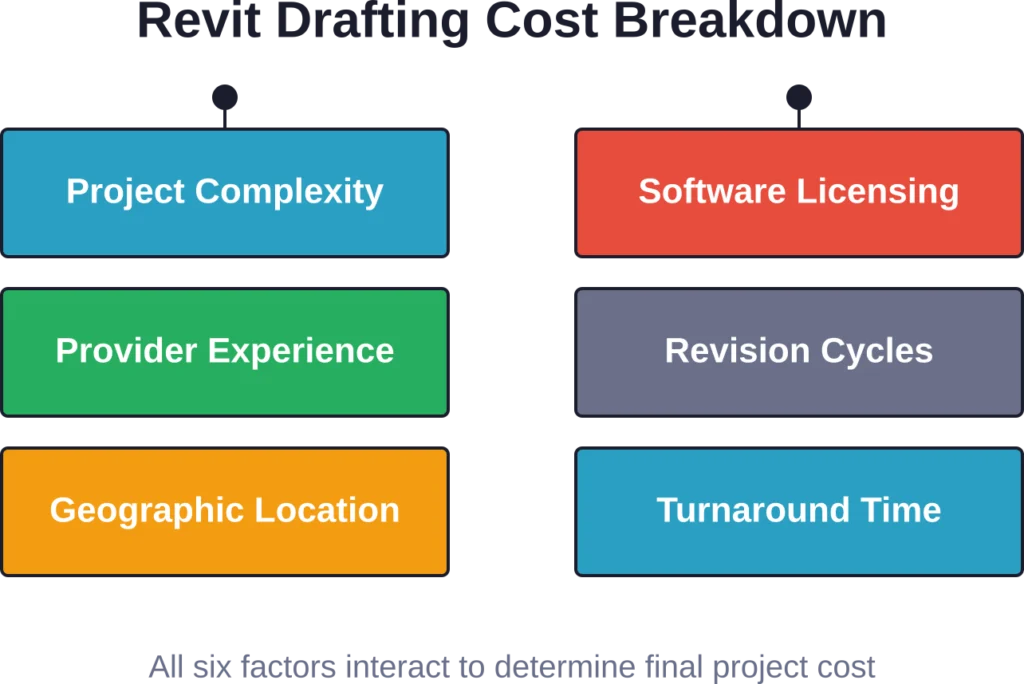
Revit drafting isn’t a commodity service. Pricing depends on several moving parts, and understanding them helps you budget accurately.
Project Complexity and Scope
A basic floor plan with minimal detail work costs far less than a full permit-ready construction document set. The difference comes down to deliverables.
Simple projects—like single-family floor plans or schematic layouts—require fewer hours and less coordination. Complex builds—multi-story residential, commercial tenant improvements, or projects with intricate MEP systems—demand more modeling time, detail views, schedules, and quality control passes.
Here’s what typical project scopes look like:
| Project Type | Average Cost (USA) | Typical Turnaround |
|---|---|---|
| Basic Floor Plan | $300 – $800 | 3–5 days |
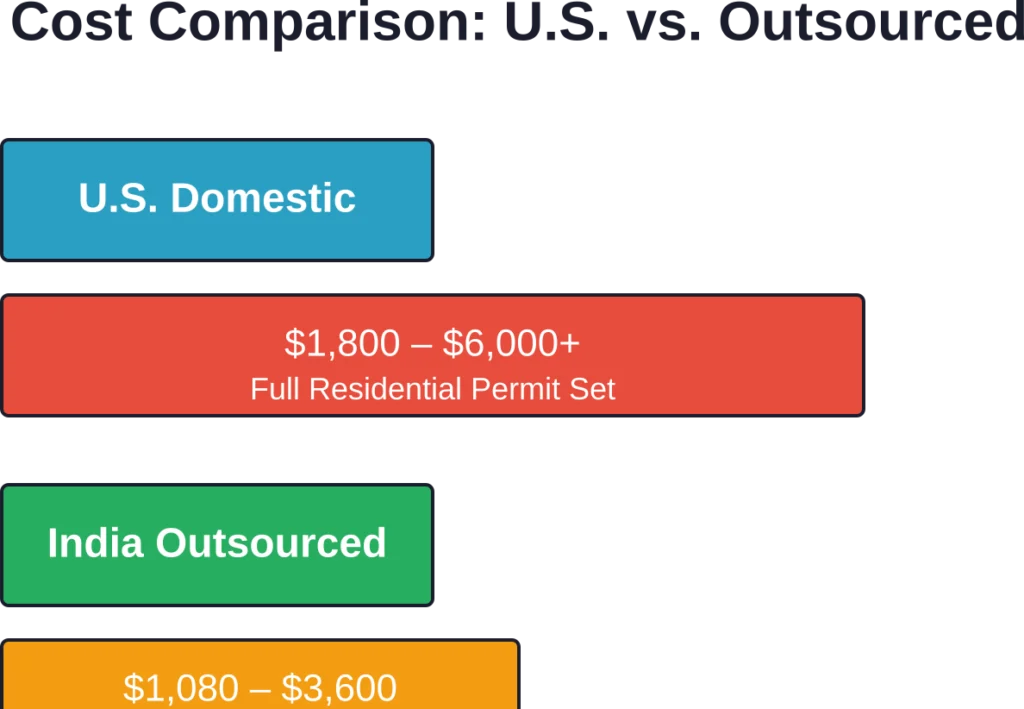
| Full Residential Permit Set | $1,800 – $6,000+ | 2–4 weeks |
| Home Addition Plans | $2,500 – $7,500 | 1–3 weeks |
| Basement Conversion Plans | $1,500 – $4,000 | 1–2 weeks |
| As-Built Drawings | $1,500 – $4,000 | 1–2 weeks |
These ranges reflect work done by professional drafting services or experienced freelancers in the United States. Costs shift based on regional labor markets and provider expertise.
Hourly Rates vs. Fixed Project Fees
Most drafting providers structure pricing one of two ways: hourly billing or flat project rates.
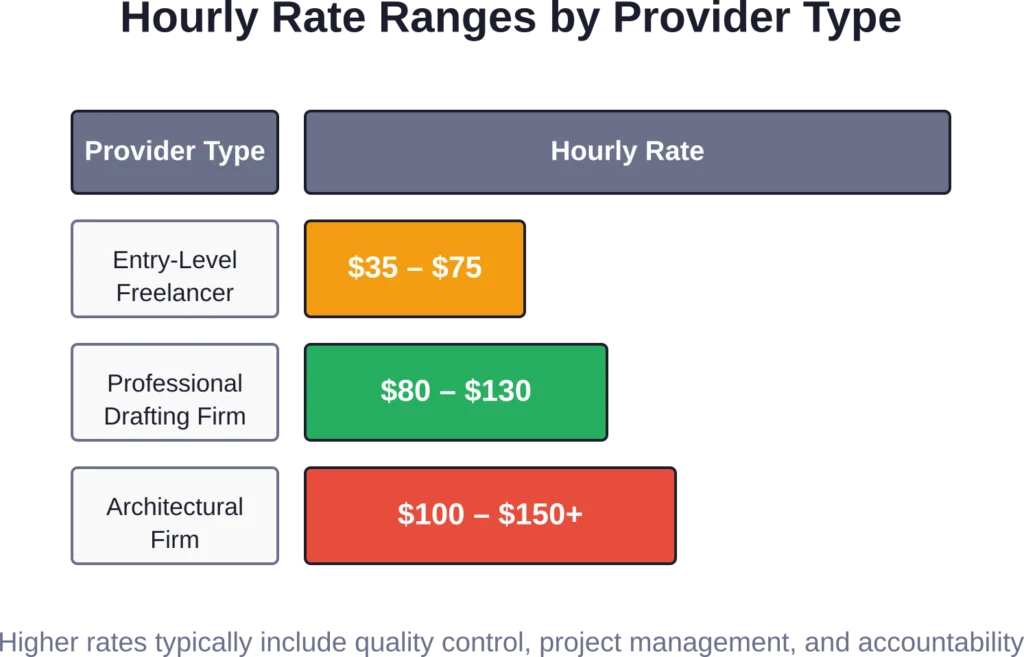
Hourly billing works for projects with undefined scope or ongoing revisions. Rates typically break down like this:
- Freelance CAD drafter (beginner): $20–$40/hour—often entry-level or overseas professionals
- Experienced freelancer: $35–$75/hour—mid-level drafters with 3–8 years of Revit experience
- Professional drafting service: $80–$130/hour—established firms with quality control processes
- Architectural firm drafting: $100–$150+/hour—in-house teams at registered architecture practices
Fixed project fees simplify budgeting. The drafter assesses scope upfront, then quotes a lump sum. This approach favors well-defined residential projects where deliverables are clear from the start.
For homeowners or small contractors, fixed pricing removes the uncertainty of runaway hours. For firms managing multiple revisions or phased work, hourly billing offers more flexibility.
Geographic Location and Labor Markets
Where your drafter is based matters—a lot.
U.S. coastal markets (California, New York, Washington) command higher rates due to cost of living and competitive labor demand. Midwest and Southern states trend 10–20% lower.
Canada follows similar patterns, with Toronto and Vancouver pricing at the high end, and Alberta or Maritime provinces offering more moderate rates.
Outsourcing to countries like India introduces significant cost arbitrage. Studios there often charge 40–60% less than U.S. equivalents while maintaining familiarity with North American building codes and documentation standards.
Software Licensing Costs
If you’re hiring a drafter directly or bringing drafting in-house, Revit software licenses add recurring overhead.
Autodesk Revit subscriptions aren’t cheap. Monthly subscriptions run approximately $370/month, while annual subscriptions cost approximately $2,910/year. For firms using multiple Autodesk tools, the AEC Collection bundles Revit, AutoCAD, Civil 3D, and Navisworks for approximately $3,775/year—better value if you need the full suite.
Revit LT is a simplified version with limited collaboration features and reduced pricing. But it lacks worksharing, advanced family editing, and several modeling tools critical for larger projects.
Most professional drafting services absorb software costs into their hourly or project rates, so clients don’t pay separately for licenses.
Get Revit Drafting Support for Project Documentation
Powerkh supports architects, engineers, and contractors with Revit drafting and BIM documentation for design and construction projects. Its services include drawing production, model updates, coordination support, and technical documentation workflows.
Need Revit Drafting Support?
Talk with Powerkh to:
- prepare Revit drawings for project delivery
- support documentation during design development
- update drawings based on coordination changes
- improve consistency across BIM documentation
Review your Revit drafting requirements with Powerkh.
Typical Revit Drafting Rates in the U.S. (2026)
Breaking down the U.S. market by provider type gives a clearer picture of what to expect.
Freelance Drafters
Freelancers span a wide skill range. Entry-level drafters—often recent graduates or professionals transitioning from AutoCAD—charge $35–$75 per hour. These rates apply to straightforward residential projects or basic modeling tasks.
Experienced freelancers with 5+ years of Revit work, a solid portfolio, and specialization in residential or light commercial projects command higher rates. Expect $60–$100+ per hour, especially if they handle coordination with engineers or manage permit submissions.
Professional Drafting Firms
Established drafting services bring quality control, project management, and accountability. Rates cluster around $80–$130 per hour.
These firms often employ multiple drafters, allowing them to handle larger workloads and meet tight deadlines. They also maintain internal standards for layer management, naming conventions, and documentation consistency—critical for projects moving through plan review.
Architectural Firms
Registered architecture firms charge premium rates—$100–$150+ per hour—because drafting sits within a broader professional service. You’re paying for liability coverage, stamped drawings, and the firm’s design oversight.
For smaller projects where you just need construction documents and don’t require design services or an architect’s seal, dedicated drafting providers offer better value.
Revit Drafting Costs in Canada
Canadian pricing mirrors U.S. trends, adjusted for currency and regional markets.
Basic floor plans run CAD $400–$1,000, while full residential permit sets cost CAD $4,000–$8,000+. Home additions and basement plans fall in the CAD $5,000–$10,000 range for comprehensive documentation.
Toronto, Vancouver, and Calgary command higher rates due to robust construction activity and higher operating costs. Smaller markets—like Halifax or Winnipeg—trend 15–25% lower.
Hourly rates for professional drafting services in Canada typically range from CAD $90–$150.
Outsourcing Revit Drafting: Cost Savings and Trade-Offs
Outsourcing to overseas drafting studios—particularly in India—has become standard practice for U.S. and Canadian firms looking to control costs without sacrificing quality.
Why India?
India hosts one of the world’s largest talent pools for AutoCAD drafting, Revit modeling, BIM coordination, and 3D visualization. Many studios specialize exclusively in serving North American clients and understand U.S. building codes, construction documentation standards, and permit requirements.
Cost savings hit 40–60% compared to domestic rates. A project that costs $4,000 in the U.S. might run $1,600–$2,400 through an Indian studio, with comparable turnaround times and deliverable quality.
Trade-Offs to Consider
Time zone differences can slow communication if not managed proactively. Firms that outsource successfully establish clear workflows, use detailed project briefs, and schedule overlapping hours for real-time coordination.
Quality varies by provider. Vetting portfolios, checking references, and starting with a pilot project help identify reliable partners.
Intellectual property and data security matter, especially for proprietary designs. Reputable studios sign NDAs and implement secure file transfer protocols.
Hidden Costs and Budget Surprises
Quoted rates rarely tell the full story. Several hidden costs creep into drafting projects if you’re not careful.
Revision Cycles
Most fixed-price quotes include one or two rounds of revisions. Additional changes beyond that trigger hourly billing or supplemental fees.
Scope creep—where “just a few tweaks” balloon into major rework—drives costs up fast. Defining deliverables clearly upfront minimizes surprises.
Coordination with Engineers
If your project involves structural, mechanical, or electrical consultants, coordination takes extra time. Drafters need to incorporate engineering markups, resolve clashes, and update models iteratively.
Some firms charge separately for coordination work. Others build it into the base rate if they know upfront that multi-discipline coordination is required.
File Preparation and Data Cleanup
Working from existing CAD files, PDFs, or scanned drawings adds prep time. Drafters often need to trace over plans, rebuild geometry, or clean up inconsistent line work before modeling begins.
If you’re providing reference files, ask whether cleanup is included or billed separately.
How to Choose a Revit Drafting Provider
Price matters, but it’s not the only variable. Picking the right provider depends on project needs and risk tolerance.
Portfolio and Specialization
Review past projects that match your scope. A drafter who specializes in single-family residential won’t necessarily excel at multi-family or commercial work—and vice versa.
Look for familiarity with local building codes if your project requires permit approval. Some drafters work nationwide but may need guidance on jurisdiction-specific requirements.
Communication and Turnaround
Responsiveness during the quoting phase often predicts how communication will go during the project. Slow replies or vague answers early on signal potential headaches later.
Ask about turnaround commitments and how they handle rush requests. Some providers charge premiums for expedited delivery; others build buffer into standard timelines.
Software Version Compatibility
Revit files aren’t always backward-compatible. If you’re working in Revit 2024 and your drafter uses Revit 2026, file exchange can get messy.
Confirm which version the provider uses and whether they can deliver in your required format.
Training and Certification Costs for In-House Drafting
Bringing Revit drafting in-house shifts costs from service fees to training and software licensing.
Revit Training Programs
Formal training accelerates skill development for staff transitioning from AutoCAD or new to BIM workflows.
Accredited institutions offer structured courses. For example, a 30-hour introductory Revit course costs approximately $799–$999 and covers 3D modeling, floor plans, elevations, and basic documentation. More comprehensive programs—150 hours with Autodesk Certified Instructors and a full year of software access from accredited institutions.
Regional options exist too. Salt Lake Community College offers an 8-week Revit course for $848 (with Strategic Workforce Initiative funding available covering 75% for Utah residents through June 30, 2026), with Strategic Workforce Initiative funding covering 75% of tuition for Utah residents through June 30, 2026.
Training investment pays off over time if your firm has consistent drafting volume. But for sporadic projects, outsourcing remains more cost-effective.
Salary Considerations
Hiring a full-time Revit drafter adds salary, benefits, and overhead. Entry-level drafters in the U.S. earn competitive salaries; specific regional data should be verified against current Bureau of Labor Statistics or industry surveys.
Freelancers or part-time contractors offer middle-ground flexibility—bringing in specialized skills without full-time commitment.
Real-World Budget Scenarios
Walking through a few common scenarios clarifies how costs add up.
Scenario 1: Simple Floor Plan for Homeowner
A homeowner planning a kitchen remodel needs a basic floor plan showing existing layout and proposed changes. Total square footage: 400 sq ft.
A freelance drafter quotes $500 flat fee, with one revision round included. Turnaround: 4 days. The homeowner provides reference photos and rough sketches.
No permit submission required, so documentation stays minimal. Final deliverables: PDF floor plan with dimensions and a 3D view.
Scenario 2: Full Permit Set for New Construction
A contractor building a 2,500 sq ft single-family home needs a complete permit set: site plan, floor plans, elevations, sections, foundation plan, roof plan, door/window schedules.
A professional drafting firm quotes $4,200 for the full set, assuming two revision rounds. Turnaround: 3 weeks.
The contractor provides architectural sketches and a preliminary site survey. The drafter coordinates with a structural engineer (hired separately) to incorporate foundation and framing details.
After two rounds of city plan review comments, the drafter invoices an additional $600 for markup incorporation—bringing total cost to $4,800.
Scenario 3: Commercial Tenant Improvement
An architecture firm needs Revit modeling and construction documents for a 3,000 sq ft retail tenant improvement. Scope includes new partition walls, storefront modifications, reflected ceiling plan, power/data plan.
The firm outsources to an India-based studio specializing in commercial work. Quote: $2,800 for full documentation, including coordination with MEP consultants.
Turnaround: 2.5 weeks. The studio works overnight (India time), delivering updates each morning (U.S. time). Communication happens via Slack and weekly video calls.
Final cost stays at $2,800—no overruns. The architecture firm estimates they saved $3,000+ compared to domestic rates.
Frequently Asked Questions
Revit drafting often costs slightly more per hour than AutoCAD because BIM modeling requires more specialized skills and software expertise. But Revit’s parametric modeling can reduce overall project time—especially for projects with multiple views and schedules that update automatically. For simple 2D work, AutoCAD remains cheaper. For coordinated 3D documentation, Revit delivers better value despite higher hourly rates.
Absolutely. Providers often offer discounts for bulk projects, long-term contracts, or repeat clients. If you’re sourcing multiple projects annually, ask about volume pricing. Freelancers have more flexibility than larger firms. Negotiating scope—like reducing revision rounds or simplifying deliverables—also brings costs down.
Basic floor plans: 3–5 days. Full residential permit sets: 2–4 weeks. Commercial projects or multi-family buildings: 4–8 weeks, depending on complexity and coordination requirements. Turnaround depends heavily on scope clarity—projects with well-defined requirements move faster than those requiring iterative design input.
Most drafters need some reference material to start. Existing CAD files, PDFs, or scanned paper drawings work. For new construction, architectural sketches or redlines suffice. If you don’t have measurements, some drafters offer site visit services (billed separately) or work from photos and rough dimensions you provide.
Typically, you’ll get native Revit (.rvt) files plus exported PDFs for printing and permit submission. Some providers also deliver DWG exports for coordination with consultants still using AutoCAD. Confirm deliverable formats upfront—especially if you need IFC files for energy modeling or other BIM uses.
When done right, yes. Many U.S. and Canadian firms outsource successfully for years. Key success factors: vetting portfolios thoroughly, starting with a pilot project, establishing clear communication protocols, and using secure file-sharing platforms. Time zone differences actually create productivity advantages—work continues overnight, compressing project timelines.
If your project requires design decisions, code compliance analysis, or stamped drawings for permitting, hire a licensed architect. If you already have design direction and just need technical documentation, a professional drafter costs significantly less. Many jurisdictions allow homeowners or builders to submit plans without an architect’s seal for simple residential projects—check local requirements.
Key Takeaways for Budgeting Your Revit Project
Revit drafting costs depend on project complexity, provider expertise, and geographic location. Basic residential plans start around $300–$800, while comprehensive permit sets run $1,800–$6,000+. Hourly rates range from $35–$75 for freelancers up to $100–$150+ for architectural firms.
Outsourcing to specialized studios—particularly in India—cuts costs by 40–60% without sacrificing quality, provided you vet providers carefully and establish clear workflows.
Hidden costs like revision cycles, consultant coordination, and file cleanup can inflate budgets unexpectedly. Define scope tightly, confirm what’s included in quoted rates, and budget 10–15% contingency for changes.
For firms with ongoing drafting needs, investing in training or hiring in-house makes sense. For sporadic projects, outsourcing offers flexibility and cost control.
Ready to move forward with your Revit drafting project? Request detailed quotes from at least three providers, compare portfolios, and clarify deliverables upfront. The right partner balances cost, quality, and turnaround—saving you time and headaches down the road.