
Quick Summary: Sleeping on your stomach places unnatural strain on the spine and neck, often leading to pain and poor sleep quality. While it may reduce snoring, the position forces your head to rotate for extended periods and flattens the spine’s natural curve. Side or back sleeping with proper pillow support offers better spinal alignment and reduces the risk of waking with discomfort.
The short answer? Not really. But if you’re a dedicated stomach sleeper, you’re not alone—and you’re probably not thrilled to hear that your preferred position ranks last on the list of sleep-friendly postures.
Here’s the thing though—sleeping on your stomach does offer one legitimate benefit: it can reduce snoring and may help with certain cases of sleep apnea. For some people, that’s enough to justify the position.
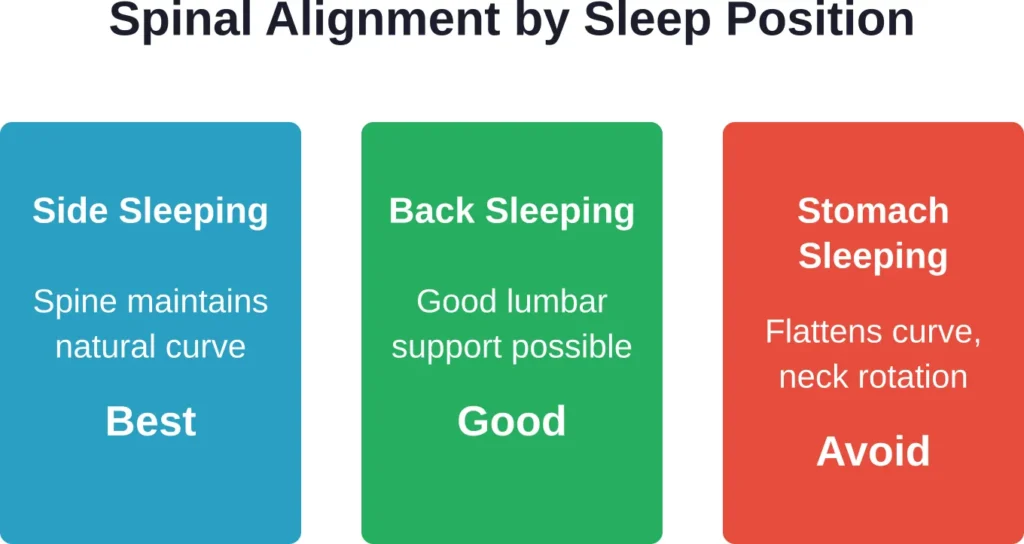
But the trade-offs are significant. Stomach sleeping forces your neck into prolonged rotation, flattens your spine’s natural curve, and creates pressure points that can leave you waking up stiff and sore. Research examining sleep posture and spinal health consistently points to side and back sleeping as superior options for long-term comfort.
So what’s actually happening to your body when you sleep face-down? And if you’re determined to stick with it, are there ways to minimize the damage?
Why Stomach Sleeping Creates Problems for Your Spine
Your spine has a natural S-shaped curve—cervical, thoracic, and lumbar regions all aligned to distribute weight and absorb shock. Stomach sleeping disrupts this alignment in two critical ways.
First, lying face-down flattens the lumbar curve. Instead of maintaining its natural arch, your lower back gets pressed toward the mattress, putting strain on the discs and ligaments. According to research examining sleep posture and spinal symptoms, prone sleeping is consistently linked to waking spinal pain, particularly in the lower back.
Second, unless you’ve figured out how to breathe through your pillow, you’re forced to turn your head to one side for hours. This prolonged rotation compresses the joints and soft tissues in your neck. Research indicates that the one-year point prevalence of cervical pain ranges from 30-50%, and sleep posture plays a measurable role in those numbers.
The combination creates a cascade effect. Poor spinal alignment during sleep leads to muscle tension, which disrupts sleep quality, which prevents your body from recovering properly. And the cycle repeats.
The Neck Strain Problem
Real talk: your neck wasn’t designed to stay rotated 90 degrees for seven hours straight.
When you sleep on your stomach, breathing requires turning your head to one side. This puts your cervical spine into sustained rotation, compressing the facet joints on one side while stretching the ligaments and muscles on the other.
Neck pain is the fourth leading cause of disability, with an annual prevalence rate exceeding 30%. Research indicates that nearly 50% of people who experience acute neck pain will continue to experience some degree of fatigue or discomfort from frequent recurrences.
Sleep posture plays a documented role in these patterns. Research examining sleep posture shows associations between prone sleeping and spinal symptoms.
The damage isn’t always immediate. Many stomach sleepers don’t notice problems in their twenties or early thirties. But over time, the repetitive strain accumulates. Joints lose mobility, muscles develop chronic tension patterns, and what once felt comfortable starts causing morning stiffness and headaches.
When Stomach Sleeping Might Help
Okay, so it’s not all bad news. There are specific scenarios where stomach sleeping offers genuine benefits.
Snoring improves for many people in the prone position. Gravity pulls the tongue and soft palate forward, opening the airway. For mild cases of obstructive sleep apnea, this can reduce the frequency of breathing interruptions.
Some people with certain digestive issues also report better comfort sleeping on their stomach. The position may reduce acid reflux symptoms in specific cases, though this varies widely between individuals.
But—and this is a significant qualifier—these benefits don’t outweigh the spinal and neck problems for most people. If snoring or sleep apnea is the primary concern, side sleeping with proper pillow support often achieves similar respiratory benefits without the musculoskeletal trade-offs.
Sleep Position Preferences by the Numbers
According to the Sleep Foundation, more than 60% of adults sleep on their side, making this position the most common, while back sleeping is second in popularity.
Stomach sleeping is actually the least common preference among adults—but for those who do sleep prone, it tends to be a deeply ingrained habit formed in childhood.
| Sleep Position | Percentage of Adults | Spinal Impact |
|---|---|---|
| Side sleeping | 60%+ | Best for alignment |
| Back sleeping | ~30% | Good with support |
| Stomach sleeping | ~10% | Highest strain |
The relatively small percentage of stomach sleepers doesn’t make the position any less problematic—it just means fewer people are dealing with the associated issues.
Modifications That Reduce Damage
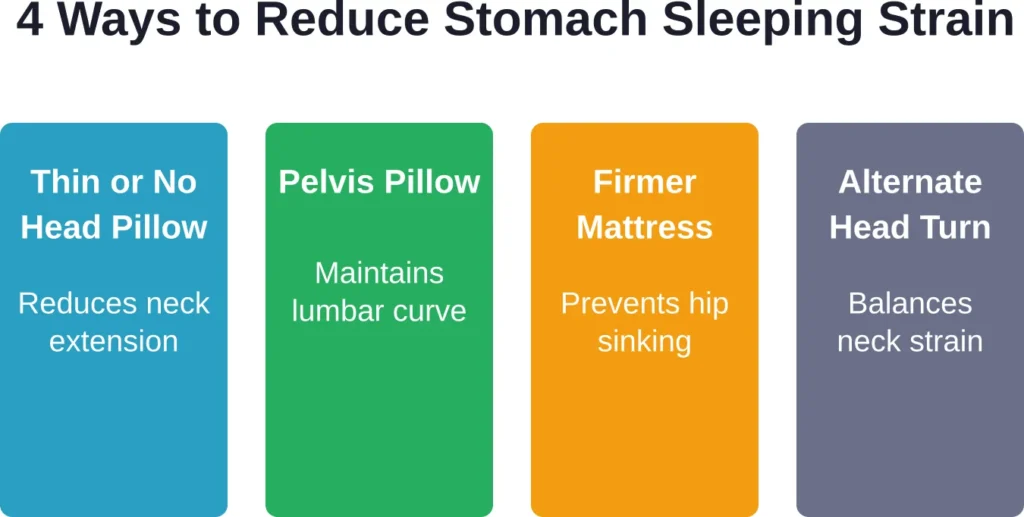
If you’re determined to stay with stomach sleeping, certain adjustments can minimize the harm.
First, ditch the thick pillow. A thin, nearly flat pillow—or no pillow at all—reduces the degree of neck extension. The goal is to keep your head as close to neutral as possible while still allowing you to breathe.
Second, place a flat pillow under your pelvis and lower abdomen. This small elevation helps maintain some of the lumbar curve that gets flattened in the prone position. It won’t fully restore natural alignment, but it reduces strain on the lower back.
Third, use a firmer mattress. Soft surfaces allow your hips and stomach to sink, which exaggerates the spinal flattening. A firmer sleep surface keeps your body more level.
Fourth, alternate the direction you turn your head throughout the night. This is easier said than done—most people unconsciously prefer one side—but training yourself to switch reduces asymmetrical strain on the neck.
Transitioning to a Better Sleep Position
Changing your sleep position isn’t easy—your body has years of conditioning working against you. But it’s possible with consistent effort.
Side sleeping offers the best spinal alignment for most people. Start by positioning pillows behind your back as physical barriers. These bumpers make it harder to roll onto your stomach during the night.
Place a pillow between your knees when side sleeping. This keeps your hips aligned and reduces lower back strain. For extra support, hug a body pillow—this keeps your shoulders from collapsing forward.
The adjustment period typically takes two to four weeks. Your body will resist at first. You’ll wake up repeatedly having rolled back onto your stomach. That’s normal. Reposition yourself and continue the pattern.
Back sleeping is another option, though it’s not ideal for everyone. It can worsen snoring and isn’t recommended during pregnancy. If you choose this position, place a pillow under your knees to maintain the natural lumbar curve.
Special Considerations
Pregnant women should avoid stomach sleeping as the pregnancy progresses—though most find it physically uncomfortable by the second trimester anyway. Side sleeping, particularly on the left side, improves circulation to the baby and reduces pressure on internal organs.
People with existing spinal conditions should consult with healthcare providers about optimal sleep positions. Certain disc injuries, spinal stenosis, and other structural issues may have specific postural requirements.
Younger children often sleep on their stomachs without immediate problems. The issues compound over decades, not days. But establishing better sleep habits early prevents the long-term accumulation of strain.
The Research Perspective
Medical research examining sleep posture and spinal health has grown significantly over the past decade. Research examining sleep posture and spinal symptoms indicates associations between sleep position and spinal pain.
Research published in medical journals examining sleep posture and waking spinal symptoms found that a significant proportion of people who are asymptomatic when going to bed wake with spinal symptoms—and prone sleeping is linked to higher rates of these complaints.
Research on sleep posture indicates that spinal pain during sleep or upon waking is reported by a significant proportion of populations studied. Sleep posture contributes meaningfully to these patterns.
The medical consensus is clear: supine and supportive side-lying positions offer better spinal health outcomes than prone sleeping. Ergonomic interventions, including proper bedding and posture education, are recommended strategies.
Frequently Asked Questions
Prolonged stomach sleeping can contribute to chronic neck and back issues over time, but the damage isn’t necessarily permanent. Transitioning to better sleep positions and addressing existing pain through physical therapy or chiropractic care can reverse many of the effects. However, decades of poor sleep posture may lead to degenerative changes that are harder to fully correct.
Sleeping without a pillow—or with an extremely thin one—is better for stomach sleepers. A thick pillow forces your neck into excessive extension, increasing strain. A flat surface keeps your head closer to neutral alignment. Placing a pillow under your pelvis instead helps maintain lumbar curve.
Habit formation is powerful. Many stomach sleepers developed the preference in childhood and find other positions feel unnatural initially. Additionally, stomach sleeping does reduce snoring for some people, creating a perceived comfort benefit that outweighs the musculoskeletal drawbacks—at least in the short term.
Most people need two to four weeks of consistent effort to adapt to a new sleep position. The first week is typically the hardest, with frequent nighttime awakenings and the tendency to revert to old habits. Using pillow barriers and repeatedly repositioning yourself helps retrain your body over time.
Stomach sleeping can improve breathing for people with snoring or mild sleep apnea by preventing airway collapse. However, the position often reduces overall sleep quality because the spinal strain causes micro-awakenings and prevents deep, restorative sleep. Side sleeping with proper support often achieves better respiratory benefits without the trade-offs.
A firmer mattress helps by preventing excessive hip sinking, which reduces lumbar strain. However, it doesn’t solve the fundamental neck rotation problem inherent to stomach sleeping. Mattress quality matters, but position change offers more substantial improvement.
Yes. Younger bodies tolerate poor sleep posture better because joints and soft tissues recover more easily. As you age, the cumulative effects of prolonged neck rotation and spinal flattening manifest as chronic pain, reduced mobility, and degenerative changes. Many lifelong stomach sleepers report increasing discomfort in their forties and fifties.
Making the Change
Look, if you’ve read this far and you’re still determined to sleep on your stomach, at least implement the modifications that reduce harm. Use a thin pillow, add pelvic support, and invest in a firmer mattress.
But if you’re open to change, transitioning to side sleeping offers measurable benefits. Better spinal alignment means deeper sleep, less morning stiffness, and reduced long-term risk of chronic pain. The adjustment period is uncomfortable, but temporary discomfort beats decades of accumulated strain.
Your body spends roughly a third of its life in sleep posture. That’s a significant percentage of time to be placing unnecessary stress on your spine and neck. Small changes compound over months and years.
The best sleeping position is the one that maintains natural spinal curves, allows unrestricted breathing, and lets you wake feeling rested rather than stiff. For most people, that’s not stomach sleeping. But with the right adjustments—whether that’s modifying your current position or gradually transitioning to a new one—better sleep is achievable.