

Quick Summary: Eating one avocado daily is generally safe and beneficial for most healthy adults, providing heart-healthy monounsaturated fats, fiber, potassium, and essential vitamins. Research shows that consuming at least two servings weekly reduces cardiovascular disease risk by 16% and heart attack risk by 21%, while daily intake improves cholesterol levels, diet quality, and may support weight management and blood pressure control.
Avocados have become a staple in kitchens worldwide, praised for their creamy texture and nutritional profile. But with 80% of their calories coming from fat, the question arises: is eating an avocado every day actually good for health?
The short answer? Yes, for most people. But let’s look at what the research actually reveals.
What Makes Avocados Nutritionally Unique
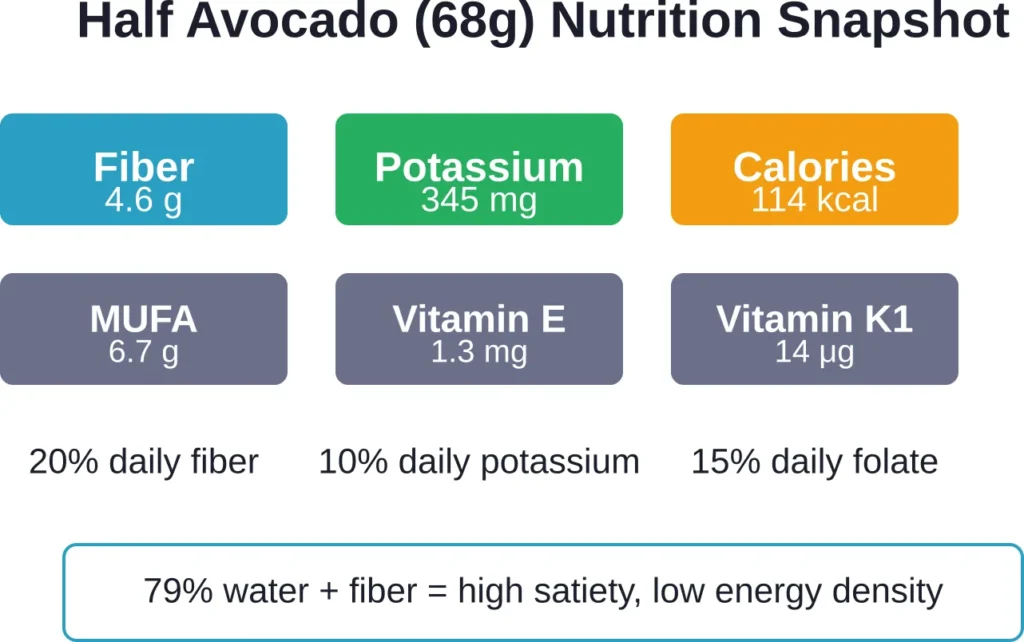
One-half avocado (68 g) delivers a concentrated nutrient package: 4.6 g dietary fiber, 345 mg potassium, 1.3 mg vitamin E, and 14 μg vitamin K1. The exact monounsaturated fatty acid content per half avocado is not specified in peer-reviewed sources cited.
Here’s the thing though—avocado oil consists of 71% monounsaturated fatty acids, 13% polyunsaturated fatty acids, and only 16% saturated fatty acids. That’s an unsaturated to saturated fat ratio of 6 to 1, similar to olive oil.
The fruit’s energy density sits at just 1.6 kcal/g because 79% of its edible weight is water and fiber. This unique composition makes avocados filling despite their calorie content.
The Heart Health Connection
A groundbreaking 30-year study tracked more than 110,000 health professionals and documented 9,185 heart attacks and 5,290 strokes among participants. Those who ate at least two servings of avocado each week had a 16% lower risk of cardiovascular disease and a 21% lower risk of coronary heart disease compared to those who rarely consumed avocados.
One serving equals half an avocado or half a cup.
Fiber-rich diets are associated with lower heart disease risk according to multiple studies. Half an avocado provides 20% of daily recommended dietary fiber intake, making it one of the most fiber-dense fruits available.
Cholesterol and Blood Lipid Effects
In a 26-week randomized controlled trial, avocado intake increased the Life’s Essential 8 blood lipids component score by 3.46 points (95% CI: 1.03–5.90). The mechanism? Avocados reduce LDL oxidation, lower small atherogenic LDL particles, and promote postprandial vascular endothelial health.
Research indicates avocado consumption is associated with improved blood lipid profiles, including effects on cholesterol levels. That’s the kind of cholesterol shift cardiologists want to see.
Daily Avocado Intake: What the Research Shows
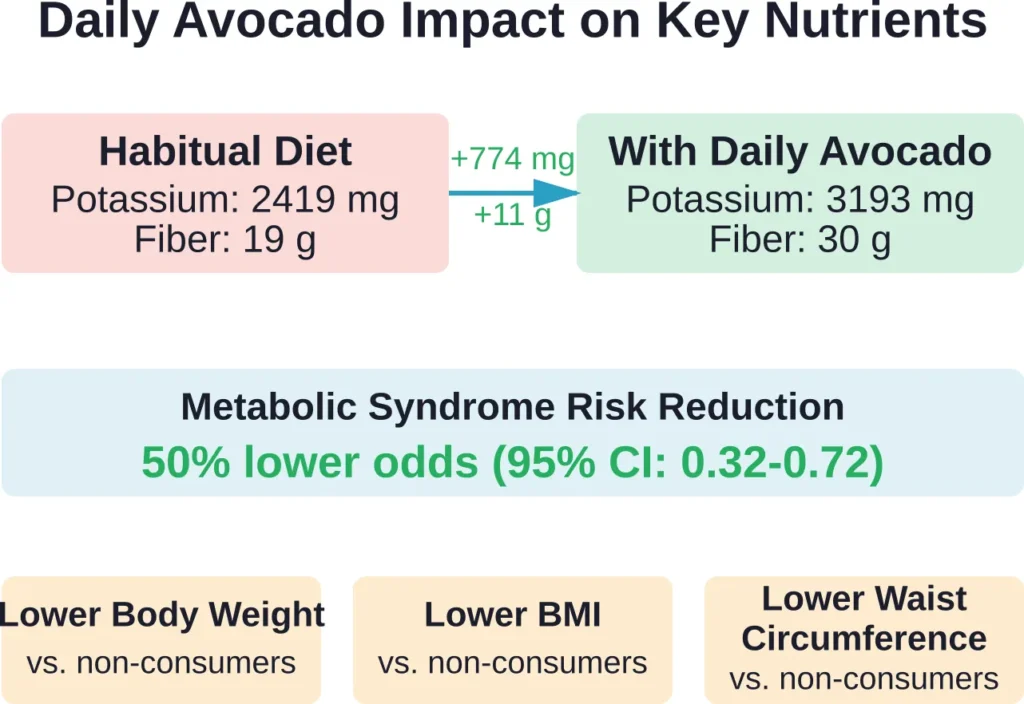
Analysis of 17,567 US adults aged ≥19 years from NHANES 2001–2008 revealed that avocado consumers had lower metabolic syndrome risk compared to non-consumers. They also showed significantly lower body weight, BMI, and waist circumference.
But wait. Does adding an avocado daily simply add calories, or does it displace other foods?
Turns out daily avocado intake altered the composition of food and nutrient intake patterns. Daily avocado intake resulted in higher daily energy intake (159 ± 575 kcal), with improvements in potassium (3193 ± 817 mg compared with 2419 ± 843 mg) and fiber (30 ± 8 g compared with 19 ± 9 g).
Diet Quality and Sleep Health Benefits
In the 26-week HAT trial, avocado intake increased the Life’s Essential 8 diet component score by 3.53 points (95% CI: 1.38–5.68). The same intervention increased the Life’s Essential 8 sleep health component score by 3.20 points (95% CI: 0.38–6.02).
The mechanism behind improved sleep isn’t fully understood yet. But the potassium and magnesium content—half an avocado provides 10% of daily recommended potassium intake; magnesium content is 19.5 mg per half avocado—may play a role in muscle relaxation and nervous system regulation.
Is There Such a Thing as Too Much Avocado?
For most healthy adults, one avocado daily fits well within a balanced diet. However, portion size matters.
Although the official avocado serving is one-fifth of a fruit (30 g), according to NHANES analysis the average consumption is one-half an avocado (68 g). A whole avocado contains approximately 227–240 calories; the exact MUFA content per whole fruit is not specified in peer-reviewed sources cited.
That’s not inherently problematic if overall calorie intake aligns with energy needs. The issue arises when people add avocados without adjusting other fat sources, potentially exceeding caloric requirements.
Who Should Exercise Caution
Individuals with kidney disease should monitor potassium intake carefully, as hyperkalemia (elevated blood potassium) can be dangerous. Those on blood thinners like warfarin need to maintain consistent vitamin K intake—half an avocado’s 14 μg of vitamin K1 can affect medication efficacy if intake varies widely day to day.
People managing their weight should account for the 114 calories per half avocado. It’s nutrient-dense, yes, but calorie tracking still matters for some goals.
| Health Aspect | Benefit of Daily Avocado | Evidence Strength |
|---|---|---|
| Cardiovascular Disease Risk | 16% reduction with 2+ servings weekly | Strong (30-year study, 110,000+ participants) |
| Heart Attack Risk | 21% reduction with 2+ servings weekly | Strong (long-term observational data) |
| Metabolic Syndrome | Lower risk in avocado consumers | Strong (NHANES analysis, 17,567 adults) |
| Diet Quality | +3.53 points improvement | Moderate (26-week trial) |
| Blood Lipid Profile | +3.46 points improvement | Moderate (controlled trials) |
| Sleep Health | +3.20 points improvement | Emerging (26-week trial, mechanism unclear) |
How to Incorporate Avocado Daily
The traditional avocado toast remains popular for good reason—it’s simple and satisfying. But daily consumption doesn’t require monotony.
Add half an avocado to morning smoothies for creaminess without dairy. Dice it into salads for texture and healthy fats that improve absorption of fat-soluble vitamins A, D, E, and K from vegetables. Use it as a mayonnaise substitute in sandwiches or as a base for pasta sauces.
Some people prefer sliced avocado with just salt and pepper as a side dish. Others blend it into chocolate mousse or use it in baking as a butter replacement—though heat does degrade some phytochemicals.
The American Heart Association notes that replacing half a serving of margarine, butter, egg, yogurt, cheese, or processed meats with avocado is associated with lower cardiovascular disease risk. That displacement effect matters more than simple addition.
Frequently Asked Questions
Avocado consumers showed significantly lower body weight, BMI, and waist circumference in population studies. The high fiber content (4.6 g per half avocado) and monounsaturated fats promote satiety, potentially reducing overall calorie intake. However, avocados contain roughly 114 calories per half, so portion control and overall dietary balance remain important for weight management.
Research supports one-half to one whole avocado daily for most healthy adults. The average consumption according to NHANES analysis is one-half an avocado (68 g) per eating occasion. Studies showing cardiovascular benefits used at least two servings weekly, where one serving equals half an avocado.
No—the opposite occurs. Daily avocado intake reduces LDL oxidation, lowers small atherogenic LDL particles, and increases HDL-C (good cholesterol). The 6:1 ratio of unsaturated to saturated fats, similar to olive oil, contributes to improved blood lipid profiles rather than raising harmful cholesterol levels.
For most healthy adults, daily avocado consumption is safe. Individuals with kidney disease should monitor potassium intake (345 mg per half avocado) to avoid hyperkalemia. Those taking blood thinners like warfarin need consistent vitamin K intake (14 μg per half avocado). Rare cases of avocado allergy exist, particularly in people with latex allergies.
Half an avocado provides 345 mg potassium (10% of daily recommended intake) and 5% of daily magnesium, both minerals associated with blood pressure regulation. Research shows avocado consumption correlates with reduced hypertension risk, though this likely results from the combined effect of potassium, magnesium, fiber, and monounsaturated fats rather than any single nutrient.
No research identifies an optimal time for avocado consumption. The fiber and healthy fats promote satiety, making it useful at breakfast to reduce mid-morning hunger or at lunch to prevent afternoon energy dips. Some studies showing sleep improvements used avocados throughout the day rather than at specific times.
Heat can degrade some phytochemicals and antioxidants in avocados, though the monounsaturated fats, fiber, potassium, and most vitamins remain stable. Most research on health benefits examined fresh, raw avocado consumption. For maximum nutrient retention, add avocado to dishes after cooking or consume it raw.
The Bottom Line on Daily Avocado Consumption
The evidence strongly supports eating avocado daily for most healthy adults. The cardiovascular benefits—including a 16% reduction in disease risk and 21% lower heart attack risk with just two servings weekly—represent substantial health protection.
Daily consumption delivers concentrated nutrition: 20% of daily fiber, 10% of potassium, and heart-healthy monounsaturated fats in a relatively low-calorie package. The metabolic syndrome risk reduction and improvements in diet quality, blood lipids, and potentially sleep health make a compelling case.
That said, overall dietary patterns matter more than any single food. Avocados work best as part of a varied diet rich in vegetables, fruits, whole grains, and lean proteins. The displacement effect—replacing less healthy fats with avocado—drives many of the observed benefits.
So yes, it’s absolutely OK to eat an avocado every day. Just keep portions reasonable, account for the calories in overall intake, and enjoy the creamy, nutrient-dense fruit as part of a balanced approach to eating.