

Quick Summary: Hand soap can be used as body wash in a pinch, as both products share the same basic cleaning mechanism — surfactants that lift dirt and oils. However, hand soap is formulated to be more aggressive for frequent hand washing and may dry out body skin with regular use, while body wash contains extra moisturizers designed for larger skin areas.
You’re standing in the shower and realize the body wash bottle is empty. The hand soap sits right there on the sink. Can you grab it and just wash with that instead?
Short answer: yes, but it’s not ideal for regular use. Here’s why the difference matters and what you should know.
The Basic Science: How All Soap Works
According to the FDA, traditional soap is made by combining fats or oils with an alkali like lye. The result breaks down oils and dirt so water can wash them away.
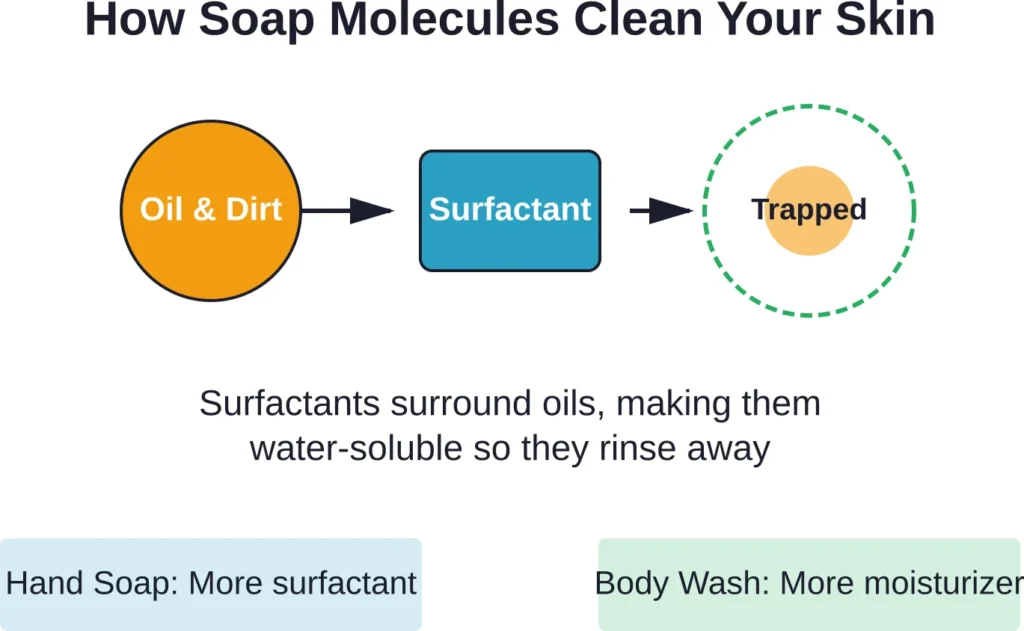
Both hand soap and body wash rely on surfactants — long molecules with one end that attracts water and another that attracts oil. When you lather up, these molecules surround dirt and germs, allowing them to be rinsed off your skin.
So fundamentally, hand soap and body wash work the same way. They break up oils and remove grime. The difference isn’t whether they clean — it’s how they’re formulated for specific conditions.
Key Differences Between Hand Soap and Body Wash
While the cleaning mechanism is identical, manufacturers formulate these products for different purposes. Hand soap tackles frequent, targeted cleaning of small surface areas. Body wash handles larger skin areas that aren’t washed as often.
pH Levels and Skin Balance
Research published in PubMed confirms that natural skin surface pH averages below 5, keeping it slightly acidic. This acidic environment protects against bacteria and maintains the skin barrier.
Hand soap typically has a higher pH (alkaline) because hands encounter more varied contaminants throughout the day. Body wash is usually formulated closer to skin’s natural pH to minimize disruption during full-body washing.
Surfactant Concentration
Hand soap contains higher concentrations of surfactants because hands need thorough, repeated cleaning. According to CDC guidelines, proper handwashing requires scrubbing for 20 seconds to remove harmful germs and chemicals.
Body wash uses gentler surfactant levels since body skin doesn’t face the same microbial exposure as hands. The trade-off? Less aggressive cleaning but better moisture retention.
Moisturizing Ingredients
Here’s where the formulations really diverge. Body wash includes extra emollients, oils, and humectants — ingredients that help skin retain moisture after washing. These are especially important for larger skin areas that lose water more easily.
Hand soap focuses on cleaning efficiency. Some formulas include moisturizers, but they’re usually secondary to the cleaning agents. The American Academy of Dermatology notes that skin becomes drier with age and loses water more easily, which is why harsh cleansers can cause problems.
| Factor | Hand Soap | Body Wash |
|---|---|---|
| pH Level | Higher (alkaline) | Closer to skin |
| Surfactant Concentration | Higher | Lower |
| Moisturizing Agents | Minimal | Abundant |
| Primary Purpose | Remove germs from hands | Cleanse larger body areas |
| Typical Use Frequency | 10+ times daily | 1-2 times daily |
What Happens When You Use Hand Soap on Your Body
Using hand soap as body wash won’t harm you in the short term. You’ll get clean. The soap will remove dirt, oils, and bacteria just fine.
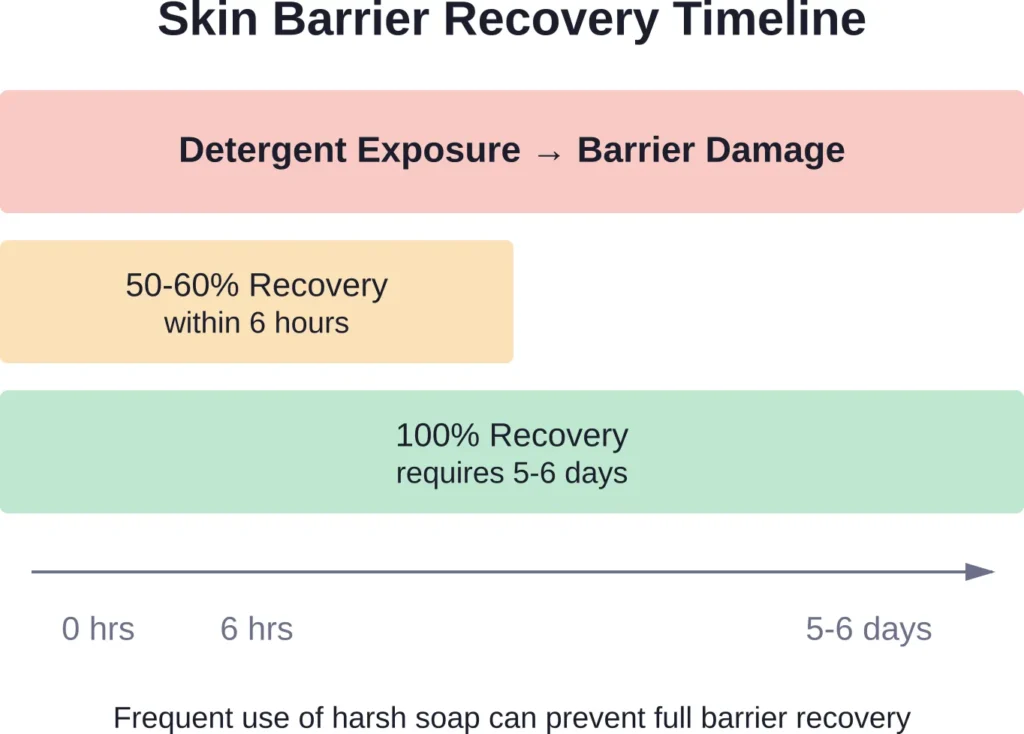
But regular use can create problems. The higher surfactant concentration and elevated pH can strip your skin’s natural oils more aggressively than body wash. According to CDC research on hand hygiene, detergents act on the skin’s intercellular lipid domain, and complete normalization of barrier function requires 5 to 6 days after exposure.
That means your skin barrier — the protective layer that keeps moisture in and irritants out — needs nearly a week to fully recover from harsh detergent exposure.
Short-Term Effects
Most people won’t notice much after using hand soap once or twice in the shower. The skin may feel slightly tighter or drier than usual, but nothing dramatic.
Long-Term Concerns
Regular use of hand soap as body wash can lead to persistent dryness, flaking, and irritation. People with sensitive skin, eczema, or psoriasis will likely notice problems sooner.
Dermatologists recommend maintaining proper skin barrier function, especially as skin ages. Keeping indoor humidity between 45% and 60% can help reduce dry, itchy skin — and using gentler cleansers is part of that equation.
When Hand Soap Is Actually Fine to Use
Look, emergencies happen. You’re traveling and forgot body wash. The hotel only has hand soap. Or you’re at someone’s house and run out mid-shower.
In these situations, hand soap works perfectly fine as a temporary substitute. One or two uses won’t damage your skin.
Just follow up with moisturizer after showering. The American Academy of Dermatology recommends applying moisturizer when skin feels dry and gently massaging it in. For very dry areas, particularly cracked heels, dermatologists recommend applying a cream with urea to help.
Can You Use Body Wash as Hand Soap?
This swap makes more sense than the reverse. Body wash is gentler, so using it to wash hands won’t cause problems — though it may not clean as thoroughly after handling very dirty or greasy materials.
The CDC recommends hand sanitizers with at least 60% alcohol when soap and water aren’t available, but emphasizes that handwashing with soap remains the gold standard. Body wash meets that requirement, even if it’s not optimized for hand cleaning.
One practical consideration: body wash often produces more lather and may take longer to rinse off hands at a sink.
| Scenario | Best Choice | Why |
|---|---|---|
| Washing hands after using restroom | Hand soap | Optimized for germ removal |
| Full body shower daily | Body wash | Gentler pH, better moisturizing |
| Emergency: out of body wash | Hand soap (short-term) | Cleans effectively, just drying |
| Sensitive or dry skin | Body wash only | Lower risk of irritation |
| Washing hands, no hand soap | Body wash | Still removes germs adequately |
What to Look for in Either Product
Whether choosing hand soap or body wash, certain ingredients signal better quality and skin compatibility.
The FDA regulates soaps and cleansers based on their intended use. Products marketed as antibacterial are classified as drugs and face stricter regulation. For most people, regular soap works just as well without added antibacterial agents.
Avoid These Ingredients
Sulfates (like sodium lauryl sulfate) create satisfying lather but can be harsh. Synthetic fragrances and dyes increase irritation risk, especially for sensitive skin. The FDA has documented concerns about phthalates in cosmetics, which function as solvents and stabilizers in fragrance preparations.
Look for These Instead
Gentle surfactants like cocamidopropyl betaine or decyl glucoside clean effectively without stripping. Glycerin, hyaluronic acid, and ceramides help maintain moisture. Natural oils like jojoba, coconut, or argan provide additional skin nourishment.
The Bottom Line: Can You Swap Them?
Hand soap as body wash? Sure, occasionally. But make it body wash for regular use.
The formulation differences exist for good reasons. Hand soap tackles the unique challenges of frequent hand washing — higher microbial exposure, varied contaminants, and smaller surface areas. Body wash addresses the needs of larger skin areas that benefit from gentler cleaning and enhanced moisturizing.
Using hand soap on your body in a pinch won’t cause lasting harm. Just don’t make it a habit, especially if you have dry or sensitive skin.
When shopping for either product, read ingredient lists. Choose formulas appropriate for your skin type. And remember: the best soap is the one that cleans effectively while keeping your skin barrier healthy.
Frequently Asked Question
Yes, hand soap typically contains higher concentrations of surfactants and has a more alkaline pH. This makes it more effective at removing germs from hands but potentially more drying for full-body use.
Occasional use is fine for most people, but regular use can lead to dryness, irritation, and disruption of the skin barrier. Research shows the skin barrier needs 5 to 6 days to fully recover from harsh detergent exposure. People with sensitive skin, eczema, or psoriasis should avoid regular use.
Yes, body wash will clean hands adequately for most situations. While it’s not optimized for the high-frequency, germ-focused cleaning that hand soap provides, it still uses surfactants to remove dirt and microorganisms. The CDC emphasizes that washing with any soap is far better than not washing at all.
Body wash is formulated with a pH closer to skin’s natural acidity, gentler surfactant concentrations, and more moisturizing ingredients. These characteristics make it better suited for cleaning larger skin areas that don’t need the aggressive degreasing power of hand soap.
According to the FDA, antibacterial soaps are classified as drugs and face stricter regulation. For most everyday situations, regular soap and proper washing technique (20 seconds of scrubbing) remove germs just as effectively without the potential downsides of antibacterial agents.
If hand soap is the only option, minimize dryness by keeping showers short (5-10 minutes), using warm rather than hot water, and applying a rich moisturizer immediately after patting skin dry. Keeping indoor humidity between 45% and 60% can also help reduce dry, itchy skin.
Avoid harsh sulfates like sodium lauryl sulfate, synthetic fragrances, artificial dyes, and phthalates, which the FDA has noted as a concern in cosmetics. Instead, look for gentle surfactants like cocamidopropyl betaine, along with moisturizing ingredients like glycerin, hyaluronic acid, and natural oils.