

Quick Summary: Having sex during your period is completely safe and normal. While it can be messier than usual, there are no major health risks for most people. In fact, period sex may offer benefits like natural pain relief from menstrual cramps and shorter periods due to uterine contrections during orgasm.
The question of whether period sex is acceptable remains surprisingly common. Despite millions of people menstruating regularly, conversations around sexual activity during menstruation often carry unnecessary stigma or confusion.
Here’s the thing though—periods are a natural biological process. According to the CDC, menstruation is experienced by millions worldwide each month, and there’s no medical reason why sexual activity needs to stop during this time.
Research indicates varying attitudes toward menstrual sex, with some studies noting differences in comfort levels and engagement. These insights highlight how cultural attitudes and personal comfort levels vary widely.
This guide addresses the safety, benefits, risks, and practical considerations of period sex based on medical evidence and health authority guidance.
Is Period Sex Safe?
The straightforward answer is yes. Sexual intercourse during menstruation is medically safe for most people.
Menstrual blood doesn’t make the vaginal environment inherently dangerous or unsuitable for sexual activity. The physical mechanics of sex don’t change fundamentally just because menstruation is occurring.
That said, there are specific considerations worth understanding.
Infection Risk Considerations
The cervix opens slightly during menstruation to allow menstrual blood to pass. This creates a marginally higher theoretical risk for certain infections to travel upward.
According to medical research, untreated sexually transmitted infections like chlamydia can lead to pelvic inflammatory disease (PID). About 10-15% of women with untreated chlamydia will develop PID, which can affect fertility.
But here’s the key point: this risk exists regardless of whether sexual activity occurs during menstruation. The primary protective measure is the same whether someone is menstruating or not—using barrier protection like condoms.
Condoms protect against STIs during any phase of the menstrual cycle. Period sex doesn’t fundamentally change STI transmission dynamics; it just emphasizes the importance of protection that should already be standard practice.
When to Avoid Period Sex
Certain medical conditions may make period sex inadvisable. People experiencing unusually heavy menstrual bleeding should consult healthcare providers.
The CDC defines heavy menstrual bleeding as periods lasting more than 7 days or requiring a new tampon or pad after less than 2 hours. If bleeding is this substantial, sexual activity might cause discomfort or exacerbate symptoms.
Anyone with diagnosed pelvic infections, cervical issues, or specific gynecological conditions should discuss sexual activity timing with their healthcare provider.
Can You Get Pregnant During Your Period?
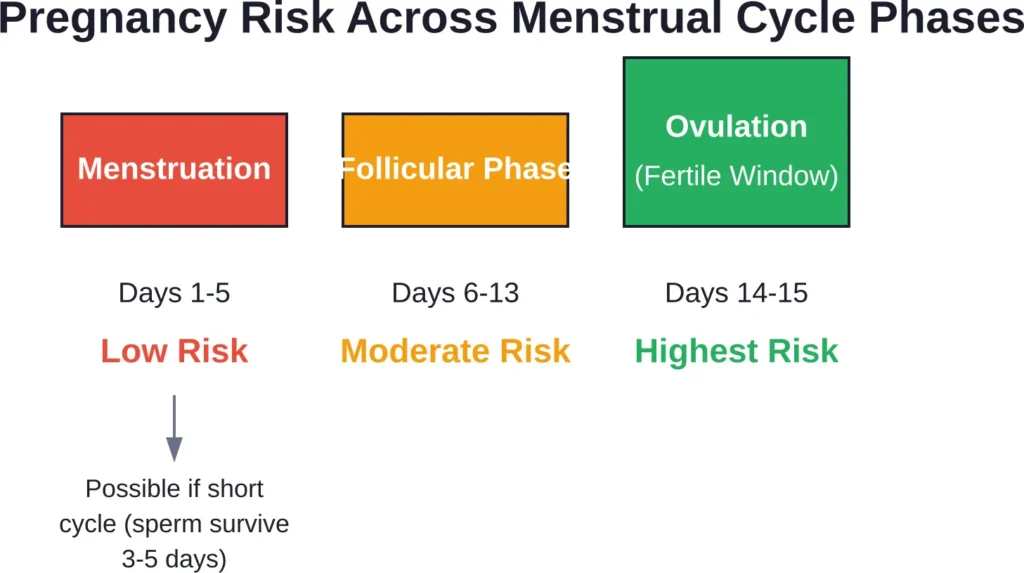
Yes, pregnancy during menstruation is possible, though less likely than during other cycle phases.
Most people assume menstruation equals zero pregnancy risk. That’s not entirely accurate.
Understanding the Fertile Window
According to the American College of Obstetricians and Gynecologists (ACOG), sperm can survive inside a woman’s body for 3 days, and sometimes up to 5 days after intercourse. Meanwhile, an egg survives in the fallopian tube for about 24 hours after ovulation.
The fertile window—when pregnancy can occur—spans approximately 5 days before ovulation to 1 day after ovulation.
For people with shorter menstrual cycles (21-24 days), ovulation can occur relatively soon after menstruation ends. If sexual activity happens during the last days of a period, and sperm survive for 5 days, fertilization becomes possible when ovulation occurs.
Additionally, irregular cycles make ovulation timing unpredictable. What appears to be menstrual bleeding might sometimes be breakthrough bleeding during ovulation or another cycle phase entirely.
Contraception Remains Important
People relying on fertility awareness-based methods should understand that menstruation doesn’t guarantee infertility. Barrier methods or hormonal contraception provide more reliable pregnancy prevention.
The bottom line? Don’t treat period sex as a natural contraceptive method. Protection matters regardless of cycle timing.
Potential Benefits of Period Sex
Beyond being safe, period sex may offer specific advantages that some people find appealing.
Natural Pain Relief
Sexual activity and orgasm trigger the release of endorphins—natural pain-relieving chemicals. These endorphins can help reduce menstrual cramp intensity.
Orgasms cause uterine contractions that may provide temporary relief from period discomfort. Some people report that sexual arousal and climax significantly ease their menstrual pain.
Shorter Periods
Uterine contractions during orgasm can help expel menstrual blood more quickly. This may shorten the duration of menstrual bleeding for some individuals.
While this won’t dramatically change period length, it represents a minor benefit that some find worthwhile.
Increased Natural Lubrication
Menstrual blood provides additional lubrication, which can make penetrative sex more comfortable. People who typically experience vaginal dryness might find period sex particularly pleasant for this reason.
Enhanced Libido
Hormonal fluctuations during the menstrual cycle affect sexual desire. Some people experience heightened libido during menstruation, making sexual activity feel more desirable during this time.
Estrogen and testosterone levels shift throughout the cycle, and for certain individuals, these hormonal changes correlate with increased arousal during menstruation.
Potential Drawbacks and Practical Concerns
The primary challenge with period sex isn’t medical—it’s practical and psychological.
Messiness
Blood will be present. This is the most obvious consideration and the one that causes the most hesitation.
Menstrual flow varies significantly. Light flow days might involve minimal blood, while heavy flow days could create substantial mess. This requires preparation and comfort with potential cleanup.
Cultural and Psychological Factors
Research on sex during menstruation reveals significant psychological dimensions. Research shows that girls in school settings have expressed negative perceptions and desire to hide menstruation from others.
Cultural attitudes toward menstruation heavily influence comfort with period sex. Many people internalize messages that menstruation is shameful, dirty, or something to hide. These attitudes affect willingness to engage in sexual activity during this time.
Interestingly, research suggests differences in attitudes toward period sex based on sexual orientation and racial identity, with bisexual or lesbian-identified women describing more positive feelings than some other groups.
Partner Attitudes
Both partners’ comfort levels matter. If either person feels uncomfortable, anxious, or disgusted, the experience won’t be enjoyable regardless of medical safety.
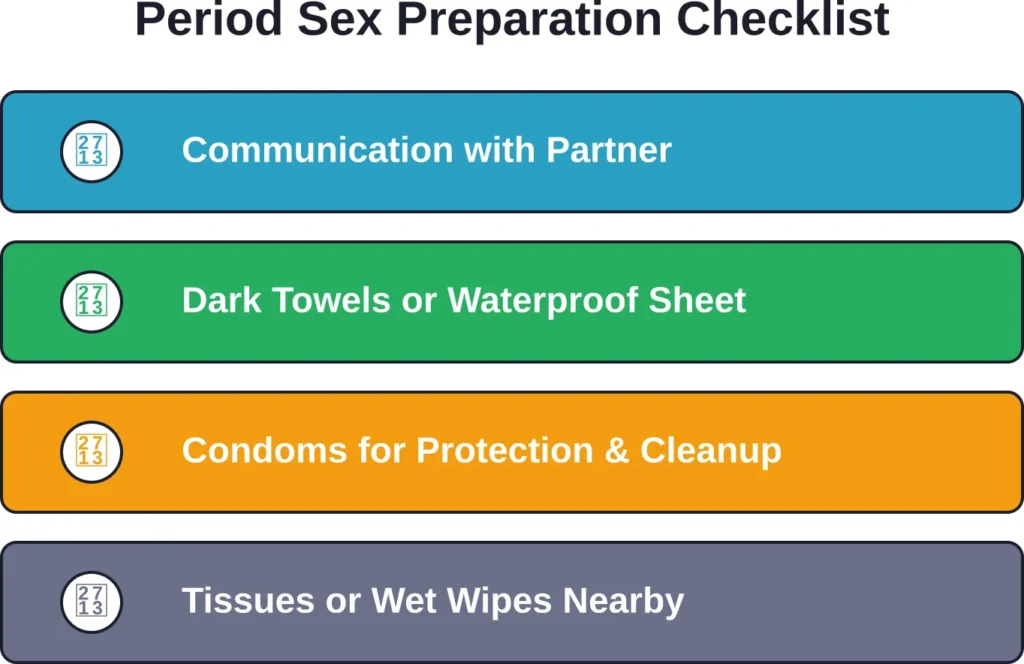
Open communication about boundaries, preferences, and concerns creates the foundation for positive period sex experiences.
Practical Tips for Period Sex
Preparation makes period sex more comfortable and less stressful for everyone involved.
Timing Considerations
Choose lighter flow days if mess concerns are significant. The first and last days of menstruation typically involve less blood than peak flow days.
Some people prefer having sex toward the end of their period when bleeding is minimal but they still experience hormonal benefits.
Protective Measures
Lay down dark-colored towels to protect bedding. This simple step prevents worry about staining sheets and allows both partners to relax.
Showering together beforehand or after can be intimate and practical. Some couples incorporate this into foreplay or post-sex connection time.
Using condoms serves dual purposes: STI protection and easier cleanup. Condoms contain seminal fluid and reduce direct blood contact, which some people find more comfortable.
Position Adjustments
Missionary position tends to minimize mess compared to positions where gravity works against containment. Shallower penetration may also reduce menstrual cup displacement or blood flow during activity.
Experiment to find what feels comfortable. Some positions might cause cramping or discomfort during menstruation even if they’re normally pleasurable.
Consider Alternative Intimacy
Sexual activity doesn’t require penetration. Manual stimulation, oral sex (with dental dams or during lighter flow), and other forms of intimacy remain options.
If penetrative sex feels uncomfortable or one partner prefers avoiding it during menstruation, other sexual activities can maintain connection and pleasure.
Hygiene Practices
According to CDC guidance on menstrual hygiene, basic cleanliness practices prevent infections and keep people comfortable during menstruation. The same principles apply to sexual activity.
Washing hands before and after sexual contact remains important. Keeping the genital area clean with gentle, unscented soap and water supports good hygiene.
The CDC recommends avoiding scented hygiene products, which can disrupt vaginal pH balance and increase infection risk. This advice applies whether someone is sexually active during their period or not.
When to Consult a Healthcare Provider
Most period sex concerns don’t require medical consultation. But certain situations warrant professional guidance.
Persistent pain during sexual activity—whether during menstruation or at other times—deserves evaluation. Pain isn’t a normal part of sex and may indicate conditions like endometriosis, fibroids, or pelvic inflammatory disease.
Unusually heavy bleeding, as defined by the CDC (lasting more than 7 days or requiring product changes every 2 hours or less), should be discussed with a healthcare provider regardless of sexual activity.
Anyone concerned about infection risk, unusual discharge, or changes in menstrual patterns should seek medical advice. These symptoms might indicate treatable conditions that affect reproductive health broadly.
Sexual and Reproductive Health Perspectives
The World Health Organization defines sexual health as complete physical, emotional, mental, and social well-being related to sexuality—not merely the absence of disease.
This framework emphasizes that sexual health requires positive, respectful approaches to sexuality and sexual relationships. It includes the possibility of pleasurable and safe sexual experiences, free of coercion, discrimination, and violence.
Period sex fits within this broader understanding. Menstruation represents a normal biological function, not a barrier to sexual expression or intimacy.
WHO’s statement on menstrual health and rights calls for recognizing menstrual health as a health and human rights issue, not merely a hygiene concern. This perspective challenges stigma and shame surrounding menstruation.
According to WHO, menstrual health means people who menstruate have access to information and education, live in environments where menstruation is seen as positive and healthy rather than shameful, and can fully participate in all activities—including intimate relationships—throughout their cycle.
Breaking Down Stigma
Negative attitudes toward period sex often stem from broader cultural discomfort with menstruation itself.
WHO explicitly calls for normalizing menstruation and breaking silence around it. Making schools, workplaces, and public institutions supportive of managing menstruation with comfort and dignity represents part of this effort.
The same principle extends to intimate relationships. Partners who view menstruation as natural and healthy rather than disgusting create environments where period sex becomes a reasonable option rather than a taboo.
Education plays a critical role. Comprehensive sexuality education, as outlined by WHO, aims to improve knowledge, correct misconceptions, and provide age-appropriate, scientifically accurate information.
Understanding that menstruation is a normal health process—not something shameful—changes how people approach decisions about sexual activity during this time.
Individual Choice and Comfort
Ultimately, whether to engage in period sex is an entirely personal decision.
Medical safety provides permission but doesn’t create obligation. Some people enthusiastically embrace period sex; others prefer abstaining. Both choices are completely valid.
What matters most is that decisions come from informed understanding rather than shame, misinformation, or unnecessary fear.
Partners should respect each other’s comfort levels without pressure or judgment. Open conversations about preferences, boundaries, and concerns create healthier sexual relationships overall.
For those curious about trying period sex, starting gradually makes sense. Experimenting on lighter flow days, using protection methods that increase comfort, and maintaining open communication helps people discover what works for their unique situation.
| Consideration | Period Sex | Non-Period Sex |
|---|---|---|
| Medical Safety | Safe for most people | Safe for most people |
| Pregnancy Risk | Lower but possible | Varies by cycle phase |
| STI Protection Needed | Yes (condoms recommended) | Yes (condoms recommended) |
| Natural Lubrication | Increased from blood | Standard arousal response |
| Potential Benefits | Cramp relief, shorter period | General health benefits |
| Cleanup Required | More extensive | Minimal |
Frequently Asked Questions
No, period sex is not inherently unhygienic. Menstrual blood is a natural bodily fluid, not dirty or contaminated. Basic hygiene practices like washing before and after sexual activity apply equally whether someone is menstruating or not. Using protection and having towels or wipes available addresses practical cleanup concerns.
For most people, period sex actually helps relieve cramps rather than worsening them. Orgasms release endorphins that act as natural pain relievers, and uterine contractions during climax may ease menstrual discomfort. However, individual experiences vary. If penetration or certain positions cause pain during menstruation, choosing different activities or avoiding sex during peak discomfort makes sense.
Yes, always remove tampons or menstrual cups before penetrative sex. Leaving them in place can push them deeper into the vaginal canal, potentially causing discomfort or making removal difficult. Some people use soft menstrual discs designed to be worn during intercourse, but traditional cups and tampons should be removed.
The infection risk during period sex is comparable to other times, assuming proper protection is used. The cervix opens slightly during menstruation, creating theoretical pathways for infection, but condoms effectively protect against sexually transmitted infections regardless of cycle phase. The key factor is consistent barrier method use, not whether someone is menstruating.
Direct, honest communication works best. Choose a non-sexual moment to discuss it. Express your feelings and ask about their comfort level without pressure. Acknowledge that it might feel messy or different, and discuss practical preparations like using towels or showering together. Respect whatever boundaries either partner sets, and remember that comfort levels can change over time.
Positions that limit deep penetration and work with gravity tend to minimize mess. Missionary position is often comfortable and practical. Side-lying positions can also work well. Avoid positions where the menstruating partner is inverted or where gravity would increase blood flow. Experimentation helps identify what feels good and manages flow effectively for each person’s body.
Possibly, though the effect is typically modest. Orgasms cause uterine contractions that help expel menstrual blood, potentially shortening bleeding duration by several hours or a day. This varies significantly between individuals based on flow volume, uterine responsiveness, and other factors. Don’t expect dramatic changes, but some people do notice slightly shorter periods when sexually active during menstruation.
Conclusion
Period sex is medically safe, potentially beneficial, and completely normal for people who choose it.
The decision comes down to personal comfort, partner agreement, and practical preparation rather than health concerns for most individuals. Understanding the actual risks—which are minimal with proper protection—versus cultural stigma helps people make informed choices.
Whether someone enthusiastically embraces period sex or prefers avoiding it, both approaches are valid. What matters is that decisions stem from accurate information, open communication, and mutual respect rather than shame or misinformation.
Sexual health encompasses physical safety, emotional well-being, and the freedom to make choices that feel right for each person’s body and relationships. Period sex fits within that framework as one option among many for maintaining intimacy throughout the menstrual cycle.
Talk openly with partners, use protection consistently, prepare practically for potential mess, and honor personal comfort levels. Those simple guidelines allow people to explore what works for their unique situations without unnecessary anxiety or confusion.