
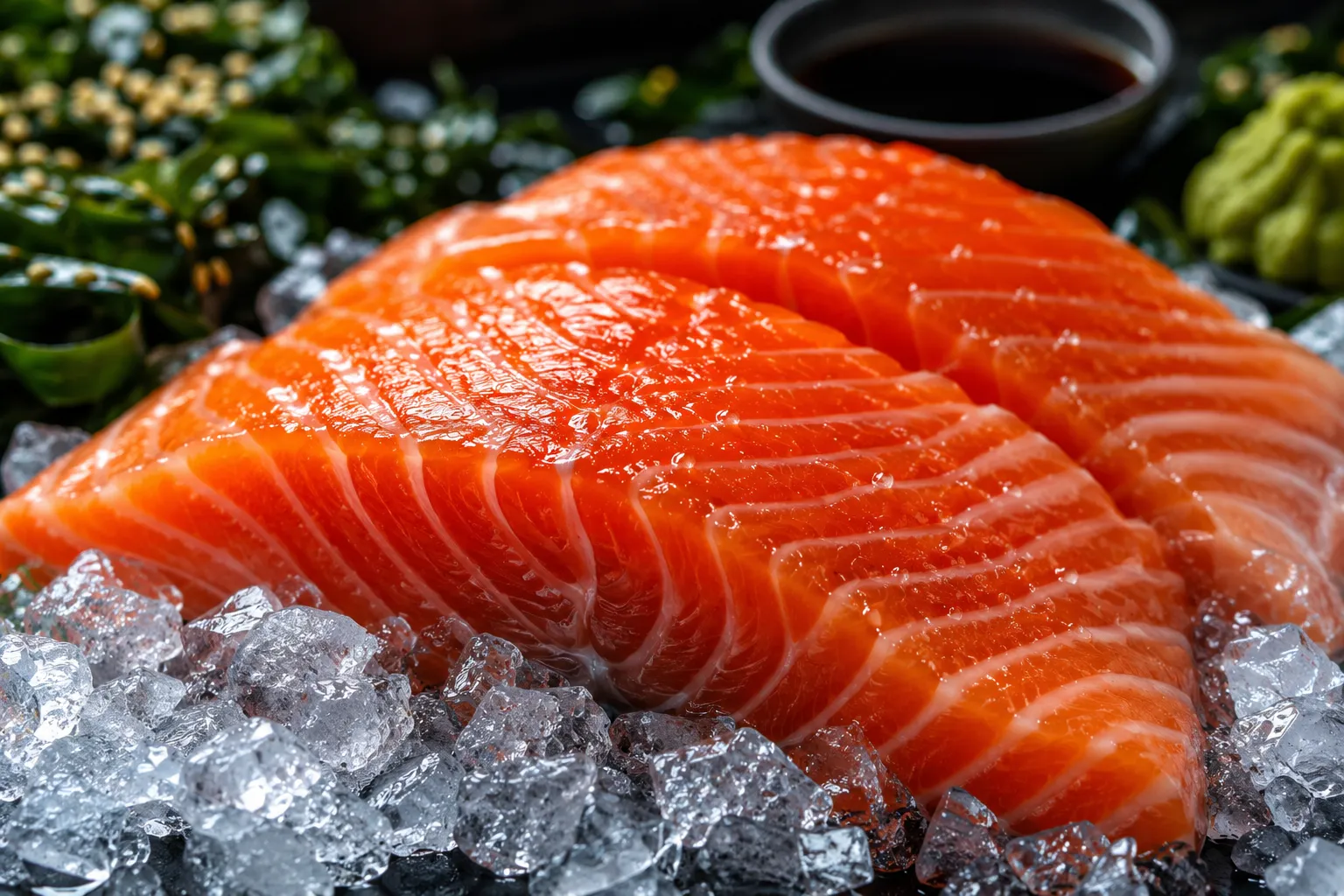
Quick Summary: Eating raw salmon is generally safe if it has been properly frozen to kill parasites (at -31°F for 15 hours or -4°F for 24 hours) and handled correctly. Farm-raised salmon poses lower parasite risks than wild-caught, but both carry potential bacteria and environmental contaminants. Pregnant women, young children, older adults, and immunocompromised individuals should avoid raw salmon entirely.
Raw salmon shows up in sushi bars, poke bowls, and Nordic gravlax recipes around the world. But here’s the thing — salmon wasn’t traditionally eaten raw in most cultures until modern freezing techniques made it safer.
So what changed? And more importantly, is your grocery store salmon safe to eat without cooking?
The answer depends on how the fish was handled, where it came from, and who’s eating it. Let’s break down what the science actually says.
The Parasite Problem in Raw Salmon
According to the CDC, anisakiasis is a parasitic disease caused by nematodes (worms) that attach to the walls of the esophagus, stomach, or intestine. Anyone who eats undercooked or raw fish or squid is at risk.
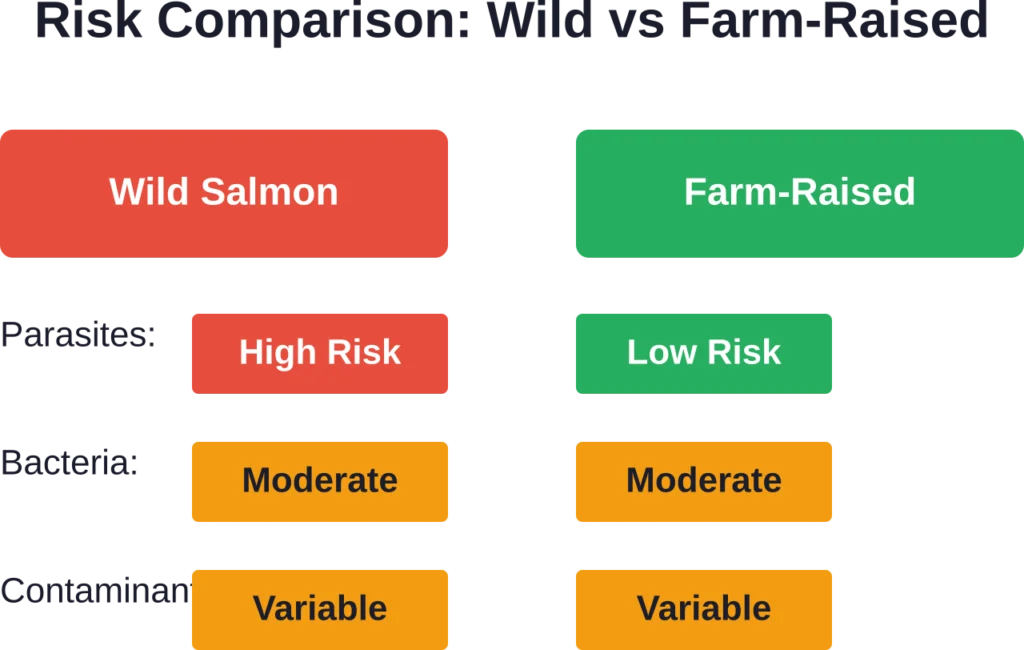
Wild-caught salmon can harbor these parasites naturally. When fish swim in ocean waters, they pick up parasite larvae from their food sources. These larvae don’t make the fish sick, but they can definitely make humans sick.
Symptoms of anisakiasis include severe abdominal pain, nausea, and vomiting. In some cases, the worms burrow into the intestinal wall, requiring medical intervention.
Farm-raised salmon has a significantly lower parasite risk because these fish are fed controlled, parasite-free diets in enclosed environments. That said, farmed salmon isn’t completely risk-free when it comes to bacteria and environmental contaminants.
How Freezing Kills Parasites
The CDC specifies exact freezing requirements for salmon intended for raw consumption. The fish must be frozen at -31°F (-35°C) or below until solid, then stored at -31°F (-35°C) or below for 15 hours. Alternatively, it can be frozen at -31°F (-35°C) or below until solid, then stored at -4°F (-20°C) or below for 24 hours.
These temperatures kill anisakis larvae and other parasites effectively. But here’s the catch — most home freezers don’t reach -31°F. Standard residential freezers typically maintain around 0°F, which isn’t cold enough to meet FDA parasite-destruction guidelines quickly.
Commercial sushi-grade suppliers use industrial blast freezers that can hit these ultra-low temperatures. That’s why fish labeled for raw consumption has usually been professionally frozen, not just tossed in a regular freezer.
What About “Sushi-Grade” Salmon?
Real talk: “sushi-grade” isn’t a regulated term in the United States. The FDA doesn’t legally define it, and no official certification process exists.
Retailers use the term to indicate fish that’s been handled with raw consumption in mind — typically meaning it was frozen according to parasite-destruction guidelines and stored at proper temperatures. But the label itself doesn’t guarantee anything.
When buying salmon for raw dishes, ask the fishmonger directly whether the fish was previously frozen and how it was stored. Reputable suppliers will know their sourcing and handling protocols.
Bacteria and Environmental Contaminants
Freezing kills parasites. It doesn’t kill bacteria.
Raw salmon can harbor bacteria like Salmonella and Listeria. In fact, the FDA investigated a multistate outbreak in October 2022 linked to fresh, raw salmon supplied to restaurants, with 39 reported illnesses across four states.
Proper handling reduces bacterial risk significantly. The fish should be kept at 40°F or below from the moment it’s caught until you eat it. Cross-contamination from cutting boards, knives, and other surfaces can introduce additional bacteria.
Environmental contaminants are another consideration. Research indicates that cooked salmon had an average of 26% lower levels of persistent organic pollutants (POPs) than raw salmon (10). These contaminants accumulate in fish tissue over time and aren’t eliminated by freezing.
Who Should Never Eat Raw Salmon
According to FoodSafety.gov, certain groups face higher risks from foodborne illness:
- Pregnant women: Immune system changes place both mother and fetus at increased risk. Some illnesses like Listeria and Toxoplasma gondii can infect the fetus even if the mother doesn’t feel sick.
- Young children: Developing immune systems can’t fight infections as effectively.
- Older adults: Age-related immune decline increases vulnerability.
- Immunocompromised individuals: Anyone with weakened immunity from illness, medication, or medical treatment should avoid raw fish entirely.
For these groups, cooking salmon to an internal temperature of 145°F (63°C) is the safest option. At this temperature, harmful bacteria and any remaining parasites are destroyed.
Reducing Your Risk When Eating Raw Salmon
If you’re healthy and want to enjoy raw salmon, follow these guidelines:
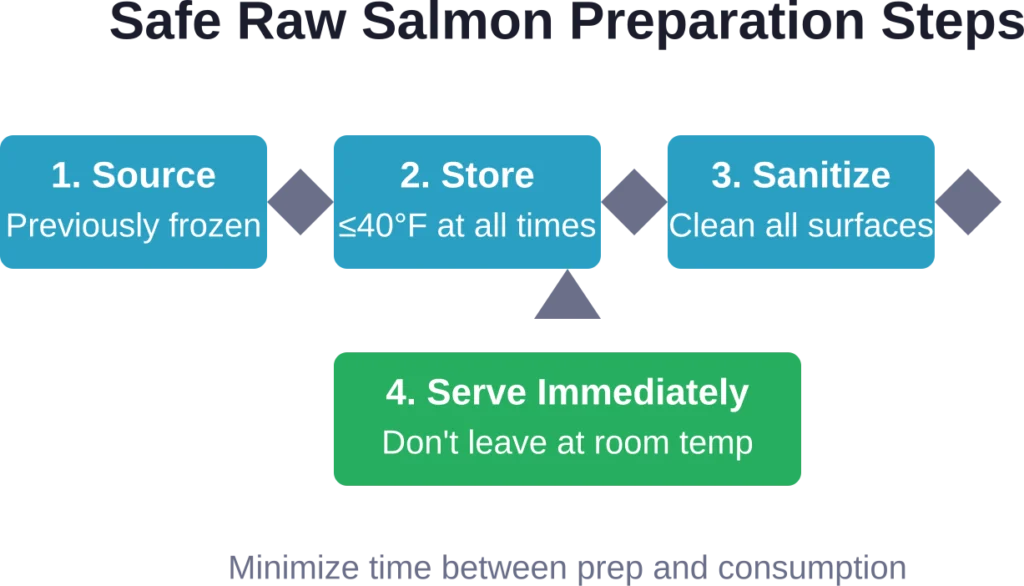
Buy from reputable sources that can verify the fish was commercially frozen. Ask specific questions about handling and storage temperatures.
Keep the salmon refrigerated at 40°F or below until immediately before serving. Bacteria multiply rapidly at room temperature.
Use separate cutting boards and utensils for raw fish. Cross-contamination is a major source of foodborne illness.
Consume the salmon as soon as possible after purchase. The longer it sits, even refrigerated, the more opportunity bacteria have to grow.
Consider farm-raised over wild-caught for lower parasite risk, though both require proper freezing for safety.
| Safety Factor | What to Look For | Red Flags |
|---|---|---|
| Appearance | Firm, translucent flesh; bright color | Dull, milky, or slimy texture |
| Smell | Mild, ocean-like scent | Strong fishy or ammonia odor |
| Storage | Displayed on ice; case temp ≤40°F | Sitting at room temperature |
| Labeling | Clear origin, previously frozen notation | Vague labeling, no source info |
The Bottom Line on Raw Salmon Safety
Modern freezing practices have made raw salmon considerably safer than it was historically. Commercial operations that follow FDA guidelines effectively eliminate parasite risks.
But “safer” doesn’t mean “risk-free.” Bacterial contamination, environmental pollutants, and handling errors can still cause illness. For vulnerable populations, the risks outweigh any culinary benefits.
For healthy adults? Raw salmon can be part of your diet if you source it carefully, store it properly, and handle it with food safety in mind. Skip the grocery store salmon that’s never been frozen and opt for fish that’s been through commercial parasite-destruction protocols.
When in doubt, cooking to 145°F gives you all the nutritional benefits of salmon without the risks. And honestly? Perfectly cooked salmon is delicious in its own right.
Frequently Asked Questions
Costco salmon can be eaten raw only if it’s been previously frozen according to FDA parasite-destruction guidelines. Ask the seafood counter staff whether the specific product was commercially frozen. Fresh salmon that’s never been frozen should not be consumed raw due to parasite risk.
Home freezers typically don’t reach the -31°F required by FDA guidelines for parasite destruction. Standard residential freezers maintain around 0°F, which isn’t sufficient. Buy salmon that’s been commercially frozen at proper temperatures rather than relying on home freezing.
“Sushi-grade” isn’t an official FDA classification. Retailers use the term to indicate fish handled with raw consumption in mind — usually commercially frozen and stored properly. However, the label alone doesn’t guarantee safety. Always verify freezing and handling protocols with the seller.
No. According to FoodSafety.gov, pregnant women should avoid raw fish entirely. Immune system changes during pregnancy increase the risk of severe foodborne illness, and some infections like Listeria can harm the fetus even if the mother shows no symptoms.
Raw salmon should be consumed within one to two days of purchase when stored at 40°F or below. The FDA recommends cooking or freezing seafood as soon as possible after buying it to minimize bacterial growth.
No, wild salmon actually carries higher parasite risk than farm-raised salmon. Farmed salmon are fed controlled diets in enclosed environments, reducing parasite exposure. Both types require proper commercial freezing to be safe for raw consumption.
According to FoodSafety.gov, cooking seafood to an internal temperature of 145°F (63°C) kills harmful bacteria. Freezing kills parasites but does not eliminate bacterial contamination — only heat does that.