
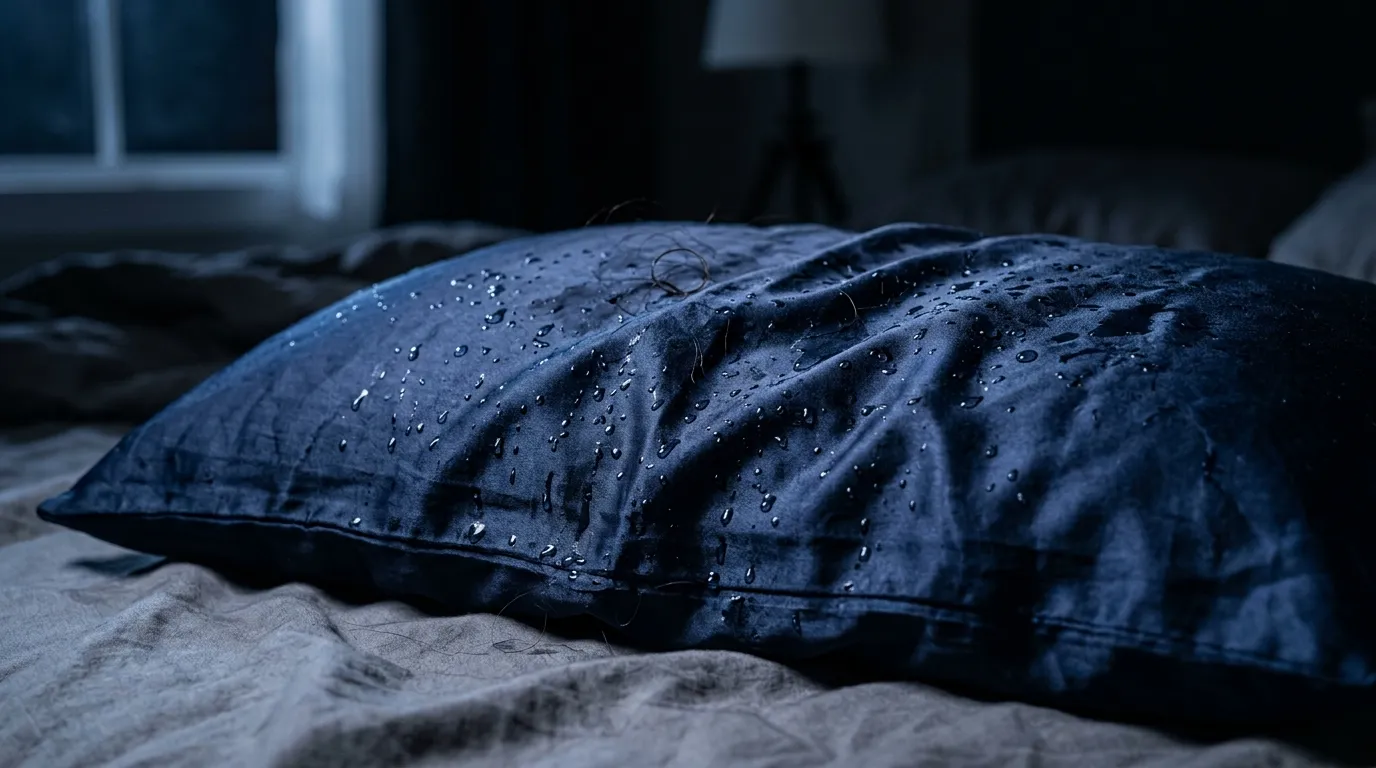
Quick Summary: Sleeping with wet hair won’t make you sick, but it can lead to hair breakage, scalp irritation, and fungal growth. Wet hair is more fragile and prone to damage from friction against pillowcases. If you must sleep with damp hair, use protective measures like silk pillowcases and loose braids to minimize harm.
We’ve all been there. It’s late, you’re exhausted, and the thought of blow-drying your hair feels like climbing a mountain. So the question pops up: is it really that bad to just hit the pillow with damp hair?
Turns out, the old wives’ tale about catching a cold from wet hair is just that—a tale. But that doesn’t mean sleeping with wet hair is completely harmless.
Let’s break down what actually happens when your head hits that pillow with soaking strands, the real risks involved, and how to minimize damage if air-drying overnight is your only option.
Why Wet Hair Is More Vulnerable
Hair structure changes dramatically when wet. The cuticle layer—the protective outer shell of each strand—swells and lifts when saturated with water.
This makes wet hair significantly more fragile and susceptible to damage. Think of it like a sponge: when dry, it’s firm. When wet, it tears easily.
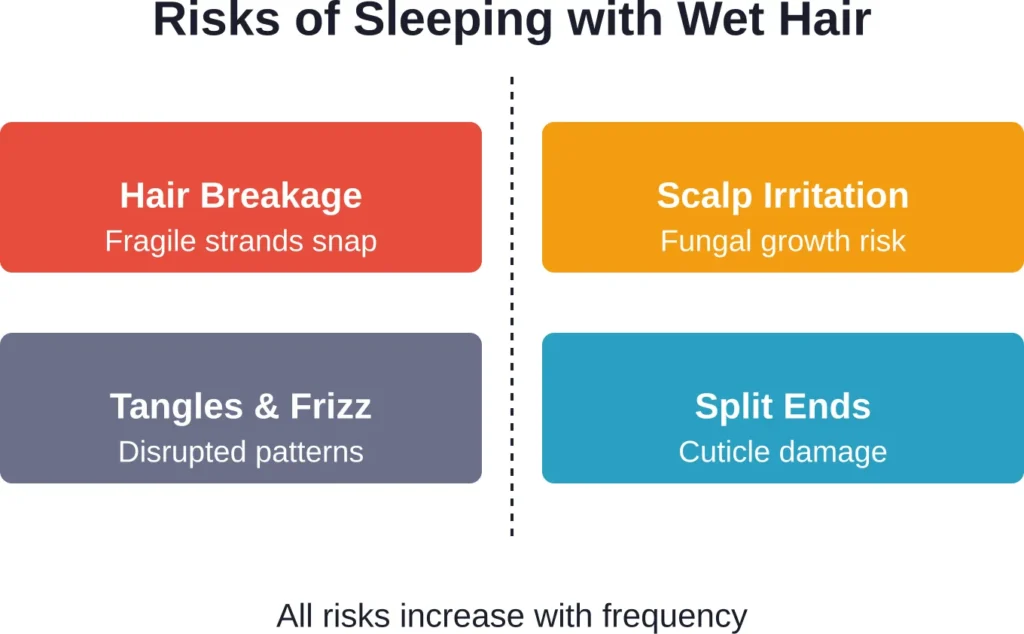
When hair rubs against cotton pillowcases throughout the night, that friction works against weakened, lifted cuticles. The result? Breakage, split ends, and frizz.
The Real Risks of Sleeping with Wet Hair
Here’s the thing though—sleeping with wet hair isn’t just about breakage. Several legitimate concerns come into play.
Hair Breakage and Damage
Wet hair stretches more easily than dry hair. Combined with the constant friction and movement during sleep, this creates the perfect storm for breakage.
Tossing and turning means your hair is repeatedly pulled, twisted, and rubbed against fabric. Those weakened strands snap more readily than they would when dry.
The American Academy of Dermatology notes that harsh treatment of hair—including aggressive brushing or styling when wet—can damage hair and cause it to look brittle and frizzy. Sleeping on wet hair falls into this category of mechanical stress.
Scalp Health Issues
A damp scalp creates a warm, moist environment. Sound familiar? That’s exactly what fungi and bacteria love.
Prolonged moisture against the scalp can contribute to conditions like dandruff, seborrheic dermatitis, or fungal infections. While not guaranteed, the risk increases with repeated exposure to this damp environment.
Your pillowcase absorbs that moisture too, creating a breeding ground for microorganisms that can then transfer back to your skin and scalp night after night.
Tangles and Frizz
Anyone with curly or textured hair knows the morning-after tangle disaster that wet hair can create. Those knots aren’t just annoying—detangling them causes additional breakage.
According to the American Academy of Dermatology, people with curly or tightly coiled hair are more prone to breakage and dryness than other hair types. Sleeping on wet curls compounds this vulnerability.
The friction from pillowcases disrupts curl patterns and creates frizz that can take significant effort to tame the next day.
What About That Cold Myth?
Let’s address the elephant in the room. No, sleeping with wet hair will not give you a cold.
Colds are caused by viruses, not damp hair. According to Mayo Clinic Health System, herpes virus exposure triggers cold sores through factors like stress, fatigue, and hormonal changes. Viral infections can be triggered by various factors—but wet hair isn’t one of them.
That said, if sleeping with wet hair makes you physically uncomfortable or causes you to lose sleep, that could indirectly weaken your immune system. Quality sleep matters for overall health.
But the direct cause-and-effect relationship between wet hair and catching a cold? That’s fiction.
Safe Ways to Sleep with Wet Hair
Okay, so what if drying your hair before bed just isn’t happening? Life gets busy. Here’s how to minimize the damage.
Let It Air Dry Partially
The best approach is waiting as long as possible before bed. Even 30 minutes of air-drying significantly reduces the amount of water in hair.
Hair that’s damp rather than soaking wet is less vulnerable to damage. Consider showering earlier in your evening routine to build in this buffer time.
Switch to a Silk or Satin Pillowcase
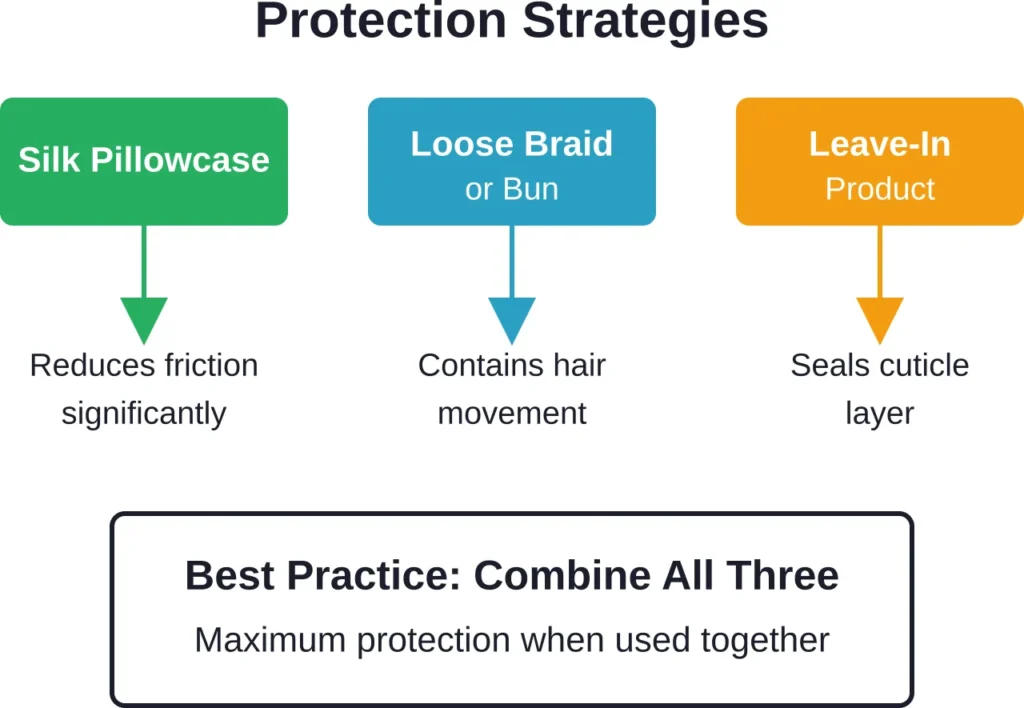
This simple change makes a real difference. Silk and satin create far less friction than cotton.
The smooth surface allows hair to glide rather than catch and pull. This reduces breakage, tangles, and frizz—whether hair is wet or dry.
Silk pillowcases may help reduce friction and some moisture absorption compared to cotton.
Use Protective Hairstyles
Loose braids or a low, loose bun prevent hair from moving around as much during sleep. The keyword here is loose—tight styles cause their own damage.
For curly hair, the “pineapple” method (a very loose, high ponytail) helps preserve curl pattern while minimizing friction. According to the American Academy of Dermatology, hairstyles that constantly pull at hair can lead to a type of hair loss called traction alopecia.
Whatever style is chosen, it should feel comfortable and not create tension on the scalp.
Apply Leave-In Conditioner or Hair Oil
A light leave-in product adds a protective layer to damp hair. This helps seal the cuticle and provides some barrier against friction.
Focus on mid-lengths to ends rather than the scalp to avoid creating that warm, moist environment discussed earlier. Hair-type-specific products work best—what works for fine straight hair won’t necessarily suit thick curls.
When You Should Absolutely Dry Your Hair First
Some situations call for prioritizing hair drying before sleep, inconvenience aside.
If dealing with an active scalp condition—dandruff, seborrheic dermatitis, or any fungal issue—keeping the scalp dry overnight becomes essential for treatment success. According to the American Academy of Dermatology, anti-dandruff shampoo should sit on the scalp for 2-10 minutes or as listed on the label before rinsing, and maintaining a dry scalp environment helps prevent recurrence.
For those with severely damaged or chemically treated hair (color, relaxers, perms), wet hair is even more fragile. Chemotherapy can cause significant hair loss, with some medications causing more severe alopecia than others. While this is an extreme example, it illustrates how compromised hair requires extra care.
If waking up with significant tangles that take 10-plus minutes to detangle, the breakage caused likely outweighs the time saved by skipping the dryer.
The Verdict: Is It OK?
Real talk: sleeping with wet hair occasionally won’t ruin hair forever. But making it a nightly habit increases cumulative damage over time.
Hair grows at a steady rate, and genetic factors play a significant role in hair health—according to research cited in dermatological literature, almost 80% of male pattern baldness is heritable. But environmental factors, including how hair is treated daily, affect its condition substantially.
The ideal scenario is allowing hair to dry completely or mostly before bed. When that’s not realistic, using protective measures dramatically reduces harm.
Think of it like sun exposure. One day at the beach won’t cause irreversible damage, but repeated unprotected exposure adds up.
Hair Type Matters
Not all hair responds to wet sleeping the same way. Texture, density, and porosity all influence vulnerability.
| Hair Type | Wet Sleep Risk Level | Primary Concerns | Best Protection |
|---|---|---|---|
| Fine, Straight | Medium | Breakage, limpness | Silk pillowcase, partial drying |
| Thick, Straight | Low-Medium | Longer drying time, tangles | Loose braid, air dry time |
| Wavy | Medium-High | Frizz, lost wave pattern | Protective style, leave-in product |
| Curly/Coily | High | Severe tangles, breakage, frizz | Satin bonnet or pillowcase, styling product |
| Chemically Treated | Very High | Extreme breakage, damage | Must dry before bed when possible |
Frequently Asked Questions
Yes, repeated exposure to moisture can lead to mildew or mold growth in pillows, especially foam pillows. Wash pillowcases frequently (at least weekly) and consider waterproof pillow protectors if sleeping with wet hair regularly.
Ideally, wait until hair is at least 70-80% dry. For most people, this takes 30-60 minutes of air drying, depending on hair thickness and length. Even partially dry hair is significantly less vulnerable than soaking wet hair.
Yes. The combination of friction and weakened hair structure when wet increases mechanical damage that leads to split ends. The American Academy of Dermatology identifies mechanical stress as a key factor in hair damage and breakage.
Loosely secured (up) is better than completely down. A loose braid, bun, or the pineapple method for curls reduces movement and friction. Tight styles cause their own damage, so the style should feel comfortable and tension-free.
Regular towels create significant friction. Better options include microfiber towels or old t-shirts, which absorb water without roughing up the cuticle. Pat or squeeze gently rather than rubbing vigorously.
When used correctly—on medium heat, held at least 6 inches away, with a heat protectant—a hair dryer causes less cumulative damage than repeated nights of wet sleeping. The key is technique and not using maximum heat settings.
It can. The damp environment on the scalp creates favorable conditions for the Malassezia fungus that contributes to dandruff. If dealing with dandruff, keeping the scalp dry overnight helps treatment work more effectively.
Take Care of Those Strands
Look, life happens. Sometimes the choice is between five extra minutes of sleep or perfectly dry hair, and sleep wins. That’s okay.
But understanding the real risks—breakage, scalp issues, and long-term damage—helps make informed decisions about hair care routines. When wet sleeping is unavoidable, simple protective measures make a measurable difference.
The bottom line? Sleeping with wet hair occasionally won’t cause disaster, but habitual wet sleeping accelerates damage over time. Hair health is cumulative—small daily choices add up.
Invest in a silk pillowcase, master a loose protective braid, and when possible, give hair at least 30 minutes to air dry before bed. Future self (and future hair) will thank current self.