
Quick Summary: Sleeping with a tampon is generally safe if worn for no longer than 8 hours total and changed before bed. Using the right absorbency level and setting an alarm if needed can help minimize risks like toxic shock syndrome. Period underwear or pads offer safer overnight alternatives without time constraints.
It’s late. The lights are off. And then it hits: did I just put in a tampon, or was that three hours ago? Can I actually sleep through the night with this thing in, or am I setting myself up for a health disaster?
The short answer? Yes, sleeping with a tampon is generally safe—but only under specific conditions. The devil’s in the details, and ignoring those details can turn a convenient overnight solution into a risky health situation.
Here’s everything worth knowing about tampon safety during sleep, what the research actually says, and why you might want to reconsider your overnight period routine altogether.
The 8-Hour Rule: Why Time Matters
According to the U.S. Food and Drug Administration, tampons are regulated medical devices. That means they come with actual usage guidelines, not just suggestions.
The golden rule: never wear a tampon for longer than 8 hours total. This isn’t arbitrary. It’s based on research into toxic shock syndrome (TSS), a rare but serious bacterial infection linked to prolonged tampon use.
Here’s where people get tripped up. Say you insert a tampon at 10pm before bed. You wake at 6am—that’s only 8 hours, right? Safe. But what if you put it in at 8pm after dinner, got distracted, then crawled into bed at 10pm without changing it? Now you’re potentially at 10 hours by morning. That’s where the risk creeps in.
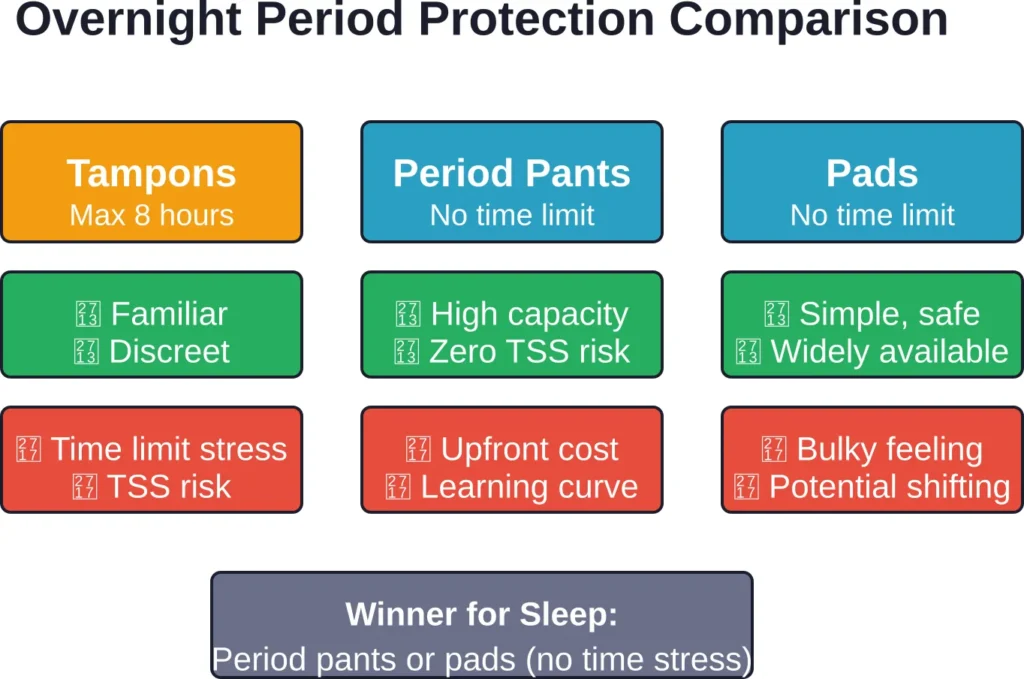
The tampon itself doesn’t cause TSS. Rather, Staphylococcus aureus bacteria—which can naturally colonize the vagina in healthy individuals—may produce toxins when tampons are left in too long. These toxins activate the immune system rapidly, leading to fever, low blood pressure, and organ damage within hours if untreated.
Choosing the Right Absorbency for Overnight Use
Not all tampons are created equal for sleep. Absorbency matters—a lot.
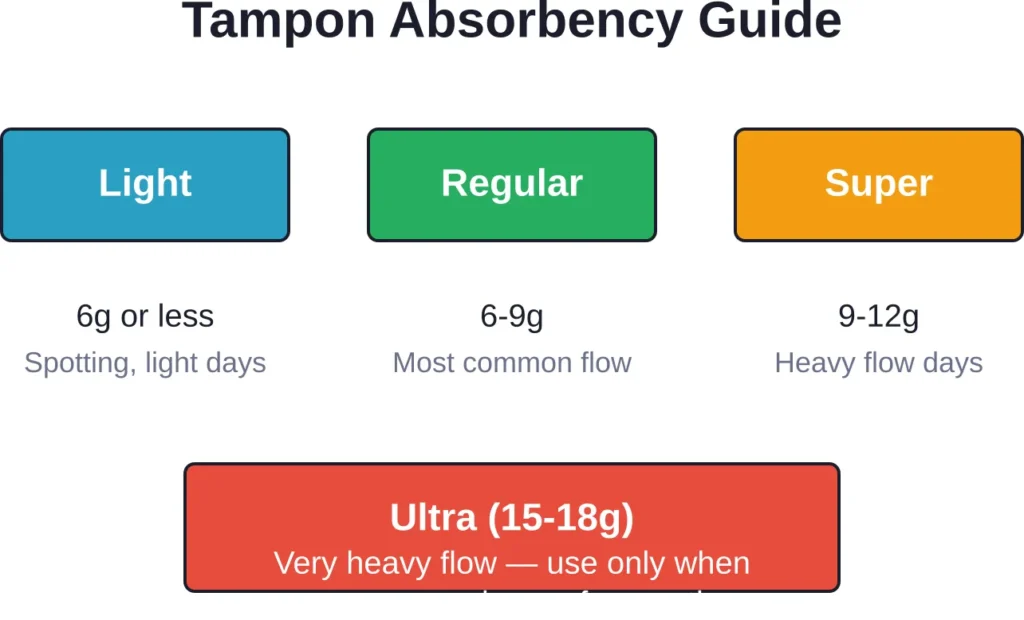
The FDA classifies tampon absorbency into ranges. According to Harvard School of Public Health data from the Apple Women’s Health Study, 47% of respondents reported using regular tampons, while 46% reported using pads.
But here’s the catch: using a higher absorbency than needed doesn’t make things safer. It actually increases risk. Ultra tampons (which hold 15-18 grams according to FDA standards) left in for extended periods create a more hospitable environment for bacterial growth.
The safest approach? Use the lowest absorbency that handles flow without leaking. If regular tampons work for daytime, they likely work overnight too—especially since people tend to have lighter flow when lying down due to gravity.
Toxic Shock Syndrome: Rare But Serious
Let’s talk about the elephant in the room: toxic shock syndrome.
TSS is rare. Very rare. But it’s also serious enough that the University of Utah Health System recently emphasized it as an emergency requiring immediate medical care because it can become life-threatening within hours.
Medical research published in the Canadian Medical Association Journal and multiple NIH studies confirms that TSS risk increases when tampons are worn for extended periods. The bacteria don’t need long—just the right conditions.
Warning signs include sudden high fever (above 102°F), vomiting, diarrhea, muscle aches, dizziness, confusion, or a sunburn-like rash. If these symptoms appear while wearing a tampon, remove it immediately and seek emergency care.
One documented case report in IDCases described a patient presenting with blood pressure of 96/60 mmHg, heart rate of 156 beats per minute, and fever of 102.8°F after menstrual cup use—proving that any internal menstrual product carries some TSS risk, not just tampons.
That said, proper use dramatically reduces risk. Change before bed. Set an alarm if needed. Don’t exceed 8 hours.
Best Practices for Safe Overnight Tampon Use
If tampons remain the go-to choice for overnight protection, here’s how to minimize risk:
- Insert right before sleep. Not two hours before bed. Right before. This maximizes the safe window.
- Choose appropriate absorbency. Regular is usually sufficient for overnight, even on heavier days, since gravity slows flow while lying down.
- Set an alarm for 7-8 hours. Especially for people who regularly sleep longer cycles. Better to wake briefly than risk prolonged wear.
- Keep backup protection. Period underwear or a pad adds leak insurance without adding TSS risk.
- Change immediately upon waking. Don’t hit snooze and roll over. The clock keeps ticking.
Real talk: if the math doesn’t work—if sleep schedules consistently exceed 8 hours—tampons aren’t the right overnight tool. Period.
Safer Alternatives for Overnight Protection
Here’s where it gets interesting. Tampons aren’t the only option, and they’re arguably not the best option for sleep.
Period Underwear
Period underwear has evolved significantly. Modern designs can absorb significant amounts—some products are designed to absorb the same amount as 10 tampons—making them ideal for overnight use without the 8-hour constraint.
They’re comfortable, reusable, and eliminate the mental math of tracking wear time. No alarms, no middle-of-the-night panic, no TSS risk. Slip them on, sleep, wake up, change.
Menstrual Cups
Menstrual cups can typically be worn for up to 12 hours, giving a wider margin than tampons. They collect rather than absorb, which changes the bacterial environment. However, the NIH has documented TSS cases associated with menstrual cups, so they’re not risk-free—just lower risk with proper hygiene and timely emptying.
Overnight Pads
Old school? Maybe. Effective? Absolutely. Overnight pads have no time limits, no insertion concerns, and zero TSS risk. For heavy sleepers or anyone anxious about the 8-hour rule, pads eliminate the worry entirely.
When Not to Sleep With a Tampon
Some situations make overnight tampon use particularly risky:
- Sleep cycles exceeding 8 hours. If typical sleep runs 9-10 hours, tampons don’t fit the schedule safely.
- Unpredictable wake times. Weekends, vacations, or irregular schedules make timing harder to track.
- History of TSS. Anyone who’s experienced toxic shock syndrome before should avoid tampons entirely, according to medical guidance.
- Very heavy flow requiring frequent changes. If daytime tampons need changing every 2-3 hours, overnight use becomes impractical and risky.
In these cases, alternative protection isn’t just convenient—it’s medically prudent.
Frequently Asked Questions
No. The maximum safe wear time for tampons is 8 hours. Wearing one for 10 hours significantly increases toxic shock syndrome risk. If sleep routinely exceeds 8 hours, period underwear or pads are safer overnight options.
Remove it immediately upon waking. Monitor for TSS symptoms over the next 24-48 hours: sudden high fever, vomiting, diarrhea, dizziness, muscle aches, or rash. If any symptoms appear, seek emergency medical care. One instance doesn’t guarantee TSS, but don’t make it a habit.
Yes, from a TSS perspective. Pads carry zero toxic shock syndrome risk because they’re external. They also have no time constraints, making them ideal for unpredictable sleep schedules or anyone anxious about the 8-hour tampon limit.
No. Never wear two tampons simultaneously. This doesn’t increase safety—it doubles TSS risk and makes proper removal difficult. If one tampon doesn’t provide sufficient protection, switch to a higher absorbency (within reason), add a pad as backup, or use period underwear designed for heavy overnight flow.
TSS symptoms develop suddenly and include high fever (often above 102°F), sudden drop in blood pressure causing dizziness or fainting, vomiting, diarrhea, muscle aches, confusion, and a sunburn-like rash. These symptoms progress rapidly. If they appear while using a tampon, remove it immediately and go to an emergency room.
Menstrual cups can typically be worn for up to 12 hours, giving more flexibility than the 8-hour tampon limit. However, TSS cases have been documented with cup use too. Cups aren’t risk-free, but they do offer a longer safe wear window when cleaned properly and emptied on schedule.
Use the lowest absorbency that manages flow without leaking. For most people, regular absorbency works overnight since lying down slows menstrual flow. Higher absorbency tampons left in for extended periods create better conditions for bacterial growth, increasing TSS risk unnecessarily.
The Bottom Line on Sleeping With Tampons
So, is it OK to sleep with a tampon in? Technically yes—but only if wear time stays under 8 hours total, absorbency matches actual flow, and the tampon goes in right before sleep.
But here’s the thing: just because something is technically safe doesn’t make it the best choice. For overnight protection, period underwear and pads offer equivalent or better leak protection without the mental load of tracking time or the TSS risk that comes with internal products.
Menstrual products are medical devices regulated by the FDA for good reason. Treat them with the same attention given to any medical product. Follow the guidelines. Know the risks. And when alternatives exist that eliminate those risks entirely, consider whether convenience is worth the trade-off.
Sleep should be restful, not stressful. Choose overnight protection that lets you actually rest.