

Quick Summary: Lifting weights every day is generally not recommended for most people. According to the CDC, adults need at least 2 days of muscle-strengthening activities per week for health benefits, with rest days essential for muscle recovery and growth. Daily lifting can work only if different muscle groups are trained each session, but even experienced lifters benefit from strategic rest days to prevent overtraining and maximize results.
Walk into any gym and you’ll see them: the dedicated lifters who show up day after day, hitting the weights with impressive consistency. But does training more frequently always mean better results?
The answer isn’t as straightforward as you might think. While strength training offers undeniable health benefits, the question of daily lifting requires a nuanced understanding of recovery science, training goals, and individual capacity.
What Official Guidelines Say About Strength Training Frequency
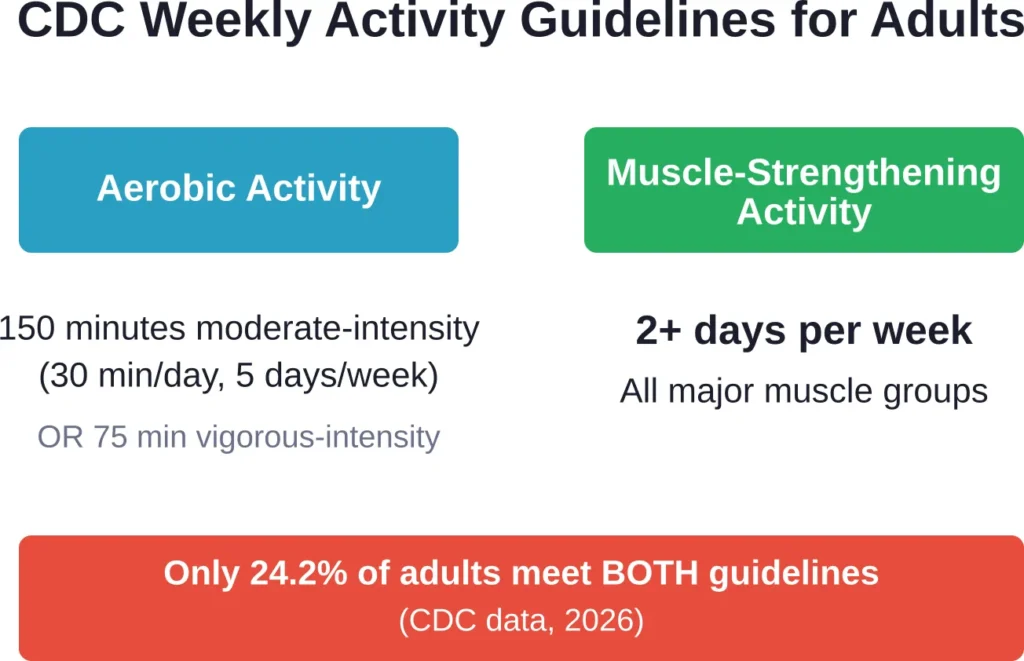
The Centers for Disease Control and Prevention (CDC) provides clear recommendations for adults regarding muscle-strengthening activities. According to their 2025 guidelines, adults need at least 2 or more days a week of activities that strengthen muscles, working all major muscle groups (legs, hips, back, abdomen, chest, shoulders, and arms).
This recommendation pairs with the aerobic activity guideline of at least 150 minutes of moderate-intensity physical activity per week. Interestingly, CDC data from 2026 shows that only 24.2% of adults 18 and older meet both aerobic and muscle-strengthening guidelines—highlighting how challenging it can be to maintain a consistent strength training routine.
The American College of Sports Medicine published updated resistance training guidelines in March 2026, marking the first major revision since 2009. After synthesizing findings from 137 systematic reviews representing data from over 30,000 participants, they confirmed that consistency matters more than complicated programs.
The Science of Muscle Recovery: Why Rest Days Matter
Here’s the thing: lifting weights creates microscopic tears in muscle fibers. That’s not damage—it’s the stimulus for growth. But the actual adaptation happens during recovery, not during the workout itself.
Research on resistance training recovery shows that muscle protein synthesis remains elevated for 24-48 hours after training in most individuals. Training the same muscle group again before this window closes can interfere with optimal adaptation.
According to medical research on recovery in resistance training microcycle construction, insufficient recovery between sessions can lead to accumulated fatigue without corresponding performance gains. The studies emphasize that while some fatigue is expected and even necessary, prolonged high training demand without adequate rest may lead to overreaching or overtraining syndrome.
Now, this is where it gets interesting. Different muscle groups recover at different rates. Larger muscle groups like legs and back typically need more recovery time than smaller muscles like biceps or calves. This biological reality creates the foundation for split training routines.
Can You Actually Lift Weights Every Day? The Realistic Scenarios
The short answer? Yes, but with major caveats.
Daily lifting becomes feasible when structured around muscle group splits. By training different muscles each day, recovery time is built into the schedule naturally. For example, training chest and triceps on Monday, legs on Tuesday, back and biceps on Wednesday, and shoulders on Thursday allows each muscle group 3-4 days of recovery while maintaining daily training frequency.
But even with perfect programming, central nervous system fatigue accumulates. The nervous system requires recovery time just like muscles do. Elite athletes and bodybuilders who train daily typically include deload weeks or lighter sessions to manage systemic fatigue.
Who Might Train Daily
Professional athletes and competitive bodybuilders sometimes train six or seven days per week, but their programs are designed by experienced coaches who carefully manage volume, intensity, and recovery modalities. These individuals also typically have:
- Years of training experience and adaptation
- Optimized nutrition and supplementation protocols
- Professional guidance on program design
- Access to recovery tools (massage, physical therapy, etc.)
- Adequate sleep and stress management
Research on protein supplementation shows that proper nutrition supports recovery. Studies found an average 9% performance improvement when consuming protein plus carbohydrate versus carbohydrate alone during cycling performance (time to exhaustion and time trial performance), emphasizing that nutrition plays a crucial role in supporting frequent training.
Who Should Not Train Daily
Beginners, intermediate lifters, and most recreational exercisers don’t need daily weightlifting. In fact, more frequent training may sabotage results by preventing adequate recovery. Training evidence suggests that newer lifters often make better progress on 3-4 day programs than when attempting daily training.
Optimal Training Frequency for Different Goals
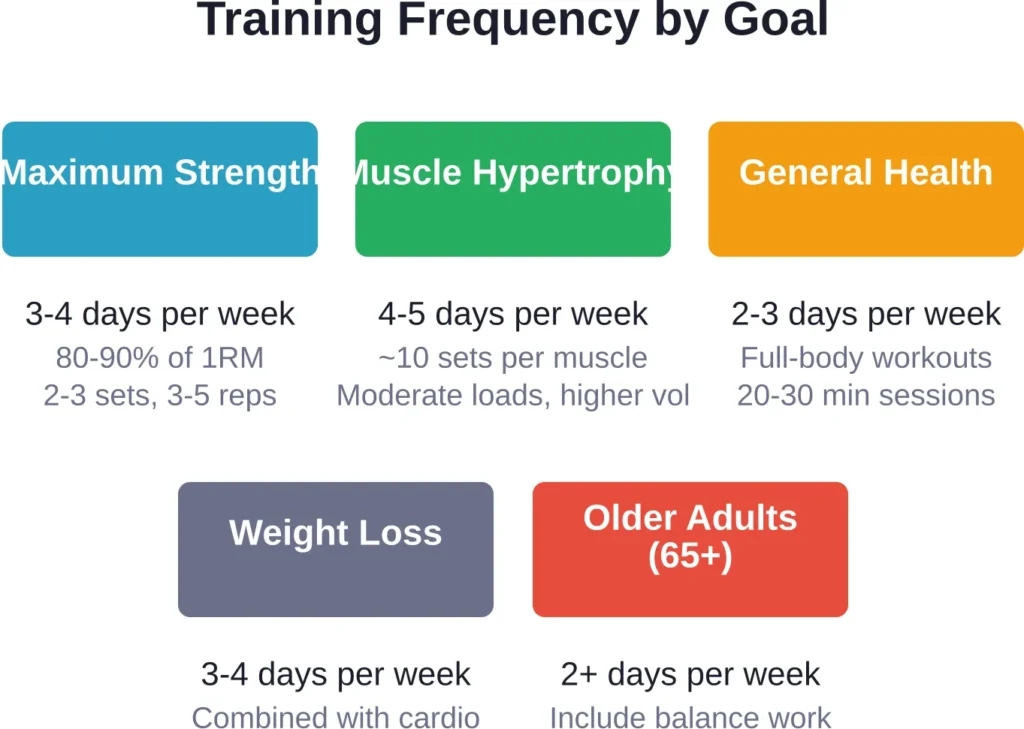
Training frequency should align with specific objectives. The ACSM’s 2026 guidelines provide clear direction based on desired outcomes.
For Building Muscle (Hypertrophy)
The ACSM’s 2026 position stand indicates that muscle growth is optimized with approximately 10 sets per muscle group weekly. This volume can be distributed across multiple sessions, typically 4-5 training days per week using body part splits or upper/lower splits.
Research on strength training shows significant muscle mass increases with proper programming over 12-week periods. The key is cumulative weekly volume, not daily training.
For Maximum Strength
Strength development requires heavy loads—typically 80% of one-repetition maximum (1RM) or higher—for 2-3 sets per exercise. According to medical research, heavy loads in the 80%-84% of 1RM range are particularly effective, with very heavy training using 85% or more producing robust strength gains.
Training 3-4 days per week allows adequate recovery between heavy sessions while providing sufficient frequency to practice movement patterns and build neural adaptations.
For General Health and Fitness
Research indicates that individuals may notice stronger muscles within about 2 weeks of starting a strength training program (approximately 20 to 30 minutes per session). This minimal effective dose improves bone density, metabolic health, functional capacity, and longevity markers.
For individuals primarily interested in health rather than athletic performance, 2-3 full-body strength sessions weekly meet and exceed minimum recommendations without requiring daily commitment.
For Weight Loss
Strength training supports weight loss by preserving muscle mass during caloric restriction and elevating metabolic rate. Combining 3-4 days of resistance training with regular aerobic activity creates an effective fat loss program.
The emphasis here is on consistency and adherence rather than maximum frequency. A sustainable 3-4 day schedule produces better long-term results than an aggressive daily program that leads to burnout.
The Real Risks of Training Too Frequently
Real talk: more isn’t always better. Daily lifting without proper planning carries several risks.
Overtraining Syndrome
Medical literature on overtraining in athletes defines this as a condition caused by excessive high-intensity training combined with insufficient recovery. Symptoms include:
- Persistent fatigue and reduced performance
- Elevated resting heart rate
- Mood disturbances and irritability
- Increased injury susceptibility
- Hormonal disruptions
- Sleep disturbances
Overtraining develops gradually and can require weeks or months to resolve. Prevention is far easier than treatment.
Increased Injury Risk
Accumulated fatigue degrades movement quality and proprioception. Training with compromised form dramatically increases injury risk, particularly for complex movements like squats, deadlifts, and Olympic lifts.
Connective tissue (tendons and ligaments) adapts more slowly than muscle tissue. Daily training can outpace tendon adaptation, leading to chronic tendinopathy.
Diminished Returns
Studies on resistance training recovery show that training the same muscle group daily without adequate recovery can actually impair progress. The body needs time to complete adaptation processes initiated by training stimulus.
| Training Frequency | Typical Recovery Status | Adaptation Quality | Injury Risk |
|---|---|---|---|
| 2-3 days/week | Full recovery between sessions | Excellent | Low |
| 4-5 days/week (split) | Muscle-specific recovery | Very good | Low-moderate |
| 6 days/week (split) | Minimal systemic recovery | Good (if managed) | Moderate |
| 7 days/week (same muscles) | Inadequate recovery | Poor | High |
How to Know if Daily Lifting Might Work for You
Despite the general recommendation for rest days, some experienced lifters can handle higher frequencies. Consider these factors:
Training Experience
Adaptation to training stress improves with years of consistent lifting. Beginners require more recovery than advanced lifters. Experienced lifters with years of consistent training may better tolerate high-frequency programs.
Recovery Capacity
Individual recovery capacity varies based on age, genetics, stress levels, sleep quality, and nutrition. Older adults typically require more recovery time; CDC guidelines for adults 65 and older emphasize the importance of 2 days of muscle-strengthening activity with adequate rest between sessions.
Research on heavy strength training in older adults shows that while intensity can be high (80%-84% of 1RM), recovery takes priority to prevent injury and optimize adaptations.
Program Design
If attempting daily lifting, program design becomes critical. Key principles include:
- Rotating muscle groups with at least 48-72 hours between training the same muscles
- Varying intensity throughout the week (not every session at maximum effort)
- Periodizing training with planned deload weeks
- Monitoring volume and adjusting based on recovery markers
- Incorporating active recovery modalities
Lifestyle Factors
Sleep, nutrition, and stress management directly impact recovery capacity. Lifters getting 7-9 hours of quality sleep, consuming adequate protein, and managing life stress can handle higher training frequencies than those without these foundations.
Smart Alternatives to Daily Lifting
Rather than lifting weights every single day, consider these evidence-based approaches:
Upper/Lower Split (4 Days)
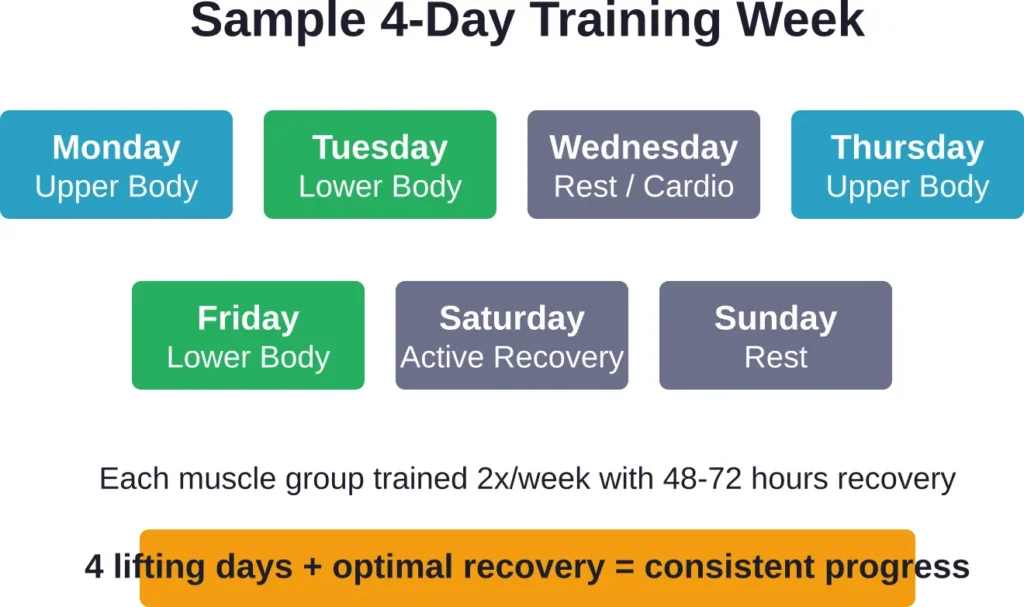
Train upper body twice weekly and lower body twice weekly, with rest days between sessions. This provides 48-72 hours of recovery for each muscle group while maintaining four training days.
Push/Pull/Legs (3-6 Days)
Divide training into pushing movements (chest, shoulders, triceps), pulling movements (back, biceps), and leg exercises. Run this cycle once (3 days) or twice (6 days) per week depending on experience and recovery capacity.
Full-Body Training (2-3 Days)
Train all major muscle groups in each session, 2-3 times weekly. This approach works excellently for beginners, time-constrained individuals, and those prioritizing general fitness over specialized goals.
Active Recovery Days
Replace additional lifting sessions with active recovery: light cardio, yoga, stretching, or mobility work. These activities promote blood flow and recovery without adding mechanical stress.
When to Expect Results from Strength Training
Research indicates that individuals may notice stronger muscles within about 2 weeks of starting a strength training program (approximately 20 to 30 minutes per session). However, visible changes in muscle size require longer timeframes with consistent training.
Patience matters here. Rushing progress by training daily before the body is ready often delays results rather than accelerating them. Training approaches emphasizing steady, consistent training with adequate recovery have been shown to outperform aggressive programs that can’t be sustained.
Signs You’re Training Too Frequently
Monitor these warning signs that indicate insufficient recovery:
- Declining performance on exercises where strength or reps should be increasing
- Persistent muscle soreness lasting more than 72 hours
- Frequent minor injuries or nagging pain
- Difficulty sleeping or non-restorative sleep
- Elevated resting heart rate (measure first thing in morning)
- Loss of motivation or enthusiasm for training
- Increased irritability or mood changes
- Prolonged fatigue lasting beyond the workout day
If experiencing several of these symptoms, reduce training frequency immediately and prioritize recovery. Sometimes the most productive thing an athlete can do is rest.
Frequently Asked Questions
No, beginners should not lift weights every day. New lifters need 48-72 hours of recovery between training sessions for the same muscle groups. Starting with 2-3 full-body workouts per week allows adaptation to training stress while minimizing injury risk. The CDC recommends at least 2 days of muscle-strengthening activity weekly as a minimum, not a maximum.
Training the same muscles without rest days prevents complete recovery and adaptation. This can lead to overtraining syndrome, increased injury risk, persistent fatigue, decreased performance, and potential hormonal disruptions. The actual muscle growth and strength gains occur during recovery, not during the workout itself. Without adequate rest, training stimulus exceeds recovery capacity.
For most people, both 3 and 5 days per week can be effective depending on goals and program structure. Three full-body sessions weekly meet minimum recommendations and work well for beginners or those prioritizing general health. Five days weekly using split routines can optimize muscle hypertrophy for intermediate and advanced lifters. The ACSM’s 2026 guidelines emphasize that consistency matters more than frequency—a sustainable 3-day program produces better results than an unsustainable 5-day approach.
Yes, muscle building is possible with just 2 days of strength training per week, though results will be slower than higher frequencies. The CDC’s minimum recommendation of 2 days weekly for muscle-strengthening activities is based on evidence that this frequency produces health benefits and functional improvements. Research on time-efficient training shows that even single-set training with appropriate intensity (70-85% of 1RM) performed 2-3 times weekly was identified as the minimum effective training dose to increase 1RM strength in resistance-trained men.
Professional bodybuilders who train daily use carefully designed split routines that ensure each muscle group receives 48-72 hours of recovery between sessions. They also employ periodization with deload weeks, have optimized nutrition and supplementation protocols, prioritize sleep and stress management, and often have access to recovery modalities like massage and physical therapy. Their training is supervised by experienced coaches who monitor recovery markers and adjust programming accordingly. This level of frequency requires years of adaptation and isn’t appropriate for recreational lifters.
No, older adults should not lift weights every day. CDC guidelines for adults 65 and older recommend at least 2 days per week of muscle-strengthening activities working all major muscle groups. Research on heavy strength training in older adults shows excellent results with 2-3 sessions weekly using loads of 80%-84% of 1RM, but emphasizes that adequate recovery between sessions is crucial for injury prevention and optimal adaptation. Older adults typically require more recovery time than younger individuals.
Yes, moderate cardio on rest days from lifting is generally fine and can actually promote recovery by increasing blood flow to muscles. Light to moderate aerobic activity (walking, cycling, swimming) doesn’t significantly interfere with strength adaptations. However, high-intensity cardio or very long endurance sessions may compromise recovery. The key is managing total stress and ensuring the body gets adequate overall recovery.
The Bottom Line: Finding Your Optimal Training Frequency
So, is it okay to lift weights every day? For most people, the answer is no—daily lifting isn’t necessary and may be counterproductive.
The evidence is clear: adults need at least 2 days of muscle-strengthening activities weekly for health benefits. Training 3-5 days per week with proper programming meets and exceeds this recommendation while allowing adequate recovery for most goals.
Daily training can work for experienced lifters using carefully designed split routines, but even then, strategic rest days and deload periods optimize long-term progress. The research consistently shows that recovery is when adaptation happens—training provides the stimulus, but rest builds the result.
Rather than asking whether daily lifting is possible, ask what training frequency supports sustainable progress toward specific goals. For the overwhelming majority, that means 3-5 quality training days per week, structured programming that matches experience level, and genuine commitment to recovery practices.
Start with 2-3 days weekly if new to strength training. Progress to 4-5 days with split routines once adaptation allows. Monitor recovery markers, adjust based on individual response, and remember: consistency over months and years matters infinitely more than cramming maximum volume into each week.
Ready to start a sustainable strength training program? Focus on building the habit first, perfect your form on fundamental movements, and trust the process. Results come from intelligent training matched with adequate recovery—not from simply doing more.