
Quick Summary: Television can be part of a healthy childhood when approached thoughtfully. Children under 2 should avoid screens except for video chatting, while older children benefit from age-appropriate, high-quality content watched with parental guidance. The key isn’t eliminating TV entirely but managing screen time limits, choosing educational programming, and balancing viewing with physical activity and real-world interactions.
The television question haunts nearly every modern parent. One minute it’s a lifesaver during dinner prep, the next it’s a source of guilt when screens dominate family time.
Here’s the thing though—the answer isn’t black and white. Research shows that screen time effects depend heavily on age, content quality, viewing duration, and what activities television replaces in a child’s day.
Real talk: most parents will use television at some point. Understanding when, how, and how much makes all the difference between helpful tool and developmental concern.
What the Research Actually Shows About Children and Television
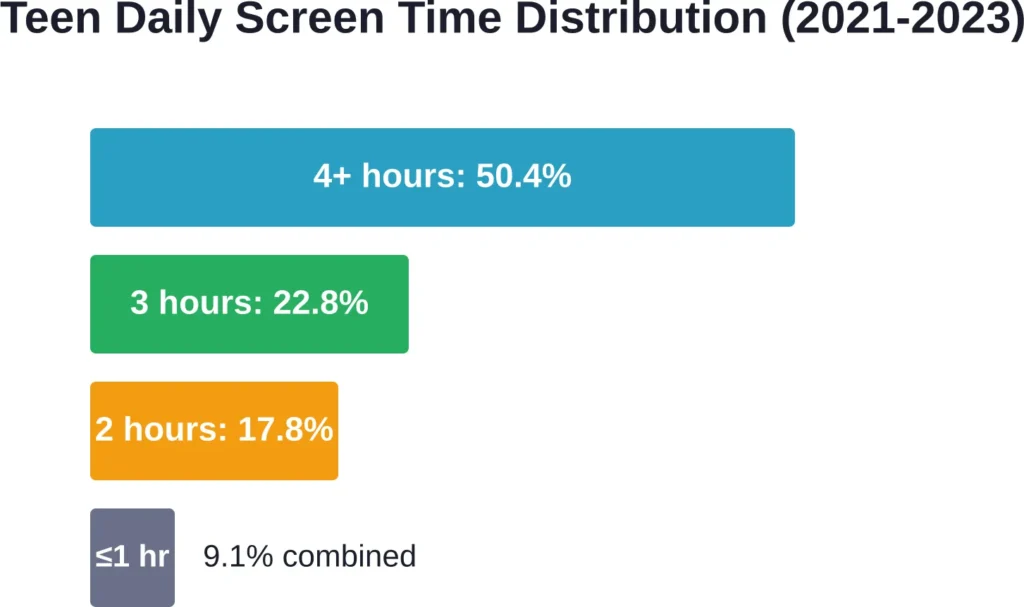
According to CDC data from July 2021 through December 2023, screen habits among teenagers reveal concerning patterns. Among teens ages 12-17, 50.4% reported four or more hours of daily screen time, while only 3.0% kept it under one hour daily.
Those numbers matter because they connect to mental health outcomes. Among teenagers with four or more hours of daily screen time, 27.1% reported anxiety symptoms and 25.9% reported depression symptoms in the previous two weeks.
But wait—does this mean all screen time damages mental health? Not exactly. The relationship between screens and well-being involves multiple factors: what’s being watched, what’s being displaced, and individual child differences.
Youth with attention deficit hyperactivity disorder face particular challenges. Research published through the CDC found these children averaged 149.1 minutes of screen time on weekdays, with 59% having a television in their bedroom. Having a bedroom TV added 25 minutes of additional daily screen time and increased odds of exceeding two hours daily by 32%.
Age-Specific Guidelines: When Can Children Start Watching Television?
The World Health Organization and American Academy of Pediatrics provide clear developmental benchmarks that account for brain development stages.
Infants Under 18 Months
Generally speaking, infants benefit most from face-to-face interaction during this rapid development period. Screen exposure—even background television—can interfere with the social engagement and language modeling that drives early brain development.
The exception? Video chatting with grandparents or distant relatives counts as social interaction rather than passive viewing.
Toddlers 18 Months to 2 Years
High-quality programming becomes acceptable in small doses during this window. Co-viewing remains essential—toddlers need adults to help them understand what they’re seeing and connect screen content to real-world experiences.
Short, educational segments work better than feature-length programs because toddler attention spans and comprehension skills are still developing.
Preschoolers 2 to 5 Years
This age group can benefit from carefully selected educational content. The WHO recommends children ages 2-4 should spend at least 180 minutes in a variety of types of physical activities at any intensity according to WHO guidelines, and should not exceed one hour of sedentary screen time daily, with less being better.
Quality matters enormously. Programs designed with developmental research backing—those teaching social skills, problem-solving, or early literacy—provide actual educational value rather than just entertainment.
School-Age Children 6 to 12 Years
Older children handle television differently, with improved comprehension and self-regulation. Consistent limits prevent screens from crowding out homework, physical activity, sleep, and social development.
Content curation remains important. Violence, advertising, and age-inappropriate themes affect behavior and worldview formation during these impressionable years.
Teenagers 13 and Up
Adolescents need boundaries that balance independence with guidance. Given that 50.4% of teenagers exceed four hours daily according to CDC data, many families would benefit from revisiting screen agreements.
The connection between excessive screen time and mental health symptoms suggests that limits serve protective functions during these vulnerable years.
| Age Group | Recommended Limit | Key Considerations |
|---|---|---|
| Under 18 months | None (except video chat) | Critical language development period |
| 18-24 months | Limited, high-quality only | Requires co-viewing and context |
| 2-5 years | Maximum 1 hour daily | Educational content, co-viewing preferred |
| 6+ years | Consistent family limits | Balance with activities, sleep, social time |
The Quality Question: Not All Television Content Is Created Equal
Duration matters, but content quality determines whether screen time helps or hinders development. Educational programming designed with child development expertise produces measurably different outcomes than entertainment-only content.
High-quality shows share common features: clear educational goals, age-appropriate pacing, positive social modeling, and interactive elements that encourage viewer participation.
Commercial content raises additional concerns. Advertising targets children who can’t yet distinguish persuasive intent from entertainment, potentially affecting food preferences, materialism, and self-image.
How Television Affects Different Areas of Development
Cognitive Development
Screen exposure affects attention span, executive function, and learning capacity differently depending on age and content. Passive viewing doesn’t build neural connections the way active exploration does.
That said, well-designed educational content can introduce concepts, vocabulary, and problem-solving models—especially when adults help children process and apply what they’ve watched.
Physical Health Concerns
Sedentary screen time contributes to reduced physical activity. The WHO reports that 80% of adolescents globally don’t meet physical activity recommendations, with excessive screen time playing a contributing role.
Children ages 2-4 should spend at least 180 minutes in a variety of types of physical activities at any intensity according to WHO guidelines. Television viewing directly competes with this essential movement time.
Sleep disruption represents another physical concern. Screen exposure before bedtime—particularly in bedrooms—interferes with sleep quality and duration.
Social and Emotional Development
Television can’t replace the back-and-forth interaction that builds social skills and emotional regulation. Babies learn language from live conversation, not screen voices.
Older children who watch prosocial content modeling kindness, cooperation, and empathy may internalize these behaviors—but only when adults help them connect screen examples to real-life situations.
Practical Guidelines for Healthy Television Habits
Now, this is where it gets practical. Knowing the research helps, but implementation determines outcomes.
Set Clear, Consistent Limits
Boundaries work best when established proactively rather than negotiated daily. Decide maximum daily durations based on age and stick to them consistently.
Screen-free zones and times—like bedrooms, mealtimes, and at least one hour before bedtime—protect critical activities from screen encroachment.
Prioritize Co-Viewing
Watching together transforms passive consumption into interactive learning. Ask questions, make connections, discuss characters’ choices.
Co-viewing also allows monitoring of content appropriateness and provides opportunities to counter problematic messages.
Curate Content Deliberately
Preview shows before allowing children to watch them. Seek programming with educational value, prosocial themes, and age-appropriate content.
Community discussions highlight that not all concerns apply universally. Some families find well-chosen television provides learning opportunities and cultural exposure that enrich rather than diminish childhood.
Model Healthy Screen Habits
Children imitate adult behavior. Parents who constantly check phones or watch television signal that screens take priority over present-moment engagement.
Demonstrating balanced technology use—putting devices away during family time, reading instead of defaulting to screens—teaches self-regulation more effectively than rules alone.
Balance Screen Time With Other Activities
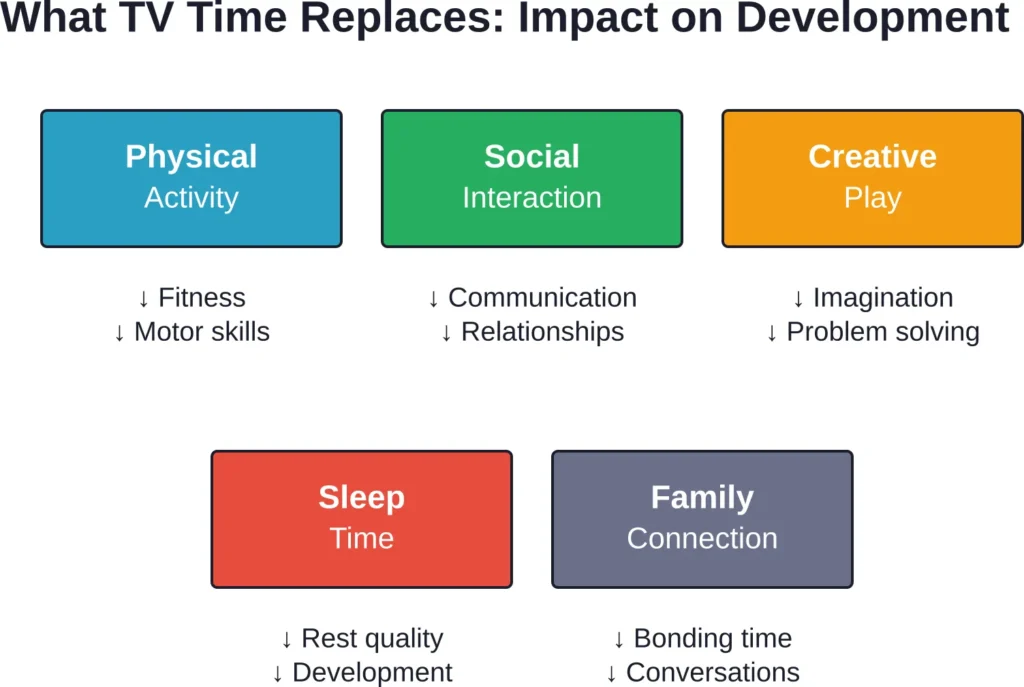
Television becomes problematic when it crowds out physical activity, outdoor play, reading, creative projects, and face-to-face interaction. Ensure children’s daily routines include diverse experiences.
The goal isn’t zero screen time but appropriate proportions that support overall healthy development.
When Television Actually Helps
Look, television isn’t categorically harmful. Used thoughtfully, it serves legitimate purposes in family life.
Educational content introduces concepts and vocabulary. Nature programs spark curiosity about the world. Age-appropriate shows model prosocial behavior and problem-solving.
Television provides breaks when parents need to accomplish tasks safely. That’s legitimate—parental burnout helps nobody, and reasonable screen time allows caregivers to maintain household functioning.
Cultural and language exposure through quality programming can supplement rather than replace learning. Bilingual families might use shows to reinforce language development.
Signs Screen Time Has Become Problematic
Certain red flags indicate television habits need reassessment:
- Tantrums or aggressive behavior when screens are turned off
- Declining interest in previously enjoyed non-screen activities
- Sleep disturbances or difficulty waking
- Academic performance decline
- Physical complaints like headaches or eye strain
- Social withdrawal or decreased family interaction
These symptoms suggest screen time has exceeded healthy limits or displaced essential activities and relationships.
Frequently Asked Questions
For children ages 2-5, more than one hour daily exceeds WHO and pediatric recommendations. Toddlers under 18 months should avoid television entirely except for video chatting. The focus should be on high-quality, educational content rather than entertainment programming, always with adult co-viewing when possible.
Yes. Background television disrupts parent-child interaction patterns and reduces the quantity and quality of language exposure infants receive. Even when babies aren’t directly viewing screens, background media interferes with focused play and caregiver engagement essential for development.
Research-backed educational programming designed with developmental expertise can support learning, particularly for preschoolers and older children. Programs must be age-appropriate, interactive, and ideally watched with adult guidance. Educational benefit depends heavily on content quality—not all shows labeled educational provide genuine learning value.
No. Bedroom televisions associate with increased screen time, reduced sleep quality, and decreased parental oversight of content. CDC research found that among youth with ADHD, bedroom TVs added 25 minutes of daily viewing and increased odds of excessive screen time by 32%. Keep screens in common areas where monitoring is easier.
Start with honest conversation about the research connecting excessive screen time to mental health concerns. Collaborate on realistic reduction goals rather than imposing sudden restrictions. Focus on adding positive alternatives—sports, hobbies, social activities—rather than just removing screens. Consider family-wide screen-free times to model balance.
Yes. Screen exposure before sleep suppresses melatonin production and delays sleep onset. This affects sleep quality, duration, and next-day functioning. Establish screen-free time at least one hour before bedtime, keeping devices out of bedrooms entirely.
Look for age-appropriate content with clear educational goals, positive character modeling, and interactive elements. Preview shows yourself or check reviews from pediatric and educational organizations. Avoid programs with violence, commercials targeting children, or rapid-paced editing designed to maximize viewing rather than learning.
The Bottom Line: Context Matters More Than Absolutes
So, is it okay to let children watch TV? The answer depends on age, content, duration, and what television replaces in daily routines.
Infant and toddler brains need real-world interaction more than screens. Preschoolers can benefit from limited, high-quality content with parental involvement. School-age children and teenagers need consistent limits that prevent excessive use while allowing age-appropriate viewing.
The research doesn’t support complete screen elimination for most families. It does support thoughtful boundaries, content curation, co-viewing, and ensuring television supplements rather than replaces essential childhood activities.
Parents who approach television as one tool among many—not a default babysitter or primary entertainment source—typically find healthy balance. The goal isn’t perfection but proportionality: screen time that fits appropriately within a childhood rich with movement, exploration, creativity, and human connection.
Start by assessing current habits honestly. Set age-appropriate limits. Choose quality over quantity. Watch together when possible. And remember that children thrive on diverse experiences—television can be part of that mix without dominating it.