

Quick Summary: Eating after a workout is not only okay, it’s essential for optimal recovery. Post-exercise nutrition replenishes glycogen stores, repairs muscle tissue, and rehydrates the body. The timing and composition of your post-workout meal can significantly impact recovery, with research showing that proper refueling supports muscle protein synthesis and prepares the body for the next training session.
The question isn’t whether it’s okay to eat after a workout. The real question is: what happens when you don’t?
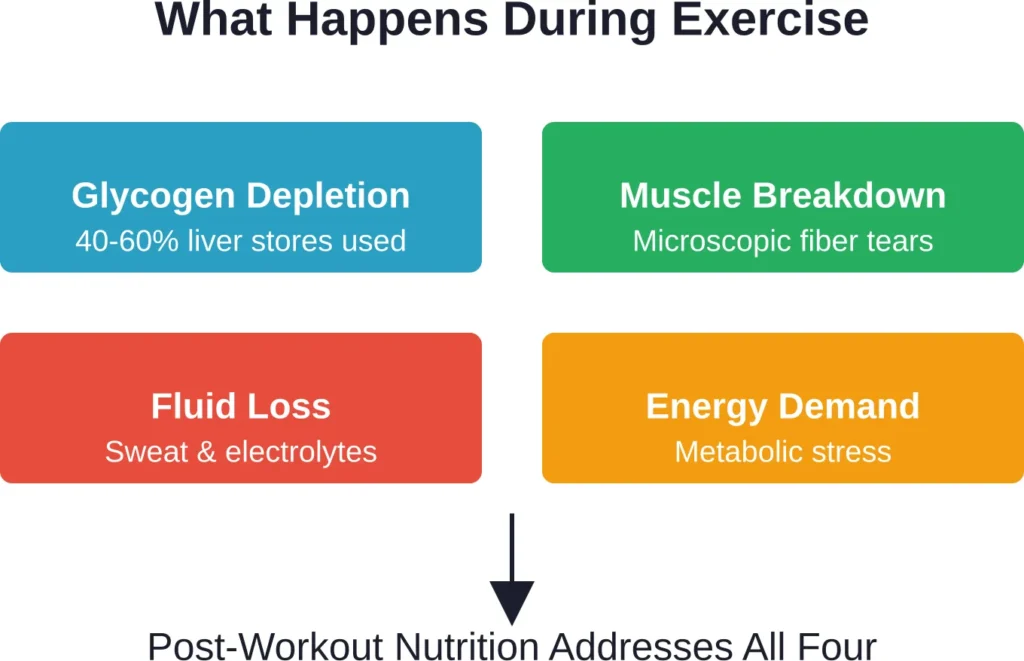
Exercise depletes energy stores, breaks down muscle fibers, and creates a cascade of metabolic demands that your body needs to address. Post-workout nutrition isn’t optional if performance and recovery matter to you.
Here’s the thing though—not all post-exercise meals are created equal. The timing, composition, and quantity of what goes on your plate directly influence how quickly your muscles repair, how effectively your glycogen stores replenish, and whether your next workout feels strong or sluggish.
Why Post-Workout Nutrition Actually Matters
During exercise, your body taps into glycogen reserves for fuel. During exercise, your muscles use up stored glycogen. Research on carbohydrate intake and glycogen recovery has been published in the journal Nutrients. Muscle glycogen takes a similar hit.
But that’s just the energy side. Exercise also creates microscopic tears in muscle fibers—that’s how muscles adapt and grow stronger. Without adequate nutrition after training, the recovery process stalls.
Consuming protein and carbohydrates post-exercise stimulates muscle protein synthesis. The International Society of Sports Nutrition has published research supporting the importance of post-exercise nutrition for muscle recovery. This dual action creates the optimal environment for muscle reconditioning.
The Timing Question: When Should You Eat?
For years, the fitness industry pushed a narrow “anabolic window”—eat within 30-60 minutes or miss out. Recent evidence tells a more nuanced story.
Research from Harvard Health reveals a striking gender difference in post-workout timing. Women should refuel within 30 to 45 minutes after exercise, while men have up to three hours. This difference stems from hormonal variations that affect how quickly muscle protein breakdown accelerates post-exercise.
That said, eating sooner rather than later benefits everyone. The International Society of Sports Nutrition recommends consuming high quality protein within the first 2 hours after working out to stimulate the building blocks for new muscle tissue.
For intense exercise lasting over 60 minutes, or when training sessions are scheduled close together (less than 8 hours apart), immediate refueling becomes more critical. Rapid glycogen resynthesis depends on prompt carbohydrate intake.
What Your Post-Workout Meal Should Include
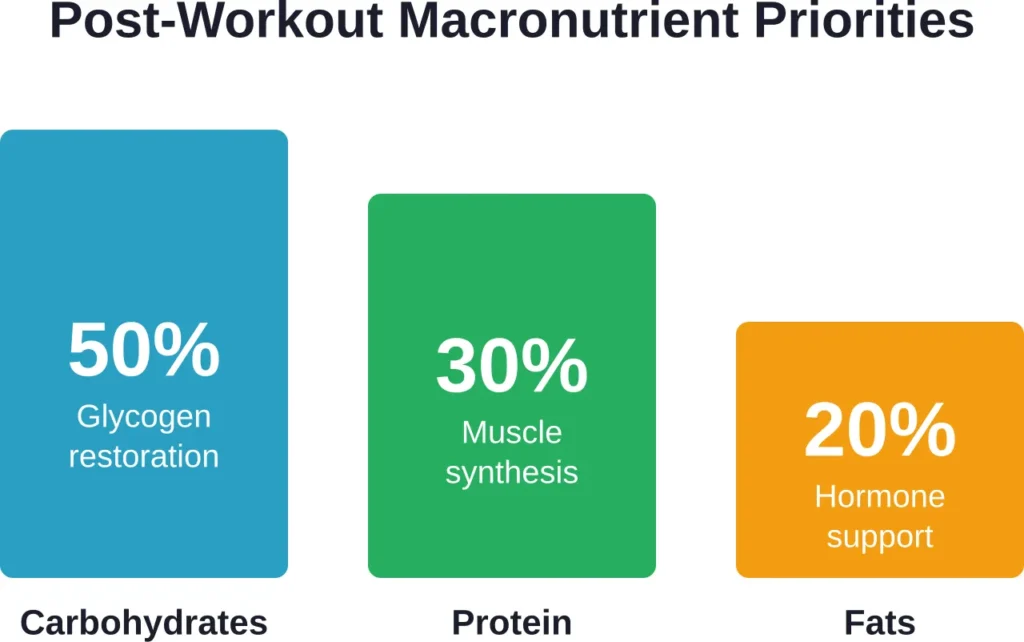
Effective recovery nutrition centers on three macronutrients: carbohydrates, protein, and yes, even some fats.
Carbohydrates: Refueling the Tank
Carbs replenish depleted glycogen stores. The amount needed depends on exercise intensity and duration.
Research published in the International Journal of Environmental Research and Public Health demonstrates that combining different carbohydrate sources improves recovery. Research comparing different carbohydrate combinations found that glucose-fructose mixes can enhance endurance capacity compared to glucose alone.
Research has shown improvements in cycling performance capacity when recovering with glucose-fructose combinations versus glucose alone.
Quality carbohydrate sources include potatoes, sweet potatoes, rice, oatmeal, fruits like bananas and berries, and whole grain bread.
Protein: Building and Repairing
Protein provides amino acids necessary for muscle repair and growth. The International Society of Sports Nutrition suggests eating 20 to 40 grams of protein every 3 to 4 hours to support muscle recovery and improve body composition.
Complete protein sources contain all essential amino acids. These include chicken, turkey, fish, eggs, Greek yogurt, cottage cheese, and for plant-based options, quinoa, tofu, tempeh, and legume combinations.
Fats: Don’t Fear Them
While fats slow digestion slightly, they don’t impair glycogen resynthesis or muscle protein synthesis when consumed in reasonable amounts. Healthy fats from avocados, nuts, seeds, and olive oil support hormone production and reduce inflammation.
Sample Post-Workout Meals That Work
Practical recovery nutrition doesn’t require elaborate meal prep. Here are combinations that deliver the right macronutrient balance:
| Meal Option | Carbs Source | Protein Source | Timing |
|---|---|---|---|
| Classic Recovery Bowl | Brown rice, sweet potato | Grilled chicken, eggs | Within 2 hours |
| Quick Shake | Banana, oats, berries | Protein powder, Greek yogurt | Within 45 min |
| Mediterranean Plate | Quinoa, whole grain pita | Grilled fish, chickpeas | Within 2 hours |
| Simple Sandwich | Whole grain bread | Turkey, cheese, hummus | Within 90 min |
The best post-workout meal is one that fits your schedule and preferences. Consistency matters more than perfection.
Hydration: The Often-Overlooked Recovery Factor
Rehydration is particularly important in endurance sports, team sports, or any activity where fluid and electrolyte losses accumulate. Pre-workout and during-workout hydration guidelines recommend drinking about 2 cups of water in the hour leading up to exercise, then about 1 cup every 15 minutes during the workout.
Post-exercise, focus on replacing what’s been lost. For quick rehydration over a short recovery period, research recommends consuming 150% of the weight lost during exercise. If you lost one kilogram (about 2.2 pounds), drink 1.5 liters of fluid.
For workouts exceeding 60 minutes, electrolyte supplementation becomes relevant. Research on rehydration fluids has been published in the International Journal of Environmental Research and Public Health.
Special Considerations for Different Goals
If Weight Loss Is the Goal
Eating after a workout doesn’t sabotage weight loss—skipping post-exercise nutrition might. Without adequate recovery fuel, training performance deteriorates, making it harder to maintain the intensity needed for continued calorie burn.
The key is reducing calories carefully while still providing recovery nutrients. A smaller meal with 15-20 grams of protein and 30-40 grams of carbohydrates supports recovery without excessive calorie intake.
For Muscle Building
Muscle growth requires a caloric surplus combined with adequate protein distribution. Consuming protein at regular intervals throughout the day supports muscle protein synthesis and recovery.
The International Society of Sports Nutrition recommends 20 to 40 grams of protein every 3 to 4 hours, making post-workout nutrition one part of a comprehensive daily strategy.
For Endurance Athletes
Endurance training depletes glycogen stores more dramatically than strength training. Carbohydrate needs scale with training volume. Athletes training at high intensities or for extended durations have elevated carbohydrate needs for recovery.
The combination of glucose and fructose improves glycogen resynthesis compared to glucose alone, particularly for athletes who train multiple times per day.
What If You Can’t Eat Right Away?
Life happens. Sometimes eating within the ideal window isn’t possible.
While sooner is better, muscle protein synthesis remains elevated for at least 24 hours after exercise. Missing the immediate post-workout window doesn’t eliminate recovery—it just makes it slightly less optimal.
If a full meal isn’t feasible, even a small protein-carbohydrate snack provides benefits. A protein shake with a banana, a handful of trail mix, or Greek yogurt with berries takes minutes to consume and delivers essential nutrients.
Total daily nutrition matters more than any single meal. Consistently meeting protein and carbohydrate targets across the day supports recovery even when post-workout timing isn’t perfect.
Common Mistakes to Avoid
Some recovery nutrition pitfalls undermine your efforts:
- Eating too little: Fear of “undoing” workout calories leads some people to skip post-exercise meals entirely, hampering recovery and future performance.
- Overemphasizing protein while neglecting carbs: Protein gets attention, but carbohydrates replenish glycogen and support the insulin response that drives nutrients into muscle cells.
- Excessive fat intake immediately post-workout: While healthy fats belong in your diet, very high-fat meals can slow digestion enough to delay recovery when rapid refueling matters.
- Forgetting hydration: Solid food gets focus while fluid replacement gets ignored, despite dehydration’s significant impact on recovery.
Frequently Asked Questions
Both matter for different reasons. Pre-workout nutrition fuels performance during exercise, while post-workout nutrition drives recovery. For workouts under 60 minutes, a light pre-workout snack may suffice. For longer or more intense sessions, eating both before and after optimizes results.
Generally speaking, eating within 2 hours post-exercise captures most recovery benefits. Research from Harvard Health shows women benefit from eating within 30-45 minutes, while men have up to 3 hours. Sooner is better when training intensity is high or when multiple sessions occur in one day.
Exercise temporarily suppresses appetite, particularly after high-intensity workouts. If solid food feels unappealing, liquid nutrition works well—smoothies, protein shakes, or chocolate milk provide easily digestible recovery nutrients without requiring much appetite.
Protein shakes work, but they’re most effective when combined with carbohydrates. A shake with just protein addresses muscle repair but neglects glycogen replenishment. Adding fruit, oats, or another carb source creates more complete recovery nutrition.
Post-workout meals support recovery, not fat gain, when kept within daily calorie targets. The nutrients consumed after exercise preferentially go toward muscle repair and glycogen storage rather than fat storage. Skipping post-workout nutrition often leads to excessive hunger later, potentially causing overeating.
Whole foods provide everything needed for recovery in most cases. Supplements like protein powder, creatine, or branched-chain amino acids can offer convenience, but they aren’t required. Research shows that adequate protein and carbohydrates from regular foods effectively support recovery.
The fundamental principles remain similar—both deplete energy and require protein and carbohydrates for recovery. Longer cardio sessions may warrant higher carbohydrate intake to replace glycogen, while strength training may emphasize protein slightly more for muscle repair. But both benefit from balanced post-workout nutrition.
The Bottom Line
Eating after a workout isn’t just okay—it’s essential for anyone serious about fitness results. Post-exercise nutrition replenishes energy stores, repairs muscle damage, and prepares the body for the next training session.
The specifics matter less than the fundamentals: get adequate protein (20-40 grams), include quality carbohydrates proportional to your workout intensity, don’t fear healthy fats, and rehydrate thoroughly. Timing helps, but total daily nutrition determines long-term progress.
Recovery is where adaptation happens. Training breaks muscle down. Nutrition builds it back stronger. Skip one half of that equation, and results stall.
Start treating post-workout nutrition as seriously as the workout itself. Track what you eat after training for two weeks and note how you feel during subsequent workouts. The connection between recovery nutrition and performance becomes obvious once you pay attention.