
Quick Summary: Most shoes should not go in the dryer, as the high heat and tumbling can damage adhesives, warp materials, and cause shrinkage. Air-drying methods using newspaper, fans, or shoe trees preserve shoe construction and extend lifespan. If you must use a dryer, choose low heat, remove insoles, and place shoes in a mesh bag to minimize damage.
Wet shoes are miserable. Whether they got soaked during a rainy run, after washing, or from stepping in a puddle, the temptation to toss them in the dryer is real.
But here’s the thing—your dryer might seem like the fastest solution, but it’s also one of the riskiest. The combination of heat and tumbling can wreak havoc on most footwear.
So is it actually okay to dry shoes in the dryer? The short answer is: not usually. Let’s break down exactly why, what happens when you do it anyway, and what methods actually work without destroying your favorite pair.
Why Your Dryer and Shoes Don’t Mix Well
Dryers aren’t designed with footwear in mind. They’re built to handle fabrics that can withstand heat and agitation—cotton shirts, jeans, towels. Shoes are different.
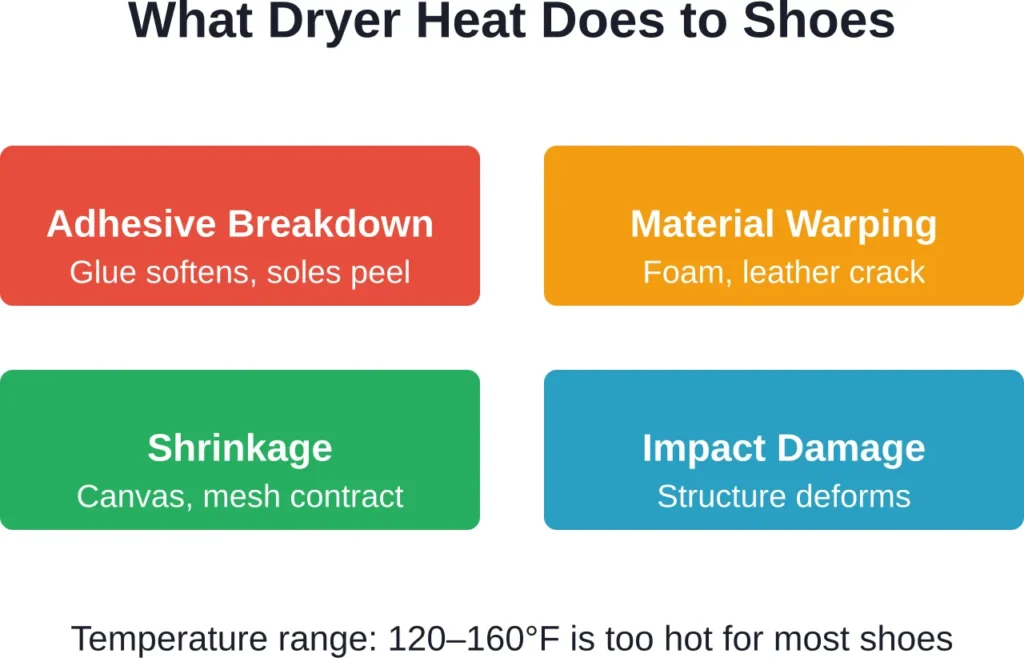
According to Whirlpool, dryer temperatures typically range from 120° to 160°F across different cycles, with some commercial dryers reaching around 176°F. That level of heat can spell disaster for the materials and construction techniques used in most athletic and casual shoes.
Here’s what actually happens inside that drum:
Heat Damage to Adhesives and Materials
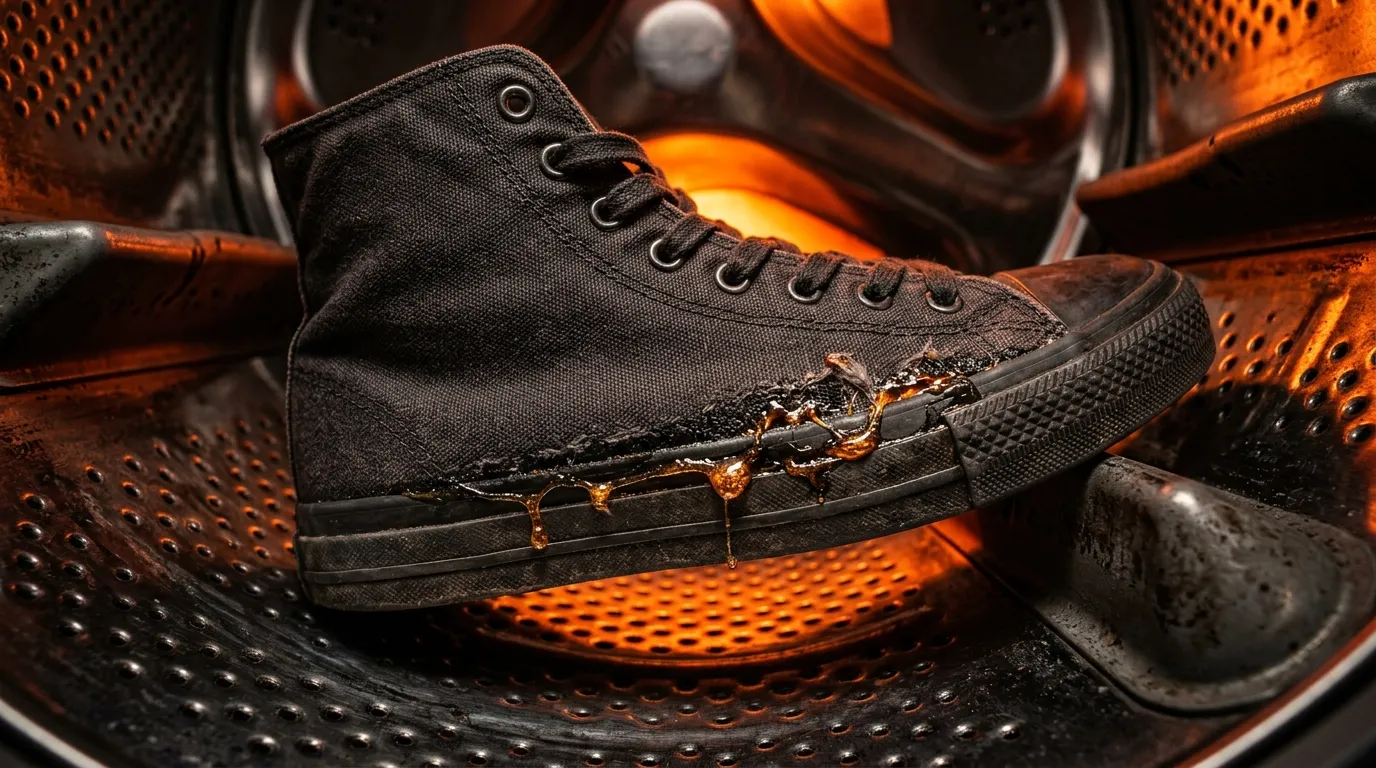
Modern shoes rely heavily on adhesives to hold soles, uppers, and reinforcements together. High temperatures weaken these bonds. The glue softens, loses its grip, and you end up with soles that peel away or uppers that separate from the midsole.
Leather can crack and become brittle when exposed to sustained heat. Synthetic materials like polyurethane and EVA foam—common in sneaker midsoles—can warp or shrink. Rubber outsoles may lose their shape.
The Tumbling Problem
Even if heat didn’t exist, the violent tumbling motion would still cause issues. Shoes bang against the drum walls and each other, potentially damaging both the footwear and the dryer itself.
That constant impact can misshape the shoe structure, damage hardware like eyelets and lace hooks, and create stress points that lead to premature wear. The noise alone should tell you something’s not right.
Shrinkage and Fit Changes
Many shoe materials shrink when exposed to heat. Canvas, certain meshes, and some synthetic fabrics will contract, leaving you with shoes that no longer fit properly.
Once shoes shrink, they don’t return to their original size. That comfortable pair you loved? Now they’re too tight, causing blisters and discomfort.
Can You Put Tennis Shoes in the Dryer? Material-by-Material Breakdown
Not all shoes are created equal. Some materials tolerate heat better than others, though none are truly ideal candidates for machine drying.
| Material Type | Dryer Safe? | Risk Level | What Happens |
|---|---|---|---|
| Canvas sneakers | Risky | Medium-High | Shrinkage, sole separation |
| Leather shoes | No | Very High | Cracking, warping, permanent damage |
| Synthetic mesh | Risky | Medium | Melting, deformation |
| Rubber rain boots | Maybe | Low-Medium | Can handle low heat briefly |
| Suede or nubuck | Never | Extreme | Texture destroyed, irreversible |
| Running shoes (EVA foam) | No | High | Midsole compression, loss of cushioning |
Athletic Shoes and Sneakers
Most athletic shoes combine multiple materials—mesh uppers, foam midsoles, rubber outsoles, synthetic overlays. Each material responds differently to heat, and the adhesives holding them together are particularly vulnerable.
Many runners report that machine drying damages running shoes, affecting cushioning and fit.
When the Care Label Says Otherwise
The Federal Trade Commission enforces the Care Labeling Rule, which requires manufacturers and importers to attach care instructions to garments. While this applies primarily to clothing, some shoe manufacturers include care labels.
If your shoes explicitly state “no tumble dry” or show a crossed-out dryer symbol, that’s non-negotiable. The manufacturer knows their construction and materials won’t survive the process.
How to Safely Dry Shoes in the Dryer (If You Absolutely Must)
Real talk: sometimes you’re in a bind. Maybe you need those shoes dry for work tomorrow, or they’re cheap enough that the risk feels acceptable.
If you decide to proceed despite the risks, here’s how to minimize damage:
Preparation Steps
Remove the insoles and laces completely. These can air-dry separately much faster. The insoles especially trap moisture and prevent airflow.
Stuff the shoes with clean rags or hand towels. This helps them keep their shape during tumbling and absorbs moisture from the inside.
Place shoes in a mesh laundry bag or pillowcase. Tie the laces together and thread them through a towel, then close the door on the laces so the shoes hang and don’t tumble freely. This reduces impact damage.
Dryer Settings That Reduce Risk
Use the lowest heat setting available—preferably air-dry or no-heat if your dryer has it. The danger comes primarily from heat, so eliminating it makes the process significantly safer.
Run short cycles. Check every 15-20 minutes rather than running a full hour-long cycle. This lets you catch problems early and prevents overexposure.
Throw in several clean, dry towels. They cushion the shoes and help absorb moisture more efficiently.
The Hanging Method
The technique where you tie laces together, drape them over the door, and close it so shoes hang inside the drum works better than loose tumbling. The shoes stay relatively stationary, reducing impact while still getting airflow.
That said, it’s still not ideal. The heat remains problematic, and some dryers generate enough vibration that hanging shoes still bang around.
Better Alternatives: How to Dry Shoes Fast Without the Dryer
The best approach avoids the dryer entirely. These methods take longer but preserve your shoes’ construction, materials, and lifespan.
The Newspaper Method
This old-school technique works remarkably well. Crumple newspaper into balls and stuff them tightly into each shoe, filling the entire interior.
Newspaper is absorbent and pulls moisture out of the shoe materials. Replace the paper every few hours as it becomes saturated—you’ll be surprised how wet it gets.
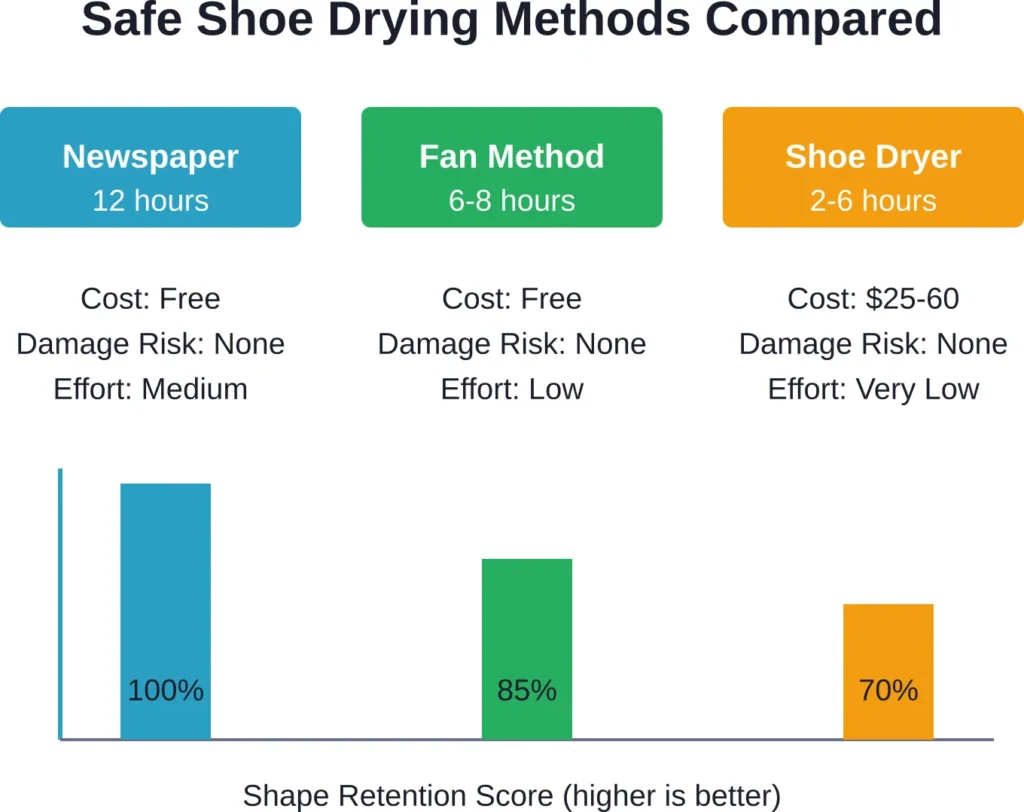
Depending on how soaked the shoes are, this process takes roughly 12 hours. Overnight works for most situations. The shoes maintain their shape, nothing gets damaged, and the cost is essentially zero.
Fan-Assisted Air Drying
Position a box fan or floor fan pointing at the shoes. Prop the shoes up so air flows directly into the opening, or place them in front of the fan with the tongues pulled forward to open the interior.
Moving air accelerates evaporation dramatically compared to still air. A strong fan can dry shoes in 6-8 hours, significantly faster than passive air-drying.
Some people create makeshift drying racks using wire or coat hangers, positioning shoes upside down over the fan. The airflow goes straight up through the sole, drying from both directions.
Shoe Dryers and Boot Dryers
Purpose-built shoe dryers use gentle warm air without tumbling. They’re worth considering if you frequently deal with wet footwear—runners who train in all weather, hikers, workers in wet environments.
These devices insert into the shoes and blow warm (not hot) air throughout the interior. Drying time ranges from 2-6 hours depending on moisture level and shoe type.
The temperature stays well below dryer heat levels, and the shoe structure remains completely static. No impact, no excessive heat, just steady drying.
Sunshine and Open Air
If weather permits, outdoor drying combines airflow and gentle warmth. Place shoes in indirect sunlight—direct sun can fade colors and overheat materials, creating similar problems to a dryer.
A shaded, breezy spot works perfectly. The natural air circulation and moderate warmth dry shoes thoroughly without risk.
Avoid extremely hot days when pavement and surfaces reach extreme temperatures. The goal is ambient warmth, not baking heat.
Preventing Water Damage in the First Place
The best solution is avoiding soaked shoes entirely. A few preventive measures go a long way.
Waterproofing Treatment
Spray-on waterproofing products create a barrier that repels water. Applied correctly, they keep shoes dry in rain and puddles.
Reapply every few months or after cleaning. The protection wears off over time.
Rotating Your Shoes
Wearing the same pair daily doesn’t give them time to fully dry between uses. Foot perspiration alone adds moisture that needs evaporation time.
Rotating between two or three pairs extends the life of all your shoes. Each pair gets 48 hours to air out completely.
Proper Storage
Store shoes in well-ventilated areas, not dark, damp closets. Cedar shoe trees absorb moisture and help shoes maintain their shape.
For athletic shoes, loosen laces and pull tongues forward after wearing. This opens the interior for maximum airflow.
Special Considerations for Expensive Footwear
Premium shoes represent a significant investment. The dryer risk simply isn’t worth it.
High-quality running shoes can cost $150-200. Leather dress shoes, boots, and specialty athletic footwear often cost significantly more. Proper care extends their lifespan by years.
For expensive shoes, consider professional cleaning services. They have equipment and expertise to handle delicate materials without damage.
Many high-end shoe manufacturers include specific care instructions. Follow them precisely—they know their product better than anyone.
When Time Really Matters: Emergency Drying Situations
Okay, so what about genuine emergencies? You have one pair of shoes, they’re soaked, and you need them in three hours.
First, assess whether you can wear them slightly damp. Uncomfortable, yes, but not destructive. They’ll finish drying on your feet.
If that won’t work, combine methods. Stuff with newspaper for 30 minutes while you prep other things. Switch to the fan method. Position shoes near (not on) a heating vent if available.
Remove insoles immediately—they hold the most water and dry separately much faster.
The dryer remains the last resort. If you’re willing to accept potential damage and the shoes aren’t expensive, the low-heat hanging method described earlier is the least harmful approach.
Frequently Asked Questions
Shoes can generally go in the washer more safely than the dryer, though both carry risks. The washer uses water and gentle agitation, which most shoes can handle. The dryer adds heat, which causes far more damage. If you wash shoes in the machine, always air-dry them afterward rather than continuing to the dryer. Remove insoles and laces, place shoes in a mesh bag with towels, and use a gentle cycle with cold water.
If using the dryer despite the risks, limit exposure to 20-30 minutes maximum on the lowest heat setting. Check frequently—every 10 minutes if possible. Prolonged heat exposure exponentially increases damage probability. The longer shoes tumble in heat, the more adhesive softens, materials warp, and structure degrades. No amount of time is truly safe, but shorter is always better.
While high heat can reduce bacteria, the risks outweigh the benefits. According to Whirlpool, select Whirlpool® Dryers have a Sanitize cycle that eliminates 99.9% of common household bacteria. However, shoes require different treatment. Better approaches include baking soda sprinkled inside overnight, cedar shoe trees, antibacterial sprays designed for footwear, or freezing shoes overnight (bacteria don’t survive extreme cold).
Insoles fare slightly better than complete shoes since they’re flat, but heat still damages foam and fabric insoles. Air-drying remains preferable. If you must use the dryer, remove insoles from shoes, place them flat in a mesh bag, use no heat or the lowest setting, and check every 10 minutes. Many insoles are inexpensive enough that replacement beats the risk of heat damage affecting their cushioning properties.
Canvas may dry faster, but that doesn’t make the dryer safer. Canvas actually shrinks more readily than leather when exposed to high heat. Leather cracks and becomes brittle. Both materials suffer damage, just in different ways. Canvas shoes should air-dry with newspaper or fan methods. Leather should never see dryer heat under any circumstances—the damage is immediate and permanent.
Rubber rain boots handle heat better than most footwear since they’re solid rubber without adhesives or foam components. Low heat for brief periods probably won’t cause catastrophic damage. That said, high heat can still degrade rubber over time, causing it to become brittle or crack. Simply turning them upside down to drain and air-dry works perfectly and eliminates all risk. Boots dry quickly on their own since water doesn’t absorb into rubber.
The air-dry or no-heat setting is the only remotely acceptable option. Standard dryer temperatures range from 120° to 160°F—both too hot for shoe adhesives and materials. Even low-heat settings typically exceed safe temperatures for footwear construction. The tumbling motion remains problematic regardless of temperature, but eliminating heat removes the primary damage mechanism. If your dryer lacks an air-dry option, the dryer isn’t a viable shoe-drying solution.
The Bottom Line on Drying Shoes
Look, nobody wants to wait 12 hours for shoes to dry. The dryer seems like such an obvious solution.
But the reality is that shoes and dryers are fundamentally incompatible. The heat breaks down adhesives and warps materials. The tumbling damages structure and hardware. The convenience isn’t worth the shortened lifespan and potential destruction.
Air-drying methods work. They require patience, but they preserve your investment and keep your shoes functional for years instead of months.
The newspaper method costs nothing and works overnight. A simple fan cuts drying time in half. A purpose-built shoe dryer (typically $25-60) is cheaper than replacing ruined footwear.
If you’ve already dried shoes in the dryer and they seem fine, great—you got lucky. But consistent dryer use accelerates wear that shows up over time. The soles that peel after six months, the fit that gradually changes, the cushioning that goes flat early—that’s cumulative heat damage.
Take care of your shoes properly, and they’ll take care of your feet. Air-dry whenever possible. Reserve the dryer for clothes that can actually handle it. Your footwear will last longer, perform better, and save you money in the long run.
Got wet shoes right now? Grab some newspaper, set up a fan, or invest in a proper shoe dryer. Your future self—and your shoes—will thank you.