
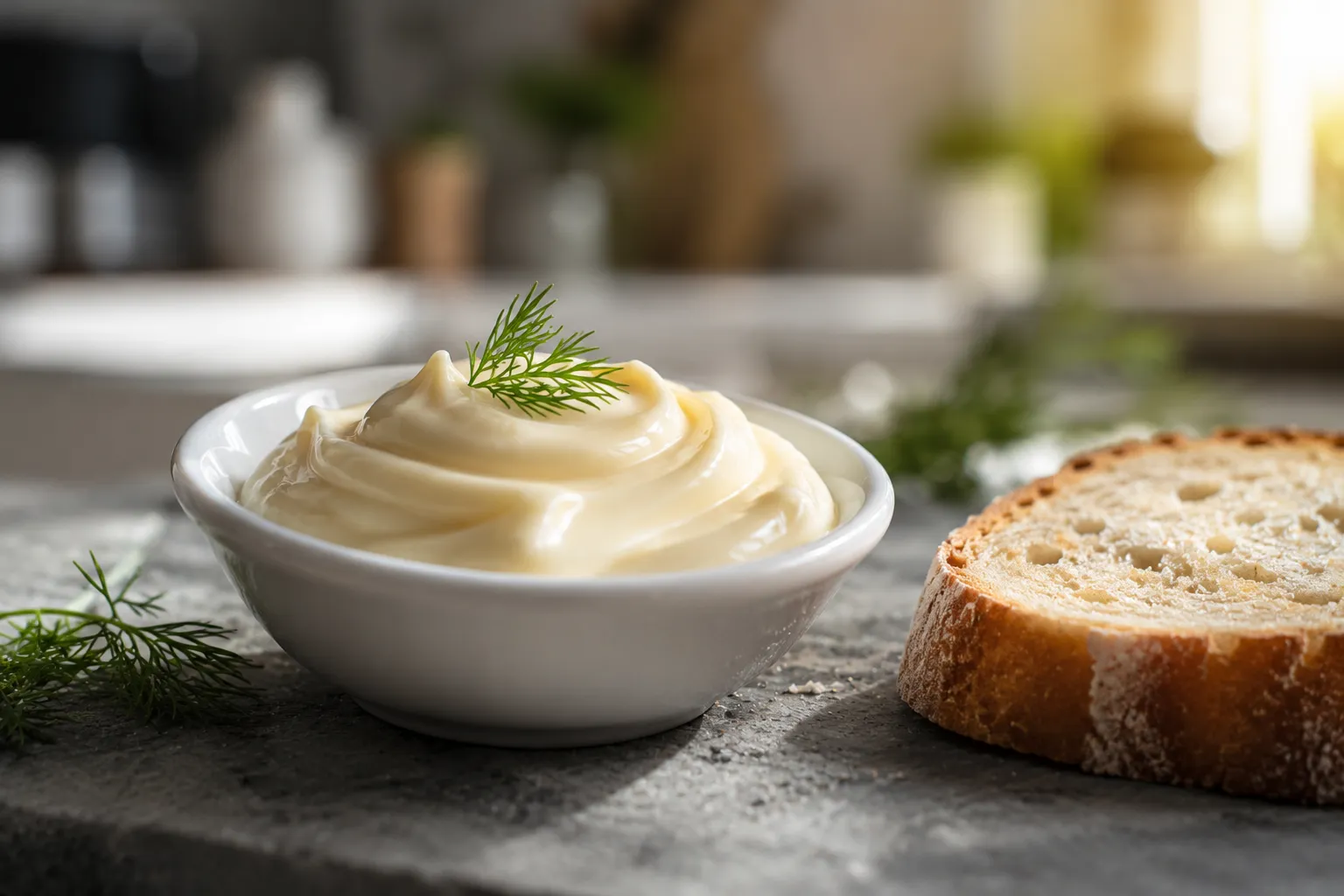
Quick Summary: Store-bought mayonnaise is safe during pregnancy because it’s made with pasteurized eggs that eliminate Salmonella risk. Homemade mayonnaise made with raw eggs should be avoided unless prepared with pasteurized eggs. Most commercial brands and restaurant chains use pasteurized mayo, making it a safe choice for pregnant women when proper food safety practices are followed.
Pregnancy transforms every food choice into a question of safety. That innocent sandwich at lunch? The salad dressing at dinner? Suddenly everything needs a second thought.
Mayonnaise sits right in the middle of this confusion. Some sources say avoid it completely. Others claim it’s perfectly fine.
The truth? It depends entirely on what type of mayonnaise and how it’s made. Here’s everything needed to make informed decisions about mayo during pregnancy.
Why Raw Eggs Create Concern During Pregnancy
The core issue with mayonnaise centers on eggs. Traditional mayo recipes require raw egg yolks to create that creamy emulsion.
Raw eggs can harbor Salmonella bacteria. According to the FDA, fresh eggs—even those with clean, uncracked shells—may occasionally contain bacteria that cause foodborne illness.
Pregnancy weakens immune defenses. The body channels resources toward growing the baby, leaving less capacity to fight off infections. What might cause mild discomfort in non-pregnant individuals can trigger severe illness during pregnancy.
Salmonella infection brings fever, nausea, vomiting, stomach cramps, and diarrhea. In severe cases, it can lead to dehydration requiring hospitalization. The CDC notes that certain groups face higher risk for severe illness from food poisoning, and pregnant women fall into that category.
But here’s the thing—not all mayonnaise contains raw eggs anymore.
Store-Bought Mayonnaise: The Safe Choice
Commercial mayonnaise sold in grocery stores uses pasteurized eggs. Pasteurization heats eggs to temperatures that eliminate harmful bacteria without cooking the eggs solid.
The FDA’s Safe Eats guidance confirms that dairy and eggs are important parts of a healthy diet when handled carefully. That includes using pasteurized products during pregnancy.
Major brands process their eggs through pasteurization before production. The acidic environment from vinegar and lemon juice in commercial mayo provides additional protection. This combination creates a product that’s shelf-stable and safe.

Look at the label. If it lists “pasteurized eggs” in the ingredients, it’s safe to eat during pregnancy. Nearly all shelf-stable mayonnaise in jars uses pasteurized eggs.
This includes popular brands found in every grocery store. The manufacturing process for commercial mayo specifically targets food safety, making it appropriate for pregnant women.
Homemade Mayonnaise: The Real Risk
Homemade mayo presents a different situation. Traditional recipes call for raw egg yolks whisked with oil and acid.
Unless those eggs are pasteurized first, homemade mayonnaise carries genuine Salmonella risk. The FDA explicitly warns that raw eggs can be contaminated with bacteria that cause foodborne illness.
Real talk: homemade mayo made with standard grocery store eggs should be avoided during pregnancy. The risk isn’t worth it, no matter how delicious fresh mayo tastes.
Two safer alternatives exist for homemade mayo lovers:
- Purchase pasteurized eggs in the shell from the grocery store (usually labeled as pasteurized)
- Make egg-free mayo using alternatives like aquafaba or silken tofu
If homemade mayo appears at a friend’s house, restaurant, or gathering, skip it. The safety status of those eggs remains unknown.
Restaurant and Fast Food Mayo Safety
Most restaurants and fast food chains use commercial mayonnaise. These establishments purchase mayo in bulk from the same manufacturers that supply grocery stores.
Fast food restaurants consistently use pasteurized commercial mayo. That includes chains like McDonald’s, Subway, and similar outlets. The sandwich at the drive-through contains safe mayonnaise.
| Situation | Safety Level | Recommendation |
|---|---|---|
| Fast food chains | ✅ Safe | Commercial mayo used consistently |
| Standard restaurants | ✅ Usually safe | Most use commercial; ask if uncertain |
| Upscale/specialty restaurants | ⚠️ Ask first | May make fresh mayo in-house |
| Home-cooked meals | ❌ Avoid | Unless confirmed pasteurized eggs |
| Catered events | ⚠️ Ask first | Safety depends on caterer practices |
Upscale restaurants sometimes pride themselves on house-made condiments. These establishments might whip up fresh mayonnaise daily using raw eggs.
When dining at nicer restaurants, ask the server. A simple “Is the mayo store-bought or made in-house?” provides the answer needed. If it’s house-made, request dishes without mayo or ask if they have commercial mayo available.
The server might not know immediately. That’s fine—they can check with the kitchen. Better to ask than to worry afterward.
Mayo-Based Foods During Pregnancy
Many prepared foods contain mayonnaise. The safety of these items follows the same logic as mayo itself.
Store-bought versions use pasteurized mayo and remain safe:
- Coleslaw from the grocery store deli
- Potato salad in sealed containers
- Macaroni salad from supermarkets
- Pre-made sandwiches from convenience stores
- Packaged dips and spreads
The FDA emphasizes that proper handling of dairy and eggs prevents foodborne illness. Commercial producers follow strict guidelines.
Now, this is where it gets interesting. Those same foods become risky when made at home or at restaurants using raw eggs. Fresh deli salads at local shops might use house-made mayo.
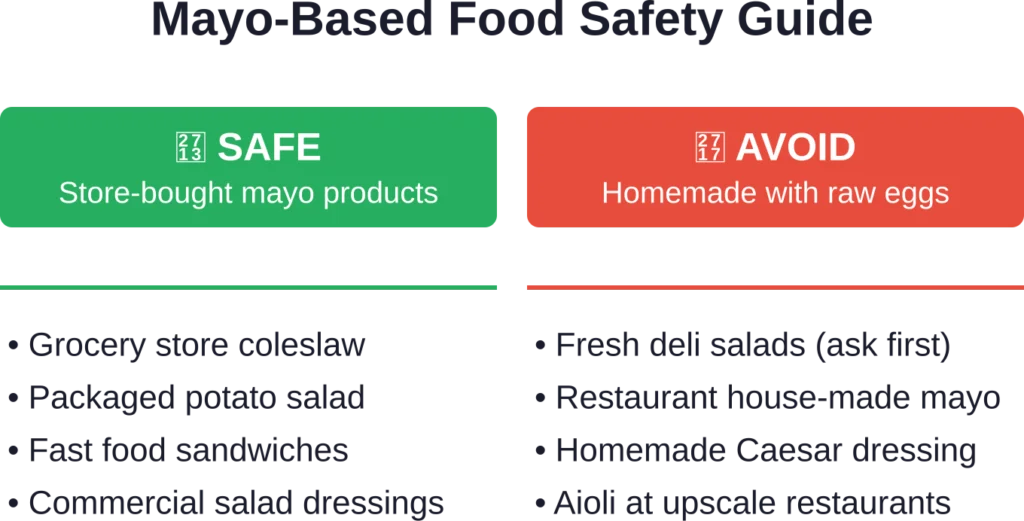
The safest approach? Stick with packaged, commercially prepared items when eating mayo-based foods.
Proper Storage and Handling Matters
Even safe, pasteurized mayonnaise requires proper handling. The FDA emphasizes refrigeration as a critical factor in preventing foodborne illness.
Once opened, mayonnaise must stay refrigerated. The “chill factor” prevents bacterial growth even in pasteurized products.
Key storage rules:
- Refrigerate mayo immediately after use
- Never leave mayo-containing foods at room temperature for more than two hours
- In hot weather (above 90°F), reduce that window to one hour
- Check expiration dates and discard old mayo
- Don’t cross-contaminate by using the same utensil for raw foods and mayo
That potato salad at the picnic? If it’s been sitting in the sun for hours, skip it. Temperature abuse can allow bacteria to multiply even in pasteurized foods.
Reading Labels for Confirmation
Verifying mayo safety takes seconds. Flip the jar around and scan the ingredient list.
Safe indicators:
- “Pasteurized eggs” listed in ingredients
- “Made with pasteurized egg yolks”
- Shelf-stable jars (these always use pasteurized eggs)
Most jarred mayonnaise products meet these criteria. Brands prioritize food safety because liability concerns and regulations demand it.
Specialty items like aioli or flavored mayo follow the same rules. Check for pasteurized eggs regardless of the specific product type.
Nutritional Considerations Beyond Safety
Safety aside, mayonnaise brings high fat and calorie content. A tablespoon contains approximately 90-100 calories, mostly from fat.
The American College of Obstetricians and Gynecologists (ACOG) emphasizes healthy eating during pregnancy. That doesn’t mean eliminating mayo, but moderation matters.
Pregnancy nutrition focuses on getting key vitamins, minerals, and nutrients for fetal development. Mayo provides some fat-soluble vitamins but lacks the nutrient density of foods like vegetables, lean proteins, and whole grains.
Use mayo as a condiment in reasonable amounts rather than the main component of meals. That sandwich with a thin mayo spread? Perfectly fine. A heaping bowl of mayo-heavy salad? Maybe reconsider portion size.
Salt content also runs high in commercial mayo. Pregnancy already increases fluid retention for many women. Excessive sodium can worsen swelling.
When to Exercise Extra Caution
Certain situations call for heightened awareness around food safety. The CDC notes that pregnant women face higher risk for severe illness from food poisoning.
Listeria presents particular concern during pregnancy. While mayonnaise itself doesn’t typically harbor Listeria, deli meats and soft cheeses on that mayo-containing sandwich might.
ACOG’s guidance on Listeria recommends avoiding unpasteurized dairy products and properly handling ready-to-eat foods. Combining safe mayo with unsafe ingredients still creates risk.
That said, pasteurized mayo from reputable sources remains consistently safe throughout pregnancy when stored properly.
The Bottom Line on Pregnancy and Mayo
Commercial mayonnaise made with pasteurized eggs gets the green light during pregnancy. The vast majority of store-bought mayo falls into this category.
Fast food and most restaurants use commercial mayo, making those options safe. Homemade mayo and specialty preparations at upscale restaurants require caution—when in doubt, ask or avoid.
Proper refrigeration and reasonable portions complete the safety picture. Following basic food safety principles allows enjoying mayo throughout pregnancy without worry.
Sound familiar? That’s because mayo safety follows the same logic as most pregnancy food questions. Pasteurization eliminates risk, proper handling prevents contamination, and common sense wins the day.
The next time someone suggests avoiding all mayonnaise during pregnancy, the facts tell a different story. Commercial mayo is not only safe—it’s been specifically designed with food safety in mind.
Frequently Asked Questions
Yes, major commercial brands like Hellmann’s and Kraft use pasteurized eggs in their mayonnaise. These products are safe to consume during pregnancy when stored properly in the refrigerator and used before expiration dates.
Don’t panic. Many people eat homemade mayo without incident because not all eggs contain Salmonella. Monitor for symptoms like fever, nausea, vomiting, or diarrhea over the next 72 hours. Contact a healthcare provider if symptoms develop or for peace of mind.
Kewpie mayo sold in the United States uses pasteurized eggs and is safe during pregnancy. Check the label to confirm pasteurization. The product follows US food safety regulations for imported foods.
Yes, Subway uses commercial mayonnaise made with pasteurized eggs. The mayo itself is safe. However, be mindful of other sandwich ingredients—deli meats should be heated until steaming to prevent Listeria risk during pregnancy.
Opened mayonnaise should be refrigerated and used within a reasonable timeframe according to package instructions. Check the label for specific guidance. Discard mayo that smells off, changes color, or passes the expiration date to ensure food safety.
Yes, egg-free mayo made from ingredients like aquafaba, soy, or other plant-based alternatives is safe during pregnancy. These products eliminate any raw egg concerns entirely while providing similar taste and texture.
Store-bought Caesar dressing made with pasteurized eggs is safe. Traditional Caesar dressing made with raw eggs at restaurants should be avoided unless confirmed to use pasteurized eggs. Always ask before ordering Caesar salad at restaurants.