
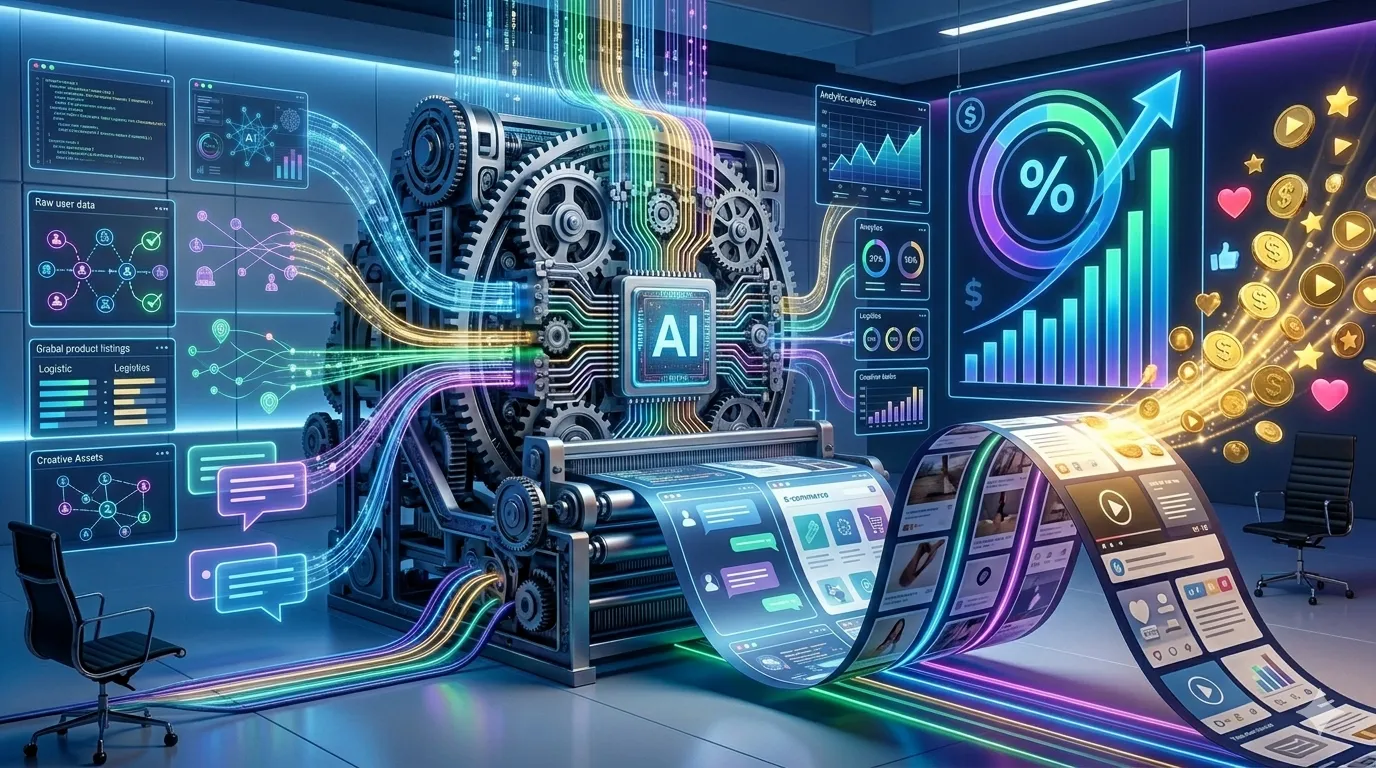
Quick Summary: The best chatbot integration companies in 2026 combine robust AI capabilities, omnichannel deployment, and seamless system connectivity. Leading agencies specialize in conversational AI platforms that handle multi-turn conversations, automate workflows, and integrate with CRM, ecommerce, and support tools. This guide profiles 15 top chatbot integration firms based on technical capabilities, industry focus, and proven deployment expertise.
Chatbot integration has become a critical business capability rather than a novelty. The challenge isn’t finding a chatbot platform anymore—it’s finding the right integration partner who can connect conversational AI to your existing systems, design workflows that actually resolve issues, and deploy across the channels where your customers already spend time.
That said, not all chatbot integration companies are created equal.
Some specialize in quick deployments with drag-and-drop builders. Others handle complex, code-intensive implementations that connect to legacy enterprise systems. The right choice depends on your technical stack, conversation volume, and whether you need voice capabilities alongside text-based chat.
This comprehensive guide examines 15 leading chatbot integration companies based on platform capabilities, technical expertise, and real-world deployment experience. Each profile covers core strengths, integration specialties, and ideal use cases—without the usual pricing fluff that goes stale in three months.
What Makes a Strong Chatbot Integration Company
Before diving into specific agencies, it’s worth understanding what separates effective chatbot integrators from vendors who just resell software licenses.
The best integration companies handle three critical layers:
Platform expertise. They’ve deployed the chatbot platform they recommend dozens or hundreds of times. They know the edge cases, the hidden limitations, and which features actually deliver value versus marketing promises.
System connectivity. Strong integrators connect chatbots to CRM systems, help desks, ecommerce platforms, payment processors, and internal databases. They understand API architecture, data mapping, and authentication protocols.
Conversation design. Technical integration alone doesn’t create effective chatbots. The best agencies design conversation flows that match how real humans communicate, build fallback paths for edge cases, and optimize handoff points when escalation to live agents is necessary.
MIT research shows that 95% of generative AI implementations face challenges in generating rapid revenue impact. The gap between proof-of-concept demos and production-ready deployments is wider than most businesses anticipate. That’s where specialized integration expertise becomes valuable.
Key Integration Capabilities to Evaluate
When assessing chatbot integration companies, several technical capabilities separate competent vendors from exceptional partners.
Omnichannel Deployment
Top chatbot platforms meet customers across multiple touchpoints: website chat widgets, mobile apps, SMS, WhatsApp, Facebook Messenger, voice channels, and in-app messaging. The integration company should handle deployment across these channels while maintaining conversation continuity.
A customer who starts a conversation on your website should be able to continue it via SMS without repeating information. That requires sophisticated session management and data synchronization across channels.
CRM and Help Desk Integration
Chatbots generate valuable customer data with every interaction. Strong integrators connect conversational AI to Salesforce, HubSpot, Zendesk, Intercom, and other business systems so conversation insights flow into existing workflows.
This integration enables chatbots to pull customer history before responding, log interactions automatically, create support tickets when escalation is required, and trigger follow-up sequences based on conversation outcomes.
Natural Language Understanding
The conversational quality gap between basic pattern-matching chatbots and true AI-powered systems is massive. Modern chatbot platforms use natural language processing and machine learning to understand intent, handle multi-turn conversations, and respond contextually.
According to G2 research, Gemini (Google’s AI assistant) shows 48% adoption in small-business segments and 30% in mid-market companies. But general-purpose AI assistants lack the domain-specific training and system integrations that purpose-built conversational AI platforms provide.
Workflow Automation
Strong chatbots don’t just answer questions—they complete tasks. The best integration companies connect conversational AI to workflow automation tools, enabling chatbots to book appointments, process orders, update account information, and trigger internal processes.
This action-oriented automation is where chatbots deliver measurable ROI rather than just deflecting simple queries.
The 15 Best Chatbot Integration Companies for 2026
The following agencies represent the leading chatbot integration specialists across different platforms, industries, and deployment approaches. Each brings distinct strengths to specific use cases.
1. Mobian AI Chatbot Development Agencies
Mobian chatbot integration specialists focus on building production-ready conversational AI systems and dedicated engineering teams for companies in healthcare, fintech, logistics, and IT. These agencies deliver custom AI agents and LLM-powered workflows with clean architecture and enterprise-grade security.
The strength lies in end-to-end delivery of AI automation systems, including private knowledge base assistants and intelligent conversation flows. Mobian integrators excel at both full outsourcing and outstaffing models while ensuring scalable architecture that grows with the business.
Projects demonstrate rapid delivery of sophisticated conversational solutions that enhance user experiences, automate complex workflows, and integrate seamlessly with existing systems in regulated industries.
Mobian agencies serve organizations that require senior-level execution for mission-critical chatbot implementations where domain expertise, regulatory compliance, and long-term partnership matter most. Their dedicated team approach ensures consistent quality from initial deployment through ongoing optimization and scaling.
Contact Information:
- Website: mobian.studio
- Phone: [email protected]
- Address: Harju maakond, Tallinn, Kesklinnalinnaosa, Masina tn 22, 10113
- LinkedIn: www.linkedin.com/company/mobian-studio
2. Gilzor Custom Chatbot Development Agencies

Gilzor chatbot integration specialists focus on building custom conversational AI solutions from scratch for startups and scaling businesses. These agencies deliver end-to-end implementations that combine intelligent chat interfaces with mobile and web applications across various industries.
The strength lies in full-cycle development including business analysis, UI/UX design optimized for conversation, and seamless integration with existing systems. Gilzor teams excel at creating chatbots that support idea validation, go-to-market strategies, and user engagement while maintaining high performance and security standards.
Real results include development of applications with embedded conversational features that helped clients achieve rapid user adoption and significant efficiency gains in customer interactions and internal processes.
Gilzor agencies best serve startups launching new products and small-to-medium businesses scaling digital channels where custom chatbot logic needs to align perfectly with unique business models and user journeys. Their approach emphasizes user-centric design and robust architecture for long-term scalability.
Contact Information:
- Website: www.gilzor.com
- Email: [email protected]
- Address: Poland, Warsaw, Office 58, street Adama Mickiewicza 37, 01-625
- LinkedIn: www.linkedin.com/company/gilzor-softwaredevelopment
3. A-listware Chatbot Implementation Partners
A-listware chatbot integration companies specialize in embedding conversational AI into enterprise applications and dedicated development teams. These partners deliver secure, scalable solutions for organizations requiring sophisticated automation within CRM, ERP, and customer-facing systems.
Their strength lies in full-spectrum software engineering combined with AI and machine learning capabilities. A-listware integrators handle everything from custom chatbot development and legacy system integration to ongoing maintenance and infrastructure support.
Implementations have successfully enhanced B2B and B2C interactions, streamlining operations and enabling intelligent customer engagement at scale for enterprise clients and growing businesses.
A-listware partners excel with companies needing reliable, high-quality chatbot solutions integrated into broader IT ecosystems where security, performance, and seamless team extension are critical success factors.
Contact Information:
- Website: a-listware.com
- Phone: +1 (888) 337 93 73
- Email: [email protected]
- Address: North Bergen, NJ 07047, USA
- LinkedIn: www.linkedin.com/company/a-listware
- Facebook: www.facebook.com/alistware
4. Oski AI Integration Specialists

Oski chatbot integration partners bring deep expertise in artificial intelligence and natural language processing to enterprise software deployments. These specialists design and implement conversational solutions that enhance customer experiences and automate business operations for tech-forward companies.
The platform combines custom AI integrations with cloud architecture, frontend interfaces, and industry-specific workflows. Oski integrators connect chatbots to existing CRM, ERP, and e-commerce systems while delivering intuitive user experiences across web and mobile channels.
Deployments have enabled organizations to reimagine operations through intelligent automation, providing data-driven insights and streamlined interactions that improve both customer satisfaction and internal efficiency.
Oski partners are the ideal choice for enterprises and ambitious startups in travel, logistics, e-commerce, fintech, and insurance sectors where conversational AI must integrate securely with complex existing infrastructure and deliver measurable business impact.
Contact Information:
- Website: oski.site
- Phone: +48571282759
- Email: [email protected]
- Address: Kaupmehe tn 7, 10114 Tallinn, Estonia
- LinkedIn: www.linkedin.com/company/oski-solutions
5. Lengreo Conversational Marketing Partners

Lengreo chatbot integration specialists excel at deploying conversational AI within B2B lead generation and demand generation systems. These partners help software development, architecture, fintech, and tech service companies turn websites and outreach channels into intelligent qualification engines handling thousands of interactions.
The platform strength lies in hyper-personalized outreach combined with chatbot automation across LinkedIn, email, and website touchpoints while preserving brand voice and sales process integrity. Lengreo integrators connect chatbots to CRM systems, marketing automation tools, and analytics platforms for seamless lead nurturing.
A case study showed that through strategic chatbot deployment, one US software development company increased annually acquired clients by 400%, while another Ukrainian IT company boosted conversion rates by 53.6%.
Lengreo partners typically serve mid-market and enterprise B2B clients focused on high-value lead generation where intelligent conversation flows directly impact revenue pipelines and cost-per-lead metrics. Their expertise shines in creating qualification paths that route prospects efficiently to human sales teams.
Contact Information:
- Website: Lengreo.com
- Phone: +31 686 147 566
- Email: [email protected]
- Address: Vrijstraat 9 C/D, 5611 AT Eindhoven, Netherlands
- LinkedIn: Lengreo
- Twitter: @Lengreo
- Instagram: @lengreo
6. Tidio Automation Experts

Tidio integration companies serve small businesses and ecommerce stores needing straightforward chatbot deployment without enterprise complexity. According to G2 data, Tidio sees 90% adoption among small-business segments versus just 8% in mid-market companies—reflecting its positioning as an accessible entry point.
These agencies specialize in quick Shopify, WordPress, and WooCommerce integrations where pre-built templates handle common ecommerce scenarios: order tracking, product recommendations, and basic customer service queries.
Tidio integrators focus on speed-to-value rather than complex custom development. Typical implementations launch within days rather than months, using visual flow builders that non-technical team members can modify after deployment.
The platform’s simplicity becomes a limitation for organizations needing advanced natural language understanding, deep CRM integration, or sophisticated workflow automation. But for businesses wanting functional chat support without significant technical investment, Tidio integration partners deliver practical results.
7. IBM watsonx Assistant Implementation Partners

IBM watsonx Assistant integrators handle enterprise-grade conversational AI deployments where security certifications, compliance requirements, and integration with legacy systems are paramount concerns.
These partners bring decades of IBM ecosystem experience to chatbot implementations. They navigate the complexity of enterprise IT environments, handle security reviews, and integrate watsonx Assistant with mainframe systems, SAP installations, and proprietary databases.
The platform’s natural language understanding capabilities have matured significantly. Modern watsonx deployments handle contextual conversations across industries from banking to healthcare to telecommunications.
IBM integration partners typically engage in six-to-twelve-month implementation cycles for large enterprises. The focus is reliability, security, and integration depth rather than rapid deployment. Organizations choosing watsonx Assistant integration companies usually have existing IBM relationships and enterprise requirements that rule out lighter-weight platforms.
8. Google Dialogflow Development Teams

Dialogflow integration specialists leverage Google Cloud’s natural language processing capabilities for both text and voice chatbot deployments. These agencies serve clients needing multilingual support, voice-enabled applications, or integration with Google workspace tools.
The platform’s speech recognition and synthesis capabilities enable sophisticated voice bot implementations. Dialogflow integrators build interactive voice response systems, voice-enabled mobile apps, and Google Assistant actions alongside traditional text-based chat.
According to G2 research, Gemini (Google’s AI assistant) shows 48% adoption in small-business segments and 30% in mid-market companies. But Dialogflow as a development platform requires more technical expertise than consumer-facing AI tools.
Dialogflow agencies typically employ developers experienced with Google Cloud Platform, Python or Node.js, and conversation design principles. They handle intent training, entity extraction, and fulfillment webhook development that connects conversation to backend systems.
9. Kore.ai Enterprise Automation Partners
Kore.ai integration companies specialize in enterprise automation across customer service, IT support, and HR workflows. The platform emphasizes agentic AI that completes tasks autonomously rather than just answering questions.
These partners deploy sophisticated bots that handle complex multi-step processes: IT ticket creation and routing, employee onboarding workflows, benefits enrollment, and account management tasks that traditionally required human processing.
Kore.ai integrators bring process automation expertise alongside technical implementation skills. They map existing workflows, identify automation opportunities, and design conversation paths that guide users through complex procedures while maintaining compliance requirements.
The platform handles both voice and digital channels, making it suitable for contact centers needing unified automation across phone, chat, and messaging. Integration partners connect Kore.ai to ServiceNow, Workday, SAP, and enterprise applications where automation delivers measurable efficiency gains.
10. Haptik Conversational Commerce Specialists

Haptik integration agencies focus on conversational commerce and customer engagement for consumer brands. These partners deploy chatbots that drive transactions, provide personalized product recommendations, and handle post-purchase support across messaging channels.
The platform’s strength lies in WhatsApp Business API integration and support for regional messaging apps popular in Asia and Latin America. Haptik integrators serve global brands needing localized conversational experiences across diverse markets.
These agencies combine ecommerce expertise with conversation design skills. They build shopping assistants that understand product catalogs, handle size and fit questions, process orders through integrated payment systems, and manage delivery tracking—all within messaging conversations.
Best suited for retail, consumer goods, and direct-to-consumer brands where conversational commerce represents a growth channel. The platform’s focus on consumer messaging means it’s less suitable for B2B sales automation or enterprise internal workflows.
11. Ada Integration Specialists

Ada-focused integration partners specialize in deploying the Ada AI chatbot platform for enterprise customer service operations. Ada integrators handle complex implementations across telecom, banking, and ecommerce sectors where conversation volume runs into millions of interactions monthly.
The platform’s strength lies in its no-code interface combined with powerful automation capabilities. Ada integrators excel at connecting the platform to Zendesk, Salesforce, and Shopify while maintaining brand voice consistency across customer touchpoints.
A case study showed that through Ada deployment, over 70% of live chat queries were handled autonomously, freeing human agents for complex cases that require specialized knowledge and empathetic communication.
Ada integration companies typically serve mid-market and enterprise clients dealing with high conversation volumes where containment rate improvements translate to significant cost savings. The platform handles text-based chat exceptionally well but lacks native voice capabilities.
12. Amazon Lex Implementation Partners

Amazon Lex integrators bring AWS cloud expertise to conversational AI deployments. These partners specialize in contact center automation and voice-enabled applications where integration with AWS Lambda, Slack, and Twilio creates sophisticated automation workflows.
Lex integration companies typically work with enterprises already invested in the AWS ecosystem. The platform’s tight integration with Amazon Connect enables seamless voice bot deployments for phone-based customer service.
The code-first approach means Lex implementations require more technical depth than drag-and-drop platforms. But that complexity unlocks customization options that visual builders can’t match. Lex integrators handle natural language processing configuration, intent mapping, and slot filling strategies that determine conversation quality.
Best fit for organizations needing voice bots, complex integrations with AWS services, and custom conversation flows that extend beyond template-based implementations.
13. Botpress Development Agencies

Botpress integration specialists focus on open-source conversational AI deployments where full code access and self-hosting are requirements. These agencies serve clients with strict data sovereignty requirements or highly customized workflow needs.
The open-source foundation means Botpress integrators can modify core platform behavior, add custom natural language understanding models, and deploy on-premise or in private cloud environments. This flexibility attracts healthcare providers, financial institutions, and government agencies where data control is non-negotiable.
Botpress agencies typically employ developers experienced with Node.js, React, and machine learning frameworks. They handle everything from initial platform setup through custom module development and ongoing maintenance.
The trade-off is higher technical overhead compared to managed SaaS platforms. Organizations choosing Botpress integration partners need dedicated technical resources or ongoing agency support to maintain deployments.
14. Intercom Conversation Design Studios

Intercom integration companies specialize in conversational marketing and sales automation. These agencies connect Intercom’s messenger platform to marketing automation tools, product analytics, and CRM systems to create personalized engagement workflows.
The platform excels at proactive messaging triggered by user behavior: cart abandonment sequences, feature adoption nudges, and qualification paths that route high-intent prospects to sales teams. Intercom integrators design these workflows based on customer journey mapping and conversion optimization principles.
Strong Intercom agencies combine technical integration skills with marketing expertise. They understand segmentation strategies, A/B testing methodologies, and how to measure conversation impact on conversion metrics.
Best suited for B2B SaaS companies and ecommerce businesses where the messenger becomes a growth channel rather than just a support tool. The platform’s strength is inbound engagement; outbound SMS and voice capabilities are limited compared to specialized contact center platforms.
15. Drift Conversational Marketing Partners

Drift integration specialists focus on B2B lead generation and qualification through conversational marketing. These agencies deploy Drift for mid-market and enterprise companies where automated meeting scheduling and prospect scoring directly impact revenue.
The platform uses machine learning and natural language processing to qualify website visitors, route conversations to appropriate sales reps, and book meetings automatically. Drift integrators connect these capabilities to Salesforce, Marketo, and marketing automation platforms.
Real talk: Drift starts at substantial monthly commitments that price out small businesses. Drift integration partners typically work with companies spending six figures annually on marketing technology where conversational AI fits into sophisticated demand generation strategies.
Channel support focuses primarily on website chat. Organizations needing omnichannel deployment across SMS, voice, and messaging apps should evaluate more channel-diverse platforms.
Industry-Specific Integration Considerations
Chatbot integration requirements vary significantly across industries. Regulatory compliance, conversation complexity, and channel preferences shape platform selection and implementation approaches.
Healthcare and Telehealth
Healthcare chatbot integrations must navigate HIPAA compliance, patient data protection, and medical information accuracy requirements. Integration companies serving this sector need experience with electronic health record systems, appointment scheduling platforms, and secure messaging infrastructure.
The conversational AI handles appointment booking, symptom checking, medication reminders, and post-visit follow-ups. But any conversation touching protected health information requires encryption, access controls, and audit logging that meet regulatory standards.
Healthcare integrators typically choose platforms with existing BAA agreements and security certifications rather than attempting to retrofit consumer-grade chatbots for medical use.
Financial Services and Banking
Banking chatbot implementations face strict security requirements, authentication protocols, and transaction verification standards. Integration companies must connect conversational AI to core banking systems, fraud detection tools, and account management platforms while maintaining PCI compliance.
The chatbots handle balance inquiries, transaction searches, card activation, and basic account management. More complex scenarios like loan applications or investment advice typically route to human specialists after initial qualification.
Financial services integrators emphasize identity verification, secure session management, and audit trails that satisfy regulatory examination requirements.
Ecommerce and Retail
Ecommerce chatbot integrations focus on product discovery, purchase assistance, and post-sale support. Integration companies connect conversational AI to product catalogs, inventory systems, order management platforms, and shipping carriers.
The chatbots provide product recommendations based on natural language queries, answer sizing and compatibility questions, process orders through integrated payment systems, and handle order tracking and returns.
Successful ecommerce integrations require deep product data integration—chatbots can’t recommend effectively without access to detailed product attributes, inventory availability, and pricing information.
Enterprise Internal Support
IT help desk and HR support chatbots automate internal employee requests. Integration companies connect these bots to ServiceNow, Active Directory, HR information systems, and knowledge bases.
The automation handles password resets, software access requests, benefits inquiries, PTO submissions, and common IT troubleshooting. The goal is deflecting tier-one support volume so human specialists focus on complex issues requiring expertise.
Enterprise integrators emphasize single sign-on integration, permission-based access to information, and workflow automation that triggers backend processes based on conversation outcomes.
Technical Integration Architecture
Understanding how chatbot platforms connect to existing systems helps evaluate integration company capabilities and set realistic implementation expectations.
API-Based Integration
Most modern chatbot platforms expose RESTful APIs for system connectivity. Integration companies use these APIs to connect conversational AI to CRM systems, databases, and business applications.
The chatbot sends API requests to backend systems when it needs customer data, product information, or transaction processing. Those systems respond with structured data the chatbot incorporates into conversation responses or uses to trigger actions.
Strong integration companies handle API authentication, rate limiting, error handling, and response mapping that transforms backend data formats into conversational contexts.
Webhook Fulfillment
Webhook-based architectures allow backend systems to process complex logic when chatbot conversations require it. When a user requests account information or wants to complete a transaction, the chatbot platform calls a webhook endpoint.
The webhook handler executes business logic, queries databases, validates inputs, and returns formatted responses the chatbot presents conversationally. This architecture keeps complex processing logic in backend systems rather than chatbot platform configuration.
Integration companies build and maintain these webhook services, handling deployment, monitoring, and updates as business requirements evolve.
Pre-Built Connector Ecosystems
Many chatbot platforms offer pre-built integrations with popular business systems: Salesforce, Zendesk, Shopify, Slack, and others. These connectors reduce custom integration effort for standard use cases.
But pre-built connectors have limitations. They support common scenarios but lack flexibility for unique workflows. Integration companies often combine pre-built connectors for quick wins while developing custom integrations for specialized requirements.
Deployment Models and Infrastructure
Where the chatbot platform runs affects security, performance, compliance, and operational complexity. Integration companies handle different deployment models based on client requirements.
SaaS Cloud Platforms
Most modern chatbot platforms operate as SaaS applications where the vendor manages infrastructure, updates, and availability. Clients configure chatbots through web interfaces without worrying about servers, databases, or scaling.
SaaS deployments offer the fastest time-to-value and lowest operational overhead. Integration companies focus on configuration and connection rather than infrastructure management.
The trade-off is less control over data location, security configurations, and platform customization. Organizations with strict data sovereignty requirements may find SaaS models incompatible with their policies.
Private Cloud and On-Premise
Some chatbot platforms support deployment in private cloud environments or on-premise infrastructure. This model appeals to healthcare providers, financial institutions, and government agencies with data residency requirements.
Integration companies handling private deployments need broader technical skills: infrastructure provisioning, database administration, security hardening, and ongoing platform maintenance. The implementation complexity and timeline increase significantly versus SaaS options.
Botpress and IBM watsonx Assistant both support private deployment models. The flexibility comes with operational responsibility that requires dedicated technical resources.
Hybrid Architectures
Some implementations use hybrid approaches where the chatbot platform runs as SaaS but connects to on-premise systems through secure tunnels or API gateways. This balances SaaS convenience with on-premise data security.
Integration companies configure VPN connections, reverse proxies, and authentication schemes that allow cloud chatbots to access internal systems without exposing those systems to the public internet.
| Platform Type | Best For | Technical Complexity | Time to Deploy |
|---|---|---|---|
| No-Code SaaS | SMB, quick deployments, standard workflows | Low | Days to weeks |
| Low-Code SaaS | Mid-market, custom workflows, CRM integration | Medium | Weeks to months |
| Code-First Cloud | Custom applications, deep integrations | High | Months |
| Open Source | Data sovereignty, full customization | High | Months |
| Enterprise On-Premise | Regulated industries, legacy system integration | Very High | 6-12 months |
Measuring Chatbot Integration Success
Strong integration companies establish measurement frameworks before deployment. Defining success metrics upfront ensures implementations optimize for business outcomes rather than just technical completion.
Containment Rate
Containment rate measures what percentage of conversations the chatbot resolves without human escalation. This metric directly impacts support costs—higher containment means fewer conversations requiring expensive human agents.
Industry data shows containment rates varying from 30% for basic FAQ bots to over 80% for sophisticated AI platforms with deep system integration. Strong performance for specialized domains can reach 70% containment or higher through effective conversation design and system integration.
Integration companies optimize containment by improving intent recognition accuracy, expanding the bot’s knowledge base, and connecting to systems that enable autonomous task completion.
Customer Satisfaction Scores
Automation shouldn’t sacrifice customer experience. Leading chatbot implementations maintain satisfaction scores comparable to human-assisted channels while delivering faster resolution times.
Post-conversation surveys measure whether chatbot interactions meet user needs. Low satisfaction scores indicate conversation design problems, capability gaps, or inappropriate use cases where human assistance remains necessary.
Resolution Time
Chatbots handle simple queries faster than human agents. Average resolution time for bot-handled conversations typically runs seconds to minutes versus the longer handling times when human agents must research answers or navigate multiple systems.
But resolution speed only matters if the bot actually resolves the issue. Fast but unhelpful responses hurt more than they help. Integration companies balance speed with accuracy.
Business Outcomes
The ultimate success metrics tie chatbot performance to business results: reduced support costs, increased conversion rates, higher customer lifetime value, or improved employee productivity for internal bots.
Strong integration companies define these outcome metrics during project scoping. A B2B sales chatbot might measure meeting bookings and pipeline impact. An ecommerce bot tracks assisted revenue and cart abandonment recovery. An IT help desk bot measures ticket deflection and employee satisfaction.
Common Integration Challenges
Real-world chatbot implementations face predictable obstacles. Understanding common challenges helps set realistic expectations and evaluate how integration companies handle complexity.
Data Quality and Availability
Chatbots are only as good as the data they access. Integration projects often reveal that product catalogs lack detailed attributes, CRM data is incomplete, or knowledge bases are outdated.
Before a chatbot can answer sizing questions, product data must include detailed measurements. Before it can provide personalized recommendations, customer profiles need preference data. The integration company can build perfect API connections, but garbage data produces garbage conversations.
Strong integrators conduct data audits early and work with clients to remediate data quality issues before or during implementation.
Intent Recognition Accuracy
Training natural language understanding models requires representative conversation data. But new deployments lack historical chatbot conversations to learn from.
Integration companies bootstrap training using customer service ticket data, FAQ searches, and simulated conversations. Post-launch, they continuously refine intent recognition based on real user interactions and misclassification analysis.
The gap between demo accuracy and production performance surprises many organizations. Controlled testing with known inputs looks great. Real users ask questions in unexpected ways, use ambiguous language, and combine multiple intents in single messages.
Conversation Design Complexity
Designing conversation flows that feel natural while accomplishing business goals requires specialized skills. Poor conversation design leads to frustrated users and high abandonment rates.
Effective chatbot conversations guide users toward successful outcomes without feeling rigid or robotic. They handle interruptions, context switches, and clarification requests. They know when to escalate to humans rather than attempting to handle queries beyond their capabilities.
Integration companies with strong conversation design capabilities deliver better user experiences than those focused purely on technical connectivity.
Handoff Coordination
The transition from chatbot to human agent represents a critical friction point. Users shouldn’t repeat information they already provided to the bot. Agents need full context about what the bot attempted before escalation.
Strong integrations pass conversation history, user data, and attempted resolution paths to human agents. This context transfer requires coordination between the chatbot platform and help desk or CRM system.
Organizations often underestimate the complexity of seamless handoff implementation. It requires workflow design, system integration, and agent training—not just technical connectivity.
Future Trends in Chatbot Integration
The chatbot landscape continues evolving rapidly. Several emerging trends will shape integration approaches over the next few years.
Agentic AI and Autonomous Task Completion
Modern conversational AI is shifting from answering questions to completing tasks autonomously. Agentic systems understand goals, plan multi-step processes, interact with multiple systems, and accomplish objectives with minimal human intervention.
This evolution requires deeper system integration and more sophisticated workflow automation. Chatbot integration companies increasingly need process automation expertise alongside conversation design skills.
Voice and Multimodal Interactions
Text-based chat remains dominant, but voice interfaces are gaining traction. Phone-based customer service automation, voice-enabled mobile apps, and smart speaker integrations expand chatbot capabilities beyond typing.
Multimodal experiences combine voice, text, and visual elements. A chatbot might respond with spoken audio on a phone call while simultaneously sending visual confirmation via SMS or app notification.
Integration companies are adding voice expertise to traditional text-chat capabilities, handling speech recognition accuracy, voice synthesis quality, and audio channel integration.
Multilingual and Cross-Cultural Deployment
Global businesses need chatbots operating in dozens of languages. Modern platforms use large language models trained on multilingual corpora, enabling conversation support across languages without building separate bots for each market.
But effective multilingual deployment requires more than translation. Cultural norms around communication style, formality levels, and conversation pacing vary significantly. Integration companies with international experience handle localization beyond literal language translation.
Privacy-Preserving AI
Growing privacy regulations and consumer concerns drive demand for chatbot implementations that minimize data collection and maximize user control. Integration approaches increasingly emphasize on-device processing, federated learning, and differential privacy techniques.
This trend favors platforms supporting private deployment models and integration companies with security-first expertise.
Selecting the Right Integration Partner
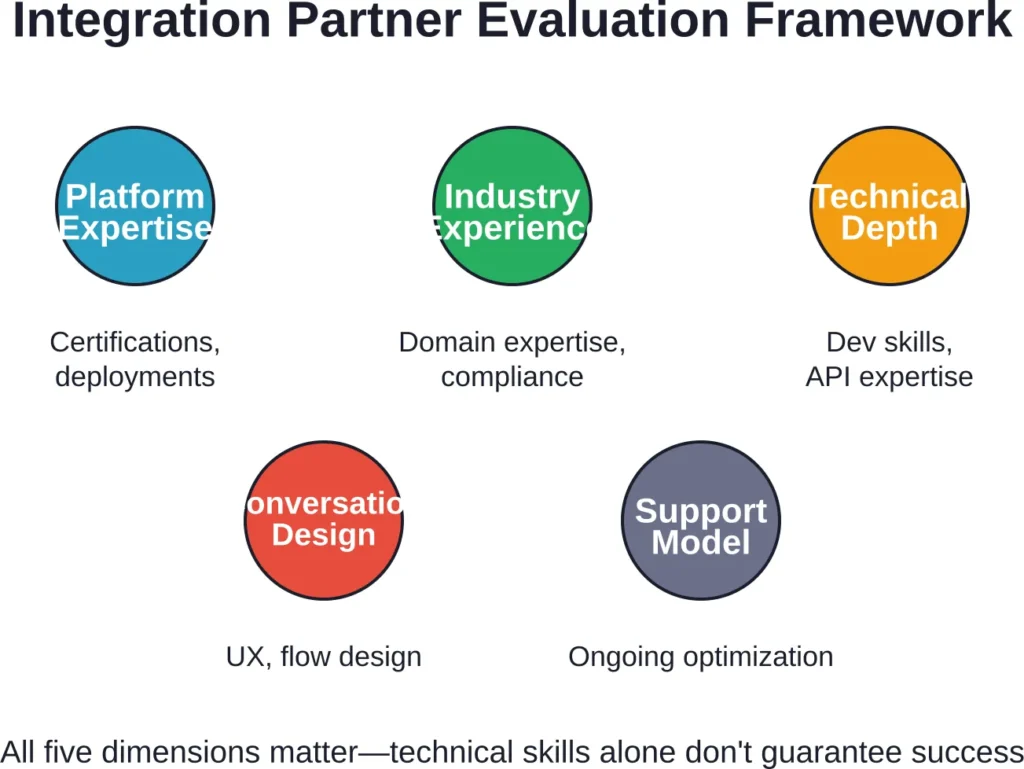
Choosing a chatbot integration company requires evaluating technical capabilities, industry experience, and cultural fit. The following framework helps structure the selection process.
Platform Specialization
Agencies with deep expertise in specific platforms deliver better results than generalists who dabble in multiple tools. An integrator who’s deployed the same platform dozens of times knows its quirks, limitations, and optimization strategies.
Ask about platform certifications, number of implementations completed, and client references using the same platform you’re considering.
Industry Experience
Integration companies with domain expertise understand industry-specific workflows, compliance requirements, and common use cases. A healthcare chatbot integrator knows HIPAA requirements. An ecommerce specialist understands product recommendation engines and cart abandonment strategies.
Evaluate whether the integration company has worked with businesses similar to yours facing comparable challenges.
Technical Depth
Beyond platform configuration, strong integrators handle API development, webhook services, authentication protocols, and system architecture. Review their technical team composition and development capabilities.
Organizations with complex integration requirements need partners who can write code, not just configure visual builders.
Ongoing Support Model
Chatbot deployments require continuous optimization. Intent recognition improves with training data. Conversation flows evolve based on usage patterns. System integrations need updates when business applications change.
Clarify whether the integration company offers post-launch support, how they handle change requests, and what ongoing maintenance looks like. One-time implementation projects often fail without sustained optimization.
Conversation Design Skills
Technical integration alone doesn’t create effective chatbots. Agencies with conversation designers on staff deliver better user experiences than pure technical implementers.
Ask to review conversation flow examples, see how they handle edge cases, and understand their testing methodology for conversation quality.
Implementation Timeline Expectations
Chatbot integration timelines vary based on platform complexity, integration scope, and conversation design requirements. Understanding typical phases helps set realistic expectations.
Discovery and Planning (2-4 weeks)
The discovery phase maps existing workflows, identifies automation opportunities, defines success metrics, and documents integration requirements. Integration companies audit available data sources, review system APIs, and assess technical constraints.
This phase produces a detailed implementation plan, conversation flow designs, and integration architecture documentation.
Platform Configuration and Development (4-12 weeks)
The core implementation phase configures the chatbot platform, builds conversation flows, develops custom integrations, and connects to backend systems. Timeline depends heavily on integration complexity.
Simple deployments using pre-built connectors and template conversations launch faster. Custom workflow automation, complex API integrations, and sophisticated natural language understanding require more time.
Testing and Refinement (2-4 weeks)
Testing validates conversation flows, integration reliability, and edge case handling. Teams conduct internal testing, user acceptance testing, and often limited beta deployments before full launch.
This phase identifies conversation design gaps, integration bugs, and performance issues that need resolution before production deployment.
Launch and Optimization (Ongoing)
Post-launch optimization continues indefinitely. Integration companies analyze conversation logs, identify misclassified intents, expand the bot’s knowledge base, and refine conversation flows based on real usage patterns.
Organizations treating chatbot deployment as a one-time project rather than ongoing optimization typically see lower performance than those committed to continuous improvement.
| Deployment Complexity | Typical Timeline | Key Factors |
|---|---|---|
| Simple (Template-based, no-code platform) | 2-6 weeks | Pre-built connectors, standard workflows, limited customization |
| Moderate (Custom flows, API integration) | 2-4 months | Custom conversation design, several system integrations, training data development |
| Complex (Enterprise, custom development) | 4-8 months | Legacy system integration, compliance requirements, sophisticated automation, voice capabilities |
| Very Complex (Multi-region, highly regulated) | 6-12+ months | Multiple deployments, regulatory approval processes, extensive security requirements |
Cost Considerations Beyond Vendor Pricing
While this guide avoids specific pricing, understanding total cost of ownership helps budget appropriately for chatbot integration projects.
Platform Subscription Costs
Most chatbot platforms charge monthly or annual subscription fees based on conversation volume, feature access, or seat counts. These recurring costs represent the largest budget component for most implementations.
Platform costs scale with usage. Organizations should model pricing across different volume scenarios to avoid surprises when conversation counts grow.
Integration Services Investment
Integration company fees cover discovery, implementation, and initial optimization. Service costs vary based on project complexity, timeline, and level of customization required.
Simple implementations using visual builders and pre-built connectors require less professional services investment than complex custom development projects.
Ongoing Maintenance and Optimization
Post-launch support represents an often-underestimated cost. Chatbots need continuous training, conversation flow updates, and integration maintenance as business requirements and connected systems evolve.
Organizations should budget for either internal resources to manage the chatbot or ongoing agency support retainers.
Internal Resource Allocation
Successful implementations require internal stakeholder time: subject matter experts to define conversation content, technical teams to provide system access, business owners to define success metrics, and support teams to handle escalations.
The internal opportunity cost often exceeds external service fees for complex deployments.
Frequently Asked Questions
Chatbot platforms provide the software technology that powers conversational AI—the natural language processing engine, conversation management system, and user interfaces. Companies like Ada, Intercom, and Drift build these platforms.
Chatbot integration companies are agencies or consultancies that deploy, configure, and connect those platforms to existing business systems. They handle implementation, conversation design, API integration, and ongoing optimization. Some platform vendors offer professional services directly, while independent agencies specialize in specific platforms.
Simple deployments using no-code platforms and template conversations can launch within 2-6 weeks. Moderate complexity projects with custom conversation flows and API integrations typically require 2-4 months. Enterprise implementations involving legacy system integration, compliance requirements, and sophisticated automation often span 4-8 months or longer.
The timeline depends on integration scope, platform complexity, available resources, and organizational decision-making speed. Organizations should prioritize rapid deployment of core functionality over attempting comprehensive feature sets in initial releases.
Yes, though integration approaches vary based on system capabilities. Modern chatbot platforms connect to legacy systems through several methods: RESTful APIs if the legacy system exposes them, middleware integration platforms that translate between modern APIs and legacy protocols, database-level integration for systems with accessible data stores, and screen-scraping automation for systems without programmatic access.
Integration companies with enterprise experience handle the complexity of connecting modern conversational AI to decades-old mainframe systems, proprietary databases, and custom applications without standard APIs.
Well-designed chatbot implementations include graceful escalation paths. When the bot doesn’t understand a query or lacks the capability to help, it should transfer the conversation to a human agent rather than repeatedly failing to assist.
Strong integrations pass conversation history and context to human agents so customers don’t repeat information. The escalation can happen through live chat handoff, callback scheduling, or ticket creation depending on channel and availability. Integration companies configure these fallback workflows as part of conversation design.
Modern AI-powered chatbot platforms support multilingual conversations. Platforms using large language models can understand and respond in dozens of languages without building separate bots for each.
But effective multilingual deployment requires more than technology. Conversation flows need cultural adaptation, not just translation. Formality levels, communication styles, and conversation pacing vary across cultures. Integration companies with international experience handle localization that respects cultural communication norms.
Chatbot platforms and integration approaches must comply with data protection regulations like GDPR, CCPA, and industry-specific requirements like HIPAA for healthcare or PCI-DSS for payment processing.
Compliance involves several technical controls: encryption of data in transit and at rest, access controls limiting who can view conversation logs, data retention policies that automatically purge old conversations, and audit logging that tracks data access. Integration companies working in regulated industries configure these security controls and help navigate compliance requirements.
Organizations with strict data sovereignty requirements may choose on-premise or private cloud deployment models rather than multi-tenant SaaS platforms.
ROI varies significantly based on use case, implementation quality, and business context. Customer service chatbots typically deliver ROI through support cost reduction—each conversation handled autonomously costs less than human-assisted support. Organizations achieving 70-80% containment rates see substantial cost savings.
Sales and marketing chatbots generate ROI through increased conversion rates, faster lead qualification, and more meetings booked with qualified prospects. Ecommerce chatbots drive revenue through assisted purchases and recovered abandoned carts.
But according to MIT research, 95% of generative AI implementations face challenges in generating measurable business outcomes. The difference between successful and failed implementations usually comes down to integration depth, conversation design quality, and commitment to ongoing optimization rather than platform selection.
Conclusion: Choosing Your Chatbot Integration Partner
The chatbot integration landscape offers diverse options across platform specializations, deployment models, and industry expertise. The right choice depends on matching agency capabilities to specific business requirements rather than pursuing the trendy platform or largest vendor.
Organizations should prioritize integration companies with deep platform expertise over generalists who dabble in multiple tools. An agency that’s deployed the same platform dozens of times brings optimization knowledge that generic consultants can’t match.
Industry experience matters as much as technical skills. Healthcare chatbot integrators understand HIPAA requirements. Ecommerce specialists know product recommendation strategies. Financial services experts navigate regulatory compliance. Domain expertise accelerates implementations and reduces costly mistakes.
Look beyond the initial deployment to ongoing support models. Chatbots require continuous optimization based on real conversation data. Integration companies offering sustained partnership deliver better long-term results than project-only engagements.
The conversational AI market will continue evolving rapidly. Agentic automation, voice interfaces, and multimodal experiences represent the near-term future. But fundamental integration principles remain constant: understand business requirements, design conversations around user needs, connect deeply to existing systems, and optimize continuously based on measured outcomes.
Ready to deploy a chatbot that actually delivers business value? Start by defining clear success metrics, auditing data quality in systems the bot will access, and mapping workflows suitable for automation. Then seek integration partners with proven expertise in your industry and platform ecosystem. The technology enables remarkable capabilities—but execution quality determines whether implementations succeed or join the majority of AI pilots that fail to generate meaningful impact.