

Quick Summary: The top dental web design companies for 2026 combine specialized expertise in dental practice marketing with proven conversion-focused design. This comprehensive list features 15 leading agencies that deliver patient-attracting websites, robust SEO strategies, and measurable growth—without long-term contracts or hidden costs.
The dental practice landscape has shifted dramatically. According to Creighton University research, only about 25–30% of dental offices are now private practice, with the majority being corporate or DSO-affiliated, increasing competition for new patients.
Your website isn’t just a digital business card anymore. It’s the first interaction most potential patients have with your practice—and 77% of patients perform online research before booking an appointment.
But here’s the thing: not all web design companies understand the unique needs of dental practices. Generic agencies might build beautiful sites, but they often miss the mark on conversion optimization, HIPAA compliance considerations, and the specific SEO tactics that drive local dental searches.
This guide breaks down the 15 best dental web design companies that actually specialize in growing dental practices. Each agency brings proven results, industry-specific expertise, and the technical chops to turn your website into your hardest-working team member.
Why Dental Practices Need Specialized Web Design
Generic web designers can build attractive websites. But dental practices face unique challenges that require specialized knowledge.
First, Over 60% of dental website visitors access sites from mobile devices. That means mobile-first design isn’t optional—it’s critical. A clunky mobile experience translates directly to lost appointment bookings.
Second, dental websites need to balance educational content with conversion optimization. Potential patients want to understand procedures, see real results, and quickly book appointments. That’s a tightrope walk between information architecture and user experience design.
Third, local SEO makes or breaks dental practices. Most patients search for dentists within a specific geographic area. Specialized dental agencies understand how to optimize for “dentist near me” searches, manage Google Business Profile listings, and build local citations that boost visibility.
Here’s what separates specialist dental web designers from generalists:
- Deep understanding of patient psychology and decision-making triggers
- Experience with dental practice management software integrations
- Knowledge of HIPAA compliance considerations for forms and data collection
- Proven conversion rate optimization tactics specific to dental services
- Established relationships with dental industry platforms and tools
The American Dental Association has recognized this need, with BaseKamp Design receiving endorsement in their Member Advantage program, with ADA TV+ availability noted by July 24, 2025, offering ADA members access to specialized marketing services and digital solutions.
Top 15 Best Dental Web Design Companies for 2026
Now for the main event. These agencies represent the cream of the crop in dental website design, each bringing unique strengths to the table.

1. Gilzor
Gilzor excels at building custom digital products with strong emphasis on user experience and conversion-focused design. The company combines deep technical expertise with practical business thinking to create websites and applications that perform.
Their standout strength is delivering measurable growth — helping clients achieve up to 3X MRR growth and attracting significant early user adoption for new products. With an 85% recurring customer rate, Gilzor builds long-term partnerships based on consistent delivery quality.
Gilzor provides full-cycle services including UI/UX design, web and mobile development, idea validation, go-to-market strategy, quality assurance, and product support. They focus on creating intuitive, user-centric interfaces that turn visitors into customers.
The company is particularly effective for startups and small-to-medium businesses looking to launch or scale digital products with clean design and strong technical foundations.
Contact Information:
- Website: www.gilzor.com
- Email: [email protected]
- Address: Poland, Warsaw, Office 58, street Adama Mickiewicza 37, 01-625
- LinkedIn: www.linkedin.com/company/gilzor-softwaredevelopment
2. Mobian Studio
Mobian Studio builds dedicated engineering teams that deliver production-ready software with excellent design and technical execution. The company specializes in mobile-first and AI-powered solutions for forward-thinking businesses.
What makes Mobian particularly effective is their focus on speed-to-market and quality delivery. They help companies ship faster without compromising on architecture, documentation, or user experience.
Mobian offers end-to-end product development, scalable architecture design, AI and automation systems, legacy integration, and full-stack delivery (mobile, web, backend, and cloud). Their approach emphasizes clean code, intuitive interfaces, and solutions that scale smoothly as businesses grow.
The studio works best with companies in IT, healthcare, fintech, and logistics that need reliable technical partners to build competitive digital products.
Contact Information:
- Website: mobian.studio
- Phone: [email protected]
- Address: Harju maakond, Tallinn, Kesklinnalinnaosa, Masina tn 22, 10113
- LinkedIn: www.linkedin.com/company/mobian-studio

3. Lengreo
Lengreo stands out as a complete marketing and technology partner that combines strategic digital marketing with high-performance website development. The company delivers full-funnel solutions that drive measurable business growth.
What makes Lengreo particularly effective is their data-driven lead generation approach. They have consistently delivered strong results for B2B clients, including increasing annually acquired clients by 400% for a US software development company and reducing cost per lead by over 6X for a Dutch event technology company.
Lengreo offers a comprehensive range of services including B2B digital marketing strategy, SEO (local and technical), website development, paid advertising (PPC, Meta, LinkedIn), hyper-personalized outreach, and demand generation. Their integrated approach creates synergy across channels that standalone website design rarely achieves.
The agency works with businesses of different sizes and industries, creating customized strategies focused on lead quality and conversion rate optimization rather than generic templates.
Contact Information:
- Website: lengreo.com
- Phone: +31 686 147 566
- Email: [email protected]
- Address: Vrijstraat 9 C/D, 5611 AT Eindhoven, Netherlands
- LinkedIn: www.linkedin.com/company/lengreo
- Instagram: www.instagram.com/lengreo.agency
- Twitter: x.com/Lengreo
4. Oski
Oski delivers smart, well-engineered software solutions with a strong focus on modern web technologies and user-centered design. The company helps tech-forward businesses and ambitious startups turn complex ideas into functional, high-performing digital experiences.
What sets Oski apart is their ability to accelerate development while maintaining quality — offering 3× faster development through AI-enhanced engineering and delivering production-ready solutions in record time.
Oski specializes in cloud solutions, frontend development (React, Vue, Angular, Next.js), artificial intelligence integrations, and custom CMS implementations. Their websites and applications emphasize scalability, intuitive UI/UX design, and seamless performance across devices.
The company works effectively with enterprises and startups in industries such as e-commerce, fintech, education, and logistics that require both beautiful design and robust technical architecture.
Contact Information:
- Website: oski.site
- Phone: +48571282759
- Email: [email protected]
- Address: Kaupmehe tn 7, 10114 Tallinn, Estonia
- LinkedIn: www.linkedin.com/company/oski-solutions

5. A-Listware
A-Listware is a reliable software development and consulting partner known for building high-quality, secure, and responsive digital solutions. The company focuses on delivering cost-effective yet professional development services tailored to client needs.
Their strength lies in creating dedicated teams that integrate seamlessly with client organizations, providing end-to-end software development, UX/UI design, and technical consulting. A-Listware consistently delivers projects that enhance business operations and user experiences.
The company offers services including custom software development, application services, team augmentation, legacy modernization, data analytics, and IT consulting. Their web and application solutions prioritize usability, scalability, and business impact.
A-Listware serves enterprises, small and medium businesses, and startups looking for trustworthy long-term technology partners.
Contact Information:
- Website: a-listware.com
- Phone: +1 (888) 337 93 73
- Email: [email protected]
- Address: North Bergen, NJ 07047, USA
- LinkedIn: www.linkedin.com/company/a-listware
- Facebook: www.facebook.com/alistware
6. Amplify360
Amplify360 takes a holistic approach to dental practice growth, combining website design with ongoing marketing support. The agency functions as an outsourced marketing department for busy practitioners.
What distinguishes Amplify360 is their focus on measurable ROI. Every marketing dollar ties to trackable patient acquisition metrics, allowing practices to see exactly how digital investments translate to revenue.
The agency offers transparent reporting dashboards that show website traffic, conversion rates, cost per lead, and patient lifetime value. This level of accountability helps practices make informed marketing decisions.
Amplify360 works particularly well with growth-focused practices ready to invest seriously in patient acquisition and willing to commit to integrated, multi-channel strategies.
7. Crimson Media Group
Crimson Media Group specializes in local SEO alongside web design, recognizing that most dental patients search within specific geographic areas. The agency excels at dominating local search results.
Their approach includes comprehensive Google Business Profile optimization, local citation building, review generation systems, and location-specific content strategies that capture “near me” searches.
Crimson Media Group also manages multi-location practices effectively, creating individual location pages with unique content while maintaining consistent branding across the practice group.
For practices in competitive urban markets, Crimson’s local SEO expertise can mean the difference between first-page visibility and obscurity in search results.

8. Golden Proportions Marketing
Golden Proportions Marketing brings dental industry-specific knowledge to every project. The agency understands procedure terminology, patient concerns, insurance complexities, and practice management workflows.
This insider knowledge translates to websites that speak the language patients actually use when searching for dental care. The content resonates because it addresses real concerns and questions.
Golden Proportions also integrates practice management software effectively, connecting websites to scheduling systems, patient portals, and CRM platforms for seamless workflows.
The agency works well with specialty practices—orthodontists, periodontists, oral surgeons—that need more sophisticated content than general dentistry sites.

9. Delmain
Delmain focuses on conversion-driven design, prioritizing patient acquisition above all else. Every design element exists to move visitors toward booking appointments.
The agency uses extensive A/B testing to optimize conversion paths, testing different CTA placements, form designs, page layouts, and content structures to identify what drives the highest booking rates.
Delmain’s websites typically feature prominent above-the-fold scheduling options, reduced-friction contact forms, and strategic use of urgency and social proof to encourage immediate action.
For practices frustrated with high traffic but low conversion rates, Delmain’s optimization-focused approach can unlock significant growth from existing visitor volume.

10. Studio Eighty Eight
Studio Eighty Eight combines creative design excellence with technical performance. The agency builds visually stunning websites that also load quickly and rank well.
Their design aesthetic tends toward modern, clean layouts with generous white space, high-quality photography, and subtle animations that add polish without sacrificing load speed.
Studio Eighty Eight also emphasizes accessibility, ensuring websites meet WCAG standards and serve patients with disabilities effectively. This inclusive approach expands the potential patient base.
The agency works particularly well with practices investing in their brand and willing to commit to professional photography, video content, and premium design elements.
11. Thrive Internet Marketing Agency
Thrive stands out as a full-service digital marketing agency with deep dental industry expertise. The company delivers comprehensive solutions that go beyond basic web design.
What makes Thrive particularly effective is their data-driven approach. A multi-location orthodontic group in the Southern United States partnered with Thrive and saw outstanding results through a blend of on-page optimization, link building, and targeted pay-per-click campaigns.
Thrive offers complete dental marketing services including website design, SEO, PPC management, social media marketing, and reputation management. The integration across these channels creates synergistic growth that standalone web design can’t match.
The agency handles practices of all sizes, from single-location startups to multi-practice dental groups. Their flexibility in approach means each practice gets a customized strategy rather than a cookie-cutter template.
12. Great Dental Websites
Great Dental Websites lives up to its name, specializing exclusively in dental practice websites. With 900+ dental practices using their platform and a 92% retention rate, they’ve refined their approach through extensive industry experience.
The standout feature? A 92% retention rate that speaks to long-term client satisfaction. Practices stick with Great Dental Websites because the platform continues delivering results year after year.
Client testimonials for Great Dental Websites indicate that typically 50-75% of new patient flow comes from optimized websites. Great Dental Websites builds this into their core strategy, focusing on conversion optimization alongside aesthetic design.
The company operates without long-term contracts, betting on performance rather than legal lock-in. This practice-friendly approach reduces risk for dental offices testing new marketing strategies.

13. LassoMD
LassoMD positions itself at the intersection of design excellence and technical SEO performance. The agency understands that beautiful design means nothing without traffic and conversions.
Their websites incorporate above-the-fold CTAs, mobile responsiveness, click-to-call functionality, online scheduling integration, pre-registration forms, dynamic video content, and educational pages that build trust and boost treatment acceptance.
LassoMD emphasizes that modern dental websites function as high-performance digital tools—engineered to win in search engines, convert visitors into patients, and make every interaction feel personal.
The agency’s analytical approach means every design decision ties back to measurable business outcomes. They don’t just ask if a design looks good—they test whether it drives appointment bookings.

14. DreamX Web
DreamX Web brings UI/UX expertise to dental website design, recognizing that user experience directly impacts conversion rates. The agency emphasizes mobile-first design principles and detailed user research.
DreamX understands that patients aren’t just looking for a name and phone number—they’re conducting research. The agency builds comprehensive service pages, educational content libraries, and intuitive navigation that supports this research process.
Their design services extend beyond basic websites to include web applications, digital product design, and UX audits. For larger dental groups or practices with complex needs, this technical capability proves invaluable.
The agency also offers expert design reviews, helping practices identify weaknesses in existing websites and develop data-backed improvement strategies.

15. Wonderist Agency
Wonderist Agency focuses on creating memorable brand experiences for dental practices. The agency recognizes that differentiation matters in competitive markets.
Beyond standard web design, Wonderist develops comprehensive brand identities—logos, color palettes, typography systems, and voice guidelines that carry across all patient touchpoints.
Their websites emphasize storytelling and emotional connection. Rather than clinical, sterile designs, Wonderist creates warm, welcoming digital experiences that reduce dental anxiety and build rapport before patients even visit.
The agency works particularly well with practices looking to position themselves as premium providers or establish distinctive market positions in crowded metropolitan areas.
Essential Features Every Dental Website Must Have
Let’s establish what makes a dental website actually work.
The best dental websites share common elements that drive patient acquisition. These aren’t nice-to-haves—they’re requirements for competitive performance in 2026.
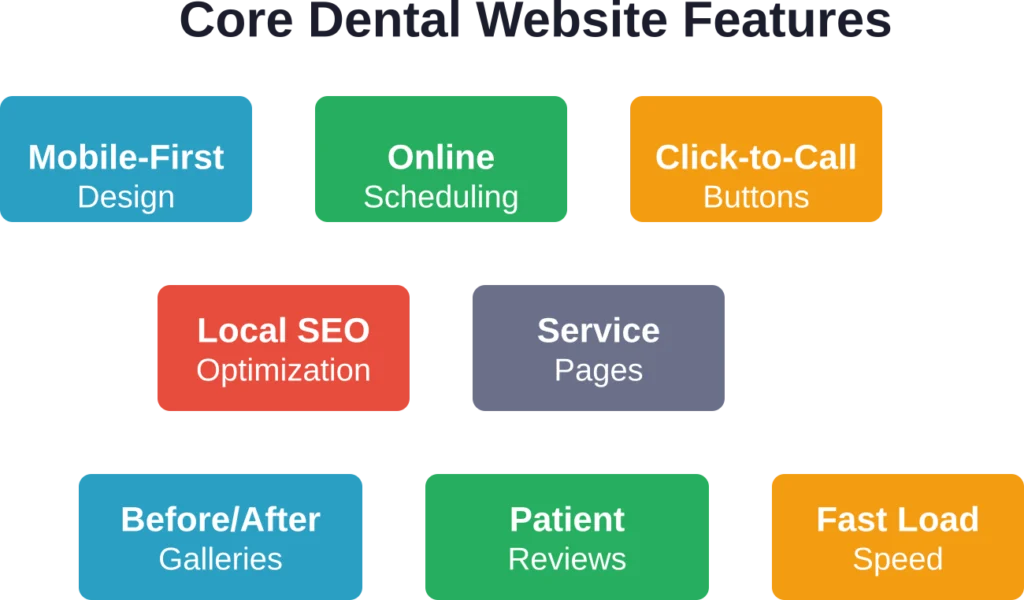
Mobile responsiveness tops the list. With the majority of searches happening on phones, sites must load quickly and display perfectly on screens of all sizes.
Online scheduling integration removes friction from the booking process. Patients can book appointments 24/7 without phone calls, and modern systems sync directly with practice management software.
Clear calls-to-action guide visitors toward booking. Above-the-fold CTAs, sticky headers with phone numbers, and strategically placed appointment buttons make conversion paths obvious.
Service pages optimized for search target specific procedures patients search for—teeth whitening, dental implants, Invisalign, emergency dentistry. Each page should answer common questions and include location-specific keywords.
Trust signals matter enormously. Patient reviews, before-and-after galleries, team bios with credentials, and professional photography build credibility before the first appointment.
Speed optimization affects both user experience and search rankings. Industry reports suggest websites should load in under three seconds to prevent visitor abandonment.
What to Look for When Choosing a Dental Web Design Company
Not every agency on this list will fit every practice. Choosing the right partner requires evaluating your specific needs and priorities.
Start with industry specialization. Agencies that focus exclusively on dental practices or healthcare bring relevant experience that generalists lack. They understand patient psychology, competitive dynamics, and regulatory considerations.
Examine portfolios carefully. Look beyond aesthetics—evaluate conversion elements, mobile design, load speed, and SEO fundamentals. The best portfolios include case studies with measurable results, not just pretty screenshots.
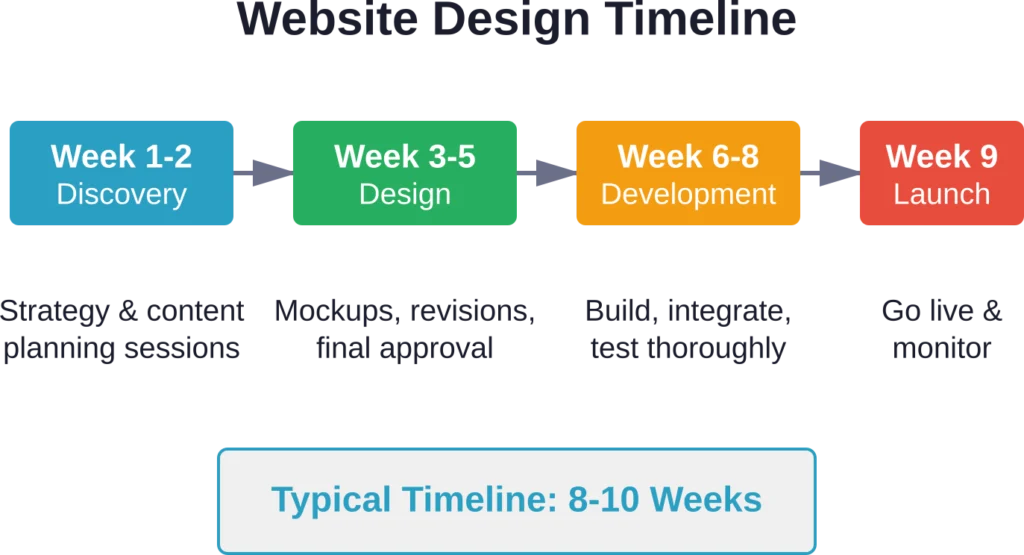
Ask about their process. How do agencies gather requirements? What does the timeline look like? How many revision rounds are included? Who owns the final website files? These practical questions prevent surprises later.
Understand ongoing support. Websites require maintenance, security updates, content additions, and continuous optimization. Some agencies offer comprehensive ongoing services while others deliver the site and walk away.
Clarify integration capabilities. Does the agency have experience with your practice management software? Can they connect scheduling tools, payment processors, and patient communication platforms?
Request references. Talk to current clients about responsiveness, results, and overall satisfaction. Past client experiences predict future outcomes more accurately than marketing promises.
The Investment: What Dental Website Design Actually Costs
While this article doesn’t include specific agency rates, understanding general market ranges helps set realistic expectations.
Basic dental websites typically cost between $2,000 and $5,000. These usually include template-based designs with essential pages, basic SEO setup, and limited customization.
Custom dental websites range from $5,000 to $15,000 or more. These feature original designs, comprehensive content development, advanced functionality, and thorough SEO optimization.
The investment doesn’t stop at launch. Small practices typically invest $1,000–$5,000 per month in ongoing marketing, depending on competitive intensity and growth goals.
For practices specifically focused on dental SEO, monthly budgets commonly range from $2,500 to $10,000 or higher, excluding advertising spend. Competitive markets require more aggressive investment.
Real talk: the cheapest option rarely delivers the best value. Dental practices represent significant business investments—often generating multiple six or seven figures annually. Website and marketing budgets should reflect that scale.
The practices that grow fastest typically allocate 5-10% of revenue to marketing consistently, treating patient acquisition as a strategic investment rather than an expense to minimize.
Specialist Agency vs. Generic Web Designer: The Key Differences
You might be wondering: can’t any decent web design company build a dental website? Technically, yes. But there are critical differences.
| Factor | Specialist Dental Agency | Generic Web Designer |
|---|---|---|
| Industry Knowledge | Understands dental terminology, procedures, patient concerns, and practice workflows | Requires extensive education on dental industry basics |
| Conversion Optimization | Proven tactics for booking appointments and reducing patient anxiety | Generic conversion best practices without dental context |
| SEO Strategy | Expertise in local dental search, competitive keywords, and Google Business optimization | General SEO knowledge without dental-specific insights |
| Integration Experience | Established connections with dental software, scheduling platforms, and industry tools | Learning integrations from scratch on each project |
| Compliance Awareness | Understands HIPAA considerations, healthcare advertising regulations, and dental board guidelines | May miss important compliance requirements |
| Content Development | Writers experienced in explaining dental procedures in patient-friendly language | Generic content writers without medical/dental background |
The difference shows up in results. Specialist agencies launch faster because they’re not learning dental basics. They convert better because they understand patient decision-making. They avoid compliance issues because they know the regulatory landscape.
For practices serious about growth, specialist agencies represent a smarter investment despite sometimes higher initial costs.
How the Best Dental Websites Drive Patient Growth
Let’s talk outcomes. What does a truly effective dental website actually accomplish?
First and foremost, visibility in local search results. When potential patients search for “dentist near me” or “emergency dental care [city],” top websites appear on the first page of results. That visibility translates directly to patient inquiries.
Second, trust building through professional presentation. High-quality photography, clear service explanations, provider credentials, and authentic patient reviews create confidence before the first phone call.
Third, conversion optimization that turns visitors into booked appointments. Strategic CTA placement, low-friction forms, online scheduling integration, and mobile-optimized design remove barriers to action.
Fourth, patient education that supports treatment acceptance. Comprehensive service pages, procedure explanations, before-and-after galleries, and FAQ sections help patients understand recommended treatments and feel comfortable moving forward.
Fifth, efficiency improvements for practice staff. Online scheduling reduces phone volume, pre-registration forms streamline check-in, and patient portals handle routine communication without staff intervention.
The best dental websites function as 24/7 marketing and patient acquisition machines, consistently delivering new patient opportunities while the dentist focuses on clinical care.
Common Mistakes When Hiring a Dental Web Design Company
Before you sign a contract, watch out for these red flags and common errors.
Choosing based solely on price. The cheapest option almost never delivers the best results. Effective websites require strategy, expertise, and ongoing optimization—all of which cost money.
Ignoring mobile performance. If an agency’s portfolio shows only desktop designs, that’s a problem. Over 60% of dental website traffic comes from mobile devices.
Accepting template designs. While templates can work for basic needs, they limit customization and create sameness. Specialist agencies often deliver 100% custom website designs rather than modified templates.
Overlooking SEO from the start. Treating SEO as an afterthought rather than a foundational strategy means expensive redesigns later. The best agencies bake SEO into the initial development process.
Failing to clarify ownership. Who owns the domain name, hosting account, and website files? Some agencies maintain control even after the contract ends, creating switching costs and dependency.
Neglecting content quality. Beautiful design with thin, generic content won’t rank or convert. Content development should be a central focus, not an afterthought.
Skipping the contract review. Understand deliverables, timelines, revision policies, ongoing costs, and termination clauses before signing. Vague contracts create conflicts later.
Questions to Ask Before Hiring Your Dental Web Design Agency
Ready to start conversations? Use these questions to evaluate potential partners:
- How many dental websites have you built in the past 12 months?
- Can you share case studies with specific performance metrics?
- What’s your typical project timeline from kickoff to launch?
- Who will be my primary point of contact?
- How do you approach mobile optimization?
- What’s included in your SEO services?
- Do you integrate with [your practice management software]?
- What ongoing maintenance and support do you provide?
- Who owns the website files and intellectual property?
- How do you measure success after launch?
- What’s your process for gathering patient testimonials and reviews?
- Can I speak with three current dental practice clients?
The answers reveal not just technical capability but also communication style, transparency, and cultural fit. Trust your instincts—you’ll be working closely with this team for months.
The Future of Dental Web Design: Trends to Watch
Web design never stands still. These emerging trends will shape dental websites through 2026 and beyond.
AI-powered chatbots are handling initial patient inquiries, answering common questions, and qualifying leads before staff involvement. The technology has matured to the point of natural conversation.
Advanced personalization tailors website content based on visitor behavior, location, and previous interactions. First-time visitors see different content than returning patients researching specific procedures.
Video content continues gaining importance. Virtual office tours, procedure explanations, provider introductions, and patient testimonials build trust more effectively than text alone.
Voice search optimization addresses the growing number of searches conducted through Siri, Alexa, and Google Assistant. Conversational keyword targeting and featured snippet optimization become critical.
Accessibility standards are moving from nice-to-have to essential. Websites that serve users with disabilities not only expand the patient base but also reduce legal risk as accessibility lawsuits increase.
Integration depth is expanding. Modern dental websites connect to practice management systems, patient communication platforms, review generation tools, and analytics dashboards for seamless workflows.
The best dental web design companies stay ahead of these trends, continuously updating their approaches rather than repeating what worked five years ago.
Frequently Asked Questions
Dental websites focus heavily on cosmetic outcomes, before-and-after galleries, and anxiety reduction—unique to dentistry. They also emphasize family-friendly messaging since dental practices often serve all ages, unlike specialists treating specific demographics. Local SEO matters more for dentists than for specialists with regional patient bases.
Immediate impacts include improved conversion rates from existing traffic—often within weeks of launch. SEO improvements take longer, typically 3-6 months to see meaningful ranking gains as search engines index new content and evaluate site performance. Practices should evaluate website success over quarters, not weeks.
WordPress powers most dental websites because of flexibility, extensive plugin ecosystems, and ease of updates. Some specialist agencies offer proprietary platforms optimized specifically for dental practices with built-in scheduling, patient portals, and analytics. The right choice depends on technical requirements, budget, and long-term scalability needs.
Both matter critically, but content often determines search rankings and conversion rates more than visual design. Beautiful design attracts attention, but comprehensive, well-written content about services, procedures, and practice philosophy actually drives bookings. The best agencies balance both rather than prioritizing one over the other.
Technically possible but rarely optimal. DIY platforms lack dental-specific features, require significant time investment, and often miss critical SEO elements. For practices doing under $500K annually, DIY might work temporarily. For established practices, professional development delivers far better ROI by converting more visitors into patients.
Regular security updates, content additions, performance optimization, and SEO adjustments are essential. Best practices include monthly blog posts, quarterly content reviews, annual design refreshes, and continuous monitoring of conversion rates. Websites that launch and receive no updates gradually decline in search rankings and become outdated.
HIPAA primarily governs protected health information—patient records, treatment details, and identifiable health data. Website contact forms collecting basic information typically don’t fall under HIPAA, but patient portals, online scheduling systems storing medical information, and secure communication tools require HIPAA-compliant hosting and encryption. Specialist dental agencies understand these distinctions and implement appropriate safeguards.
Conclusion: Choosing the Right Partner for Your Dental Practice Website
The dental practice landscape has evolved dramatically. With the majority of offices now operating under DSO or corporate structures, independent practices need every competitive advantage.
Your website represents the single most important marketing asset. It works 24/7, never calls in sick, and consistently drives new patient opportunities when properly designed and optimized.
The 15 agencies highlighted here represent proven options, each bringing specialized expertise to dental website design. Whether prioritizing conversion optimization, local SEO dominance, comprehensive marketing integration, or premium brand positioning, there’s an agency match for every practice.
The key is choosing a partner that understands dentistry specifically—not just web design generally. That specialization translates to faster launches, higher conversion rates, better search rankings, and ultimately more new patients walking through the door.
Ready to transform your dental practice website from a digital business card into a patient acquisition engine? Start conversations with 2-3 agencies from this list, compare approaches and portfolios, and select the partner that best aligns with your growth goals and practice culture.
Your competitors are investing in professional website design. The question isn’t whether to invest, but who to partner with for maximum results.