

Quick Summary: The top e-commerce web design companies in 2026 blend conversion-focused UX, platform expertise, and scalable architecture. Leading agencies specialize in Shopify, WooCommerce, and headless commerce, delivering mobile-first designs that reduce friction and boost transactions. Choosing the right partner depends on technical depth, vertical experience, and proven ability to integrate payment systems, inventory management, and checkout optimization.
Running an online store isn’t just about having products—it’s about creating an experience that pushes people toward the buy button. A confusing navigation structure or a checkout process with too many fields can send potential customers running before the first sale.
Eye-tracking studies show that visitors form an opinion about a site in seconds. That first impression determines whether someone stays to browse or bounces immediately.
The right e-commerce web design agency doesn’t just make things look polished. They architect the entire journey—from landing page through product discovery, cart interaction, and final purchase confirmation.
What Defines a Top-Tier E-Commerce Design Agency in 2026
Professional commerce design services do more than apply a template and call it done. The best agencies combine technical platform knowledge with user experience research and conversion rate optimization.
Here’s what separates the leaders from the rest.
Platform Mastery and Integration Depth
Top agencies specialize in specific platforms—Shopify, WooCommerce, or custom headless architectures. They know the capabilities and limitations of each system inside out.
Real expertise means integrating shopping carts with inventory management systems, implementing proper security measures like SSL and PCI compliance, and streamlining checkout flows to remove unnecessary steps and fields.
One famous case study shows how changing a single “register” button to “continue” generated significant lift in conversions. That’s the kind of insight platform specialists bring.
Mobile-First Commerce Experience
Mobile commerce isn’t optional anymore. In 2025, around 30% of the world’s population shops online—and a massive portion of those transactions happen on mobile devices.
The best agencies design for mobile screens first, then scale up. They optimize touch targets, simplify forms for thumbs instead of cursors, and test checkout flows on actual devices.
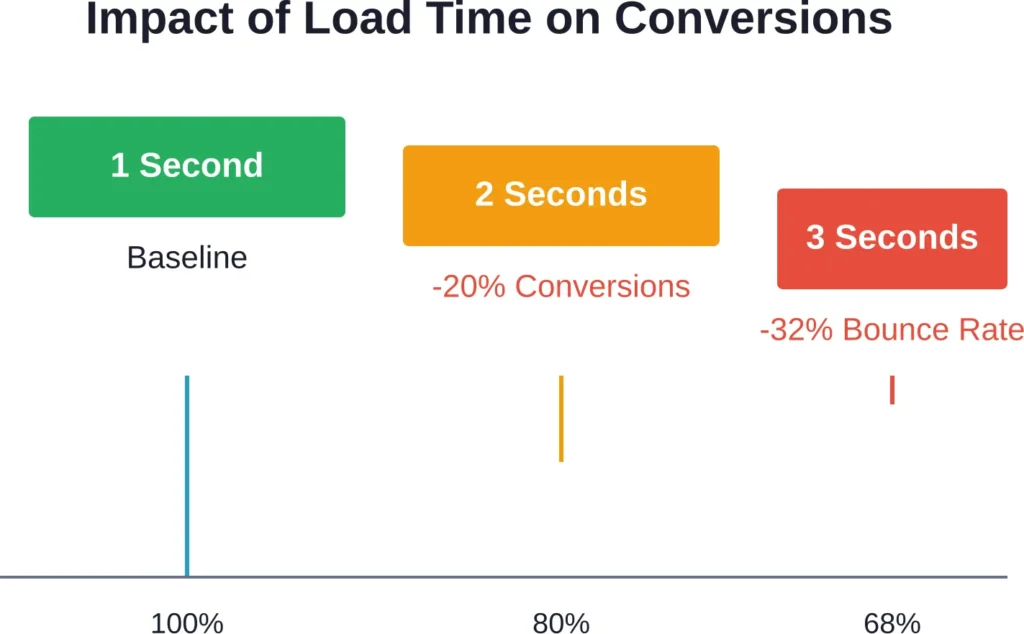
Load speed matters more on mobile than anywhere else. Research indicates that users expect pages to load quickly, with many expecting load times under two seconds. Load speed delays have measurable impacts on conversion rates and user satisfaction metrics.
That translates to real money—slow load times represent significant revenue loss for retail businesses. Extended load times result in significant increases in bounce rates.
Conversion-Focused UX and Testing
Design decisions should be driven by data, not just aesthetics. The best agencies use A/B testing, heat mapping, and session recordings to understand how real users interact with a store.
They refine layouts based on what actually converts—not what looks impressive in a portfolio screenshot. That means testing button colors, form field order, product image sizes, and trust signals like security badges.
In 2025, trends like AI-powered personalization and headless commerce are reshaping how businesses approach website design. But technology alone isn’t enough—the human element of understanding buyer psychology still drives results.
15 Best E-Commerce Web Design Companies in 2026
These agencies stand out for platform expertise, conversion optimization, and proven track records building stores that sell. They approach web design through a product-first lens, focusing on clarity, structure, and measurable results.
1. Oski

Oski builds smart, scalable digital solutions with a focus on e-commerce platforms for tech-forward enterprises and ambitious brands. They handle frontend development, cloud architecture, and AI integrations to create high-performance online stores.
Their expertise covers React, Next.js, and other modern frameworks combined with robust backend systems. They emphasize seamless user experiences, personalization, and automation that drive higher conversions in e-commerce environments.
Oski works across multiple industries including e-commerce, logistics, and fintech, delivering solutions that support complex catalogs, booking systems, and personalized shopping journeys.
Contact Information:
- Website: oski.site
- Phone: +48571282759
- Email: [email protected]
- Address: Kaupmehe tn 7, 10114 Tallinn, Estonia
- LinkedIn: www.linkedin.com/company/oski-solutions
2. A-Listware

A-Listware provides end-to-end software development and consulting for e-commerce platforms, helping businesses build custom solutions that enhance online sales and operational efficiency. They specialize in creating responsive, secure, and scalable digital storefronts.
They offer custom software development, UX/UI design, application services, and dedicated development teams tailored for e-commerce needs. Their focus includes enterprise applications, cloud solutions, and seamless integration with existing systems.
A-Listware supports enterprise clients, small and medium businesses, and startups in building reliable e-commerce infrastructure and customer-facing digital experiences.
Contact Information:
- Website: a-listware.com
- Phone: +1 (888) 337 93 73
- Email: [email protected]
- Address: North Bergen, NJ 07047, USA
- LinkedIn: www.linkedin.com/company/a-listware
- Facebook: www.facebook.com/alistware
3. Gilzor

Gilzor specializes in custom web and mobile development for e-commerce platforms, helping startups and growing businesses launch and scale digital stores that users love. They focus on building high-conversion solutions with clean design and strong user experience.
Their process includes idea validation, UI/UX design, full-cycle development, quality assurance, and go-to-market strategy. They create scalable e-commerce applications with features that improve purchasing flow and customer retention.
Gilzor has delivered successful e-commerce projects across retail, grocery, and consumer goods verticals, supporting both early-stage startups and established businesses looking to add new sales channels.
Contact Information:
- Website: www.gilzor.com
- Email: [email protected]
- Address: Poland, Warsaw, Office 58, street Adama Mickiewicza 37, 01-625
- LinkedIn: www.linkedin.com/company/gilzor-softwaredevelopment
4. Lengreo

Lengreo acts as a complete marketing and tech partner, combining website development with full-funnel digital marketing to help e-commerce businesses drive both traffic and conversions. They build eCommerce websites and landing pages that are optimized for lead generation and sales performance.
Their services include in-depth discovery and business analysis, prototyping, development, and ongoing optimization. With strong expertise in SEO, paid ads, and hyper-personalized outreach, they focus on measurable results such as increased client acquisition and improved conversion rates.
Lengreo works with software development companies, service providers, and tech businesses expanding their online presence. They deliver tailored strategies across B2B and B2C e-commerce environments.
Contact Information:
- Website: lengreo.com
- Phone: +31 686 147 566
- Email: [email protected]
- Address: Vrijstraat 9 C/D, 5611 AT Eindhoven, Netherlands
- LinkedIn: www.linkedin.com/company/lengreo
- Instagram: www.instagram.com/lengreo.agency
- Twitter: x.com/Lengreo
5. Mobian Studio
Mobian Studio builds dedicated engineering teams that deliver production-ready mobile and web solutions for e-commerce and digital commerce platforms. They help companies ship faster with clean architecture and strong user-focused design.
Their approach includes full-stack delivery, scalable architecture, AI-powered features, and legacy system integration. They create mobile-first e-commerce experiences optimized for conversion and long-term growth.
Mobian works with companies in retail, logistics, and consumer-facing industries that need high-quality digital products to compete in the e-commerce space.
Contact Information:
- Website: mobian.studio
- Phone: [email protected]
- Address: Harju maakond, Tallinn, Kesklinnalinnaosa, Masina tn 22, 10113
- LinkedIn: www.linkedin.com/company/mobian-studio
6. Lounge Lizard

Lounge Lizard has been building e-commerce sites for over two decades, giving them deep experience across platform migrations, rebrands, and scaling challenges. They’re based in New York and serve clients nationally.
Their services span strategy, design, development, and marketing. They handle both new builds and redesigns of underperforming stores, with a focus on mobile optimization and page speed.
Lounge Lizard works with fashion, luxury goods, and lifestyle brands that need sophisticated design paired with solid technical execution.
7. Ramotion

Ramotion specializes in branding and digital product design, including e-commerce experiences. Their design work emphasizes visual storytelling and brand consistency across all touchpoints.
They work primarily with startups and mid-sized companies launching new product lines or entering new markets. Their process includes brand strategy, visual identity, and website design delivered as a cohesive package.
Ramotion’s strength lies in creating memorable brand experiences that differentiate in crowded markets. They’re a strong fit for brands where design is a core competitive advantage.
8. Dotcomweavers
Dotcomweavers focuses on enterprise e-commerce, working with larger catalogs, complex integrations, and multi-site deployments. They support Magento, Shopify Plus, and custom solutions.
Their team handles B2B commerce, wholesale portals, and hybrid models where the same platform serves both retail and trade customers. They’re experienced with ERP integration, automated order routing, and advanced pricing rules.
Dotcomweavers serves clients in manufacturing, distribution, and B2B services—industries where e-commerce requirements go beyond standard retail functionality.
9. Coalition Technologies

Coalition Technologies combines web design with SEO and conversion rate optimization. Their team of 50–249 employees operates across time zones, offering round-the-clock development and support.
They specialize in Shopify and WooCommerce, with strong expertise in custom theme development and performance optimization. Their approach includes technical SEO audits, page speed improvements, and structured data implementation.
Coalition works with both emerging and established brands, handling everything from initial launch through ongoing growth optimization.
10. Shopify Plus Partners (Official Network)

For brands committed to the Shopify ecosystem, working with an official Shopify Plus Partner ensures deep platform knowledge and access to beta features. The partner directory includes dozens of vetted agencies specializing in different verticals and capabilities.
Official partners receive training directly from Shopify, stay current on platform updates, and have proven track records delivering successful stores. They range from boutique studios to global consultancies.
Using the Shopify Partner Directory lets you filter by location, industry expertise, and project type. It’s a reliable starting point for finding specialists who know the platform inside out.
11. Thrive Internet Marketing Agency
Thrive combines web design with digital marketing services, making them a strong choice for brands that need both a new store and the traffic to fill it. Their team handles everything from UX research through SEO and paid media.
They specialize in Shopify and WooCommerce builds, with particular strength in brands scaling from mid-market to enterprise. Their approach emphasizes mobile-first design and checkout optimization.
Thrive’s client roster spans multiple verticals, including health, fashion, and home goods. They’re based in the USA and work with both direct-to-consumer brands and B2B commerce operations.
12. Excited Agency

Excited takes a product-first approach to web design, focusing on clarity and structure over surface-level aesthetics. They combine UX research, web design, branding, and motion design to create websites that scale with the product.
Their process starts with deep discovery—understanding the target audience, competitive landscape, and conversion bottlenecks. Then they build iterative prototypes, test with real users, and refine before launch.
Excited works primarily with SaaS and tech companies expanding into e-commerce, as well as direct-to-consumer brands. They support long-term growth with ongoing optimization rather than one-off projects.
13. Techling LLC

Techling specializes in e-commerce development with a focus on AI integration and custom functionality. Their team of 10–49 employees handles both Shopify and custom platform builds.
Clients include CAPA, Chex AI, Cazvid, Dressup, Deft GPT, and Daspire. They’re particularly strong in stores that require complex features—wish lists, loyalty programs, advanced shipping rules, and inventory synchronization.
Techling brings technical depth for brands that need more than a standard theme installation. They handle data migration, third-party API integration, and custom checkout flows.
14. Superside

Superside offers unlimited design services on a subscription model, making them a flexible option for brands that need ongoing design support beyond the initial launch.
Their e-commerce expertise covers landing page design, product photography, email templates, and seasonal campaign assets. They work with established brands that already have a platform in place but need continuous creative output.
The subscription model works well for companies with fluctuating design needs—high volume during product launches and holiday seasons, lower volume during off-peak months.
15. ParallelHQ

ParallelHQ focuses on research-driven design and iterative testing. They support Shopify, WooCommerce, and custom headless stacks, with strong UX and optimization capabilities.
Their process includes cart integration, payment gateway setup, and security implementation. They don’t force account creation during checkout—a strategy backed by research showing significant conversion lift when friction is removed.
ParallelHQ works with mid-market and enterprise clients across industries, with particular expertise in complex catalogs and multi-currency stores.
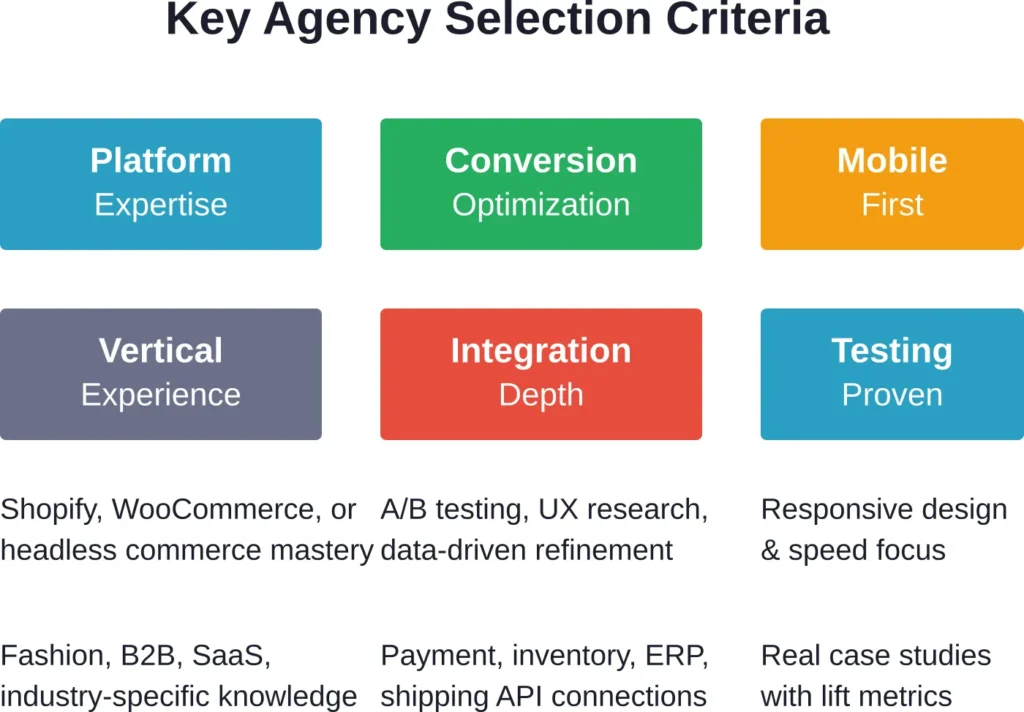
How to Evaluate E-Commerce Web Design Agencies
Not every agency is the right fit for every project. Here’s what to look for when vetting potential partners.
Portfolio Relevance and Results
Look beyond pretty screenshots. Ask for case studies that include before-and-after metrics—conversion rates, average order value, mobile performance scores, page load times.
Check whether their portfolio includes stores similar to yours in complexity, catalog size, and target audience. An agency that excels at building minimalist fashion stores might not be the best choice for a B2B industrial supply catalog.
Technical Capabilities and Integration Experience
If your store requires specific integrations—ERP systems, warehouse management, subscription billing, or multi-currency support—confirm the agency has done it before. Ask for references from similar projects.
Technical debt can cripple a store’s ability to scale. Strong agencies write clean, maintainable code and document their work so future developers can pick up where they left off.
Process Transparency and Communication
How does the agency handle feedback? What does their revision process look like? How often will you receive updates, and through what channels?
Red flags include vague timelines, resistance to contracts with clear deliverables, or pressure to start immediately without proper discovery. The best agencies take time upfront to understand requirements before proposing solutions.
Post-Launch Support and Optimization
A website launch isn’t the finish line—it’s the starting gun. Ask what post-launch support looks like. Do they offer ongoing optimization? How do they handle bug fixes and updates?
Some agencies specialize in build-and-handoff projects. Others offer retainer relationships for continuous improvement. Match the engagement model to your internal capabilities and growth plans.
E-Commerce Design Trends Shaping 2026
The landscape keeps evolving. Here’s what’s driving the best e-commerce experiences right now.
Headless Commerce and Composable Architecture
Headless commerce decouples the front-end presentation layer from the back-end commerce engine. This gives design teams more flexibility and lets developers use modern frameworks like React or Vue.
The trade-off is complexity—headless requires more technical expertise to implement and maintain. But for brands with unique customer experiences or omnichannel requirements, the flexibility pays off.
AI-Powered Personalization
Product recommendations, dynamic pricing, and personalized landing pages are all powered by machine learning now. Many designers increasingly view AI as a primary collaborator rather than just a tool.
But personalization can backfire if implemented poorly. Customers notice when recommendations feel off-target or when dynamic pricing seems manipulative. The best implementations feel helpful rather than creepy.
Progressive Web Apps and Mobile Performance
Progressive web apps (PWAs) bridge the gap between mobile websites and native apps. They offer offline functionality, push notifications, and home screen installation—all without requiring app store approval.
For e-commerce brands, PWAs can dramatically improve mobile conversion rates by delivering app-like speed and reliability through a browser.
Common E-Commerce Design Mistakes to Avoid
Even experienced teams make these errors. Here’s what to watch out for.
Forcing Account Creation Before Checkout
Guest checkout should always be an option. Research consistently shows that mandatory registration kills conversions. Customers are willing to create accounts after a successful purchase—not before they’ve decided to trust the brand.
Overcomplicated Navigation and Filtering
Mega menus with dozens of categories overwhelm rather than help. The best navigation structures are shallow—two or three clicks from homepage to any product.
Filtering and sorting should be intuitive. Common options like price range, size, color, and brand should be immediately visible. Advanced filters can be tucked behind a “more options” toggle.
Ignoring Mobile Checkout Flow
Forms designed for desktops often break on mobile. Long dropdown menus are painful to navigate on a phone. Typing addresses on a small keyboard is error-prone.
Better approaches include autofill support, address lookup by ZIP code, and mobile-optimized input types (number keyboards for credit cards, email keyboards for email fields).
Underestimating Load Speed Impact
Real talk: users won’t wait for slow pages. When load time hits three seconds, conversion rates drop from 40% to 29%—a decline of more than a quarter of potential sales.
Image optimization, lazy loading, and content delivery networks aren’t optional luxuries. They’re table stakes for competitive performance.
| Load Time | Bounce Rate Impact | Conversion Impact | User Satisfaction |
|---|---|---|---|
| 1 second | Baseline | Baseline (100%) | Baseline (100%) |
| 2 seconds | +9% | -20% | -16% |
| 3 seconds | +32% | -29% | -27% |
| 5 seconds | +90% | -45% | -41% |
Platform Comparison: Shopify vs WooCommerce vs Headless
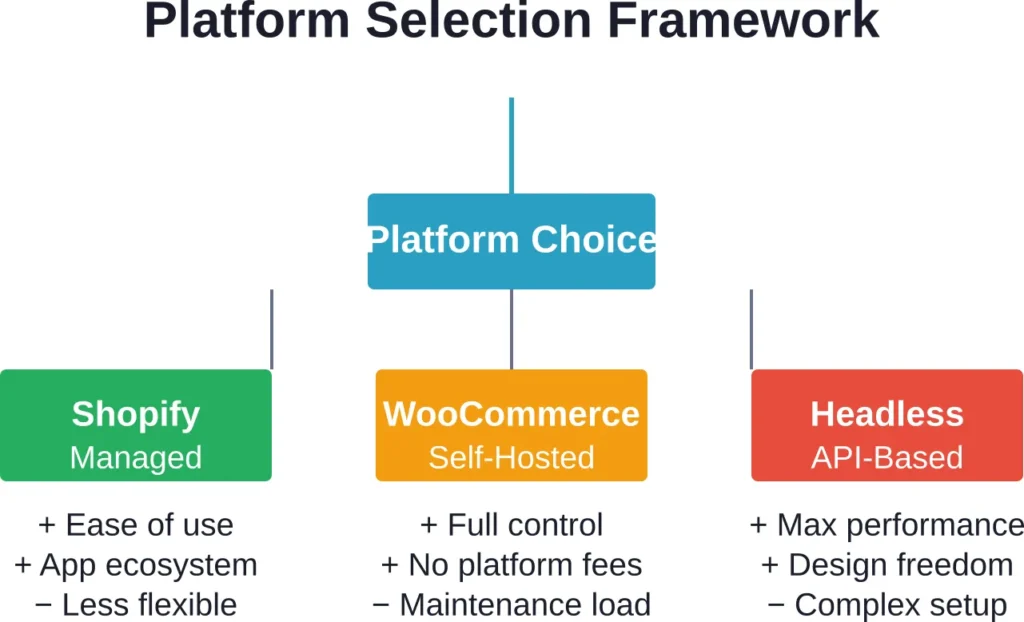
Choosing the right foundation matters as much as choosing the right agency. Here’s how the major platforms stack up.
Shopify: Ease and Ecosystem
Shopify is the go-to for brands that want reliable hosting, automatic updates, and a massive app ecosystem. The platform handles security, PCI compliance, and infrastructure scaling.
The downside is less flexibility for highly customized experiences. Shopify’s template language (Liquid) is less powerful than full-stack frameworks, and some advanced features require workarounds.
Shopify Plus offers enterprise features—advanced APIs, multi-store management, and dedicated support—for brands with more complex requirements.
WooCommerce: Control and Customization
WooCommerce runs on WordPress, giving developers complete control over the front and back end. It’s open source, meaning no monthly platform fees (though hosting, security, and maintenance costs add up).
Flexibility is the main advantage. Any design or feature is possible if you’re willing to build it. The challenge is that everything—from security patches to performance optimization—becomes your responsibility.
WooCommerce works well for brands with in-house development teams or long-term agency partnerships.
Headless Commerce: Flexibility and Performance
Headless setups pair a commerce engine (Shopify, Magento, or a dedicated headless platform like Commerce Layer) with a modern front-end framework. This delivers blazing speed and complete design freedom.
The cost is complexity. Headless requires developers comfortable with APIs, build pipelines, and modern JavaScript frameworks. Deployment and maintenance are more involved than managed platforms.
Headless makes sense for brands with unique customer experiences, omnichannel requirements, or content-heavy sites where performance is critical.
Budget Expectations for E-Commerce Design Projects
While we’re not discussing specific agency rates, understanding general market ranges helps set realistic expectations.
Small Business Storefronts
Basic e-commerce sites with standard templates and limited customization typically start in the low thousands. These are suitable for small catalogs, straightforward checkout, and businesses testing e-commerce for the first time.
Expect templated design, limited integrations, and self-service management after launch.
Mid-Market Custom Builds
Custom designs, specialized functionality, and integration with existing systems move projects into the mid-five-figure range. These builds include UX research, custom theme development, payment gateway integration, and thorough testing.
This tier suits growing brands with proven product-market fit that need design and functionality to match their ambitions.
Enterprise and Complex Commerce
Large catalogs, multi-site deployments, B2B functionality, and extensive integrations push projects into six figures and beyond. Enterprise builds include dedicated project management, security audits, performance testing, and ongoing optimization.
These projects typically involve multiple stakeholders, phased rollouts, and long-term support agreements.
Questions to Ask Before Hiring an E-Commerce Agency
These questions reveal whether an agency truly understands e-commerce—or just designs websites that happen to sell things.
What’s Your Discovery Process?
Strong agencies spend significant time understanding the business, customers, and competitive landscape before touching design tools. Beware of agencies that jump straight to mockups without asking hard questions.
How Do You Approach Mobile Commerce?
If the answer is “responsive design,” dig deeper. True mobile-first thinking means rethinking information architecture, interaction patterns, and checkout flow specifically for small screens—not just shrinking a desktop layout.
What Metrics Do You Use to Measure Success?
Design should drive business outcomes. Agencies should talk about conversion rates, average order value, cart abandonment rates, and customer lifetime value—not just time on site or page views.
Can You Share Case Studies with Measurable Results?
Portfolio pieces are nice. Case studies with before-and-after data are better. The best agencies can quantify the impact of their design decisions with real numbers.
How Do You Handle Ongoing Optimization?
E-commerce isn’t a set-it-and-forget-it channel. Ask about post-launch testing, seasonal updates, and continuous improvement. Agencies that disappear after launch leave money on the table.
Frequently Asked Questions
E-commerce specialists understand shopping behavior, checkout psychology, and conversion optimization at a deeper level. They know how to structure product catalogs, optimize search and filtering, integrate payment gateways, and reduce cart abandonment. Regular web agencies focus on informational sites where the goal is engagement rather than transactions.
Timelines vary based on complexity. A basic Shopify store with a customized theme can launch in 6–8 weeks. Mid-market custom builds typically take 3–5 months. Enterprise projects with extensive integrations and custom development often span 6–12 months or more. Discovery, design, development, testing, and content migration all require dedicated time.
Shopify offers ease of use, managed hosting, automatic updates, and strong app integrations—ideal for brands that want to focus on products rather than technical maintenance. WooCommerce provides complete control and flexibility, perfect for brands with unique requirements or in-house development teams. The choice depends on technical resources, customization needs, and long-term growth plans.
Look beyond aesthetics. Evaluate case studies with measurable results—conversion rate improvements, mobile performance gains, or revenue lift. Check if portfolio projects match your industry, catalog size, and technical complexity. Ask about the agency’s role in each project and whether they handled strategy, design, development, or all three.
Critical. Mobile commerce represents a significant and growing portion of online sales. Data shows that 47% of users expect pages to load in two seconds or less, and delays cause immediate drops in conversion and satisfaction. Mobile optimization isn’t just responsive layouts—it’s rethinking the entire experience for touch interfaces, smaller screens, and on-the-go shopping contexts.
Yes. E-commerce sites require continuous optimization, seasonal updates, security patches, and performance monitoring. Technology and customer expectations evolve quickly. Stores that launch and go stagnant fall behind competitors who iterate based on data. Budget for either ongoing agency support or internal resources to maintain and improve the site post-launch.
ROI varies by industry and implementation, but data-backed examples show measurable impact. Reducing mobile load time by 1.2 seconds generated a 12% lift in completed transactions in one B2C project. Removing friction from checkout (like forced account creation) has produced significant conversion increases. Professional design pays for itself when conversion improvements compound over thousands of transactions.
Finding the Right Partner for Your E-Commerce Vision
The best e-commerce web design companies don’t just build stores—they architect experiences that convert browsers into buyers and first-time customers into repeat purchasers.
Choosing the right agency means matching technical capabilities with business goals. Platform expertise matters. Vertical experience matters. Proven ability to drive measurable results matters most.
Start by clarifying what success looks like for your store. Then evaluate agencies based on their ability to deliver those specific outcomes—not just beautiful designs.
The agencies listed here represent different specializations, platforms, and approaches. Whether launching a new direct-to-consumer brand, scaling an established store, or migrating to a modern platform, the right partner exists in this landscape.
Take time to vet portfolios, ask hard questions about process and metrics, and verify references from similar projects. An e-commerce site is too important to trust to anyone who can’t demonstrate both design chops and business understanding.
Ready to build a store that actually sells? Start conversations with agencies that specialize in your platform, understand your industry, and measure success the same way you do—in transactions, not just traffic.