

Quick Summary: This comprehensive guide profiles 15 leading frontend development agencies for 2026, evaluating their specializations, tech stacks, client reviews, and project approaches. From niche React specialists to full-service digital studios, these companies represent the best options for businesses seeking pixel-perfect interfaces, performance optimization, and scalable web applications.
Finding the right frontend development partner can feel overwhelming. The market overflows with agencies promising clean code, beautiful interfaces, and teams that supposedly understand your vision perfectly.
But here’s the thing—most businesses waste weeks evaluating dozens of companies, only to discover mismatched expectations halfway through a project.
The frontend development landscape has evolved dramatically. Approximately 76% of developers report using tools such as GitHub Copilot, ChatGPT, Replit, Cursor, Claude, and Amazon Q Developer, agencies that haven’t adapted their workflows risk delivering outdated solutions. The companies that thrive in 2026 combine technical mastery with strategic thinking about performance, accessibility, and long-term maintainability.
This article cuts through the noise. After analyzing hundreds of agencies based on work quality, client feedback, technical capabilities, and industry reputation, these 15 frontend development companies stand out as genuine leaders.
What Makes a Frontend Development Company Exceptional in 2026
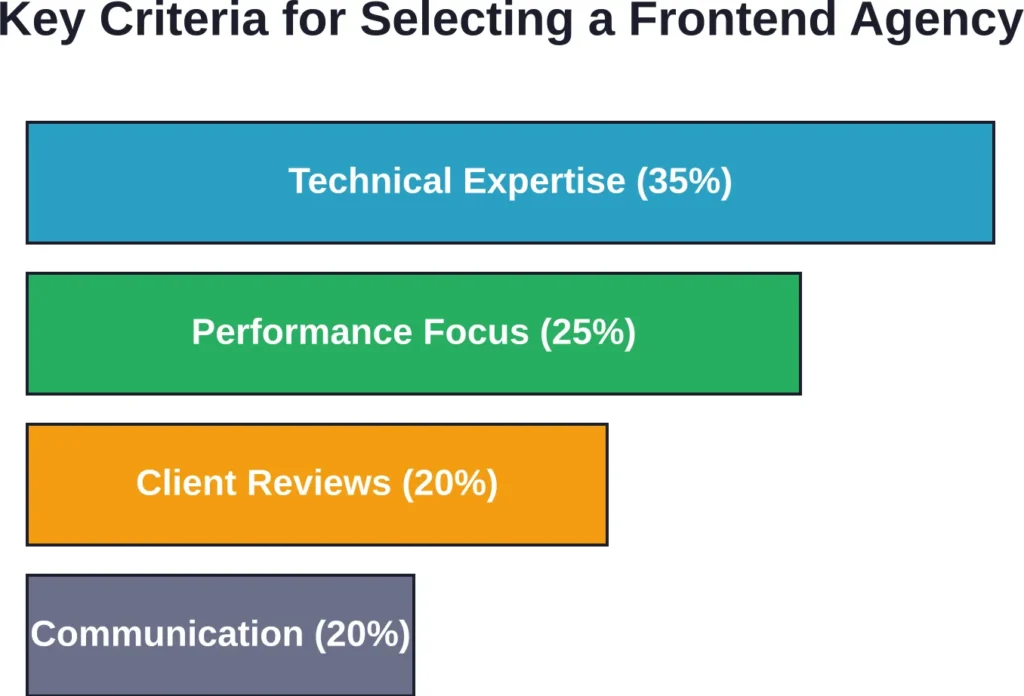
Before diving into the list, understanding evaluation criteria matters. The best frontend development companies share specific characteristics that separate them from average shops.
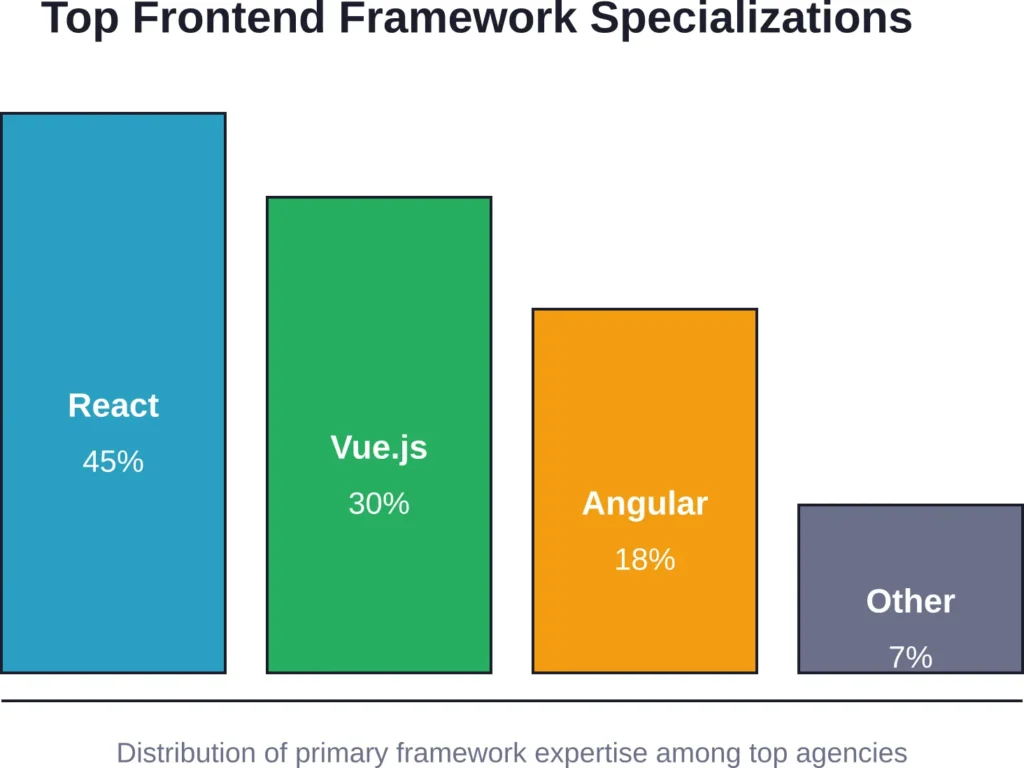
Technical depth comes first. Agencies need proven expertise in modern frameworks—React, Angular, Vue, Next.js, and emerging technologies. But knowing a framework and architecting scalable, maintainable applications are entirely different skills.
Design-to-development workflow efficiency determines project success. Companies with streamlined Figma-to-code processes deliver faster without sacrificing quality. Agencies that treat design files as suggestions rather than specifications create friction and delays.
Performance optimization separates good from great. Fast-loading interfaces aren’t optional anymore. Companies that prioritize Core Web Vitals, code splitting, and progressive enhancement deliver experiences users actually enjoy.
Communication transparency prevents project disasters. The best agencies provide regular updates, honest timelines, and proactive problem-solving. When challenges arise, they surface issues early rather than scrambling at deadline.
Industry recognition through verified reviews offers validation. Platforms like Clutch aggregate client feedback, providing insight into real project experiences beyond marketing promises.
1. Oski Solutions
Oski Solutions delivers high-performance frontend solutions for tech-forward enterprises and ambitious startups. The agency focuses on creating intuitive, scalable interfaces that drive business results through modern web technologies.
Their frontend expertise centers on React, Vue, Angular, Next.js, and Nuxt, combined with strong UI/UX design principles. The team excels at building responsive, accessible applications with seamless user experiences across devices. Projects emphasize clean architecture, optimized performance, and future-proof codebases.
What sets them apart is the integration of frontend development with broader digital innovation. They create interfaces that not only look exceptional but also support complex business logic while maintaining lightning-fast load times and superior Core Web Vitals scores.
Client feedback consistently highlights their ability to transform requirements into polished, conversion-focused interfaces. Companies partner with them when they need interfaces that enhance user engagement and support enterprise-scale operations.
Their process begins with deep business analysis and user research, followed by prototyping and iterative design development. This ensures every frontend decision aligns with strategic goals before implementation begins. Quality assurance and ongoing support complete the cycle, delivering maintainable solutions ready for long-term growth.
Best For
Enterprises and startups needing sophisticated frontend implementations. Companies seeking React or Vue specialists for complex user interfaces. Organizations focused on performance optimization and exceptional user experiences across industries like fintech, e-commerce, and logistics.
Contact Information
- Website: oski.site
- Phone: +48571282759
- Email: [email protected]
- Address: Kaupmehe tn 7, 10114 Tallinn, Estonia
- LinkedIn: www.linkedin.com/company/oski-solutions
2. Gilzor

Gilzor builds custom digital products with a strong emphasis on frontend excellence. The team creates web and mobile interfaces that combine beautiful design with robust functionality to help businesses launch, scale, and grow.
Their development approach covers full-cycle frontend implementation, from user-centric UI/UX design to production-ready code. Special focus goes to conversion-oriented interfaces, accessible design patterns, and smooth interactions that improve user satisfaction and business metrics.
The agency stands out through its strategic frontend thinking. Every project starts with idea validation and business analysis, ensuring interfaces solve real user problems while supporting broader product goals. They deliver scalable architectures that grow with the business.
Client projects demonstrate their ability to create high-performing web applications and mobile experiences across industries. The team excels at turning complex requirements into intuitive, engaging interfaces that users love.
Their workflow includes thorough prototyping, iterative development, and rigorous quality assurance. Post-launch support and maintenance ensure interfaces remain optimal as products evolve. This end-to-end focus delivers solutions that perform from day one.
Best For
Startups launching new digital products needing strong frontend foundations. SMBs developing web applications for additional sales channels. Product companies seeking user-centric interfaces that drive engagement and conversions.
Contact Information
- Website: www.gilzor.com
- Email: [email protected]
- Address: Poland, Warsaw, Office 58, street Adama Mickiewicza 37, 01-625
- LinkedIn: www.linkedin.com/company/gilzor-softwaredevelopment
3. Lengreo

Lengreo acts as a complete marketing and tech partner with deep frontend development capabilities. They build high-converting websites, landing pages, and digital experiences that drive measurable business growth.
Their website development services encompass discovery, prototyping, design implementation, and ongoing optimization. The team creates eCommerce platforms, business websites, and performance-focused landing pages using modern frontend technologies and best practices.
What distinguishes them is the combination of technical frontend expertise with proven marketing results. Interfaces are built not just for aesthetics but for conversion rate optimization, lead generation, and SEO performance. Every element serves clear business objectives.
Client testimonials praise their proactive approach and ability to deliver high-quality work that produces tangible outcomes. Companies turn to Lengreo when they need websites and digital experiences that actively contribute to revenue growth.
The process emphasizes close collaboration, transparent communication, and data-driven decisions. From initial strategy through implementation and optimization, they integrate frontend development with broader digital marketing goals for maximum impact.
Best For
Businesses needing conversion-optimized websites and landing pages. Companies seeking frontend development integrated with B2B lead generation strategies. Organizations wanting performance-focused digital experiences that support marketing objectives.
Contact Information
- Website: Lengreo.com
- Phone: +31 686 147 566
- Email: [email protected]
- Address: Vrijstraat 9 C/D, 5611 AT Eindhoven, Netherlands
- LinkedIn: Lengreo
- Twitter: @Lengreo
- Instagram: @lengreo
4. Mobian Studio
Mobian Studio builds dedicated engineering teams specializing in frontend and full-stack solutions for companies that demand excellence in digital product delivery. Their approach ensures production-ready interfaces delivered on time and within budget.
The team excels at creating sophisticated frontend architectures for mobile and web applications. They focus on clean, maintainable code, scalable components, and exceptional user experiences across complex domains like healthcare, fintech, and logistics.
What sets them apart is the combination of senior-level frontend expertise with flexible engagement models. Whether through dedicated teams or embedded engineers, they deliver interfaces built on modern architectures that support long-term scalability and evolution.
Projects benefit from their emphasis on documented, well-architected solutions. The team integrates frontend development with backend systems and AI capabilities while maintaining focus on performance, accessibility, and user-centric design.
Their delivery process includes dedicated teams working exclusively on client projects, thorough quality assurance, and post-launch partnership. This ensures interfaces not only launch successfully but continue performing as products scale.
Best For
Companies building complex web and mobile applications requiring strong frontend architecture. Organizations needing senior frontend engineers for healthcare, fintech, or logistics solutions. Teams seeking scalable, maintainable interfaces with long-term support.
Contact Information
- Website: mobian.studio
- Phone: [email protected]
- Address: Harju maakond, Tallinn, Kesklinnalinnaosa, Masina tn 22, 10113
- LinkedIn: www.linkedin.com/company/mobian-studio
5. A-Listware

A-Listware provides expert frontend development as part of comprehensive software solutions. The agency delivers responsive, high-quality user interfaces that power enterprise applications and digital transformation initiatives.
Their frontend capabilities include modern frameworks, responsive design, and user experience optimization. Projects range from custom web applications to complex enterprise portals, always with emphasis on performance, accessibility, and seamless integration.
The company excels at creating interfaces that serve as the foundation for powerful digital experiences. Their UX/UI design expertise ensures interfaces are both visually compelling and functionally superior, supporting business processes and user needs effectively.
Client relationships benefit from seamless team integration and consistent delivery quality. Organizations partner with them when they need reliable frontend development that integrates perfectly with broader technology ecosystems.
Their approach combines technical frontend excellence with strong project management and quality assurance. This delivers solutions that meet immediate needs while supporting future growth and evolution of the digital product.
Best For
Enterprises requiring robust frontend solutions for complex applications. Companies seeking dedicated frontend teams for digital transformation projects. Organizations needing high-quality UI/UX implementation across web and enterprise software.
Contact Information
- Website: a-listware.com
- Phone: +1 (888) 337 93 73
- Email: [email protected]
- Address: North Bergen, NJ 07047, USA
- LinkedIn: www.linkedin.com/company/a-listware
- Facebook: www.facebook.com/alistware
6. TinyFrog Technologies
TinyFrog Technologies operates as a full-service web agency with particular strength in small to mid-sized business projects. Their approach balances technical quality with budget consciousness.
The agency handles WordPress development, custom applications, and e-commerce platforms. Their frontend work emphasizes responsive design, ensuring interfaces adapt smoothly across devices. Mobile optimization receives particular attention given that mobile traffic exceeds desktop for most websites.
TinyFrog’s project management style suits clients new to web development. They guide stakeholders through technical decisions, explain tradeoffs clearly, and prevent scope creep through structured change management processes.
Their team maintains long-term client relationships, providing ongoing updates, security patches, and feature additions. This continuity creates institutional knowledge about client businesses, making future projects more efficient.
Content strategy integration sets them apart from purely technical shops. They consider how content will be created, updated, and managed during development. This prevents situations where beautifully designed sites become impossible for marketing teams to maintain.
The agency’s regional focus provides accessibility for California-based businesses while remote capabilities extend their reach nationally. They balance in-person meetings with distributed collaboration tools depending on client preferences.
Best For
Small to mid-sized businesses launching new websites. Companies needing WordPress expertise with custom functionality. Organizations wanting ongoing technical partnerships beyond initial development.
7. Dotlogics
Dotlogics brings enterprise-level frontend development capabilities with particular strength in complex business applications. Their client roster includes Fortune 1000 companies alongside growing mid-market businesses.
Technical capabilities span custom web application development, progressive web apps, and sophisticated UI implementations. They excel at projects requiring integration with existing enterprise systems—CRMs, ERPs, and legacy databases.
The agency’s development methodology emphasizes security and scalability from project inception. For enterprise clients, security requirements often constrain technical decisions. Dotlogics navigates these constraints while maintaining modern development practices.
Their team includes specialists in accessibility compliance, ensuring applications meet WCAG standards. This matters for government contractors, healthcare organizations, and companies prioritizing inclusive design.
Project timelines reflect thorough planning and quality assurance processes. While not the fastest agency, their systematic approach prevents the technical debt and shortcuts that cause long-term maintenance nightmares.
Dotlogics maintains ongoing relationships with enterprise clients, providing maintenance, updates, and gradual feature expansion. Their support structures accommodate the approval processes and change management procedures large organizations require.
Best For
Enterprise companies needing secure, scalable web applications. Organizations requiring WCAG accessibility compliance. Businesses integrating frontend interfaces with complex backend systems.
8. BlueLabel Labs

BlueLabel Labs specializes in mobile-first web experiences and progressive web applications. Their expertise bridges traditional web development and native mobile app capabilities.
The agency’s technical stack emphasizes frameworks that enable app-like experiences in browsers—service workers for offline functionality, push notifications, and home screen installation. These capabilities blur the line between websites and native apps.
BlueLabel’s design process prioritizes mobile experiences first, then scales up to larger screens. This mobile-first methodology reflects actual usage patterns where most traffic originates from smartphones.
Their development team handles complex gesture interactions, animation, and transitions that make web interfaces feel responsive and immediate. Performance optimization ensures smooth 60fps animations even on mid-range devices.
The agency works extensively with startups and growth-stage companies building consumer-facing products. Their experience with product launches includes beta testing, analytics integration, and iterative improvement based on user behavior data.
BlueLabel’s post-launch support includes conversion optimization, A/B testing, and user flow analysis. They treat launches as starting points rather than finish lines, continuously refining based on real-world usage.
Best For
Startups building mobile-first web products. Companies wanting progressive web app capabilities. Organizations targeting mobile users with app-like experiences.
9. Alliance Interactive
Alliance Interactive combines frontend development with strategic consulting for digital transformation projects. Their work extends beyond implementation to include technology roadmapping and architecture planning.
The agency handles projects where frontend development represents one piece of larger digital initiatives. They coordinate with stakeholders across organizations—IT departments, marketing teams, and executive leadership—ensuring technical solutions align with business strategy.
Their frontend capabilities include React, Angular, and Vue implementations with emphasis on component reusability and design system development. For large organizations, consistent UI patterns across multiple properties become critical for brand coherence.
Alliance Interactive’s team includes UX researchers who conduct usability testing, user interviews, and analytics analysis. This research informs design decisions with actual user behavior rather than assumptions.
Project governance structures accommodate enterprise approval processes. They work within existing change management frameworks rather than requiring clients to adapt to agency preferences.
The agency’s long-term engagements often evolve into strategic partnerships where they advise on technology decisions beyond immediate project scope. This trusted advisor role develops through demonstrated expertise and aligned outcomes.
Best For
Large organizations undergoing digital transformation. Companies needing strategic consulting alongside technical execution. Enterprises requiring component libraries and design systems across multiple properties.
10. DD.NYC

DD.NYC operates as a creative-technical hybrid agency with strong capabilities in both branding and frontend development. Their projects emphasize visual impact alongside technical excellence.
The agency’s portfolio showcases bold, memorable designs translated into smooth, performant implementations. They balance creative ambition with technical pragmatism—proposing innovative interfaces while ensuring browser compatibility and load time performance.
DD.NYC’s development team specializes in animation, WebGL, and interactive experiences that push beyond standard website conventions. Their work suits brands wanting to make strong impressions and differentiate through digital experiences.
The technical execution includes careful attention to progressive enhancement—ensuring core functionality works even when advanced features aren’t supported. This approach maximizes reach while providing enhanced experiences where possible.
Their client base includes fashion brands, entertainment companies, and consumer products where brand expression matters as much as functionality. Projects often include custom typography, sophisticated color systems, and motion design integration.
DD.NYC maintains a relatively small team, providing partner-level attention to each project. This boutique structure suits clients wanting direct access to senior designers and developers rather than working primarily with junior staff.
Best For
Brands prioritizing visual impact and creative differentiation. Companies wanting sophisticated animation and interactive experiences. Organizations where brand expression drives business value.
11. The Frontend Company

The Frontend Company takes a laser-focused approach—frontend development, nothing else. Founded in 2016, this agency has built its reputation on niche expertise rather than trying to do everything.
Their tech stack centers on React, Angular, Next.js, and Vue. The team specializes in complex single-page applications where performance and user experience matter most. With a Clutch rating of 5.0★ (29 reviews), client satisfaction runs consistently high.
The company operates with a team of 10-49 employees, maintaining the agility of a boutique shop while handling enterprise-level projects. Their focus on frontend frameworks means developers spend years mastering specific technologies rather than spreading attention across full-stack concerns.
What sets them apart? Pure specialization. When agencies claim expertise in everything from backend architecture to mobile apps to DevOps, something suffers. The Frontend Company’s concentrated focus translates to deeper technical knowledge and faster problem-solving.
Client feedback consistently highlights their ability to rescue troubled projects. Companies come to them after other agencies delivered slow, buggy interfaces. The Frontend Company rebuilds with clean architecture, proper state management, and optimized rendering.
Their workflow emphasizes collaboration with in-house design teams. Rather than providing design services, they excel at translating existing design systems into production-ready code. This approach works perfectly for businesses with strong design capabilities needing implementation expertise.
Best For
Companies with established design teams seeking pure frontend implementation expertise. Businesses scaling existing applications facing performance bottlenecks. Organizations needing React or Angular specialists for complex UI challenges.
12. Lounge Lizard

Lounge Lizard operates as a full-service digital agency with strong frontend capabilities. Since their founding, they’ve delivered websites and applications for brands ranging from startups to Fortune 500 companies.
Their approach combines web design, branding, and frontend development into integrated projects. This full-service model suits clients wanting a single partner handling multiple disciplines rather than coordinating separate agencies.
The technical team works across React, Vue, and traditional JavaScript frameworks. They handle responsive design, progressive web apps, and mobile-optimized interfaces. Their portfolio demonstrates versatility across industries including healthcare, finance, e-commerce, and professional services.
Design-first methodology shapes their development process. Projects begin with extensive discovery, user research, and interface design before code gets written. This prevents the costly rework that happens when development starts before design solidifies.
Lounge Lizard maintains offices in multiple cities, providing geographic coverage for clients preferring face-to-face collaboration. Their distributed team structure allows them to tap specialized talent while maintaining consistent project management.
Client reviews praise their project management and communication. Regular check-ins, detailed progress reports, and proactive updates keep stakeholders informed. When timeline adjustments become necessary, they communicate changes early rather than missing deadlines.
Best For
Businesses seeking integrated design and development services. Companies valuing established agency processes and structured project management. Organizations needing geographic presence for regular in-person collaboration.
13. Excited

Excited creates websites through a product-first lens. Rather than treating websites as marketing brochures, they build them as strategic products supporting business goals.
Their methodology emphasizes clarity, structure, and conversion optimization. Every design decision connects to measurable outcomes—increased engagement, improved conversion rates, reduced bounce rates. This results-oriented approach resonates with growth-focused companies.
The agency combines UX research, web design, branding, and motion design into cohesive experiences. Their frontend implementations prioritize accessibility, ensuring interfaces work for users with disabilities. With verified strong client satisfaction, the agency maintains consistent positive feedback.
Technical execution focuses on clean code and maintainability. They structure projects for long-term scalability, making future updates straightforward rather than requiring extensive refactoring. This matters for companies planning multi-year product roadmaps.
Design systems and component libraries form the foundation of their development approach. By building reusable components from the start, they accelerate feature development and maintain visual consistency across large applications.
Their team emphasizes collaboration and stakeholder involvement. Regular design reviews and feedback sessions ensure alignment before extensive development work begins. This iterative approach catches issues early when changes cost less.
Best For
Product companies prioritizing conversion optimization and business metrics. Organizations building design systems for long-term scalability. Teams valuing research-driven design decisions backed by user data.
14. HUEMOR
HUEMOR positions itself as a growth-driven design agency with strong technical capabilities. Their projects focus on increasing revenue, not just creating attractive interfaces.
The agency’s discovery process digs deep into business metrics before design begins. They analyze existing analytics, conduct user research, and identify conversion friction points. This data-driven foundation ensures development efforts target real problems.
Frontend development centers on modern frameworks with emphasis on performance. They optimize for Core Web Vitals—the metrics Google uses for search ranking. Fast-loading pages improve both user experience and organic traffic.
Their team handles complex e-commerce implementations, enterprise web applications, and high-traffic content platforms. Technical solutions scale to handle growth without requiring complete rebuilds when traffic increases.
HUEMOR’s communication style skews transparent and direct. They’re known for honest conversations about timelines, budgets, and technical tradeoffs. When clients request technically problematic features, they explain implications rather than just saying yes.
The agency maintains long-term relationships with many clients, providing ongoing optimization and feature development beyond initial launches. This continuity allows them to learn business contexts deeply and make increasingly informed recommendations.
Best For
E-commerce businesses focused on conversion rate optimization. Companies needing performance-optimized implementations for SEO benefits. Organizations valuing data-driven design decisions over subjective preferences.
15. Storm Brain

Storm Brain specializes in custom web applications requiring sophisticated frontend architecture. Their technical depth suits complex business tools, SaaS platforms, and data-rich interfaces.
The development team works extensively with React for building component-based interfaces. Their expertise includes state management libraries, API integration patterns, and real-time data synchronization. These capabilities matter for applications where users collaborate or view live-updating information.
Storm Brain’s process emphasizes technical planning before coding begins. Architecture documentation, component hierarchy diagrams, and data flow maps prevent the structural problems that plague rushed projects.
Their team collaborates closely with backend developers to optimize API designs for frontend consumption. This coordination reduces unnecessary data transfer, improves response times, and creates smoother user experiences.
Quality assurance includes automated testing, cross-browser verification, and accessibility audits. They catch issues during development rather than discovering problems after launch. This thoroughness extends timelines slightly but prevents expensive post-launch fixes.
Client feedback emphasizes their ability to handle technically challenging projects other agencies decline. When requirements include complex data visualization, real-time updates, or intricate user interactions, Storm Brain’s deep technical knowledge becomes essential.
Best For
SaaS companies building complex web applications. Businesses requiring real-time collaboration features. Organizations needing data visualization or analytics dashboard implementations.
How to Choose the Right Frontend Development Partner
Selecting from these top companies requires evaluating specific project needs against agency strengths. No single agency suits every situation.
Technical requirements narrow options immediately. Companies needing React expertise should prioritize agencies with proven React track records. Organizations requiring accessibility compliance need partners experienced in WCAG standards.
Project scope determines appropriate agency size. Boutique agencies offer senior attention but limited bandwidth. Larger agencies handle concurrent projects but may assign junior developers to smaller clients.
Budget considerations extend beyond initial development. Agencies proposing lowest estimates sometimes cut corners that create expensive long-term problems. Evaluating total cost of ownership—including maintenance, updates, and potential refactoring—provides clearer comparison.
Communication style matters more than many realize. Agencies that match organizational communication preferences prevent friction. Some clients want daily updates; others prefer weekly summaries. Mismatched communication expectations cause frustration regardless of technical quality.
Portfolio review reveals both capabilities and aesthetic sensibilities. Do their previous projects demonstrate technical sophistication? Does their design style align with brand identity? Have they handled similar complexity before?
Reference checks provide insight beyond marketing promises. Speaking with previous clients uncovers how agencies handle challenges, missed deadlines, or scope changes. The best agencies aren’t perfect—they’re responsive when problems arise.
Key Trends Shaping Frontend Development in 2026
The frontend development landscape continues evolving rapidly. Understanding current trends helps evaluate whether agencies use modern approaches or outdated practices.
AI-assisted coding has become standard practice. Approximately 76% of developers report using tools such as GitHub Copilot, ChatGPT, Replit, Cursor, Claude, and Amazon Q Developer, accelerate routine coding tasks, allowing developers to focus on complex problem-solving and architecture decisions.
Component-driven development dominates modern projects. Building reusable component libraries rather than page-by-page implementations improves consistency, accelerates future development, and simplifies maintenance. Agencies still building pages from scratch miss efficiency opportunities.
Performance budgets have shifted from nice-to-have to mandatory. Google’s Core Web Vitals directly impact search rankings. Agencies ignoring performance optimization hurt client visibility and user experience simultaneously.
Accessibility awareness has increased significantly. Legal requirements in many jurisdictions mandate WCAG compliance. Beyond legal considerations, accessible design expands potential audiences and improves usability for everyone.
JAMstack architectures—JavaScript, APIs, and Markup—have matured into production-ready approaches. Decoupling frontends from backends enables flexibility, improves security, and enhances performance. Leading agencies understand when JAMstack fits and when traditional architectures work better.
Design system sophistication has increased as organizations recognize the value of consistent UI patterns. Mature agencies help clients develop and maintain design systems that scale across teams and properties.
Common Mistakes When Hiring Frontend Developers
Understanding typical hiring mistakes helps businesses avoid expensive problems. These patterns appear repeatedly across failed projects.
Choosing based solely on cost leads to technical debt. The cheapest option rarely delivers the best value. Agencies competing on price alone cut corners—minimal testing, shortcuts in code quality, and junior developers handling complex work.
Ignoring portfolio relevance causes mismatches. An agency that builds beautiful marketing sites might lack the technical depth for complex applications. Similarly, agencies specializing in enterprise software may struggle with consumer-facing design.
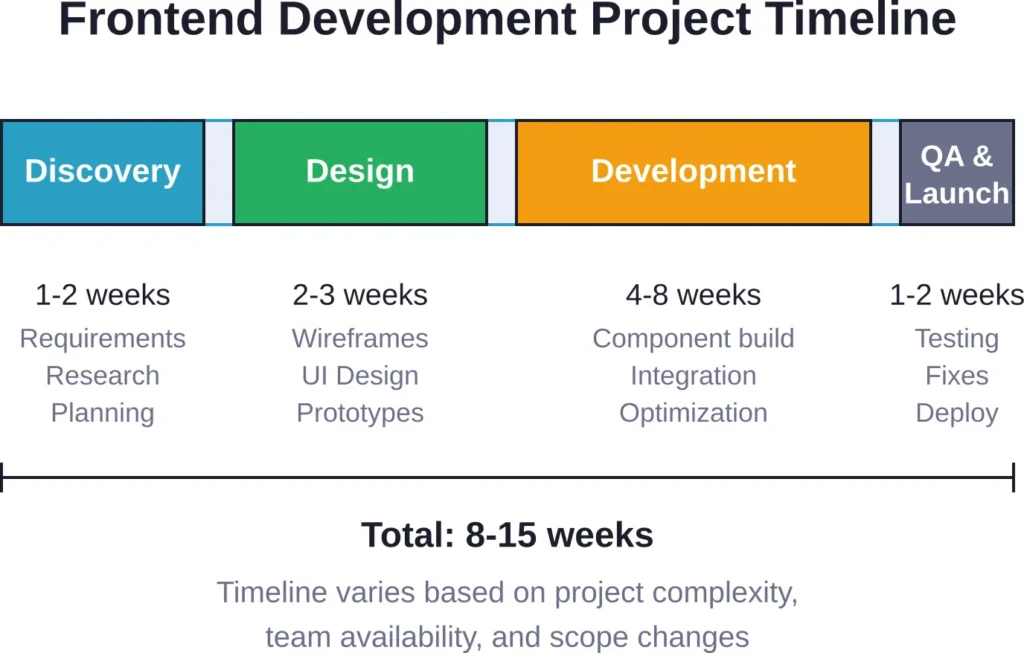
Skipping the discovery phase creates misaligned expectations. Agencies that propose solutions before understanding requirements either work from templates or make dangerous assumptions. Proper discovery prevents costly midstream corrections.
Underestimating ongoing maintenance needs creates problems. Websites and applications require updates, security patches, and feature additions. Agencies offering unsustainably low maintenance rates either provide poor service or unexpectedly raise prices.
Failing to verify technical claims leads to disappointment. Marketing materials promise expertise in every modern framework. Reviewing actual code samples, speaking with technical references, and asking detailed technical questions reveals genuine capabilities.
Neglecting communication compatibility causes friction. Technical excellence matters little if communication breakdowns prevent effective collaboration. Mismatched communication styles create frustration regardless of development quality.
Questions to Ask Potential Frontend Partners
Thorough vetting requires asking specific questions beyond generic capabilities discussions. These questions reveal agency approaches and potential red flags.
“Can you show us the actual code from a recent project?” reveals code quality, documentation practices, and technical sophistication. Agencies reluctant to share code samples may hide poor practices.
“How do you handle performance optimization?” distinguishes agencies that treat performance as afterthought from those building it into development processes. Look for specific answers about code splitting, lazy loading, and Core Web Vitals.
“What happens when requirements change mid-project?” tests flexibility and change management processes. The best agencies acknowledge that requirements evolve and have structured processes for handling changes without derailing projects.
“Who will actually work on our project?” prevents bait-and-switch scenarios where senior developers handle sales but junior staff execute projects. Meeting the actual team provides clarity.
“How do you approach accessibility?” reveals whether agencies treat accessibility as compliance checkbox or fundamental design principle. Strong answers include specific WCAG success criteria and testing methodologies.
“What’s your testing process?” distinguishes thorough agencies from those shipping buggy code. Look for answers covering automated testing, cross-browser verification, and device testing.
“How do you measure project success?” identifies whether agencies focus on delivering features or achieving business outcomes. The best partners care about conversion rates, user engagement, and business metrics.
The Real Cost of Frontend Development
Understanding cost structures helps set realistic budgets and evaluate proposals accurately. Frontend development costs vary dramatically based on multiple factors.
Complexity drives costs more than page count. A simple five-page website with custom animations and complex interactions costs more than a twenty-page site using standard patterns. Technical sophistication matters more than content volume.
Design requirements significantly impact budgets. Custom illustrations, sophisticated animations, and unique interactions require more design and development time than template-based approaches.
Integration complexity affects timelines and costs. Connecting to existing systems, APIs, and databases adds technical challenges. Each integration point requires development time, testing, and ongoing maintenance.
Quality assurance thoroughness influences both immediate costs and long-term value. Agencies that test extensively across browsers, devices, and use cases cost more upfront but deliver fewer post-launch surprises.
Ongoing maintenance represents substantial additional expense. Security updates, framework updates, and feature additions continue beyond initial launch. Budgeting only for initial development creates future problems.
Geographic location affects rates but shouldn’t override quality considerations. Offshore agencies offer lower hourly rates but communication challenges, time zone differences, and variable quality offset savings.
Frequently Asked Questions
Prioritize verified client reviews, portfolio relevance to your project type, specific technical expertise in required frameworks, transparent communication practices, and realistic timeline estimates. Check actual code samples when possible and speak with previous clients about their experience beyond initial launch. Strong agencies demonstrate both technical capabilities and project management maturity.
Medium-complexity projects typically require 8-15 weeks from discovery through launch. Simple websites may complete in 4-6 weeks, while complex applications can extend to 6 months or longer. Timelines depend on project scope, design complexity, integration requirements, client feedback cycles, and team availability. Agencies promising unusually fast delivery often cut corners that create problems later.
Choose specialized frontend agencies when you have strong internal design capabilities and need pure implementation expertise. Full-service agencies work better when you need integrated design, branding, and development from a single partner. Specialized agencies typically offer deeper technical knowledge in specific frameworks, while full-service agencies provide coordinated multidisciplinary teams.
Verified reviews on platforms like Clutch provide valuable insight into actual client experiences. Look for patterns across multiple reviews rather than focusing on single testimonials. Pay attention to how agencies handled challenges, communication quality, timeline adherence, and post-launch support. Consistent high ratings across multiple reviews demonstrate strong client satisfaction, while patterns of communication complaints signal red flags.
Leading agencies demonstrate expertise in React, Vue, or Angular—the dominant modern frameworks. Next.js capabilities indicate understanding of server-side rendering and performance optimization. Knowledge of state management libraries, component architecture patterns, and performance optimization techniques matters more than framework quantity. Agencies claiming expertise in every technology often lack depth in any.
Establish detailed requirements during discovery phase, document all agreed features clearly, implement formal change request processes, and maintain regular communication about progress and challenges. Professional agencies help clients understand implications of changes on timeline and budget before implementing them. Structured project management with defined milestones prevents gradual feature expansion that derails projects.
Frontend development focuses exclusively on user interface implementation—what users see and interact with in browsers. Full-stack development includes both frontend and backend (server-side logic, databases, APIs). For projects requiring sophisticated user interfaces, specialized frontend agencies often deliver better results than generalist full-stack teams. Backend integration can be coordinated with your existing technical teams or separate backend specialists.
Making Your Final Decision
Choosing a frontend development partner represents a significant business decision. The right agency accelerates digital initiatives, while the wrong choice creates expensive problems and delays.
Start by clearly defining project requirements, technical needs, and business goals. Vague requirements lead to misaligned proposals. Detailed requirement documentation enables accurate estimates and prevents misunderstandings.
Evaluate multiple agencies from this list based on your specific needs. No single agency suits every situation. Match agency specializations to project requirements—don’t hire an enterprise-focused agency for a simple marketing site or a boutique creative shop for complex application development.
Request detailed proposals including technical approach, timeline breakdown, team composition, and communication processes. Generic proposals suggest agencies haven’t fully understood requirements. Detailed proposals demonstrate thoughtful planning.
Check references thoroughly. Speak with previous clients about communication quality, problem-solving approaches, and how agencies handled unexpected challenges. The best agencies aren’t perfect—they’re responsive when problems arise.
Trust matters as much as technical skill. You’ll work closely with your chosen agency for months. Choose partners whose communication style matches organizational preferences and whose values align with company culture.
The frontend development landscape in 2026 offers exceptional options for businesses seeking to build sophisticated web experiences. These 15 companies represent proven partners with verified track records, technical depth, and satisfied clients.
Your specific needs determine which agency fits best. Take time to evaluate thoroughly. The right partnership delivers not just a completed project, but a competitive digital presence that drives business results for years.
Ready to start your frontend development project? Reach out to the agencies that match your requirements, share your vision, and begin conversations about bringing your digital product to life.