

Quick Summary: The best funeral home web design companies combine compassionate aesthetics with practical functionality, offering obituary management, mobile optimization, and local SEO expertise. Leading agencies specialize in the unique needs of death care professionals, creating digital experiences that serve grieving families with dignity while helping funeral homes compete in an increasingly online-first marketplace.
The digital front door matters more than ever in the death care industry. When families face loss, most begin their search for funeral services online, often late at night when grief hits hardest.
A funeral home website isn’t just another business site. It needs to radiate compassion while handling sensitive tasks like obituary posting, service scheduling, and floral arrangements. The wrong design can alienate grieving families at their most vulnerable moment.
But here’s the thing—not every web design agency understands the funeral industry’s unique demands. Generic marketing agencies often miss the mark on tone, functionality, and regulatory compliance.
This guide examines the agencies that get it right. These 15 companies specialize in creating websites that honor both the deceased and the families left behind, while helping funeral homes thrive in an increasingly competitive digital landscape.
Why Funeral Home Websites Need Specialized Design
General web design doesn’t cut it for death care services. The funeral industry operates under constraints that don’t apply to restaurants, retail stores, or even other service businesses.
Tone presents the first challenge. A funeral home site must balance professionalism with warmth, authority with empathy. Too corporate and it feels cold. Too casual and it seems disrespectful.
Functionality creates the second hurdle. Families need to access obituaries at 3 AM, send flowers from their phones, and find service details without hunting. Since approximately 80% of internet users search online even for funeral services, mobile responsiveness isn’t optional—it’s essential.
WordPress powers over 40% of the internet (a widely cited statistic), and custom WordPress builds offer funeral homes the ultimate flexibility for integrating obituary management, tribute pages, and grief resources. But customization requires expertise specific to the death care sector.
Local SEO determines whether families find a funeral home when they search “funeral services near me” or discover competitors instead. Industry reports suggest that an integrated flower shop can generate between $500 and $2,000 per month in commission, often covering website costs entirely.
What Makes a Great Funeral Home Web Design Company
The best agencies share several characteristics that separate them from general web designers dabbling in funeral services.
Death Care Industry Experience
Agencies with funeral home portfolios understand regulatory requirements, family expectations, and industry terminology. They know that “cremation services” and “memorial services” aren’t interchangeable terms and that certain language comforts while other phrasing alienates.
Experience translates to fewer revision rounds and faster launches. Designers who’ve built dozens of funeral sites anticipate needs that generalists miss entirely.
Obituary and Tribute Systems
Modern funeral websites need robust obituary management. Families should be able to submit information, upload photos, and share memories without calling the funeral home office.
The software must handle unlimited photos in premium configurations, integrate charity donation options, and provide shareable memorial pages that work across social platforms.
Mobile-First Design Approach
Grieving families access funeral information from smartphones more often than desktops. Sites that don’t load quickly on mobile or require constant pinching and zooming create frustration when empathy matters most.
Testing shows mobile speed directly impacts how long families stay on a site and whether they call to arrange services.
Local SEO Capabilities
Funeral homes serve specific geographic areas. The right agency optimizes for local search, ensuring the business appears in Google Maps results and location-based searches.
This includes proper schema markup, location pages for multiple chapels, and content strategies that target neighborhood-specific keywords without feeling manipulative.
Ongoing Support and Updates
Funeral home websites aren’t “set it and forget it” projects. Obituaries need posting, service times require updates, and seasonal content keeps sites fresh.
Great agencies offer maintenance packages that handle technical updates, security patches, and content changes so funeral directors can focus on serving families.
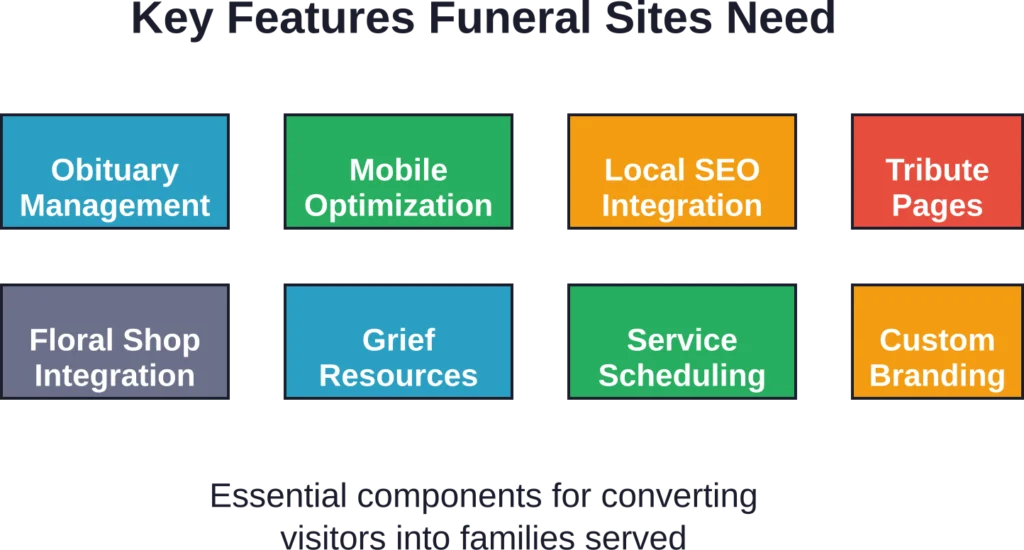
Top 15 Funeral Home Web Design Companies
These agencies have proven track records creating websites specifically for funeral homes, cremation services, and memorial providers. Each brings unique strengths to death care web design.
1. Mobian Studio
Mobian Studio creates dedicated engineering teams that deliver production-ready digital solutions for funeral homes and death care providers. They specialize in building respectful, high-quality websites and applications that help families during their most difficult moments.
Their approach includes end-to-end product development with clean architecture and intuitive design. Funeral homes benefit from mobile-responsive websites, secure memorial tools, and streamlined online arrangement systems that families can navigate with ease and dignity.
Mobian excels at legacy integration and scalable architecture, allowing funeral homes to modernize their digital presence without disruption. They also bring expertise in AI-powered solutions to improve family communication, tribute management, and operational efficiency while maintaining the highest standards of sensitivity and professionalism.
Contact Information:
- Website: mobian.studio
- Phone: [email protected]
- Address: Harju maakond, Tallinn, Kesklinnalinnaosa, Masina tn 22, 10113
- LinkedIn: www.linkedin.com/company/mobian-studio

2. Oski
Oski builds smart, well-engineered software solutions specifically adapted for forward-thinking funeral homes and death care organizations. With deep expertise in cloud infrastructure and modern web technologies, they create stable, respectful digital experiences for families.
Their frontend and backend development capabilities deliver elegant, mobile-responsive funeral home websites with intuitive navigation suitable for all age groups. Oski integrates powerful features such as secure online arrangement forms, memorial video hosting, and real-time obituary updates.
The company also brings artificial intelligence and automation expertise to help funeral homes improve efficiency in family communications and internal processes while maintaining the highest standards of care and professionalism in every digital interaction.
Contact Information:
- Website: oski.site
- Phone: +48571282759
- Email: [email protected]
- Address: Kaupmehe tn 7, 10114 Tallinn, Estonia
- LinkedIn: www.linkedin.com/company/oski-solutions
3. Lengreo
Lengreo operates as a complete marketing and technology partner with a sharp focus on the death care industry. They help funeral homes strengthen their online presence through targeted strategies that drive qualified leads and meaningful family connections.
Their services include comprehensive digital marketing strategy, SEO optimization for local funeral searches, and custom website development tailored specifically for funeral homes. They build professional, respectful websites with integrated obituary systems, pre-need inquiry forms, and seamless user experiences that honor the sensitivity of the industry.
Lengreo excels at lead generation and appointment setting through hyper-personalized outreach, LinkedIn campaigns, and conversion rate optimization. This helps funeral homes attract more families actively seeking services while maintaining dignity and trust. Their paid advertising and content marketing approaches ensure funeral homes appear prominently when families need them most.
Contact Information:
- Website: lengreo.com
- Phone: +31 686 147 566
- Email: [email protected]
- Address: Vrijstraat 9 C/D, 5611 AT Eindhoven, Netherlands
- LinkedIn: www.linkedin.com/company/lengreo
- Instagram: www.instagram.com/lengreo.agency
- Twitter: x.com/Lengreo

4. Gilzor
Gilzor specializes in custom software development and digital solutions designed for the unique needs of funeral homes and death care providers. They help funeral businesses launch and scale respectful online platforms that families can trust during difficult times.
Their full-cycle development services cover everything from UI/UX design focused on simplicity and empathy to robust web and mobile applications. Funeral homes benefit from custom obituary management systems, memorial tribute tools, and secure pre-planning portals that improve family experience while streamlining operations.
With strong expertise in idea validation, business analysis, and go-to-market strategy, Gilzor ensures funeral home websites not only look professional but also effectively connect with local communities. Their quality assurance and ongoing support keep platforms reliable when families need them most.
Contact Information:
- Website: www.gilzor.com
- Email: [email protected]
- Address: Poland, Warsaw, Office 58, street Adama Mickiewicza 37, 01-625
- LinkedIn: www.linkedin.com/company/gilzor-softwaredevelopment
5. A-Listware
A-Listware provides dedicated software development and IT consulting services with proven experience supporting service-oriented businesses, including those in the funeral industry. They focus on building reliable, secure digital platforms that enhance community trust.
Their offerings include custom software development, team augmentation, and legacy system modernization for funeral homes looking to upgrade their online presence. This results in professional websites featuring integrated management tools, easy-to-use tribute pages, and strong security measures appropriate for handling sensitive family information.
A-Listware delivers end-to-end solutions including UX/UI design, testing, and infrastructure services, ensuring funeral homes receive high-quality, responsive websites that operate seamlessly and reflect the dignity of their profession.
Contact Information:
- Website: a-listware.com
- Phone: +1 (888) 337 93 73
- Email: [email protected]
- Address: North Bergen, NJ 07047, USA
- LinkedIn: www.linkedin.com/company/a-listware
- Facebook: www.facebook.com/alistware
6. Passare (CFS Passare)
Passare approaches funeral home websites as components of broader operational systems. Their platform connects web presence with case management, arrangement rooms, and family communication in a unified ecosystem.
Web design from Passare prioritizes information flow between funeral directors and families. Arrangement forms, service preferences, and documentation requests happen through the website, reducing phone tag and in-person visits families might find emotionally draining.
The platform includes collaboration features that let families plan services together even when scattered across different cities. This capability matters increasingly as families become more geographically dispersed and in-person planning meetings grow more difficult.
Passare also offers analytics showing which website pages families visit most, how long they spend reading grief resources, and which service options generate the most interest. These insights inform both web design improvements and business strategy.

7. Osiris Creative
Osiris Creative brings advertising agency thinking to funeral home web design. Their team includes copywriters, designers, and strategists who craft messaging that differentiates funeral homes in crowded markets.
Rather than generic “serving families since 1950” copy, Osiris develops positioning that highlights what makes each funeral home unique—whether that’s eco-friendly burial options, veteran service expertise, or cultural specialization.
Their design aesthetic skews contemporary, appealing to younger families planning services while maintaining the dignity older families expect. This balance helps funeral homes attract next-generation clientele without alienating current customers.
Osiris provides comprehensive digital marketing beyond just web design, including social media management, Google Ads campaigns, and email marketing automation. This integrated approach ensures consistent messaging across all digital touchpoints.

8. Funeral Tech
Funeral Tech specializes in cutting-edge features that position funeral homes as technology leaders. Their sites incorporate virtual reality chapel tours, AI-powered chatbots that answer common questions 24/7, and appointment scheduling that integrates with funeral directors’ calendars.
The agency focuses on conversion optimization, A/B testing different layouts, calls-to-action, and form designs to maximize the percentage of visitors who contact the funeral home. Industry data suggests well-optimized sites can increase applications by 15-20% without increasing traffic.
Funeral Tech builds sites with headless CMS architecture, separating content from presentation in ways that make future redesigns faster and less expensive. This technical approach also improves site speed and security.
Their platform includes robust analytics and heatmapping that show exactly where visitors click, how far they scroll, and where they abandon forms. These insights drive continuous improvement rather than one-time launches.
9. Funeral Directors Web
Funeral Directors Web caters specifically to independent and family-owned funeral homes rather than large corporate chains. Their designs emphasize local heritage, family ownership stories, and community connections that independents use to compete against corporate competitors.
The agency offers flexible month-to-month contracts rather than requiring long-term commitments, reducing risk for funeral homes testing professional web design for the first time.
Funeral Directors Web includes educational resources teaching funeral home staff basic website updates, blog post creation, and social media integration. This knowledge transfer creates independence and reduces ongoing costs.
Their sites include charity integration features, allowing families to direct memorial donations to specific causes. This capability matters to modern families who increasingly choose charitable giving over traditional flowers.

10. DISRUPT Media
DISRUPT Media brings an outsider’s perspective to funeral home web design, questioning industry assumptions and pushing creative boundaries further than traditional agencies.
Their designs sometimes polarize funeral directors but consistently perform well with families, particularly younger demographics. DISRUPT uses bolder colors, more casual language, and interactive features uncommon in conservative funeral websites.
The agency specializes in social media integration, creating shareable content that extends funeral home reach beyond paid advertising. Their approach recognizes that families discover funeral homes through Facebook posts, Instagram stories, and online reviews as much as Google searches.
DISRUPT also offers video production services, creating staff introduction videos, facility tours, and educational content that humanizes funeral homes and builds trust before families ever visit in person.

11. Funeral Directors Life (FDL Digital)
FDL Digital operates as a subsidiary of Funeral Directors Life Insurance Company, giving them deep roots in the death care industry. This agency understands funeral home operations from the inside because they’ve served funeral directors for decades through insurance products.
Their web design services focus exclusively on funeral homes and don’t dilute expertise across unrelated industries. Sites built by FDL Digital typically include comprehensive obituary systems, pre-need arrangement forms, and integration with funeral home management software.
The agency emphasizes turnkey solutions that don’t require funeral directors to become web experts. Templates offer starting points, but customization ensures each site reflects the individual funeral home’s brand and community standing.
FDL Digital handles hosting, security certificates, and technical maintenance, removing technology headaches from funeral directors’ plates. Their support team speaks the industry’s language and responds to urgent requests—like posting an obituary outside business hours—with appropriate priority.
12. Funeralwise
Funeralwise positions itself as a technology partner for the death care industry rather than just a web design vendor. Their platform combines website design with marketing automation, lead tracking, and family communication tools.
The company specializes in custom WordPress builds tailored to funeral home workflows. Each site includes mobile-responsive design, ADA compliance features, and page speed optimization that keeps mobile load times under three seconds.
Funeralwise integrates with major funeral home management systems, allowing information to flow between websites and back-office software without duplicate data entry. This integration reduces errors and keeps obituary information current across all platforms.
Their approach includes ongoing content strategy, helping funeral homes maintain blogs that answer family questions about cremation, burial, pre-planning, and grief. This content serves families while improving search engine rankings for competitive keywords.

13. Frazer Consultants
Frazer Consultants brings over three decades of funeral service experience to web design projects. They’ve built thousands of funeral home websites and understand regional differences in funeral customs, terminology, and family expectations.
Their design process starts with comprehensive discovery calls that examine each funeral home’s unique value proposition, competitive landscape, and target demographics. This research informs site architecture and messaging that resonates with local communities.
Frazer specializes in video integration, recognizing that families increasingly want to livestream services or create video tributes. Their sites handle streaming without requiring funeral homes to master complex broadcast technology.
The agency also provides reputation management services, helping funeral homes monitor and respond to online reviews across Google, Facebook, and industry-specific platforms. In an era when families research funeral homes like they research restaurants, reputation management protects and enhances community standing.

14. Tukios
Tukios focuses on the intersection of technology and storytelling in death care. Their platform helps funeral homes create compelling visual tributes, memorial videos, and online memorials that families cherish and share.
Web design services from Tukios center on visual storytelling capabilities. Sites include robust photo galleries, video hosting, and slideshow creation tools that families can use independently without calling the funeral home for technical help.
The platform includes grief support resources, meditation guides, and planning checklists that position funeral homes as long-term partners rather than one-time service providers. These resources keep families connected to the funeral home’s website long after services conclude.
Tukios also provides employee training, ensuring funeral home staff can update websites, post obituaries, and manage tributes confidently. This training investment maximizes the platform’s value and reduces dependence on external support.

15. CFS Funeral Websites
CFS (Carriage Funeral Services) Websites specializes in clean, elegant designs that never feel cluttered or overwhelming. Their aesthetic philosophy emphasizes white space, readable typography, and intuitive navigation that elderly visitors can use without confusion.
The company offers tiered service levels, from template-based sites for smaller funeral homes to completely custom designs for larger operations with multiple locations. This flexibility makes professional web design accessible regardless of budget.
CFS builds sites with extensive local SEO optimization, including location-specific landing pages, schema markup for funeral businesses, and Google My Business integration. These technical elements help funeral homes dominate local search results.
Their obituary system allows unlimited posts without per-obituary fees, removing financial disincentives to showcasing every family served. This approach generates more content, which search engines reward with better rankings.
Platform vs. Agency: Understanding the Difference
When researching funeral home web design, funeral directors encounter both platform providers and custom agencies. Understanding the distinction helps match solutions to needs.
Website Platforms
Platforms offer templated solutions with funeral-specific features built in. Funeral homes select a design template, customize colors and content, and launch relatively quickly.
These solutions typically cost less upfront and include hosting, security, and technical maintenance in monthly or annual fees. Updates and new features roll out automatically to all users.
The tradeoff involves limited customization. Funeral homes using the same platform may have similar-looking sites, and unique features require choosing a different platform or accepting limitations.
Custom Web Design Agencies
Agencies build sites from scratch or heavily customize WordPress themes to create unique designs. Every element gets tailored to the specific funeral home’s brand, community, and competitive position.
Custom development costs more initially and requires longer timelines—typically 6-12 weeks versus 2-4 weeks for platforms. But the result reflects the funeral home’s identity rather than generic industry aesthetics.
Agencies also provide strategic consulting, competitive analysis, and long-term digital marketing planning that platforms rarely include.
Hybrid Approaches
Some providers blur these lines, offering robust platforms with extensive customization options. These solutions provide funeral-specific features like obituary management while allowing design flexibility.
Funeral homes should assess technical comfort, budget, timeline, and differentiation needs when choosing between approaches. Smaller operations often succeed with platforms, while larger funeral homes benefit from custom agency work.
Essential Features Every Funeral Home Website Needs
Regardless of which company builds the site, certain capabilities matter for all funeral home websites.
Obituary Management System
Families need easy obituary access with search functions by name and date. The system should accept photos, service information, and allow family members to leave condolences and share memories.
Administrative interfaces must let funeral home staff post obituaries quickly, even from mobile devices when urgent situations arise.
Service Information and Pre-Planning Resources
Clear descriptions of burial, cremation, memorial services, and pre-need planning help families understand options before emotional in-person meetings. Educational content positions funeral homes as trusted advisors.
Download forms for planning worksheets and pre-arrangement information capture leads while providing genuine value.
Staff Profiles and Facility Photos
Families feel more comfortable working with funeral directors they’ve “met” through staff bio pages with professional photos and personal information. Facility photos reduce anxiety about visiting during difficult times.
Virtual tours serve families researching options late at night or those unable to visit in person due to distance.
Mobile-Responsive Design
With most funeral home website traffic now coming from mobile devices, responsive design isn’t optional. Text must remain readable without zooming, buttons need appropriate size for finger tapping, and forms should work on smartphone screens.
Mobile speed particularly matters—sites that take more than three seconds to load lose significant percentages of visitors.
Local SEO Elements
Proper schema markup tells search engines what the business does, where it operates, and when it’s available. Location pages for each chapel or service area help rank for geographic searches.
Google My Business integration keeps business information synchronized between the website and Google Maps results.
Integration Capabilities
Modern funeral home websites should integrate with floral vendors (generating commission income), grief support resources, livestreaming platforms, and funeral home management software.
These integrations reduce duplicate data entry and provide seamless family experiences across touchpoints.
| Feature Category | Essential Elements | Business Impact |
|---|---|---|
| Obituary System | Search, photos, condolences, sharing | Serves families, generates traffic, improves SEO |
| Service Information | Burial, cremation, memorial options, pre-planning | Educates families, generates leads |
| Staff & Facilities | Bios, photos, virtual tours | Builds trust, reduces anxiety |
| Mobile Design | Responsive layout, fast loading, touch-friendly | Serves mobile users (majority of traffic) |
| Local SEO | Schema markup, location pages, GMB integration | Improves local search rankings |
| Integrations | Floral vendors, streaming, management software | Generates revenue, improves efficiency |
Questions to Ask Before Hiring a Funeral Home Web Designer
Smart funeral directors vet agencies carefully before committing. These questions reveal whether a company truly understands death care or just dabbles in it.
How Many Funeral Home Websites Have You Built?
Agencies with extensive funeral portfolios bring pattern recognition that accelerates projects and prevents common mistakes. Ask to see examples and check whether those sites still look current.
Do You Understand Funeral Home Compliance Requirements?
Funeral homes operate under FTC regulations, state licensing requirements, and cemetery rules. Web content, forms, and disclaimers must comply with these regulations. Experienced agencies know what’s required without funeral directors having to educate them.
How Do You Handle Obituary Posting and Updates?
Clarify whether funeral home staff will post obituaries independently or whether each posting requires contacting the agency. Understand the process for urgent updates and after-hours situations.
What Happens to the Website if We Stop Working Together?
Some agencies host sites on proprietary platforms, meaning funeral homes lose everything if the relationship ends. Others build on WordPress or standard platforms that transfer easily. Understand ownership terms before signing contracts.
How Do You Measure Website Success?
Agencies should discuss metrics like organic search traffic, conversion rates, mobile performance scores, and search ranking improvements. Avoid agencies that can’t articulate how they’ll measure results.
What’s Included in Ongoing Support?
Clarify what “maintenance” includes—security updates only, or also content changes and technical support? Understand response times for different issue types and whether support costs extra.
Cost Considerations for Funeral Home Web Design
While specific pricing varies by company, scope, and location, understanding general investment levels helps funeral homes budget appropriately.
Initial Development Investment
Template-based platforms typically require lower upfront costs, while custom designs command premium pricing reflecting the expertise and hours involved.
Most successful directors view websites as investments with measurable return rather than expenses to minimize. One pre-need contract generated through the website can justify years of web expenses.
Ongoing Monthly or Annual Fees
Hosting, security certificates, software licenses, and support typically come with recurring fees. These might be bundled into monthly payments or billed annually.
Integrated features like floral shops can offset these costs through commission income, with typical ranges falling between $500-$2,000 monthly depending on volume.
Hidden Costs to Consider
Some platforms charge per-obituary fees, transaction fees on floral orders, or fees for additional users accessing the administrative system. Clarify all potential charges before committing.
Also consider costs for photos, copywriting, or video production if those aren’t included in quoted pricing.
ROI Calculations
Smart funeral directors calculate cost-per-acquisition from website leads compared to other marketing channels. Digital marketing often delivers better ROI than traditional print advertising, direct mail, or broad-market radio spots.
Tracking phone calls, form submissions, and pre-need inquiries from the website quantifies its value beyond aesthetics.
Common Mistakes Funeral Homes Make with Websites
Even with professional design help, some funeral homes undermine their web presence through avoidable mistakes.
Treating the Website as a One-Time Project
Launching a website isn’t the finish line. Successful funeral homes continually update content, add blog posts answering family questions, and refine based on performance data.
Sites that launch then sit unchanged for years signal to families and search engines alike that the funeral home isn’t actively engaged.
Focusing Only on Aesthetics
Beautiful design matters, but functionality determines whether sites convert visitors into families served. User experience, load speed, and intuitive navigation often matter more than striking visuals.
Neglecting Mobile Users
Testing sites only on desktop computers misses how most families actually access funeral information. What looks perfect on a 27-inch monitor might be unusable on a smartphone.
Using Industry Jargon
Terms familiar to funeral directors confuse families. Clear, compassionate language serves families better than technical funeral industry terminology.
Hiding Important Information
Contact information, service options, and planning resources should be prominent and accessible from every page. Making families hunt for basic information creates frustration at precisely the wrong time.
Ignoring Search Engine Optimization
Beautiful websites that don’t rank in search results serve only families who already know the funeral home’s name. SEO ensures new families can discover services when searching for help.

The Future of Funeral Home Web Design
Web design continues evolving, and funeral homes benefit from understanding emerging trends.
AI-Powered Personalization
Artificial intelligence increasingly tailors website content to individual visitors based on their behavior, location, and apparent needs. Families researching cremation see different content than those exploring traditional burial.
Voice Search Optimization
As families use Siri, Alexa, and Google Assistant to find local services, funeral home sites need optimization for conversational queries like “funeral homes near me open now” rather than just typed keywords.
Virtual Reality Experiences
Some innovative funeral homes now offer VR chapel tours and ceremony previews. This technology helps distant family members participate in planning and provides comfort to those anxious about facility visits.
Enhanced Security and Privacy
As data privacy regulations expand and cyber threats evolve, funeral home websites need robust security protecting sensitive family information. Modern platforms include encryption, secure forms, and compliance with privacy regulations.
Accessibility Standards
Web accessibility ensures sites work for visitors with visual, hearing, motor, or cognitive disabilities. Beyond being the right thing to do, accessibility compliance increasingly affects search rankings and legal liability.
Making Your Decision
Selecting a funeral home web design company requires balancing expertise, approach, features, and cultural fit.
Start by clarifying goals—is the priority generating pre-need leads, improving community perception, or simply having modern online presence? Different agencies excel at different objectives.
Request proposals from 3-4 companies on this list, providing the same information to each for comparable responses. Compare not just what they’ll build but how they communicate, their understanding of funeral service, and their approach to measuring success.
Check references, specifically asking other funeral directors about responsiveness, project management, and long-term satisfaction. The cheapest option rarely delivers the best value.
Remember that websites aren’t finished products. Choose an agency that views the launch as the beginning of an ongoing partnership rather than the conclusion of a transaction.
The right funeral home web design company combines technical expertise with genuine understanding of death care’s unique demands. They’ll create sites that honor both the families being served and the funeral homes serving them.
Frequently Asked Questions
Template-based platforms typically launch within 2-4 weeks, while custom designs require 6-12 weeks depending on complexity, content readiness, and revision rounds. Rush projects cost more and often compromise quality. The discovery phase, where agencies learn about the funeral home’s brand and community, shouldn’t be rushed since it informs all subsequent design decisions. Factor in time for content creation, photography, and stakeholder reviews when planning timelines.
Most modern funeral home websites include content management systems allowing staff to post obituaries, update service times, add blog posts, and modify basic content without technical expertise. Agencies typically provide training during website launch. More complex changes like design modifications, new page creation, or feature additions usually require agency assistance. The level of independence varies by platform—some offer extensive self-service capabilities while others require more agency involvement for changes.
Website accessibility benefits all visitors and reduces legal risk from discrimination claims under the Americans with Disabilities Act. While court interpretations vary, best practices include proper heading structure, alt text for images, keyboard navigation support, sufficient color contrast, and screen reader compatibility. Many modern web design agencies build accessibility into standard processes. Accessibility also improves search engine optimization since many accessibility best practices align with what search engines value.
Mobile optimization isn’t optional—it’s essential. Most funeral home website traffic now comes from smartphones and tablets, particularly from families researching late at night when grief strikes. Google’s search algorithm prioritizes mobile-friendly sites, meaning poor mobile experience hurts search rankings regardless of desktop quality. Mobile optimization includes responsive design that adapts to screen sizes, fast loading on cellular connections, touch-friendly buttons, and readable text without zooming. Sites that frustrate mobile users lose potential families to competitors.
Basic SEO—proper page titles, meta descriptions, heading structure, and quality content—should be built into any professional funeral home website. Ongoing advanced SEO including link building, technical optimization, and competitive keyword research often benefits from specialist help. Many funeral home web design agencies include foundational SEO in their services, with optional advanced packages for competitive markets. Funeral directors should understand SEO basics but rarely need to become experts themselves if working with qualified agencies.
Platforms provide templated solutions with funeral-specific features built in—select a template, customize content and colors, and launch quickly at lower cost. Multiple funeral homes use the same underlying platform, though customization reduces similarity. Custom websites get built from scratch or extensively modified from themes, creating unique designs that precisely match the funeral home’s brand. Custom development costs more and takes longer but delivers differentiation and flexibility platforms can’t match. Mid-size operations often succeed with platforms while larger funeral homes benefit from custom development.
Tracking mechanisms show which marketing channels generate calls, form submissions, and pre-need inquiries. Phone tracking numbers unique to the website attribute calls correctly. Form submissions capture source information. Google Analytics shows traffic sources and user behavior. Comparing cost-per-lead from the website against other marketing channels quantifies relative value. Since one pre-need contract typically covers years of website expenses, even modest lead generation delivers strong returns. Successful funeral directors track inquiries systematically rather than guessing at website impact.
Conclusion
The best funeral home web design companies understand that death care websites serve dual purposes—comforting grieving families while helping funeral businesses thrive.
These 15 agencies bring proven expertise building sites that balance compassion with conversion. They understand obituary management, tribute pages, grief resources, and local SEO specific to funeral service.
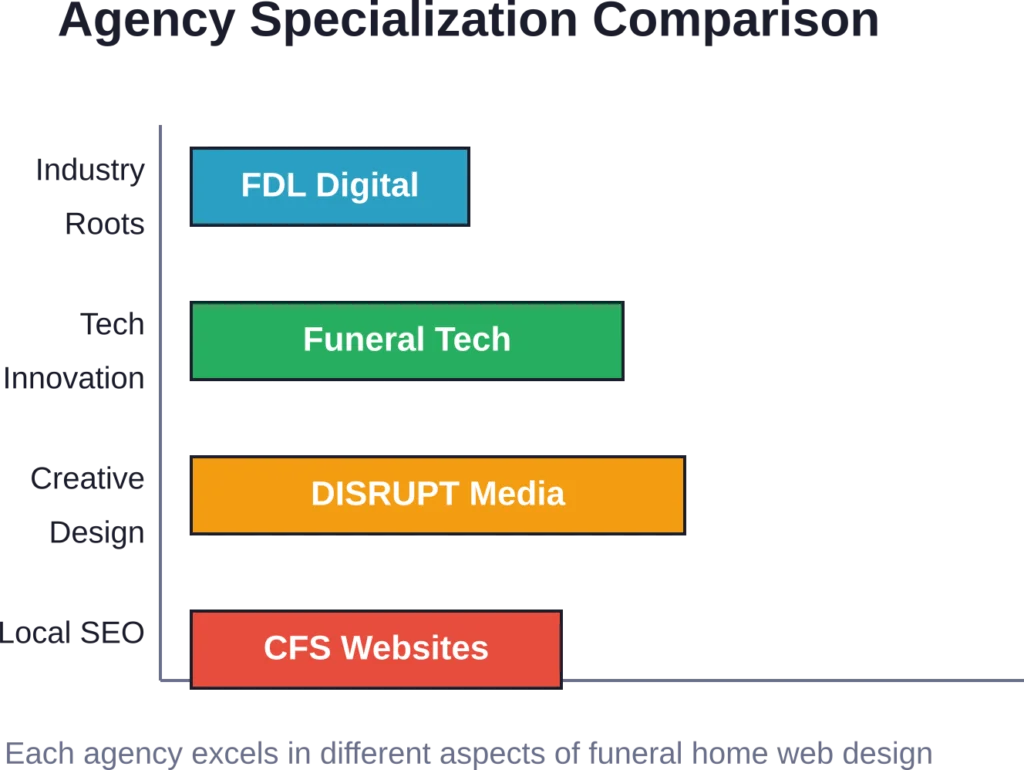
But the “best” agency depends on individual funeral home needs, market position, budget, and goals. Template platforms serve some operations perfectly while others require custom development. Technical innovation matters to some funeral directors while others prioritize traditional design and deep industry roots.
The common thread across successful projects involves treating websites as long-term investments rather than one-time expenses. Great funeral home sites evolve continuously, responding to family feedback, competitive changes, and technology advances.
Families increasingly begin their funeral planning journey online, often late at night when loss feels most overwhelming. The digital experience funeral homes provide during those vulnerable moments shapes perception, builds trust, and ultimately determines which funeral home families choose to guide them through life’s most difficult passages.
Ready to transform how families discover and connect with funeral services? Start by requesting proposals from three agencies on this list whose approaches align with the funeral home’s values and goals. The right partnership creates digital experiences worthy of the profound service funeral homes provide to families and communities.