

Quick Summary: Cracking your neck occasionally and gently is generally safe, but forcing it frequently or with excessive force can lead to joint instability, pinched nerves, pulled muscles, and in rare cases, blood vessel injury. The popping sound comes from gas bubbles releasing in the joint fluid. While occasional neck cracking isn’t necessarily harmful, persistent neck issues should be evaluated by a healthcare professional.
That satisfying pop when you twist your neck. Most people have done it at some point, usually after sitting too long or waking up stiff. But is cracking your neck actually bad for you?
The answer isn’t simple. According to Cleveland Clinic, forcing your neck to crack can lead to health issues like joint instability, a pinched nerve, a pulled muscle, or in rare cases, blood vessel injury. But occasional, gentle neck cracking? That’s usually harmless.
Here’s what matters: how often you’re doing it, how forcefully you’re twisting, and whether you’re using your hands to force the movement.
What Happens When Your Neck Cracks
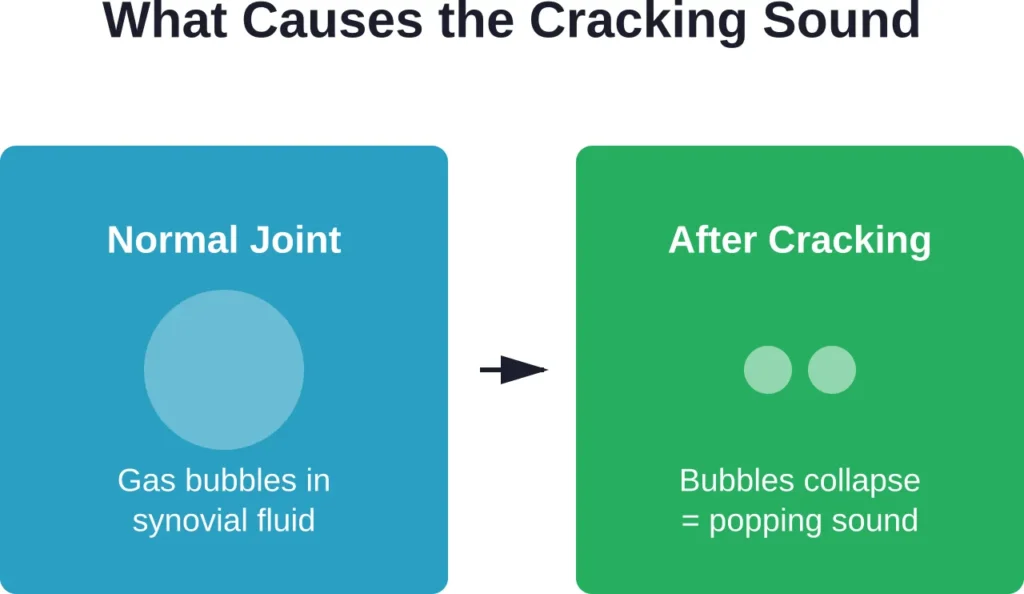
The popping or cracking sound comes from your cervical spine joints. Inside these joints sits synovial fluid, which cushions the bones and keeps everything moving smoothly.
When you stretch or move your neck, the pressure inside the joint changes. Gas bubbles that naturally exist in the fluid can suddenly collapse or form, creating that distinctive popping noise. Medical professionals call this cavitation.
That sound? It’s not your bones grinding together. It’s just gas.
When Neck Cracking Becomes a Problem
Occasional cracking when you naturally stretch isn’t the issue. The problem starts when people use their hands to forcefully twist their neck, seeking that release.
Potential risk factors associated with neck cracking include:
- You’re using your hands to force the rotation beyond natural range of motion
- You’re cracking your neck multiple times throughout the day
- You’re applying excessive force to get the crack
- You feel pain during or after the cracking
Some people report cracking their necks multiple times daily, often without realizing the cumulative strain they’re placing on cervical structures.
Joint Instability Over Time
Repeatedly forcing your neck to crack can stretch the ligaments that hold your cervical vertebrae in place. These ligaments provide stability. When they become loose, joints can move in ways they shouldn’t.
The result? More instability, which creates the urge to crack even more. It becomes a cycle.
Nerve and Muscle Damage
Your neck houses critical nerves that branch out to your shoulders, arms, and hands. Forceful twisting can pinch these nerves, leading to pain, numbness, or tingling that radiates down your arm.
Pulled muscles are another common consequence. The sudden, forceful motion can strain or tear muscle fibers, causing pain and stiffness that lasts days or weeks.
Vascular Risks
This is rare, but it’s the most serious risk. Major arteries run through your neck, supplying blood to your brain. Extreme neck manipulation can, in exceptional cases, damage these blood vessels.
While serious adverse events from cervical manipulation are considered rare, they remain possible. Artery damage can lead to stroke.
The Difference Between Self-Cracking and Professional Adjustment
Here’s where things get interesting. Chiropractors crack necks all the time. So what’s different?
Professional adjustment involves specific, controlled movements applied at precise angles. Chiropractors spend years learning anatomy and proper manipulation techniques. They know exactly how much force to apply and where.
When you twist your own neck, you’re essentially guessing. You can’t see what you’re doing, you don’t know which joint is actually moving, and you have no way to control the force distribution.
| Aspect | Self-Cracking | Professional Adjustment |
|---|---|---|
| Force Control | Uncontrolled, often excessive | Precise, measured force |
| Target Specificity | Random joint affected | Specific joint targeted |
| Frequency | Often multiple times daily | As needed, typically weekly or less |
| Risk Assessment | None | Medical history reviewed first |
| Technique | Twisting with hands | Varied techniques based on need |
That said, chiropractic manipulation carries its own risks. Research indicates that serious complications are rare, but they can occur.
Why Your Neck Feels Like It Needs Cracking
That urge to crack your neck usually comes from tension, stiffness, or poor posture. Sitting at a desk for hours, looking down at your phone, sleeping in awkward positions—these all strain neck muscles.
The temporary relief from cracking comes from stretching those tight muscles and stimulating nerve endings. But it doesn’t address the underlying problem.
According to Mayo Clinic, poor posture is one of the most common causes of neck pain and stiffness. Leaning over a computer or hunching at a workbench strains neck muscles continuously.
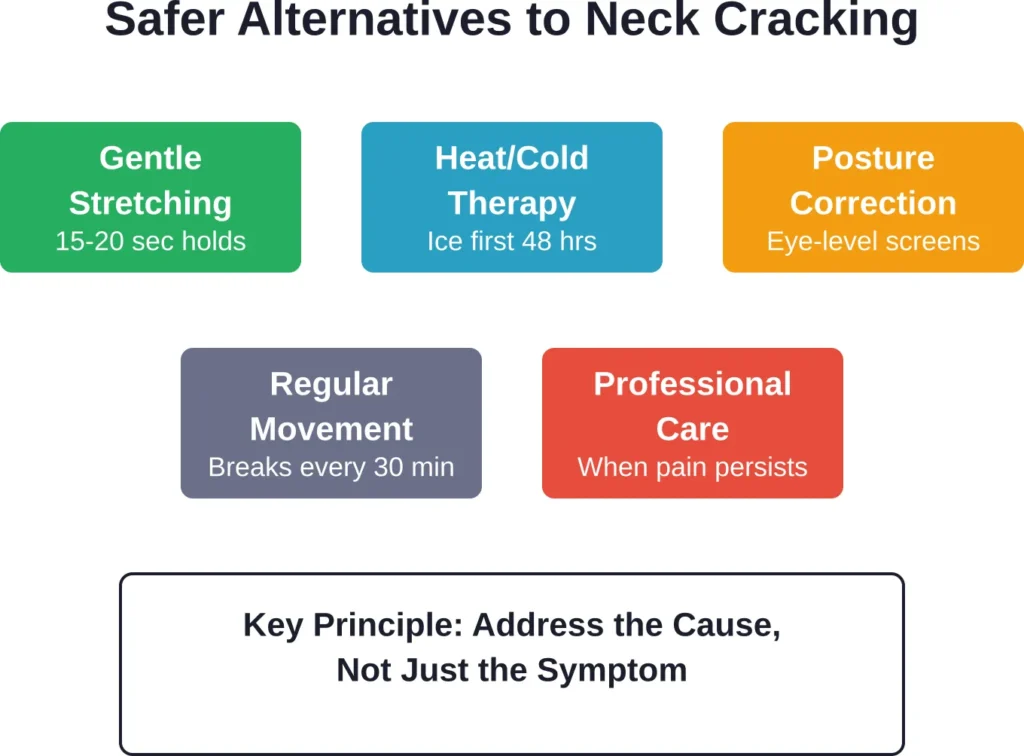
Safer Alternatives to Neck Cracking
Instead of forcing your neck to crack, try these approaches that address the root cause of stiffness:
Gentle Stretching
Slow, controlled neck stretches can relieve tension without the risks of forceful cracking. Tilt your head toward each shoulder, hold for 15-20 seconds, then release. Rotate slowly through your comfortable range of motion.
The key word? Gentle. Stop before you feel the urge to force anything.
Heat and Cold Therapy
For acute neck discomfort, Mayo Clinic recommends applying an ice pack wrapped in a thin towel for up to 15 minutes at a time during the first 48 hours. After that initial period, switch to heat therapy like a warm shower or heating pad.
Posture Correction
Address the source. Set up your workspace so your monitor is at eye level. Take breaks every 30-45 minutes to move around. Keep your phone at eye level instead of looking down constantly.
Better posture means less muscle strain, which means less urge to crack.
When to See a Healthcare Professional
Some situations require medical evaluation. Seek professional care if:
- Neck pain persists for more than a week despite self-care
- Pain is severe or worsening
- You experience numbness, tingling, or weakness in your arms or hands
- You develop headaches along with neck pain
- The cracking is accompanied by grinding sensations or sharp pain
Mayo Clinic notes that imaging tests like X-rays or MRIs may be necessary to identify underlying issues such as pinched nerves, herniated discs, or arthritis.
The Bottom Line on Neck Cracking
So, is it OK to crack your neck? Occasionally and gently—when it happens naturally during stretching—it’s generally harmless. The occasional pop isn’t going to cause problems.
But making it a habit, especially when you’re using force or cracking multiple times daily, introduces real risks. Joint instability, nerve damage, and muscle strain aren’t worth that momentary sense of relief.
Focus on addressing why your neck feels tight in the first place. Improve your posture, take movement breaks, and use gentle stretching. These approaches fix the problem rather than temporarily masking it.
And if neck issues persist? Get them checked out properly. Real solutions beat quick fixes every time.
Frequently Asked Questions
The sensation comes from stretching tight muscles, releasing pressure in the joints, and stimulating nerve endings. This triggers a temporary sense of relief and increased mobility. However, this feeling doesn’t mean the underlying tension or postural issues have been resolved.
Current research hasn’t established a direct link between occasional neck cracking and arthritis development. However, repeated forceful manipulation can damage joint structures and ligaments over time, potentially leading to instability and accelerated wear.
If you’re cracking your neck more than once or twice a day, or if you feel compelled to do it frequently, that’s likely excessive. The urge to crack repeatedly often indicates underlying muscle tension or joint issues that need proper treatment, not repeated manipulation.
Grinding sounds, called crepitus, can result from several factors including cartilage wear, bone surfaces moving past each other, or tendons snapping over bone structures. While often harmless, persistent grinding accompanied by pain warrants medical evaluation for conditions like osteoarthritis or disc degeneration.
Professional adjustment involves controlled, specific techniques applied by trained practitioners who understand cervical anatomy. While generally safer than forceful self-manipulation, chiropractic neck adjustment still carries some risk. Research indicates serious complications are rare but possible, so discuss risks and benefits with your healthcare provider.
Spontaneous cracking during normal movement is common and usually harmless. It occurs when joint position shifts naturally, changing pressure in the synovial fluid and causing gas bubbles to form or collapse. This differs from forcefully twisting your neck to produce a crack.
Forceful or frequent neck manipulation can strain muscles and irritate nerves that connect to the head, potentially triggering tension headaches. If headaches develop or worsen after neck cracking, stop the habit and consult a healthcare professional to rule out more serious issues.