
Quick Summary: Drinking a gallon of water daily isn’t necessary or recommended for most people. Research published in Nutrients journal found that total water intake in normally hydrated men ranged from 1.7 to 7.9 liters per day, and for women, the range was 1.3 to 6.1 liters daily, depending on factors like activity level, climate, and body size. While proper hydration is essential, excessive water intake can lead to water intoxication and dangerously low sodium levels.
Scroll through social media and you’ll see influencers chugging gallon jugs, claiming transformative health benefits. The trend has exploded. But does science actually back up drinking a gallon of water every single day?
The short answer? For most people, no. Water needs are highly individual, and forcing down 128 ounces daily could actually cause more harm than good.
Let’s break down what research really says about water intake, who might benefit from higher consumption, and the genuine risks of overhydration.
Understanding Your Body’s Water Needs
Water comprises from 75% of body weight in infants to 55% in elderly, according to NIH research. It’s essential for cellular homeostasis, temperature regulation, nutrient transport, and pretty much every metabolic process.
Here’s the thing though—water requirements aren’t one-size-fits-all.
Research published in Nutrients journal examined hydration patterns across healthy adults and found something fascinating: total water intake in normally hydrated men ranged from 1.7 to 7.9 liters per day. For women, the range was 1.3 to 6.1 liters daily.
That’s a massive spread. And it makes perfect sense when you consider the factors at play.
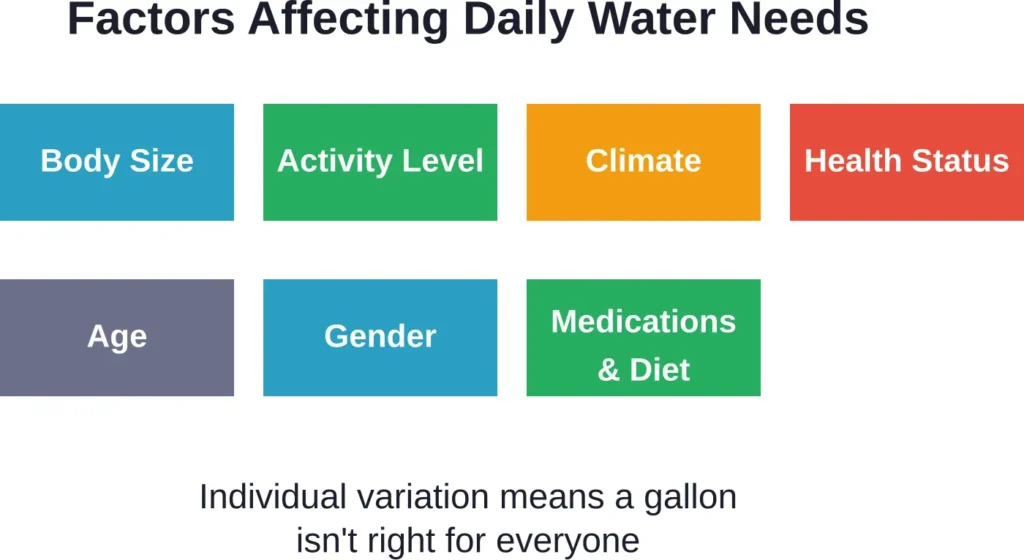
What Science Says About Water Intake Recommendations
Generally speaking, health organizations suggest adequate fluid intake rather than rigid targets. But when specific numbers do appear, they’re typically lower than a gallon.
Research shows mild neuroendocrine defense of body water commences when total water intake (TWI) is less than 1.8 L/24h. Research across various countries found that 19–71% of adults consume less than 1.8 liters daily.
The body is remarkably efficient at water regulation. According to NIH data, your body regulates total water volume to within 0.5% daily through sophisticated hormonal mechanisms involving vasopressin and kidney function.
Normal plasma osmolarity ranges from 285–295 mOsm/kg. Your body maintains this tight range through thirst signals and kidney adjustments. When you’re properly hydrated, forcing additional water doesn’t provide extra benefits—your kidneys just work harder to eliminate the excess.
Where Does Water Come From?
Here’s something people often miss: you don’t get water solely from beverages.
Food contributes about 20% of total water intake for most adults. Some fruits and vegetables are nearly 100% water by weight. European studies estimate food provides 20–30% of water intake, while research in four Chinese cities found it contributed 40%.
That means if you’re eating a diet rich in fruits, vegetables, soups, and other water-dense foods, your beverage needs decrease accordingly.
Who Might Actually Need a Gallon Daily?
Okay, so the blanket recommendation doesn’t hold up. But are there specific situations where drinking a gallon makes sense?
Absolutely.
Athletes and Active Individuals
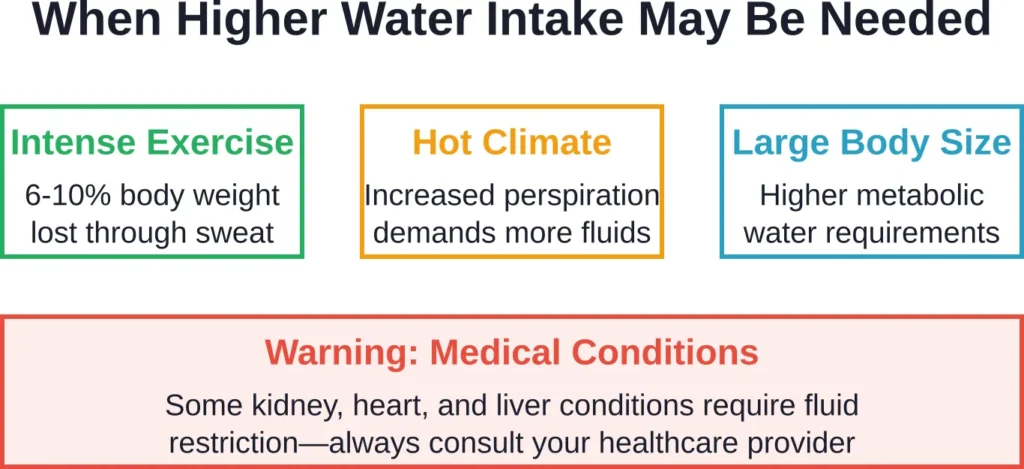
Athletes lose approximately 6–10% of body weight through sweat during prolonged athletic events. Even a 2% water loss noticeably impairs athletic performance.
If you’re training intensely, especially in heat, your water needs can easily reach or exceed a gallon. But here’s the catch—you’d know from thirst. Your body’s signaling system ramps up dramatically during physical exertion.
Hot and Humid Climates
Living or working in extreme heat increases fluid loss through perspiration. Outdoor laborers in summer conditions may genuinely require a gallon or more to maintain proper hydration.
According to CDC guidance on heat-related illness prevention, drinking water and consuming salty snacks helps maintain electrolyte balance during heat exposure.
Certain Medical Conditions
Some health conditions increase water requirements. However—and this is crucial—other conditions require strict fluid restriction.
The National Kidney Foundation emphasizes that people with advanced chronic kidney disease or kidney failure often need to limit fluid intake carefully. Consuming too much can lead to dangerous fluid overload.
Always consult healthcare providers before dramatically changing water intake if you have any medical conditions.
The Real Risks of Drinking Too Much Water
Now, this is where it gets serious. Excessive water intake isn’t just unnecessary—it can be dangerous.
Water Intoxication and Hyponatremia
When you drink water faster than your kidneys can eliminate it, blood sodium levels drop dangerously low. This condition is called hyponatremia. CDC case reports document hyponatremic seizures caused by water intoxication, with serum sodium levels recorded at 116 mEq/L (normal: 135-145 mEq/L).
Research shows an acute total body water increase of just 7–8% can trigger hyponatremia. Symptoms include nausea, headache, confusion, and in severe cases, seizures. The CDC documented cases of hyponatremic seizures in infants given excessive water, demonstrating that water intoxication is a genuine medical emergency.
Kidney Strain
Your kidneys filter about 50 gallons of blood every single day, according to the National Kidney Foundation. When you consistently consume excessive water, you’re asking them to process and eliminate far more than necessary.
For healthy kidneys, this usually isn’t catastrophic. But it’s unnecessary stress on organs that are already working hard.
Electrolyte Imbalance
Water dilutes electrolytes in your blood—sodium, potassium, and others essential for muscle function, nerve signaling, and cellular processes. Chronic overhydration can create persistent imbalances that affect everything from heart rhythm to cognitive function.
| Risk Factor | Potential Impact | Severity |
|---|---|---|
| Hyponatremia | Low blood sodium causing confusion, seizures | High |
| Water Intoxication | Rapid cell swelling, neurological damage | Critical |
| Electrolyte Imbalance | Muscle cramps, irregular heartbeat | Moderate |
| Kidney Strain | Increased filtering workload | Low to Moderate |
| Sleep Disruption | Frequent nighttime urination | Low |
Signs You’re Drinking the Right Amount
Forget arbitrary targets. Your body has built-in indicators that work far better than any influencer’s recommendation.
Real talk: thirst is remarkably accurate for most people. Research on water homeostasis shows that thirst mechanisms, combined with vasopressin regulation, maintain tight control over hydration status.
Here’s what proper hydration looks like:
- Pale yellow urine (not completely clear—that suggests overhydration)
- Urinating every 2-4 hours during waking hours
- No persistent thirst between meals
- Normal energy levels and concentration
- Moist lips and mouth
Studies have found that the prevalence of dehydration in adults ranges from 16–28% depending on age. But forcing a gallon when your body doesn’t signal need won’t prevent dehydration—responding to thirst will.
Practical Hydration Strategies That Actually Work
So what should you do instead of counting to 128 ounces?
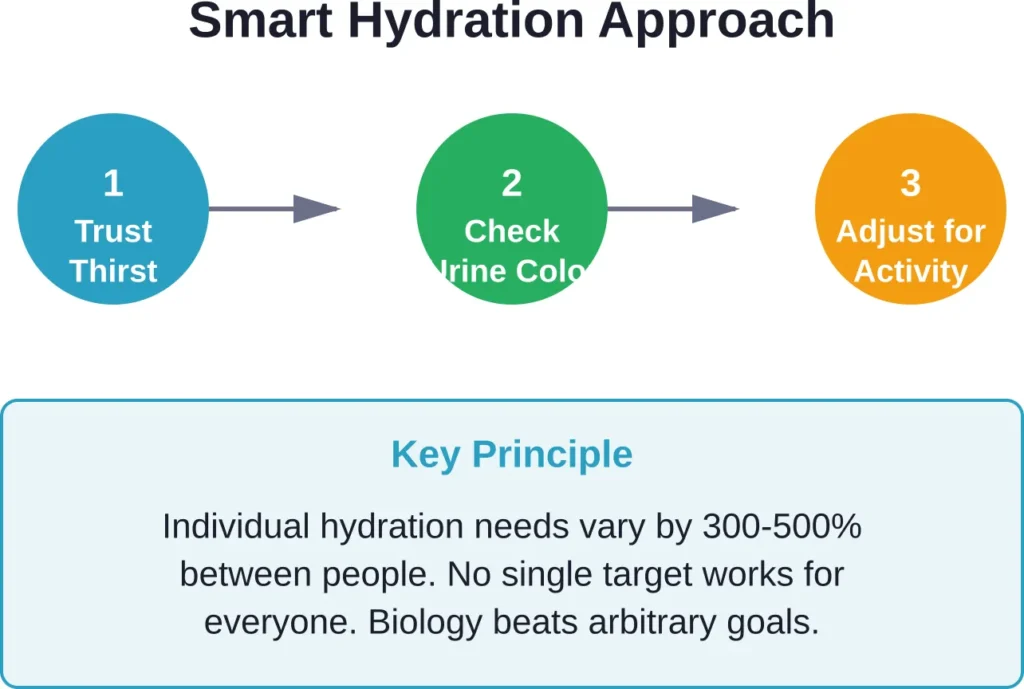
Listen to your body’s signals. Drink when thirsty. Increase intake during exercise, heat exposure, or illness. Pay attention to urine color as a simple check-in.
Keep water accessible throughout the day. Having a water bottle nearby makes responding to thirst effortless rather than an afterthought.
Eat water-rich foods. Watermelon, cucumbers, lettuce, soups, and citrus fruits contribute meaningful hydration while providing nutrients. Remember that 20% figure from earlier.
Adjust for circumstances. Flying? Increase intake—airplane cabins are extremely dry. Sick with fever? You need more fluids. Starting a new medication? Ask your pharmacist if it affects hydration needs.
Consider beverage variety. Coffee and tea count toward hydration despite their caffeine content. The diuretic effect is mild and doesn’t negate their fluid contribution for regular consumers.
When to Seek Professional Guidance
Certain situations absolutely require consulting healthcare providers about hydration.
If you have kidney disease, heart failure, liver disease, or conditions affecting electrolyte balance, water intake needs careful management. The National Kidney Foundation stresses that both too little and too much fluid can be dangerous for people with compromised kidney function.
Pregnant or nursing? Your fluid needs increase, but the amount varies individually. Discuss appropriate intake with your obstetrician or midwife.
Taking diuretics, blood pressure medications, or other drugs affecting fluid balance? Ask your pharmacist or doctor how these impact hydration needs.
Experiencing persistent extreme thirst, urinating excessively, or showing signs of chronic dehydration despite adequate intake? These can signal diabetes, kidney problems, or other conditions requiring evaluation.
The Bottom Line on Gallon-a-Day Drinking
The gallon-a-day trend is well-intentioned but misguided for most people. Science shows that water needs vary dramatically—from 1.3 to 7.9 liters daily depending on individual factors.
For the average person with a sedentary to moderately active lifestyle in a temperate climate, a gallon exceeds physiological needs. Your body efficiently signals when it needs water through thirst, and forcing excess doesn’t provide additional benefits.
Athletes, people in extreme heat, or those with certain medical conditions may genuinely need a gallon or more. But here’s the crucial point: they’d know from thirst and performance indicators, not from following a social media challenge.
The risks of consistent overhydration—hyponatremia, electrolyte imbalance, kidney strain—are real and sometimes severe.
Trust your body’s sophisticated regulatory mechanisms. Drink when thirsty. Monitor urine color. Adjust for activity and environment. Eat water-rich foods. That’s the science-backed approach to healthy hydration.
Frequently Asked Questions
Warning signs include completely clear urine, urinating more than once per hour consistently, feeling bloated or nauseous after drinking, and persistent headaches. Normal urine should be pale yellow, not colorless. If you’re forcing yourself to drink beyond thirst regularly, you’re likely consuming too much.
Water can support weight management by increasing satiety and temporarily boosting metabolic rate slightly. However, there’s no evidence that specifically drinking a gallon provides unique weight loss benefits compared to adequate hydration based on individual needs. The metabolic boost from drinking water is modest and doesn’t require excessive amounts.
Yes, this can be extremely dangerous. Drinking large volumes rapidly can overwhelm your kidneys’ ability to eliminate excess water, leading to acute water intoxication. Research shows an acute total body water increase of just 7–8% can cause life-threatening hyponatremia. Always space water intake throughout the day.
Athletes may need a gallon or more depending on training intensity, duration, and environmental conditions. Research shows athletes can lose 6–10% of body weight through sweat during prolonged events. However, needs should be determined by sweat loss, thirst, and performance indicators rather than arbitrary targets. Many athletes benefit from sports drinks that replace electrolytes, not just water.
Yes, coffee and other caffeinated beverages contribute to daily fluid intake. While caffeine has a mild diuretic effect, it doesn’t negate the hydration these beverages provide, especially for regular consumers who develop tolerance to caffeine’s diuretic properties. All fluids—including milk, tea, juice, and even soda—contribute to hydration.
Keep water easily accessible throughout the day. Set regular reminders on your phone or use apps that track intake. Eat more water-rich foods like fruits and vegetables. Add flavor with lemon, cucumber, or herbs if plain water doesn’t appeal to you. Focus on responding to thirst signals rather than hitting arbitrary targets.
No, absolutely not without medical guidance. The National Kidney Foundation emphasizes that people with advanced chronic kidney disease or kidney failure often need strict fluid restrictions. Excess fluid intake can lead to dangerous fluid overload in people with compromised kidney function. Anyone with kidney disease must follow their nephrologist’s specific fluid recommendations.