
Quick Summary: Drinking coffee when sick is generally safe in moderation and may offer mild benefits like improved alertness and pain relief. However, coffee’s diuretic effect and potential to disrupt sleep mean hydration and rest should remain top priorities during illness. Limiting intake to one cup and switching to decaf or other warm beverages may support recovery better.
When a cold or flu hits, the morning coffee ritual becomes a question mark. Will that steaming mug help power through the day, or will it slow down recovery? With 80% to 90% of adults in North America consuming caffeine regularly, this dilemma hits close to home for millions.
The good news? Coffee isn’t necessarily off-limits when you’re under the weather. But the full picture requires understanding both the benefits and potential drawbacks of caffeine during illness.
The Pros of Drinking Coffee When You’re Sick
Coffee offers a few legitimate upsides when battling a cold or flu, though none should replace proper rest and hydration.
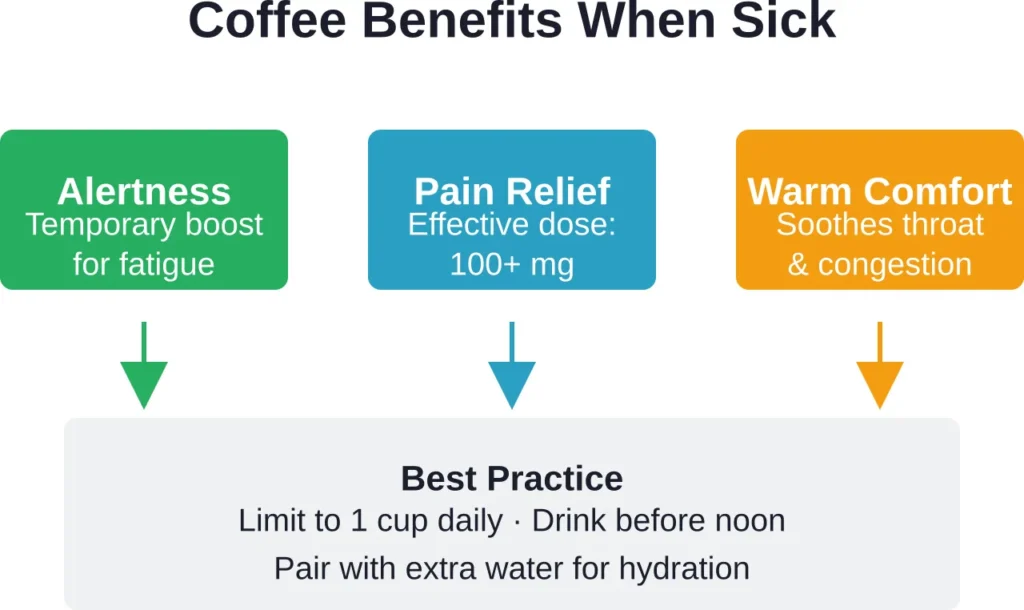
Temporary Energy and Alertness Boost
Sickness drains energy reserves fast. Caffeine provides an alerting effect after ingestion. According to the CDC, heavy caffeine use loses its alerting effect over time, but strategic use—treating it as “medicine” rather than a constant crutch—can provide short-term relief from illness-induced fatigue.
This matters when you absolutely must function despite symptoms, though it’s no substitute for the sleep your immune system desperately needs.
Pain Relief Properties
Research published in the National Library of Medicine shows caffeine has analgesic properties. Research indicates a minimum dose of 100 mg provides statistically significant pain relief benefits. For headaches, body aches, or sore throat discomfort that accompany many illnesses, that morning coffee might offer modest relief alongside over-the-counter medications.
Warm Liquid Comfort
Hot beverages soothe irritated throats and provide temporary relief from congestion. Coffee fits this category, offering psychological comfort alongside physical warmth. The ritual itself—hands wrapped around a warm mug—carries emotional benefits during miserable sick days.
The Cons of Drinking Coffee When You’re Sick
Before reaching for that second cup, consider the downsides that might outweigh the benefits.
Dehydration Risk
Caffeine acts as a mild diuretic, increasing urine production. When fighting illness—especially with fever, vomiting, or diarrhea—maintaining hydration becomes critical. According to Mayo Clinic guidance on gastroenteritis treatment, sipping liquids and sports drinks prevents dehydration, which ranks as a primary recovery concern.
According to Harvard Health, taking iron supplements with coffee can render the supplements between 50% and 90% less effective. If taking medications or supplements during illness, coffee timing matters.
Sleep Disruption
Rest ranks among the most powerful healing tools available. Caffeine lingers in the system for hours, potentially sabotaging the quality sleep needed for immune function. Research on caffeine and the common cold has examined its effects on symptoms associated with illness.
Drinking coffee after noon increases the likelihood of nighttime sleep interference, precisely when the body does its most intensive repair work.
Stomach Irritation
Coffee increases stomach acid production. When already dealing with nausea or digestive upset from illness, that extra acidity can worsen symptoms. Harvard Health notes that coffee makes stomach contents more acidic, which accounts for various medication interactions and can trigger discomfort in sensitive individuals.
Is Coffee Good for a Cold or Flu?
The honest answer: it depends on your symptoms and consumption habits.
For mild colds without fever or dehydration concerns, a single cup of regular coffee probably won’t harm recovery. It might even provide welcome comfort and temporary symptom relief. But moderation matters enormously here.
On average, adults in the U.S. consume between 110-260 mg of caffeine per day, substantially less than 400 mg per day, which is the upper limit of moderate consumption. When sick, cutting that in half makes sense. Consider these guidelines:
| Symptom Type | Coffee Recommendation | Reasoning |
|---|---|---|
| Mild cold, no fever | 1 cup maximum, before noon | Minimal dehydration risk; avoid sleep disruption |
| Fever or sweating | Avoid or switch to decaf | Hydration is critical; diuretic effect compounds fluid loss |
| Nausea or stomach upset | Avoid completely | Acidity can worsen digestive symptoms |
| Severe congestion | 1 cup acceptable | Warm liquid may help; prioritize water/tea afterward |
| Taking medications | Check interactions; space 2+ hours apart | Coffee affects absorption of many drugs |
Decaffeinated Coffee: A Middle Ground?
Decaf offers most of coffee’s sensory experience—warmth, aroma, ritual—without the caffeine-related downsides. For those who crave the taste but want to prioritize hydration and sleep, decaffeinated coffee makes sense during illness.
Research on caffeine and the common cold tested both caffeinated and decaffeinated coffee. While caffeinated versions showed benefits for alertness, decaf still provided the soothing warmth and psychological comfort many seek.
Keep in mind decaf isn’t entirely caffeine-free. A typical cup of decaf contains minimal caffeine compared to regular coffee, which can contain substantially more. That negligible amount won’t cause the problems regular coffee might.
Better Alternatives to Coffee When You’re Sick
Several beverages deliver warmth and comfort without caffeine’s drawbacks during illness.
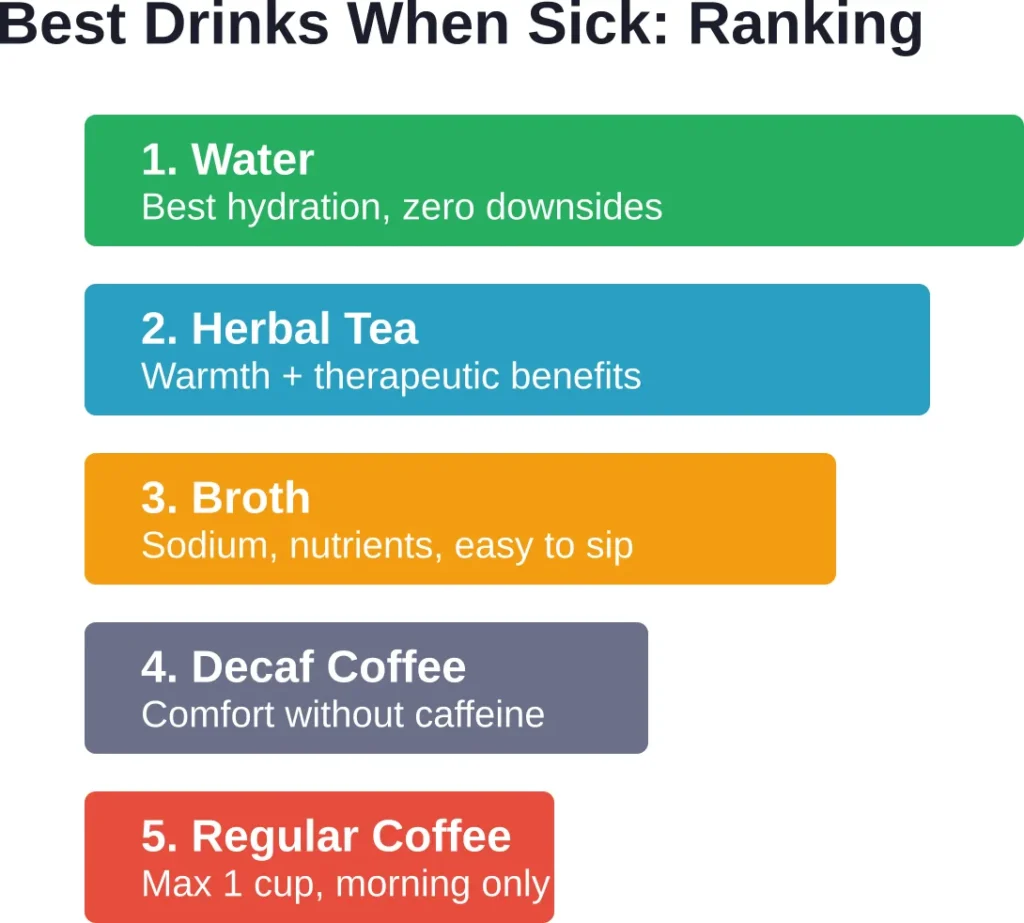
Water: The Non-Negotiable Priority
According to the CDC, getting enough water every day prevents dehydration, unclear thinking, mood changes, overheating, constipation, and kidney stones. Water has zero calories and remains the gold standard for hydration during illness.
Plain water might seem boring when feeling miserable, but it’s doing the heavy lifting for recovery that coffee simply can’t.
Herbal Teas
Caffeine-free herbal teas—chamomile, peppermint, ginger—provide warmth and specific benefits. Ginger tea can ease nausea. Peppermint may help with congestion. Chamomile promotes relaxation and sleep quality.
These options deliver the ritual and comfort of a hot beverage without working against recovery efforts.
Bone Broth or Clear Broths
Savory warm liquids provide sodium and nutrients that can help with hydration, especially when appetite is low. Mayo Clinic recommendations for norovirus infection treatment specifically mention sipping liquids to support recovery.
The Verdict: Strategic Use Over Automatic Habit
So, is it okay to drink coffee when sick? Yes—with important caveats.
Coffee won’t sabotage recovery if consumed mindfully. One morning cup when dealing with a mild cold likely causes no harm and might offer modest benefits. But treating coffee as optional rather than mandatory during illness serves recovery better.
The CDC advises treating caffeine strategically as “medicine” for its alerting effects rather than relying on heavy daily use. When sick, that wisdom becomes especially relevant. If you normally drink three cups daily, cutting back to one (or zero) redirects focus to what truly matters: hydration, rest, and giving the immune system space to work.
Listen to your body. If coffee makes you feel worse—jittery, dehydrated, or unable to sleep—that’s a clear signal to skip it. If a small amount provides genuine comfort without obvious drawbacks, there’s no need for rigid avoidance.
Frequently Asked Questions
Coffee doesn’t directly fight cold viruses, but caffeine may temporarily relieve malaise symptoms like reduced alertness and slower psychomotor performance associated with common colds. Research indicates a minimum dose of 100 mg provides statistically significant pain relief benefits. However, rest, hydration, and proper nutrition remain the primary cold-fighting strategies.
Yes, it’s generally wise to avoid or significantly limit coffee when running a fever. Fever causes fluid loss through sweating, and caffeine’s mild diuretic effect can compound dehydration risk. Prioritize water and electrolyte drinks instead. If you must have coffee, switch to decaf and drink extra water alongside it.
Moderate coffee consumption doesn’t directly weaken immune function. However, excessive caffeine can disrupt sleep quality, and inadequate sleep does impair immune response. The indirect effect—poor sleep due to afternoon or evening caffeine—poses the real concern during illness when rest is crucial for recovery.
Limit coffee to one cup (approximately 8 ounces) before noon when dealing with illness. This minimizes dehydration risk and prevents sleep interference while allowing you to enjoy potential benefits like improved alertness and mild pain relief. If experiencing fever, stomach upset, or taking medications, consider avoiding coffee entirely or switching to decaf.
Check medication labels carefully. Many over-the-counter cold preparations already contain caffeine, and combining them with coffee can lead to excessive intake. According to StatPearls data, analgesics and cold medications often contribute to cumulative caffeine intake. Space coffee at least two hours away from medications, and consult package instructions or a pharmacist about potential interactions.
Decaf coffee is generally better during illness because it provides warmth and comfort without caffeine’s diuretic effect or sleep disruption potential. A typical cup of decaf contains minimal caffeine compared to regular coffee, which can contain substantially more, making it a safer choice when hydration and rest are priorities.
Water should be your primary beverage, supplemented with herbal teas (ginger, chamomile, peppermint), clear broths, and electrolyte drinks if needed. The CDC emphasizes that getting enough water prevents dehydration and helps the body function normally. Warm beverages like herbal tea provide throat-soothing benefits similar to coffee without the downsides.
Final Thoughts: Coffee as Tool, Not Crutch
The relationship between coffee and illness recovery doesn’t need to be all-or-nothing. Strategic, moderate consumption—emphasizing “strategic” and “moderate”—can coexist with effective recovery practices.
But here’s what matters most: when in doubt, prioritize water, sleep, and rest over any caffeinated beverage. Coffee offers marginal benefits at best during illness. Proper hydration and adequate sleep deliver transformative ones.
Next time you’re under the weather, ask yourself whether you truly want that coffee or simply crave the ritual. If it’s the latter, a warm cup of herbal tea might serve you better.