
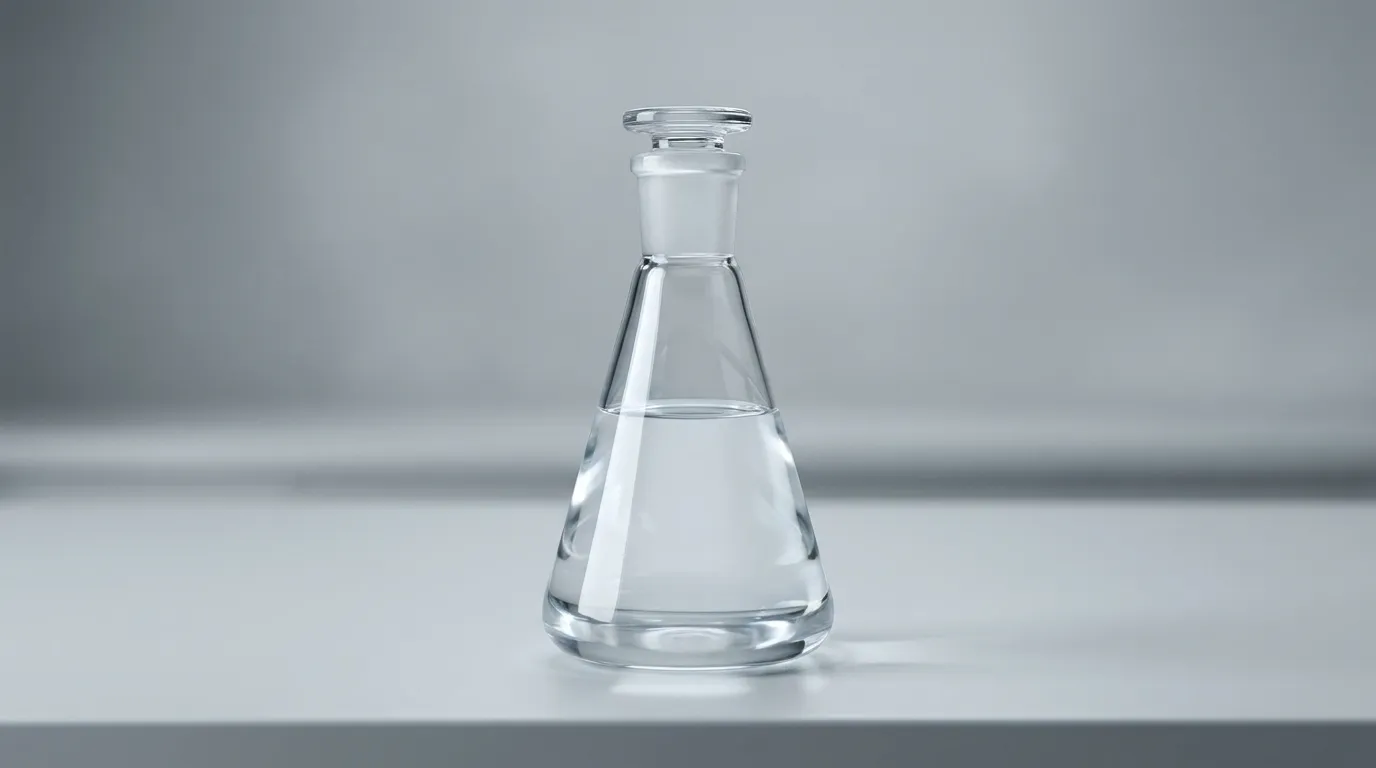
Quick Summary: Distilled water is safe to drink and removes up to 99.5% of impurities through boiling and condensation. However, it lacks essential minerals like calcium and magnesium that tap water provides. For most people eating a balanced diet, occasional consumption poses no risk, but relying on it as the sole water source long-term may contribute to mineral deficiencies.
Walk down any grocery aisle and you’ll spot gallon jugs of distilled water sitting next to spring and purified varieties. But is distilled water actually okay to drink regularly?
The short answer? Yes, it’s safe. But there’s more to the story than simple safety.
Distilled water undergoes a purification process that removes nearly everything—contaminants, minerals, even taste. That purity makes it perfect for certain uses, but raises questions when it comes to daily hydration.
What Is Distilled Water?
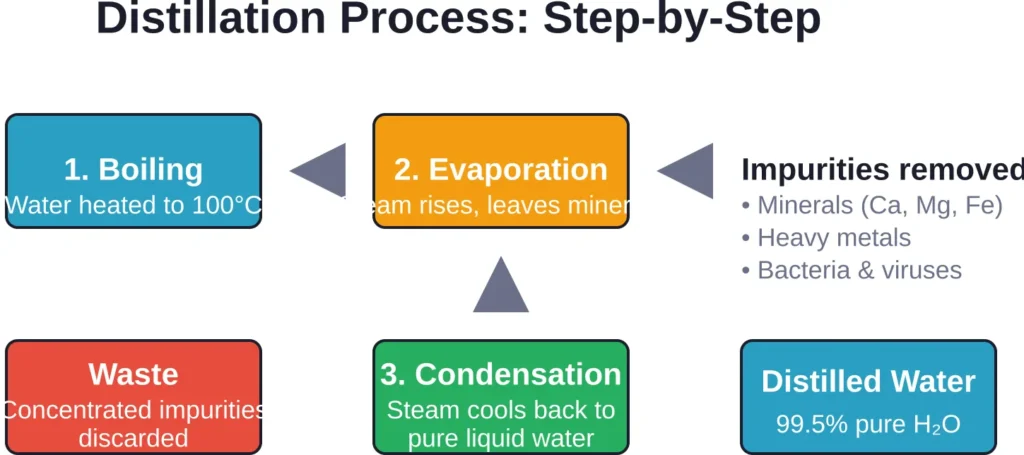
Distilled water is created through a straightforward process: boiling water until it evaporates, then condensing the steam back into liquid form. This method leaves behind impurities that don’t evaporate at water’s boiling point.
The process can remove up to 99.5% of impurities, according to extension publications from the University of Nebraska-Lincoln. That includes dissolved minerals, heavy metals, bacteria, viruses, and chemical contaminants.
Here’s what gets left behind during distillation:
- Heavy metals like lead and mercury
- Minerals including calcium, magnesium, and iron
- Salts and dissolved solids
- Most bacteria and viruses
- Organic compounds with high boiling points
The water remaining in the boiling chamber concentrates these impurities, which get discarded. The condensed steam becomes distilled water—virtually pure H₂O.
Is Distilled Water Safe to Drink?
Distilled water meets EPA drinking water standards for contaminant removal. It won’t harm you to drink it occasionally or even regularly.
The safety concern isn’t about toxicity—distilled water contains no dangerous substances. The question is whether removing everything from water affects health over time.
Community discussions on platforms like Reddit reveal a common misconception. According to CDC data from a 2021 survey, 33% of respondents incorrectly answered that tap water does not have bacteria or living things present (95% confidence interval: 30%–36%). This misunderstanding leads some people to assume distilled water’s sterility makes it superior.
But sterility and healthfulness aren’t the same thing.
What the Regulatory Agencies Say
The EPA sets legal limits on over 90 contaminants in drinking water under the Safe Drinking Water Act. These standards ensure tap water safety across the United States.
Distilled water easily meets—and exceeds—these standards by removing contaminants entirely. In that sense, it’s one of the purest drinking options available.
However, the EPA also establishes Secondary Maximum Contaminant Levels for minerals that affect taste and appearance but aren’t health hazards. These include calcium, magnesium, and iron—minerals that distillation removes but that contribute to nutrition.
The Mineral Question: What You’re Missing
Here’s where things get interesting. Tap water isn’t just H₂O—it’s a mineral delivery system.
According to the National Research Council’s review published by the NIH, most large water-supply systems in the United States contain measurable amounts of essential minerals. In 1975, approximately 16.7% of the population was served by large water-supply systems from which mineral composition data was gathered.
Water can contribute to overall mineral intake depending on mineral concentration and consumption volume.
| Mineral | Typical Range in Tap Water | EPA Secondary MCL | Health Function |
|---|---|---|---|
| Calcium | 1–145 mg/L | Not regulated (aesthetic) | Bone health, muscle function |
| Magnesium | Variable | Not regulated (aesthetic) | Enzyme function, heart health |
| Iron | Variable | 0.3 mg/L | Oxygen transport, energy |
| Fluoride | Variable | 2.0 mg/L | Dental health |
| Zinc | Variable | 5 mg/L | Immune function, wound healing |
Distilled water contains virtually none of these minerals. For someone who eats a varied diet with dairy, leafy greens, nuts, and fortified foods, that’s not a problem.
But for children, athletes losing minerals through sweat, or people with restricted diets, the lack of minerals becomes more significant.
Taste and Hydration Differences
Many people notice distilled water tastes flat or “off.” That’s because taste receptors respond to dissolved minerals, not just water molecules.
The absence of minerals also affects the water’s pH. While tap water typically falls within the EPA’s secondary standard range of 6.5 to 8.5, distilled water often measures slightly acidic (around 5.8) after absorbing carbon dioxide from air.
Does this affect hydration? The science suggests minimal impact for most people. Water is water—the body absorbs it regardless of mineral content.
That said, electrolyte balance matters during intense physical activity. Athletes who drink only distilled water without replacing minerals lost through sweat may experience cramping or fatigue more readily than those drinking mineral-containing water.
When Distilled Water Makes Sense
Not everyone needs to avoid distilled water. Context matters.
Distilled water excels in situations where mineral content causes problems:
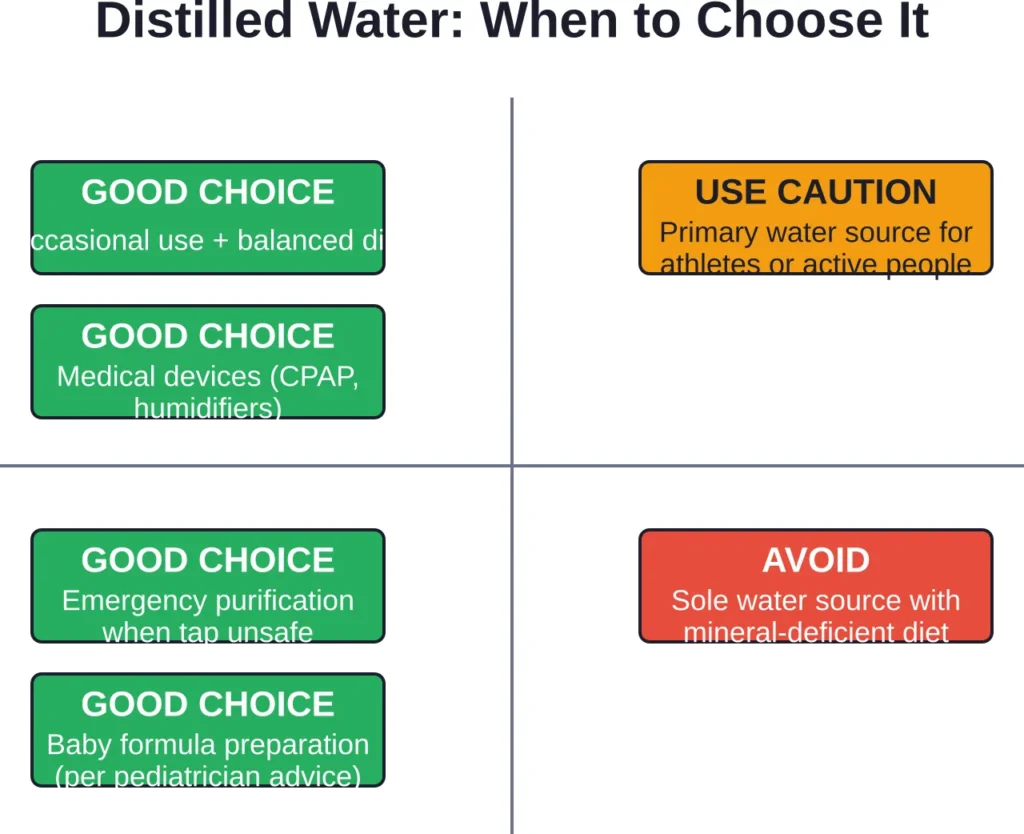
- Medical devices: CPAP machines and humidifiers benefit from distilled water because minerals don’t build up and create bacterial growth environments
- Baby formula mixing: Some pediatricians recommend distilled water to control mineral intake in infants
- Laboratory work: Scientific equipment requires mineral-free water for accurate results
- Steam irons and car batteries: Mineral deposits damage these devices over time
- Emergency situations: When tap water safety is questionable, distillation provides reliable purification
For occasional drinking, distilled water poses no concern. Someone drinking it a few times per week while maintaining a balanced diet won’t experience deficiencies.
Distilled vs. Other Water Types
Understanding how distilled water compares to alternatives helps clarify when each type makes sense.
Distilled vs. Purified Water
Purified water undergoes treatment to remove contaminants, but the process differs from distillation. Purification methods include reverse osmosis, deionization, and carbon filtration.
These processes remove many—but not necessarily all—minerals. Some purified water retains beneficial minerals while eliminating harmful contaminants.
Distilled vs. Tap Water
Tap water in the United States must meet EPA standards for over 90 contaminants. According to the World Health Organization, in 2022, 6 billion people used safely managed drinking-water services.
In developed countries with strong water infrastructure, tap water provides hydration plus minerals. The tradeoff is potential exposure to trace contaminants within legal limits and aesthetic issues like chlorine taste.
Distilled vs. Bottled Water
Bottled water comes from various sources—some from municipal supplies, others from springs or wells. The CDC notes that bottled water must meet safe drinking water standards regardless of source.
Many bottled waters contain minerals similar to tap water. Spring water, in particular, often has higher mineral content than municipal supplies.
| Water Type | Mineral Content | Contaminant Removal | Best For |
|---|---|---|---|
| Distilled | None (99.5% pure H₂O) | Highest (99.5%) | Medical devices, lab use, short-term drinking |
| Purified (RO) | Very low to moderate | High (90–99%) | Daily drinking when mineral intake is adequate |
| Tap | Moderate (varies by location) | Regulated to EPA limits | Daily drinking, cost-effective hydration |
| Spring | Moderate to high | Variable (source dependent) | Mineral supplementation, taste preference |
| Filtered (carbon) | Same as source water | Moderate (chlorine, some organics) | Improving tap water taste while keeping minerals |
Potential Long-Term Concerns
Research on long-term distilled water consumption remains limited, but some studies raise questions worth considering.
Research on demineralization of drinking water has examined whether removing minerals affects health over extended periods. The concern centers on cumulative mineral deficits, particularly in populations already at risk for inadequate mineral intake.
Drinking water can contribute to mineral nutrition, though the contribution varies based on diet and water composition. Removing this contribution entirely could matter for vulnerable populations.
That said, no evidence suggests distilled water causes acute harm in healthy adults eating varied diets. The concerns are subtle, long-term, and population-specific.
Who Should Think Twice About Distilled Water
Certain groups may want to limit distilled water consumption or ensure adequate mineral intake through other sources:
- Athletes and active individuals: Heavy sweating depletes electrolytes; drinking mineral-free water without replacement may worsen imbalances
- Children: Growing bodies need consistent mineral intake for bone development and metabolic function
- Pregnant and breastfeeding women: Increased mineral requirements make every source count
- People with restricted diets: Vegan, low-dairy, or limited diets may already struggle with calcium and magnesium intake
- Older adults: Reduced appetite and dietary variety increase reliance on water as a mineral source
For these groups, choosing mineral-containing water or ensuring robust dietary mineral intake becomes more important.
Making the Right Choice for Your Situation
So, is it okay to drink distilled water? The answer depends on individual circumstances.
For most healthy adults with balanced diets, occasional or even regular distilled water consumption poses minimal risk. The body obtains necessary minerals from food, making water’s contribution less critical.
But for daily, long-term hydration—particularly for active people or those with limited diets—water containing minerals offers advantages distilled water can’t match.
The most practical approach? Consider these factors:
- Your overall diet quality and variety
- Activity level and sweat loss
- Access to mineral-rich foods
- Specific health conditions affecting mineral metabolism
- Whether you’re using distilled water for devices versus drinking
When in doubt, testing your tap water helps you understand what you’re getting—or missing. Many municipalities provide annual water quality reports showing mineral content and contaminant levels.
If tap water quality concerns you, filtered water often provides a middle ground: removing problematic contaminants while retaining beneficial minerals.
Frequently Asked Questions
For healthy adults eating balanced diets, distilled water alone won’t cause deficiencies. However, if someone relies exclusively on distilled water while also consuming a mineral-poor diet, cumulative deficits may develop over time, particularly for calcium and magnesium.
This common claim lacks strong scientific support. While distilled water contains no minerals, it doesn’t actively pull minerals from tissues or bones. The body tightly regulates mineral balance through complex mechanisms that don’t break down simply because drinking water lacks minerals.
Not necessarily. Tap water meeting EPA standards provides safe hydration plus minerals. Distilled water offers purity but removes beneficial minerals along with contaminants. For most people in areas with quality tap water, filtered tap water provides the best balance.
There’s no official limit on distilled water consumption. Healthy adults can drink it daily without immediate harm, especially if their diet provides adequate minerals. However, using it as the exclusive water source for months or years may contribute to mineral gaps in vulnerable populations.
Distilled water is sometimes recommended for mixing baby formula because it eliminates contaminants and allows precise control of mineral content through the formula itself. However, parents should consult pediatricians about the best water choice for their specific situation, as recommendations vary.
Yes. The body absorbs distilled water just as effectively as tap or bottled water. Hydration depends on water consumption, not mineral content. The difference appears during intense exercise when electrolyte replacement becomes necessary—distilled water alone won’t replace lost minerals.
Taste receptors respond to dissolved minerals, not just water molecules. The complete absence of minerals in distilled water creates a flat taste many people find unappealing. Some describe it as “empty” or slightly metallic after exposure to air.
The Bottom Line
Distilled water is perfectly safe to drink. It won’t poison you, harm your organs, or cause immediate health problems.
But “safe” and “optimal” aren’t the same thing.
For most people, water that contains minerals—whether from the tap, a filter, or a bottle—provides hydration plus nutritional benefits distilled water can’t offer. The minerals in regular drinking water contribute to daily intake of calcium, magnesium, and other essential nutrients.
Use distilled water where it excels: medical devices, laboratory work, emergency purification, and situations where mineral content causes problems. For daily drinking, consider whether your diet provides robust mineral intake before making distilled water your primary source.
The safest approach? Variety. Drinking different water types based on context—tap water at home, filtered water from a pitcher, occasional distilled water—ensures you get hydration without missing out on minerals that support long-term health.
Want to know exactly what’s in your tap water? Request your municipality’s annual water quality report or invest in independent testing. Knowledge beats guesswork every time.