
Quick Summary: Tap water in the United States is generally safe to drink, regulated by the EPA to meet strict federal standards for over 90 contaminants. Public water utilities must monitor water quality and notify consumers within 24 hours if immediate health risks arise. While most tap water is safe, quality varies by location, plumbing age, and water source, making local testing and awareness important.
Every day, millions of Americans turn on their kitchen faucets and fill a glass without a second thought. But is that tap water actually safe to drink?
The short answer is yes—for most people in most places. But that’s not the whole story.
According to the CDC, public tap water in the United States is regulated and usually safe to drink. The EPA sets legal limits on over 90 contaminants in drinking water, establishing standards that protect human health using the best available technology. These regulations, enforced through the Safe Drinking Water Act, originally passed by Congress in 1974, make American tap water among the safest in the world.
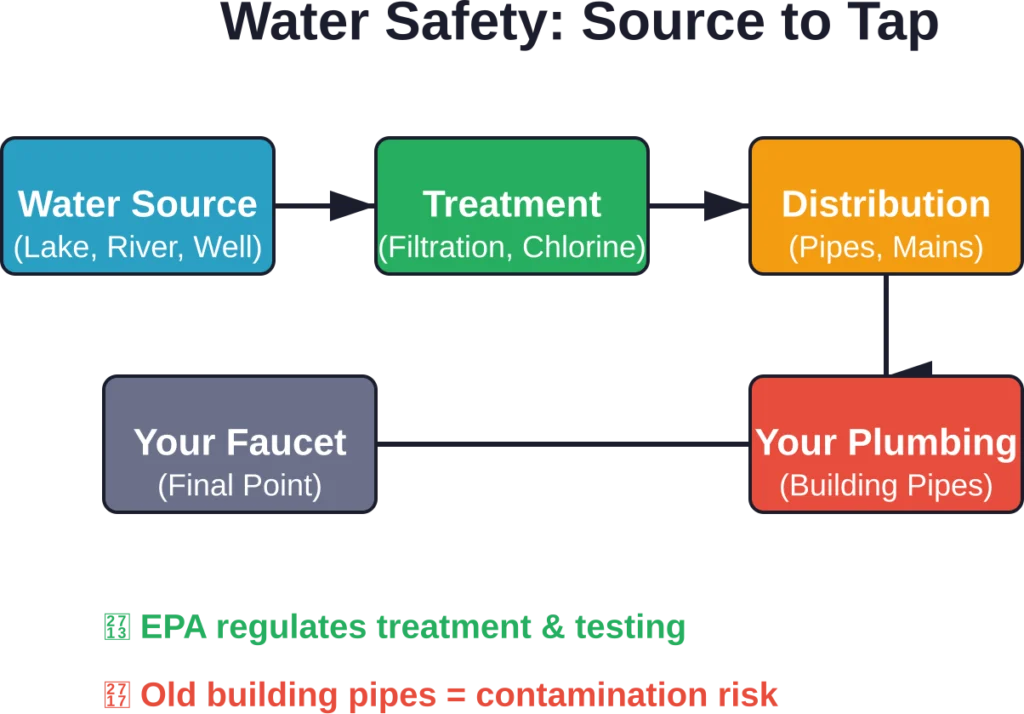
That said, water quality isn’t uniform everywhere. Where your water comes from, how old your plumbing is, and even which building you’re in can all affect what comes out of your faucet.
Understanding U.S. Drinking Water Regulations
The Safe Drinking Water Act gives the EPA authority to establish and enforce drinking water standards nationwide. These National Primary Drinking Water Regulations are legally enforceable standards that apply to public water systems.
Here’s what that means in practice: utilities must test water regularly, treat it to meet standards, and report results to the public. If there’s an immediate health risk, your water utility must notify you within 24 hours, according to CDC guidelines.
The EPA regulates contaminants including bacteria like Total Coliforms (which have a maximum contaminant level goal of zero), viruses (which are regulated through surface water treatment rules), and parasites like Giardia lamblia (which are regulated through surface water treatment rules). Chemical contaminants from industrial processes, agriculture, and aging infrastructure are also monitored.
But federal oversight has limits. According to the Public Policy Institute of California, more than 400 large urban water utilities supply water to over 90% of California’s residents, while nearly 2,500 smaller utilities serve more rural areas. Smaller systems sometimes struggle to meet the same standards as larger ones.
When Tap Water Quality Becomes a Concern
Not all tap water is created equal. The quality depends on three main factors: source water quality, treatment effectiveness, and distribution system integrity.
Community discussions reveal common concerns. Some regions deal with hard water that leaves mineral deposits. Others face issues with aging infrastructure that introduces contaminants after treatment.
Lead remains one of the most serious tap water contaminants. Homes built before 1986 are more likely to have lead pipes, according to EPA data. The Safe Drinking Water Act now limits lead content to a maximum of 0.25% (weighted average) in pipes and plumbing fixtures, and 0.2% in solder and flux.
But here’s the thing: even water treated to perfection at the plant can pick up contaminants traveling through old pipes.
The Lead Problem in Older Buildings
Lead pipes aren’t the only issue. Brass faucets, chrome-plated fixtures, and lead solder in plumbing joints can all leach lead into drinking water—especially in buildings constructed before lead-free standards took effect.
The CDC and EPA agree that there is no known safe level of lead in a child’s blood. Even low exposure can cause developmental problems, learning difficulties, and behavioral issues.
The Infrastructure Investment and Jobs Act allocated $50 billion for drinking water, wastewater, and stormwater infrastructure improvements, with a focus on replacing lead service lines. The EPA’s Lead and Copper Rule Improvements now requires replacement of lead pipes within 10 years.
Chemical Contaminants You Can’t See or Taste
According to the CDC, many contaminants are invisible, odorless, and tasteless. Without adequate information, people evaluate water safety based on prior experiences, media reports, and personal values rather than actual water quality.
PFAS (per- and polyfluoroalkyl substances) have become a major concern. These “forever chemicals” persist in the environment and accumulate in the human body. The EPA recently established the first-ever nationwide, legally enforceable drinking water standards for PFAS.
Other chemical contaminants include:
- Nitrates from agricultural runoff
- Chlorine byproducts from water treatment
- Industrial chemicals like benzene and toluene
- Pesticides and herbicides
- Pharmaceutical residues
Trust in Tap Water: A Global Perspective
A 2019 World Risk Poll study surveyed 148,585 adults across 141 countries about water safety perceptions. The findings were striking: 52.3% anticipated serious harm from their water supply in the short term.
In the United States specifically, a significant percentage of adults polled anticipated serious harm from drinking water. That’s a significant trust gap, especially in a country with some of the world’s strictest water regulations.
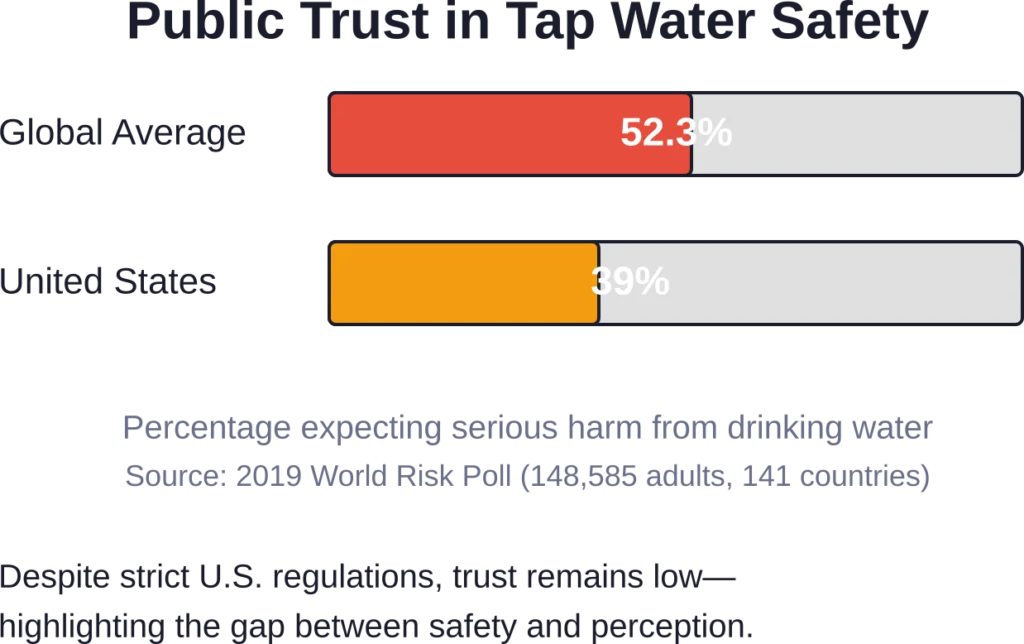
This trust gap matters. Low confidence in water quality is associated with perceptions of public corruption and system failures, even when objective water quality meets safety standards.
How to Know If Your Tap Water Is Safe
The EPA ensures tap water from public water supplies meets safety standards. But individual circumstances vary.
Check Your Consumer Confidence Report
Every public water system must provide an annual Consumer Confidence Report (CCR) to customers. This report details:
- Water source information
- Detected contaminants and their levels
- Potential health effects of contaminants
- Compliance with regulations
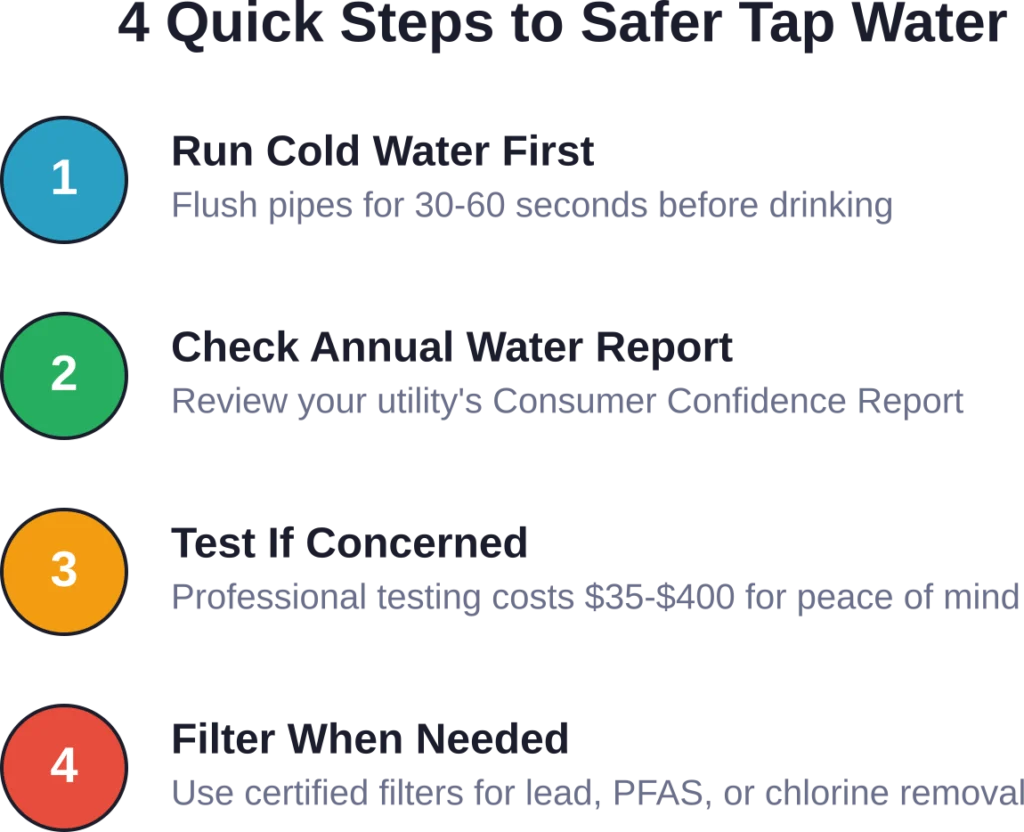
Most utilities post these reports online or mail them to customers. If concerned about water quality, start here.
Test Your Water
For private well owners or those wanting extra assurance, professional water testing provides specific data about local water quality.
According to California state resources, basic water quality testing costs range from $35 to $400 depending on the comprehensiveness of testing. Hiring a professional to sample and interpret results adds to the cost but ensures accuracy.
Testing makes sense when:
- Living in a home built before 1986
- Noticing changes in water taste, odor, or appearance
- Pregnant or caring for young children
- Using a private well (not connected to public water)
- Concerned about specific local contaminants
| Problem | Possible Cause | Health Risk |
|---|---|---|
| Orange or brown water | High iron levels | Generally safe, but unpleasant |
| Chlorine smell | Disinfection byproducts | Usually safe at regulated levels |
| Cloudy appearance | Air bubbles or sediment | Often harmless, test if persistent |
| Metallic taste | Lead, copper, or zinc | Potentially harmful, especially lead |
| Rotten egg smell | Hydrogen sulfide | Unpleasant but typically not dangerous |
When You Shouldn’t Use Tap Water
Even safe-to-drink tap water requires caution in certain situations.
Contact Lenses
Tap water can contain microorganisms that won’t harm drinking but can cause serious eye infections when trapped against the eye by a contact lens. Always use sterile saline solution for lens care.
Neti Pots and Nasal Irrigation
Using tap water in neti pots or other nasal irrigation devices can introduce harmful organisms directly into sinus cavities. Boil water for one minute (three minutes at higher elevations), then cool before use, or use distilled water.
Humidifiers and CPAP Machines
Tap water in humidifiers can disperse minerals and potential contaminants into the air. Over time, bacteria can form biofilms in water reservoirs. Distilled or demineralized water works better and keeps equipment cleaner.
Aquariums
Chlorine and chloramines used to disinfect tap water will kill fish. Aquarium water requires dechlorination and careful pH balancing before adding fish.
Practical Steps to Ensure Safe Drinking Water
For most Americans, tap water is safe right out of the faucet. But taking a few precautions makes sense.
Run the tap. If water has been sitting in pipes for several hours (like first thing in the morning), run cold water for 30-60 seconds before drinking. This flushes out any lead or other metals that may have leached from plumbing.
Use cold water for drinking and cooking. Hot water dissolves contaminants from pipes more readily than cold water. Always start with cold tap water for consumption, heating it separately if needed.
Consider filtration. Water filters certified to NSF/ANSI standards can remove specific contaminants. Different filters target different issues—lead, chlorine, PFAS, bacteria. Match the filter to actual or suspected contaminants in local water.
Maintain plumbing. Replace old faucets, especially those with brass or chrome plating that may contain lead. If renovation involves plumbing work, verify that lead-free materials are used throughout.
Bottled Water vs. Tap Water
Faced with uncertainty, many Americans turn to bottled water. Sales have climbed steadily for years.
But bottled water isn’t necessarily safer than tap water. The EPA regulates public tap water, while the FDA oversees bottled water with less stringent testing requirements. Some bottled water is simply filtered tap water.
Environmental costs matter too. Plastic bottle production consumes resources, and recycling rates remain disappointingly low. Reusable bottles filled with filtered tap water offer a more sustainable alternative.
Private Wells: A Different Situation
If drinking from a private well, the responsibility for water safety falls entirely on the well owner. The EPA doesn’t regulate private wells.
According to the CDC, proper well construction and continued maintenance help keep germs and chemicals out. Well owners should test water annually for bacteria and every 3-5 years for chemical contaminants.
Local health departments can provide guidance on well testing, maintenance, and treatment options specific to regional concerns.
The Bottom Line on Tap Water Safety
So, is it OK to drink tap water?
For most Americans connected to public water systems, the answer is yes. Federal and state regulations ensure that utilities treat and monitor water to meet strict safety standards. The system works—most of the time, in most places.
But “most” isn’t “all.” Older buildings with lead plumbing, regions with specific contamination issues, and private well users all face elevated risks. Even in well-regulated systems, distribution infrastructure can introduce contaminants after treatment.
The smart approach combines awareness with action. Review water quality reports. Test water if circumstances warrant concern. Use simple precautions like running taps and choosing cold water for consumption. Install appropriate filtration when specific contaminants pose local risks.
Water is essential to life. Understanding where it comes from, how it’s treated, and what might affect its quality empowers better decisions about this most basic resource.
Ready to take control of water quality? Start by requesting your utility’s latest Consumer Confidence Report and consider professional testing if living in an older building or using a private well. Small steps today protect health for years to come.
Frequently Asked Questions
Tap water from public systems is regulated by the EPA with mandatory testing and reporting requirements. Bottled water falls under FDA oversight with less frequent testing. In most cases, properly regulated tap water meets or exceeds bottled water safety standards. The choice often comes down to taste preference and convenience rather than safety.
Lead is invisible, odorless, and tasteless. The only reliable way to detect lead is through professional water testing. Homes built before 1986 have higher lead risk. If concerned, contact local health departments or certified labs for testing, which typically costs between $35 and $100 for basic lead screening.
Filtration depends on local water quality and personal concerns. Check your Consumer Confidence Report first to identify any detected contaminants. If lead, PFAS, chlorine taste, or other specific issues are present, choose a filter certified to remove those particular contaminants. Not all filters address all problems—match the filter technology to the actual issue.
Chlorine smell indicates disinfection chemicals used to kill harmful bacteria. While unpleasant, chlorinated water at regulated levels is safe to drink. The smell is stronger when utilities increase chlorination in response to contamination risks. Letting water sit in the refrigerator for a few hours allows chlorine to dissipate, improving taste and smell.
Properly treated tap water should not cause illness. However, contamination can occur through aging infrastructure, treatment failures, or local emergencies. If water suddenly changes in taste, odor, or appearance, contact the utility immediately. Utilities must notify customers within 24 hours if an immediate health risk is detected. Immunocompromised individuals should consult doctors about additional precautions.
For public water system users, annual testing is unnecessary unless specific concerns arise. The utility conducts regular testing and reports results annually. Private well owners should test annually for bacteria and every 3-5 years for chemical contaminants. Test more frequently if noticing changes in water quality or after nearby industrial activity or flooding.
In modern plumbing systems with copper or PEX pipes, bathroom and kitchen tap water come from the same source and are equally safe. However, in older buildings with galvanized steel or lead pipes, bathroom water may have sat longer in pipes or traveled through older fixtures, potentially picking up more contaminants. For drinking, kitchen faucets are generally the safer choice in older buildings.