

Quick Summary: Dry scooping creatine—swallowing the powder directly without mixing it in liquid—is technically possible but comes with real risks including choking, gastrointestinal distress, and breathing difficulties. While it doesn’t change creatine’s effectiveness, mixing the powder with water is the safer, more practical approach recommended by sports nutrition experts.
Scroll through fitness TikTok or Instagram Reels, and you’ll inevitably stumble across someone tilting their head back, dumping a scoop of powder straight into their mouth, and chasing it with water.
Dry scooping has become a viral trend, particularly with pre-workout supplements and creatine. But just because something’s trending doesn’t mean it’s smart.
So what’s the deal with dry scooping creatine? Is it actually dangerous, or is this just another case of the internet overreacting?
What Is Dry Scooping Creatine?
Dry scooping means consuming powdered supplements—in this case, creatine—directly from the container or scoop without mixing it with water or any other liquid first. The powder goes straight into the mouth, followed by a drink of water to wash it down.
The typical method involves dumping creatine powder onto the tongue, attempting to swallow it, then quickly drinking liquid to help it go down. Some people claim it saves time. Others say it kicks in faster.
Neither claim holds up under scrutiny, but we’ll get to that.
Why Has This Trend Taken Off?
Social media thrives on shock value and quick hacks. Dry scooping looks dramatic, it’s easy to film, and fitness influencers have promoted it as a time-saving technique or a way to get supplements working faster.
A study from this year showed that nearly 17% of adolescents surveyed reported dry scooping supplements. That’s a significant chunk of young athletes and fitness enthusiasts experimenting with a method that carries legitimate risks.
The trend isn’t limited to creatine. Pre-workout powders, protein powders, and even BCAAs have all been dry scooped by influencers chasing engagement metrics.
Does Dry Scooping Creatine Work Faster?
Here’s the thing: it doesn’t.
Creatine absorption happens in the small intestine, not the mouth or throat. Whether the powder is mixed with water before you drink it or swallowed dry and followed by water makes zero difference to how quickly it enters the bloodstream.
Studies show that creatine monohydrate—one of the most common forms found in supplements—has around 99% bioavailability when properly absorbed. That absorption rate doesn’t change based on how the powder enters the digestive system.
After swallowing creatine, it travels to the stomach, then to the small intestine where absorption occurs. Mixing the powder with liquid beforehand simply makes this process smoother and safer. The endpoint is identical.
Real talk: creatine isn’t a fast-acting supplement anyway. It works through saturation. The body stores creatine in skeletal muscle over time, and those stores are what enhance performance during high-intensity exercise. Timing down to the minute is irrelevant.
What Are the Actual Risks of Dry Scooping Creatine?
Now we get to the meat of the issue. Dry scooping might not kill you, but it’s not without consequences.
Choking Hazard
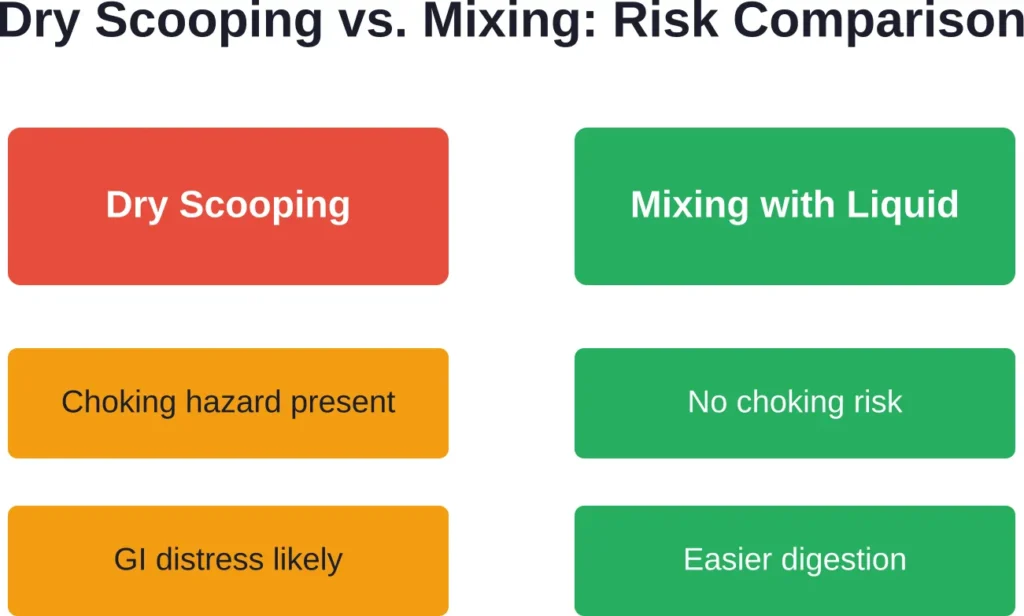
This is the most immediate danger. Creatine powder is dry, fine, and doesn’t dissolve instantly on contact with saliva. Dumping a scoop into the mouth can trigger coughing, gagging, or—in worst-case scenarios—choking.
The powder can coat the throat and airway, making it difficult to breathe. Inhaling even a small amount can cause serious respiratory distress.
There’s a reason why food safety guidelines discourage consuming dry powders. The texture and consistency create a genuine aspiration risk.
Gastrointestinal Distress
Creatine powder hitting the stomach in concentrated form can lead to digestive issues. Cramping, bloating, nausea, and diarrhea are common complaints.
Among collegiate athletes, 41% reported creatine use, with 24% experiencing gastrointestinal distress. Dry scooping likely increases that percentage by delivering the powder in a less digestible form.
Breathing Difficulties
Inhaling creatine powder—even accidentally—can irritate the lungs and airways. The fine particles aren’t meant to be inhaled, and doing so can cause coughing fits, shortness of breath, or lung inflammation.
This risk multiplies if someone dry scoops pre-workout powders, which often contain stimulants like caffeine. Inhaling caffeine powder can lead to rapid heart rate, chest pain, and even cardiac events in extreme cases.
Increased Cardiovascular Stress
While creatine itself is safe for the heart, dry scooping pre-workout formulas (which people often confuse with creatine) has been linked to cardiovascular incidents. The sudden influx of stimulants without dilution can spike heart rate and blood pressure dangerously.
Creatine doesn’t contain stimulants, so this risk is lower. But the broader dry scooping trend has caused real medical emergencies, and it’s worth noting that habit.
Why Mixing Creatine With Liquid Is the Smarter Move
Mixing creatine powder with water, juice, or another beverage before drinking it eliminates nearly all the risks associated with dry scooping. And it doesn’t sacrifice convenience or effectiveness.
Easier Digestion
When creatine is dissolved or suspended in liquid, the digestive system processes it more efficiently. The stomach doesn’t have to work as hard to break down a concentrated clump of powder, reducing the likelihood of cramping or nausea.
Better Hydration
Creatine works best when the body is well-hydrated. Mixing the powder with at least 8-12 ounces of water ensures adequate fluid intake alongside supplementation.
Dehydration can interfere with creatine’s muscle-saturating effects and increase the risk of cramping. Water is your friend here.
No Choking Risk
This one’s obvious. Liquid doesn’t coat the throat or trigger coughing fits. Drinking a dissolved supplement is straightforward and safe.
Same Results, Less Drama
The effectiveness of creatine doesn’t change based on delivery method. Mixed or dry scooped, the supplement ends up in the same place doing the same job.
But one method is measurably safer. The choice is pretty clear.
How to Take Creatine Safely and Effectively
If the goal is to supplement with creatine responsibly, here’s the straightforward approach that aligns with sports nutrition research.
Standard Dosing Protocol
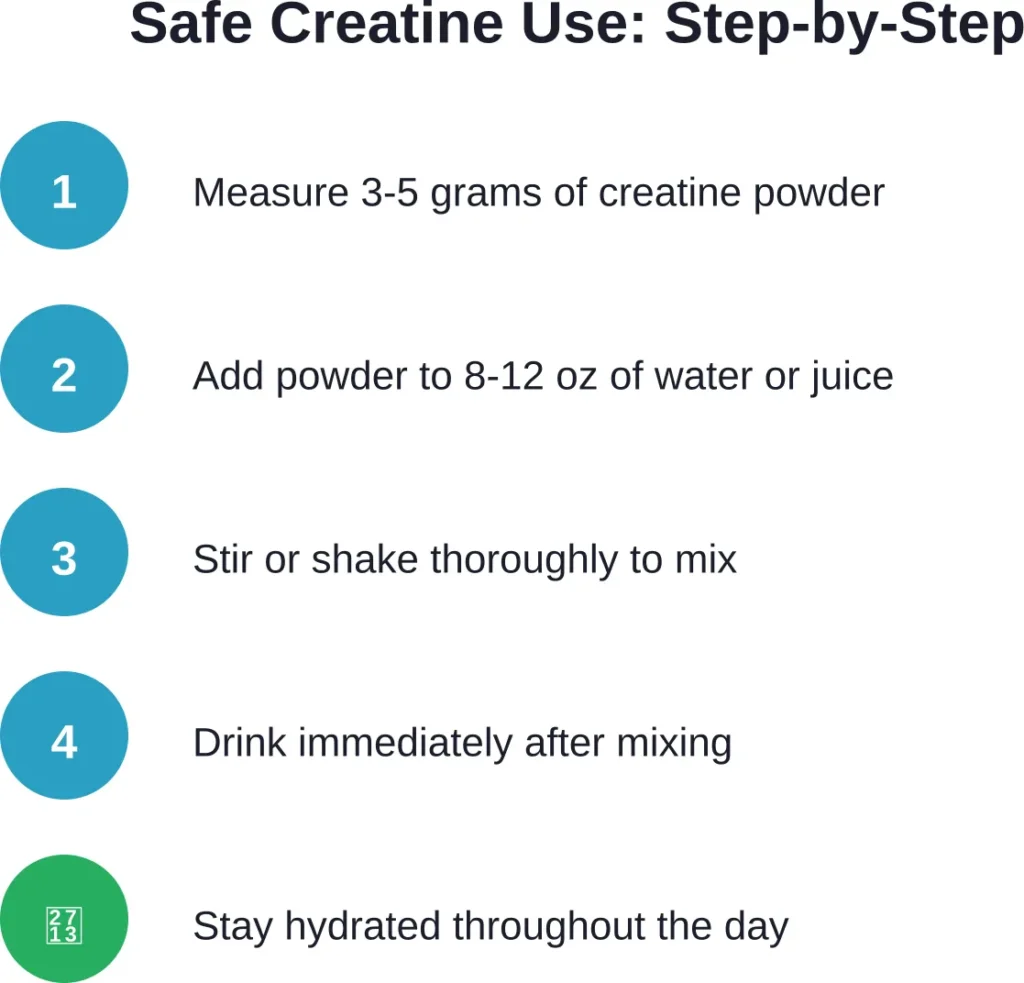
The most researched protocol involves a loading phase followed by a maintenance phase. During loading, take 20 grams per day (split into four 5-gram doses) for 5-7 days. After that, drop to a maintenance dose of 3-5 grams daily.
Alternatively, skip the loading phase entirely and take 3-5 grams per day from the start. Muscle creatine saturation takes a few weeks longer this way, but the endpoint is the same.
Mix With 8-12 Ounces of Liquid
Water works perfectly. Juice, milk, or a protein shake are also fine. The key is dissolving or suspending the powder in enough liquid to make consumption smooth.
Stir thoroughly. Creatine monohydrate doesn’t dissolve completely in cold water, but it doesn’t need to. Drinking the mixture ensures the powder gets where it needs to go.
Timing Doesn’t Matter Much
Creatine isn’t a pre-workout in the traditional sense. Taking it immediately before exercise won’t produce an instant energy boost. The supplement works by saturating muscle stores over time.
That said, many people take creatine post-workout or with a meal for convenience. Both approaches work fine. Consistency matters more than timing.
Stay Hydrated
Creatine pulls water into muscle cells, which is part of how it works. Drinking plenty of water throughout the day supports this process and reduces the risk of cramping.
General hydration guidelines apply: aim for half an ounce to an ounce of water per pound of body weight daily, adjusted for activity level and climate.
Who Should Avoid Dry Scooping Creatine?
Honestly? Everyone. But certain groups face elevated risks.
People With Swallowing Difficulties
Dysphagia or any condition affecting the ability to swallow safely makes dry scooping particularly dangerous. Choking risk multiplies when swallowing mechanics are already compromised.
Those With Respiratory Conditions
Asthma, COPD, or other lung conditions increase vulnerability to powder inhalation. Even a small amount of creatine entering the airways can trigger serious breathing problems.
Adolescents and Young Athletes
Teens are disproportionately influenced by social media trends. Given that 17% of adolescents surveyed reported dry scooping, parents and coaches should emphasize safer supplementation practices.
Anyone Prone to GI Issues
If creatine already causes stomach upset when mixed properly, dry scooping will make it worse. People with sensitive digestive systems should stick to well-diluted doses.
Common Myths About Dry Scooping Creatine
Let’s clear up a few persistent misconceptions.
Myth: It Works Faster
Absorption happens in the small intestine regardless of delivery method. Dry scooping doesn’t accelerate this process.
Myth: It’s More Convenient
Mixing creatine with water takes about 15 seconds. Dry scooping followed by chugging water takes roughly the same amount of time, but with added risk.
Myth: It Increases Potency
Creatine’s effectiveness depends on muscle saturation, not how dramatically it enters the body. There’s no potency boost from bypassing the mixing step.
Myth: Everyone’s Doing It
Social media amplifies trends, but most athletes and gym-goers still mix their supplements like rational adults. The dry scooping crowd is loud, not large.
What the Research Says About Creatine Safety
Creatine monohydrate is one of the most studied supplements in sports nutrition. Decades of research confirm its safety when used as directed.
Research has concluded that creatine supplementation does not increase the prevalence or frequency of side effects when compared to placebo. Claims that creatine supplementation increases the risk of adverse effects are unfounded.
Concerns about kidney function have been thoroughly debunked. While creatine supplementation does increase creatinine levels (a byproduct of creatine metabolism), this doesn’t indicate kidney damage. In fact, creatine spontaneously degrades into creatinine at a rate of approximately 2% per day in skeletal muscle.
Among collegiate athletes, 41% reported creatine use. While 24% experienced gastrointestinal distress, these symptoms correlate more strongly with dosing practices and hydration status than with creatine itself.
The bottom line: creatine is safe. Dry scooping it is not.
Frequently Asked Questions
Yes, inhaling creatine powder can irritate the airways and lungs. The fine particles aren’t meant to enter the respiratory system, and accidental inhalation can cause coughing, shortness of breath, or inflammation. Mixing creatine with liquid eliminates this risk entirely.
No. Creatine absorption occurs in the small intestine regardless of whether the powder is mixed with liquid beforehand or swallowed dry. The digestive process is the same, and there’s no speed advantage to dry scooping.
Social media trends drive much of the behavior. Influencers promote dry scooping as a time-saving hack or a more intense way to take supplements. The dramatic visual content also generates engagement, which incentivizes more people to try it despite the risks.
Both carry risks, but dry scooping pre-workout is generally more dangerous because those formulas often contain high doses of stimulants like caffeine. Concentrated caffeine entering the system rapidly can cause heart palpitations, chest pain, and cardiovascular stress. Creatine doesn’t contain stimulants, so the primary risks are choking and GI distress.
Mix creatine powder with at least 8-12 ounces of liquid. Beyond that, maintain general hydration throughout the day—aim for half an ounce to an ounce of water per pound of body weight, adjusted for activity level.
Yes. Concentrated creatine powder hitting the stomach without dilution can cause cramping, bloating, and nausea. Research shows that 24% of collegiate athletes using creatine experienced gastrointestinal distress, and dry scooping likely increases that percentage.
Mix 3-5 grams of creatine monohydrate with 8-12 ounces of water or another beverage. Stir thoroughly and drink it immediately. Take creatine consistently every day, with or without food, and stay well-hydrated throughout the day.
The Bottom Line on Dry Scooping Creatine
So, is it OK to dry scoop creatine? Technically, some people do it without immediate catastrophe. But that doesn’t make it a good idea.
Dry scooping carries measurable risks—choking, GI distress, breathing difficulties—without offering any benefits. Creatine doesn’t work faster or better when consumed dry. Absorption happens in the small intestine either way, and muscle saturation builds over time regardless of delivery method.
Mixing creatine with water takes seconds, eliminates nearly all the risks, and produces identical results. There’s no rational argument for dry scooping when the safer alternative is just as convenient.
Creatine monohydrate is one of the most effective, well-researched supplements available. It enhances strength, supports muscle growth, and has applications beyond athletic performance—including cognitive and metabolic health. But like any supplement, it works best when used intelligently.
Skip the TikTok trends. Mix the powder with water. Stay hydrated. Be consistent. That’s the formula that actually works.