

Quick Summary: Eating a banana every day is perfectly healthy for most people and provides valuable nutrients like potassium, fiber, and vitamin B6 that support heart health, digestion, and energy levels. According to the CDC, 12.3% of adults met fruit intake recommendations in 2019, making daily banana consumption a simple way to improve nutritional intake. However, individuals with kidney conditions should consult healthcare providers due to potassium restrictions.
Bananas are one of the most popular fruits worldwide, and for good reason. They’re portable, affordable, and naturally sweet. But if you’re reaching for one every single day, you might wonder whether that’s actually a healthy habit.
The short answer? For most people, eating a banana every day is not just okay—it’s beneficial. Here’s what the science says about making bananas a daily dietary staple.
Why Most People Should Eat More Fruit (Including Bananas)
Before diving into bananas specifically, consider this sobering data: According to the CDC, 12.3% of adults met fruit intake recommendations in 2019. That’s right—nearly 9 out of 10 Americans don’t eat enough fruit.
Vegetable intake is even worse, with just 10.0% of adults meeting recommendations. Among high school students in 2017, only 7.1% met fruit recommendations and just 2.0% met vegetable recommendations.
These numbers reveal a significant nutritional gap. Adding a daily banana is one of the simplest ways to improve overall fruit intake and boost essential nutrient consumption.
The Nutritional Power of One Daily Banana
What makes bananas worth eating every day? They’re packed with nutrients that support multiple body systems.
Potassium for Heart Health and Blood Pressure
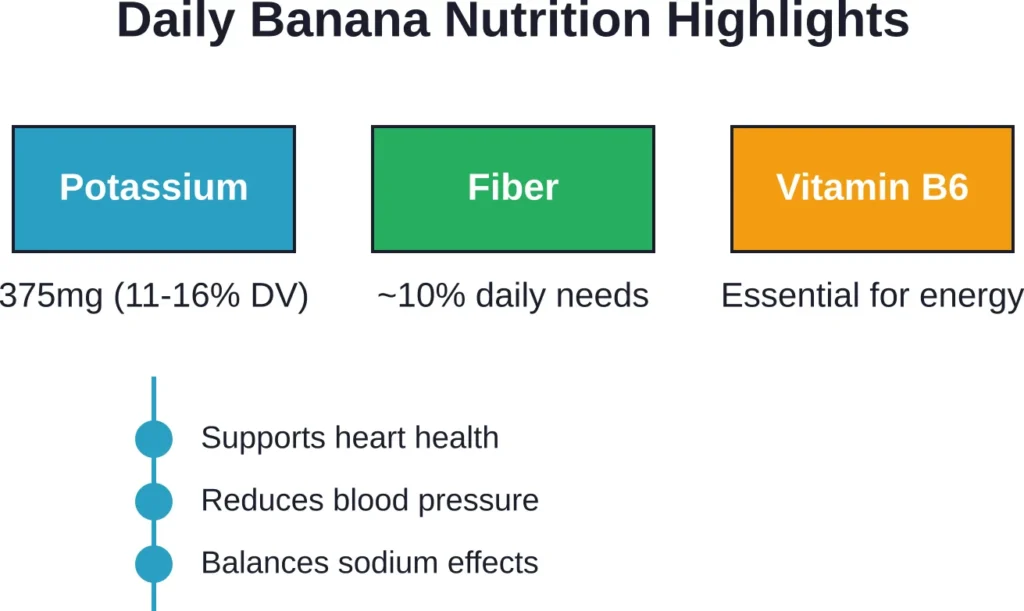
According to the U.S. Department of Agriculture, one medium banana provides 375 milligrams of potassium. That’s about 11% of the recommended daily potassium for a man and 16% for a woman.
Potassium is vital for heart health, especially blood pressure management. The World Health Organization emphasizes increasing potassium intake to reduce blood pressure and cardiovascular disease risk, which remains the leading cause of death globally.
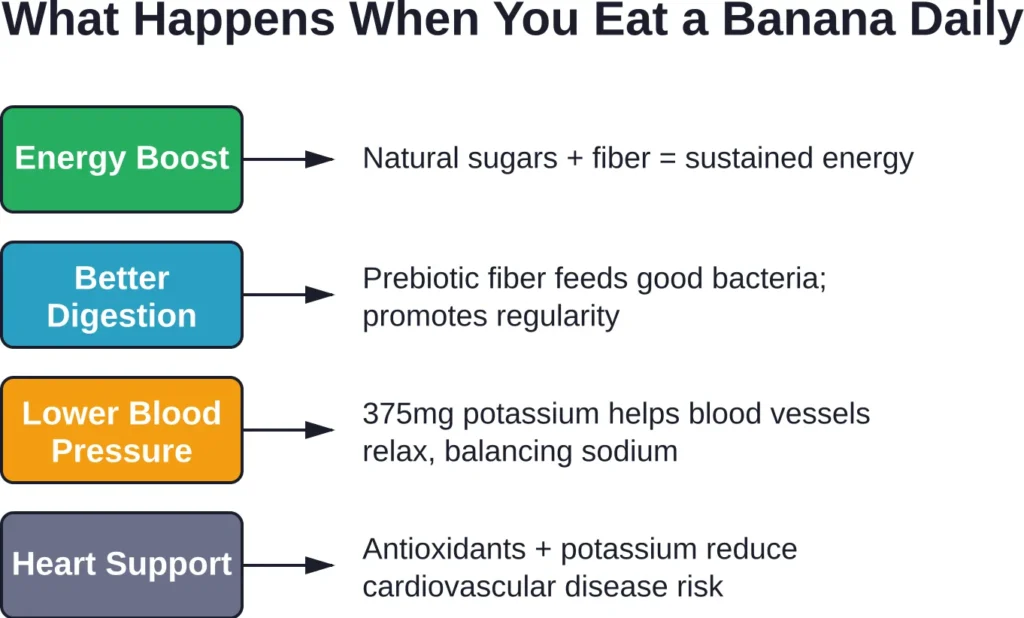
Higher potassium intake helps counterbalance sodium’s effects, allowing blood vessels to relax and reducing strain on the cardiovascular system.
Fiber for Digestive Health
One medium banana provides fiber to support digestive health. Both water and fiber content promote regularity and encourage digestive health.
Here’s the thing though—banana ripeness matters. Slightly underripe bananas offer a unique advantage: they’re a source of prebiotic fiber that feeds beneficial gut bacteria, supporting overall gut health and improving the digestive system’s function.
Vitamin B6 and Energy Support
Bananas are a good source of vitamin B6, which plays essential roles in energy metabolism and cognitive function. This vitamin helps convert food into usable energy without the crash associated with refined sugars.
The natural sugars in bananas—combined with fiber—provide sustained energy rather than quick spikes and subsequent crashes.
Health Benefits of Daily Banana Consumption
When you eat a banana every day, several positive changes can occur in your body.
Blood Sugar Balance
Despite their sweetness, bananas can help manage blood sugar levels. Fiber helps lower blood sugar levels, and research indicates that eating a high-fiber diet could reduce type 2 diabetes risk and may lower blood sugar in those who already have the disease.
Reduced Bloating and Better Hydration
Bananas contain both water and electrolytes that support hydration. The potassium content may help reduce bloating by balancing sodium levels and reducing water retention.
Some people report that daily banana consumption helps with digestive regularity and reduces uncomfortable bloating.
Heart Disease and Cancer Risk Reduction
Bananas may help lower blood pressure and reduce the risk of developing cancer, according to nutritional research. The combination of potassium, fiber, and antioxidants provides cardiovascular protection.
Antioxidants in bananas combat oxidative stress and inflammation, both of which contribute to chronic disease development.
Is It Possible to Eat Too Many Bananas?
Now, this is where it gets interesting. While one banana daily is beneficial for most people, there are scenarios where caution is warranted.
Kidney Conditions and Potassium Restrictions
Individuals with chronic kidney disease or those taking certain medications may need to limit potassium intake. Damaged kidneys struggle to remove excess potassium from the blood, which can lead to dangerous accumulation.
If you have kidney concerns, consult a healthcare provider before making bananas a daily habit.
Carbohydrate Considerations
According to the WHO, carbohydrates should comprise 45–75% of total daily energy intake. Bananas fit well within a healthy dietary pattern, but those managing blood sugar conditions should monitor overall carbohydrate distribution throughout the day.
One medium banana contains carbohydrates, which is manageable when balanced with protein and healthy fats.
Variety Matters
Real talk: no single fruit provides every nutrient the body needs. While bananas are nutritious, eating a variety of fruits ensures broader nutrient coverage.
The WHO emphasizes that healthy dietary practices include adequacy, balance, moderation, and variety. A banana can be part of that variety, but shouldn’t be the only fruit consumed.
Practical Ways to Work Bananas Into Your Diet
Beyond just peeling and eating, bananas are versatile.
- Slice over oatmeal or whole-grain cereal for added natural sweetness
- Blend into smoothies with leafy greens and protein powder
- Freeze and blend for a healthy ice cream alternative
- Mash into whole-wheat pancake or waffle batter
- Pair with nut butter for a balanced snack combining carbs, protein, and healthy fats
The Academy of Nutrition and Dietetics suggests baked banana fritters topped with Greek yogurt and walnuts as a naturally sweet breakfast option.
Frequently Asked Questions
One medium banana contains calories. When eaten as part of a balanced diet, daily banana consumption is unlikely to cause weight gain. The fiber content actually promotes satiety, potentially helping with weight management.
There’s no scientifically “best” time. Many people enjoy bananas in the morning for sustained energy, while athletes often eat them before or after workouts for quick carbohydrate replenishment and potassium replacement. Choose whatever timing fits your routine and energy needs.
It depends on your goals. Slightly green (underripe) bananas contain more resistant starch and prebiotic fiber, supporting gut health and providing slower sugar release. Ripe yellow bananas are easier to digest and provide quicker energy. Both are healthy—just different.
Many diabetics can include bananas in their diet, but portion control and timing matter. The fiber in bananas helps moderate blood sugar response. However, individuals with diabetes should monitor their blood glucose response and consult their healthcare team about appropriate fruit intake.
Bananas can interact with certain medications, particularly ACE inhibitors and potassium-sparing diuretics used for blood pressure and heart conditions. These medications can increase potassium levels, and adding high-potassium foods might cause dangerous accumulation. Always discuss dietary changes with your doctor if you’re on medication.
For healthy individuals without kidney issues, eating bananas daily can be part of a healthy diet. Consuming excessive amounts could lead to nutrient imbalances or digestive discomfort. Moderation and variety remain key principles of healthy eating.
Bananas are often recommended for muscle cramps due to their potassium content, which plays a role in muscle function. While potassium deficiency can contribute to cramping, cramps usually result from multiple factors including hydration status and electrolyte balance, not just potassium alone.
The Bottom Line on Daily Banana Consumption
For the vast majority of people, eating a banana every day is not just okay—it’s a simple, affordable way to boost nutrient intake and support overall health. Given that only 12.3% of adults meet fruit recommendations, adding a daily banana addresses a significant nutritional gap.
Bananas provide heart-healthy potassium, digestion-supporting fiber, energy-boosting vitamin B6, and beneficial antioxidants. They support blood pressure management, digestive regularity, and sustained energy without processed sugars.
That said, individuals with kidney conditions should consult healthcare providers before increasing potassium intake. And remember—variety matters. Bananas are excellent, but they work best as part of a diverse dietary pattern that includes multiple fruits, vegetables, whole grains, and lean proteins.
Sound familiar? If you’ve been wondering whether that daily banana habit is healthy, the science says yes. Go ahead and keep that banana in your routine—your body will thank you.