
Quick Summary: Eating fruit before bed is generally okay and can even promote better sleep if you choose the right types. Fruits rich in sleep-supporting nutrients like melatonin, magnesium, and tryptophan—such as kiwi, cherries, and banana—can help improve sleep quality when consumed in moderate portions. The key is timing your snack 30-60 minutes before bed and avoiding high-sugar tropical fruits that might spike blood sugar and disrupt rest.
That late-night hunger pang hits different. You’re winding down, ready for sleep, but your stomach has other plans. Reaching for a piece of fruit seems like a healthy choice—but does it actually help or hurt your sleep quality?
The short answer? It depends on what you’re eating and when.
The relationship between diet and sleep is more complex than most people realize. Research published in Advances in Nutrition demonstrates that diet impacts sleep efficiency and sleep-onset latency. Sleep efficiency below 85% or taking more than 20-30 minutes to fall asleep indicates poor sleep quality, according to studies using polysomnography measurements.
But here’s the thing—fruit isn’t the enemy. Certain types can actually support better rest.
The Science Behind Fruit and Sleep Quality
A substantial body of research shows a reciprocal relationship between sleep and fruit consumption. Studies in Nutrients have examined how fruit and vegetable intake affects sleep patterns and vice versa.
The economic impact is staggering. According to research analyzing data from 62,000 people in five countries, insufficient sleep costs the US economy $411 billion annually. Insufficient sleep costs Japan $138 billion annually, the UK £40 billion, and Germany $60 billion annually.
So what happens when you combine these two factors?
Best Fruits to Eat Before Bed
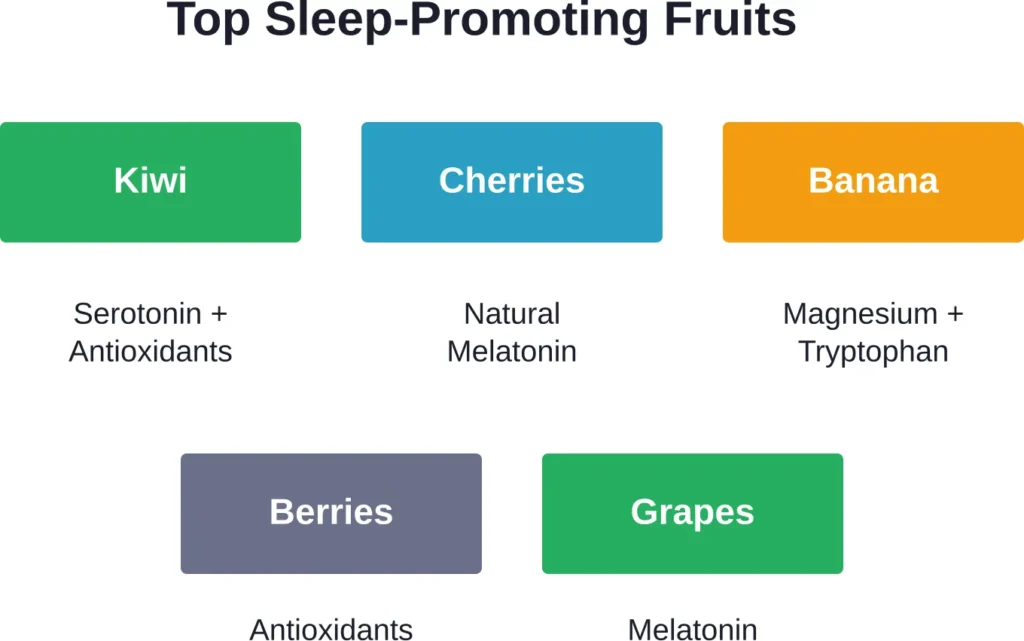
Not all fruits affect sleep the same way. Some contain specific compounds that actively promote rest.
Kiwi: The Sleep Champion
Research on kiwifruit consumption has examined improvements in sleep patterns. The fruit contains antioxidants and serotonin that may benefit those with sleep disorders.
Kiwifruits pack a triple punch of sleep-promoting nutrients: vitamin C, serotonin precursors, and antioxidants that reduce inflammation.
Cherries and Melatonin
Tart cherries are one of the few natural food sources of melatonin—the hormone that regulates your sleep-wake cycle. They offer a gentle, food-based approach to increasing melatonin levels without supplements.
Bananas for Muscle Relaxation
Research has examined bedtime banana and milk intake in relation to sleep quality. Foods rich in tryptophan, like bananas, given at bedtime may improve both sleep parameters and appetite hormones.
Bananas also provide magnesium and potassium—minerals that help relax muscles and nerves.
Fruits to Avoid Before Bed
While some fruits promote sleep, others can interfere with rest—especially if you’re prone to blood sugar fluctuations or acid reflux.
High-sugar tropical fruits like mangoes, pineapples, and very ripe bananas can spike blood glucose levels. Research from Columbia University found that diets high in refined carbohydrates and added sugars increased the risk of insomnia in postmenopausal women.
Citrus fruits pose a different problem. Oranges, grapefruits, and lemons are acidic and may trigger heartburn when you lie down—particularly if you eat them within two hours of bed.
| Fruit Type | Best For Sleep | Timing Matters |
|---|---|---|
| Kiwi, Cherries, Banana | Yes—sleep-promoting nutrients | 30-60 min before bed |
| Berries, Grapes, Melon | Good—low sugar, hydrating | 30-90 min before bed |
| Mango, Pineapple | Avoid—high sugar content | Earlier in day |
| Citrus fruits | Avoid—may cause reflux | 3+ hours before bed |
Debunking Common Myths About Eating Fruit at Night
Despite what online sources claim, there’s no magical “best time” to eat fruit. Medical News Today notes that people can get similar health benefits from fruit at any time of day.
That said, timing can matter for specific goals.
Myth: Never Eat Fruit on an Empty Stomach
This claim has zero scientific backing. Research on meal sequencing found that eating fruit before a meal reduced subsequent energy intake by 18.5% (166 kcal) compared to control.
For weight management, eating fruit first may offer benefits.
Myth: Fruit Sugar Keeps You Awake
Natural fruit sugars behave differently than refined sugars. The fiber in whole fruit slows glucose absorption, preventing the sharp spikes and crashes associated with processed sweets.
The American Heart Association recommends whole fruits and advises limiting fruit juice servings to ½ cup of 100% juice.
Myth: Diabetes Means No Fruit at Night
The American Diabetes Association confirms that fresh, frozen, or canned fruits without added sugars can be part of a healthy diabetes meal plan. The key is portion control and choosing lower-glycemic options.
Portion Size Matters
Even the best sleep-promoting fruits can backfire if portions are too large. A heavy stomach right before bed works against quality rest.
The American Heart Association recommends 2 cups of fruit daily for most adults. For a bedtime snack, aim for about half that amount—roughly one cup or one medium piece of fruit.
Think: one kiwi, a small banana, or a handful of cherries. Not a fruit salad.
Combining Fruit with Other Sleep-Friendly Foods
Pairing fruit with complementary foods can enhance sleep benefits. Research on bedtime nutrition found that combining tryptophan-rich foods improved both sleep parameters and appetite hormones.
Smart combinations include:
- Banana slices with a small handful of almonds (adds magnesium and healthy fats)
- Cherries with a few walnuts (provides omega-3s and melatonin)
- Kiwi with plain yogurt (adds protein and probiotics)
- Berries with a small amount of cottage cheese (balances carbs with protein)
The CDC notes that for night-shift workers adjusting their circadian rhythms, eating when the digestive tract expects sleep increases risk for gastrointestinal symptoms and metabolic issues. The same principle applies to late-night eating—lighter is better.
What About Fruit Juice Before Bed?
Whole fruit beats juice every time for bedtime snacking. Juice lacks fiber, which means faster sugar absorption and less satiety.
If choosing juice, the American Heart Association advises limiting portions to ½ cup of 100% juice. Skip fruit drinks, punches, or cocktails—they contain added sugars that can disrupt sleep quality.
The American Academy of Pediatrics (AAP) recommends that children under 1 year not have fruit juice. For children aged 1-3 years, AAP recommends no more than 4 ounces of 100% fruit juice daily.
Special Considerations for Different Groups
Different populations may need to adjust their bedtime fruit strategy.
For people managing diabetes, the American Diabetes Association recommends fresh or frozen fruits without added sugars. Monitor how different fruits affect individual blood glucose levels—responses vary.
Athletes recovering from training may benefit from fruit’s natural carbohydrates. Research on elite athletes found that kiwifruit positively impacted both sleep and recovery markers.
Older adults face unique challenges. Research shows that as people age, they need fewer calories to maintain weight. Nutrient-dense fruits offer vitamins without excess calories—but portions should reflect reduced energy needs.
Frequently Asked Questions
Eating fruit before bed won’t cause weight gain unless it pushes total daily calories into a surplus. Research showed that eating fruit before meals actually reduced subsequent energy intake by 166 calories. Moderate portions of fruit as a bedtime snack are unlikely to impact weight when part of a balanced diet.
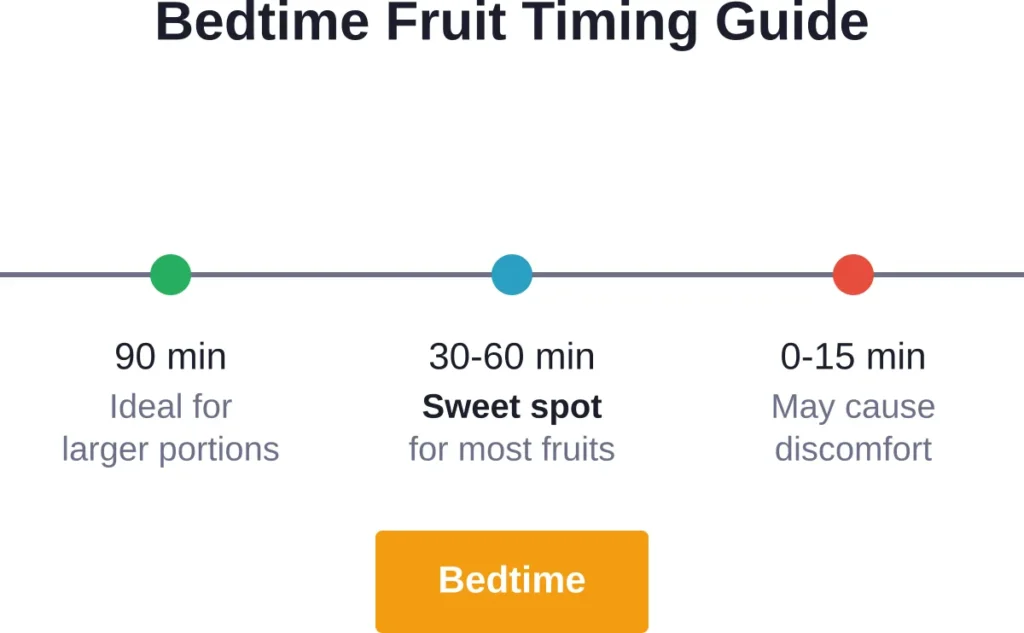
Aim for 30-60 minutes before bed for optimal digestion and sleep benefits. This timing allows initial digestion while ensuring sleep-promoting nutrients like melatonin and magnesium are available when needed. For larger portions or higher-sugar fruits, allow 90 minutes or more.
Certain fruits can support faster sleep onset. Research on kiwifruit consumption has examined improvements in sleep patterns, while research confirmed tart cherries provide natural melatonin. Bananas offer tryptophan and magnesium that promote relaxation. Results vary individually, but sleep-friendly fruits may reduce the time it takes to fall asleep.
Fruit offers advantages over processed snacks—it provides fiber, vitamins, and sleep-supporting compounds without artificial ingredients. Research in Advances in Nutrition found that diet quality affects sleep efficiency and sleep-onset latency. Whole fruits rank among the healthiest bedtime options when portions are controlled.
Avoid acidic fruits like citrus, pineapple, and tomatoes if prone to reflux. Stick with low-acid options like bananas, melons, and berries. Eat at least 2-3 hours before lying down to allow proper digestion and minimize symptoms.
Yes, according to the American Diabetes Association. Choose fresh, frozen, or canned fruits without added sugars. Pair fruit with protein or healthy fats to slow glucose absorption. Monitor blood sugar responses to determine which fruits and portions work best individually.
Frozen fruits retain most nutrients and sleep-promoting compounds. For canned fruit, choose varieties packed in water or juice without added sugars—the American Diabetes Association confirms these can provide similar benefits. Avoid fruits in heavy syrup, which adds unnecessary sugar that may disrupt sleep.
The evidence is clear: eating fruit before bed isn’t just okay—it can actively support better sleep when done right. Focus on low-sugar, nutrient-dense options like kiwi, cherries, and bananas. Time your snack 30-60 minutes before bed and keep portions moderate.
Remember, quality sleep contributes to overall health in ways that extend far beyond feeling rested. The economic burden of sleep disruption tops $411 billion annually in the US alone. Simple dietary choices—like choosing the right bedtime snack—represent low-cost interventions with potentially significant impact.
Ready to improve your sleep naturally? Start experimenting with sleep-friendly fruits tonight and track how different options affect your rest quality over the next week.