
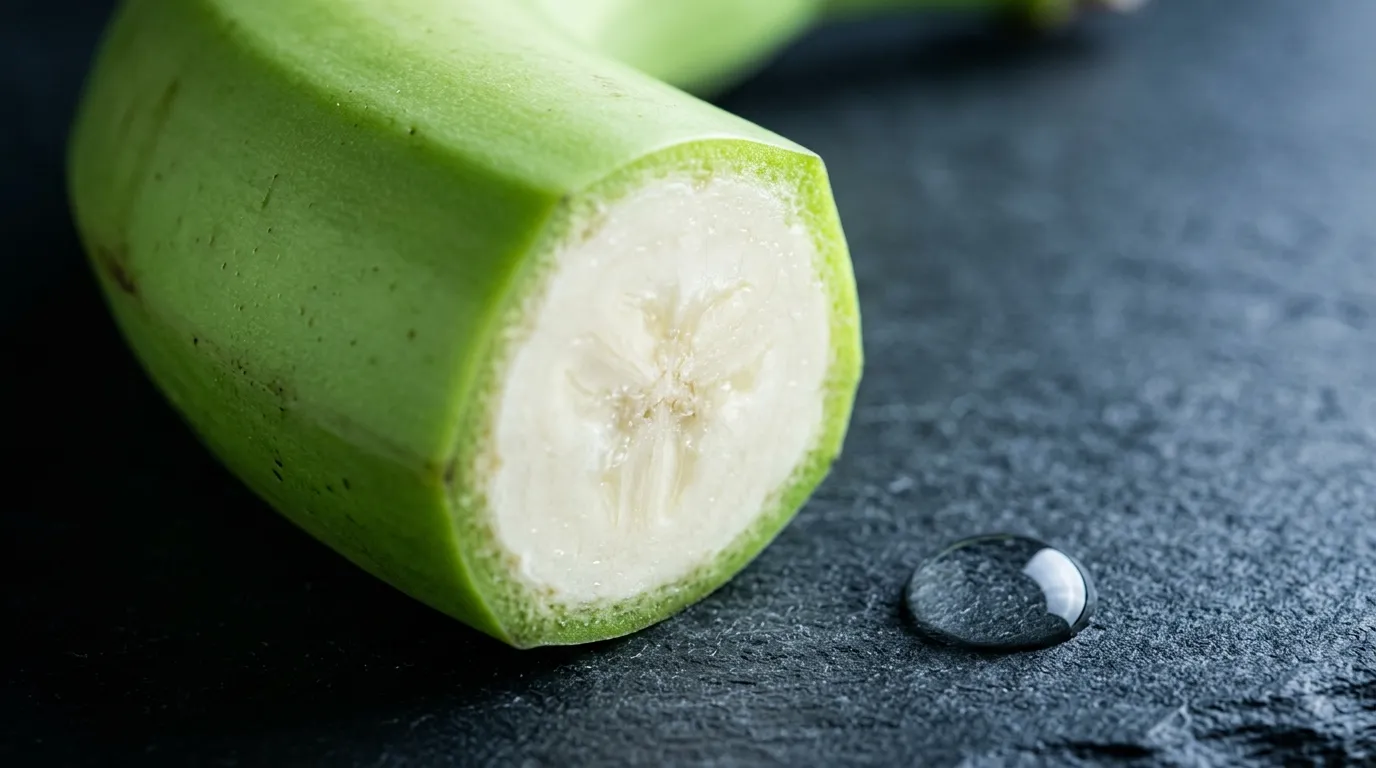
Quick Summary: Green bananas are completely safe to eat and offer unique health benefits. They contain high amounts of resistant starch that supports digestive health, blood sugar control, and may reduce cancer risk according to recent research. While less sweet than yellow bananas, green bananas provide the same essential vitamins and minerals, making them a nutritious choice at any ripeness stage.
Most people wait for bananas to turn sunny yellow before peeling them. But here’s something that might surprise you: those firm, green bananas sitting on your counter aren’t just edible—they’re actually packed with unique health benefits that disappear once the fruit ripens.
Green bananas have a very different nutritional profile compared to their sweeter, yellow counterparts. And for certain health goals, that green stage might be exactly what you’re looking for.
What Makes Green Bananas Different?
The color isn’t just cosmetic. As bananas ripen, their internal chemistry transforms dramatically.
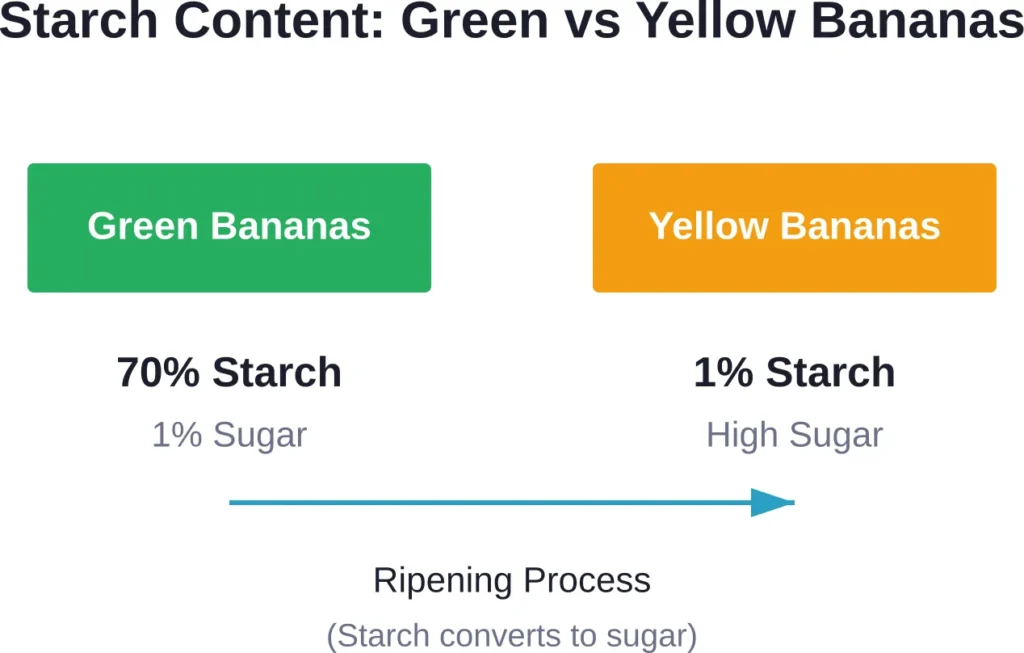
Green bananas contain mostly starch—specifically resistant starch, which behaves more like fiber than typical carbohydrates. During the ripening process, enzymes break down this starch into simple sugars: sucrose, glucose, and fructose. That’s why yellow bananas taste sweet while green ones have a firmer, almost chalky texture with minimal sweetness.
Ripe yellow bananas contain only about 1% starch. The rest has converted to sugar, giving them that familiar sweet taste. Green bananas flip this ratio entirely.
The Resistant Starch Advantage
Green banana flour contains approximately 30% resistant starch availability, with total starch content reaching approximately 70% on a dry basis.
Resistant starch earned its name because it resists digestion in the small intestine. Instead, it travels to the colon where it feeds beneficial gut bacteria, functioning as a prebiotic fiber.
This isn’t just theoretical. A landmark 2023 study published in Cancer Prevention Research found that daily consumption of resistant starch over two years was associated with a 60% reduction in certain cancers among high-risk individuals.
Are Green Bananas Safe to Eat?
Absolutely. Green bananas are completely safe for consumption, though they’re less commonly eaten raw in many cultures due to their bitter, astringent taste and firmer texture.
They contain the same essential vitamins and minerals as yellow bananas, including potassium (9% of daily value per medium banana), vitamin B6 (25% DV), vitamin C (11% DV), magnesium (7% DV), copper (10% DV), and manganese (14% DV).
The main difference lies in digestibility and taste. Some people experience mild bloating or gas when eating green bananas due to the resistant starch content. This is normal and typically indicates the prebiotic fiber is doing its job feeding gut bacteria.
For most people, this isn’t problematic. But if digestive discomfort occurs, cooking green bananas can help break down some of the resistant starch while preserving many benefits.
Health Benefits of Green Bananas
The resistant starch and pectin in green bananas deliver several research-backed advantages.
Blood Sugar Management
Because green bananas contain minimal simple sugars and high amounts of resistant starch, they have a much lower glycemic impact than ripe bananas. The resistant starch doesn’t spike blood glucose levels the way regular starches do.
This makes green bananas particularly interesting for people monitoring blood sugar or following lower-glycemic eating patterns.
Digestive Health Support
Resistant starch acts as fuel for beneficial bacteria in the colon. These bacteria ferment the resistant starch, producing short-chain fatty acids like butyrate that support colon health and reduce inflammation.
Green bananas also contain significant amounts of pectin, a type of soluble fiber that can help with both diarrhea and constipation by normalizing bowel function.
Appetite Control and Satiety
The fiber-like properties of resistant starch promote feelings of fullness. Because it resists digestion in the small intestine, it doesn’t provide the quick energy burst of simple carbohydrates—but it does help you feel satisfied longer.
Combined with the pectin content, green bananas can help moderate appetite more effectively than their sweeter, ripe counterparts.
| Feature | Green Bananas | Yellow Bananas |
|---|---|---|
| Taste | Bitter, starchy, less sweet | Sweet, creamy |
| Texture | Firm, waxy | Soft, easy to mash |
| Starch Content | 70% (mostly resistant) | ~1% |
| Sugar Content | Very low | High |
| Glycemic Impact | Lower | Higher |
| Best Eaten | Cooked or blended | Raw |
| Prebiotic Benefit | High (resistant starch) | Lower |
How to Eat Green Bananas
Raw green bananas aren’t particularly pleasant for most palates. The texture is chalky, the flavor astringent, and they can leave a fuzzy feeling in your mouth.
But cooking transforms them completely.
Cooking Methods
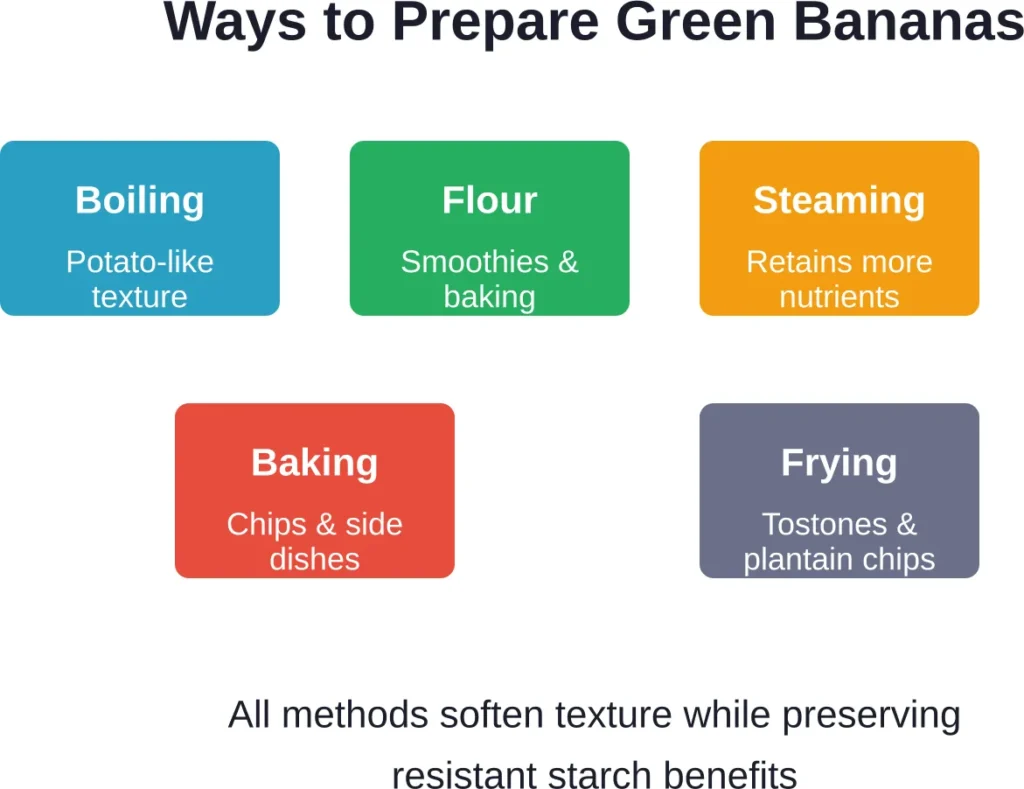
Boiling is the most common preparation. Boiled green bananas develop a potato-like texture and mild flavor that works well in savory dishes. In many Caribbean and Latin American cuisines, boiled green bananas appear in stews, soups, and as side dishes.
Green banana flour offers another convenient option. It can be added to smoothies, baked goods, or used as a gluten-free flour alternative. Commercial products are available that contain high levels of prebiotic fiber.
Steaming, baking, and frying also work well. Each method softens the texture while maintaining much of the resistant starch content, especially if the bananas aren’t overcooked.
Green Bananas vs Plantains
People often confuse green bananas with plantains, but they’re different varieties. Plantains are roughly twice the size of standard bananas and contain even more starch. They’re almost never eaten raw, even when ripe, because they remain starchy throughout their life cycle.
Over 100 plantain cultivars exist worldwide. Both green bananas and plantains offer similar resistant starch benefits when green, but plantains have become more established as a cooking banana in global cuisines.
Are There Any Downsides?
For most people, green bananas present no health concerns. The main issues are preference-based rather than safety-related.
That chalky, astringent taste puts many people off. The texture can feel unpleasant when eaten raw. Higher intakes of resistant starch may cause gas or bloating in some individuals as the gut microbiome adjusts.
Starting with small portions allows the gut microbiome to adjust. Most digestive symptoms diminish as gut bacteria adapt to the increased prebiotic fiber.
When to Choose Green vs Yellow Bananas
Neither option is inherently better—they serve different purposes.
Choose green bananas when seeking maximum resistant starch benefits, lower sugar content, better blood sugar control, or increased satiety. They’re ideal for cooking applications and for people following lower-glycemic eating patterns.
Yellow bananas make more sense when convenience matters. They’re easier to digest, sweeter, and require no preparation. The higher sugar content provides quick energy, making them popular for pre- or post-workout snacks.
Bananas with brown spots? Those are at peak sweetness and easiest to digest, though the resistant starch has fully converted to simple sugars. They’re perfect for baking or smoothies when you want maximum natural sweetness.
What about bananas that are too old? If they smell fermented, have split skins with liquid leaking out, or show mold, they’ve passed their prime and should be discarded.
The Global Picture
Bananas are among the world’s most produced fruits. The Musa Cavendish variety accounts for about 45% of the global banana market due to its high production per hectare and resilience to environmental changes.
Some portion of banana production is not commercialized or is lost to waste. Green banana flour and other products made from underutilized bananas represent an opportunity to reduce this waste while capturing the unique nutritional benefits of unripe fruit.
Frequently Asked Questions
Yes, green bananas are safe to eat raw, though most people find them unpleasantly bitter and chalky. Cooking improves both taste and texture significantly while preserving the resistant starch benefits.
The opposite is typically true. The resistant starch and pectin in green bananas usually support healthy digestion and regular bowel movements. Some people experience temporary gas or bloating as their gut bacteria adjust to the increased prebiotic fiber.
At room temperature, green bananas typically ripen to yellow in 3-5 days. Storing them in a paper bag with an apple or ripe banana speeds the process due to ethylene gas. Refrigeration slows ripening significantly, though the peel may darken.
Green bananas may support weight management goals due to their lower sugar content, resistant starch that promotes satiety, and reduced glycemic impact compared to ripe bananas. But total calorie intake and overall diet quality matter more than banana ripeness alone.
Green bananas can be a better option for people managing blood sugar due to their high resistant starch content and minimal simple sugars. The glycemic impact is considerably lower than ripe bananas. Individual responses vary, so monitoring blood glucose after eating them provides the best guidance.
Green banana flour contains resistant starch, functions as a prebiotic fiber, and is naturally gluten-free. Regular wheat flour contains digestible starch, gluten proteins, and minimal resistant starch. They behave differently in recipes and have distinct nutritional profiles.
Yes, though cooking methods and temperatures affect retention. Gentle cooking (boiling, steaming) preserves more resistant starch than high-heat methods. Even with some loss, cooked green bananas retain significantly more resistant starch than ripe bananas.
The Bottom Line
Green bananas aren’t just safe to eat—they’re a nutritional powerhouse with unique benefits that disappear as the fruit ripens. The high resistant starch content supports gut health, blood sugar management, satiety, and potentially even reduces cancer risk based on recent research.
The taste and texture won’t appeal to everyone, especially raw. But cooking methods like boiling, steaming, or using green banana flour make these benefits accessible without the bitter, chalky experience of raw green bananas.
Next time you see green bananas at the market, grab a bunch. Try cooking them as you would potatoes or toss a tablespoon of green banana flour into your morning smoothie. Your gut bacteria will thank you.