
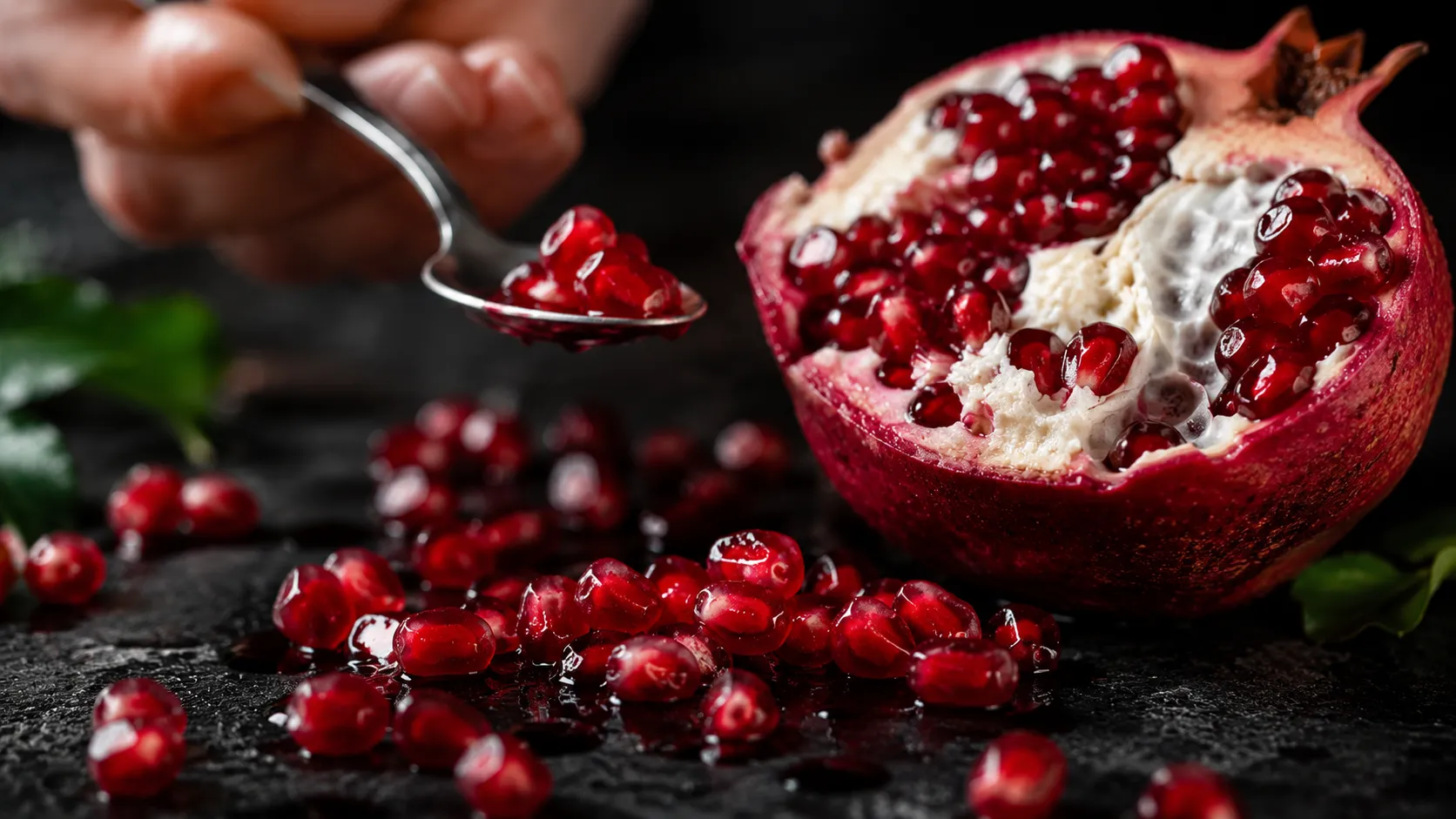
Quick Summary: Yes, pomegranate seeds are completely safe to eat and highly nutritious. The edible portion includes the arils—the juicy red sacs surrounding the seeds—and the crunchy seeds themselves, both packed with antioxidants, fiber, and vitamins. While the white membrane and outer skin are technically edible, they’re quite bitter and usually discarded.
Pomegranates can be intimidating. You crack one open and find hundreds of glistening red jewels, each with a hard seed inside. The big question: do you eat the whole thing, spit out the seeds, or avoid them altogether?
Real talk: most of the confusion comes from the pomegranate’s unique structure. Unlike apples or oranges, this fruit doesn’t play by the usual rules.
What You’re Actually Eating
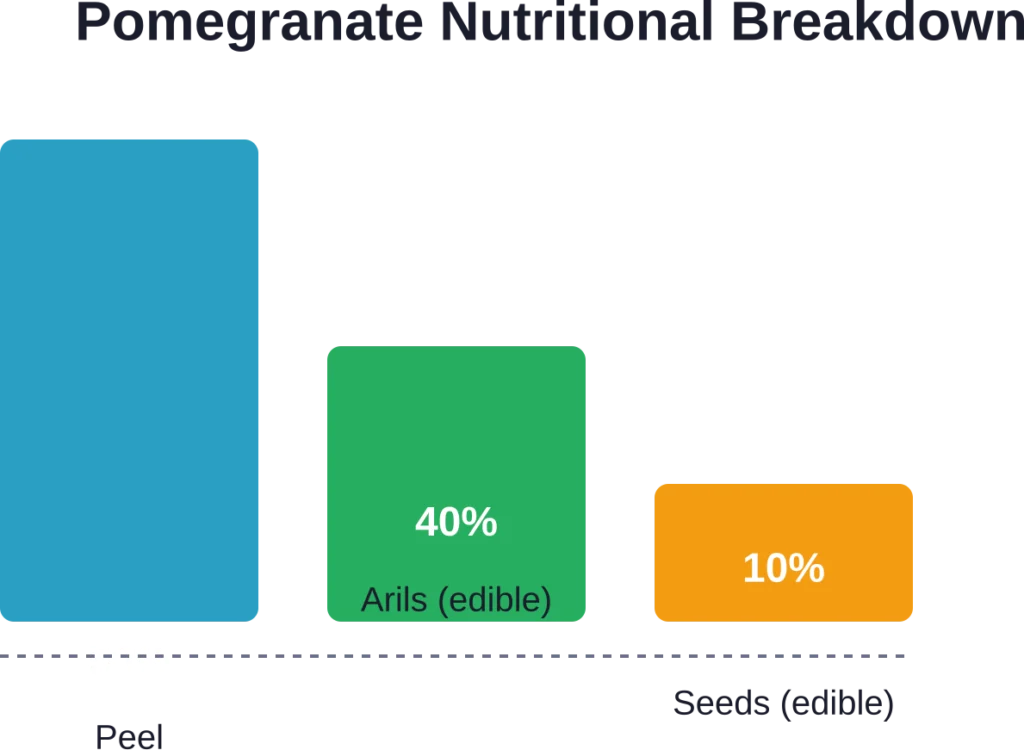
Here’s the thing—when people say “pomegranate seeds,” they’re usually talking about the entire edible portion: the aril. An aril is the juicy, translucent sac that surrounds the actual seed. According to research published in the NIH database, the edible part of a pomegranate consists of 40% arils and 10% seeds, while the peel makes up approximately 50% of the whole fruit.
The arils contain 85% water by composition, which explains that satisfying burst of juice when you bite down. The white seed inside? That’s crunchy, fibrous, and completely safe to eat.
The white membrane separating the arils and the thick outer skin are technically edible but intensely bitter. Most people skip these parts, though some use the peel in extracts or traditional medicine.
Why Eating the Seeds Is Actually Good for You
The American Heart Association highlights pomegranates as rich in dietary fiber and antioxidants. But what does that really mean for your health?
Those crunchy seeds pack serious nutritional value. They’re loaded with polyphenolic antioxidants—compounds that protect against cell damage and inflammation. Harvard Health notes that pomegranates may help lower LDL cholesterol and blood pressure.
The fiber content deserves special attention. While soft fruits give you soluble fiber, pomegranate seeds provide insoluble fiber—the kind that keeps your digestive system moving efficiently. Community discussions on health forums frequently mention this benefit, with users noting improved digestion after adding pomegranate arils to their diet.
Are There Any Risks?
Look, pomegranate seeds are safe for most people. But there are a few situations worth knowing about.
Digestive concerns occasionally pop up in online discussions. If you have chronic constipation or digestive blockage issues, eating large quantities of pomegranate seeds could potentially worsen the problem. The high fiber content that benefits most people might create complications for those with existing intestinal issues.
Allergies are rare but possible. Some people report mild reactions, though pomegranate allergies don’t make the top allergen lists maintained by health authorities.
And here’s something practical: if you’re on blood pressure or cholesterol medication, check with your doctor. Research from Washington University School of Medicine indicates pomegranate compounds can affect how certain medications work.
Storage and Safety Tips
Proper storage matters more than most people realize. According to data from Colorado State University, pomegranates should be stored at temperatures between 32°F and 41°F with 80% to 85% relative humidity. Under these conditions, they can last 6-7 months.
Once you’ve extracted the arils, keep them refrigerated in an airtight container. They’ll stay fresh for about five days. Ready-to-eat arils in plastic cups from grocery stores have become popular specifically because of their convenience—just check the expiration date.
| Storage Method | Temperature | Duration |
|---|---|---|
| Whole fruit (optimal) | 32°F to 41°F | 6-7 months |
| Whole fruit (room temp) | 60°F to 70°F | 1-2 weeks |
| Extracted arils | 35°F to 40°F | 5 days |
| Frozen arils | 0°F or below | 12 months |
Botrytis cinerea fungus can develop during storage, appearing as grey mold. In California, growers use the fungicide Fludioxonil at maximum residue limits of 5 ppm to prevent this. For home storage, maintaining proper humidity prevents most mold issues.
How to Actually Eat Them
Now, this is where it gets interesting. You don’t need to overthink consumption methods.
The simplest approach? Toss them into yogurt, oatmeal, or salads. The American Heart Association features several recipes incorporating pomegranate arils, including tropical parfaits and frozen yogurt bark that pair the seeds with other fruits.
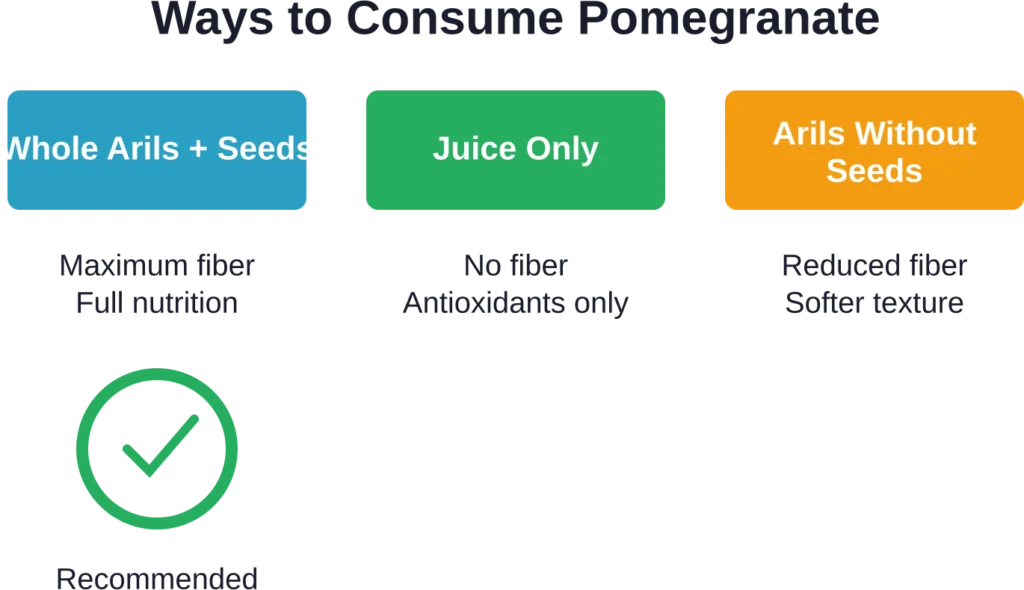
Some people prefer juicing, but you’ll lose most of the fiber benefits. The whole arils—seeds included—deliver the complete nutritional package.
Sprinkling them over savory dishes works surprisingly well. Middle Eastern cuisine has incorporated pomegranates for centuries, using the seeds to add texture and a tart sweetness to grain dishes and roasted vegetables.
The Verdict on Pomegranate Seeds
So—are pomegranate seeds safe to eat? Absolutely. Not only safe, but beneficial for most people.
The seeds provide fiber, antioxidants, vitamins, and minerals that juicing or spitting them out would eliminate. The NIH’s National Center for Complementary and Integrative Health confirms pomegranate has been used in traditional medicine for centuries, with modern research backing many of those historical applications.
That said, moderation matters. A reasonable serving—about half a cup of arils—delivers nutrition without overdoing the fiber intake. And if pomegranates are new to your diet, start small to see how your digestive system responds.
The work of extracting those ruby-red arils? Nutritionists think it’s worth it. The fruit even earned the nickname “jewel of autumn” from health experts for good reason.
Frequently Asked Questions
No need to spit them out. The seeds are edible and provide valuable fiber and nutrients. Many people who grew up spitting the seeds have switched to eating them whole after learning about the health benefits.
For most people, no. The fiber actually supports healthy digestion. However, if you have chronic constipation or intestinal blockage issues, large quantities might cause complications. Start with small amounts if you’re concerned.
That’s the membrane that separates the different chambers of arils inside the fruit. It’s technically edible but extremely bitter, so most people discard it when extracting the arils.
The whole arils (juice sacs plus seeds) contain significantly more fiber than juice alone. While juice preserves the antioxidants, eating the complete aril delivers the full nutritional package including vitamins, minerals, and both soluble and insoluble fiber.
A typical serving is about half a cup of arils, which contains roughly 70-80 calories. This amount provides health benefits without excessive fiber intake. Listen to your body and adjust based on how you feel.
Yes, children can eat pomegranate arils and seeds. The seeds are small enough that choking risk is minimal for kids over three years old. As with any new food, introduce them gradually and supervise young children while eating.
Frozen arils retain most of their nutritional value and can be stored for up to 12 months. They’re a convenient option when fresh pomegranates aren’t in season and work well in smoothies, yogurt, or thawed as a topping.
Ready to add pomegranates to your diet? Start with pre-packaged arils from the grocery store if cutting the fruit seems daunting. Once you experience the flavor and health benefits, mastering the extraction technique becomes worth the effort. Your heart, digestive system, and taste buds will thank you.