
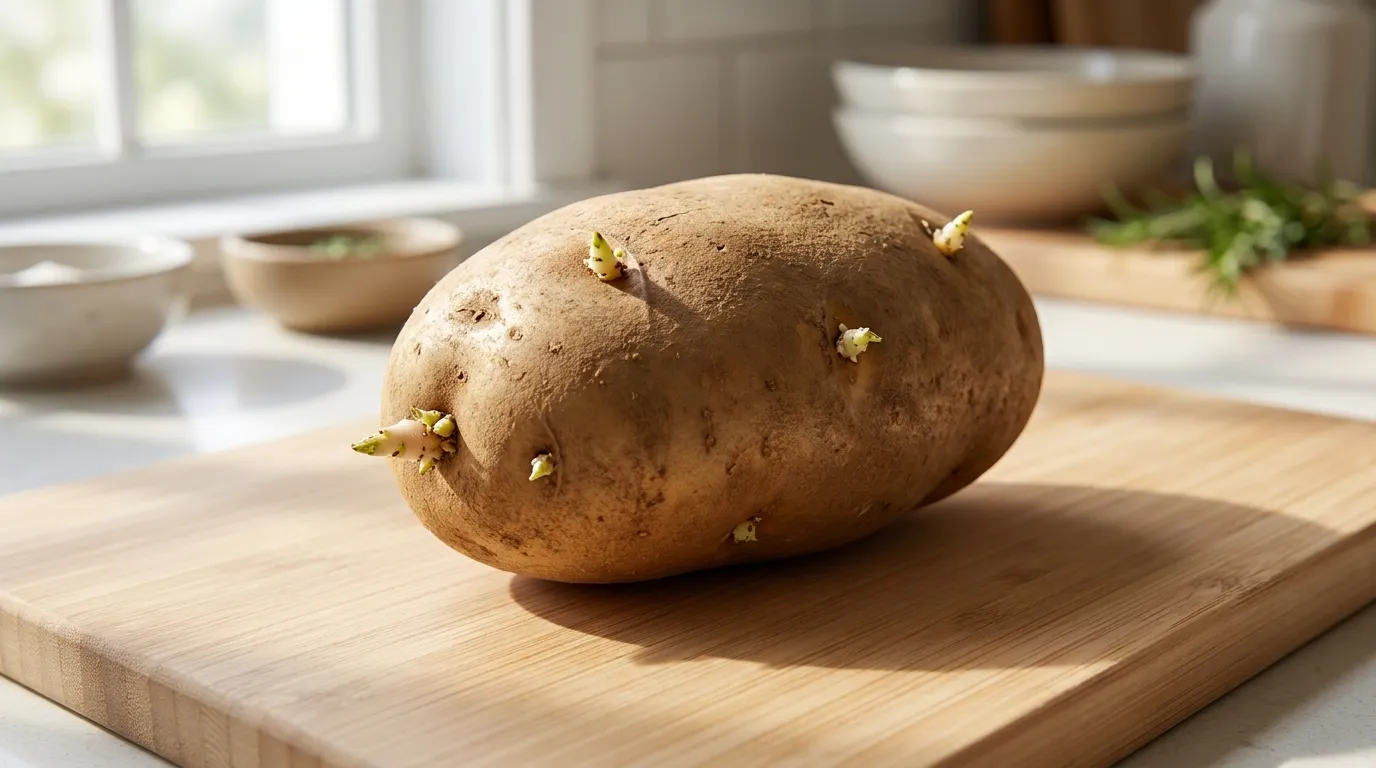
Quick Summary: Sprouted potatoes can be safe to eat if sprouts are small and the potato remains firm. However, potatoes with long sprouts, wrinkled skin, or green discoloration should be discarded because they contain elevated levels of toxic glycoalkaloids (α-solanine and α-chaconine) that can cause illness. When in doubt, throw it out.
You reach into your pantry for a potato and discover it’s sprouted. Maybe just a few tiny nubs. Maybe full-blown alien tentacles. Either way, you’re wondering: can I still eat this thing, or is it destined for the compost bin?
The answer isn’t always black and white. It depends on how far the sprouting has progressed and what else is happening with that spud.
Why Do Potatoes Sprout in the First Place?
Potatoes sprout when they’re exposed to warmth, humidity, and light. That’s basically a recipe for telling the tuber it’s planting season. The potato interprets these conditions as its cue to grow into a new plant.
Most home kitchens provide exactly this environment. Unless you’re storing potatoes in a cool, dark basement or root cellar, they’ll eventually start sending out shoots. It’s not a sign your potatoes were bad to begin with. It’s just biology doing its thing.
But here’s where it gets tricky. When potatoes sprout, they produce higher concentrations of toxic compounds called glycoalkaloids.
The Glycoalkaloid Problem: What Makes Sprouted Potatoes Risky
Glycoalkaloids—specifically α-solanine and α-chaconine—are natural defense chemicals that potatoes produce to ward off pests and disease. According to research published by the National Institutes of Health, these two compounds constitute over 95% of total glycoalkaloid content in potatoes.
These toxins are particularly concentrated in the skin, sprouts, and any green areas of the tuber. When potatoes sprout or turn green from light exposure, glycoalkaloid levels can climb to potentially dangerous concentrations.
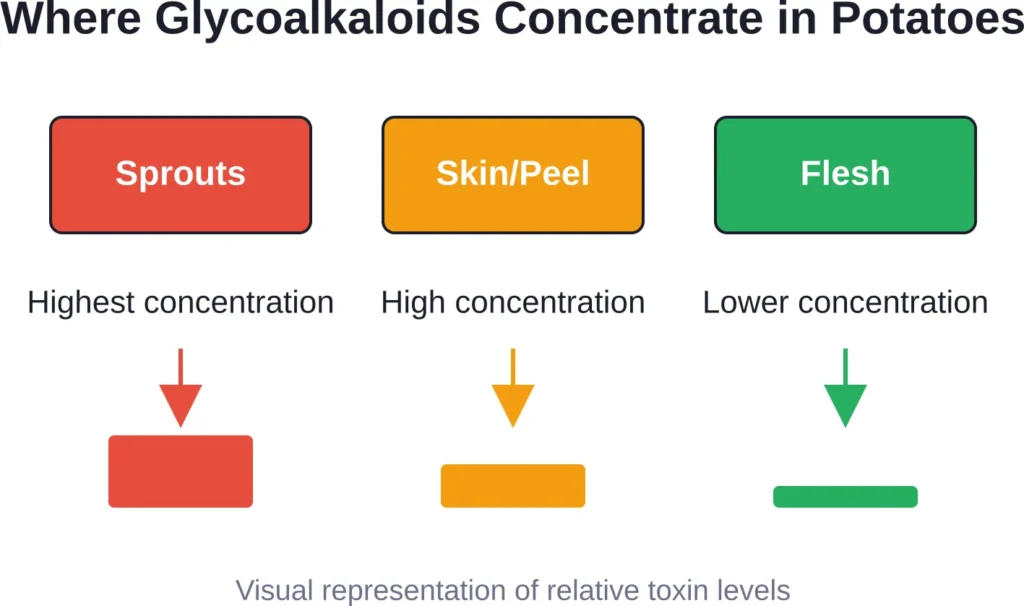
Consuming high levels of glycoalkaloids can lead to symptoms like nausea, vomiting, diarrhea, stomach cramps, and headaches. In severe cases, it can cause neurological problems.
The good news? Cooking doesn’t eliminate these toxins. Thermal blanching can decrease glycoalkaloid levels, but not sufficiently to eliminate toxins from heavily contaminated potatoes.
When It’s Safe to Eat Sprouted Potatoes
So when can you salvage a sprouted spud? Use this decision framework.
If the sprouts are small—less than an inch—and the potato is still firm with no wrinkles or soft spots, it’s generally safe to eat after you remove the sprouts. Cut away the sprouts generously, removing at least a half-inch of flesh around each sprout site. Peel the potato to eliminate the skin where glycoalkaloids concentrate.
Many home cooks report successfully using slightly sprouted potatoes this way without issues. The key is that the potato itself hasn’t deteriorated.
When to Throw Sprouted Potatoes Away
Toss the potato without hesitation if you see any of these warning signs:
- Long sprouts (several inches or more)
- Wrinkled, shriveled, or soft skin
- Green discoloration anywhere on the potato
- Mushy or rotten spots
- An off smell
When sprouts get long, the potato has invested significant energy into growing new plant tissue. That process increases glycoalkaloid production throughout the entire tuber, not just in the sprouts themselves.
Green coloration indicates chlorophyll production from light exposure. While chlorophyll itself isn’t toxic, it’s a reliable marker that glycoalkaloid levels have also increased in those areas.
| Potato Condition | Action | Safety Level |
|---|---|---|
| Tiny sprouts (<1 inch), firm potato | Remove sprouts and peel; safe to eat | Safe |
| Long sprouts, firm potato | Discard | Risky |
| Any sprouts + wrinkled skin | Discard | Unsafe |
| Any sprouts + green areas | Discard | Unsafe |
| Soft spots or rot | Discard | Unsafe |
How to Prevent Potatoes From Sprouting
Prevention beats remediation. Store potatoes properly and you’ll avoid the sprouting problem altogether.
According to Penn State Extension, potatoes should be stored in a dark, cool, moist location between 40–46°F with 90% humidity. That’s cooler than most kitchens but warmer than most refrigerators.
Here’s the thing though—storing potatoes below 38°F can cause sugar buildup, which leads to an unpleasant sweet taste and excessive browning when cooked. So don’t just toss them in the fridge.
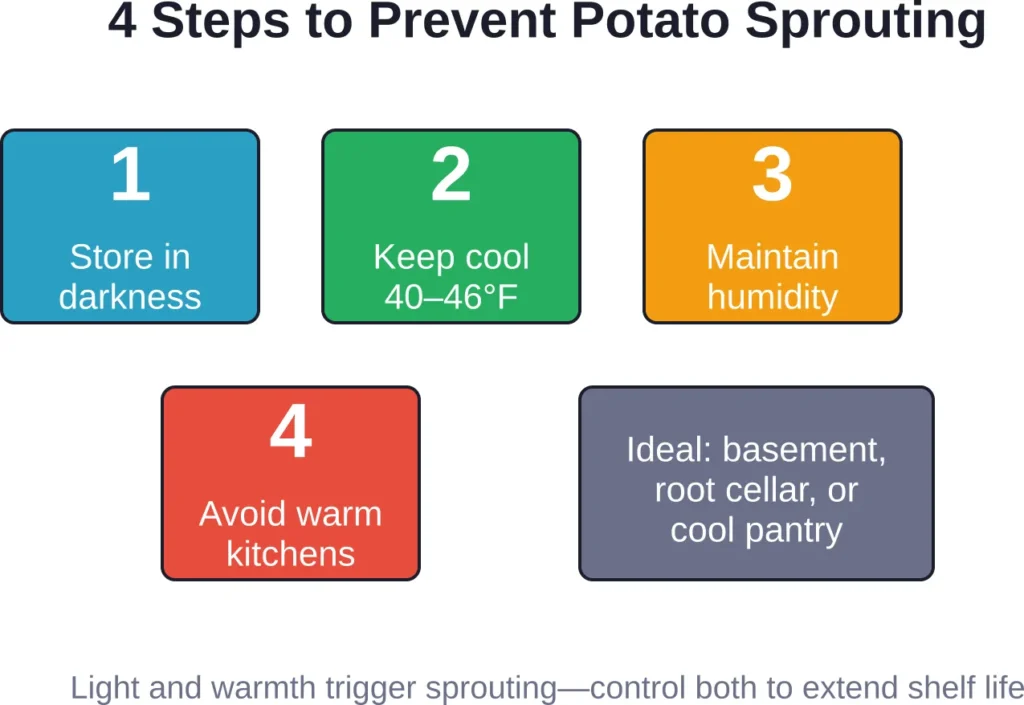
Ideal storage spots include basements, root cellars, or unheated pantries. If you don’t have access to these, choose the coolest, darkest cabinet in your kitchen—away from the stove and other heat sources.
Before storing, cure potatoes for 2 to 3 weeks by placing them in a well-ventilated area at 50 to 60°F, with 85 to 90 percent humidity. This allows wounds to heal and skin to thicken, which extends storage life significantly.
Don’t wash potatoes before storing them. Moisture promotes rot and mold. Brush off excess dirt and store them in a breathable container like a paper bag, cardboard box, or mesh bag—never in plastic.
What About Cooking Methods?
Can you cook away the glycoalkaloids? Not really.
These compounds are heat-stable. Boiling, baking, and frying will reduce toxin levels somewhat, but not enough to make a badly sprouted or green potato safe. Thermal blanching can decrease glycoalkaloid levels, but not sufficiently to eliminate toxins from heavily contaminated potatoes.
Peeling removes a significant portion since the skin contains high concentrations. But if the sprouting is advanced or green areas are present, toxins have likely spread into the flesh.
The CDC Perspective on Food Safety
The Centers for Disease Control and Prevention emphasizes following the four steps to food safety: Clean, Separate, Cook, and Chill. When it comes to potatoes specifically, the “Chill” step matters most for prevention.
According to CDC guidelines, certain foods are at higher risk for contamination and illness. While sprouted potatoes aren’t typically associated with bacterial pathogens like salmonella or E. coli, the chemical toxins they produce pose their own distinct risk.
The CDC advises that if you’re unsure whether a food is safe after storage issues, it’s better to discard it. That same principle applies to sprouted potatoes showing advanced deterioration.
The Bottom Line: Trust Your Judgment
So is it okay to eat potatoes that have sprouted? Sometimes.
Small sprouts on an otherwise healthy, firm potato? Go ahead and use it after removing the sprouts and peeling thoroughly. Long sprouts, wrinkled skin, or any green coloration? That’s a hard pass.
When in doubt, throw it out. Potatoes are inexpensive enough that the risk isn’t worth it. And if you store them properly from the start—cool, dark, and dry—you’ll avoid the question entirely.
Your health and peace of mind are worth more than salvaging a questionable spud.
Frequently Asked Questions
Yes, if the potatoes have long sprouts, wrinkled skin, or green areas. These indicate elevated glycoalkaloid levels that can cause nausea, vomiting, diarrhea, and stomach cramps. Small sprouts on firm potatoes are generally safe after removal and peeling.
Not always. If sprouts are small (under an inch) and the potato is firm with no green areas or soft spots, you can cut away the sprouts, peel the potato, and use it safely. Discard potatoes with long sprouts or signs of deterioration.
No. Green coloration comes from chlorophyll production due to light exposure, while sprouting is the potato’s attempt to grow. However, both conditions often occur together and both indicate increased glycoalkaloid toxin levels.
No. Glycoalkaloids are heat-stable and remain toxic even after boiling, baking, or frying. Cooking can reduce toxin levels but won’t eliminate them from badly sprouted or green potatoes.
Under ideal storage conditions (40–46°F, dark, 90% humidity), potatoes can last several months when stored correctly. In a typical kitchen environment (warmer and lighter), they’ll start sprouting within 2–4 weeks.
Yes, if the potato is still firm and has no green areas or soft spots. Remove sprouts generously with at least a half-inch of surrounding flesh, and peel the potato before cooking to remove skin where toxins concentrate.
Potatoes turn green when exposed to light, which triggers chlorophyll production. This often happens alongside sprouting because both are responses to environmental conditions. Green areas indicate higher glycoalkaloid levels and should be completely removed or the potato discarded.