

Quick Summary: No, taking 20 mg of montelukast is not recommended and exceeds the FDA-approved dose. The standard dose for adults and adolescents 15 years and older is 10 mg once daily, with no evidence supporting higher doses. Taking more than prescribed can increase the risk of side effects without providing additional therapeutic benefit.
If you’ve been prescribed montelukast—branded as Singulair—you might wonder whether taking a higher dose would work better for stubborn asthma or allergy symptoms. Maybe your regular 10 mg tablet isn’t cutting it anymore, or you’re curious if doubling the dose would speed up relief.
Here’s the thing though—there’s no medical justification for taking 20 mg of montelukast. The FDA-approved standard dose for adults and adolescents 15 years and older is 10 mg once daily, and clinical research hasn’t shown any benefit from higher doses.
Let’s break down why the 10 mg dose exists, what happens if you take more, and when you should talk to your doctor about adjusting your treatment plan.
What Is the FDA-Approved Dose for Montelukast?
According to official prescribing information from the National Institutes of Health, the recommended dose of montelukast for adults and adolescents 15 years and older is one 10 mg tablet once daily. This applies whether you’re treating asthma, preventing exercise-induced bronchoconstriction, or managing allergic rhinitis.
The dosing schedule varies slightly by condition:
- For asthma: Take 10 mg in the evening
- For allergic rhinitis: Take 10 mg at the same time each day (morning or evening)
- For exercise-induced bronchoconstriction: Take 10 mg at least two hours before exercise
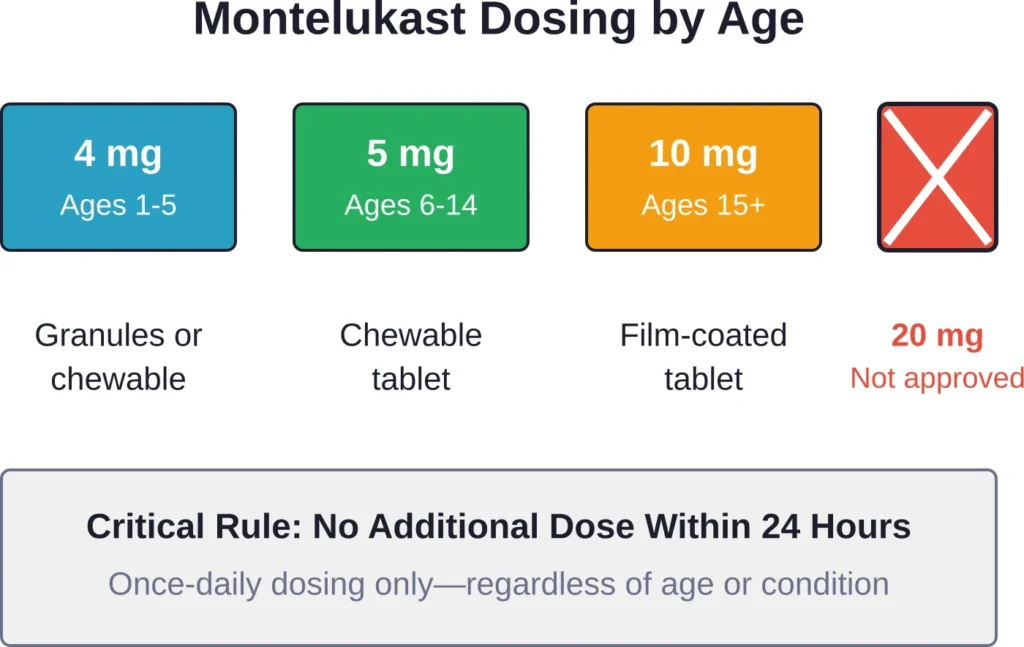
One critical rule: you should not take an additional dose of montelukast within 24 hours of a previous dose. This minimum 24-hour interval is mandatory regardless of your condition.
After you take a 10 mg tablet, montelukast reaches peak plasma concentration in 3 to 4 hours in fasted adults, with a mean oral bioavailability of 64%. The drug binds heavily to plasma proteins—about 99%—which means your body processes it in a very specific way that doesn’t benefit from higher doses.
Why 20 mg of Montelukast Isn’t Recommended
The 10 mg dose wasn’t chosen arbitrarily. It’s the result of extensive clinical trials involving numerous adult and adolescent patients who were evaluated for safety and efficacy. Researchers tested various doses to determine the optimal balance between therapeutic benefit and side effects.
Here’s what the research shows:
No clinical studies have demonstrated that 20 mg provides better asthma control or allergy relief than 10 mg. The drug’s mechanism—blocking leukotriene receptors that cause inflammation and bronchoconstriction—doesn’t improve with dose escalation beyond 10 mg.
In fact, a randomized controlled trial confirmed that the standard 10 mg dose effectively improved asthma control and quality of life, representing a diverse patient population.
Real talk: if your symptoms aren’t controlled on 10 mg, doubling the dose won’t fix the problem. It just means montelukast might not be the right medication for your specific situation, or you need combination therapy.
What Clinical Studies Say About Higher Doses
Research from the National Institutes of Health found that montelukast demonstrated a tolerability profile similar to placebo during both short-term and long-term administration, even at doses substantially higher than the recommended clinical dose. But—and this is important—better tolerability at higher doses doesn’t mean better effectiveness.
The key word there is “tolerability,” not “efficacy.”
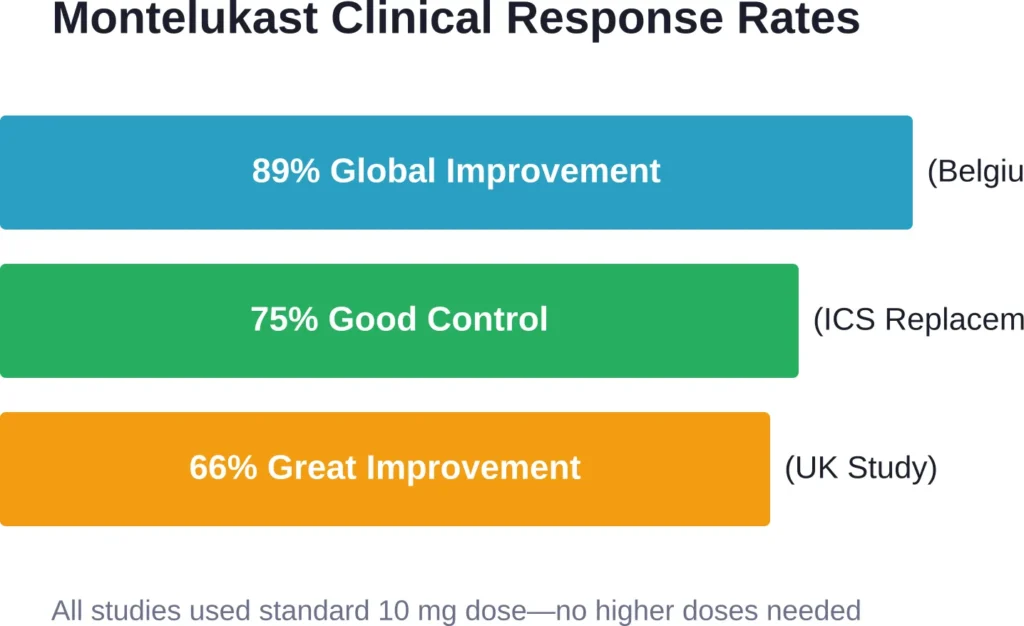
Studies evaluating montelukast effectiveness found that replacing ICS with montelukast was associated with good asthma control in more than 75% of patients Studies have shown that patients report significant improvement in asthma control with montelukast therapy. Clinical studies have demonstrated significant global improvement of asthma symptoms with montelukast therapy.
None of these studies used 20 mg doses. The standard 10 mg was sufficient.
What Happens If You Take 20 mg of Montelukast?
Okay, so what if you’ve already taken a double dose—either by mistake or because you thought it would help? Should you panic?
The short answer? Probably not, but you should monitor yourself and contact a healthcare provider.
Montelukast overdoses have been reported, and the most common side effects include:
- Drowsiness and agitation
- Nausea and stomach pain
- Vomiting
- Headache
- Thirst
These symptoms are generally mild and resolve on their own, but they’re uncomfortable. More concerning is that montelukast carries a black box warning—the FDA’s most serious warning—regarding neuropsychiatric events.
The warning highlights reports of agitation, aggression, depression, sleep disturbances, and suicidal thoughts or behavior in patients taking montelukast. While these events are rare, taking more than the prescribed dose could theoretically increase risk.
What to Do If You’ve Taken Too Much
If someone takes too much montelukast or takes it by accident, use the webPOISONCONTROL online tool or call Poison Control at 1-800-222-1222 for guidance. Don’t wait to see if symptoms develop—get professional advice immediately.
For accidental double doses (20 mg instead of 10 mg), healthcare providers typically recommend monitoring for side effects and avoiding the next scheduled dose to reset the 24-hour interval between doses.
Montelukast Dosing by Age and Condition
Understanding the complete dosing picture helps clarify why 20 mg isn’t appropriate for anyone. Montelukast comes in different strengths for different age groups, all carefully calibrated based on clinical research.
| Age Group | Condition | Dose | Form |
|---|---|---|---|
| Adults and adolescents ≥15 years | Asthma, allergic rhinitis | 10 mg once daily | Film-coated tablet |
| Adults and adolescents ≥15 years | Exercise-induced bronchoconstriction | 10 mg 2 hours before exercise | Film-coated tablet |
| Children 6-14 years | Asthma, allergic rhinitis | 5 mg once daily | Chewable tablet |
| Children 2-5 years | Asthma, allergic rhinitis | 4 mg once daily | Chewable tablet or granules |
| Children 12-23 months | Asthma | 4 mg once daily | Oral granules |
Notice the pattern? The maximum dose never exceeds 10 mg for any age group treating any condition. Children get lower doses (4-5 mg) not because adults need more, but because their smaller body mass requires less medication to achieve the same therapeutic effect.
If your doctor wanted you to take more than 10 mg, they would prescribe a different medication or add a second medication to your regimen—not increase the montelukast dose.
When Montelukast Isn’t Working: Alternatives to Increasing Dose
If the standard 10 mg dose isn’t controlling your symptoms, resist the urge to self-medicate with a higher dose. Instead, talk to your doctor about these evidence-based alternatives.
Combination Therapy
Montelukast is often most effective when combined with other asthma medications. According to National Heart, Lung, and Blood Institute guidelines, leukotriene receptor antagonists like montelukast can be used as adjunctive therapy with inhaled corticosteroids, though for youths ≥12 years of age and adults, long-acting beta agonists are the preferred adjunctive therapy.
Studies show that some patients show greater response to montelukast than inhaled corticosteroids in crossover studies, suggesting that some people are “montelukast responders” while others aren’t. If you’re not in that 15%, adding medications rather than increasing montelukast makes more sense.
Medication Switching
Your doctor might consider:
- Switching to or adding inhaled corticosteroids
- Adding long-acting beta agonists
- Trying zileuton (another leukotriene modifier that works differently)
- Considering biological therapies for severe asthma
Each option targets asthma or allergies through different mechanisms, which is why combination therapy often works better than simply taking more of one medication.
Timing Adjustments
Research indicates montelukast is recommended to be taken in the evening for asthma, though studies on exercise-induced bronchoconstriction show the timing of the dose relative to exercise matters more than time of day for that specific condition.
Some patients report better symptom control by adjusting when they take their daily dose. This doesn’t mean taking it twice—it means finding the optimal time within your 24-hour cycle.
Common Montelukast Side Effects at Normal Doses
Even at the correct 10 mg dose, montelukast can cause side effects. The most common adverse reactions—with incidence of 5% or greater and higher than placebo—include:
- Upper respiratory infection
- Fever
- Headache
- Pharyngitis (sore throat)
- Cough
- Abdominal pain
- Diarrhea
- Otitis media (ear infection)
- Influenza
Many of these overlap with cold and flu symptoms, which can make it hard to distinguish whether montelukast is the culprit or if you’re simply sick.
The Black Box Warning: Neuropsychiatric Events
The FDA added a black box warning to montelukast after reports of serious neuropsychiatric events. These include:
- Agitation, aggression, and irritability
- Depression and suicidal thoughts or behavior
- Sleep disturbances and abnormal dreams
- Tremor and restlessness
Sound alarming? These events are rare, but they’re serious enough that the FDA wants doctors and patients to weigh the benefits against the risks, especially for mild allergic rhinitis where other effective medications exist.
The warning specifically notes that these events have sometimes been associated with the reduction of oral corticosteroid therapy, suggesting complex interactions between medications and underlying conditions.
Special Populations: Who Needs Dose Adjustments?
Here’s some good news: montelukast doesn’t require dose adjustments for most special populations.
Kidney Disease
No dose adjustment is needed for patients with kidney disease. The medication isn’t primarily eliminated through the kidneys.
Liver Disease
Patients with mild to moderate liver disease generally don’t need dose adjustments. Those with severe liver disease should discuss the risks and benefits with their doctor, but the standard dose remains 10 mg—not higher, not lower.
Elderly Patients
Older adults use the same 10 mg dose as younger adults. Clinical trials included elderly patients without showing a need for different dosing.
Pregnancy and Breastfeeding
Montelukast is FDA pregnancy category B, meaning animal studies haven’t shown fetal risk but human studies are limited. The dose remains 10 mg if the medication is deemed necessary during pregnancy—never 20 mg.
| Population | Dose Adjustment Needed? | Recommended Dose |
|---|---|---|
| Kidney disease | No | 10 mg once daily |
| Mild-moderate liver disease | No | 10 mg once daily |
| Severe liver disease | Use with caution | 10 mg once daily (if used) |
| Elderly (≥65 years) | No | 10 mg once daily |
| Pregnancy | No | 10 mg once daily (if benefits outweigh risks) |
Drug Interactions and Considerations
Montelukast has relatively few drug interactions compared to many medications, but a few are worth noting.
Phenobarbital and rifampin can decrease montelukast plasma concentrations by inducing liver enzymes that metabolize the drug. However, the prescribing information doesn’t recommend dose adjustments—instead, doctors monitor effectiveness.
Gemfibrozil can increase montelukast exposure, but again, no dose change is recommended. The therapeutic window for montelukast is wide enough that moderate increases in drug levels aren’t typically problematic at the standard 10 mg dose.
The key takeaway? Even when other drugs affect montelukast levels, the solution isn’t to adjust the dose to 20 mg. Doctors either monitor more closely or consider alternative medications.
How to Take Montelukast Correctly
Maximize the effectiveness of your 10 mg dose by taking it correctly:
For asthma: Take your 10 mg tablet in the evening, whether or not you have symptoms that day. Consistency matters more than perfect timing—pick an evening time you’ll remember and stick to it.
For allergic rhinitis only: Take your 10 mg tablet at the same time each day, morning or evening. Choose whichever time fits your routine best.
For exercise-induced bronchoconstriction: Take 10 mg at least two hours before exercise. If you already take montelukast daily for asthma or allergies, don’t take an extra dose before exercising—your daily dose provides protection.
With or without food: A standard meal doesn’t influence oral bioavailability or peak concentration in the morning, so take montelukast with or without food based on your preference.
Special forms: If using oral granules (typically for young children), administer within 15 minutes after opening the packet. Mix with a spoonful of cold, soft food like applesauce, mashed carrots, or ice cream—never dissolve in liquid other than formula or breast milk for infants.
Frequently Asked Questions
No, you should not increase your dose to 20 mg. Clinical trials haven’t shown any benefit from doses higher than 10 mg, and taking more increases the risk of side effects without improving symptom control. If 10 mg isn’t working, talk to your doctor about combination therapy or alternative medications rather than doubling your dose.
Contact Poison Control at 1-800-222-1222 or use the webPOISONCONTROL online tool for guidance. Monitor yourself for side effects like drowsiness, nausea, stomach pain, agitation, or headache. Skip your next scheduled dose to maintain the required 24-hour interval between doses, then resume your normal 10 mg daily schedule.
No. The FDA-approved dose for all adult indications is 10 mg once daily. Medical literature doesn’t support higher doses for any condition, and prescribing information specifically states that 10 mg is the maximum recommended dose for adults and adolescents 15 years and older.
Montelukast reaches peak plasma concentration in 3 to 4 hours after taking a dose. However, full therapeutic effects for asthma control may take several days to weeks of consistent daily dosing. For exercise-induced bronchoconstriction, protection begins within 2 hours of taking a dose, which is why it should be taken at least 2 hours before exercise.
Absolutely not. Children’s doses are even lower than the adult dose—4 mg for ages 1-5 years and 5 mg for ages 6-14 years. These doses are carefully calculated based on body weight and metabolism. Never give a child more than their prescribed dose.
Clinical studies evaluated montelukast tolerability during both short-term and long-term administration at the standard 10 mg dose, finding a safety profile similar to placebo for most patients. However, the FDA’s black box warning regarding neuropsychiatric events means patients and doctors should regularly reassess whether continued use is appropriate, especially for mild conditions where alternatives exist.
Singulair is the brand name for montelukast. Generic versions contain the same active ingredient in the same strength and form, meeting FDA bioequivalence standards. Both brand and generic versions use the same dosing—10 mg once daily for adults—and neither should be taken at 20 mg doses.
When to Contact Your Doctor
Reach out to your healthcare provider if:
- Your asthma or allergy symptoms aren’t controlled on 10 mg of montelukast
- You experience any neuropsychiatric symptoms (mood changes, depression, agitation, suicidal thoughts)
- You develop new or worsening symptoms while taking montelukast
- You’ve been taking a dose other than what was prescribed
- You’re considering stopping montelukast or changing when you take it
Don’t adjust your dose on your own. Medication management requires a partnership between you and your doctor, with adjustments based on your specific response and medical history.
The Bottom Line on 20 mg Montelukast
Taking 20 mg of montelukast isn’t recommended, isn’t supported by research, and won’t improve your symptoms beyond what 10 mg provides. The FDA-approved dose of 10 mg once daily for adults and adolescents 15 years and older represents the optimal balance between effectiveness and safety, backed by clinical trials involving thousands of patients.
If your current dose isn’t working, the solution isn’t more montelukast—it’s a conversation with your doctor about combination therapy, alternative medications, or investigating whether your diagnosis and treatment plan need adjustment.
Montelukast can be an effective medication for asthma, exercise-induced bronchoconstriction, and allergic rhinitis, but only when used correctly at the prescribed dose. Stick with 10 mg, take it consistently at the right time for your condition, and work with your healthcare team to optimize your overall treatment plan.
Your health is too important to experiment with unproven doses. When in doubt, follow the FDA-approved guidelines that have kept millions of patients safe and effectively treated.