
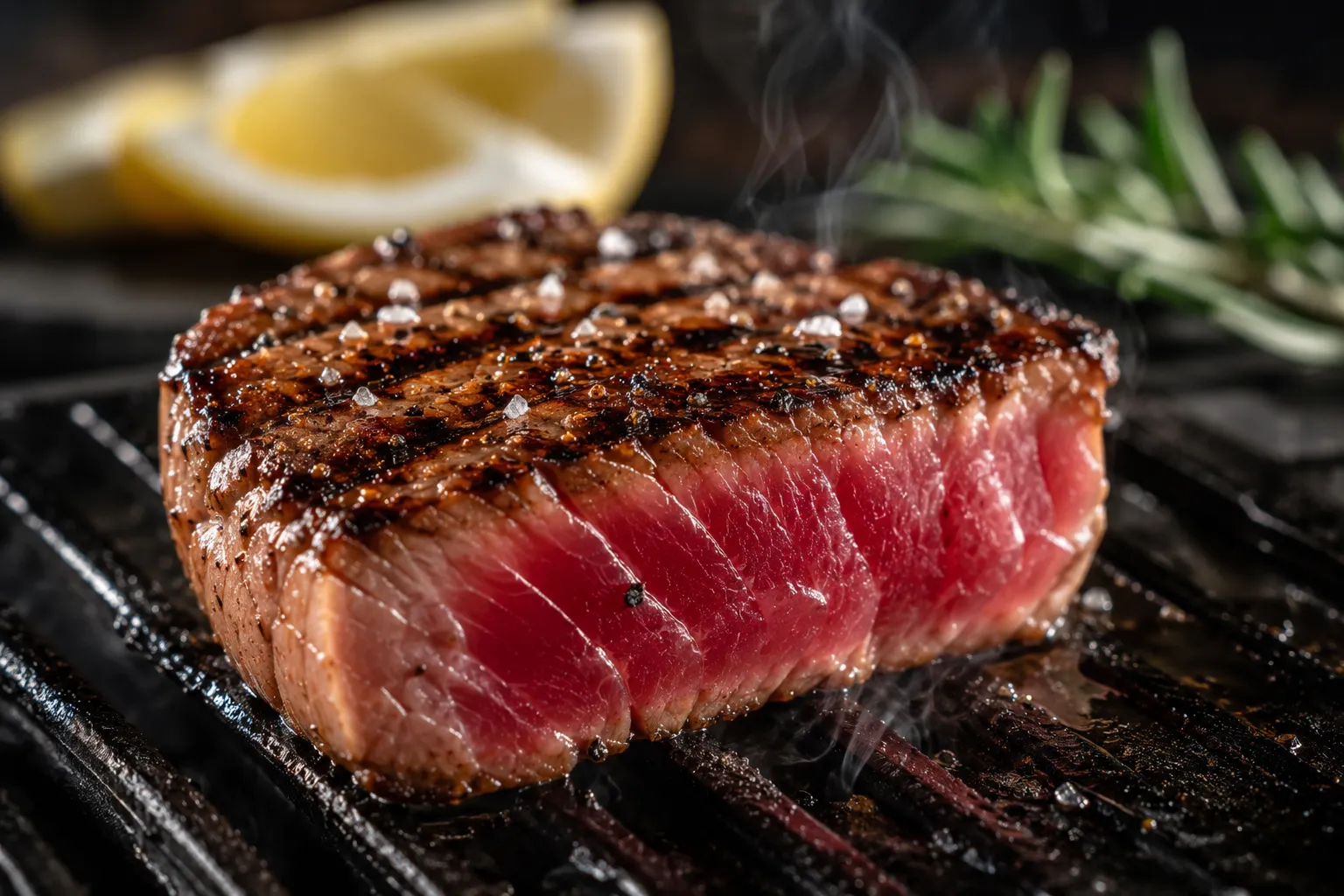
Quick Summary: Eating tuna every day is generally not recommended due to mercury accumulation risks, especially for pregnant women, breastfeeding mothers, and young children. Light or skipjack tuna contains lower mercury levels than albacore and can be consumed more frequently in moderation. Most adults can safely eat 2-3 servings of light tuna per week, while vulnerable populations should limit intake further according to FDA and EPA guidelines.
Tuna sits on millions of kitchen shelves worldwide. It’s convenient, protein-packed, and budget-friendly. But there’s a catch—mercury.
The question isn’t whether tuna is nutritious. It absolutely is. The real question is whether daily consumption crosses the line from healthy habit into risky territory.
Look, the short answer is no, eating tuna every day isn’t advisable for most people. But the longer answer involves understanding mercury levels, types of tuna, your personal health status, and what federal health agencies actually recommend.
What Makes Tuna Both Beneficial and Risky
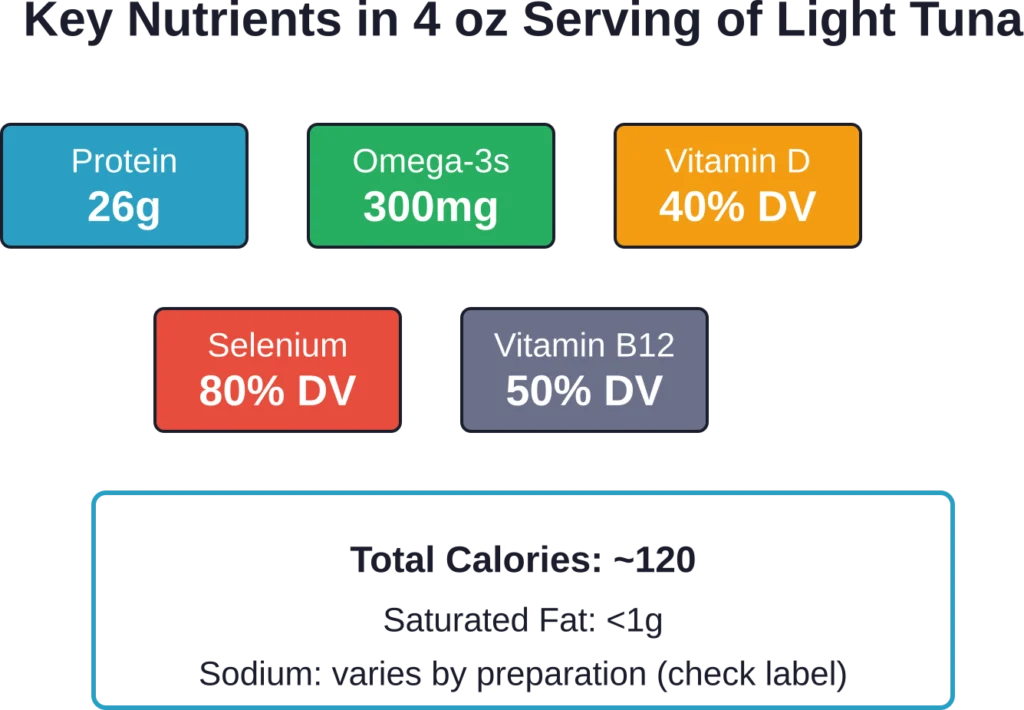
Tuna delivers impressive nutritional value. A single serving provides high-quality protein, omega-3 fatty acids (DHA and EPA), vitamin D, B vitamins, selenium, and iron—all while remaining relatively low in calories and saturated fat.
These nutrients support heart health, brain development, and overall wellness. The Dietary Guidelines for Americans recommend eating fish twice weekly for good reason.
But here’s the thing though—tuna accumulates mercury from ocean water. As a larger, predatory fish, tuna consumes smaller fish throughout its lifetime, concentrating mercury in its tissue. This bioaccumulation process means bigger, older tuna carry higher mercury levels.
Mercury is a toxic heavy metal that primarily affects the nervous system. According to the CDC, mercury exposure can affect an infant’s brain and nervous system development during pregnancy and after birth. Breastfeeding mothers should minimize exposure to mercury in their diets. For adults, excessive mercury intake over time may impair cognitive function, vision, and coordination.
Mercury Levels: Not All Tuna Is Created Equal
The type of tuna matters enormously when assessing safety for daily consumption.
Light Tuna (Skipjack)
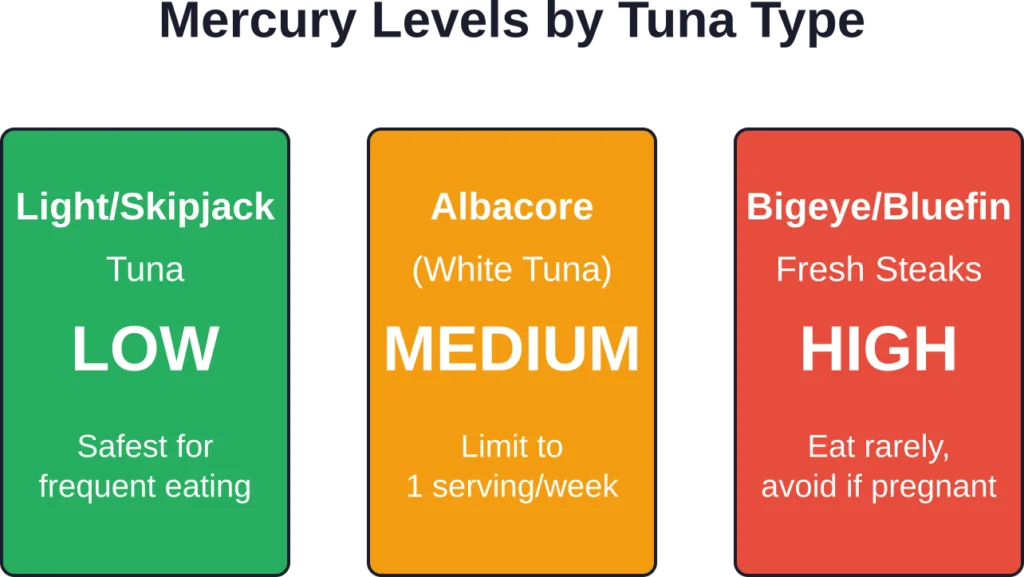
Light tuna, typically skipjack, contains significantly lower mercury concentrations. This variety comes from smaller tuna species that haven’t lived long enough to accumulate substantial mercury.
Community discussions frequently note that skipjack represents the safer choice for regular consumption. It’s the tuna variety most often recommended by dietitians when people want to eat tuna frequently.
Albacore (White Tuna)
Albacore, marketed as “white tuna,” contains roughly three times more mercury than light tuna. These are larger fish with longer lifespans, giving them more time to concentrate mercury in their flesh.
The FDA and EPA specifically advise limiting albacore consumption compared to light tuna.
Fresh Tuna Steaks
Fresh tuna steaks—particularly bigeye, yellowfin, and bluefin—often contain mercury levels comparable to or exceeding albacore. These varieties should be consumed even more sparingly than canned albacore.
FDA and EPA Guidelines on Tuna Consumption
The FDA and EPA have issued specific advice regarding eating fish, including tuna. This guidance particularly targets women who might become pregnant, are pregnant, or are breastfeeding, as well as parents feeding young children.
According to these federal agencies, fish consumption is encouraged for nutritional benefits, but certain limits apply based on mercury content.
For Pregnant Women and Young Children
These vulnerable populations face the strictest recommendations because developing brains are most susceptible to mercury damage.
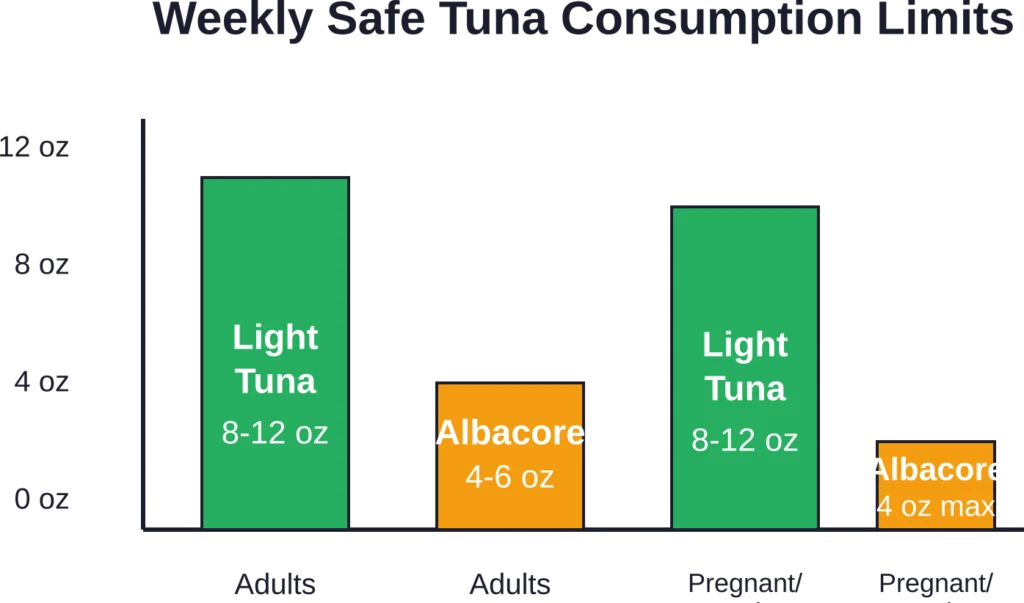
According to FDA/EPA guidance, for light tuna, pregnant women can consume 2-3 servings per week safely. For albacore tuna, the recommendation drops to just one serving per week maximum.
For General Adult Population
Adults without specific vulnerabilities have slightly more flexibility, but daily tuna consumption still isn’t recommended regardless of type.
Analyses indicate that even with lower-mercury light tuna, daily consumption causes cumulative mercury buildup that exceeds safe thresholds over time. Mercury can take months to clear from the body once exposure decreases, which is why spacing out tuna meals allows the body time to process and eliminate mercury between exposures. That’s why the weekly serving framework exists rather than daily recommendations.
Real talk: spacing out tuna meals is essential for health. That’s why the weekly serving framework exists rather than daily recommendations.
How Much Tuna Is Actually Safe Per Week
Let’s break down specific numbers based on current guidance.
| Population Group | Light/Skipjack Tuna | Albacore/White Tuna |
|---|---|---|
| Pregnant women | 2-3 servings (8-12 oz) per week | 1 serving (4 oz) per week |
| Breastfeeding mothers | 2-3 servings (8-12 oz) per week | 1 serving (4 oz) per week |
| Children (ages 2-10) | 1-2 servings (3-6 oz) per week | 1 serving (3 oz) per week maximum |
| General adults | 2-3 servings (8-12 oz) per week | 1-2 servings (6 oz) per week |
A standard serving equals approximately 4 ounces (113 grams) for adults. One 5-ounce can of tuna typically contains about 3-4 ounces of drained tuna.
So if someone eats one can of light tuna daily, that’s roughly 21-28 ounces weekly—more than double the recommended maximum even for the lowest-mercury variety.
Health Risks of Daily Tuna Consumption
What actually happens when mercury intake exceeds recommended levels?
Mercury Toxicity Symptoms
Chronic mercury exposure produces subtle symptoms that develop gradually:
- Memory problems and difficulty concentrating
- Tremors or muscle weakness
- Numbness or tingling in extremities
- Vision or hearing impairment
- Coordination problems
- Mood changes including irritability and depression
These symptoms may not appear immediately. Mercury accumulates over weeks and months of excessive intake.
User experiences in community discussions reveal cases where individuals consumed tuna daily for extended periods before experiencing concerning symptoms or learning about mercury risks during routine blood tests.
Scombroid Poisoning Risk
Beyond mercury, improperly stored tuna poses another risk: scombroid poisoning. When tuna isn’t refrigerated properly, bacteria produce high histamine levels.
According to the CDC, scombroid fish poisoning associated with tuna causes symptoms including facial flushing, sweating, rash, a burning or peppery taste in the mouth, diarrhea, and abdominal cramps. In documented cases, the median time from eating contaminated tuna to symptom onset was 1 hour, with a range of 15 minutes to 2 hours; symptoms typically resolve within several hours without medical intervention.
The good news? All symptoms typically resolved within 24 hours in reported incidents. But frequent tuna consumption increases exposure risk to this type of food poisoning.
Allergic Reactions and Histamine Intolerance
Some individuals develop histamine intolerance or allergic reactions with frequent tuna consumption. While not universal, this risk increases with daily intake.
Nutritional Benefits You Don’t Want to Miss
Despite mercury concerns, tuna remains nutritionally exceptional. Understanding what it provides helps contextualize why moderate consumption matters.
Protein Powerhouse
Tuna delivers approximately 20-25 grams of protein per 3-ounce serving. This complete protein contains all essential amino acids needed for muscle maintenance, immune function, and cellular repair.
Omega-3 Fatty Acids
Tuna provides EPA and DHA omega-3 fatty acids that support cardiovascular health, reduce inflammation, and promote brain function. These specific omega-3 forms are less abundant in plant sources.
Consuming omega-3 fatty acids provides health benefits including protection against heart disease, reduced inflammation, and improved organ health. The American Heart Association recommends eating fish twice weekly largely because of these omega-3 benefits.
Micronutrients
Beyond protein and healthy fats, tuna contains:
- Vitamin D for bone health and immune function
- Vitamin B12 for nerve function and red blood cell production
- Selenium, an antioxidant that protects cells
- Iron for oxygen transport
- Niacin for energy metabolism
This nutrient density makes tuna valuable in moderation—you get substantial nutrition without excessive calories or saturated fat.
Smarter Shopping: Choosing Lower-Mercury Tuna
When buying canned tuna, several factors influence mercury exposure and overall quality.
Read the Label Carefully
Check whether the can contains “light” or “white” tuna. Light tuna (skipjack) should be the default choice for frequent consumption.
Some brands explicitly test for mercury and display results. These transparency measures help consumers make informed decisions.
Water vs. Oil Packed
Tuna packed in water contains fewer calories and less sodium than oil-packed varieties. For health-conscious consumers watching calorie or sodium intake, water-packed is generally preferable.
That said, oil doesn’t affect mercury content—this choice comes down to dietary preferences.
Sodium Content Varies Widely
Regular canned tuna may contain 200-400mg sodium per serving. Low-sodium versions reduce this significantly, sometimes to under 100mg per serving.
Given that excessive sodium intake contributes to hypertension, checking sodium levels matters for cardiovascular health.
Sustainability Considerations
According to USDA ARS research, 90 percent of the global wild fish stocks are rated as fully or over-exploited. Fish farming, which started in the US in the 1800s, is an increasingly important source of seafood production.
Certifications like MSC (Marine Stewardship Council) or “pole-and-line caught” indicate more sustainable fishing practices that reduce bycatch and environmental impact.
Safer Alternatives and Dietary Variety
The solution isn’t necessarily eliminating tuna—it’s diversification.
Low-Mercury Fish Options
Several fish varieties provide similar nutrients with substantially lower mercury:
- Salmon – Rich in omega-3s, typically contains minimal mercury
- Sardines – Exceptionally high in omega-3s and calcium, very low mercury
- Anchovies – anchovy mercury concentration averages 0.02 µg/g (µg/g or ppm) across 15 samples tested
- Catfish – Mild flavor, catfish (0.03 µg/g average based on FDA testing)
- Tilapia – Lean protein source with minimal mercury
- Cod – Versatile white fish with low mercury levels
Rotating Protein Sources
Balanced nutrition comes from variety. Rather than relying on tuna daily, rotate between:
- Different fish varieties (salmon, sardines, cod)
- Poultry (chicken, turkey)
- Plant proteins (legumes, tofu, tempeh)
- Eggs
- Lean red meat (occasional)
This approach delivers diverse nutrient profiles while minimizing any single food’s potential risks.
If You Love Tuna
For tuna enthusiasts unwilling to give it up entirely, strategic consumption works:
- Stick to light/skipjack tuna exclusively
- Limit to 2-3 cans per week maximum
- Space servings throughout the week rather than consecutive days
- Alternate with salmon, sardines, or other low-mercury fish
- Avoid albacore and fresh tuna steaks or reserve for rare occasions
Special Considerations for Specific Groups
Athletes and High-Protein Dieters
Athletes requiring substantial protein might gravitate toward tuna for convenience and protein density. But daily consumption still poses risks.
Better strategy: use tuna as one protein source among many. Chicken, Greek yogurt, cottage cheese, eggs, and protein powder all deliver high protein without mercury concerns.
Budget-Conscious Consumers
Canned tuna appeals partly because it’s affordable. The good news is other budget-friendly, low-mercury proteins exist.
Canned salmon, while slightly pricier than tuna, offers comparable convenience with less mercury. Sardines are often cheaper than tuna per serving. Eggs, dried beans, and lentils provide inexpensive protein alternatives.
People with Existing Health Conditions
Individuals with kidney disease, neurological conditions, or compromised immune systems should discuss fish consumption with healthcare providers. These populations may need stricter mercury limits.
Similarly, anyone planning pregnancy should begin limiting high-mercury fish well before conception, as mercury persists in the body for months.
What If You’ve Been Eating Tuna Daily?
Sound familiar? Many people discover mercury risks only after consuming tuna daily for weeks or months.
First, don’t panic. Stop daily consumption immediately and switch to the recommended weekly limits or less. Mercury levels decrease gradually once intake stops or reduces significantly.
If experiencing potential mercury toxicity symptoms—tremors, numbness, memory issues, vision changes—consult a healthcare provider. Blood and hair tests can measure mercury levels.
For most people without symptoms, simply adjusting future intake is sufficient. The body naturally eliminates mercury over time once exposure decreases.
Building a Balanced Fish-Eating Plan
The Dietary Guidelines for Americans recommend eating 8 ounces of seafood weekly for optimal health benefits. Here’s how to structure that safely:
| Day | Seafood Option | Mercury Level |
|---|---|---|
| Monday | Salmon fillet (4 oz) | Low |
| Tuesday | — | — |
| Wednesday | Sardines (3 oz) | Very low |
| Thursday | Light tuna (4 oz) | Low |
| Friday | — | — |
| Saturday | Cod or tilapia (4 oz) | Low |
| Sunday | — | — |
This sample plan delivers seafood’s nutritional benefits while maintaining mercury exposure well below safety thresholds.
The Bottom Line on Daily Tuna Consumption
So, is it okay to eat tuna every day? The evidence says no—for virtually everyone.
Daily tuna consumption, regardless of variety, creates mercury accumulation risks that outweigh convenience benefits. Even light tuna, the lowest-mercury option, shouldn’t be eaten daily over extended periods.
But wait. That doesn’t mean avoiding tuna entirely.
Eaten in moderation—2-3 servings of light tuna weekly for adults, less for vulnerable populations—tuna provides valuable nutrition without significant mercury risk. It remains an excellent protein source when consumed appropriately.
The key is balance and variety. Rotate tuna with salmon, sardines, and other low-mercury fish. Use diverse protein sources throughout the week. Check labels, choose skipjack/light varieties, and respect weekly serving limits.
That approach captures tuna’s benefits while protecting against its primary risk. It’s not about elimination—it’s about moderation and informed choices.
Frequently Asked Questions
No, even light tuna shouldn’t be consumed daily. While light tuna contains lower mercury than albacore, eating it every day still causes mercury accumulation beyond safe levels. Stick to 2-3 servings (8-12 ounces total) per week maximum for adults.
Mercury can take months to clear from the body once exposure decreases. Complete elimination takes several months after stopping or significantly reducing intake. This is why spacing out tuna consumption matters—it gives the body time to clear mercury between exposures.
Generally yes, if it’s light/skipjack canned tuna. Light canned tuna typically contains less mercury than fresh tuna steaks (bigeye, yellowfin, bluefin) and canned albacore. Fresh tuna steaks often come from larger fish species with higher mercury concentrations. Always check labels—canned “white” or albacore tuna contains more mercury than canned “light” tuna.
Mercury poisoning symptoms develop gradually and include memory problems, difficulty concentrating, tremors, muscle weakness, numbness or tingling in hands and feet, vision problems, coordination difficulties, and mood changes like irritability or depression. If experiencing these symptoms after frequent tuna consumption, consult a healthcare provider. Blood or hair tests can measure mercury levels.
Several fish have mercury levels low enough for more frequent consumption: sardines, anchovies (0.02 µg/g average according to FDA data from 15 samples), catfish (0.03 µg/g average based on FDA testing), salmon, tilapia, and Atlantic mackerel. That said, dietary variety remains important even with low-mercury options for balanced nutrition.
Yes, but in smaller quantities than adults. According to the CDC, children ages 2-10 can safely eat 1-2 servings (3-6 ounces total) of light tuna per week, or up to 1 serving (3 ounces) of albacore weekly. Young children are more vulnerable to mercury’s effects on brain development, so parents should prioritize low-mercury fish varieties and respect serving limits. Children under 2 should consult a pediatrician before introducing tuna.
No, cooking does not reduce mercury content in tuna or any fish. Mercury binds to proteins in fish tissue and remains stable through cooking, grilling, baking, or any preparation method. The only way to reduce mercury exposure is choosing lower-mercury fish varieties and limiting portion sizes and frequency of consumption.