
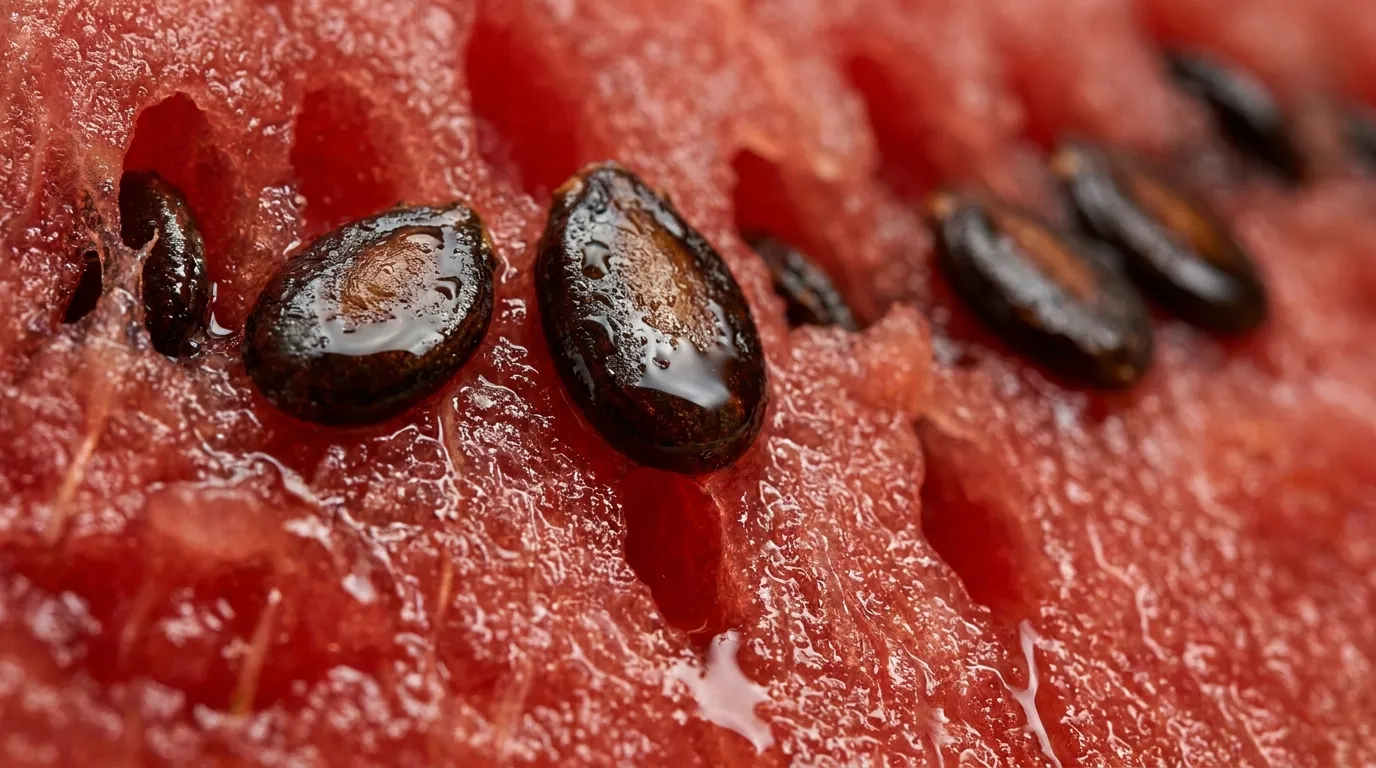
Quick Summary: Yes, watermelon seeds are completely safe to eat and offer impressive nutritional benefits. They contain significant amounts of protein (35.41%), healthy fats (40.71%), magnesium, iron, and zinc. The seeds can be eaten raw, but roasting them enhances flavor and makes nutrients more bioavailable.
Remember those childhood warnings about watermelon seeds growing in your stomach? Complete fiction. The reality is far more interesting—and nutritious.
Watermelon seeds aren’t just safe to eat. They’re surprisingly packed with nutrients that most people toss away without a second thought.
What Happens When You Eat Watermelon Seeds?
Here’s the thing: your digestive system handles watermelon seeds just fine. Swallowing a few whole seeds won’t hurt you—they’ll pass through undigested. But you’re missing out on the nutrition locked inside.
The real benefits come from chewing or roasting the seeds. According to research published in Food Chemistry X (2025), watermelon seed powder contains 35.41% protein and 40.71% fat—mostly the healthy kind your body needs.
That might not sound like much, but one watermelon typically contains between 200 and 800 seeds. That’s a lot of nutrition going to waste.
The Nutritional Powerhouse Inside
The nutritional profile of watermelon seeds might surprise you. These small black seeds punch well above their weight.
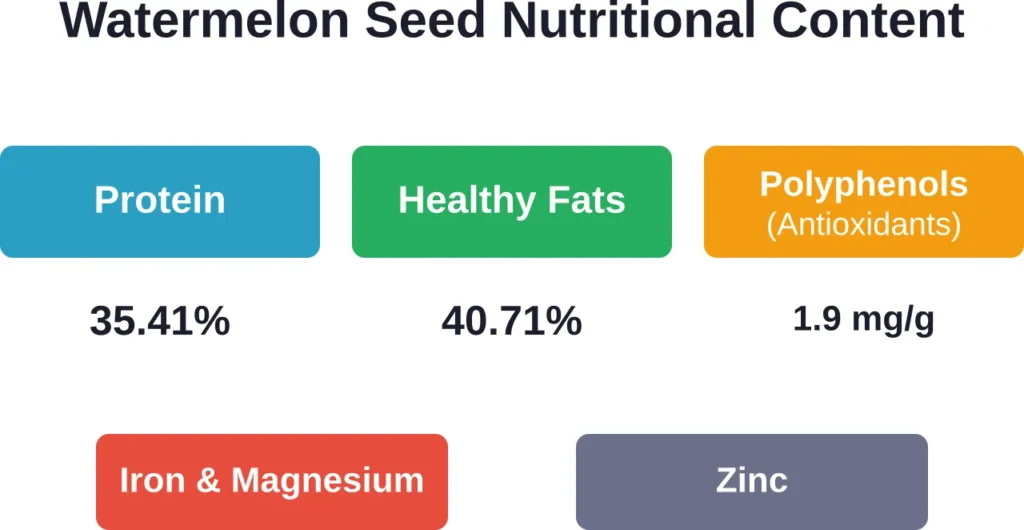
Magnesium
Watermelon seeds are loaded with magnesium, an essential mineral that regulates more than 300 bodily functions. Not bad for something most people throw away.
Iron
Every ounce of watermelon seeds contains two milligrams of iron. This makes up approximately a quarter of the dietary needs for male adults and 10% of the needs for female adults.
Iron is critical for oxygen transport in your blood and energy production. For people who don’t eat much red meat, watermelon seeds offer a plant-based alternative.
Zinc
One ounce provides about 26 percent of the daily value of zinc. Zinc supports immune function, cell growth, and wound healing. It’s also necessary for your body’s digestive and nervous systems.
Protein and Healthy Fats
The protein content in watermelon seeds is genuinely impressive. At 35.41% protein by weight, they rival many traditional protein sources.
The fat content is equally noteworthy. These are primarily unsaturated fats—the kind that support heart health rather than harm it.
How to Eat Watermelon Seeds Properly
Raw seeds are technically edible, but they’re tough and bland. Roasting transforms them completely.
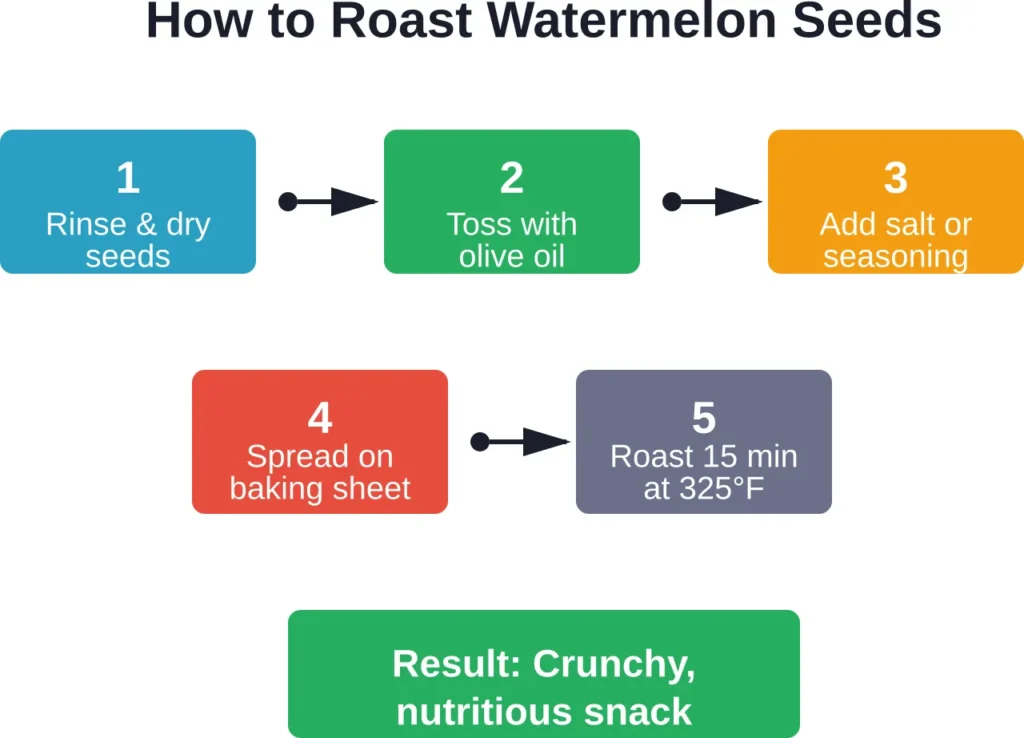
Start by rinsing the seeds thoroughly. Pat them dry with a towel. Toss them with a small amount of olive oil and your choice of seasoning—salt works great, but you can get creative.
Spread the seeds on a baking sheet in a single layer. Roast at 325°F for about 15 minutes. They’re done when they turn golden and crispy.
The result? A crunchy snack that tastes similar to sunflower seeds or pumpkin seeds. Some people describe the flavor as nutty.
Are There Any Risks?
Fresh produce may become contaminated with harmful bacteria that may be in the soil or water where produce grows, or during storage or preparation. This applies to the fruit itself more than the seeds.
Consuming dangerous foodborne bacteria will usually cause illness within 1 to 3 days of eating the contaminated food. However, sickness can also occur within 20 minutes or up to 6 weeks later.
Washing watermelon before cutting reduces this risk significantly. The seeds themselves pose no unique safety concerns beyond what applies to the entire fruit.
People with seed allergies should exercise caution, though watermelon seed allergies are uncommon. Start with a small amount if you’ve never eaten them before.
Beyond the Seeds: The Whole Watermelon Is Edible
While we’re discussing seeds, here’s something else most people don’t realize: the watermelon rind is edible too.
The white part between the red flesh and the green outer skin can be pickled, stir-fried, or blended into smoothies. It’s less sweet than the flesh but contains fiber and nutrients.
The entire watermelon—flesh, seeds, and rind—is edible. We waste so much of this fruit’s potential.
Frequently Asked Questions
Yes, black watermelon seeds are perfectly safe and nutritious. They’re the mature seeds and contain more nutrients than the small white seeds. Roasting them makes them easier to digest and tastier.
No, this is a myth with no scientific basis. Watermelon seeds do not cause appendicitis or grow in your stomach. They pass through your digestive system safely, whether whole or chewed.
There’s no strict limit, but one to two ounces (about a handful) of roasted seeds makes a reasonable serving. This provides significant nutrients without excessive calories.
Roasted seeds are better. Roasting makes nutrients more bioavailable, improves digestibility, and greatly enhances flavor. Raw seeds are safe but tough and less palatable.
Black seeds are mature and fully developed, packed with nutrients. White seeds are immature and contain fewer nutrients. Both are safe to eat, but black seeds offer more nutritional value.
Yes, roasted watermelon seeds can be ground into flour using a coffee grinder. This flour can supplement regular flour in baking recipes, adding protein and nutrients.
Seedless watermelons contain small, soft white seed coats that are completely edible. They lack the mature black seeds but are genetically bred to be nearly seedless for convenience.
The Bottom Line
Watermelon seeds deserve better than the trash bin or the ground. They’re safe, nutritious, and surprisingly versatile.
With their impressive protein content, essential minerals, and healthy fats, these seeds offer genuine nutritional value. Roasting takes just 15 minutes and transforms them into a snack that rivals store-bought options.
Next time you slice into a watermelon, save those seeds. Your body will thank you for the extra nutrients, and you might discover a new favorite snack in the process.