
Quick Summary: Taking creatine before bed is safe and effective. Research shows creatine does not disrupt sleep quality, and nighttime dosing can support muscle recovery during rest while helping maintain consistent daily supplementation. The timing of creatine intake matters less than taking it consistently every day.
Walk into any gym, and the question will eventually come up: when’s the best time to take creatine? Some people swear by post-workout shakes. Others mix it into their morning coffee. And then there’s the bedtime crowd.
But here’s where things get confusing. Community discussions online show mixed opinions about nighttime dosing. Some claim it interferes with sleep, while others report better recovery. So what does the research actually say?
The short answer? Creatine before bed is perfectly fine for most people. It’s not a stimulant, doesn’t contain caffeine, and research suggests it may even support sleep quality under certain conditions. Let’s break down the science.
Understanding Creatine and How It Works
Creatine is a naturally occurring compound found in muscle tissue. The body produces small amounts on its own, and people also get it through dietary sources like red meat, seafood, and animal milk. About 95% of the body’s creatine stores are held in skeletal muscle, with the remaining 5% distributed in the brain, kidneys, and liver.
At the cellular level, creatine helps regenerate adenosine triphosphate (ATP), which serves as the primary energy currency for short, intense bursts of activity. Think sprinting, lifting heavy weights, or jumping. When ATP breaks down during exercise, creatine phosphate donates a phosphate group to help quickly rebuild it.
This process is why creatine supplementation has become the gold standard for athletes and recreational lifters looking to improve strength, power, and lean muscle mass. It’s one of the most researched supplements in sports nutrition, with decades of studies supporting both its efficacy and safety.
Does Creatine Interfere With Sleep?
Here’s the thing most people get wrong: creatine is not a stimulant. It doesn’t contain caffeine or any compounds that directly affect the central nervous system in a way that promotes wakefulness.
Unlike pre-workout supplements that may include caffeine with a half-life of roughly 4 hours, creatine works on an entirely different mechanism. It saturates muscle stores over time, and its benefits come from consistent daily intake rather than acute timing around energy demands.
Research from studies examining creatine supplementation and sleep deprivation has been conducted. Studies have examined creatine’s relationship with sleep, though the specific effects and conditions require careful interpretation of the peer-reviewed literature. Research has examined whether creatine may help reduce the negative cognitive effects of sleep loss.
Research has examined creatine’s relationship with sleep habits in the general population. The relationship between creatine supplementation and sleep patterns continues to be studied.
Benefits of Taking Creatine Before Bed
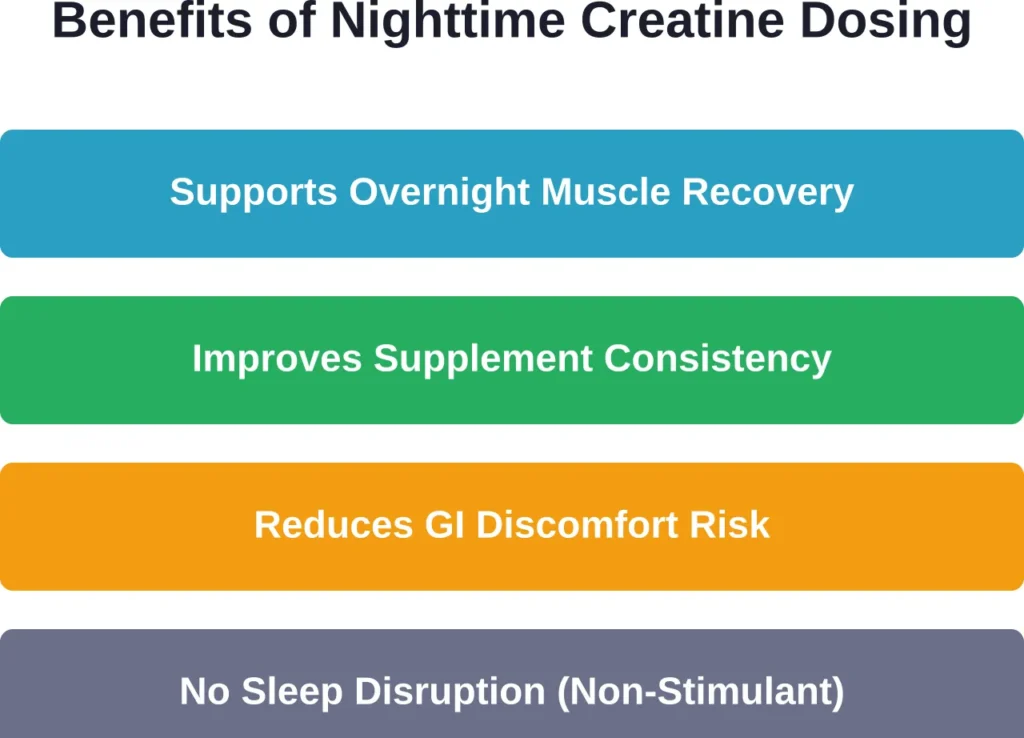
Timing creatine intake around bedtime offers several practical advantages. First, it supports overnight muscle recovery. During sleep, the body undergoes critical repair processes—muscle protein synthesis ramps up, growth hormone secretion peaks, and tissues rebuild from the day’s training stress.
Having creatine available in the system during these hours means muscle cells have access to the compound when recovery processes are most active. This doesn’t mean nighttime is inherently superior to other times, but it certainly isn’t disadvantageous.
Second, bedtime dosing solves a consistency problem. Many people struggle to remember daily supplements. Tying creatine intake to a nighttime routine—brushing teeth, taking other vitamins, winding down—creates a reliable habit anchor. Since creatine’s effectiveness depends on maintaining saturated muscle stores through daily intake, consistency matters more than precision timing.
Third, some people experience mild stomach discomfort when taking creatine on an empty stomach or before intense exercise. Taking it before bed, often after dinner when food is still in the system, can minimize gastrointestinal issues.
Potential Drawbacks to Consider
That said, nighttime creatine isn’t perfect for everyone. The most common concern is water retention. Creatine pulls water into muscle cells as part of its mechanism, which can lead to a slight increase in total body water. For some people, drinking fluids close to bedtime—including water mixed with creatine—leads to nighttime bathroom trips.
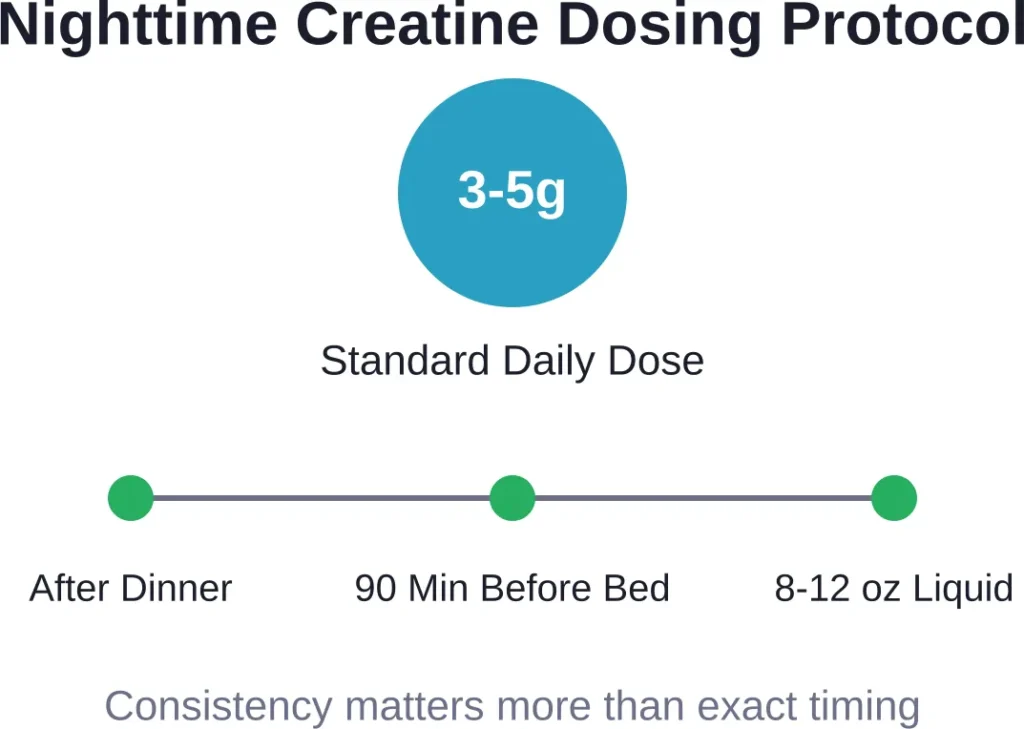
If interrupted sleep from needing to urinate is a problem, this timing might not be ideal. The solution is simple: take creatine earlier in the evening, at least 90 minutes before lying down, to allow time for fluid processing.
Another consideration is individual response variability. While creatine itself doesn’t stimulate the nervous system, some people report feeling unusually alert or energized after taking it at night. This response isn’t common and lacks a clear physiological explanation, but anecdotal reports exist in community discussions. If this happens, switching to morning or post-workout dosing makes sense.
What the Research Says About Timing
Multiple studies have examined whether creatine timing affects outcomes. The consensus? Timing has minimal impact compared to total daily intake.
Research has compared morning versus evening creatine intake in elite athletes, with timing showing minimal impact on outcomes when daily dosing is consistent. Both timing protocols effectively increased muscle creatine stores and supported strength gains, suggesting that consistency mattered more than the clock.
Research does show a slight edge for taking creatine close to workout times—either immediately before or after training. The theory is that increased blood flow to muscles during and after exercise may enhance creatine uptake. But the effect size is small, and studies have shown benefits with creatine taken at any time of day, as long as daily dosing continues.
For those training in the morning or midday, bedtime supplementation still works because creatine saturates muscle stores over days and weeks, not hours. Once stores are full (typically after 5-7 days of consistent dosing), the exact timing becomes even less relevant.
Best Practices for Taking Creatine at Night
If bedtime dosing fits the schedule, here’s how to optimize it. Mix creatine with water or a carbohydrate-containing beverage. Some research suggests that pairing creatine with carbohydrates or protein may enhance muscle uptake due to insulin’s role in nutrient transport, though this isn’t strictly necessary.
The standard maintenance dose is 3-5 grams per day. Loading phases (20 grams daily split into four doses for 5-7 days) can saturate stores faster, but they’re optional. Consistent daily dosing at 3-5 grams achieves the same saturation within 3-4 weeks.
Take creatine with at least 8-12 ounces of liquid to ensure full dissolution and minimize any gastrointestinal discomfort. Creatine monohydrate, the most studied and cost-effective form, works well for nighttime dosing.
Time the dose to align with the routine—after dinner, while preparing for bed, or alongside other evening supplements. The key is picking a consistent trigger that ensures daily adherence.
When Nighttime Dosing Might Not Be Ideal
Certain situations make bedtime supplementation less practical. People with overactive bladders or those prone to nocturia may want to avoid additional fluids in the evening. Shifting the dose to morning or midday solves this.
Those taking multiple supplements at night should consider timing adjustments if the total volume of pills and liquids becomes uncomfortable or disruptive. Spreading supplements throughout the day can improve adherence and comfort.
And if training happens late in the evening, taking creatine immediately post-workout—which naturally falls close to bedtime—covers both bases: consistent daily intake and proximity to the workout window.
Creatine Safety and Long-Term Use
Concerns about creatine safety have largely been debunked by decades of research. Studies consistently show that creatine is well-tolerated in both short-term and long-term use when taken at recommended doses. It does not damage kidneys in healthy individuals, does not cause dehydration when adequate water is consumed, and does not negatively impact cardiovascular health.
The International Society of Sports Nutrition has published research on creatine safety, which is referenced in scientific literature on supplement efficacy and safety. Nighttime dosing does not introduce any unique safety concerns beyond what applies to creatine taken at other times of day.
| Timing Option | Advantages | Disadvantages |
|---|---|---|
| Before Bed | Supports overnight recovery, easy to remember, minimal GI issues | May increase nighttime urination for some |
| Post-Workout | Aligns with muscle blood flow, convenient after training | Requires gym access or planning around training time |
| Morning | Easy to pair with breakfast routine | May be forgotten if mornings are rushed |
| Anytime (Consistent) | Builds saturated stores regardless of clock | Requires habit anchoring to ensure daily adherence |
Practical Takeaways
So, is it okay to take creatine before bed? Absolutely. Research supports nighttime dosing as safe and effective. It won’t disrupt sleep, and it offers practical benefits for recovery and consistency.
The most important factor is taking creatine every day, regardless of timing. Muscle creatine stores build up over time, and maintaining those stores requires regular intake. Whether that happens at 7 a.m., 3 p.m., or 10 p.m. matters far less than simply doing it consistently.
For people who train in the evening or struggle to remember supplements during the day, bedtime is an excellent choice. For those concerned about nighttime bathroom trips or who prefer post-workout nutrition, other times work just as well.
Real talk: stop overthinking the timing. Pick a time that fits the routine, stick with it, and let the creatine do its job.
Frequently Asked Questions
No. Creatine is not a stimulant and does not contain caffeine or compounds that promote wakefulness. Research shows no evidence that creatine negatively impacts sleep quality or causes insomnia. If feeling alert after nighttime dosing, individual response may vary, and switching to morning intake is an option.
Taking creatine with food, especially carbohydrates or protein, may enhance muscle uptake due to insulin’s role in nutrient transport. However, it’s not required. Creatine can be taken with or without food. If stomach discomfort occurs, taking it after dinner can help minimize issues.
The standard daily dose is 3-5 grams. This applies whether taking creatine at night, in the morning, or post-workout. Loading phases (20 grams daily for 5-7 days) are optional and can be done at any time of day.
Yes. Creatine can be safely combined with most other supplements, including protein powders, magnesium, or melatonin. There are no known negative interactions between creatine and common nighttime supplements. Just ensure adequate fluid intake.
Creatine causes intramuscular water retention (water pulled into muscle cells), which is part of its mechanism. This occurs regardless of timing. Some people notice slight bloating, but it’s not specific to nighttime dosing. Drinking adequate water throughout the day helps the body regulate fluid balance.
Research shows minimal difference. Research has compared morning versus evening intake in elite athletes, with timing showing minimal impact on outcomes when daily dosing is consistent. Taking creatine close to workouts may offer a slight advantage in uptake, but the effect is small. Consistency matters far more than precision timing.
Creatine saturation occurs over days to weeks, not hours. With consistent daily dosing of 3-5 grams, muscle stores typically saturate within 3-4 weeks. Nighttime dosing follows the same timeline as any other time. Once stores are saturated, timing becomes even less relevant to maintaining benefits.
Final Thoughts
The debate over creatine timing often misses the bigger picture. Yes, taking creatine before bed is safe. No, it won’t ruin sleep or sabotage gains. And yes, nighttime dosing can support recovery during the hours when muscle repair peaks.
But the real secret? It’s not about finding the perfect 15-minute window. It’s about showing up every day with a consistent dose and letting time do the work.
If bedtime works for the schedule, go for it. If not, pick another time. Either way, the muscles won’t know the difference—as long as the creatine shows up.
Ready to optimize your supplement routine? Start by locking in a consistent daily dose, whether that’s before bed, after training, or with morning coffee. Track adherence for 30 days and let the results speak for themselves.