

Quick Summary: Exercising before bed is generally safe and may even improve sleep quality for most people, according to recent research. The key is avoiding vigorous, high-intensity workouts within one hour of bedtime and choosing moderate activities like yoga, stretching, or light cardio instead. Individual responses vary, so listen to your body and adjust timing based on your sleep quality.
The longstanding belief that nighttime exercise ruins sleep has been challenged. For decades, fitness professionals warned against evening workouts, claiming they’d leave people wired and unable to fall asleep.
But here’s the thing: recent research tells a different story. Studies published by the National Institutes of Health show that evening exercise doesn’t necessarily disrupt sleep—and for many people, it actually helps.
The relationship between exercise timing and sleep quality is more nuanced than previously thought. Understanding when, how, and what type of exercise works best before bed can help optimize both fitness goals and sleep health.
What Research Reveals About Evening Exercise and Sleep
A comprehensive study examining 14,689 participants tracked exercise data over time. The findings challenged conventional wisdom about nighttime workouts.
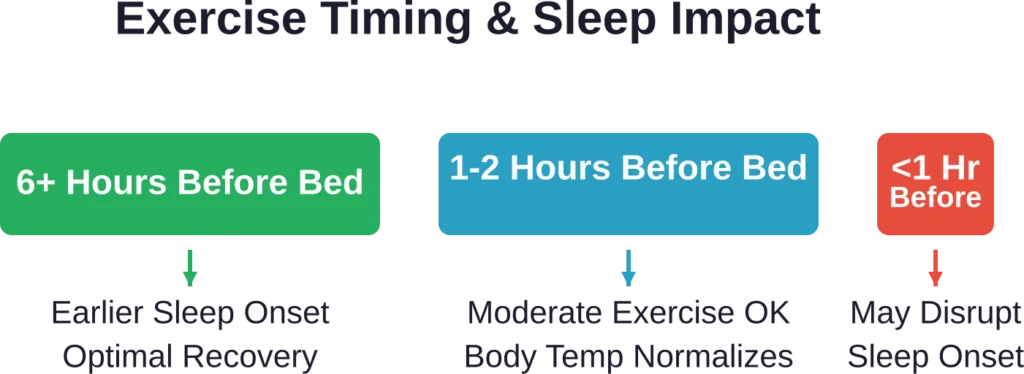
The research showed that exercise timing and intensity have dose-dependent relationships with sleep quality. However, vigorous exercise within one hour of bedtime did correlate with sleep disruptions.
According to the American Academy of Sleep Medicine, approximately 53% of Americans report that exercising helps them get better sleep. But the impact varies by sex: 63% of men say exercise improves their sleep, compared to 43% of women.
The Body Temperature Connection
Exercise raises core body temperature, which is where concerns about bedtime workouts originate. The body needs to cool down to initiate sleep—a process that typically takes 30-90 minutes post-exercise.
This cooling period is actually beneficial. As body temperature drops, it signals the brain that it’s time to sleep, facilitating the natural transition to rest.
So timing becomes crucial. Finishing a workout 30-90 minutes before bed allows the body’s temperature to drop at just the right time, potentially enhancing sleep quality rather than disrupting it.
Benefits of Working Out Before Bed
Evening exercise offers several advantages that morning workouts can’t match.
Better Sleep Quality for Most People
Regular physical activity improves sleep duration and quality. This improvement extends beyond duration. Exercise helps people fall asleep faster, experience deeper sleep stages, and wake up less frequently during the night.
Stress Relief When You Need It Most
Physical activity reduces cortisol—the stress hormone that often peaks after demanding workdays. Evening workouts provide a productive outlet for accumulated tension and anxiety.
For many people juggling work deadlines and family responsibilities, nighttime is the only realistic window for exercise. The stress-reduction benefits make it worthwhile despite concerns about sleep disruption.
Consistency and Convenience
The best workout time is the one that fits your schedule consistently. Morning intentions often fall victim to snooze buttons and unexpected early meetings.
Evening exercise eliminates these obstacles. The workout is already planned after work commitments end, making it easier to maintain a regular routine—and consistency matters more for long-term health than perfect timing.
When Evening Exercise Might Disrupt Sleep
Not everyone responds to nighttime workouts the same way. Individual physiology and exercise intensity play significant roles.
High-Intensity Workouts Too Close to Bedtime
Vigorous exercise within one hour of sleep triggers several physiological responses that interfere with falling asleep. Heart rate remains elevated, adrenaline floods the system, and core body temperature stays high.
Activities like high-intensity interval training (HIIT), heavy weightlifting, or intense cardio sessions create a state of arousal that directly opposes the calm needed for sleep.
Research shows that when exercise strain is too high and timing is too late, people experience delayed sleep onset, shorter sleep duration, and lower sleep quality.
Individual Variability Matters
Some people are simply more sensitive to evening stimulation. These individuals might feel wired after any nighttime physical activity, regardless of intensity.
Age also influences response. Younger adults (aged 25-34) report the highest rates of sleep improvement from exercise at 62%, suggesting they tolerate evening workouts better than older populations.
Real talk: if evening exercise consistently leaves you staring at the ceiling for an hour, it’s not the right choice—regardless of what research says about average responses.
Best Practices for Exercising Before Bed
Strategic planning makes nighttime workouts compatible with quality sleep.
Choose the Right Exercise Intensity
Moderate-intensity activities work best before bed. Think brisk walking, light jogging, yoga, swimming at a comfortable pace, or cycling at moderate speed.
These activities provide fitness benefits without triggering excessive physiological arousal. Low-to-moderate exercises consistently promote sleep quality without the disruption risk of vigorous training.
| Exercise Type | Best Time Before Bed | Sleep Impact |
|---|---|---|
| Yoga / Stretching | 30-60 minutes | Promotes relaxation |
| Light Cardio | 1-2 hours | Neutral to positive |
| Moderate Strength Training | 1.5-2 hours | Generally safe |
| HIIT / Vigorous Exercise | 3+ hours | May disrupt if closer |
Time It Properly
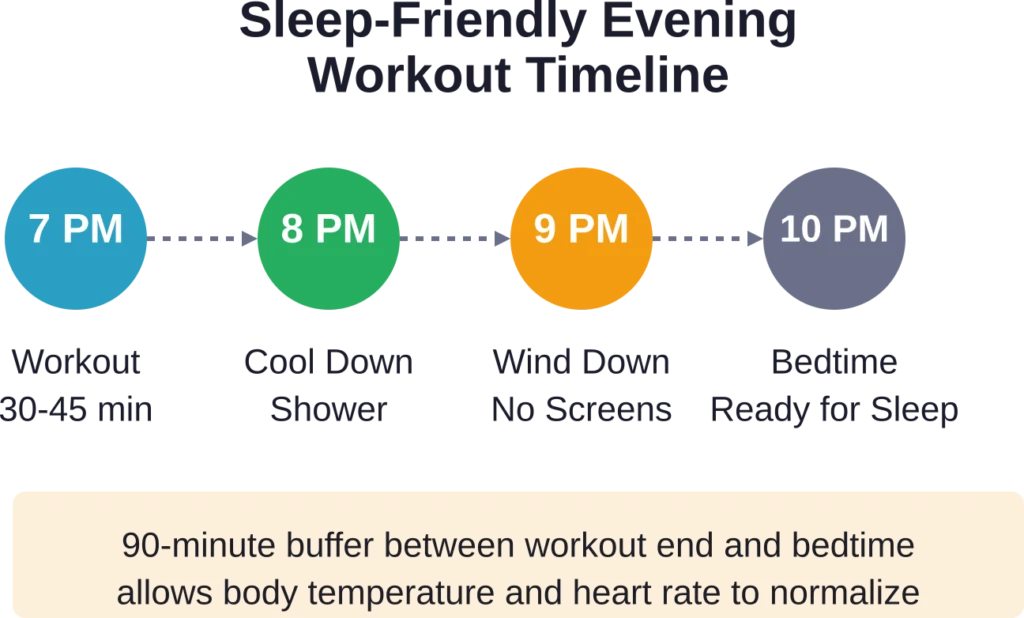
The 30-90 minute window after exercise represents the critical cooling-down period. Planning workouts to end at least 90 minutes before bed provides a safety buffer.
For moderate activities like yoga or walking, 30-60 minutes is typically sufficient. But vigorous workouts need the full 90 minutes or more.
Create a Post-Workout Wind-Down Routine
What happens after exercise matters as much as the workout itself. A systematic cool-down helps transition from activity to rest.
Taking 15-30 minutes to wind down makes a significant difference. This means stepping away from stimulating activities—including phones and computers—and engaging in relaxing behaviors.
Consider a lukewarm shower (not hot, which raises body temperature), gentle stretching, or quiet reading. The goal is signaling to the body that it’s time to shift gears.
Avoid Late-Night Eating After Exercise
Post-workout nutrition is important, but large meals before bed interfere with sleep. Active digestion keeps the body in a more alert state.
Avoiding large meals and alcohol before bedtime is recommended for better sleep. If hunger strikes after an evening workout, choose a small snack—perhaps Greek yogurt, a banana, or a handful of nuts—and stop eating at least 45 minutes before bed.
Turn Off Screens After Working Out
The temptation to check phones or watch TV after exercising is strong. But blue light from electronic devices suppresses melatonin production, making it harder to fall asleep.
Turning off devices at least 30 minutes before bedtime supports the body’s natural sleep preparation. This recommendation comes directly from CDC sleep guidelines.
How Much Exercise Do You Need for Sleep Benefits?
The CDC recommends adults get at least 150 minutes of moderate-intensity aerobic exercise weekly, plus two days of muscle-strengthening activities. This breaks down to roughly 30 minutes daily, five days per week.
Research confirms that meeting these guidelines correlates with improved sleep quality. Regular physical activity improves sleep duration and quality.
But wait—more isn’t always better. Overtraining can actually harm sleep quality. The goal is consistent, moderate activity rather than sporadic intense sessions.
Signs Evening Exercise Isn’t Working for You
Listen to what the body communicates. Several signals indicate nighttime workouts might be counterproductive:
- Taking more than 30 minutes to fall asleep after evening exercise
- Feeling mentally wired or physically restless in bed
- Waking frequently during the night after evening workouts
- Experiencing next-day fatigue despite adequate time in bed
- Noticing heart rate remains elevated hours after exercising
If these symptoms persist for more than a week or two, shifting workouts to morning or afternoon makes sense. Individual biology trumps general guidelines.
Alternative Strategies for Better Sleep
Exercise is just one component of quality sleep. Other behavioral strategies work synergistically with physical activity.
Maintain a Consistent Sleep Schedule
Consistent sleep-wake times regulate circadian rhythms more effectively than any single intervention. Going to bed and waking at the same time daily—even on weekends—strengthens the body’s internal clock and makes falling asleep easier.
Optimize the Sleep Environment
The bedroom should be quiet, dark, and cool. Research suggests temperatures between 60-67°F promote optimal sleep.
Blackout curtains, white noise machines, and comfortable bedding all contribute to better rest—especially important when managing the arousal from evening exercise.
Practice Relaxation Techniques
Progressive muscle relaxation, deep breathing exercises, and meditation help transition from the stimulated post-workout state to sleep readiness.
These techniques activate the parasympathetic nervous system, countering the sympathetic arousal from exercise and facilitating faster sleep onset.
Special Considerations for Different Populations
Certain groups need tailored approaches to evening exercise.
People With Insomnia
Studies show that insomnia prevalence rates range from 10% to 30%, and in some cases, even as high as 50-60%. For these individuals, exercise timing becomes even more critical.
Morning exercise tends to be more beneficial for people with chronic insomnia. Long-term morning workouts decrease cortisol concentrations after awakening and consistently improve sleep quality without the risk of evening stimulation.
Shift Workers
People working non-traditional hours face unique challenges. Their circadian rhythms are already disrupted, making exercise timing decisions more complex.
For shift workers, the priority is consistency—exercising at the same time relative to sleep onset, regardless of when that occurs during the 24-hour cycle.
Older Adults
Aging affects both exercise recovery and sleep architecture. Older adults may need longer recovery windows between evening workouts and bedtime.
They also benefit more from lower-intensity activities like tai chi, gentle yoga, or walking rather than vigorous exercise—especially in the evening hours.
Frequently Asked Questions
For moderate-intensity exercise, finishing at least 60-90 minutes before bed works for most people. Vigorous workouts should end at least two hours before sleep, with some individuals needing even more time. The key factor is allowing body temperature and heart rate to return to baseline before attempting sleep.
Yes. Gentle yoga and stretching are among the best pre-bed activities. They promote relaxation, reduce muscle tension, and don’t trigger the high arousal associated with vigorous exercise. These activities can be performed as close as 30 minutes before bed without sleep disruption for most people.
Several factors could be responsible: exercising too close to bedtime, workout intensity being too high, elevated core body temperature, increased cortisol and adrenaline, or individual sensitivity to evening stimulation. Try finishing workouts earlier, reducing intensity, or switching to morning exercise to see if sleep improves.
Research suggests yes. According to American Academy of Sleep Medicine data, 63% of men report exercise helps them sleep better compared to only 43% of women. However, these are population-level trends—individual responses vary significantly regardless of sex.
Small, balanced snacks are fine, but avoid large meals. Stop eating at least 45 minutes before bed to allow initial digestion. Good post-workout evening snacks include Greek yogurt, a small portion of lean protein with vegetables, or a banana with a small amount of nut butter.
Nighttime exercise is still better than no exercise. Focus on moderate intensity rather than vigorous workouts, finish as early in the evening as possible, implement a proper cool-down routine, and maintain consistent timing so the body can adapt. The health benefits of regular exercise outweigh potential minor sleep disruptions for most people.
Some people notice better sleep quality within a few days of starting regular exercise, but research typically shows more consistent improvements after 4-6 weeks of maintaining an exercise routine. Consistency matters more than intensity for sleep benefits, so focus on sustainable habits rather than dramatic short-term efforts.
The Bottom Line on Evening Exercise
So, is it OK to exercise before bed? For most people, absolutely—with smart planning.
The evidence shows that moderate-intensity evening exercise doesn’t harm sleep and often improves it. The old blanket warning against nighttime workouts was overly cautious.
The real determinants of success are workout intensity, timing relative to sleep, and individual physiology. High-intensity exercise within one hour of bed remains problematic for most people. But moderate activities completed 90 minutes or more before sleep pose little risk and offer significant benefits.
Here’s what matters most: consistency beats perfect timing. A regular evening workout routine that fits your schedule will deliver better long-term health outcomes than sporadic morning exercise that constantly gets skipped.
Pay attention to what your body tells you. If evening workouts consistently interfere with sleep despite following best practices, shifting to morning or midday exercise makes sense. But for the majority of people, nighttime exercise is not only acceptable—it’s a practical, effective way to meet fitness goals while supporting overall health.
Ready to optimize your evening workout routine? Start by tracking how different exercise times and intensities affect your sleep for two weeks. This data will reveal your personal patterns and help you dial in the perfect schedule. The goal isn’t following rigid rules—it’s finding what works for your unique physiology and lifestyle.