

Quick Summary: Feeding a dog once a day can be acceptable for some adult dogs, though veterinarians typically recommend twice-daily meals. New research suggests once-daily feeding may offer health benefits for certain dogs, but individual factors like age, breed, activity level, and health conditions must guide feeding frequency decisions.
Walk into any veterinary clinic and ask about feeding schedules, and the traditional answer comes back: twice daily. That’s the standard advice most dog owners hear and follow.
But recent research is challenging that conventional wisdom. Data from large-scale studies suggest that once-daily feeding might actually correlate with better health outcomes in some companion dogs. So what’s the real story?
The answer isn’t one-size-fits-all. Feeding frequency depends on multiple factors including your dog’s age, breed, activity level, and individual health status.
What Veterinarians Traditionally Recommend
Veterinarians typically recommend feeding the average adult dog twice daily. This approach has dominated feeding guidelines for years, partly because it mirrors human mealtimes and partly because it seemed to make practical sense.
The twice-daily schedule offers some clear advantages. It helps prevent extreme hunger between meals, potentially reducing the risk of bloat in deep-chested breeds. It also makes medication administration easier when treatments need to be given with food.
According to a 2008 survey published in the Journal of the American Veterinary Medical Association, most pet owners in the United States feed their dogs multiple times per day. The study noted that 98.7% of dogs were considered healthy or generally healthy by their owners, suggesting that traditional feeding practices generally work well.
The New Research on Once-Daily Feeding
Here’s where things get interesting. Recent research from the Dog Aging Project—a large-scale, long-term study tracking thousands of companion dogs—found associations between once-daily feeding and better health outcomes.
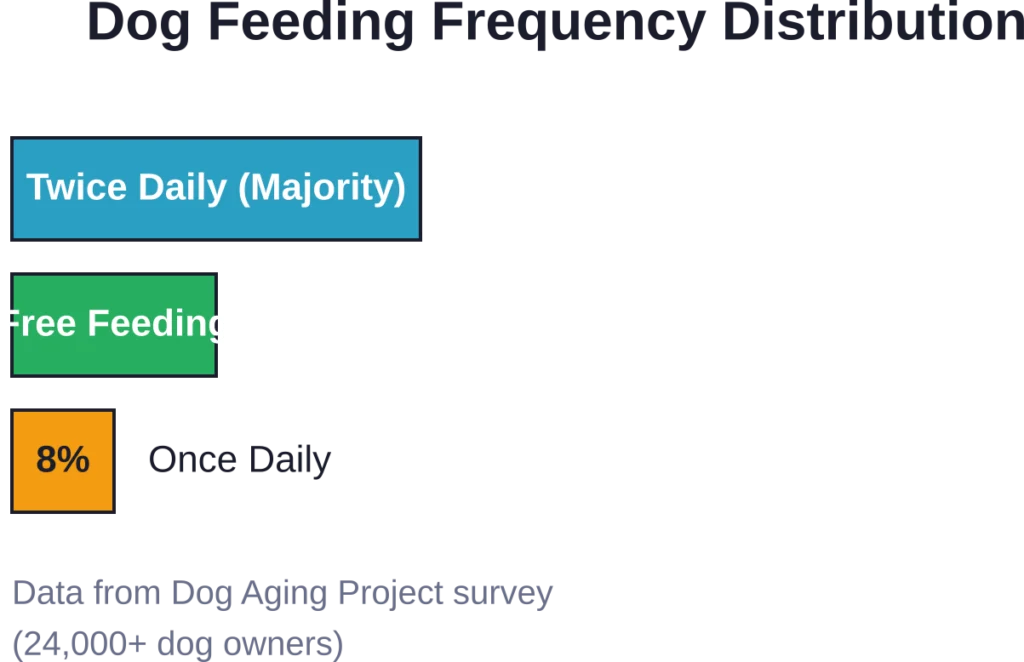
The research analyzed data from over 24,000 dog owners. Results showed that most feed their dogs twice daily, some free-feed by keeping bowls constantly topped up, and approximately 8% feed once daily.
Early analysis indicated that dogs fed once daily showed associations with better cognitive function and fewer age-related health conditions compared to dogs fed more frequently. The research team noted potential connections to improved markers in several health categories.
That said, researchers emphasized this data shows correlation, not causation. Dogs fed once daily might differ in other ways—perhaps their owners make different care decisions overall, or the dogs themselves have different baseline characteristics.
Why Once-Daily Feeding Might Offer Benefits
The potential benefits of once-daily feeding connect to concepts like intermittent fasting, which has shown health advantages in laboratory studies with other species.
When dogs eat less frequently, their digestive system gets extended rest periods. This metabolic break might allow for improved cellular repair processes and better regulation of appetite-related hormones.
Research in other mammals suggests that intermittent fasting can influence metabolic pathways related to longevity. The extended fasting period between meals might trigger beneficial biological responses.
Some veterinarians also note practical observations: dogs fed once daily often show more food motivation, which can help with training. They may also maintain steadier energy levels throughout the day rather than experiencing post-meal drowsiness.
When Once-Daily Feeding Isn’t Appropriate
Despite potential benefits, once-daily feeding isn’t suitable for all dogs. Several categories should stick with more frequent meals.
Puppies need multiple small meals throughout the day. Their growing bodies require steady nutrition, and their small stomachs can’t hold enough food for a full day’s calories in one sitting. Most puppies do best with three to four meals daily until around six months of age.
Small and toy breeds face higher risk of hypoglycemia (low blood sugar) when going extended periods without food. Their faster metabolisms and smaller energy reserves make twice-daily feeding safer.
Dogs with certain medical conditions require specialized feeding schedules. Diabetic dogs typically need meals timed with insulin injections. Dogs with a history of bloat or gastrointestinal issues may need smaller, more frequent meals.
Pregnant or nursing dogs have dramatically increased nutritional demands that single daily meals cannot adequately meet.
| Dog Category | Recommended Feeding Frequency | Reason |
|---|---|---|
| Puppies (under 6 months) | 3-4 times daily | Growth needs, small stomach capacity |
| Small/toy breeds | 2-3 times daily | Hypoglycemia risk, fast metabolism |
| Adult large breeds | 1-2 times daily | Individual tolerance varies |
| Diabetic dogs | 2 times daily (with insulin) | Blood sugar management |
| Pregnant/nursing | 3-4 times daily | Increased caloric demands |
Factors That Should Guide Your Decision
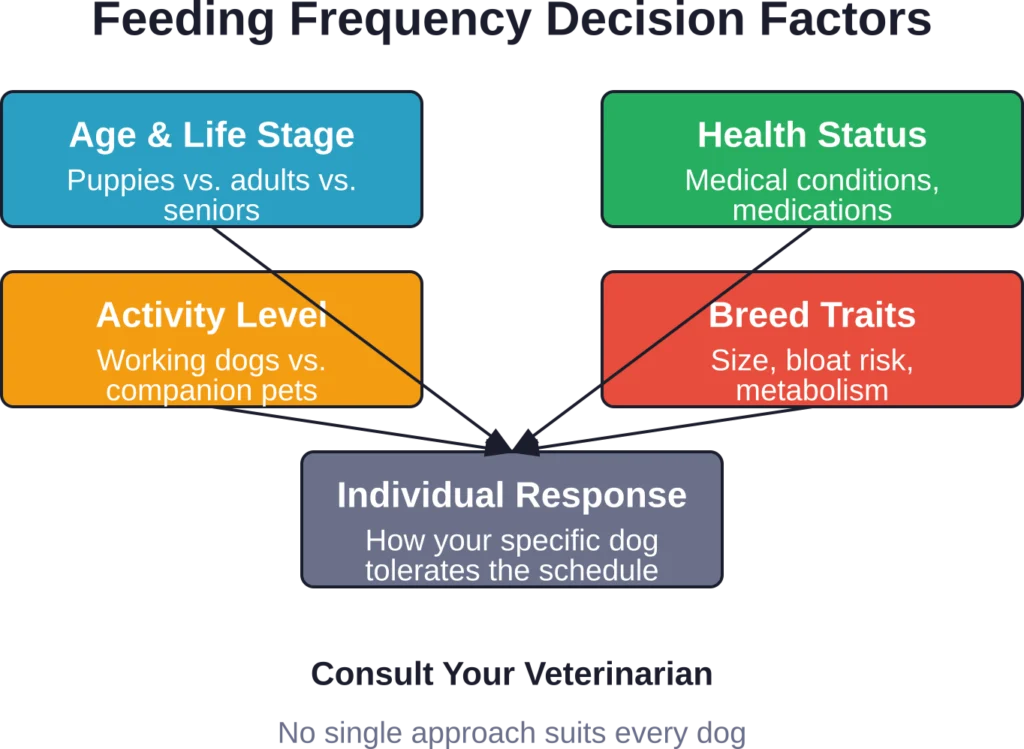
Choosing a feeding schedule requires considering multiple individual factors specific to your dog.
Age and life stage: Adult dogs have more flexibility than puppies or senior dogs. Older dogs with declining organ function may benefit from smaller, more frequent meals that are easier to process.
Activity level: Highly active dogs or working dogs might perform better with meals split around their activity periods. A dog competing in agility might need a small morning meal and larger evening meal rather than one large feeding.
Breed considerations: Deep-chested breeds like Great Danes, German Shepherds, and Standard Poodles face elevated bloat risk. Veterinarians often recommend these breeds receive multiple smaller meals rather than one large feeding to reduce stomach distension.
Body condition: Weight management goals influence feeding strategy. Research on pet weight suggests significant portions of the pet dog population experience weight management challenges. Dogs needing weight loss might benefit from twice-daily feeding to help manage hunger and maintain metabolism.
How to Transition to Once-Daily Feeding
If you’re considering switching to once-daily feeding for an adult dog currently on a twice-daily schedule, transition gradually.
Start by slowly adjusting meal times closer together over a week or two. If feeding at 7 AM and 6 PM, shift to 8 AM and 5 PM, then 9 AM and 4 PM, gradually consolidating toward a single midday or evening meal.
Monitor your dog’s response carefully. Watch for signs of excessive hunger, behavioral changes, vomiting bile (which can indicate an empty stomach), or energy level fluctuations.
Some dogs adapt immediately. Others never quite adjust and continue to show hunger-related behaviors or digestive upset. That’s perfectly fine—twice-daily feeding remains a completely healthy option.
What Matters Most: Total Daily Nutrition
Real talk: feeding frequency matters less than total daily nutrition quality and quantity.
Whether feeding once or twice daily, the total calories and nutritional balance matter most. A high-quality commercial diet formulated to meet Association of American Feed Control Officials (AAFCO) standards provides complete nutrition when fed in appropriate amounts.
Portion control remains critical regardless of feeding frequency. Overfeeding leads to weight gain whether that excess comes in one meal or three. Calculate daily caloric needs based on your dog’s ideal body weight and activity level, then divide that total appropriately across meals.
Consistency also plays a key role. Dogs thrive on routine. Whatever schedule you choose, stick with regular timing. Their digestive systems adapt to anticipate meals at expected times.
Frequently Asked Questions
Yes, healthy adult dogs can typically transition to once-daily feeding if done gradually. Shift meal times closer together over 1-2 weeks while monitoring for any digestive upset or behavior changes. Consult your veterinarian before making changes, especially for dogs with health conditions, small breeds, or seniors.
Most adult dogs adapt to once-daily feeding within a few weeks. Initial hunger between the old meal times usually subsides as their system adjusts to the new schedule. Some dogs continue to show hunger-related behaviors and may be better suited to twice-daily feeding.
For deep-chested, large-breed dogs prone to bloat (gastric dilatation-volvulus), feeding one very large meal might increase risk compared to splitting the same amount into two smaller meals. These breeds typically benefit from multiple smaller meals rather than single large feedings.
No single time works universally. Many owners feed once daily in the evening, allowing dogs to settle and digest overnight. Others prefer midday feeding. Choose a time that fits consistently into household routines and allows monitoring for a few hours after eating.
No. Puppies require multiple small meals throughout the day—typically three to four meals for young puppies, transitioning to twice daily around six months of age. Their growth demands steady nutrition, and their small stomachs cannot accommodate a full day’s calories in one meal.
The Dog Aging Project research found associations between once-daily feeding and better health markers in some areas, but researchers emphasize this shows correlation, not proven causation. Long-term studies are ongoing to better understand whether feeding frequency directly influences canine longevity and healthspan.
No. Diabetic dogs require carefully timed meals that coordinate with insulin administration, typically twice daily. Maintaining stable blood sugar levels depends on consistent meal timing and portion sizes. Always follow your veterinarian’s specific feeding protocol for diabetic dogs.
Making the Right Choice for Your Dog
So is it OK to feed a dog once a day? The honest answer: it depends entirely on the individual dog.
For some healthy adult dogs, once-daily feeding works well and may even offer benefits. For others—puppies, small breeds, dogs with medical conditions, or individuals who simply don’t adapt well—twice-daily or more frequent feeding remains the better choice.
The emerging research on once-daily feeding presents intriguing possibilities, but it doesn’t override the importance of individualized care. What works for one dog might not suit another, even within the same breed or household.
Pay attention to your dog’s body condition, energy levels, and overall health regardless of feeding frequency. A dog maintaining ideal weight, showing good energy, healthy coat condition, and normal digestion is on the right feeding plan—whether that’s one meal, two meals, or somewhere in between.
When in doubt, consult your veterinarian. They can assess your specific dog’s needs based on age, breed, health status, and lifestyle to recommend the feeding approach most likely to support long-term health and wellbeing.