
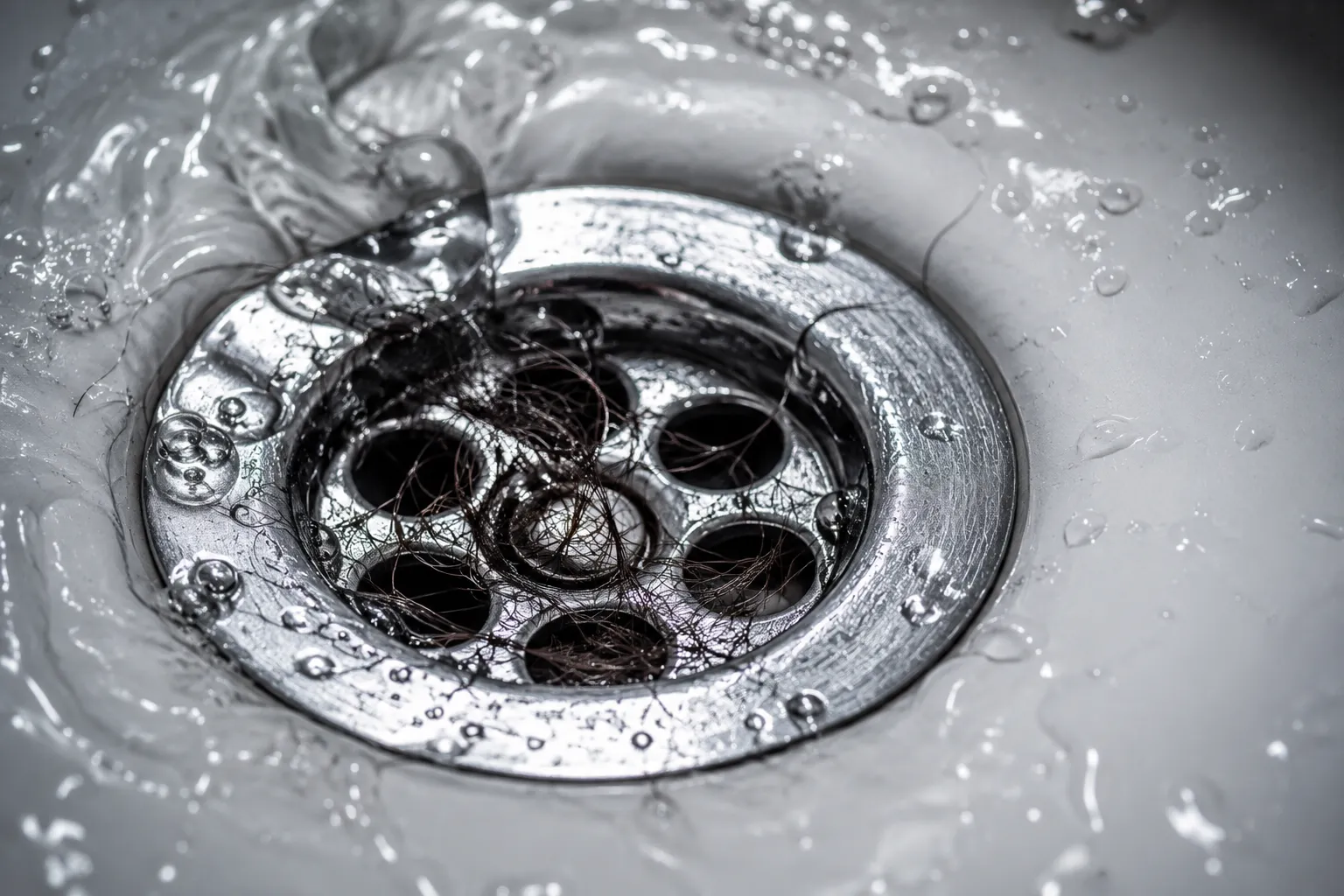
Quick Summary: No, you should never flush hair down the toilet. Hair does not break down in water and can tangle around other debris in pipes, creating stubborn clogs in your plumbing system, septic tank, or municipal sewer lines. Instead, dispose of hair in the trash or compost bin to avoid costly plumbing repairs and system damage.
After a haircut at home, trimming a beard over the sink, or cleaning out a hairbrush, the toilet might seem like a convenient disposal spot. Just a quick flush and the evidence disappears, right?
But here’s the thing—what vanishes from your sight doesn’t vanish from your plumbing. Hair becomes one of the most stubborn materials in drainage systems, and that seemingly harmless flush can trigger expensive consequences months down the line.
Understanding what happens when hair enters toilet drains helps homeowners avoid emergency plumber calls, protect septic systems, and maintain proper waste disposal habits. The toilet is designed for specific waste only, and hair doesn’t make the list.
Why Hair Should Never Go Down the Toilet
Hair seems small and harmless. How much damage could a few strands possibly cause?
The problem lies in hair’s unique physical properties. Unlike toilet paper, which is specifically engineered to disintegrate in water, hair maintains its structure indefinitely when submerged. Human hair is composed of keratin, a protein that resists breakdown in typical plumbing conditions.
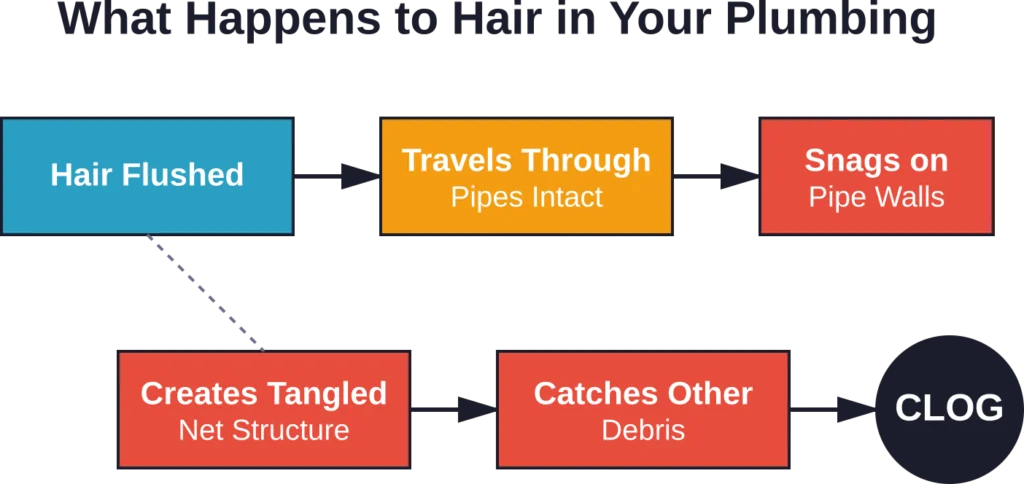
When hair enters the toilet drain, it doesn’t dissolve or fragment. Instead, it travels through pipes intact, eventually snagging on rough pipe interiors, joints, or existing debris accumulation. Over time, these strands create a net-like structure that captures other materials passing through—toilet paper fragments, soap residue, mineral deposits, and organic waste.
This tangled mass grows gradually. The Santa Margarita Water District emphasizes that toilets should only handle the three P’s: pee, poop, and toilet paper. Everything else, including hair, turns the toilet into an inappropriate trash receptacle that compromises the entire wastewater system.
Hair Behaves Differently Than Flushable Materials
Toilet paper disintegrates within seconds when agitated in water. Even single-ply varieties are designed to break apart under the turbulence of a flush.
Hair, meanwhile, can remain structurally intact for years in wet conditions. Strands that enter municipal sewer systems or septic tanks don’t decompose at meaningful rates. According to the EPA’s septic system care guidelines, proper waste disposal is essential for system longevity—and hair falls squarely in the category of materials that interfere with normal waste processing.
The length and texture of hair exacerbate the problem. Long hair creates particularly troublesome tangles, but even short clippings from beard trims accumulate over repeated flushes. The hair binds with grease, creating dense blockages that resist simple plunging or chemical treatments.
What Happens When Hair Goes Down the Toilet
So what’s actually happening inside pipes after flushing hair?
The journey starts innocently enough. Hair flushes away with wastewater, traveling through the toilet’s trap—the curved section of pipe designed to maintain a water seal. Most hair passes this initial barrier without issue.
Problems emerge further downstream. In home plumbing, hair tends to accumulate at pipe bends, connections, or areas where flow slows. Older homes with cast iron or rough-interior pipes provide more surface irregularities for hair to catch on.
In Septic Systems
For homes on septic systems, flushing hair creates additional complications. The EPA states that septic tanks require careful maintenance, with inspections recommended every three years and pumping typically needed every three to five years.
Hair doesn’t biodegrade in the septic tank environment. While human waste and toilet paper break down through bacterial action, hair accumulates in the tank’s sludge layer. According to EPA guidelines, tanks should be pumped when the sludge layer rises to within 12 inches of the outlet, or when combined sludge and scum occupy 25% of the tank’s liquid depth.
Hair accelerates the timeline to these thresholds. It contributes to scum layer buildup near the surface and can clog the T-shaped outlet that prevents solids from entering the drainfield. When hair escapes into the drainfield, it can clog the soil pores that allow wastewater to filter and disperse, potentially causing complete system failure.
Septic system repairs rank among the most expensive home maintenance issues, with full system replacement potentially costing $10,000 to $30,000 or more depending on property conditions. Hair seems insignificant compared to that price tag—until it contributes to premature failure.
In Municipal Sewer Systems
Even homes connected to municipal sewers aren’t off the hook. Hair that makes it past home plumbing contributes to larger blockages in municipal sewer lines.
Combined with fats, oils, and grease from kitchen drains, hair helps form notorious “fatbergs”—massive blockages in city sewer systems. These obstructions can cause sewage backups affecting entire neighborhoods, overflow into streets or waterways during heavy rain, and require expensive municipal interventions.
Water districts increasingly emphasize proper disposal habits. The responsibility for sewer system health extends beyond municipal crews to individual households making daily choices about what goes down drains.
Common Scenarios That Lead to Flushing Hair
Understanding when and why people flush hair helps prevent the habit before it starts.
Home haircuts represent a major culprit. Trimming bangs over the bathroom sink, giving kids a buzz cut, or maintaining a beard creates visible hair accumulation. The toilet seems more convenient than gathering clippings into a trash bag.
Brushing hair before showering presents another scenario. Rather than cleaning hair from a brush into the waste basket, some people find it easier to flush strands away. Pet grooming follows the same pattern—fur from brushing cats or dogs gets flushed for quick cleanup.
Shower drain catches filled with hair also tempt people toward toilet disposal. After removing accumulated hair from a drain cover, the toilet appears to be a logical destination.
In all these situations, short-term convenience trades for long-term plumbing risk. The few seconds saved by flushing hair don’t offset potential repair costs or the hassle of dealing with clogs.
The Right Way to Dispose of Hair
So hair can’t go down the toilet. What’s the proper disposal method?
The trash bin remains the simplest solution. After haircuts, sweep or gather clippings and deposit them directly into a garbage bag. For smaller amounts from brushing or shower drains, collect hair in tissue or toilet paper and throw it in the bathroom waste basket.
Some municipalities accept hair in compost programs, particularly for yard waste collection. Hair is organic material that eventually decomposes in proper composting conditions. Check local composting guidelines to confirm hair is accepted.
| Hair Source | Best Disposal Method | Why It Works |
|---|---|---|
| Haircuts and trims | Sweep into trash bag | Keeps hair contained and out of plumbing |
| Brushes and combs | Remove to waste basket | Prevents accumulation in drains |
| Shower drain catches | Tissue wrap, then trash | Avoids introducing hair to any drain |
| Pet grooming | Outdoor brushing or trash | Large fur volumes stay out of home plumbing |
For pet owners dealing with substantial fur volume, outdoor brushing reduces indoor cleanup needs. Brushing dogs or cats outside allows wind to disperse loose fur naturally, though gathering it for trash disposal prevents wildlife entanglement risks.
Installing drain catches in showers and bathroom sinks provides a first line of defense. These inexpensive screens trap hair before it enters plumbing, making disposal a matter of periodic removal to the trash. The EPA recommends protecting septic systems through proper waste disposal—and drain catches support that goal by preventing problematic materials from entering the system at all.
Signs of Existing Hair Clogs
What if hair has already been flushed repeatedly? Certain warning signs indicate developing problems.
Slow draining represents the earliest symptom. Toilets that drain sluggishly after flushing, sinks that empty gradually, or showers with standing water all suggest partial blockages. Hair clogs typically start small and worsen over time as more material accumulates.
Gurgling sounds from drains signal air trapped by blockages. When water flows past a partial clog, it creates bubbles that produce distinctive gurgling noises. These sounds may occur in one fixture or multiple drains, depending on where the blockage formed.
Recurring clogs present another red flag. If plunging temporarily resolves a toilet clog but the problem returns within days or weeks, a deeper obstruction likely exists. Hair tangles resistant to plunging often require mechanical removal.
Multiple slow fixtures indicate a main line issue. When several drains throughout the home slow simultaneously, the blockage probably sits in the main sewer line rather than individual fixture drains. Hair combined with other debris in the main line creates serious obstructions.
Sewage odors shouldn’t emanate from drains. If bathroom or kitchen drains produce foul smells, waste isn’t flowing properly through the system. Hair blockages can trap decomposing organic matter, creating odor problems.
Addressing Hair Clogs
Caught early, some hair clogs respond to basic interventions. Plunging with a proper seal can sometimes dislodge minor accumulations. San Jose State University maintenance guidelines emphasize creating an effective seal when plunging—for double sinks, the second drain must be blocked to build pressure.
Drain snakes or augers provide mechanical removal for stubborn clogs. These tools physically break up or extract blockages rather than relying on pressure or chemicals. For toilet clogs, a closet auger designed specifically for toilets works better than standard sink snakes.
Chemical drain cleaners deserve caution. The EPA and institutional maintenance guidelines warn that many chemical cleaners damage pipes, particularly in older plumbing systems or septic tanks. Harsh chemicals can corrode pipe interiors and kill beneficial bacteria in septic systems.
Professional plumbing service becomes necessary for deep clogs, recurring problems, or multiple affected fixtures. Plumbers use camera inspection to locate blockages and professional-grade augers or hydro-jetting to clear obstructions. While professional service costs money upfront, it prevents the greater expense of extensive pipe damage from neglected clogs.
Other Items That Don’t Belong in Toilets
Hair isn’t alone in the category of things people flush but shouldn’t.
Flushable wipes top the problem list. Despite marketing claims, most wipes don’t disintegrate like toilet paper. They contribute to both home plumbing clogs and municipal sewer blockages. Liquid-Plumr and other plumbing authorities consistently advise against flushing any wipes, regardless of labeling.
Dental floss creates problems similar to hair—it doesn’t break down and tangles around other debris. Cotton swabs, cotton balls, and facial tissues also resist breakdown compared to toilet paper.
Feminine hygiene products, including tampons and pads, absorb water and expand in pipes. These products are designed to absorb fluid, making them particularly effective at creating blockages. The same applies to diapers or baby wipes.
Medications flushed down toilets enter water systems, where treatment plants struggle to remove pharmaceutical compounds. These chemicals affect aquatic ecosystems and potentially contaminate drinking water sources.
Fats, oils, and grease might seem liquid enough to flush, but they solidify as they cool in pipes. Combined with hair and other debris, grease creates the dense blockages known as fatbergs.
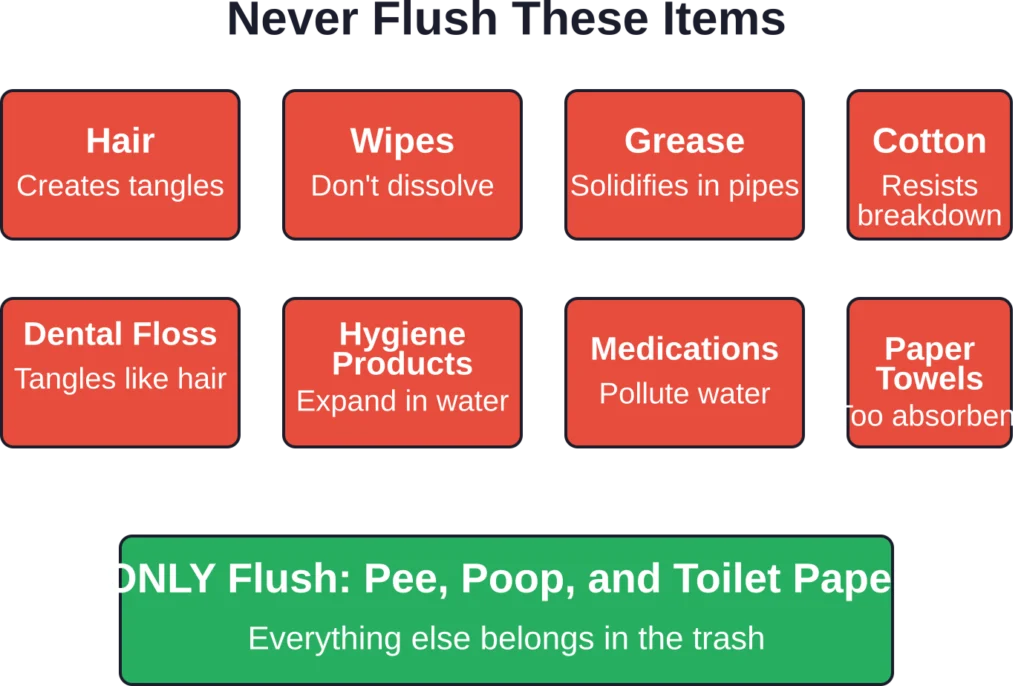
The three P’s rule—pee, poop, and toilet paper—provides a simple guideline. If it’s not one of those three things, it doesn’t belong in the toilet.
Protecting Your Plumbing System Long-Term
Prevention beats repair every time. A few proactive habits protect plumbing systems from hair-related damage and other common problems.
Install quality drain screens in all bathroom sinks, showers, and tubs. These simple devices catch hair before it enters pipes, requiring only periodic cleaning. The small investment in drain screens prevents much larger expenses down the line.
According to the EPA, toilet use accounts for 25 to 30 percent of household water use. Many older homes have toilets with 3.5- to 5-gallon reservoirs, while newer, high-efficiency toilets use 1.6 gallons of water or less per flush. While flushing habits matter most for preventing clogs, efficient fixtures reduce overall system strain.
Regular maintenance extends system life. For septic systems, the EPA recommends professional inspection at least every three years, with pumping typically needed every three to five years based on household size and usage. Staying ahead of maintenance prevents the catastrophic failures that result in emergency repairs.
Educate household members about proper disposal. Children especially benefit from clear guidance about what belongs in toilets. Establishing good habits early prevents problems from developing.
Water Efficiency and System Health
Water conservation practices support both environmental goals and plumbing health. Spreading washing machine loads throughout the week rather than doing multiple loads in a single day prevents overwhelming septic systems, according to EPA guidance.
High water use in short periods can flush solids from septic tanks into drainfields before adequate treatment occurs. This damages the drainfield’s filtering capacity and can lead to system failure.
For homes on municipal sewer systems, efficient water use reduces wastewater treatment burden and lowers utility costs. But efficiency doesn’t compensate for flushing inappropriate items—hair, wipes, and other problematic materials cause issues regardless of water volume.
The Real Cost of Convenience
Flushing hair takes seconds. Dealing with the consequences takes significantly longer and costs considerably more.
Plumbing service calls for clog removal typically start at several hundred dollars for straightforward cases. Complicated blockages requiring camera inspection, extensive augering, or pipe section replacement escalate into thousands. Septic system repairs rank among the most expensive home maintenance items, with full system replacement costing $10,000 to $30,000 or more depending on property conditions.
Beyond direct costs, clogs create household disruption. Toilets out of service, water damage from backups, and the hassle of coordinating repair schedules all stem from preventable disposal habits.
Municipal sewer system impacts extend the problem beyond individual homes. Communities spend millions annually addressing sewer blockages and overflow events. Rate increases to fund infrastructure maintenance and repair affect all residents.
The cumulative effect of small daily choices about waste disposal ripples through plumbing systems, municipal infrastructure, and household budgets. Hair seems too insignificant to matter—until the accumulation creates problems that definitely do.
FAQ
A single flush of a few hair strands probably won’t cause immediate issues, but hair accumulates over time. Each flush adds to the total amount in pipes, gradually building toward a clog. Hair doesn’t break down or flush through completely—it remains in the system, catching on pipe irregularities and binding with other debris. Regular flushing of even small amounts creates the same eventual problem as occasional large quantities.
Yes, hair poses particular problems for septic systems. It doesn’t biodegrade in the septic tank environment, instead accumulating in sludge and scum layers. Hair can clog the tank’s T-shaped outlet, preventing proper wastewater flow, and if it reaches the drainfield, it can clog soil pores essential for waste filtration. The EPA recommends proper waste disposal as a core element of septic system care, and hair falls outside the category of appropriate septic waste.
Monitor drains for warning signs: slow draining, gurgling sounds, recurring clogs, or sewage odors. If symptoms appear, start with basic interventions like proper plunging technique. For persistent problems or multiple affected fixtures, contact a professional plumber for camera inspection and mechanical cleaning. Addressing developing clogs early prevents more serious damage. Going forward, stop flushing hair and dispose of it in trash instead.
No. Despite marketing claims, most wipes don’t disintegrate like toilet paper and contribute to both household and municipal sewer blockages. Plumbing experts and water authorities consistently advise against flushing any wipes. The safest approach treats all wipes as trash-only items, regardless of packaging claims about flushability.
The EPA recommends professional septic system inspection at least every three years. Pumping is typically needed every three to five years, though frequency depends on household size, tank capacity, and water usage patterns. Tanks should be pumped when the sludge layer rises to within 12 inches of the outlet or when combined sludge and scum occupy 25% of the tank’s liquid depth. Regular maintenance prevents system failures that result in expensive emergency repairs.
Brush pets outdoors when possible, allowing loose fur to disperse naturally. For indoor grooming, collect fur in a plastic bag or directly into trash. Never flush pet hair down toilets or rinse it down drains—the volume from regular grooming accelerates clog formation. For homes with heavy-shedding breeds, outdoor brushing significantly reduces indoor cleanup burden and keeps fur out of plumbing entirely.
Chemical cleaners often prove ineffective against hair clogs and can damage pipes, particularly in older plumbing or septic systems. Institutional maintenance guidelines warn that chemical cleaners corrode pipe interiors and kill beneficial bacteria in septic tanks. Mechanical removal using plungers, drain snakes, or professional augering addresses hair clogs more effectively and safely. For stubborn blockages, professional plumbing service provides the most reliable solution.
Protecting Your Home, One Flush at a Time
The toilet handles an essential function, but only when used properly. Hair doesn’t belong in that equation.
Every flush represents a choice—convenience now or system protection long-term. Hair takes seconds to drop in the trash and can take months or years to create plumbing catastrophes. The gap between those two timeframes makes the connection easy to ignore, but the physics of hair in pipes doesn’t change based on whether anyone’s paying attention.
Proper disposal habits cost nothing beyond a small shift in routine. Trash bins accept hair without complaint. Compost programs in some areas provide another option. Drain screens catch hair before it becomes a problem. None of these solutions require expensive equipment or significant effort.
What they do require is consistency. Hair clogs build gradually through repeated small additions, and prevention works the same way—daily choices compounding into long-term system health.
For anyone who’s flushed hair in the past, the solution starts now. Stop adding to the accumulation, monitor for developing problems, and address issues early if they appear. Plumbing systems tolerate a lot of abuse before failing completely, but prevention remains cheaper and easier than repair.
The three P’s rule isn’t arbitrary. It reflects what toilet plumbing can actually handle without damage. Everything else—hair, wipes, grease, cotton, medications—belongs somewhere other than down the drain.
If you’re experiencing slow drains, recurring clogs, or other warning signs of plumbing problems, contact a licensed plumber for professional assessment. Camera inspection can locate blockages and identify whether hair or other debris is causing issues. Professional cleaning removes obstructions before they escalate into pipe damage or system failure.
For septic system owners, schedule the recommended three-year inspection if one hasn’t occurred recently. Professional evaluation identifies developing problems while they’re still manageable and ensures the system is functioning properly. Proper care extends septic system life and prevents the enormous expense of premature failure.
The bottom line? Keep hair out of toilets. It’s not designed to go there, doesn’t break down in water, and creates problems expensive to fix. A simple habit change protects plumbing, saves money, and prevents unnecessary headaches. The toilet isn’t a trash can—treat it accordingly, and it’ll reliably do the one job it’s actually designed for.