
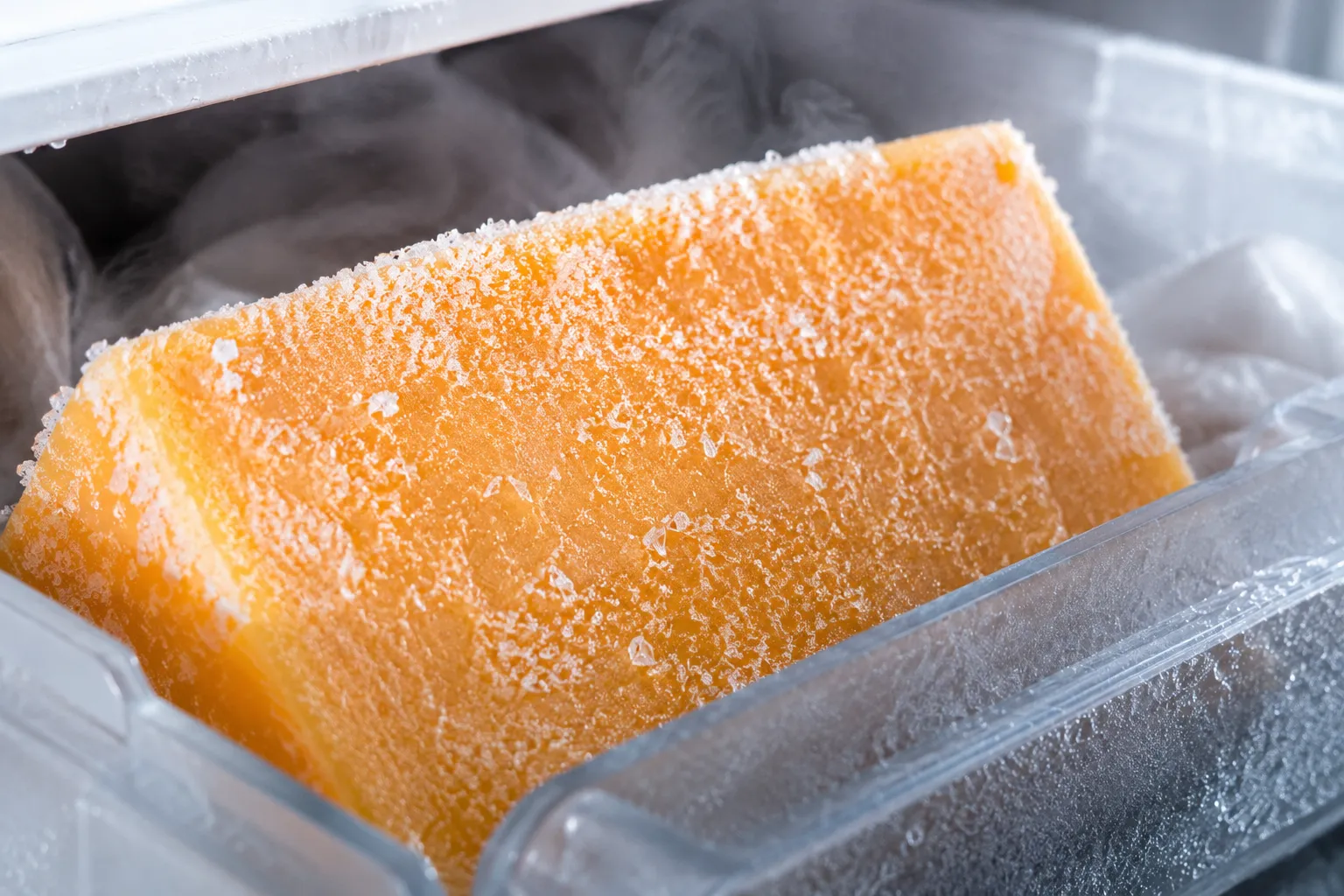
Quick Summary: Yes, freezing cheese is perfectly acceptable for most types, though texture changes may occur. Hard and semi-hard cheeses like cheddar, mozzarella, and Swiss freeze best and can last 6-9 months frozen. Soft and fresh cheeses don’t freeze well due to moisture content, but frozen cheese works great for cooking and melting purposes.
The question of whether it’s OK to freeze cheese sparks heated debates in kitchens everywhere. Some cooks freeze cheese regularly without a second thought. Others act like mentioning frozen brie is a culinary crime.
Here’s the reality: freezing cheese is absolutely fine for most varieties, but the results depend heavily on the type of cheese and what it’ll be used for afterward. The freezer changes cheese texture—that’s unavoidable physics—but it doesn’t make cheese unsafe or useless.
This guide breaks down exactly which cheeses handle freezing like champs, which ones emerge from the freezer ready to disappoint, and how to freeze cheese properly so it stays as close to its original quality as possible.
What Freezing Does to Cheese
When cheese freezes, the water inside forms ice crystals. Those crystals puncture the protein and fat structure that gives cheese its texture. The colder it gets, the larger those crystals grow, and the more damage they do.
Once thawed, the cheese may become crumbly, grainy, or mealy. The mouthfeel changes. Hard cheeses handle this better because they contain less moisture—there’s simply less water to form destructive crystals.
Soft cheeses, packed with moisture, suffer more dramatic texture changes. Think of freezing ricotta or fresh mozzarella—they turn watery and separated after thawing.
But here’s what doesn’t change: flavor. Freezing preserves the taste of cheese remarkably well. The chemical compounds responsible for flavor remain stable at freezer temperatures. So frozen cheese that’s been properly wrapped can still deliver on taste, even if the texture isn’t quite the same.
Cheeses That Freeze Well
Not all cheeses respond equally to freezing. Some varieties come out of the freezer in remarkably good condition, especially when used for cooking rather than eating fresh.
Hard Cheeses
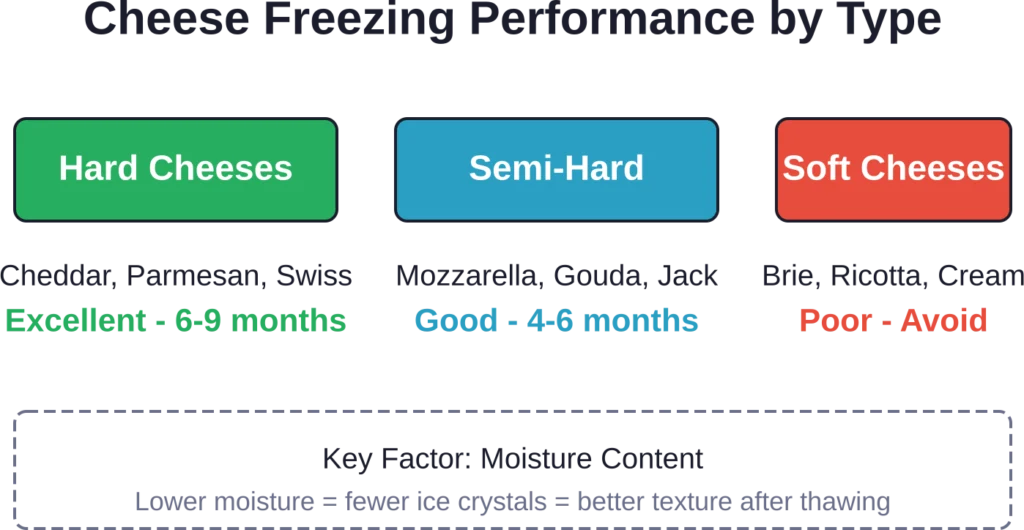
These are the freezer champions. Hard cheeses have low moisture content, which means fewer ice crystals and less structural damage.
| Cheese Type | Freezer Performance | Best Use After Thawing |
|---|---|---|
| Cheddar | Excellent | Shredding, melting, cooking |
| Parmesan | Excellent | Grating, cooking |
| Swiss | Very good | Melting, sandwiches |
| Gruyère | Very good | Cooking, gratins |
| Provolone | Good | Melting, pizza |
Cheddar cheese freezes particularly well. Community discussions confirm that frozen cheddar, when thawed and used for cooking, performs nearly identically to fresh. The texture may be slightly more crumbly, which actually makes it easier to shred.
Semi-Hard Cheeses
Mozzarella, Monterey Jack, and Gouda fall into this category. They contain more moisture than hard cheeses but still freeze reasonably well.
Mozzarella—especially the low-moisture variety used for pizza—handles freezing without major problems. Pre-shredded mozzarella is often frozen during distribution anyway, which proves the concept works commercially.
Shredded Cheese
Already shredded cheese freezes exceptionally well. The increased surface area means it thaws faster and more evenly. Plus, shredded cheese is almost always destined for cooking, where texture changes matter less.
Pre-shredded cheese from the store often contains anti-caking agents that help prevent clumping in the freezer. Home-shredded cheese freezes fine too but may require breaking up any clumps after thawing.
Cheeses You Should Not Freeze
Some cheeses emerge from the freezer in genuinely poor condition. The texture becomes so compromised that even cooking can’t salvage them.
Soft and Fresh Cheeses
Fresh cheeses lose their characteristic texture when frozen due to high moisture content, similar to findings in food science literature on freezing effects. These high-moisture varieties turn into watery, grainy results after freezing.
Skip freezing these:
- Brie and Camembert: The creamy texture becomes chalky and separated
- Ricotta: Turns watery and grainy; the curds break down
- Cottage cheese: Becomes lumpy and weepy
- Cream cheese: Gets crumbly and loses its spreadable texture
- Fresh mozzarella: The kind in water becomes rubbery and loses moisture
- Goat cheese (chèvre): Texture becomes mealy and unpleasant
- Mascarpone: Separates and loses its silky consistency
Aged and Specialty Cheeses
Expensive artisanal and specialty cheeses should generally not be frozen due to potential loss of complex flavor profiles and carefully developed textures. The qualities that make these cheeses special get compromised by freezing.
Blue cheeses can technically be frozen, but the veining often becomes more bitter and the texture crumbles excessively. Aged varieties like aged cheddar or aged Gouda lose some of their nuanced flavor complexity.
How to Freeze Cheese Properly
Proper freezing technique makes a significant difference in how well cheese survives the freezer.
Preparation Steps
Start with fresh cheese. Freezing doesn’t reverse aging or spoilage—it only pauses it. Cheese that’s already starting to deteriorate will be worse after thawing.
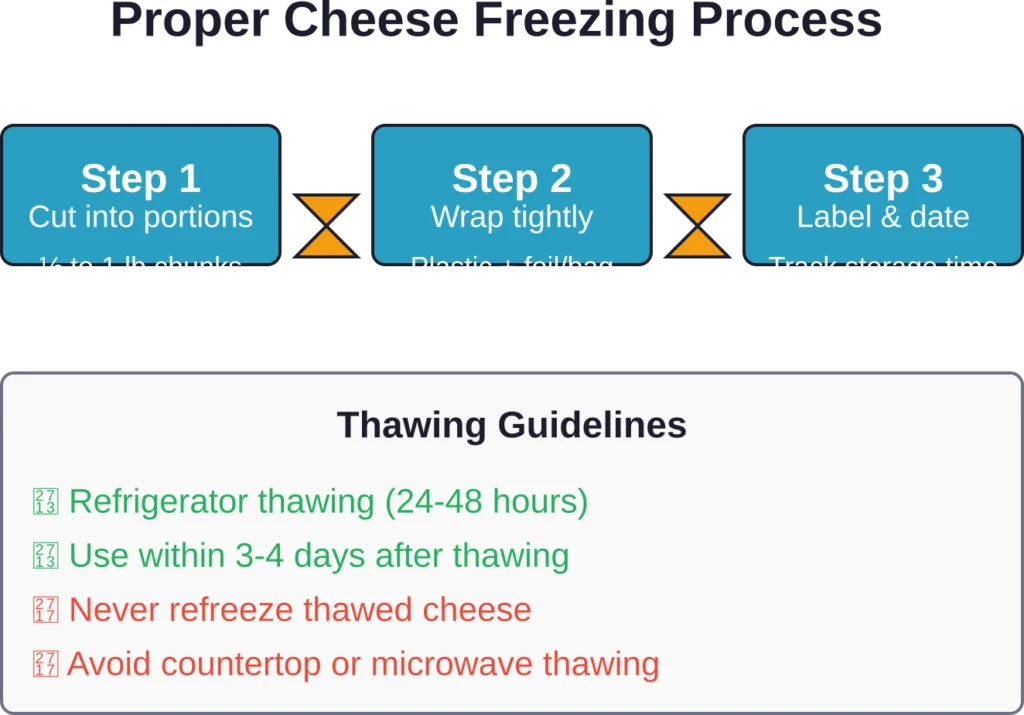
Cut large blocks into smaller portions before freezing. Half-pound or one-pound chunks work well. Smaller portions freeze and thaw faster, reducing ice crystal formation. They’re also more practical—thaw only what’s needed rather than the entire block.
For hard cheese, consider shredding or grating before freezing. Pre-shredded cheese is immediately ready to use after thawing, and the texture changes become irrelevant when it’s melted into dishes.
Wrapping Technique
Air exposure causes freezer burn, which creates dry, discolored patches on the cheese surface. Proper wrapping prevents this.
Use a double-wrap method: first wrap the cheese tightly in plastic wrap or wax paper, eliminating as much air as possible. Then place the wrapped cheese in a freezer bag or wrap again in aluminum foil. Squeeze out excess air from the bag before sealing.
Label everything. Write the cheese type and freezing date on the package. Frozen cheese looks remarkably similar once wrapped, and nobody wants to play freezer roulette.
Storage Duration
Cheese doesn’t last indefinitely in the freezer, even when properly wrapped.
| Cheese Category | Maximum Freezer Time | Quality Notes |
|---|---|---|
| Hard cheeses (blocks) | 6-9 months | Best quality maintained |
| Shredded hard cheese | 3-4 months | Slight texture change |
| Semi-hard cheeses | 4-6 months | Noticeable texture change |
| Sliced cheese | 2-3 months | More surface area = faster degradation |
Beyond these timeframes, cheese remains safe to eat but quality declines noticeably. Flavor dulls and texture becomes increasingly crumbly or dry.
How to Thaw Frozen Cheese
Thawing method matters nearly as much as freezing technique. Rushed thawing creates condensation and exacerbates texture problems.
The Refrigerator Method
Slow thawing in the refrigerator produces the best results. Place the wrapped frozen cheese on a plate in the refrigerator and let it thaw gradually over 24-48 hours, depending on the size of the portion.
This slow process allows ice crystals to melt without creating excessive moisture or dramatic temperature shifts that further damage the cheese structure.
Once thawed, use the cheese within three to four days. Don’t let it sit in the refrigerator for weeks—thawed cheese has a shorter shelf life than fresh cheese.
What Not to Do
Never thaw cheese on the countertop at room temperature. The outer layer reaches unsafe temperatures while the center remains frozen, creating ideal conditions for bacterial growth.
Microwave thawing is equally problematic. Microwaves heat unevenly, creating hot spots that can partially melt or cook the cheese while other sections remain frozen. The texture becomes irreparably damaged.
And here’s a critical rule: never refreeze previously frozen cheese. Each freeze-thaw cycle causes additional ice crystal damage. Refreezed cheese becomes crumbly, dry, and practically unusable.
Best Uses for Previously Frozen Cheese
Frozen and thawed cheese performs best in cooked applications where texture changes become invisible.
Melted cheese dishes are perfect. Pizza, quesadillas, grilled cheese sandwiches, nachos—the heat melts everything into smooth, gooey perfection regardless of slight texture changes from freezing.
Casseroles, pasta bakes, and gratins work excellently with thawed cheese. The cheese gets incorporated into the dish and baked, so any crumbliness or texture variation disappears completely.
Soups and sauces benefit from frozen cheese too. Cheese sauces, beer cheese soup, and mac and cheese all melt the cheese thoroughly, eliminating texture concerns.
Shredded frozen cheddar works fine as a topping for chili, tacos, or baked potatoes. Once melted, nobody can tell it was frozen.
Where previously frozen cheese struggles: cheese boards, fresh applications, or anywhere the cheese is featured prominently without being melted. Save fresh cheese for those purposes.
Common Mistakes When Freezing Cheese
Several recurring errors create disappointing results even with cheese types that typically freeze well.
Freezing cheese in its original packaging: Store packaging isn’t designed for long-term freezer storage. It allows air exposure and doesn’t provide adequate protection against freezer burn.
Freezing too-large portions: A massive five-pound block of cheese takes days to thaw and forces using the entire amount once defrosted. Smaller portions offer flexibility.
Freezing already-old cheese: Freezing pauses deterioration but doesn’t reverse it. Cheese that’s already developing off-flavors or showing mold won’t improve in the freezer.
Expecting fresh-cheese quality: Frozen cheese won’t match fresh cheese in texture or mouthfeel when eaten plain. Adjusting expectations prevents disappointment.
Skipping labels: Six months later, that mysterious wrapped block in the freezer could be anything. Labeling saves guesswork and reduces waste.
Can You Freeze Cheese That’s Already Opened?
Yes. Opened cheese freezes just as well as unopened cheese, assuming it’s still fresh and hasn’t been sitting in the refrigerator for weeks.
Remove the cheese from its original packaging, cut it into reasonable portions if necessary, and rewrap properly using the double-wrap method described earlier. The fact that the package was opened doesn’t affect how the cheese responds to freezing.
Opened cheese has typically been exposed to more air, which may have dried the surface slightly. Trim any dried or discolored edges before freezing for best results.
The Bottom Line on Freezing Cheese
So, is it OK to freeze cheese? Absolutely—with caveats.
Hard and semi-hard cheeses freeze successfully when wrapped properly and used within recommended timeframes. The texture changes but remains perfectly acceptable for cooking and melting applications. Shredded cheese freezes particularly well and loses almost nothing in the process.
Soft, fresh, and expensive specialty cheeses should stay out of the freezer. The texture degradation is too severe to justify freezing these varieties.
Proper technique matters. Double-wrap cheese to prevent freezer burn, portion it appropriately before freezing, label everything clearly, and thaw slowly in the refrigerator rather than rushing the process.
The cheese won’t be identical to fresh, but it’ll be completely fine for the vast majority of cooking applications. That’s a worthwhile trade-off when the alternative is throwing away cheese that’s approaching its expiration date.
Freezing cheese isn’t a perfect solution, but it’s a practical one. For home cooks managing bulk purchases, sale-priced cheese, or partially-used blocks, the freezer extends usability by months without significant sacrifice in quality for cooked dishes.
Frequently Asked Questions
Hard cheeses in blocks can stay frozen for 6-9 months while maintaining good quality. Shredded cheese keeps for 3-4 months, and semi-hard varieties last 4-6 months. Beyond these timeframes, cheese remains safe but quality declines with flavor becoming duller and texture more compromised.
No, freezing preserves cheese flavor remarkably well. The chemical compounds responsible for taste remain stable at freezer temperatures. What changes is texture—frozen cheese may become crumbly or grainy—but the flavor profile stays largely intact, especially when used in cooked dishes.
Yes, both unopened and opened bags of shredded cheese freeze excellently. Store-bought shredded cheese contains anti-caking agents that help prevent clumping in the freezer. Transfer opened bags to a freezer bag, remove excess air, and seal. Shredded cheese thaws quickly and works perfectly for cooking straight from frozen.
Ice crystals that form during freezing puncture the protein and fat structure of cheese. When thawed, this structural damage causes cheese to crumble more easily than fresh cheese. Hard cheeses with lower moisture content crumble less than high-moisture varieties because fewer ice crystals form.
Yes, but they don’t freeze as well as blocks or shredded cheese. Separate slices with parchment or wax paper before freezing to prevent sticking. Thawed cheese slices may be slightly more brittle but work fine for melting on burgers, sandwiches, or other cooked applications. Use within 2-3 months for best quality.
Cream cheese becomes crumbly and grainy after freezing because of its high moisture content. The smooth, spreadable texture is destroyed, making it unsuitable for frosting or spreading on bagels. However, frozen cream cheese can still work when mixed thoroughly into cooked dishes like casseroles or dips where texture is less critical.
Not necessarily. Shredded frozen cheese can go directly onto pizza, into casseroles, or into soup without thawing first. It melts perfectly during cooking. Block cheese benefits from thawing for easier slicing or grating, but if grating frozen, the cheese is easier to handle when still partially frozen and firm.