
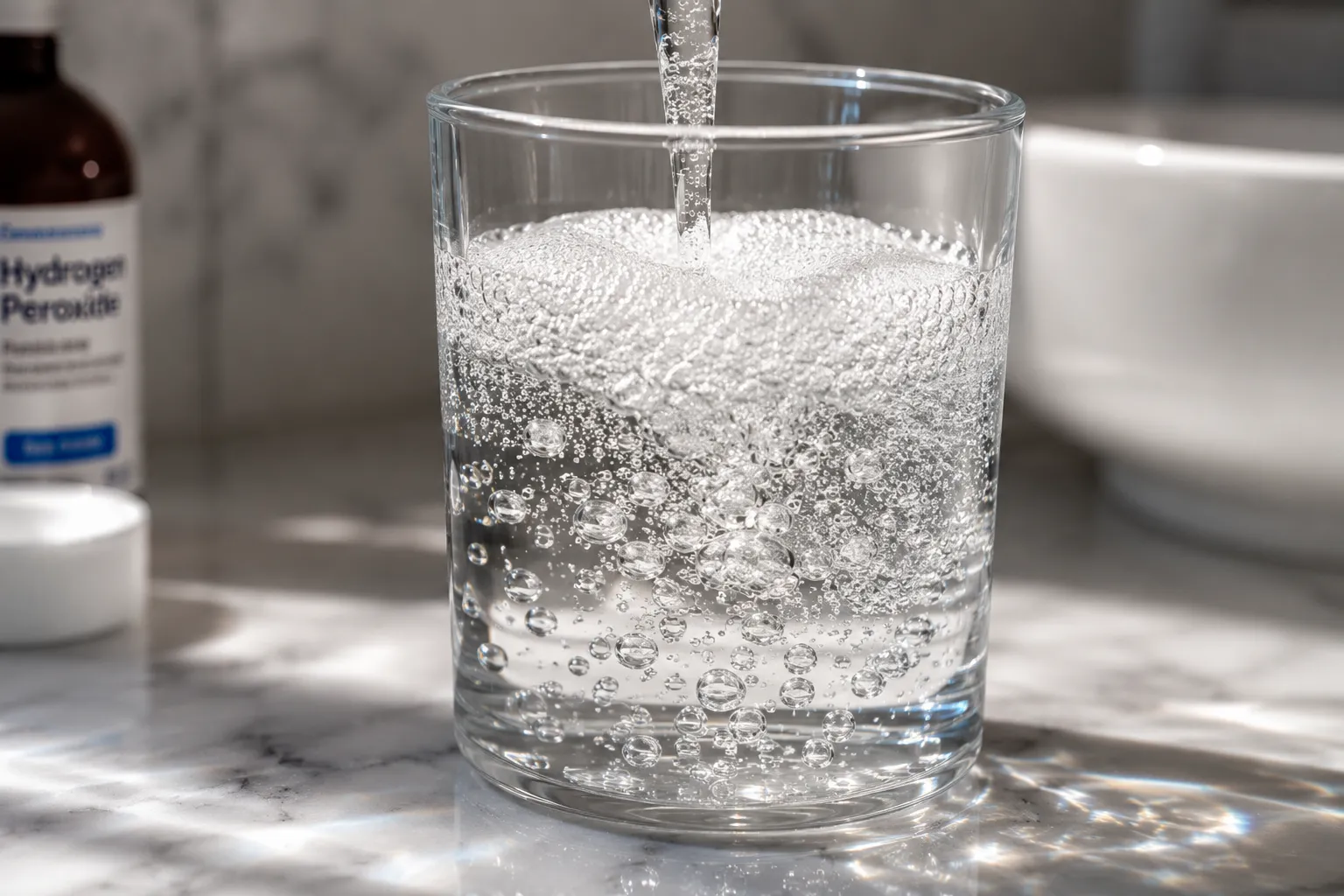
Quick Summary: Gargling with hydrogen peroxide is safe when properly diluted to 1% to 1.5% concentration and used occasionally for oral disinfection. The majority of studies use 1.5% H2O2, which offers antibacterial benefits for sore throats and gum health. However, household 3% hydrogen peroxide must be diluted significantly before oral use, and it’s not recommended for daily long-term use due to potential tissue damage.
Hydrogen peroxide has been sitting in medicine cabinets for decades, and people have used it for everything from wound care to stain removal. But when it comes to oral health, many wonder whether gargling with this common household chemical is actually safe.
The short answer? Yes—but only when done correctly.
Here’s the thing though: the brown bottle of hydrogen peroxide you buy at the drugstore isn’t ready to use straight from the container. According to the CDC, household concentrations generally range from 3% to 9% and are most commonly found at 3%. That 3% solution is mildly irritating to skin and mucous membranes, which means it needs significant dilution before it goes anywhere near your mouth.
Understanding Hydrogen Peroxide Concentrations
Not all hydrogen peroxide is created equal. The concentration matters—a lot.
Research published on PubMed shows that the majority of included studies on oral health were performed with 1.5% H2O2. For commercially available gargle products, concentrations typically range from 1.5% to 3%. When creating a diluted mouth rinse at home, experts recommend diluting to 1% to 1.5% concentration.
| Concentration | Typical Use | Safe for Oral Use? |
|---|---|---|
| 1% to 1.5% | Diluted oral rinse | Yes, when used properly |
| 3% to 9% | Household disinfectant (brown bottle) | Only when diluted |
| 10% | Hair bleaching solutions | No—strongly irritating |
| 27.5% to 70% | Industrial applications | No—highly corrosive |
The CDC notes that 10% hydrogen peroxide, found in hair-bleaching solutions, is strongly irritating and may be corrosive. Industrial concentrations can be as high as 70%, which are absolutely not for oral use.
How to Properly Dilute Hydrogen Peroxide for Gargling
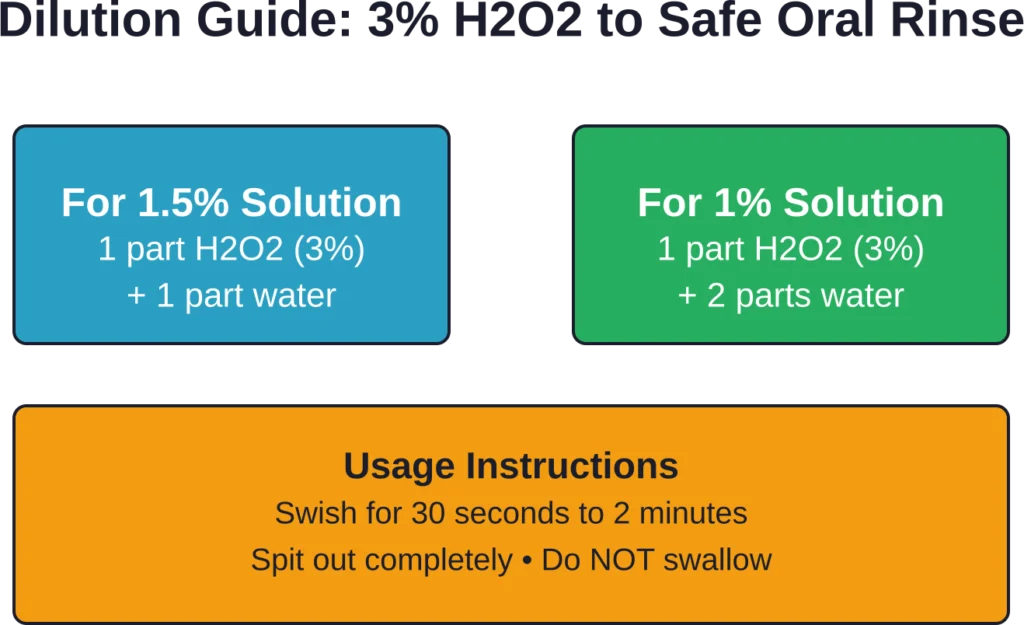
Start with the standard 3% concentration you’ll find at most drug stores. To create a safe 1.5% solution, combine one part hydrogen peroxide with one part water.
For example: mix ¼ cup of 3% hydrogen peroxide with ¼ cup of water. This creates a 1.5% solution, which is the most common concentration used in dental studies.
For an even gentler 1% solution, mix one part 3% hydrogen peroxide with two parts water. That’s ¼ cup hydrogen peroxide to ½ cup water.
Potential Benefits of Gargling Hydrogen Peroxide
Hydrogen peroxide offers legitimate antibacterial properties when used correctly. Research indicates several potential benefits:
Reduces oral bacteria. The fizzing action you see when gargling helps dislodge debris and bacteria, though this effect only lasts for a short time. Studies show H2O2 demonstrates a slightly better effect compared to placebo mouth rinses for plaque accumulation.
May help with sore throats. Community discussions frequently mention using diluted hydrogen peroxide for minor throat irritation. The antibacterial properties can help reduce bacterial load in the throat.
Supports gum health. According to the American Dental Association, certain antimicrobial rinse solutions used from 30 seconds to 2 minutes effectively reduced aerosol contamination produced during periodontal prophylaxis.
Temporary whitening effect. Some people report minor teeth whitening benefits, though this isn’t the primary purpose of gargling and results vary.
Real Risks and Side Effects You Should Know
Now, this is where it gets important. Hydrogen peroxide isn’t without risks.
Research on safety issues relating to the use of hydrogen peroxide in dentistry shows that H2O2 is a highly reactive substance which can damage oral soft tissues and hard tissues when present in high concentrations and with exposures of prolonged duration.
Here’s what can go wrong:
- Tissue irritation and damage to the soft tissues in your mouth
- Tooth sensitivity, especially with frequent use
- Stomach irritation if accidentally swallowed
- Altered taste sensation
- Potential disruption of normal oral microbiome with overuse
The FDA has documented cases where contaminated oral rinses led to serious adverse events. In October 2020, a third-party laboratory identified Burkholderia lata in Paroex 0.12% chlorhexidine oral rinse. While this involved a different product, it highlights the importance of using properly manufactured and stored oral care products.
When NOT to Gargle with Hydrogen Peroxide
The American Dental Association notes that children younger than the age of 6 should not use mouthrinse, unless directed by a dentist, because they may swallow large amounts of the liquid inadvertently.
But wait. There are other situations where you should skip the hydrogen peroxide:
- If you have open mouth sores or ulcers
- Following recent oral surgery or dental procedures
- If you experience burning or significant discomfort
- When you have a known sensitivity to peroxides
- As a replacement for professional dental care
Frequently Asked Questions
No. The 3% concentration found in standard brown bottles is too strong for oral use and must be diluted to 1% to 1.5% by mixing with water before gargling.
According to the American Dental Association, antimicrobial rinse solutions should be used from 30 seconds to 2 minutes for effectiveness.
While hydrogen peroxide has antibacterial properties, strep throat requires professional medical diagnosis and antibiotic treatment. Gargling may provide temporary relief but won’t cure the infection.
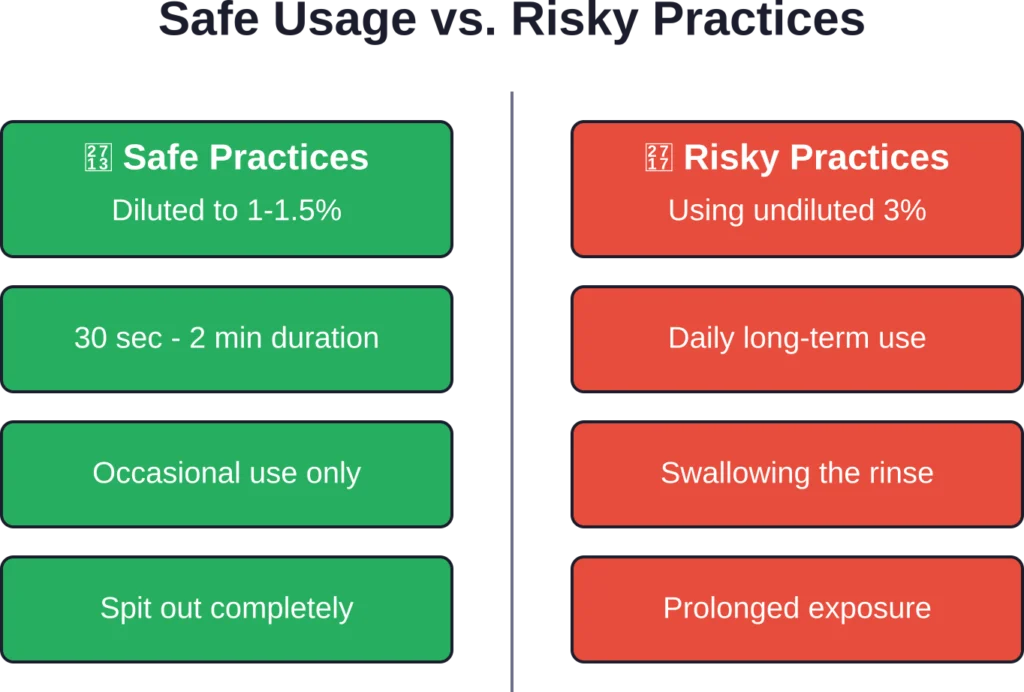
Daily long-term use isn’t recommended. Prolonged exposure can damage oral tissues and disrupt the normal oral microbiome. Use occasionally for specific issues rather than as a daily routine.
Swallowing small amounts of diluted hydrogen peroxide (1% to 1.5%) typically causes minor stomach irritation. If you swallow a significant amount or experience symptoms, contact poison control or seek medical attention.
Some people report minor whitening effects, but gargling isn’t an effective whitening method. Professional whitening treatments use higher concentrations under controlled conditions for better results.
Generally speaking, diluted hydrogen peroxide is safe around most dental work when used occasionally. However, consult your dentist about your specific situation, especially with recent dental work.
The Bottom Line on Hydrogen Peroxide Gargling
So, is it OK to gargle with hydrogen peroxide? Absolutely—when done right.
The key is proper dilution to 1% to 1.5% concentration, occasional use rather than daily routines, and never swallowing the solution. Research demonstrates legitimate antibacterial benefits for oral health, but hydrogen peroxide isn’t a substitute for regular brushing, flossing, and professional dental care.
Real talk: if you’re dealing with persistent oral health issues, recurring sore throats, or significant dental concerns, see a dental professional instead of relying on home remedies.
Ready to take control of your oral health with evidence-based practices? Start by consulting your dentist about which oral care routine makes sense for your specific needs.