

Quick Summary: Masturbating once a week is completely healthy and normal. Medical research shows no negative health effects from weekly masturbation, and studies indicate it may offer benefits like stress relief and improved sexual satisfaction. The frequency that works best varies by individual—what matters most is that it doesn’t interfere with daily life or cause distress.
The question of whether masturbating once a week is acceptable has lingered in many minds, often tangled up with outdated myths and cultural taboos. But here’s the reality: masturbation is a natural, common sexual behavior that most adults engage in at varying frequencies.
Medical research from credible institutions confirms that weekly masturbation isn’t just okay—it’s completely normal. Understanding the actual data behind masturbation frequency helps clear away misconceptions and offers a healthier perspective on sexual self-care.
What Does Research Say About Masturbation Frequency?
When it comes to how often people masturbate, the numbers tell an interesting story. According to research published in medical journals, 61% of men and 38% of women in American samples reported masturbatory behavior over the past year (Das, 2007). British data shows that 66% of men and 33% of women reported masturbation within the preceding 4 weeks (Mercer et al.).
These statistics reveal something important: masturbation frequency varies widely among individuals, and there’s no single “correct” number. Age also plays a role. Research shows that masturbation rates vary significantly by age. In younger adults, higher percentages report masturbation in recent time periods, while rates decline substantially with age in both men and women.
So where does once a week fit? Right in the middle of perfectly normal behavior. Some people masturbate daily, others once a month, and many fall somewhere in between. Weekly masturbation is neither excessive nor insufficient—it’s simply one point on a broad spectrum of healthy sexual expression.
Health Benefits of Masturbating Once a Week
Masturbation isn’t just harmless—it actually offers several documented health benefits when practiced regularly at frequencies like once a week.
Physical Health Advantages
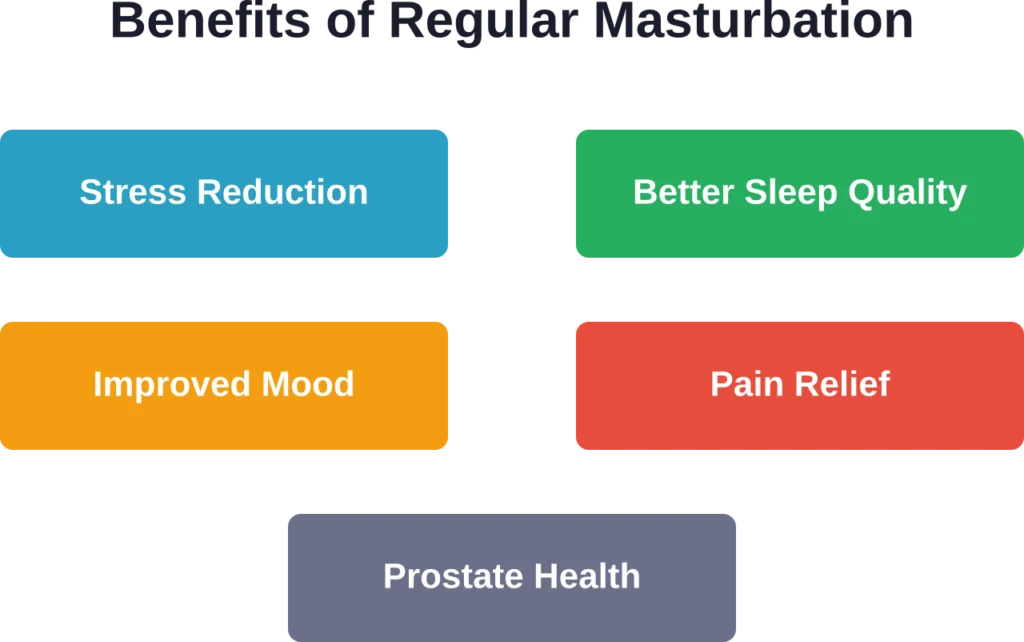
Research has identified multiple physical benefits associated with regular ejaculation. A 2016 cohort study of 31,925 participants with 18 years of follow-up found that a lower risk of prostate cancer was associated with a higher frequency of ejaculation. While once weekly may not be the highest frequency studied, regular ejaculation appears to support prostate health.
Beyond that, masturbation can improve sleep quality, boost immune function, and serve as a natural pain reliever. The endorphins released during orgasm act as natural mood elevators and can temporarily reduce physical discomfort.
Mental Health and Stress Relief
The psychological benefits are equally notable. Medical research exploring ejaculation frequency and mental health outcomes suggests that masturbation can serve as an effective coping mechanism for managing stress and psychological distress.
Research on masturbation as a coping strategy in women found that it serves multiple psychological functions including emotional regulation and stress management. This isn’t problematic—it’s actually a healthy, accessible stress management tool that doesn’t involve substances or risky behaviors.
Is Once a Week Too Much or Too Little?
Here’s the thing: there’s no universal standard for masturbation frequency. The question isn’t whether once a week is the “right” amount—it’s whether your personal frequency works for you.
Medical experts agree that masturbation becomes problematic only when it interferes with daily responsibilities, relationships, or causes physical harm. Weekly masturbation falls well below any threshold of concern. In fact, community discussions and medical forums consistently affirm that once weekly is a moderate, sustainable frequency.
Research on sexual satisfaction reveals something counterintuitive: the relationship between masturbation frequency and sexual satisfaction isn’t linear. A 2016 survey of literature found that 44 percent of studies analyzed reported a similar link between frequent ejaculation and lower prostate cancer risk, but satisfaction depends more on context and attitude than raw frequency.
Some people feel satisfied masturbating once a week. Others prefer more or less frequent activity. Both patterns are healthy as long as they align with personal comfort and don’t create distress.
When Masturbation Might Become a Concern
While weekly masturbation is unquestionably healthy, it’s worth understanding the signs that any frequency—whether once a week or once a day—might be problematic.
| Warning Sign | What It Means |
|---|---|
| Interference with work or school | Missing obligations or declining performance due to masturbation |
| Physical injury | Causing pain, irritation, or damage through excessive force or frequency |
| Relationship problems | Choosing masturbation over intimacy with a partner consistently |
| Compulsive thoughts | Constant preoccupation with masturbation throughout the day |
| Inappropriate timing | Masturbating in public spaces or situations with serious consequences |
These warning signs apply regardless of frequency. Someone masturbating once a week could theoretically have a problem if it meets these criteria, though that would be unusual. Conversely, someone masturbating daily might have zero issues if it fits comfortably into their life.
Real talk: the frequency itself is rarely the problem. The context and consequences matter far more.
Masturbation Frequency Across Different Demographics
Age and gender significantly influence masturbation patterns, and understanding these variations helps normalize the wide range of behaviors.
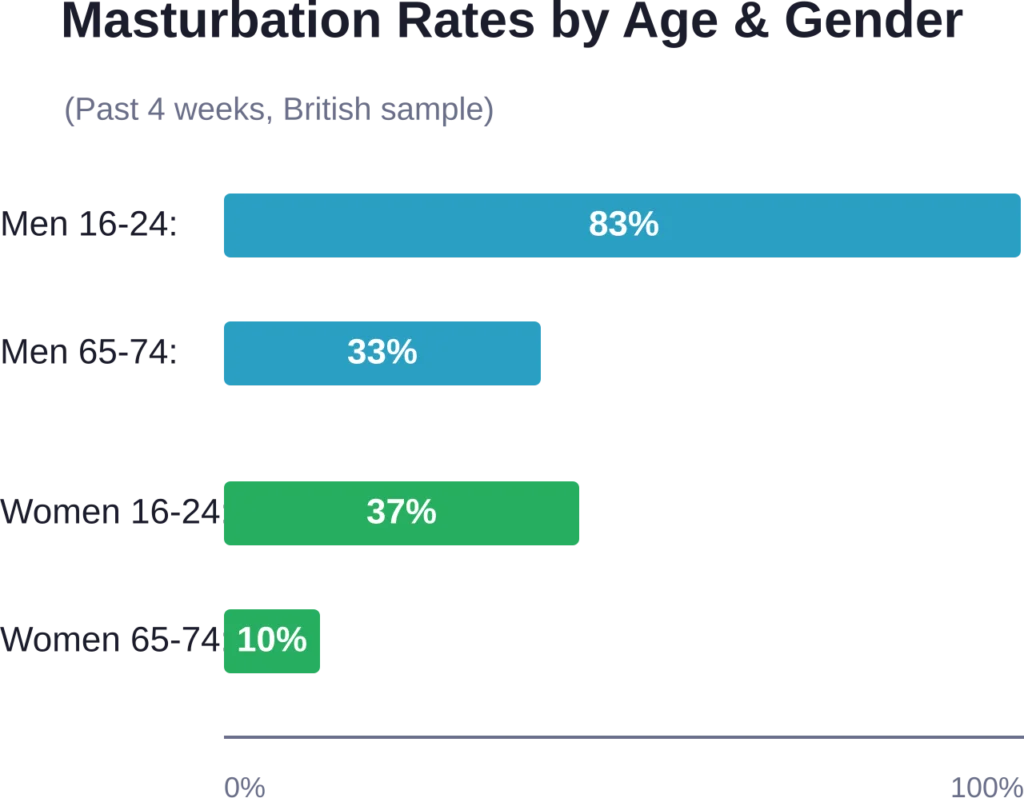
Research shows that masturbation frequency typically decreases with age. Age-related patterns indicate substantially higher rates of masturbation in younger adults (16-24) compared to older adults (65-74) in both men and women.
Gender differences persist across all age groups, with men consistently reporting higher masturbation frequencies than women. However, prevalence rates of masturbating at least once in the past year among adult women range from 21-42% across UK, US, and Australian surveys—indicating that female masturbation, while less frequent on average, is still common and normal.
Debunking Common Myths About Masturbation
Despite scientific evidence, several myths about masturbation persist. Let’s address the most common ones directly.
Myth: Masturbation causes infertility. False. No evidence supports this claim. Regular ejaculation doesn’t deplete sperm reserves or harm reproductive function.
Myth: Masturbation is physically harmful. Not true. Masturbation doesn’t cause hair growth in unusual places, shrink genitals, or damage sexual organs when practiced normally.
Myth: Masturbation is addictive. Misleading. While compulsive sexual behavior exists as a legitimate concern, typical masturbation patterns—including daily or weekly frequencies—don’t constitute addiction. Research on abstinence from masturbation and hypersexuality provides perspective on concerns about masturbation dependency.
Myth: Masturbation harms relationships. Not inherently. Studies examining masturbation and partnered sex found that among women, those who desired partnered sex much more often were 3.89 times (95% CI: 2.98, 5.08) more likely to report higher frequencies of masturbation. Masturbation and partnered sex often coexist healthily rather than competing.
Masturbation and Sexual Satisfaction
The relationship between solo sex and overall sexual satisfaction is more nuanced than many assume. Research reveals what appears to be a paradoxical relationship: masturbation frequency doesn’t directly predict sexual satisfaction in a simple way.
What matters more than frequency is attitude. Studies on female sexual function found that harboring positive feelings toward masturbation and maintaining a positive genital self-image exert a positive influence on sexual function—regardless of how often masturbation occurs.
This means someone masturbating once a week with a healthy, positive attitude toward their sexuality likely experiences better sexual satisfaction than someone masturbating at any frequency while carrying shame or guilt. The psychological context shapes the outcome more than the behavior itself.
Additionally, research on masturbation as a coping strategy in women found that it serves multiple psychological functions beyond pure physical release—including emotional regulation, self-exploration, and body awareness. These benefits accumulate over time regardless of whether masturbation happens once weekly or more often.
Making Peace with Your Personal Frequency
The most important takeaway? Your masturbation frequency should feel right for you—not match an arbitrary standard or align with what others do.
If once a week feels comfortable, satisfying, and doesn’t interfere with your life, that’s perfectly healthy. If you prefer more or less frequent activity, that’s equally valid. Sexual health encompasses far more than frequency counts—it includes comfort, consent (with yourself), and the absence of harm or distress.
Medical research consistently supports a sex-positive view of masturbation as part of healthy sexual development and ongoing sexual wellness throughout life. The scientific community recognizes masturbation as a strategy to improve sexual health, promote relational intimacy (through better self-awareness), and support overall well-being.
About 12% of women in the United States report distressing sexual health concerns (AAFP, 2015), but masturbation frequency itself is rarely the cause. When sexual concerns arise, they typically stem from relationship issues, medical conditions, medications, psychological factors, or cultural/religious conflicts—not from the simple act of masturbating once a week.
Frequently Asked Questions
Yes, absolutely. Masturbating once a week falls well within the range of normal sexual behavior. Research shows that masturbation frequency varies widely among healthy adults, from several times per week to once a month or less. Weekly masturbation is a moderate frequency that many people maintain throughout their lives without any negative effects.
Not negatively in most cases. Research actually shows that people who desire partnered sex more often tend to masturbate more frequently—indicating that solo and partnered sex often complement rather than compete with each other. Masturbation can improve sexual self-awareness and communication, potentially enhancing partnered experiences. Problems only arise if masturbation consistently replaces desired partnered intimacy.
No documented health risks exist for masturbating once a week. Medical research has found no negative physical or mental health consequences associated with moderate masturbation frequencies. The only potential concerns arise from physical injury due to excessive force or from psychological distress if masturbation conflicts with personal values—neither of which is inherent to weekly frequency itself.
That depends entirely on your personal preferences, sex drive, and life circumstances. There’s no optimal frequency that applies to everyone. Some people feel satisfied with weekly masturbation, while others prefer daily or occasional activity. The right frequency is whatever feels comfortable and sustainable for you without causing distress or interfering with responsibilities.
Yes, research shows that masturbation frequency typically decreases with age. Age-related patterns indicate substantially higher rates of masturbation in younger adults (16-24) compared to older adults (65-74) in both men and women. These changes are natural and reflect shifting hormone levels, life circumstances, and sexual priorities.
Yes. Research on masturbation as a coping strategy in women found that it serves multiple psychological functions including emotional regulation and stress management. The endorphins and oxytocin released during orgasm naturally reduce stress hormones and promote relaxation. Once-weekly masturbation can contribute to overall stress management as part of a broader self-care routine.
No, abstaining from masturbation is not unhealthy. While masturbation offers certain benefits, it’s not a requirement for physical or mental health. Some people choose not to masturbate due to low sex drive, personal values, relationship preferences, or simple lack of interest—all of which are perfectly normal. Sexual health looks different for everyone, and absence of masturbation doesn’t indicate a problem unless it causes personal distress.
Conclusion
Masturbating once a week is healthy, normal, and comes with documented benefits ranging from stress relief to improved sexual self-awareness. Medical research consistently affirms that moderate masturbation frequencies pose no health risks and may actually support physical and mental well-being.
The frequency that works best varies from person to person, shaped by age, gender, relationship status, and individual preferences. What matters most isn’t hitting a particular number but rather maintaining a healthy relationship with your sexuality—one free from shame, compulsion, or interference with daily life.
If weekly masturbation feels right for you, embrace it as a normal part of sexual health. And if you ever have concerns about your sexual behaviors or well-being, don’t hesitate to consult a healthcare provider who can offer personalized guidance.