
Quick Summary: Popping pimples is generally not recommended as it can lead to permanent scarring, infection, and more noticeable acne. Dermatologists advise letting blemishes heal naturally or seeking professional extraction using sterile technique. If a pimple must be addressed, safer alternatives include warm compresses, over-the-counter treatments with benzoyl peroxide or salicylic acid, and spot treatments.
That swollen red bump appeared at the worst possible time. The urge to squeeze it is almost overwhelming. But according to the American Academy of Dermatology, popping pimples yourself can backfire spectacularly, leading to permanent acne scars, more painful breakouts, and even infection.
The reality? There’s an art to proper pimple extraction, and without the right technique, you’re likely making things worse.
Why Dermatologists Say Don’t Do It
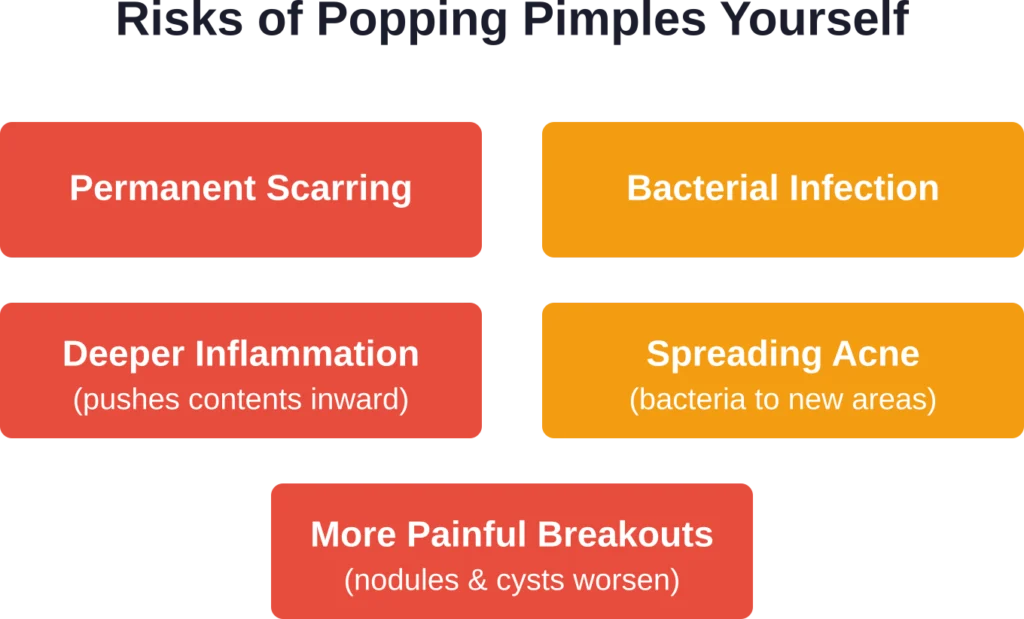
When you pop pimples yourself, you’re essentially performing minor surgery without sterile instruments or proper technique. The American Academy of Dermatology warns that squeezing pimples and other acne blemishes may seem simple, but the risks include permanent scarring, more noticeable acne, more painful breakouts, and bacterial infection.
Here’s what happens under your skin when you squeeze: the contents of the pimple—oil, dead skin cells, and bacteria—can rupture deeper into the surrounding tissue rather than coming cleanly to the surface. This pushes infection into adjacent pores and dermis layers.
The bacteria involved, particularly Cutibacterium acnes which naturally lives on skin, multiplies in the extra oil and inflammation. Squeezing spreads this bacteria to nearby areas, creating new breakouts exactly where you don’t want them.
The Triangle of Death Risk
Social media has amplified warnings about popping pimples in the “triangle of death”—the area from the bridge of your nose to the corners of your mouth. This zone has blood vessels that connect directly to the brain’s cavernous sinus.
While rare, introducing bacteria into this area through aggressive squeezing can theoretically cause serious complications. The blood vessels here lack valves that normally prevent backward flow, creating a potential pathway for infection to reach the brain.
Real talk: life-threatening cases are extremely uncommon. But dermatologists confirm the increased risk of localized infection and scarring in this facial zone makes popping pimples here particularly inadvisable.
What Dermatologists Can Do Instead
Professional acne extraction is different. Board-certified dermatologists use sterile instruments and proper technique to minimize tissue damage and infection risk.
According to the American Academy of Dermatology, the procedure involves using a sterile needle or surgical blade to open the blemish, then removing contents with specialized tools. This approach drains pimples, cysts, or nodules without rupturing them into surrounding tissue.
For deep, painful acne nodules or cysts, dermatologists can inject corticosteroids directly into the blemish. This treatment flattens the lesion within 48 to 72 hours—dramatically faster than natural healing.
When Professional Help Makes Sense
Not every pimple warrants a dermatology visit. But certain situations call for professional intervention: painful cystic acne, recurring nodules, acne that’s leaving scars, or breakouts that don’t respond to over-the-counter treatments after several weeks.
Dermatologists can also address existing acne scars through procedures like chemical peels, microneedling, or laser treatments—options that become necessary when DIY popping has already caused damage.
Safe Alternatives That Actually Work
So what should be done about that angry pimple staring back from the mirror? Several dermatologist-approved alternatives exist that won’t cause the same risks as squeezing.
Heat Treatment for Whiteheads
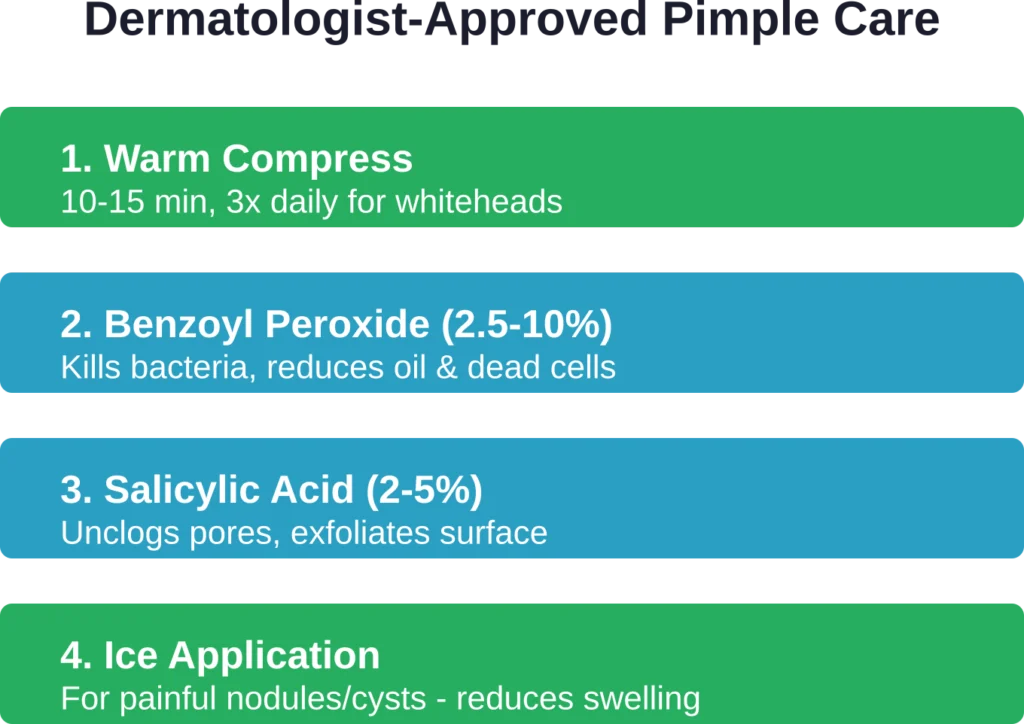
The American Academy of Dermatology recommends applying a warm, damp washcloth to bring a pimple to a head safely. Soak a clean washcloth in hot water, wring it out, and apply it to the area for 10 to 15 minutes, three times daily.
This gentle heat increases circulation and can help a pus-filled whitehead drain naturally without manual pressure.
Ice for Deep, Painful Pimples
For nodules deep in the skin, cold therapy reduces inflammation and pain. Wrap an ice cube in a clean cloth and apply it to the swollen area for short intervals.
The cold constricts blood vessels, reducing swelling and numbing discomfort while the blemish heals from within.
Over-the-Counter Spot Treatments
Non-prescription acne products can effectively treat individual blemishes. According to Mayo Clinic, benzoyl peroxide products are available in strengths from 2.5% to 10%, with lower strength products proving as effective as higher concentrations with fewer side effects.
Benzoyl peroxide kills acne-causing bacteria, removes excess oil, and clears dead skin cells that clog pores. Starting with a 2.5% water-based formula lowers the risk of irritation.
Salicylic acid offers another option, available in 2% to 5% strengths over the counter. This ingredient unclogs pores by dissolving the bonds between dead skin cells.
For prescription-strength effectiveness available without a doctor visit, adapalene gel 0.1% is available without prescription. This retinoid helps prevent clogged pores and reduces inflammation.
| Treatment | Strength | How It Works | Best For |
|---|---|---|---|
| Benzoyl Peroxide | 2.5-10% | Kills bacteria, removes oil & dead cells | Inflamed pimples, whiteheads |
| Salicylic Acid | 2-5% | Unclogs pores, exfoliates | Blackheads, mild acne |
| Adapalene Gel | 0.1% | Prevents clogs, reduces inflammation | Persistent acne, prevention |
| Azelaic Acid | 10-20% | Antibacterial, reduces swelling | Acne + hyperpigmentation |
When Pimple Popping Might Be Considered
Look, there are rare situations where a fully-formed whitehead with a visible white center might be carefully drained—but only if done with extreme caution and proper sanitization.
The blemish must be completely surfaced (not deep or cystic), hands and tools must be thoroughly washed and sanitized, and only the gentlest pressure should be applied. If it doesn’t release immediately, stop.
But here’s the thing: even with perfect technique, there’s still risk. And blackheads, cysts, nodules, and anything without a clear white head should absolutely never be squeezed.
Preventing Acne in the First Place
The best strategy? Avoid situations where popping seems necessary.
Wash problem areas with a gentle cleanser twice daily—no more, as excessive washing irritates skin and worsens acne. Use oil-free, non-comedogenic products that won’t clog pores. And hands off: touching your face transfers bacteria and oil from fingers to pores.
According to the American Academy of Dermatology, trying new acne treatments every week irritates skin and causes breakouts. Give products four to eight weeks to work before switching.
For severe acne with many deep breakouts, prescription treatments like isotretinoin attack all causes of acne. According to the American Academy of Dermatology, about 85% of patients see permanent clearing after one course of isotretinoin.
Frequently Asked Questions
Dermatologists strongly advise against popping pimples at home. Even with sanitized tools and careful technique, squeezing pimples risks permanent scarring, infection, and deeper inflammation. The only truly safe extraction is performed by a board-certified dermatologist using sterile instruments and proper technique.
The triangle of death—from nose bridge to mouth corners—contains blood vessels connected to the brain’s cavernous sinus. Popping pimples here carries increased risk of serious infection spreading to the brain, though such cases are extremely rare. More commonly, squeezing in this area causes severe scarring and localized infection.
Surface pimples like whiteheads typically heal in three to seven days when left alone. Deeper nodules or cysts can take several weeks. Applying warm compresses three times daily can speed healing for whiteheads, while ice reduces inflammation for painful deep pimples. Over-the-counter benzoyl peroxide or salicylic acid accelerates the process.
Clean the area immediately with a gentle cleanser, apply an over-the-counter antibiotic ointment, and keep hands away from the wound. Don’t pick at any scab that forms. If the area becomes increasingly red, swollen, warm, or painful over the next 24-48 hours, see a healthcare provider as these signs indicate infection.
Seek dermatologist care if over-the-counter treatments haven’t improved acne after several weeks, if painful cysts or nodules develop, if acne is leaving scars, or if breakouts cause significant emotional distress. Dermatologists can provide prescription treatments, perform safe professional extractions, and administer corticosteroid injections that flatten painful lesions within 48 to 72 hours.
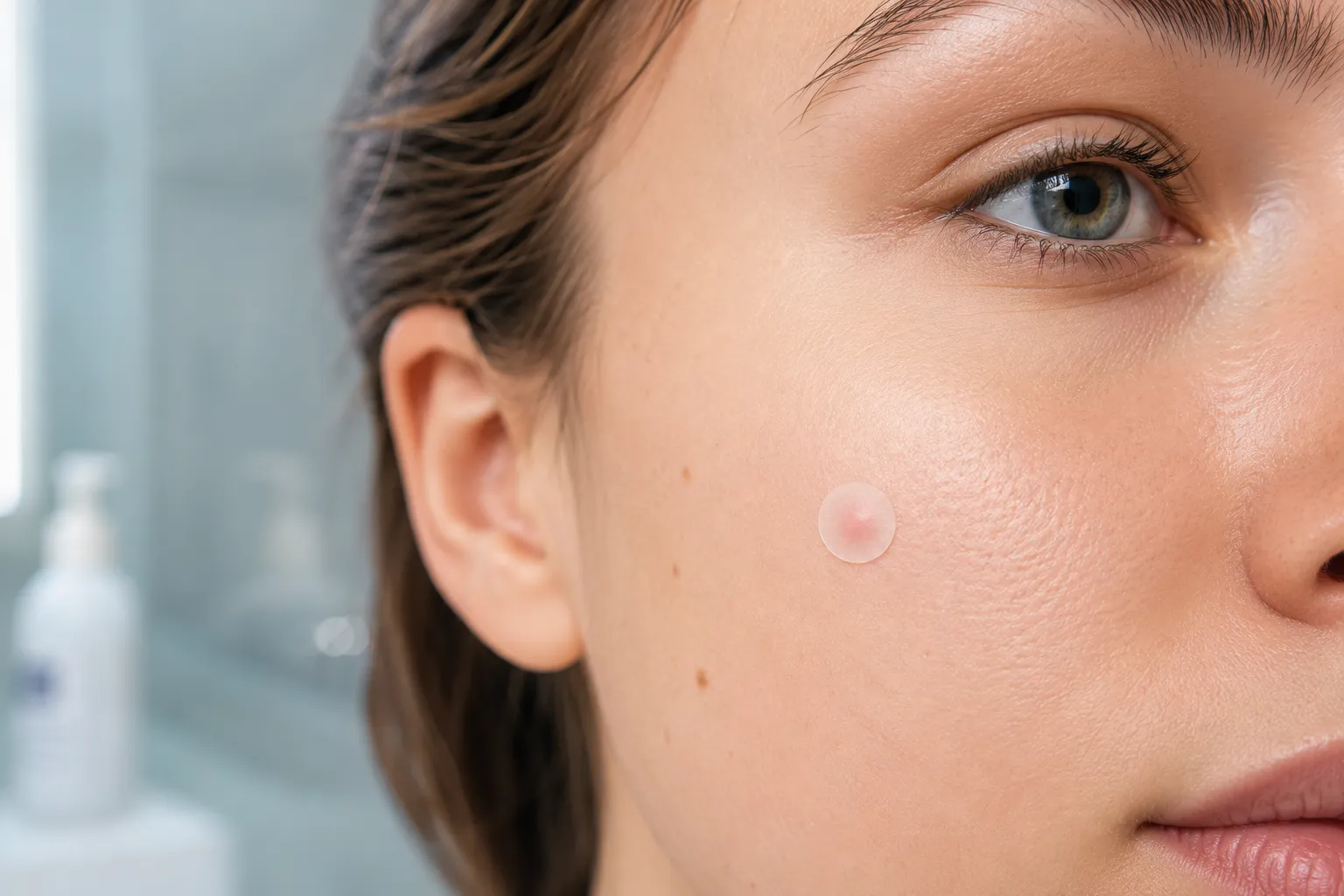
Hydrocolloid pimple patches absorb fluid from blemishes, reduce inflammation, and create a protective barrier that prevents touching and bacterial contamination. They work best on surfaced whiteheads or already-open pimples, drawing out contents without squeezing. Many dermatologists recommend them as a safer alternative to manual extraction for appropriate blemish types.
Yes. Squeezing pimples damages surrounding skin tissue and can create permanent atrophic scars (depressions), hypertrophic scars (raised bumps), or post-inflammatory hyperpigmentation (dark spots). Deeper, more inflamed acne like cysts and nodules carries the highest scarring risk when popped. Professional dermatological extraction minimizes this risk through sterile technique.
The Bottom Line on Pimple Popping
The question “is it OK to pop pimples?” has a clear answer from dermatologists: no, it’s not. The risks—permanent scarring, spreading infection, deeper inflammation, and more painful breakouts—far outweigh any temporary satisfaction.
Safe alternatives exist. Warm compresses for whiteheads, ice for painful nodules, over-the-counter benzoyl peroxide starting at 2.5%, and salicylic acid products all treat blemishes without tissue damage. For persistent or severe acne, board-certified dermatologists perform sterile extractions and offer prescription treatments that address root causes.
That urgent desire to squeeze will pass. The scars from giving in to it might not. When in doubt, hands off and treatment on.