

Quick Summary: No, it is not safe to shower during a thunderstorm. Lightning can travel through a building’s plumbing system and electrocute anyone in contact with water or metal fixtures. According to the CDC, about 10% of lightning strike victims die, and indoor strikes through plumbing do occur. Wait at least 30 minutes after the last thunder before showering.
That rumble of thunder in the distance raises a question many people dismiss as old wives’ tales: can lightning actually strike someone in the shower?
The short answer is yes, and it happens more often than most realize. Despite being indoors, contact with plumbing during a thunderstorm creates a genuine electrocution risk that sends people to emergency rooms every year.
Here’s what the science says—and why waiting a few extra minutes could save a life.
Why Showering During a Thunderstorm Is Dangerous
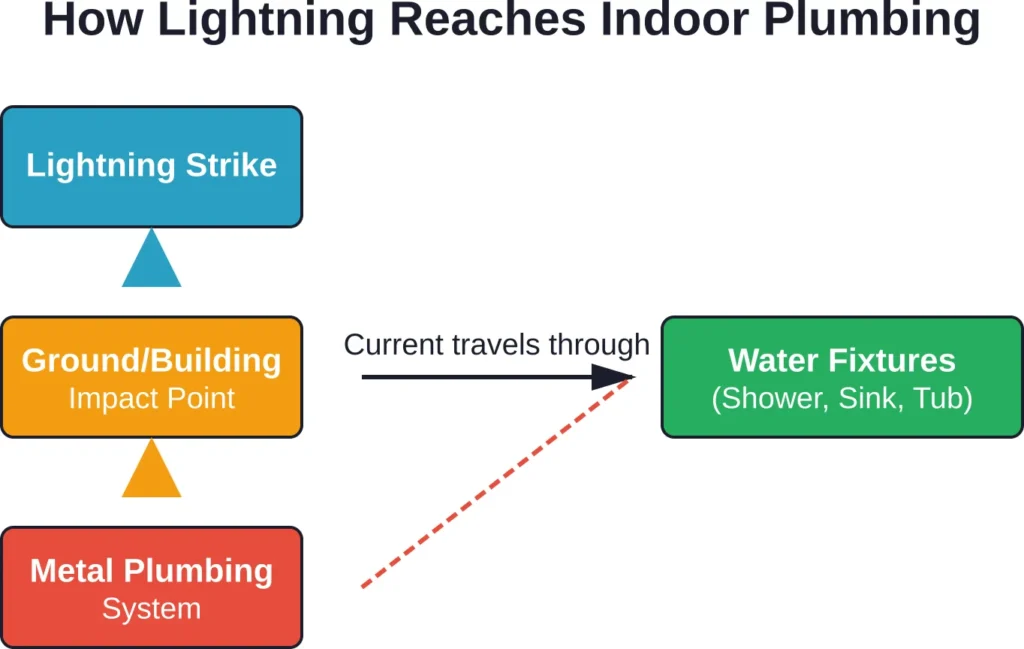
Lightning doesn’t stop at your roof. When it strikes a building or the ground nearby, the massive electrical current seeks the path of least resistance to reach the ground. Metal plumbing pipes act as excellent conductors, channeling that energy throughout a home’s water system.
Water itself conducts electricity, especially when it contains minerals and impurities found in most municipal and well water. The combination creates a direct pathway from the strike point to anyone touching a faucet, standing in a shower, or soaking in a bathtub.
According to the National Weather Service, about one-third of lightning injuries occur indoors. Activities like showering, washing dishes, or doing laundry account for a significant portion of these incidents.
The Science Behind Lightning and Plumbing
Lightning carries between 20 million and 1 billion volts of electricity. Even a fraction of that energy is lethal to humans, who can be killed or seriously injured by currents as low as 0.1 amps.
Modern homes often have copper, steel, or PVC plumbing with metal components. These materials provide minimal resistance to electrical flow. When lightning strikes, the current disperses through all conductive pathways—wiring, pipes, metal framing.
The National Oceanic and Atmospheric Administration confirms that about 40 million lightning strikes hit the ground in the United States each year. While the odds of being struck by lightning in a given year are less than one in a million, the risk increases significantly during specific behaviors—including showering during storms.
Real talk: the risk isn’t theoretical. Emergency departments treat lightning injuries that occurred indoors through plumbing contact every year.
What the CDC and Weather Service Recommend
The Centers for Disease Control and Prevention explicitly warns against showering, bathing, washing dishes, or doing laundry during thunderstorms. Their guidance is unambiguous: avoid all contact with plumbing until the storm passes.
The National Weather Service follows the 30/30 rule for lightning safety. Take cover when the time between a flash of lightning and a roll of thunder is 30 seconds or less. Remain under cover until 30 minutes after the last flash of lightning or clap of thunder.
That 30-minute window matters. According to the American Red Cross, the beginning and end of storms are the most dangerous times. Many people resume normal activities too quickly, not realizing lightning can strike from storms up to 10 miles away—even when skies appear to be clearing.
| Activity | Risk Level | CDC Recommendation |
|---|---|---|
| Showering/Bathing | High | Avoid completely during storms |
| Washing Dishes | High | Postpone until 30 min after last thunder |
| Doing Laundry | Moderate | Wait until storm passes |
| Using Corded Phones | High | Use cell phones or cordless only |
| Using Cell Phones | Safe | No risk from cell phone use |
Other Indoor Activities to Avoid During Thunderstorms
Showering isn’t the only risky indoor activity. Lightning can enter buildings through any conductive pathway, including electrical wiring and phone lines.
The CDC recommends avoiding these activities until storms pass:
- Using corded landline phones (cell phones and cordless phones are safe)
- Touching electrical equipment or cords
- Working on desktop computers plugged into outlets
- Leaning against concrete walls (rebar reinforcement conducts electricity)
- Lying on concrete floors
But wait—does that mean everything indoors is dangerous? Not exactly. The key is avoiding contact with anything that could carry electrical current from outside: plumbing, wiring, metal structures.
Lightning Strike Statistics and Survival Rates
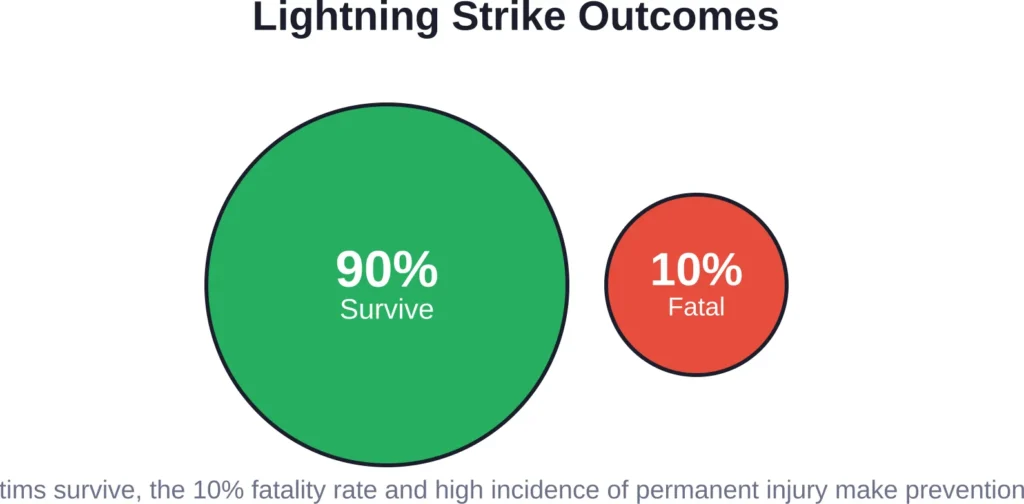
According to CDC data spanning 2006 through 2021, lightning caused an average of 28 deaths per year in the United States. About 10% of people struck by lightning die, mostly from cardiac arrest.
The remaining 90% survive but often face devastating life-long injuries including neurological damage, chronic pain, hearing loss, and vision problems. Survivors frequently experience memory issues, personality changes, and debilitating fatigue that never fully resolves.
Demographic patterns are striking. Males are four times more likely than females to be struck by lightning. The disparity likely reflects occupational patterns and outdoor recreational behaviors rather than biological vulnerability.
When It’s Safe to Resume Showering
Patience is the price of safety. The National Weather Service is clear: wait 30 minutes after the last clap of thunder before resuming activities involving plumbing or electrical appliances.
Here’s the thing though—judging storm distance isn’t intuitive. Sound familiar? That childhood practice of counting seconds between lightning and thunder actually works. Count the seconds from when lightning flashes until thunder rumbles, then divide by five to get the distance in miles. If that number is six or less (30 seconds or less), the storm is within striking distance.
Storms move, stall, and sometimes circle back. Don’t trust appearances. Blue sky doesn’t mean safety—lightning can strike from storms up to 10 miles away, a phenomenon sometimes called “bolt from the blue.”
What to Do If Someone Is Struck by Lightning
Contrary to myth, lightning strike victims don’t carry an electrical charge and are safe to touch immediately. Quick action saves lives.
The American Red Cross recommends these steps:
- Call 911 immediately
- Check for breathing and pulse
- Begin CPR if the person has no heartbeat
- Treat burns and shock
- Move the person to shelter only if it’s safe to do so
Many lightning strike victims go into cardiac arrest but can be revived with prompt CPR. Unlike other cardiac arrest situations, lightning victims have excellent survival rates when resuscitation begins quickly—their hearts often restart and maintain rhythm once stimulated.
Busting Common Thunderstorm Myths
Misinformation about lightning safety persists. Community discussions and anecdotal experience often contradict official guidance, creating dangerous gaps in public knowledge.
| Myth | Reality |
|---|---|
| “I’ve showered during storms my whole life” | Rare events feel impossible until they happen; risk is real but low-probability |
| Rubber-soled shoes protect from lightning | Footwear provides zero meaningful protection from lightning voltage |
| Lightning never strikes the same place twice | Lightning frequently strikes the same location, especially tall structures |
| Cell phones attract lightning | Wireless devices are safe; only corded phones pose a risk |
| You’re safe once rain stops | Lightning can strike 30+ minutes after rain ends |
Practical Tips for Storm Safety at Home
Beyond avoiding the shower, a few simple practices dramatically reduce indoor lightning risk.
Stay informed. NOAA Weather Radio and smartphone weather apps provide real-time alerts for severe weather in specific locations. Most modern phones support Wireless Emergency Alerts that don’t require app installation or cellular data.
Unplug valuable electronics before storms arrive. Surge protectors offer some protection but can’t handle direct lightning strikes. Unplugging computers, televisions, and appliances prevents damage and eliminates one pathway for current to reach occupants.
Designate a safe room away from windows, exterior walls, and plumbing. Interior hallways and closets work well. Avoid basements with exposed pipes or concrete walls containing rebar.
Create a family lightning safety plan. Discuss the 30/30 rule, identify safe shelter locations, and establish communication protocols if family members are separated when storms develop.
The Bottom Line on Showering During Thunderstorms
Look, nobody likes disrupting their routine. That morning shower feels non-negotiable, and evening baths provide genuine stress relief. But the science is settled: plumbing conducts lightning, water conducts electricity, and the combination creates measurable risk.
The CDC, National Weather Service, NOAA, and every major safety organization issue the same guidance. Avoid plumbing contact during thunderstorms. Wait 30 minutes after the last thunder before showering, bathing, or washing dishes.
Is the risk high? No—odds of being struck by lightning in any given year are less than one in a million. But with an average of 28 deaths annually and hundreds more suffering permanent injuries, those odds aren’t zero. And unlike outdoor lightning risks that require bad luck and bad timing, indoor risks are entirely avoidable through simple behavioral changes.
The calculus is straightforward: waiting 30 minutes costs nothing. Getting struck costs everything.
Check local weather forecasts before planning activities. When thunder roars, go indoors—and stay away from the shower until the storm truly passes.
Frequently Asked Questions
No. While PVC itself doesn’t conduct electricity, most plumbing systems include metal components—faucets, showerheads, valves, water heaters, and pipe joints. Lightning current can still reach these metal parts and travel through water to anyone in the shower. The CDC recommends avoiding all plumbing contact regardless of pipe material.
Wait at least 30 minutes after the last clap of thunder before using plumbing or resuming normal activities. Lightning can strike from storms up to 10 miles away, and the 30-minute window ensures the storm has truly passed your location. This is the official recommendation from the National Weather Service and follows the 30/30 lightning safety rule.
Technically, any contact with plumbing carries some risk during lightning storms. However, brief contact like handwashing or tooth brushing presents much lower risk than extended exposure in a shower or bath. For maximum safety, avoid even brief plumbing contact during active lightning. Use hand sanitizer as a temporary alternative if necessary.
Yes. Cordless phones and cell phones are safe to use during thunderstorms because they don’t connect to exterior phone lines. Only corded landline phones pose a risk, as lightning can travel through telephone wiring into the handset. The CDC explicitly states that wireless phones present no lightning danger.
Get out immediately and move away from plumbing. Dry off in a safe location away from windows, exterior walls, and water fixtures. Don’t resume the shower even if the storm seems brief. Wait the full 30 minutes after the last thunder before returning to the bathroom.
Yes. Lightning current doesn’t weaken significantly when traveling through conductive materials like metal pipes. Whether on the first floor or the twentieth, plumbing systems throughout a building can carry dangerous current from a strike. High-rise residents face the same showering risks during thunderstorms as those in single-family homes.
Both are equally dangerous. Whether water comes from a showerhead or fills a bathtub, the risk comes from contact with plumbing and water that conducts electricity. Sitting in a bathtub may actually increase exposure time and body surface area in contact with water, but both activities should be avoided completely during thunderstorms.