

Quick Summary: Taking vitamins at night is generally safe for most supplements, but timing matters for optimal absorption and sleep quality. Research shows that certain vitamins like B6, C, E, and folate consumed in the evening may offer cardiovascular benefits, while B vitamins taken before bed might interfere with sleep for some people. The best approach is to take fat-soluble vitamins (A, D, E, K) with your largest meal and water-soluble vitamins at any consistent time that fits your routine.
Popping vitamins right before bed seems convenient—one less thing to remember in the morning rush. But does the timing actually matter?
The short answer is that most vitamins are perfectly fine to take at night. However, certain supplements may affect sleep quality or absorption depending on when they’re consumed.
Here’s the thing though—research reveals some surprising benefits to evening vitamin intake that many people don’t know about.
Understanding Vitamin Absorption and Timing
The body doesn’t process all vitamins the same way. Some dissolve in fat, others in water, and this fundamental difference shapes when they work best.
Fat-soluble vitamins (A, D, E, and K) require dietary fat for proper absorption. Taking these with your largest meal—whether breakfast, lunch, or dinner—ensures optimal uptake. The timing matters less than the presence of fat.
Water-soluble vitamins (B-complex and C) dissolve in water and generally absorb well regardless of meal timing. The body excretes excess amounts through urine, making toxicity rare.
But wait. Absorption isn’t the whole story.
Evening Vitamin Intake and Cardiovascular Health
Recent research from the National Institutes of Health examined how vitamin timing affects health outcomes. The findings challenge conventional morning-supplement routines.
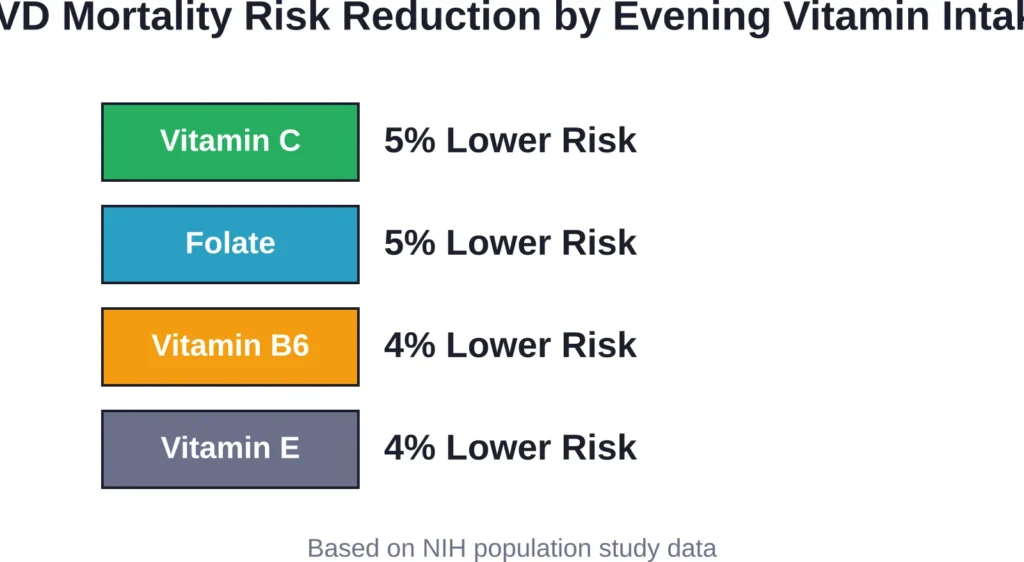
According to data published in Frontiers in Cardiovascular Medicine, certain vitamins consumed in the evening showed the lowest cardiovascular disease mortality risk. Specifically:
- Evening vitamin B6 intake correlated with 4% lower CVD mortality risk when 10% of dietary intake shifted from morning to evening
- Vitamin C consumption in evening hours showed 5% lower CVD mortality risk with similar intake shifts
- Vitamin E taken at night demonstrated 4% lower CVD mortality risk
- Folate evening intake associated with 5% lower CVD mortality risk
Research suggested vitamin B2 showed different patterns, with morning intake associated with certain cardiovascular outcomes.
These percentages reflect population-level associations rather than individual guarantees. Still, the pattern suggests timing influences more than just absorption.
Vitamins That May Disrupt Sleep
While evening intake offers potential cardiovascular benefits for some vitamins, others might interfere with sleep quality.
B Vitamins and Energy
B-complex vitamins play crucial roles in energy metabolism. They help convert food into fuel the body uses throughout the day.
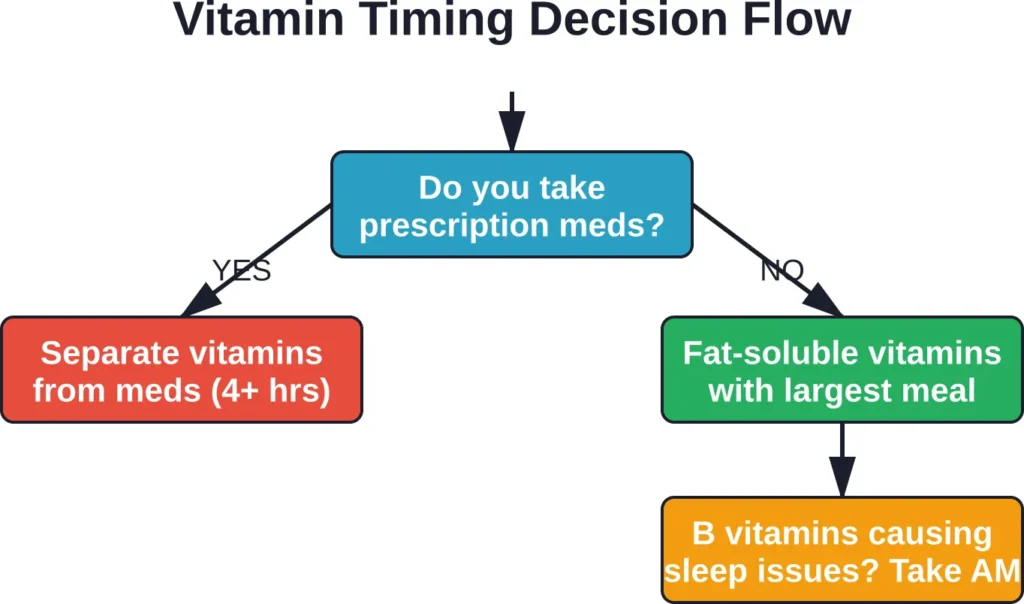
Taking B vitamins—particularly B12, B6, and thiamine—before bed may stimulate energy production at the wrong time. Some people report difficulty falling asleep or more vivid dreams after nighttime B vitamin intake.
That said, individual responses vary widely. Many people take B vitamins at night without any sleep disruption.
Multivitamins Before Bed
Most multivitamins contain B-complex vitamins along with other nutrients. Research published in Sleep Medicine found associations between multi-vitamin/multiple vitamin use and disturbed sleep maintenance. The study advanced five equally plausible explanations including that vitamins cause poor sleep, poor sleepers seek vitamins, and unidentified factors promote both poor sleep and vitamin use.
The relationship between multivitamins and sleep remains complex. If sleep issues develop after starting nighttime multivitamin supplementation, switching to morning intake makes sense.
Best Vitamins to Take at Night
Several supplements actually support better sleep when taken in the evening.
Magnesium
Magnesium plays a role in muscle relaxation and nervous system regulation. Many people find magnesium supplementation before bed promotes deeper, more restful sleep.
This mineral doesn’t interfere with morning routines and may enhance sleep quality—making it an ideal nighttime supplement.
Vitamin D
Vitamin D is fat-soluble and absorbs best with food containing fat. If dinner represents the largest or fattiest meal of the day, taking vitamin D at night maximizes absorption.
Some debate exists about vitamin D and sleep. While it doesn’t typically cause sleep disruption, individual sensitivity varies.
Calcium
Calcium absorption doesn’t depend heavily on time of day, though the body may absorb it slightly better when taken in smaller divided doses. Evening calcium supplementation works well for most people.
Calcium can interfere with certain medications. Research found that 47.5% of hypothyroid patients used calcium supplements, and these can reduce levothyroxine absorption when taken together.
Vitamin and Medication Interactions
Timing becomes critical when vitamins interact with prescription medications.
According to research published in Pharmaceuticals, 51.8% of hypothyroid patients used dietary supplements known to interact with levothyroxine, especially calcium (47.5%) and iron (11.9%). Proper separation of levothyroxine from these supplements is important for medication effectiveness.
Calcium and iron supplements particularly interfere with levothyroxine. The same pattern applies to other medications.
The medication alendronate (prescribed for osteoporosis) illustrates strict timing requirements. According to MedlinePlus, take alendronate just after you get out of bed in the morning, before you eat or drink anything. Never take alendronate at bedtime or before you wake up and get out of bed for the day. Do not eat, drink, or take any other medications (including vitamins) for at least 30 minutes after taking alendronate.
| Medication Type | Interacting Supplements | Recommended Separation Time |
|---|---|---|
| Levothyroxine (thyroid) | Calcium, iron, multivitamins | At least 4 hours |
| Alendronate (bone health) | All vitamins and minerals | At least 30 minutes |
| Antibiotics (certain types) | Calcium, magnesium, zinc, iron | 2-6 hours depending on drug |
| Blood thinners | Vitamin K, vitamin E, fish oil | Consult physician |
Creating Your Optimal Vitamin Schedule
The ideal vitamin timing depends on several personal factors. Here’s how to build a routine that works.
Consider Your Largest Meal
Fat-soluble vitamins (A, D, E, K) absorb best with dietary fat. Take these during whichever meal contains the most fat—often dinner for many people.
If breakfast includes eggs, avocado, or other fatty foods, morning intake works equally well.
Monitor Your Sleep Response
Start with nighttime supplementation if that’s most convenient. Track sleep quality for two weeks.
Notice difficulty falling asleep, more frequent waking, or unusually vivid dreams? Switch B vitamins and multivitamins to morning. Keep minerals like magnesium and calcium in the evening routine.
Maintain Consistency
The body adapts to routine. Taking vitamins at the same time daily—whether morning or night—matters more than the specific hour chosen.
Consistent timing also improves compliance. Linking supplementation to an existing habit (morning coffee, brushing teeth before bed) reduces the chance of forgetting doses.
Special Considerations for Different Vitamin Types
Not all supplements fit neatly into morning or evening categories. Context matters.
Prenatal Vitamins
Prenatal vitamins contain higher doses of certain nutrients, particularly iron and folate. Iron can cause nausea when taken on an empty stomach.
Taking prenatal vitamins with dinner reduces digestive discomfort and ensures better iron absorption (iron absorbs better with vitamin C, often present in evening meals).
Iron Supplements
Iron absorption peaks when taken on an empty stomach, but this timing increases nausea risk. Taking iron at bedtime with a small snack offers a compromise—less food than a full meal but enough to prevent stomach upset.
Calcium interferes with iron absorption. Space these supplements at least two hours apart.
Fish Oil and Omega-3s
Fish oil supplements don’t have strict timing requirements, but taking them with food reduces the fishy aftertaste some people experience.
Evening intake works well, especially when dinner includes other fats that enhance absorption.
What the Research Doesn’t Tell Us
Real talk: vitamin timing research remains incomplete. Most studies focus on deficiency prevention rather than optimal timing.
The cardiovascular timing data comes from observational studies that show associations, not causation. People who eat more vegetables at dinner naturally consume more vitamins in the evening—their lower CVD risk might stem from overall diet quality rather than timing alone.
Individual variation matters enormously. Some people tolerate B vitamins at night perfectly well. Others find even small evening doses disruptive.
The best approach? Experiment systematically, track results, and adjust based on personal response.
Common Vitamin Timing Mistakes to Avoid
Several timing errors reduce supplement effectiveness or cause unnecessary side effects.
Taking fat-soluble vitamins without fat wastes money—absorption drops significantly. Always pair vitamins A, D, E, and K with at least a small amount of dietary fat.
Combining calcium and iron reduces absorption of both minerals. Separate these by at least two hours.
Exceeding recommended doses doesn’t improve results and may cause harm. Fat-soluble vitamins accumulate in body tissues, making toxicity possible with chronic high-dose supplementation.
Skipping doses inconsistently prevents steady nutrient levels. Missing occasional doses matters less than erratic patterns where weeks pass between supplementation.
| Common Mistake | Why It Matters | Better Approach |
|---|---|---|
| Taking all supplements together | Interactions reduce absorption | Space competing nutrients 2+ hours apart |
| Fat-soluble vitamins on empty stomach | Poor absorption without dietary fat | Take with meals containing fat |
| Inconsistent timing | Prevents steady nutrient levels | Link to daily habit (meal, bedtime routine) |
| Ignoring medication interactions | Reduces drug effectiveness | Separate vitamins and meds 4+ hours |
Frequently Asked Questions
Most people can take multivitamins before bed without issues. However, B vitamins in multivitamins may cause sleep disruption or vivid dreams in sensitive individuals. If sleep problems develop after starting nighttime multivitamins, switch to morning intake. Otherwise, bedtime supplementation works fine and may improve consistency.
Fat-soluble vitamins (A, D, E, K) work best when taken with the largest or fattiest meal, regardless of time. Research shows certain vitamins like B6, C, E, and folate may offer cardiovascular benefits when consumed in evening, while vitamin B2 appears most beneficial in morning. Water-soluble vitamins generally work equally well at any consistent time.
B vitamins play major roles in energy metabolism, converting food into cellular fuel. Taking B-complex vitamins or multivitamins containing B vitamins before bed can stimulate energy production, making falling asleep difficult. If this occurs, switch these supplements to morning. Minerals like magnesium typically don’t cause this response.
Vitamin D absorbs best with dietary fat, so take it with whichever meal contains the most fat—often dinner for many people. Some evidence suggests vitamin D may affect sleep in sensitive individuals, though most people tolerate evening intake well. Consistency matters more than specific timing, so choose the schedule most likely maintained long-term.
B vitamins (particularly B12, B6, and thiamine) may interfere with sleep in some people due to their role in energy metabolism. Research has found associations between multi-vitamin use and disturbed sleep maintenance, though causation remains unclear. If insomnia develops after starting nighttime vitamins, try morning intake instead. Most other vitamins don’t typically disrupt sleep.
Competing nutrients require separation to prevent absorption interference. Space calcium and iron at least 2 hours apart. Separate vitamins from certain medications (like levothyroxine) by at least 4 hours. Fat-soluble vitamins can be taken together since they don’t compete. Water-soluble vitamins generally don’t require separation from each other.
Fat-soluble vitamins (A, D, E, K) require food containing fat for proper absorption—always take these with meals. Water-soluble vitamins (B-complex and C) absorb well with or without food, though taking them with food may reduce stomach upset. Iron absorbs best on empty stomach but causes less nausea with food. Most multivitamins should be taken with food to optimize absorption of all components.
Finding Your Personal Vitamin Schedule
The perfect vitamin timing doesn’t exist universally—it exists individually.
Start by identifying medications that require separation from supplements. Build supplement timing around these constraints first.
Next, match fat-soluble vitamins to the meal with the most dietary fat. For most people, that’s dinner.
Try taking B vitamins and multivitamins at night initially if that’s more convenient. Monitor sleep quality for two weeks. Switch to morning if sleep disruption occurs.
Keep minerals like magnesium and calcium in the evening routine—these often support better sleep rather than disrupting it.
The goal isn’t perfection. It’s consistency. A good vitamin schedule maintained daily beats a perfect schedule followed sporadically.
Listen to your body, adjust based on response, and don’t overthink it. The benefits of regular supplementation far outweigh minor timing optimization in most cases.