
Quick Summary: Sleeping in compression socks is generally safe for most people, but it’s usually not necessary unless a doctor specifically recommends it for conditions like venous ulcers or post-surgery recovery. Compression socks work by improving blood flow during periods of reduced movement, which naturally occurs when you lie down at night. For most people, wearing compression socks during the day provides sufficient benefits without the potential risks of overnight wear, such as discomfort or reduced circulation if they’re too tight.
Compression socks have become increasingly popular for managing everything from leg swelling to athletic recovery. But as more people rely on them for daily comfort, a common question emerges: should they stay on at night?
The answer isn’t always straightforward. While compression therapy offers proven benefits during waking hours, nighttime wear follows different rules.
How Compression Socks Actually Work
Compression socks apply graduated pressure to the legs, with the tightest squeeze at the ankle that gradually decreases toward the knee. This design helps push blood upward against gravity, improving circulation and reducing fluid buildup.
Research published in Healthcare examined compression stockings worn for 8 hours overnight by university students and cashiers who stand for prolonged periods. The study found that research showed that compression reduced shank circumference in the study population, though the benefits diminished after removal.
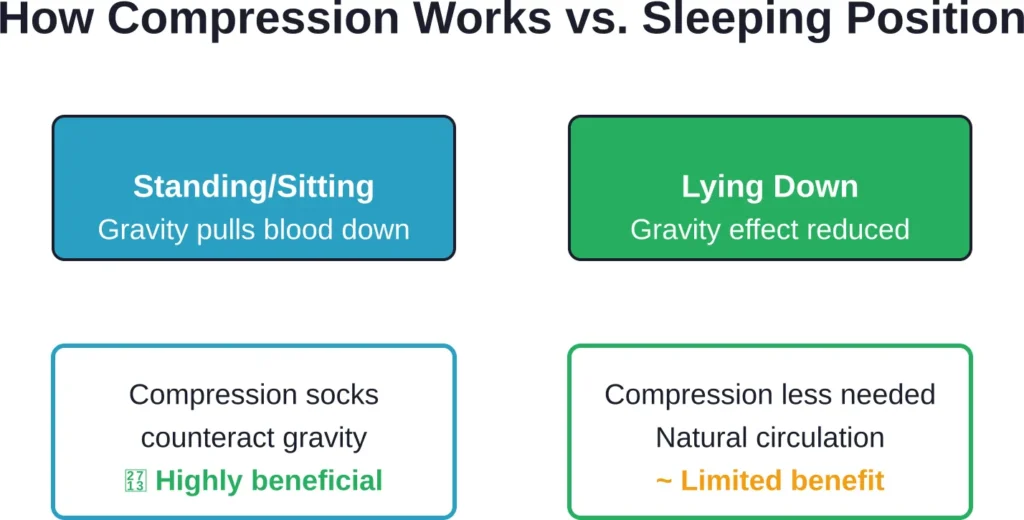
Here’s the thing though—compression therapy was originally designed to counteract the effects of prolonged sitting or standing. When lying flat, gravity’s impact on blood flow naturally decreases. That changes the equation for nighttime wear.
When Doctors Actually Recommend Overnight Wear
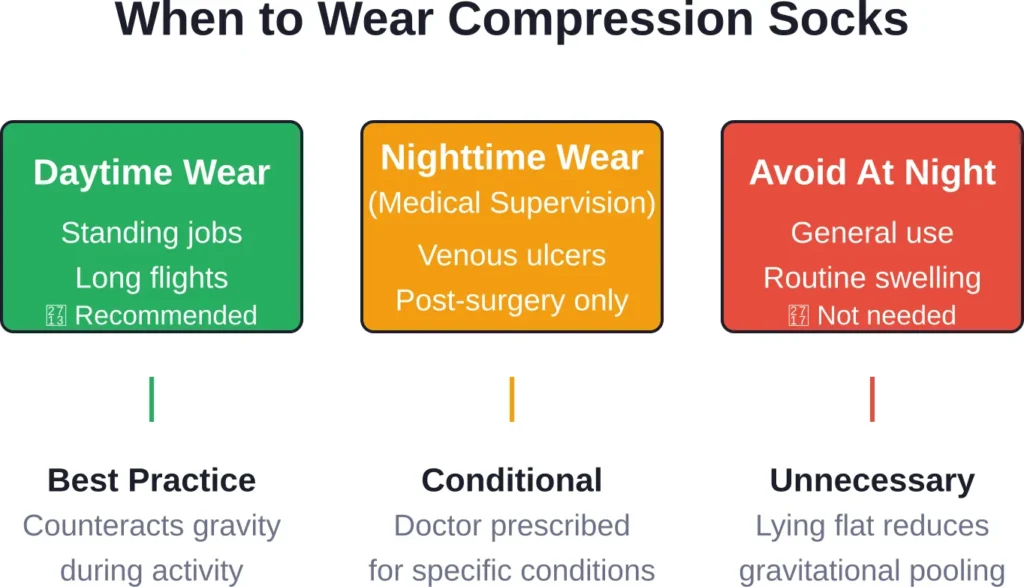
Most medical professionals suggest removing compression socks before bed. But there are exceptions.
Doctors may recommend sleeping in compression socks for specific medical conditions, including venous ulcers, post-surgical recovery from vein procedures, or severe chronic venous insufficiency. According to research on compression garment efficacy, these specialized applications require professional medical guidance.
Pregnant women represent another special case. Research shows that 80% of pregnancies involve leg edema, and pelvic vein thrombosis can occur during pregnancy and puerperium. Some healthcare providers recommend nighttime compression for these high-risk situations, but only under medical supervision.
Real talk: if a doctor hasn’t specifically told you to wear compression socks at night, the default answer is to take them off.
The Research on Sleeping in Compression Socks
Studies examining overnight compression wear have produced mixed results. A scoping review published in Sports Medicine examined compression garments across multiple studies, with the majority published in recent years. The research shows significant variability in compression protocols and outcomes.
One study specifically examined nighttime compression for people with nocturia—frequent nighttime urination. After four weeks of wearing compression stockings, participants showed improvements in nighttime frequency and related symptoms. However, the study emphasized individual variability in response.
But here’s what matters most: research consistently shows that compression benefits diminish rapidly once the socks come off. That doesn’t necessarily mean they should stay on 24/7, though.
Potential Risks of Nighttime Compression
Sleeping in compression socks isn’t dangerous for most people, but several risks deserve attention.
| Risk Factor | Description | Prevention |
|---|---|---|
| Discomfort | Tight socks can disrupt sleep quality | Remove before bed unless medically necessary |
| Skin Irritation | Prolonged wear may cause itching or redness | Choose proper size and material |
| Reduced Circulation | Incorrect fit can restrict blood flow | Consult healthcare provider for proper sizing |
| Nerve Compression | Bunched fabric at joints can compress nerves | Ensure smooth fit without bunching |
An international consensus statement on compression therapy risks noted that medical literature documents that excessive compression pressure, particularly at bony prominences, can cause skin breaks. According to research on compression treatment contraindications, pressure at bony prominences like ankles, the tibia, and the fibular head may be higher than expected due to the Law of Laplace.
Who Should Consider Nighttime Compression
Certain groups may benefit from sleeping in compression socks under medical guidance.
Post-Surgical Patients
People recovering from venous procedures like endovenous ablation may receive instructions to wear compression socks continuously for a specified period. Research has examined compression protocols following ablation procedures, with recommendations varying by individual surgical needs.
People With Severe Venous Insufficiency
Chronic venous disease affects millions globally. Research indicates varicose vein prevalence varies across populations, with documented ranges varying by gender and ethnicity.
Those with advanced venous disease sometimes need 24-hour compression management, but this decision must come from a vascular specialist.
Long-Distance Travelers
According to the CDC, more than 300 million people travel on long-distance flights each year. While compression socks help prevent deep vein thrombosis during travel, wearing them to sleep during a flight follows different logic than wearing them in bed at home—the seated position still subjects legs to gravitational pooling.
Better Alternatives for Nighttime Relief
If leg swelling or discomfort bothers you at night, several alternatives work better than compression socks.
Elevating legs above heart level allows gravity to assist circulation naturally. Placing a pillow under the calves creates the ideal angle without requiring any specialized equipment.
Gentle leg exercises before bed—ankle circles, calf raises, or simple stretching—promote blood flow without the need for compression. Many people find this approach more comfortable and equally effective for minor swelling.
Staying hydrated throughout the day prevents fluid retention that worsens at night. Reducing salt intake serves a similar purpose, particularly for those prone to edema.
How to Wear Compression Socks Safely
Whether wearing compression socks during the day or overnight under medical guidance, proper use matters.
Sizing is critical. Compression socks that are too tight can restrict circulation rather than improve it. Measurements should be taken in the morning before swelling develops, following manufacturer guidelines for calf and ankle circumference.
The FDA classifies medical support stockings as Class 2 devices, indicating moderate regulatory oversight. Choosing products from reputable manufacturers ensures appropriate pressure gradients and quality construction.
Compression levels typically range from 15-20 mmHg for mild support to 30-40 mmHg for medical-grade compression. Higher compression levels should only be used under medical supervision.
Look, the most important rule: check for proper fit throughout the day. Compression socks should feel snug but never painful. Any numbness, tingling, or color changes in the feet signal incorrect fit or excessive compression.
What the Medical Community Says
Healthcare providers generally agree on core principles around compression therapy timing.
Research on compression efficacy emphasizes that a significant proportion of employees in Germany frequently work from standing positions, making daytime compression particularly valuable for occupational health. The benefits for standing workers are well-documented, but these same workers don’t typically need overnight compression.
Vascular specialists consistently recommend daytime wear for varicose veins, leg fatigue, and occupational swelling. Nighttime recommendations remain reserved for specific medical conditions requiring 24-hour management.
The consensus from multiple studies: compression therapy works best when targeted to periods of gravitational stress on the venous system.
Making the Right Choice for Your Situation
So, is it OK to sleep in compression socks? For most people, the answer is that it’s safe but unnecessary.
Compression socks deliver proven benefits during waking hours when sitting or standing challenges circulation. At night, when lying horizontal naturally reduces gravitational pooling, the added benefit becomes marginal for people without specific medical conditions.
That said, sleeping in compression socks won’t harm most people if done correctly with proper sizing and fit. Some individuals report better comfort with overnight wear, particularly during recovery from intense physical activity.
The best approach: use compression socks during the day when they provide maximum benefit, and reserve nighttime wear for situations where a healthcare provider specifically recommends it. This strategy maximizes effectiveness while minimizing potential discomfort or risks.
If leg swelling, pain, or circulation issues affect quality of life despite compression therapy, consult a vascular specialist. Persistent symptoms may indicate underlying conditions requiring more comprehensive treatment than compression alone can provide.
Frequently Asked Questions
While technically possible, wearing compression socks continuously for 24 hours isn’t recommended unless a doctor specifically advises it. Skin needs time to breathe, and continuous compression can lead to irritation. Most people should remove compression socks at night and put on a fresh pair in the morning.
Research shows that nighttime compression provides minimal additional benefit for swelling beyond daytime wear. Elevating legs while sleeping works just as effectively without the potential discomfort. If ankle swelling persists despite daytime compression and elevation, consult a healthcare provider to rule out underlying conditions.
If a doctor recommends sleeping in compression socks, they’ll typically prescribe 15-20 mmHg compression for overnight use—the lower end of the therapeutic range. Higher compression levels at night can cause discomfort and restrict circulation when muscle activity drops during sleep. Never use medical-grade compression (30-40 mmHg) overnight without specific medical instruction.
Improperly fitted compression socks can restrict circulation, particularly if they roll down or bunch up during sleep. This risk increases overnight when people are unaware of positioning problems. Signs of restricted circulation include numbness, tingling, color changes in toes, or pain. If any of these occur, remove the socks immediately and consult a healthcare provider about proper sizing.
People with peripheral artery disease, severe peripheral neuropathy, or certain skin conditions should avoid compression therapy altogether, including overnight wear. According to medical consensus on compression contraindications, these conditions make compression potentially harmful. Anyone with diabetes, heart failure, or circulatory disorders should consult a physician before using compression socks.
Most people notice reduced leg fatigue and swelling within hours of wearing compression socks during activity. However, research shows these benefits fade quickly—within 10 to 30 minutes after removal. For conditions like varicose veins, consistent daily wear over weeks to months provides cumulative benefits, but overnight wear doesn’t accelerate this timeline for most people.
The CDC recommends compression socks during long flights to prevent deep vein thrombosis, but once the flight ends and you can lie flat, they’re generally unnecessary. After landing, elevating legs and staying hydrated provides sufficient circulation support. If you have additional risk factors for blood clots, discuss post-flight compression protocols with a healthcare provider before traveling.