
Quick Summary: Swallowing gum is generally harmless and won’t stay in your stomach for seven years. Your digestive system can’t break down gum, but it passes through your body naturally within 40 hours, just like other indigestible items. While occasional gum swallowing causes no harm, making it a habit could potentially lead to intestinal blockage, especially in young children.
Remember hearing that swallowed gum stays in your stomach for seven years? That childhood warning has persisted for generations, causing unnecessary worry. Here’s the thing though—it’s complete fiction.
The truth about gum and your digestive tract is far less dramatic. But understanding what actually happens can help ease concerns, especially for parents whose kids have accidentally swallowed their bubble gum.
What Really Happens When You Swallow Gum
Chewing gum contains gum base—a mixture of elastomers, resins, and waxes that give gum its chewy texture. Your stomach can’t digest this material, but that doesn’t mean it sets up camp in your digestive system.
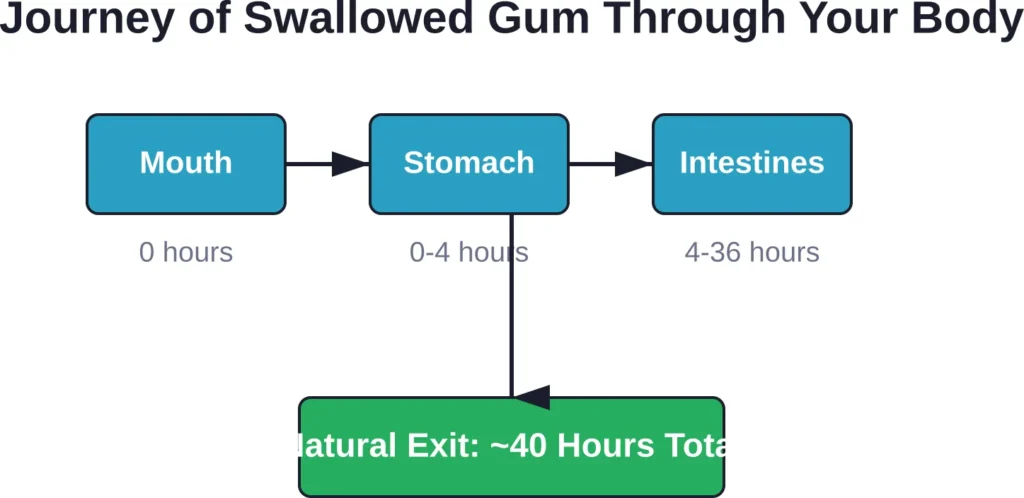
Instead, the gum moves through your body just like other indigestible items. It passes through your esophagus, stomach, and intestines before exiting naturally. According to health experts, swallowed gum passes through your body in about 40 hours.
Your digestive system handles plenty of things it can’t break down. Corn kernels, seeds, and certain fibers pass through relatively intact. Gum follows the same path.
The Seven-Year Myth Explained
So where did this persistent myth originate? The misconception likely stems from the fact that gum base resists digestion. Somewhere along the way, that scientific truth morphed into the dramatic claim about seven-year stomach residency.
But there’s no medical basis for this timeline. Your body doesn’t store indigestible materials for years. The digestive system continuously moves contents along, regardless of whether they can be broken down.
When Swallowing Gum Can Become a Problem
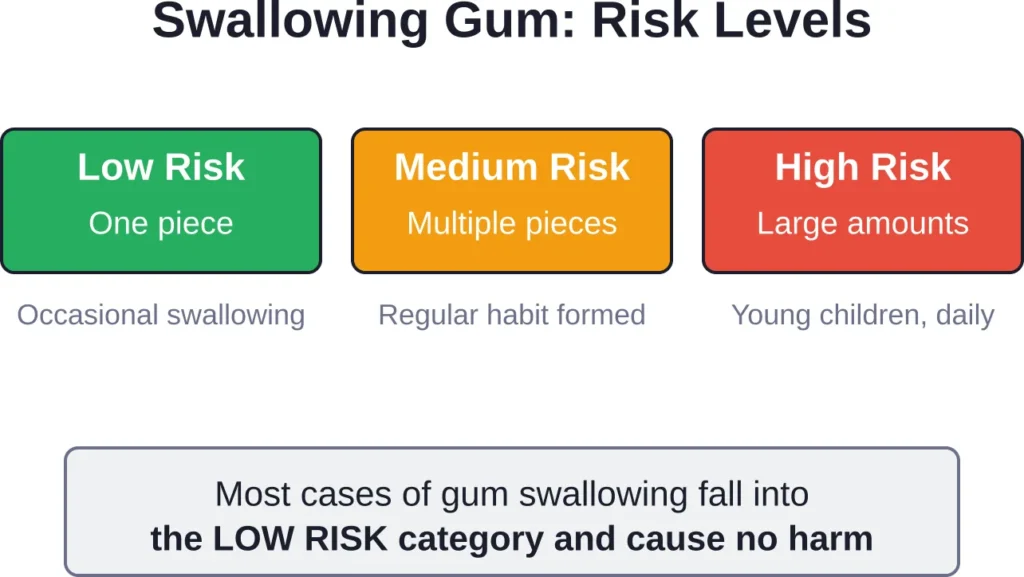
Real talk: swallowing one piece of gum isn’t harmful. But repeatedly swallowing gum can potentially cause issues, especially in young children.
Large amounts of swallowed gum, combined with other indigestible materials, could contribute to intestinal blockage. This is rare but documented in medical literature. Children are particularly vulnerable because their digestive tracts are smaller.
According to medical literature on foreign bodies in children’s digestive systems, about 75 percent of the objects found in children’s esophagi are coins. While gum doesn’t typically get stuck in the esophagus like solid objects, the principle remains—children put all sorts of things in their mouths.
Warning Signs to Watch For
If a child swallows gum regularly, watch for these symptoms:
- Constipation or difficulty passing stool
- Stomach pain or cramping
- Persistent nausea or vomiting
- Loss of appetite
These symptoms warrant a visit to your healthcare provider. In most cases though, even children who swallow gum experience no complications.
Best Practices for Gum Chewers
The simplest approach? Spit out your gum when the flavor’s gone. Wrap it in paper and toss it in the trash—not under tables or on sidewalks.
For parents, teach children early that gum is meant to be chewed and discarded, not swallowed. Supervise young kids with gum, and consider waiting until they’re old enough to understand the difference between gum and food.
Some gum packages now include disposal wrappers specifically for this purpose. It’s a small courtesy that keeps public spaces cleaner while reinforcing proper gum habits.
What Your Digestive System Can Handle
Your digestive tract is remarkably resilient. Beyond gum, it processes fiber, seeds, and various food components that resist complete breakdown. The system evolved to move materials through efficiently, whether fully digestible or not.
That said, common sense applies. Don’t test your digestive system’s limits by swallowing non-food items intentionally. While your body can handle the occasional gum mishap, it wasn’t designed to process rubber, plastic, or other synthetic materials regularly.
Frequently Asked Questions
No, this is a myth. Swallowed gum passes through your digestive system in about 40 hours, similar to other foods. Your body can’t digest gum, but it doesn’t store it either—the gum simply exits naturally with other waste.
Most children experience no problems after swallowing gum. It passes through their system normally within a couple of days. However, if a child swallows gum frequently or in large amounts, monitor for signs of constipation or stomach discomfort and consult a pediatrician if concerns arise.
Intestinal blockage from gum is extremely rare and typically requires swallowing multiple pieces along with other indigestible materials. Single pieces of gum pass through without issue. Blockage risk is slightly higher in young children due to smaller digestive tracts.
Neither type is designed to be swallowed, but both pass through your system similarly. Sugar-free gum contains artificial sweeteners instead of sugar, but the indigestible gum base is essentially the same. The main difference is that sugar-free gum won’t contribute to tooth decay.
Gum typically exits your body within 40 hours of swallowing, following the normal digestive timeline. This timeframe varies based on individual digestive speed, but the gum will pass through naturally without special intervention.
Occasional gum swallowing isn’t cause for concern, but making it a regular habit isn’t recommended. Repeatedly swallowing gum could potentially contribute to digestive discomfort or, in rare cases, blockage. It’s best to spit gum out when finished chewing.
Monitor for symptoms like stomach pain, constipation, or vomiting over the next few days. In most cases, even large pieces pass without incident. Contact a healthcare provider if symptoms develop or if you’re concerned, particularly with young children or if other objects were swallowed alongside the gum.
The Bottom Line on Swallowing Gum
Swallowing gum isn’t the digestive disaster that playground warnings suggest. Your body handles it efficiently, moving it through your system without the seven-year residence myth implies.
But that doesn’t mean you should make swallowing gum a habit. The occasional accident won’t harm you, but proper disposal remains the best practice. Teach kids the difference, and keep chewing gum what it’s meant to be—a temporary treat, not a digestive challenge.
When in doubt, spit it out. Your digestive system will thank you for not giving it extra work.